This Week in Space 212 Transcript
Please be advised that this transcript is AI-generated and may not be word-for-word. Time codes refer to the approximate times in the ad-free version of the show.
Tariq Malik [00:00:00]:
Coming up on this Week in Space, Blue Origin's new Glenn rocket goes boom. SpaceX's Starship launches on Flight 12 and it's a success, but there's a catch. And also NASA's moon base plans got a big boost with a bunch of contracts, but it does circle back to Blue Origin. So tune in and find out what
Rod Pyle [00:00:20]:
podcasts you love from people you Trust. This is TWiT. This is this Week in Space. Episode number 212 recorded on May 29, 2020, 2026. Kaboom. Starship and a Moon Base. Hello everyone and welcome to another episode of this Week in Space, the Kaboom Starships and Moon Bases edition. We got some good news, some bad news, and some in between news.
Rod Pyle [00:00:46]:
I'm Rod Pyle, editor chief at Aster magazine, and I'm here with the grand lunar himself, Tarek Malik of Space.com and his sterling lieutenant. Or maybe he's your boss by now. Mike Wall. He should be, who's like the ace
Tariq Malik [00:01:02]:
guy@space.com now because Tarek reporting from like kids baseball games and stuff like that knows no bounds.
Rod Pyle [00:01:10]:
Mike Wall, because Tarek graduated to being an officer, so he gets to be in charge now. So today I say with a heavy heart, we're going to be focusing on the new Glenn Kaboom, which happened late Yesterday, Starship Flight 12, which went a little better than that, and the recent announcement about the Artemis Moon Base. We're going to try and get all that to be a fun filled afternoon.
Tariq Malik [00:01:34]:
Yeah, we had a whole plan and now it's like a different plan.
Rod Pyle [00:01:38]:
Why do we plan? You know? Now I do need to say for anyone who will be in the Washington D.C. area next week, we'll be presenting this show live at the International Space Development Conference at the Hilton, McLean, Virginia. Same bat time, same bat channel as always. Two o' clock in that time zone. And our very special guest will be Jerry Griffin, who was an Apollo flight director. He's a former director of jsc, all around good guy and perhaps most importantly, the subject of the new biography I'm writing about him with him. So if you can join us, that would be swell. You do have to pay for a day pass to the International Space Development Conference.
Rod Pyle [00:02:15]:
But there's no additional charge for our seminar and in fact our episode. And in fact I think probably I can get Tarek to pay you to come.
Tariq Malik [00:02:24]:
That's right.
Rod Pyle [00:02:25]:
But before we go there, it's that time for a space joke from Tom Monahan.
Tariq Malik [00:02:30]:
Tom.
Rod Pyle [00:02:32]:
Hey, Tarik.
Tariq Malik [00:02:33]:
Yes, Rod?
Rod Pyle [00:02:34]:
Why did the man of the moon go on a diet. I don't know why he was tired of feeling full and decided to come a new moon.
Tariq Malik [00:02:42]:
I get it. I get it. I feel like that's all I get
Rod Pyle [00:02:45]:
from Mike is the eyebrows.
Mike Wall [00:02:47]:
Okay.
Tariq Malik [00:02:48]:
We didn't even get like our laugh track. I know.
Rod Pyle [00:02:50]:
Where's the sound effect? Anthony? You're going to have to do it yourself. Okay, that'll do.
Tariq Malik [00:02:56]:
You got the symbols and
Rod Pyle [00:02:59]:
now I've heard that some people want to send us out into a hard lunar vacuum when it's joke time of this show. But you can help by sending us your best, worst or mostly different space joke to twist twit tv. And we'll be happy to blame it on you on the air. And now let's go to headline news.
Tariq Malik [00:03:18]:
Headline news, Headline news. Oh, I think it was early, a
Rod Pyle [00:03:23]:
little bit by a couple of seconds. So Eric and I just before showtime and before you got here, Mike completely trashed the headline section because we had stuff, we had our regular kind of, oh, that's interesting headline. And then the world changed.
Tariq Malik [00:03:39]:
So of course, mostly all stories by. Mike actually wrote that Swift story too.
Mike Wall [00:03:46]:
Oh, right, right. Yeah.
Rod Pyle [00:03:47]:
He's always my first go to when I, when I do drop in@space.com. unless of course, Tarek, you've written one. And then, you know, then I still got a mic once I.
Tariq Malik [00:03:56]:
Blue moon, right?
Rod Pyle [00:03:57]:
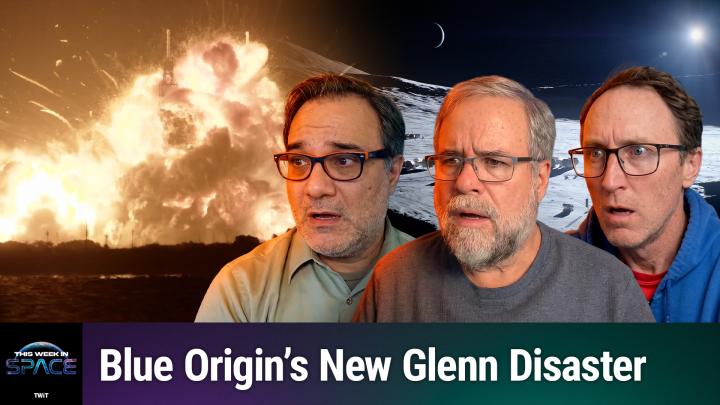
Big deal. We had a kaboom yesterday. The new Glenn rocket was being static tested on the launch pad at LC36 and it exploded in a very impressive fireball that was seen from. I saw one video that lit up the entire horizon from 120 miles away.
Tariq Malik [00:04:15]:
It made a mushroom cloud. That's how big it was.
Rod Pyle [00:04:18]:
This isn't as big as if you lost a Saturn V or a starship on the pad, but it's still really big. I mean, this is a lot of energy packed in those chemicals in that sucker. And you know, it's always bad to lose a rocket, but perhaps an even bigger concern is losing that launch complex because that's the only one that Blue Origin has the moment.
Tariq Malik [00:04:38]:
Yeah.
Rod Pyle [00:04:39]:
So I don't know, guys, do you think it's.
Tariq Malik [00:04:41]:
By the way, this video people are watching. This is from NASA Space flight.
Mike Wall [00:04:44]:
Yeah. Look at that thing. That's crazy. Yeah, it is. It is just insane how powerful that is, how big that is. This is all really depressing for people who care about space.
Rod Pyle [00:04:54]:
I was going to ask, do you think it's. It's premature to invoke Tom Hanks saying, guys, we just lost the moon.
Mike Wall [00:05:01]:
No, but what it does mean is that this is going to be a big delay for Blue Origin, which is a huge part of the moon based plans that NASA just kind of is trying to firm up and just made a big announcement about a few days ago. And it means that probably we're going to have to rely more on SpaceX for a lot of the stuff if we want to do it in the short term because it's Blue Origin and SpaceX who, who hold the contracts to, to land Artemis astronauts and all this stuff. So yeah, this is, it's, yeah, and it's like you said, you know, I mean they, that's the loss of a rocket, that's a bad thing, especially when it's a reusable for a stage like New Glenn. But the fact that the pad, I mean that, that's such a powerful explosion and we like, we've seen a few pictures of the pad afterward and it looks, it looks pretty damaged. Right? Like, I don't know how long it'll take them to rebuild that pad. It's going to be like many months though, if not like, like a year or so to get that pad back up and running.
Tariq Malik [00:05:53]:
And we should probably run down like exactly what happened what we know of right now. Right. This is going to be or was going to be Blue Origin's fourth launch of a new One rocket. And it follows the lackluster NG3 launch that led to the loss of its commercial payload by phone, what was it? Mobile?
Mike Wall [00:06:17]:
Bluebird 7, AST Space Mobile.
Tariq Malik [00:06:20]:
Yeah, the AST Space Mobile site and the FAA just recently I guess signed off with Blue Origin on their anomaly explanation with Blue Origin saying that they know what happened, why the upper stage didn't work on that as planned on that, on that mission so that they could actually launch this one. This one was going to launch what, it was going to launch an Amazon satellite, right?
Mike Wall [00:06:40]:
Yeah, well, yeah, yeah, it was going to launch 48Amazon Leo Internet satellites and that was supposed to launch like June 4th. That's what this, this test was, was a static fire test, you know, which is a routine engine test to, to show everything is ready for launch. And so it's just interesting. Tarek. Yeah. Like you mentioned, there was an upper stage issue on the last New Glenn launch. This was a core stage issue, right? They were, yeah, I mean they were igniting like the first stage engines of New Glenn when this happened. So this is a different, it's a different part of the rocket than we saw an issue with on the last flight.
Tariq Malik [00:07:12]:
So a different part of the rocket, which means a different problem, which means some sort of new investigation. Does the FAA get involved in a static fire test or is that something else?
Mike Wall [00:07:23]:
I'm not exactly sure. I'll have to look at that. But yeah, this, this I'm. I'm not sure. But I mean like regardless, there's going to be an, like an investigation by Blue Origin. Like whether I don't seen by the FAA or not.
Tariq Malik [00:07:34]:
I don't recall what happened when SpaceX lost that satellite on the pad when
Mike Wall [00:07:40]:
it just blew up.
Tariq Malik [00:07:42]:
Yeah, yeah. So back in 26, 2019, 19, 2016,
Mike Wall [00:07:47]:
I think it was. It's been a decade.
Tariq Malik [00:07:49]:
Yeah, a long time ago.
Mike Wall [00:07:51]:
Well, there's a silver lining in that. None of those, those Amazon. Leon. Yeah, like the Internet satellites by Amazon were not on top of the rocket. Apparently they were. They had not yet been integrated into the upper stage during static fire.
Rod Pyle [00:08:05]:
But even if they were, that's kind of a family affair, right? I mean it's better than losing a military payload or something. So why, why would the FAA get involved in the previous launch in an upper stage failure? I mean, is there insufficient energy from the booster to make sure that things hurled into at least a temporary orbit, Is that the concern?
Mike Wall [00:08:25]:
Well, it's just Cuba or something. Well, if it's a flight anomaly, then the FAA has authority over that. Right, so it doesn't. Yeah.
Tariq Malik [00:08:33]:
Commercial Launch provider.
Mike Wall [00:08:35]:
Right, right.
Tariq Malik [00:08:36]:
It did also fall back to Earth Rod, which causes that overflight concern there.
Rod Pyle [00:08:43]:
So.
Tariq Malik [00:08:43]:
Well, this will be. See how it develops. But, but I think the, the TLDR is that NASA just announced this week that NG5, which is the one that was supposed to launch the, the, the Blue Moon Mark one lander was set for the fall. Blue Origin had said prior to NG3's launch that that mission was set for before the end of the summer. So we're already seeing it slide to the right and now they've lost both the first stage and they, they've solved apparently an upper stage issue and they're gonna have to do a whether or not that launch gets off at the end of this. This year even I think could be up for grabs depending on what the nature of the glitch was. By the way, this booster anyone was carrying, it was called no it's necessary, which is a quote from Interstellar, by the way. When coup has to dock a spinning spacecraft on a spinning space station so that they don't die.
Rod Pyle [00:09:37]:
At least they didn't take a quote from when he was crying because astronauts don't cry. Oh wait, yes they do. I guess we, we saw that in Artemis too, didn't we? Jammer B writes, FAA has the authority over pre launch activities.
Tariq Malik [00:09:49]:
There you go, there you go. So that'll answer it. So I would expect a statement from them coming up by the end.
Rod Pyle [00:09:56]:
Yeah. So there's been nothing from them yet, right. Other than acknowledgment that it went bang.
Tariq Malik [00:10:01]:
Yeah, yeah. So from, from FAA or from Blue Origin?
Rod Pyle [00:10:05]:
From Blue Origin.
Tariq Malik [00:10:06]:
Blue Origin's been sending out a whole bunch of statements. So they, they had, that they had an anomaly that no one was injured, which is like a very, a very good silver lining. That's very nice because it could have been the size of that explosion. It could have been very, very bad. I think about the Brazil launch accident that killed all those people on the pad back in the, the early 2000s.
Rod Pyle [00:10:27]:
Well, you got to wonder if they ever lose a starship on the pad, that people don't stay very far away from that thing. I really wonder if that, that zone is.
Tariq Malik [00:10:36]:
Well, I mean, well when they do that, like there's nobody nearby like at all. So we've already seen what happens when they destroyed that car. That was during the first.
Rod Pyle [00:10:44]:
Right. But I mean if you're standing over in South Padre, is that really far, sufficiently far away if that thing goes bang right at the launch site?
Tariq Malik [00:10:52]:
I don't know. I mean it blew up when I was there and, and but it was, it was already two minutes into flight by that point.
Mike Wall [00:10:57]:
Yeah. It would be interesting if you had a full on detonation on the launch mount during like, during like a 33 engine kind of static fire of those Raptor threes. I don't, that, that would be, that would be a big boom too. I'm, I don't know how big a boom. Yeah, very, very big boom.
Tariq Malik [00:11:13]:
And, and the other statement that just came out recently as we were getting ready to start taping and is that they're, they've put up that people can call. So if you go to Blue Origins, Twitter or X or whatever, there's a statement there. So if you are in the Space coast area and you see strange debris washing on the shore, they don't want you to touch it.
Mike Wall [00:11:35]:
Do not touch it.
Tariq Malik [00:11:36]:
Yeah, they want you to call a hotline number and, and then that way, you know, they can come in, they can retrieve it. It is covered in toxic fuel and that kind of stuff. So you do not want to touch it because it can really mess you up can also be really sharp and all of that stuff too. So, yeah, there for people on the video, the number.
Rod Pyle [00:11:56]:
Hey, Mr. Gen X. We're not taping. We're recording.
Tariq Malik [00:11:59]:
Yeah.
Rod Pyle [00:12:01]:
My last question is, do we think or have we heard, can Blue Moon mark one fly on a Falcon Heavy?
Mike Wall [00:12:09]:
I don't know. I don't know if it can or not. I've been reading some speculation about that. I think the jury is still, I haven't heard like anything from Blue Origin about what it's compatible with and so on. I mean, I think there are probably conversations going on about that now. I mean, NASA's probably asking that question and trying to figure it out because they definitely want to get Blue Moon up and running as fast as possible if they can, because that's a big part of the Artemis plans of the moon based plans and so on. And yeah, it's not going to be flying on a new Glenn anytime soon, it would appear.
Rod Pyle [00:12:40]:
Boy, you gotta wonder if Mr. Bezos is gritting his teeth over that or if he just says, yeah, whatever, just get it off the ground. Speaking of getting off the ground, we need to lift off to a break and we'll be right back to discuss the story that Tarek's really excited about today, which involves his next door to hometown. We'll be right back. And we're back. So let's shine a little sunshine on the day before our next slightly depressing story. Tarik, tell us about Manhattanhenge.
Tariq Malik [00:13:09]:
Yeah, sunshine and moonshine. I got like a two for everybody. Yeah. So today as we're recording, for everyone that lives in Manhattan or that is going through there, it's the second day of the first period of manhattanhenge in New York. And that's because some of the streets around Midtown, they run east to west and they align at sunset perfectly with the sunset with it going down like right in the middle of the square. And this is from this shot that people are watching now on the, on the video is from 42nd street, which is right around the corner from the Space.com offices. And people just gather and you can see that they've blocked the entire road. And our own Chelsea Goad was there last night for the first night of manhattanhenge.
Tariq Malik [00:14:01]:
And that was, that was not even like the best one. That was a kind of like a partial sunset tonight as we're recording. It's Friday the 29th as we're recording. This one is like the big main one for May and they have like police officers on horses telling people to Stop crowding the street because the cars still have to go through. And it's just kind of one of those weird coincidences that that's just how the streets lined up to be kind of like a sundial of sorts a couple times a year. The next time is going to be in July where there's going to be another two days of Manhattan henge. And that's going to be like the big one because people are going to be more on summer break. They can get out.
Tariq Malik [00:14:37]:
It's going to be on the weekend too.
Rod Pyle [00:14:39]:
So don't they realize they should just close Manhattan for this event because we think it's important.
Tariq Malik [00:14:45]:
I know, right? Well, what's nice is that around the Corner from the Space.com offices is Park Avenue south, which if you've ever watched the Avengers where they're all on a bridge fighting and they do the big circle thing. That's actually around the corner from our office. That's that bridge. And so people stand on that bridge and look, or they stand in the middle of the street and look and, and it's a big party over there. It was really, really cool.
Rod Pyle [00:15:06]:
Sorry, I prefer grown up movies.
Tariq Malik [00:15:08]:
I did, I did say I had a twofer. And the other thing that's happening overnight tonight and this weekend is the blue moon. Did you know Rod? And it's not, it's, it's a, it's not about that blue moon rear end or anything like that. It's. It's actually, it's actually the second full moon of the month and it's going to be overnight on Saturday and Sunday and it's going to be really fun, really fun. In fact, if you go to a bar and you order a blue moon beer, it actually might be blue because they're doing a whole big promotion for the blue moon this weekend. So if you do that, send us a photo because I want to see it. I won't be able to check it out in person, so I'd like to see it.
Rod Pyle [00:15:46]:
Well, gosh, I'm feeling a little blue about the moon. And that extends to our next story, which is starship test flight number 12. Boy, that was a stretch of a segue, you know. Went off pretty well. It didn't hit all the marks, but hit the major ones. Except for dumping its booster back in the ocean. Unplanned and unpowered. But it did manage to get off its mass simulator satellites.
Rod Pyle [00:16:13]:
And I think what impressed me the most was that starship the upper stage appeared to re enter in one piece without a bunch of burn through on the forward flaps and so forth, but I didn't see as many camera shots of that as we had in the past, so. So I'm not sure. Any word on that?
Tariq Malik [00:16:31]:
Well, I guess this is where we bring Mike into the fray. Right, Rod? This is like our main big story.
Rod Pyle [00:16:38]:
Bring in the X.
Tariq Malik [00:16:39]:
We should introduce Mike again, the space flight and tech editor@space.com and my friend for like what, like 15 years now?
Mike Wall [00:16:48]:
Yeah, something like that.
Rod Pyle [00:16:49]:
Yeah, well, and the guy that almost had to rescue me in Death Valley as I was struggling up the hillside with 100 pounds of tripod and beta cam.
Mike Wall [00:16:57]:
That was Curiosity team. Yeah, it was a lot of fun.
Tariq Malik [00:17:00]:
So. So welcome back. Welcome back, Mike, thank you very much for your ability, especially on a busy day like today when we've got rockets blowing up on the pads in Florida. And for everyone who may needs a refresher after our last episode with Rod and I, our last podcast that, that Evening was when SpaceX launched Flight 12 of Starship. It was the very first launch of the version three of the rocket. It's a bigger rocket, 408ft tall, it's more powerful, it's got new V3 Raptor engines.
Rod Pyle [00:17:32]:
Yeah, because wifly, the one that worked before.
Tariq Malik [00:17:34]:
Lots of bells and whistles. Lots of bells and whistles. And we didn't know at the end of our last episode what happened, but now we do, and that's why Mike is here, because Mike knows as well a lot better than we do. So Mike, what happened with Flight 12 as we get things started?
Mike Wall [00:17:52]:
Yeah, I mean, it seemed like it mostly went well. I mean, SpaceX heralded, heralded it like as a success because as they were saying, you know, they got the, like the upper stage ship to go all the way to, to the designated landing zone, which, which is in like the Indian Ocean off the coast of Western Australia, as it's been on, on most of the previous flights. And yeah, they were really, they were really hoping that the, that the heat shield tiles would hold there, wouldn't be burned through, there wouldn't be a bunch of tile shedding. And that seemed to be the case. You know, it seemed to make it back down to the ocean in one piece and it was, it was very quickly put into millions of pieces when it kind of toppled over and hit the water. But that was to be expected. That was not a failure. It hit the water as it was supposed to in a controlled fashion, vertically, and then just tipped over because there was no tower to catch it.
Mike Wall [00:18:42]:
There are no Chopstick arms there to catch it as it would on an operational flight. So it seemed like everything went well with the ship upper stage, including the payload deployment. They actually deployed 22 payloads on this flight, which was more than twice as many as they've deployed before. Twenty of those were dummy Starlink satellites. Two of them were actual Starlin with camera gear attached to them so you could. So they could do like an inspection of the heat shield tiles.
Tariq Malik [00:19:04]:
They had a funny name, right? They had a funny name.
Mike Wall [00:19:07]:
Oh, yeah, they called them Dodger Dogs. Dodger Dogs, Yeah, because they were long.
Tariq Malik [00:19:13]:
Because they were long and they stuck out the ends like the giant hot dogs over at Dodger stadium.
Mike Wall [00:19:17]:
Right.
Rod Pyle [00:19:17]:
For $25. Yeah.
Mike Wall [00:19:19]:
Right. Like the company is based in the LA area, so that, that makes sense to be talking about LA baseball, but I don't particularly care for that because I'm in San Francisco, so I'm. But yeah, yeah. So things. The upper stage seemed to go great.
Tariq Malik [00:19:34]:
They did lose an engine though, right? They lost one of the engines on the way up.
Mike Wall [00:19:38]:
Yeah. But the other five on the upper stage ship were able to compensate and get it onto the proper trajectory. And where they had issues was with super heavy, the first stage booster. It was not able to do its controlled descent back to Earth and it was supposed to do a controlled splash down in the Gulf.
Tariq Malik [00:19:54]:
Gulf.
Mike Wall [00:19:55]:
And it was not able to do that. It came down in the Gulf, but not where and kind of how they wanted it to. And that actually kind of spurred an investigation by the FAA saying this was a mishap. Officially it was. Yeah, it was declared like a Mishap. And so SpaceX needs to investigate and submit a report that the FAA will, will oversee. So, yeah, it's not like 100% unvarnished good news, but for the most part, considering this is a brand. Not brand new, but it's a very new vehicle.
Mike Wall [00:20:23]:
It's got a lot of bells and whistles, like Tarek was saying, a lot of upgrades. Yeah, yeah. It's very different. And it's, it's also. It's the version of the vehicle. It's like the first sort of mature version of Starship. You know, this is the vehicle that with, I mean, after they put life support on it, which is not something you can just sort of arm wave away. Oh, yeah, those put life support, but once they get that stuff on it and do a few more things, this is the version of the vehicle that will fly astronauts to the moon and stuff like that and maybe to Mars if things go well, so, so this is a big, It's a big deal that it actually did pretty well on its first flight, this new V3 vehicle.
Tariq Malik [00:20:57]:
Yeah. And Rod, just to put some things into perspective, the very first Starship SN1B1, blew up the first time that they launched it. Right. You all saw me watch that way back when, back in 2023 now, which seems crazy. The very first version of the, the version two rocket, actually, the first three of them, right, they all blew up at various stages until they had that, that Flight 11 flight last year. So getting this one out the gate and into space, I think seems like it would be a really big, A big milestone for sure, but not like the slam dunk that NASA might have been hoping for.
Rod Pyle [00:21:41]:
Can I just say as a child of the 60s, that no Saturn V ever exploded. More expensive. I get it, traditional contracting. But they all worked with an engine loss on one or two flights. That's it. You know, but they all worked. Nothing went bang, you know. Yeah, yeah, you'd think 50, 60 years later, the second time around with the heavy lifting done by the US and Soviet Union way back in the day, that it might not be this hard.
Rod Pyle [00:22:09]:
I know they're doing something completely different. I get it. And for a lot less money. But come on, guys, you know, we really need this thing to work so we can get people to the moon.
Tariq Malik [00:22:19]:
Yeah.
Rod Pyle [00:22:19]:
I don't even think it about Mars.
Mike Wall [00:22:21]:
Yeah, I would say, I mean, it's a valid criticism. And I'd say with SpaceX, you know, they tend to, they don't hit Elon Musk's kind of timelines, generally speaking, but they do, like, get the job done. Like historically, look at what the Falcon 9 has become, look at what Falcon Heavy is now. And I mean, I. Right, yeah, yeah. So I mean, we were promised a very ambitious timeline with Starship when we first heard about it as the BFR and everything, but like a decade ago. Almost, right?
Tariq Malik [00:22:53]:
Not almost a decade, exactly. A decade in September.
Mike Wall [00:22:58]:
Yeah. So those sorts of timelines were probably. They were always overly ambitious and have not been met, obviously. But if you're SpaceX, you're probably encouraged by this and you're probably like, well, we have this brand new Raptor engine that's even more powerful. Powerful. And it did pretty well. And cheap.
Rod Pyle [00:23:16]:
My God.
Mike Wall [00:23:16]:
Yeah, so, and, and it's, it's also worth noting, you know, like, yeah, like NASA developed kind of rocket program and SpaceX development programs are very different in strategy and in philosophy. You know, SpaceX has always said Test fly, test fly, test fly, iterate, test fly, all that. So they, it's kind of glib to say they don't care about explosions because they obviously would rather it didn't explode. But they, they have, have 10 more ships, five more boosters kind of already ready to go out of their factory. So it's not as big a deal as like losing like a Saturn 5 would be like, like a completely mature rocket. So it's, it's part, it's like built into their philosophy to lose a few here and there.
Tariq Malik [00:23:54]:
What will be interesting because this is the last starship test flight before the ipo, right?
Rod Pyle [00:24:00]:
Yeah, yeah, because the ipo, that's for after the break.
Tariq Malik [00:24:04]:
Okay. Okay.
Rod Pyle [00:24:04]:
Yeah.
Tariq Malik [00:24:05]:
Okay, well we'll talk about that then in a bit.
Rod Pyle [00:24:08]:
Let's invest in a break and we'll be right back. Stand by. All right, so let's talk about that ipo. That was actually my next question was this test had a lot riding on it, not just for starship and for the lunar landing program, but also for the IPO, which is upcoming. I've seen numbers for this everywhere, from 1.4 trillion to 2 trillion. What do we know about the I. Current status of the IPO?
Mike Wall [00:24:36]:
I've seen like 1.75 trillion. It's like kind of a middle ground that seems like what, what they might be going for and for the valuation, for the valuation of the company and like the actual raise might be like 75 billion or something. I'm, I'm like, I'm not a finance guy, so.
Tariq Malik [00:24:49]:
Well, they put that in the ipo, the documents, that's, that's what they're hoping to raise is at least 75 million.
Mike Wall [00:24:55]:
Yeah.
Rod Pyle [00:24:55]:
After the billion, 50 pages. Here's all the reasons you should doubt what we're doing. Right?
Mike Wall [00:25:01]:
Yeah, yeah, but it's like. Yeah, so it is, it's going to be one of the biggest, if not the biggest IPOs valuations of a private company going public ever. Like, it's a really big deal. And it also is like, like it's part of what appears to be a transition of SpaceX going away from being like a launch company to becoming like an AI company, which is what all signs point to. They're valuing what they're going to be able to do in AI over their launch prowess, launch market kind of options. And I guess that's been in the cards for a while. We really got a sense of that in December when SpaceX put out their big update about we want to do all These data centers in Earth orbit and probably on the moon or in lunar orbit, we're going to use railguns to launch these AI data center satellites off the moon. All this stuff, typical big picture Elon Musk kind of stuff.
Mike Wall [00:25:52]:
But it seems like they are pivoting toward. We aren't really a launch company anymore. Even though we're going to be doing a lot of launches with Starship, but a lot of those are going to be servicing these giant kind of mega constellations with orbiting data centers, doing AI stuff. And that's how they're going to make most of their money.
Tariq Malik [00:26:11]:
It's really weird. Like, what is SpaceX anymore? We were talking about it a little bit on a previous episode, but like with this, with this ipo, they are a launch company, they are a social media company because they own X, which owns the X social media, the former Twitter thing. They're the AI company. I guess they're going to do orbital data, become a server company with these orbital thingamajigs at a robot company.
Rod Pyle [00:26:39]:
And I'm just waiting for them to
Tariq Malik [00:26:41]:
decide, well, the robot is part of Tesla.
Mike Wall [00:26:44]:
That's Tesla. Yeah. Optimus is Tesla.
Tariq Malik [00:26:46]:
Optimus is part of Tesla.
Rod Pyle [00:26:47]:
But, yeah, but, but you know that he's going to decide that it would make sense to cross breed apes and humans and put cybernetic caps on them and have them be astronauts because he won't get as many complaints.
Mike Wall [00:26:58]:
Well, and that'll bring Neuralink. Yeah, like that'll bring neuralink into the picture too.
Rod Pyle [00:27:02]:
There you go.
Mike Wall [00:27:03]:
You got to do electrodes and we
Rod Pyle [00:27:04]:
could cross breed pigs and people.
Tariq Malik [00:27:06]:
That is the plot of the spaceman comic book. The like Neanderthal astronauts.
Rod Pyle [00:27:12]:
Why do you know these things?
Tariq Malik [00:27:14]:
Because I collected the spaceman comic book.
Rod Pyle [00:27:16]:
Of course. Of course you did.
Tariq Malik [00:27:19]:
Okay, well, I forgot about Starling too. We talked all about a little bit about Starlink and by the way, those two Dodger dog Starlinks gave us our first views and video of a starship free flying in space after like separation because usually we only see it from the booster. So that was at least a bit of a nice moment to see that. To see that happen too. So, yeah, I guess we'll get more of those in the days to come.
Rod Pyle [00:27:48]:
So has there been any word? Because as we discussed in this flight, number 12, version three of the Raptor, which is greatly streamlined in both manufacturing design from certainly from the original, but even from the version two, in fact, if the numbers are right, I could actually, if I sold my house, I could afford to buy one Raptor 3, they could make it in like two days. Right. As opposed to the companies that are supposed to be making updated shuttle engine designs for the SLS, which are still I think what, 150 million.
Mike Wall [00:28:24]:
That's the really, that's one of the really crazy things about what they're doing with starship. I mean think about every single starship that launches every full stack was super heavy ship has, has 39 Raptors on it. Right? Yeah. So in the future they are going to be doing a lot of reuse. They're not going to need 39 new Raptors for every flight. But, but at the moment they are pretty much using 39 new Raptors for every flight as they're getting this thing up and running. And they've, they've not gone to reusability yet really. Although they're, they've started to a little bit.
Mike Wall [00:28:53]:
But yeah, so that's, they reused one booster, right.
Tariq Malik [00:28:55]:
Of vita.
Mike Wall [00:28:56]:
Yeah, yeah, yeah. So they've, they've done a little bit of reuse but. But for the most part they just have to churn out like so many Raptors to, to fuel this program. It's just like the, yeah. Like the scale of this build is just something we've never seen before.
Rod Pyle [00:29:10]:
The great thing is they're, they're doing it like turning out Chevy blazers.
Mike Wall [00:29:14]:
Yeah.
Tariq Malik [00:29:14]:
They look like toy engines.
Rod Pyle [00:29:16]:
Yeah.
Tariq Malik [00:29:16]:
It's like there's nothing. There's no plumbing or anything that you can see. There's two little pipes that come out of it.
Mike Wall [00:29:22]:
It is also streamlined. It's so streamlined.
Tariq Malik [00:29:25]:
It is so sleek.
Rod Pyle [00:29:26]:
I mean let's just. You're right, let's give them credit where credit do. There's a lot of genius that company. It's not all from the top. There's a lot of really smart people from Gwynne Shotwell down working there and they have accomplished a lot of things. They're also getting a lot of blowback in public forums about. Come on, NASA's faster than you. What's taking so long? Stop blowing things up.
Rod Pyle [00:29:48]:
Elon Lies. He said we were going to be on Mars 10 years ago. And yeah, he's a little optimistic. That's a kind way of saying that
Tariq Malik [00:29:57]:
NASA is faster than SpaceX SLS. Took 18 years to fly for the Saturn.
Rod Pyle [00:30:03]:
Five like four and a half years.
Tariq Malik [00:30:06]:
Okay, yeah, that was, that was then faster than them now.
Rod Pyle [00:30:10]:
Well, no, I'm talking about, I'm talking about my NASA. Okay. So before we, before we run out on this block, I have two, two things I want to talk about one. How does the whole GROK thing play into this? Because, Mike, you mentioned it sort of becoming an AI company with an AI system that seems to be trailing just about every other major player. And then maybe we should talk a little bit about what the FAA investigation is going to.
Tariq Malik [00:30:36]:
Actually, can I ask one more question? Because I would be very interested, Mike, in your.
Rod Pyle [00:30:40]:
Yeah, Mike, take notes. Three questions.
Tariq Malik [00:30:44]:
So, like I said earlier, we're leading into this section. This is the last starship test flight before the IPO. The IPO is set for June 5th. June.
Mike Wall [00:30:52]:
June 12th.
Tariq Malik [00:30:53]:
June 12th, I think. Yeah. So very hard pressed for them to launch Flight 13 before that time.
Mike Wall [00:31:00]:
No, they're not going to.
Tariq Malik [00:31:01]:
So when they launch flight 13 and they are now a public company, do we think that if they have another failure like this, it has bigger ramifications than like what they've been able to do as a private company where they've lost a rocket on the pad, they've lost a rocket in flight with a NASA payload, you know, and bounced back within a year each of those times. And they've been launching at a loss, we can say, right, because they've been losing stages or whatever and they're not operational with Starship to this date. Do they face additional scrutiny because they have public shareholders? Or are those shareholders people that are just so into it that they can accept more loss? Do they get more leeway?
Mike Wall [00:31:49]:
Well, I, I would think anytime you're a public company compared to a private company, I mean, public companies have a fiduciary responsibility to maximize their stock price every quarter. Right. So you do have that responsibility. It's built into the laws of being a public company. But at the same time, I've read a little bit about this and like I said, I'm not a finance expert, so I'll just take a top level understanding takeaway of it. It's basically Elon Musk has written some stuff into this where he still has controlling a controlling share.
Tariq Malik [00:32:18]:
51%.
Mike Wall [00:32:19]:
Yeah, yeah. So he's still going to be in charge. I think he's written some stuff in there where he can't be ousted except under really extreme circumstances, stuff like that. So it's not going to be your typical public company as far as I can tell. And I mean, like I said, there's a disclaimer. I'm not an expert about this stuff, but just from what I've read, it's like he has built some language into their documentation that basically gives him a little more control than most CEOs would have over a public company.
Tariq Malik [00:32:45]:
And also big milestone if they get that city on Mars with people in it too.
Mike Wall [00:32:49]:
Yeah, yeah, yeah, he would, he would get, he would get a bigger payday, all this stuff. So, yeah, it's, it's like not your typical public company, which is what I'm guessing. And also it's not your typical public company in a lot of other ways too, and that it's a national security kind of asset for the US and it's vital to the US military, you know, because they launched so many kind of national security payloads.
Tariq Malik [00:33:08]:
So if the government buys a big stake like they've been doing, well, all those chip makers.
Mike Wall [00:33:14]:
Yeah, well, that's interesting. Yeah, yeah, it's just one of those things. So they're, they're, they're very important to the, to the US government for lots of different reasons. So there's, there's a big stake in the success of SpaceX from a lot of different angles.
Rod Pyle [00:33:27]:
I, I can still think back fondly to the days where he had to sue the Air Force to be allowed. I know, which I thought at the time, I thought, wait, suing your future client.
Tariq Malik [00:33:36]:
Okay, well, he sued the Air Force for, to be able to launch from Vandenberg after they won the Vandenberg lease. So, yeah. So you, so you had a question about the FAA investigation?
Rod Pyle [00:33:48]:
Yeah, just, you know, what do we know about it and how long do we think that's going to take? The last one was pretty short, but yeah, dropping something the size of the super heavy into Havana would be a very bad public relations move for the
Mike Wall [00:34:01]:
U.S. yeah, I mean, I would expect it to be wrapped up relatively quickly, I think, I think in that story I wrote about the, about the last kind of Falcon 9 FAA investigation, it lasted like four days or something before SpaceX got, it got back to flying.
Rod Pyle [00:34:14]:
I mean, can the FAA actually do anything in four days other than fetch more coffee? That seems remarkably short.
Mike Wall [00:34:21]:
Yeah, they aren't doing the investigation, they're overseeing it. So it's up to SpaceX to figure out what happened and to write up a fix. And if the FAA determines it's okay, then they'll sign off on it. And I think it would be pretty surprising if The FAA found SpaceX's the kind of determination lacking because SpaceX knows their hardware a lot better probably than the FAA does. So yeah, it's probably going to be. SpaceX will figure it out and the FAA will read it and be like, that makes sense. And yes, you are free to you're free to fly again. That's that, that's been the pattern in the past.
Mike Wall [00:34:54]:
But Rod, didn't you also ask about Grok too? Was that one of the three questions?
Rod Pyle [00:34:57]:
Well, just. Yeah, I mean it seems to be the foot dragger of the major AI services and so much depends. So much of this, this, this IPO seems to depend on Grok and its future value and their activities, I mean.
Mike Wall [00:35:12]:
Yeah, well, I, I think that's true in a way. You know, I mean, SpaceX has been working or we, we like you're seeing Elon's kind, kind of X posts have in the past week or so he's talked some about trying to get Grok ramped up, up and running. You know, they actually, they made big kind of personnel changes at xai. They have been. But I don't know if Grok is like, like absolutely central to all of their AI plans because they're also building this like giant kind of big data compute kind of AI data compute center and they've already signed a deal to sell some of the services of anthropic and that's going to be worth billions of dollars. So even if GROK doesn't pan out in the long run, I think they still have a pretty solid foothold in the AI space. And not necessarily just because of their, their AI data centers in space plans, but because of the compute that they're building here on Earth. They're probably going to keep selling that to other companies.
Rod Pyle [00:36:07]:
Well, pretty clearly what we should be doing is instead of investing in this ipo, we should be investing in gas turbines, which Elon seems to be snapping up at an absolutely astronomical rate, much to the dismay of his neighbors, I might add. All right, let's Grok our way into a break and we'll be back in just a second.
Tariq Malik [00:36:25]:
That's good one. That's a good segue there. I like it.
Rod Pyle [00:36:28]:
Moon is my harsh mistress, man. Let's talk moon bases. Now, I just want to say when I was a kid, I know I bring this up from time to time, it was a very long time ago. I had a moon base toy and I had a space truck and I had Major Matt Mason and the little space station thing and all that other moon stuff. It was a great time to be a kid. As long as you were okay with having toys that could actually kill you or your friends, which some of them did. Wand darts? Yes. But you know, a movie, don't get
Tariq Malik [00:37:01]:
me started on lawn darts.
Rod Pyle [00:37:02]:
Was part of what we grew up with and part of that later on was seeing the plans that Wernher von Braun and others did for the US army back in 1959 called Project Horizon, which is going to be our outpost on the moon to counter the reds who were going to build their outpost on the moon. And we had nuclear tipped bazookas and lunar claymore mines and spring and gas powered pellet guns to puncture the suits of the bad guys and all this stuff. And as silly as that sounds now there are parts of this current conversation that actually do have some significant overlap with what they were talking about then. Obviously more mature and more advanced. But we recently had a big presser about the moon base and it's going to be in three phases. It's a little less exciting than having 20 soldiers on the moon with lunar claymores and nuclear bazookas, but is still pretty cool. So who wants to take us through the.
Tariq Malik [00:37:59]:
Well, this is, my Mike covered this for Space.com so we should, we should start with Mike. I will point out that, you know, it's official though now because NASA has a website. So on line 55 there, Anthony, you can say the NASA Moon base website. It's not one word, it's two words,
Rod Pyle [00:38:16]:
capital S. It should be one word that bugs me. Alpha was one word as I recall. So Mike, before you jump into this, I do have a question. There's this idea, this conversation we've had in the show and in other places of course, about territory.
Mike Wall [00:38:34]:
Right.
Rod Pyle [00:38:34]:
So outer Space treaty. You can't own your piece of the moon. You could just go use it. But apparently you could declare safety zones, exclusion zones, whatever you want to call them. So part of the plan is to drop a couple of unmanned hoppers, uncrewed hoppers, excuse me, robotic hoppers, to mark the edges of our territory. So does that mean we have to have another robot that goes up and runs string from one hopper to another
Tariq Malik [00:38:59]:
so we can actually show.
Rod Pyle [00:39:00]:
I mean, I don't quite get that. Does that make sense to you?
Tariq Malik [00:39:03]:
Little, little signs.
Mike Wall [00:39:06]:
Yeah, these hoppers are. Yeah, they're, they're the like the Moonfall drones that NASA announced like a month or so ago that they're going to build, they're going to be built at JPL. And NASA hopes to launch three or four of them in 2028.
Rod Pyle [00:39:19]:
If there is a JPL by then.
Mike Wall [00:39:21]:
Yeah, there will still be a JPL.
Rod Pyle [00:39:23]:
They might be managed by Marriott or something.
Mike Wall [00:39:25]:
Yeah, right. Not, not Caltech anymore. That's, that's been open to competition. That's Another story for another day probably. But yeah. So if all goes according to plan, you know, NASA will drop three or four of these like moonfall hopping drones near the lunar south pole and they'll do scouting work to help plan out where the moon base is going to actually be. You know, what are good sites to land, like habitat modules and the fission power source because it's going to be nuclear powered. All this stuff where rovers go.
Mike Wall [00:39:51]:
But then maybe a secondary purpose might be once they've done that scouting work, they just sort of set up the corners of the like hundreds of square miles that the moon base will cover and just to sort of markets territory, whether that is for the base denizens for, for posterity to show where it is and was, or whether that's a warning to other countries, namely China, that this is, this is where, where Moon Base Alpha or where the Neil A. Armstrong Moon Base is, as Congress told us it will be called back in 2008, where that's going to be, that's open to interpretation probably. Yeah. So it'll be interesting. I think we have heard a lot of stuff from the US military especially and from NASA officials too, just about how important it is for the US to get there first and to start building its infrastructure first. Because we want to be the one setting the norms of behavior on the Moon and be responsible and all this. And if we let China get there first and foremost, they do it, then who really knows what's going to happen? And I think that they really do believe it's important to get there first. And it is sort of a wild west.
Mike Wall [00:40:54]:
So getting there first probably does matter if you. There is no ownership, like as you mentioned, by sovereign nations on the moon or any other celestial body that's outlined in the Outer space treaty from 1967. But there's no enforcement mechanisms in the Outer Space Treaty. There are no space cops who are going to go and put a ticket on your windshield if you're a lunar rover that parked in the wrong zone, you know what I mean? So that's going to be like, it's open to interpretation. And it's also. Do, do humans have a history of pushing the limits and taking what they can until like somebody forcibly stops them? Yes, that's in our species DNA kind of. So we shall see what actually happens when two competing bases start being built and maybe we, we find a patch that doesn't have as much water ice as we thought or doesn't have as much helium 3 as we saw it, as we thought, or Sought and China's patch does. And do we ask them if we can use it? Do we just go over there and start using it and see what they do? I mean, just like, who knows? That's that stuff.
Mike Wall [00:41:53]:
That's not necessarily going to be science fiction forever.
Rod Pyle [00:41:56]:
We install our nuclear reactor and say, hey guys, you know, we think it might go critical in a couple of days. You might want to move over a little bit. Oh, look, look what's in the dirt here. Yeah, And I do wonder.
Tariq Malik [00:42:08]:
The cliffhanger ending of, of Space Force, by the way.
Rod Pyle [00:42:11]:
Oh God.
Tariq Malik [00:42:12]:
That the US Moon base sent all their troops over to the Chinese one and then the Chinese moon base and all their folks over to the other one, and then no one knew what
Rod Pyle [00:42:24]:
happened after we lost the show. It is interesting, and I don't mean to harp on this because we've talked about it in other episodes, but the idea of being the first to get a fission reactor there that could go critical at any time, theoretically, and having to declare a safety zone for that seems like the fastest and easiest way to be the first to do a de facto property claim.
Mike Wall [00:42:49]:
Yeah, I think that's, that's probably right. And whether you're doing, whether you're making that, that declaration in good faith or because, you know, it serves your selfish interests, like I don't know if that matters. Right. It's still going to be a de facto property claim. So I mean, you probably, you like do need an exclusion zone for a nuclear reactor for safety's purposes and. Yeah, so that's just kind of how, how it's going to be.
Rod Pyle [00:43:10]:
So we could drop reactors in a ring around the entire.
Mike Wall [00:43:14]:
We don't need the whole. They can mark the perimeter. We don't need the moonfall drones.
Rod Pyle [00:43:18]:
I'm not being helpful, I realize. Tarek, you better jump in and start asking questions.
Tariq Malik [00:43:23]:
Yeah, I want to, I want to ask about contracts because one of the things that I was really struck in this big moon base, one, like two, three, slash, was the fact that NASA announced a series of contracts that really kind of set the stage for it. And I think they renamed a bunch of lunar eclipse missions as part of this moon based program. And I was hoping that you could kind of outline what those contracts were. Right. There's some stuff for landers, there's some stuff for rovers for the Moonfall themselves, like that kind of a thing. What's the stage now with the contracts for Moonbase that we heard from this briefing?
Mike Wall [00:44:09]:
Yeah, so this briefing a couple days ago did give us A few contract updates. And that kind of brings us back to the original, what we started this whole conversation about with Blue Origin because they actually got a couple of really high profile kind of contracts. We were told that the Blue Moon lander, like the robotic version, has been chosen to land two private moon rovers that the astronauts will use at the moon base. And so NASA is hoping that at least one of those two moon rovers, which will be built by two different companies, Lunar Outpost and Venturi Astrolabe, that at least one of those will be delivered to the lunar surface by 2028, like ahead of the first kind of Artemis moon landing, which is supposed to be late 20. And both of those two private rovers are supposed to be delivered by the Blue Moon Mark one lander, like the robotic version of the Blue Moon lander. And so, yeah, that kind of takes us back to the beginning of this is like, will they be ready? Will that actually happen by late 2028? Will the kind of blue moon mark one lander have shown its stuff enough to be trusted with the payload like that on an operational mission? I don't know. It depends when. Yeah, yeah, exactly.
Tariq Malik [00:45:30]:
These are contracts that are worth $234 million a piece. So that's $468 million. If you're going to round up. That's nearly half a billion dollars that they've got riding on these contracts.
Mike Wall [00:45:41]:
Yes.
Tariq Malik [00:45:41]:
Alone to get these rovers there.
Mike Wall [00:45:43]:
And it's not just the money, you know, like, if you're going to be an Artemis astronaut on the surface and you want to explore the lunar south pole, you're going to need mobility and you're. So these, these like, rovers are viewed as key to the mobility around the south pole of the moon. So, yeah, for function and cost savings, you would, you would really want that to work.
Tariq Malik [00:46:03]:
And the lunar outpost and Astrolabe contracts, those are about 20 million apiece, is that right? Something like that.
Mike Wall [00:46:10]:
To, to, for the rovers, individual companies. Yeah, like, I think it's more than that, isn't it? I think it's. Yeah, I think, I think it's more than that. I don't have the numbers off the
Tariq Malik [00:46:18]:
top, off the double check. Yeah, I could be off. I could be off, but there's more contracts right there. Some more still. So.
Mike Wall [00:46:24]:
Yeah, well, and, and yeah, we were talking about the, those like Moonfall drones, those will be delivered or those will be carried to the moon, I think to the lunar surface by Firefly, which, which, which made history in March 2025 landing and, and actually completing like A lunar surface mission. The first private company to do both of those things actually complete a successful surface mission on the moon. So yeah, there was a lot of news in that news drop and I
Tariq Malik [00:46:51]:
think Firefly said that their contract was worth 75, 75 million and I actually, I think they're going to drop the moonfall at the three or four, but Firefly said four in their release. They're going to have them separate in orbit and then they'll drop down or above the moon.
Mike Wall [00:47:09]:
That's my understanding. It's going to be on, on the Elytra. That's what's going to carry them. It's, it's, it's, it's Fireflies vehicle called. Yeah. Called Elytra, which is different than Blue Ghost which was the lunar lander that made history in March 2025 with the, with the moon landing.
Tariq Malik [00:47:25]:
Yeah, I, I learned that Elytra is not just a minecraft tool to fly around.
Mike Wall [00:47:29]:
It's, it's a, it's a covering over a beetle's wings.
Tariq Malik [00:47:31]:
Yeah, that's a Mike Mike.
Rod Pyle [00:47:33]:
Mike informed boy he would know that. Right,
Tariq Malik [00:47:38]:
Interesting.
Rod Pyle [00:47:39]:
So included in this is multiple, multiple I guess robotic landings that wasn't specified in the, the version, the write up I read but lots and lots and lots of robotic landings. Are these primarily exploratory in nature or do they evolve into something doing ISRU testing and assembly?
Mike Wall [00:48:00]:
Yeah, that's part of the broader picture. No, Viper, which is like a rover, that is a NASA mission that has had the checkered history. It was canceled and then revived. It's supposed to land too in the next few years and it'll do scouting work for water ice and see how accessible it is on the floors of these polls, solar craters and all this. So there is going to be ISRU work going on with some of, of this stuff that we're dropping down near the, the south pole of the moon.
Tariq Malik [00:48:32]:
So yeah, Viper arrives on the blue, the blue moon Mark one. Right.
Mike Wall [00:48:37]:
It's going to be a blue moon as well.
Tariq Malik [00:48:38]:
Yeah. So, so it then that as I understand That's Moon Base 1 mission.
Mike Wall [00:48:43]:
I, I named it that. Yeah, it's, it's kind of confusing because we like heard a lot about, about some of these missions before under the sort of clips program which is what, what like Blue Ghost flew under what intuitive machines has been flying under when they've launched their moon missions. So yeah, I mean some of these are repurposed kind of clips missions or they've, they, they were clips missions or were kind of affiliated but now they're worth more money and so forth. So it's different. But yeah, they've been rebranded as, as like Moon Base 1, Moon Base 2, Moon Base 3. Some of the.
Tariq Malik [00:49:14]:
We should probably talk about that really quick. Moon Base 1 is the Blue Moon Mark 1 landing with the Viper rover that was supposed to launch in the fall, is what they said. Obviously, from what we've been talking about. Who knows? Now, Moon Base 2 was Astrobotics Griffin Lander, is that right?
Mike Wall [00:49:32]:
I believe so, yeah.
Tariq Malik [00:49:34]:
The Astrolabe flip rover on it. It's like a little robot that can flip around. And then there was Moon Base 3, some other mission that we were told is very important to lunar exploration, but they didn't say who was doing it. Yeah, they used a picture that really looked like. Really looked like Firefly for sure. Not Firefly, the other one. Intuitive Machines.
Mike Wall [00:49:53]:
Intuitive Machines, yeah.
Tariq Malik [00:49:54]:
And so we know that Intuitive Machines has a contract because they announced that at the ignition event.
Mike Wall [00:49:59]:
Yeah, yeah. So all. Yeah. So this is. It seems a little confusing because we're getting a lot of news kind of back to back to back. It was only, like three months ago, I guess, that we learned that, like, Artemis 3 would not actually land on the moon. It would go to Earth orbit and be a docking test with Starship and. Or Blue Moon and the Orion capsule.
Mike Wall [00:50:17]:
So that was only three months ago. It seems like a lifetime ago. So we've been getting a lot of news about Artemis restructuring about Moon Base because it's a real priority for Jared Isaacman, the current. Yeah. Who has only been NASA chief since December, to really get this up and running and to show us all the progress they're making and to keep us informed about the, the, the kind of restructuring of everything as they, they work to get this stuff moving. And it's a real priority for them to get this stuff moving. It's pretty obvious from, from all of this news that we've been getting recently.
Rod Pyle [00:50:48]:
All right, well, let's slide into our last break, and we'll be right back to wrap this up. So stay with us. So meanwhile, on the other side of our little planet, China says, quote, we will spare no effort to strive for the goal of achieving the first Chinese landing on the moon by 2030. 30. Now, before yesterday, I kind of looked at that and said, we got a chance. You'll see. I still maintain they're going to land in late 29, but that's just me. But even with that, we had a shot.
Rod Pyle [00:51:21]:
Do we still have a shot?
Mike Wall [00:51:24]:
I think we still have A shot. But it's probably dependent on Starship at this point if we're gonna. I mean.
Rod Pyle [00:51:29]:
Oh God.
Mike Wall [00:51:30]:
Not like totally dependent on Starship, but it certainly looks like Starship is the front runner with like, with the new Glenn issues and the fact that we might not see kind of blue origin launch from its only new Glenn pad for like a year or more.
Tariq Malik [00:51:44]:
They need another pad. They need another pad.
Rod Pyle [00:51:47]:
Maybe they could borrow a SpaceX pad. No, I know that won't integrate.
Mike Wall [00:51:51]:
They've gotten the ball rolling on getting another pad at Cape Canaveral going, but that's still early stages and they apparently want to fly out of Vandenberg on the west coast as well. But, but I don't. Yeah. That. There's a lot of work that needs to be done to make that happen.
Rod Pyle [00:52:05]:
They launch Polar out of Vandenberg.
Mike Wall [00:52:07]:
Yeah, yeah. So it's, it's. Yeah. I mean we'll just have to wait and see how extensive the pad damage was and how long it will take to get that back up and running. But yeah, like most of the estimates that I've read in these early hours after the explosion, it's going to be like a year or more. As we were saying is, is, is what experts have. Correct.
Rod Pyle [00:52:26]:
Actually looking at a map, if they did launch out of Vandenberg towards equatorial, most likely place to get affected by something falling out of the sky would be the Barstow area. I can live with that.
Tariq Malik [00:52:40]:
We love our listeners.
Rod Pyle [00:52:42]:
We love our listeners of Barstow, but geez. Actually I was there recently and it's become quite the little sophisticated burg. So I should stop making fun of Barstow.
Mike Wall [00:52:53]:
I mean, I would say rot. You were talking about China by 2030. Yeah, that's deadly serious. I think they're fully capable. Yeah, they are. They've shown how much they are capable of just with, with like Tiangong, their space station in low Earth orbit, which they finished in late 2022. And they're, it's, they're launching astronauts routinely there now and returning them to Earth after six month missions. And they've, they, they are, they're doing it sort of step by step and not doing a hugely ambitious kind of.
Mike Wall [00:53:21]:
Yeah. Kind of program like Starship is.
Rod Pyle [00:53:23]:
They're doing kind of Apollo style.
Mike Wall [00:53:24]:
It's kind of Apollo style. Like what do we need? What's the vehicle we need to land astronauts on? And that's what they're building.
Rod Pyle [00:53:30]:
Well, and that's all right.
Tariq Malik [00:53:31]:
And I believe Jared Isaacman. Yeah, I believe he said just last week right At a event in D.C. that the next people to fly around the moon will be on a Chinese spacecraft. That they will be. He is predicting that they will fly a circumlunar flight on their new spacecraft before Artemis 2 or before Artemis 4 gets there. So and so.
Rod Pyle [00:53:59]:
Well, yeah, before we can live with circumlunar, it's that, that landing that's got so much symbolism, right, that flag.
Tariq Malik [00:54:05]:
Well, it depends on if they don't do anything else.
Rod Pyle [00:54:07]:
Right.
Tariq Malik [00:54:07]:
Like, what if they do a spacewalk, weather out there. Right. What if they go into orbit?
Rod Pyle [00:54:11]:
We've done spacewalks up by the moon before. We've gone into orbit before.
Tariq Malik [00:54:15]:
Not this century. If they do anything more than what Artemis.
Rod Pyle [00:54:19]:
If it happened during my lifetime, it still counts.
Tariq Malik [00:54:21]:
If they did. If they do anything more than what Artemis 2 did, like, then the US is going to have a. Like, you know, they're going to have a fit because.
Mike Wall [00:54:31]:
Yeah, part.
Rod Pyle [00:54:31]:
Part of the question there is, which has been brought up by people I talk to frequently, you know, if. If they make that landing, what happens to our schedule and our funding? Is Congress really and the executive branch at that point going to push for second best, quote, unquote, and stick with this moon base thing? Or do we see another big program mothball?
Tariq Malik [00:54:54]:
That's what happened in and for all mankind. They double down.
Rod Pyle [00:54:59]:
I mean, real life, we saw the Gateway simulator when we were just at Johnson, and they wouldn't let me take a picture of it because it doesn't exist anymore. It never existed. Don't turn your camera over there. What's that? Gateway.
Tariq Malik [00:55:11]:
Shh.
Rod Pyle [00:55:12]:
I mean, what happens?
Mike Wall [00:55:14]:
You were so mad. You were so mad at them. Yeah, it's a good question. Because right now all the drumbeat is we have to beat China back to the moon. We have to beat them. It's more about that than about we have to build the moon base before they do because that's, that's the more. That's the sexier, easier to grasp sort of milestone is just putting boots on the moon. And it's something that we've seen happen before and we can visualize a lot easier than, I know building a giant moon base, which will be a much, much bigger effort.
Mike Wall [00:55:44]:
I don't know what's going to happen if China beats us back to the moon. And I don't know. Congress is. Has generally proven itself to be fairly fickle. So it's. It's entirely possible that. That some funding could dry up.
Rod Pyle [00:55:58]:
Well, maybe. I think, Ron, I think we refocus Our language in the next six months to say. Actually what we meant was not landing, but building that moon base. We're going to be first to build the moon base because the Chinese lander is pretty small and it would take a lot of, a lot more oomph for them to get up the amount of cargo we're talking about with our big, big tough guy launchers.
Tariq Malik [00:56:20]:
But sorry, I think I was going to say, I think that you are right, Rod, that they will land before 2030 on the moon. But I think it'll be an update uncrewed lander to show that it's ready to go, you know.
Rod Pyle [00:56:31]:
Oh, a test of their crude lander, but without crew.
Tariq Malik [00:56:34]:
Yeah, without crew. But it'll do something else.
Rod Pyle [00:56:36]:
You know, I was talking to a synologist not too long ago who said don't fool yourself. They will take any risk to make that deadline, especially because of the party anniversary.
Tariq Malik [00:56:47]:
So I guess, I guess we'll see. I guess.
Mike Wall [00:56:50]:
Yeah, that. But I mean you think about like it's important not to lose face. Like especially in Chinese culture, if, if they have a catastrophe, if they land before they're ready and it doesn't go well and people die, that would just be, that'd be such a black eye. That's, that's. I mean it's like you just got to weigh those two things together. Get, get everything ready on, on schedule and on time versus we actually lost somebody in a very public way and just lost all this source of national pride.
Tariq Malik [00:57:20]:
No, I mean like we've seen already like a preview of that with the, the cracked windows on or whatever they were on the spacecraft that required the, the swap out and all that stuff. So interesting times. Interesting.
Rod Pyle [00:57:32]:
Well, you wonder how much news you'd get how soon if there was a problem on the moon or if they'd say yeah, they defected. Well, where did they defect out there? I would. They just defected. Stop. Stop talking. Well, gosh, guys. Is there anything else you want to mention, Mike?
Mike Wall [00:57:51]:
No, I just, I just would. Would like to wish Blue Origin luck on getting back up and running again. And just like everybody is saying in the spaceflight community, you know, space is hard. And I mean these accidents happen and for, I mean, I just hope, I mean all of us want to see more exploration and more exciting things happen in space. So I just want, just hope they, they get back up and running as fast and as safely as. As they can.
Tariq Malik [00:58:15]:
And thankfully no one was injured.
Mike Wall [00:58:16]:
Injured. That is true.
Tariq Malik [00:58:19]:
Really important.
Rod Pyle [00:58:20]:
Well, as a corporate communications guy from time to time I would just augment. I would alter that. Say space is challenging.
Mike Wall [00:58:28]:
Yes. Let's.
Rod Pyle [00:58:30]:
Let's not put too fine a point on it.
Mike Wall [00:58:31]:
Yeah, it is challenging. It has historically been very challenging.
Rod Pyle [00:58:35]:
So I want to thank everybody for joining us for episode 212 today. 212, Tarek. 212 hours of joy with me, New
Tariq Malik [00:58:44]:
York zip code, experienced area code called
Rod Pyle [00:58:47]:
Starships and Moon Bases. And now we're calling it kaboom. Starships and Moon Bases because we're irreverent. Tarek, where can we see you mooning folks these days?
Tariq Malik [00:58:56]:
Yeah, you just reminded me that Nicki Minaj was at the Flight 12 launch because she sings the starship song.
Rod Pyle [00:59:01]:
Tarek, where can we see you mooning folks these days?
Tariq Malik [00:59:05]:
Well, you can find me@space.com, as always, and you can find me on all the socials at tarekj. Malik. And this weekend, you will find me playing Fortnite because it is community day. There's a lot of free stuff that you can get. And looking at the moon because it's the blue moon weekend like we talked about. And I'm really excited about that easiest night sky object you can see.
Rod Pyle [00:59:26]:
So. Okay. And Mike, where can we find you doing your more adult activities than him these days?
Mike Wall [00:59:32]:
More adult activities? No, I'm just on the space.com website. I'm not very active on social media by choice.
Rod Pyle [00:59:38]:
But you don't have a game channel.
Mike Wall [00:59:41]:
I do not. Sorry.
Tariq Malik [00:59:44]:
Speaking of game channels, if you like video games, you can follow me on YouTube @spacetronplays.
Rod Pyle [00:59:48]:
Well, that's kind of what I was queuing up for. Yeah. How many followers do you have now?
Tariq Malik [00:59:52]:
545. Wow.
Mike Wall [00:59:54]:
We're getting there.
Tariq Malik [00:59:56]:
Yeah.
Rod Pyle [00:59:57]:
That must earn you about $1.50 a year.
Tariq Malik [01:00:00]:
I'm not monetized, Rod. Thank you for reminding me.
Rod Pyle [01:00:06]:
And you can always find me without playing video games of any kind@pilebooks.com or astermagazine.com and you can find us with Jerry Griffin at the ISTC, the international space development conference in McLean, Virginia, in exactly a week. An hour ago. So, yeah, that actually doesn't work because we post the show later, but next Friday. Let's just say next Friday. So if you're in that area, grab a day pass, come see us, and we'll shake your hand and give you cooties or something. And always remember, you could drop us a line at Twisted Twit tv. We welcome your comments, suggestions, ideas, space travel jokes. New episodes of this podcast publish every Friday.
Rod Pyle [01:00:48]:
Don't forget on your favorite podcatcher, so make sure to subscribe, tell your friends and give us reviews. We, we'll take whatever you got, but we like five things, whatever, whatever unit of review you've got. Finally, you can follow the Twittech podcast network at Twit on Twitter and on Facebook @Twit TV on Instagram. Mike, thanks for joining us today. We kind of pulled you in at the last minute and I know yesterday was probably pretty hairy for you, but I appreciate you making time for us.
Mike Wall [01:01:14]:
Yeah, sure. No worries. Always good to talk to you guys because of tar.
Rod Pyle [01:01:17]:
Thank. It's nice of you to say because Atarik and I have been doing this solo. We probably would have been done about
Tariq Malik [01:01:22]:
a half an hour ago, which is fine, but it would have been okay.
Rod Pyle [01:01:27]:
But I mean we got the, the real juice here from, from the guy himself. All right, buddy, thanks. We'll see you next week in person, live. Thank you. Take care.