This Week in Space 189 Transcript
Please be advised this transcript is AI-generated and may not be word for word. Time codes refer to the approximate times in the ad-supported version of the show.
Tariq Malik [00:00:00]:
Coming up on this week in space, SpaceX has plans to go public in 2026. NASA loses contact with their Mars Maven probe at the Red Planet. And if you've wondered about the roots of commercial space operations in orbit, well, they go back to Russia. And Jeff Manber, who was there at the start and now at Voyager Technologies, is going to show us how.
Rod Pyle [00:00:27]:
This is This Week in Space, episode number 189 recorded on December 12, 2025: Privatizing Orbit. Hello, and welcome to another episode of This Week in Space, the Privatizing Orbit edition. I'm Rod Pyle, editor-in-chief at Astra magazine, as you all know, and I'm here with my favorite junior space cadet, Tariq Malik, editor-in-chief for space.com. Hello, partner.
Tariq Malik [00:00:49]:
Hello. Who you calling junior? Also, privatizing orbit. That's a pretty good title for this episode. Very excited about it.
Rod Pyle [00:00:56]:
Well, I'm back, so things are going to be okay this week. You did a great job last week, by the way.
Tariq Malik [00:01:02]:
Thank you.
Rod Pyle [00:01:03]:
I listened shortly after, got back from behind the great firewall, and I enjoyed it. And I appreciate that you tossed a couple of recognitions my way. You didn't need to do that. But it's clear that my influence extends beyond my large gravitational field into the ether.
Tariq Malik [00:01:21]:
Also, we got a letter from Simon who said that it wasn't the same to not have Rod there, so you were missed. Okay, thank you, Simon. Chopped liver.
Rod Pyle [00:01:30]:
Sheesh.
Rod Pyle [00:01:31]:
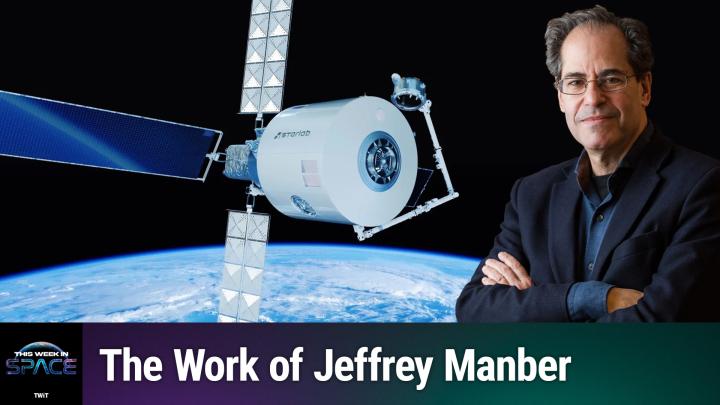
That could mean a couple of things. You know, it doesn't necessarily mean that it wasn't as good. It may mean that it's better when I'm out there. This Week in Space we're going to be joined by. This Week in Space we'll be joined by one of the original space buccaneers, and I really mean that, Geoffrey Manber. His list of accomplishments is long and storied, and when you hear him speak, you'll understand what I mean. He's currently with Voyager Space, working on their various programs, including the STAR Labs space station. But he really was one of the first people into the whole commercial space thing when it was just about impossible to do.
Rod Pyle [00:02:07]:
So this is a guy that had no doubts about himself and didn't take no for an answer. And I'm just kind of knocked out by his resume. So I'll stop gushing now and say before we start, please don't forget to do us a solid. Make sure to, like, subscribe and whatever other things you could do on podcast to let the world know you love us. Because that keeps us on the air and keeps everybody here happy. Now, have a space joke from Phil Stanley.
Tariq Malik [00:02:30]:
Phil. Hey, Tarik. Yes, Rod?
Rod Pyle [00:02:33]:
Of all the objects in the solar system, which is Mother Earth's favorite?
Tariq Malik [00:02:37]:
I don't know which one.
Rod Pyle [00:02:39]:
Her son.
Tariq Malik [00:02:47]:
No, it's good.
Rod Pyle [00:02:49]:
He's using my newest sound effect. I heard that some people want to send us into a solar orbit when it's joke time in the show. But you can help by sending us your best works or mostly different spaces joke at TWiT.tv, just like he did. Because we need your brilliance. Clearly, when you leave it to us, it's not great. All right, and now let's move on to cue it. Headline news.
Tariq Malik [00:03:13]:
Headline news. Did I, did I nail it? I don't know. Did I do John?
Rod Pyle [00:03:21]:
Sounds about right. We don't know till we hear it downstream. All right, that's right. So you gotta lead with the lead. SpaceX plans to go public with an IPO.
Tariq Malik [00:03:31]:
Oh my God.
Rod Pyle [00:03:32]:
This has been talked about for years. Only the very wealthy got to invest in SpaceX. Now the less wealthy will be able to invest in SpaceX, but the big head scratcher for me has been why the heck would Musk do this when it's going to tie his hands? So he's got a lot of wacky ideas. You know, Mars by 2020, Mars by 2022, Mars by.
Tariq Malik [00:03:57]:
Think it's going to tie his hands?
Rod Pyle [00:03:59]:
Yes, because if he says, hey, I'm going to build a million Optimus robots and then I'm going to send 500,000 of them to Mars and I'll do it in six months, his shareholders are going to go, what the hell are you talking about? You're risking our money.
Tariq Malik [00:04:13]:
I think, I think that the promises might change, but I do not. After meeting with Tesla investors at the first starship launch, I, I do not believe that the people that invest in space, we should, we should talk about the IPO first and then we can talk about this part real quick.
Rod Pyle [00:04:29]:
Yeah, tell us the story.
Tariq Malik [00:04:30]:
So. So this actually came out of the Wall Street Journal and the information where last week they reported that after we had our episode that SpaceX was reportedly planning an IPO. Now, like you said, we've always been wondering if they were ever going to go public. And so it was kind of weird that this kind of behind the scenes reports from Wall Street Journal and the information were breaking this. And like, is it really? Bloomberg followed up with their own, their own report saying that if they did this, they could, they could be valued at 1.5 trillion, which is crazy. They could raise something like $30 billion, which would make it one of the most, if not the most, the largest IPO in history, I think the last one according to Arstatnica, which I really think people should go and read Eric Brewer's piece. And the reason why is because after he posted it and shared it with the world, Elon Musk commented on it and said accurate, which means they're doing the thing. Right.
Tariq Malik [00:05:27]:
So, so you know, apparently Elon and the folks at SpaceX see that the time is either right for now to raise a bajillion, well, 30 billion, you know, up to dollars in investment, which they could then put towards the development of whatever they want.
Rod Pyle [00:05:45]:
Right.
Tariq Malik [00:05:45]:
The starship, all the starship things.
Rod Pyle [00:05:48]:
Starlink, you know, say whatever they want.
Tariq Malik [00:05:51]:
So they can sell by the, by.
Rod Pyle [00:05:52]:
The, whatever he wants. He's now got to go to his, a new board of directors, I assume.
Tariq Malik [00:05:58]:
Yeah.
Rod Pyle [00:05:59]:
I, I do, I do think that unlike perhaps other, other IPOs where it's like, okay, we're going to be shackled to the investors now and we have to deliver on the returns. I think that the type of high powered investor in SpaceX is going to be someone that is in it for the long haul because they've seen what they could, the company can do over time if you stick with it. You know, when Elon came out in the early 2000s and it's like we're going to start reusing the rockets. I remember people laughing at them, you know, and now they're doing it multiple times a week.
Tariq Malik [00:06:06]:
Well, well, but this is the part that like I, I wanted to bring up, I, I, well then do. Well, I'm, I'm doing it now.
Rod Pyle [00:06:13]:
Okay.
Tariq Malik [00:06:13]:
I, I do, I do think that unlike Perhaps other, other IPOs where it's like, okay, we're going to be shackled to the investors now and we have to deliver on the returns. I think that the type of high powered investor in Space X is going to be someone that is in it for the long haul because they've seen what they could, the company can do over time if you stick with it. You know, when Elon came out in the early 2000s and it's like we're going to start reusing the rockets. I remember people laughing at them, you know, and now they're doing it multiple times a week.
Rod Pyle [00:06:48]:
It took Steve Jurvetson to step up and say I'll get you money.
Tariq Malik [00:06:51]:
Yeah.
Rod Pyle [00:06:52]:
Everybody else was saying, was watching that the Falcon one not fly.
Tariq Malik [00:06:57]:
But, but I believe that there are people that, that are fundamentally committed to Elon, you know, one way or another and then also to SpaceX and that vision, one way or another, that they will just be in it for the long haul no matter what and that they're, you know, there is a, a very public acknowledgment that his timelines are usually not the actual timelines, that things take longer than what he says. I think that that acceptance really will keep at least some of the flexibility there, there is still the need to return the investment quarter over quarter over quarter, which could lead to a change, but it might lead to a more effective change where things are actually.
Rod Pyle [00:07:40]:
And it might add some sanity to some of the wack things he said.
Tariq Malik [00:07:45]:
Over the years as a journalist.
Rod Pyle [00:07:46]:
And it might add some pressure to get starship flying quicker than they have been.
Jeffrey Manber [00:07:52]:
Yeah.
Tariq Malik [00:07:53]:
And as a journalist, I, for one, welcome the addition of being a publicly held company, which then means that your records are now available for the public to review. So I'm very excited for that part, for sure. Looking forward.
Rod Pyle [00:08:08]:
All right, well, from that, moving to a sadder note, NASA has lost contact with the Maven Mars Orbiter. Maven is one of the more recent arrivals. Part of a trio of orbiters is Maven, Mars Reconnaissance Orbiter and Mars Odyssey. Both of those are older. The sad part here, besides we don't like losing a spacecraft unplanned, is that this trio of orbiters is our primary link with the rovers that are still operating on the planet and will be. And without them, your bandwidth has reduced dramatically because now you can only get radio signals directly from the rover. Now, the thing about Maven was it was in a particularly high orbit, so it actually was able to, quote, see, unquote, the rover for longer periods of time than the ones that are orbiting faster. And I think it's.
Rod Pyle [00:08:58]:
Mars Odyssey is scheduled to timeout within a couple of years because it's depleted as fuel. Right.
Tariq Malik [00:09:03]:
Yeah. Yeah. So Odyssey is, you know, slowly on its own road for retirement. Maven still, I mean, Maven launched in 2013, and it arrived a short time later. And so, so it is, you know, about 10 months later after that. And. And so, so it is in, you know, well into, like, its post-primary mission phase. But.
Tariq Malik [00:09:26]:
But you're right, like, in addition to studying the atmosphere, Maven's primary mission was to really try to understand where Mars's atmosphere went. Like, what was, how did it lose its water over time, that solar wind stripping and whatnot? Where did the methane come from? Where did it go, you know, over time, all of that stuff. Maven was kind of the go-to orbiter for that on the NASA side. And it also worked in concert with Odyssey, Mars Reconnaissance Orbiter, also Europe's probes with Mars Express and Trace Gas Orbiter to serve as that connection for the rovers that are working on the ground. So losing any spacecraft like that is, you know, kind of unfortunate to see. I believe that they lost contact with Maven when it was on the far side of the planet too. So we don't know what happened. It went behind Mars, as you know, in terms of line of sight with the space network and then it was gone.
Tariq Malik [00:10:21]:
And so they are trying to work to resurrect it.
Rod Pyle [00:10:26]:
Do you think it was aliens? Maybe it's.
Tariq Malik [00:10:28]:
I hope it was aliens. Wouldn't that be great? Yeah, maybe it was Mark Watney.
Rod Pyle [00:10:34]:
Yeah, well, or it may have been the Klingons because we have yet another. Roll the drum roll. Starfleet or Star Trek franchise. Thank you, John. Starfleet Academy. So the preview was put up a couple days ago. I watched it. It was four or five minutes of overacting, which I would characterize as more ham than a pig farm and with visual effects that look like a video game.
Rod Pyle [00:11:05]:
Now give me a break. As you may have heard once or twice, I worked on Star Trek. I worked at visual effects. We were forced into.
Tariq Malik [00:11:13]:
I worked on Star Trek as one day.
Rod Pyle [00:11:14]:
Shut up.
Tariq Malik [00:11:15]:
This is the smart one.
Rod Pyle [00:11:16]:
Because we had physical models, we were sort of constrained because it was really expensive to do a shot, right? It took like 10, 15 passes on the motion control system. John's freaking out to do a shot. And then you had to composite them. You had to paint in the phasers and all that. So because it was expensive, it kind of minimized how many VFX shots you could drop in. Right? Which is not necessarily a good thing, but it does force you to be a little more conservative in your storytelling. Then an Enterprise came along and I thought was good, you know, they were able to use cgi. That allowed them to express the stories a little more fully.
Rod Pyle [00:11:50]:
But the last couple of Trek spinoffs I've watched, it's like there's 47 things happening on the screen. There's big ships and little ships and blobs and tentacles and God knows what else. And you're thinking, jesus Christ, guys, get a sense of story here. You're not guiding me through the narratives. Sorry, I'm having an editorial moment here. You're just throwing everything you got and it gets a little tiring and it really looks like a crappy video game. And what is with this middle aged captain's hair? Every moment she's in the trailer, she looks like she just rolled out of bed and her hair is kind of stuck in her mouth and stuff. And it's like, well, what is this all about?
Tariq Malik [00:12:30]:
All right, well, well, I'm not gonna give spoilers. I don't know if I can share what I know about the show, but I know a lot about the Show.
Rod Pyle [00:12:36]:
Oh, are you an insider now?
Tariq Malik [00:12:39]:
So. But I'm pretty sure it sounds like Rod doesn't like the trailer that he saw. So I think that this is really exciting to have this type of a show because it's kind of like a reset for TWiT. For Paramount to be able to do. And Holly Hunter is the captain of this. Of this new show.
Rod Pyle [00:13:00]:
That was Holly Hunter.
Tariq Malik [00:13:01]:
Yeah, it's Holly Hunter. Yeah. And she plays a very interesting captain.
Rod Pyle [00:13:04]:
Yeah. And Paul Giamatti is the Big Bad as shown in the Windows Weekly.
Tariq Malik [00:13:06]:
Yeah. And Paul Giamatti is the Big Bad as shown in the.
Rod Pyle [00:13:12]:
He's fun. Yeah.
Tariq Malik [00:13:13]:
And it's very interesting because this is a show that is telling you who the Big Bad is right up front. And how is that gonna evolve over 10 episodes? I think it's really exciting.
Jeffrey Manber [00:13:23]:
Oh, gosh.
Rod Pyle [00:13:23]:
The Big Bad looks just like a human being with a little bit of rubber on his head, which is. This is a Trek staple. It's like, can you give me a good CGI alien with eye tentacles and stuff? And not just another human.
Tariq Malik [00:13:35]:
He is a Klingon Tellerite hybrid, my friend.
Rod Pyle [00:13:38]:
Oh, well, that explains everything.
Tariq Malik [00:13:40]:
Come on. And for people that are wondering, the show is set in, like, the Discovery universe, which means it's like in the far, far, like 30, whatever century, because.
Rod Pyle [00:13:49]:
That'S part of canon.
Tariq Malik [00:13:53]:
We have. We are going to have a whole show about this show when it comes out. You know what? We are going to talk about the state of Star Trek. We're going to get someone in. Maybe we can get my Mikah, get.
Rod Pyle [00:14:01]:
One of the stars. I know Mike. We can get Mike Elgan, probably.
Tariq Malik [00:14:04]:
And then. And then we're gonna.
Rod Pyle [00:14:05]:
We're gonna.
Tariq Malik [00:14:06]:
We're gonna talk about it and they're gonna point for point, address all your issues, because I think it's.
Rod Pyle [00:14:10]:
No, they're just gonna beat me senseless because I'm such an animal about.
Tariq Malik [00:14:13]:
I think it's gonna be a great show. I. I've been hoping for a Starfleet Academy show since I collected all of the comics when I was a kid. And. And now we're actually. I can see everyone if you can. That could still happen, Rod Pyle. That could still happen.
Rod Pyle [00:14:29]:
It's true. It's true. It's not too late.
Tariq Malik [00:14:32]:
And.
Rod Pyle [00:14:33]:
And for sure, if that offer comes along, it'll go to you and not me because you get all the goodies.
Tariq Malik [00:14:38]:
And I will drop you like a bad habit if I get to go to space Rod.
Rod Pyle [00:14:44]:
Well, that doesn't surprise me. Okay. I guess we've kind of ground that one into the ground, huh?
Tariq Malik [00:14:51]:
By the way, premieres in January. If anyone. If anyone's listening.
Rod Pyle [00:14:54]:
So, Starfleet, before I forget, I just want to thank you and Mike Wall for. For picking up the baton last week. I thought you did a great job. Listened to it when I got back from China. Thought. Thought it was good. Thought it was good.
Jeffrey Manber [00:15:09]:
Thank you.
Tariq Malik [00:15:10]:
That's high praise from Rod.
Rod Pyle[00:15:11]:
Thank you.
Tariq Malik [00:15:13]:
You picked a great week to leave because Jared Isaac been confirmed. So.
Rod Pyle [00:15:20]:
What is this? What is this in the Slack channel? Is that me? After my hundred thousand steps in five days. So we. For those who don't know, my partner and I went to China and she signed us up with a local guide in a region called Tianjin, which is where they filmed Avatar. So it's all those big vertical rock stacks that are so amazing.
Tariq Malik [00:15:43]:
The flying mountains.
Rod Pyle [00:15:45]:
The only problem is there is one set of escalators and an elevator for these mountains, but for most of it, you take stairs. So when I say a hundred thousand steps in five days, I don't mean we were strolling down the street of a village. I mean these were stairs and they're carved out of stone. Some are 4 inches high, some are 6 inches high, some are 2 inches high, some are a foot high. So you're constantly, if you're my age, looking down, trying to make sure you don't stumble and break every bone you've got. Because China in the old days didn't believe in banisters. So if you trip at the top of that thousand foot thing you just climbed up, you're not stopping till you get to the bottom in a bloody heap. So, anyway, it was great fun.
Rod Pyle [00:16:25]:
Enjoyed it a lot. And Tariq, you really should go someday.
Tariq Malik [00:16:29]:
Because I hope one day to get there. I hope one day, you know, so. Be nice to see a long March launch.
Rod Pyle [00:16:36]:
You know, John, eventually I'm gonna have reason to come back up to Northern California. And I am gonna pay you back for that graphic you just put up in Discord. Is that Betty White?
John Ashley [00:16:47]:
You know what we should do Rod.
Rod Pyle [00:16:51]:
It's generic. Senior citizen. Yes. What should we do?
John Ashley [00:16:53]:
We should probably go to a break.
Rod Pyle [00:16:56]:
Oh, you wanted to do a show. Okay.
Tariq Malik [00:17:00]:
We forgot that we will be back.
Rod Pyle [00:17:04]:
We will be back in just a moment with Jeffrey Bamber, the original space buccaneer. Stay with us.
Leo Laporte [00:17:10]:
Hi, I'm Leo Laporte, host of This Week in Tech and many other shows on the TWiT Podcast Network. Can you believe it? 2026 is around the corner. So this, my friends, is the best time to grow your brand. With TWiT, nobody understands the tech audience better than we do.
Leo Laporte [00:17:27]:
We love our audience and we know how to effectively message to them. We develop genuine relationships with brands, creating authentic promotions that resonate with our highly engaged community of tech enthusiasts. You know, over 90% of TWiT's audience is involved in their company's tech and IT decision making. Can you believe that 88% have actually made a purchase based on a TWiT post read ad. No one comes close. We're the best at this. As one TWiT fan said, I've bought from TWiT sponsors because I trust Leo and his team's knowledge of the latest in tech. If TWiT supports it, I know I can trust it.
Leo Laporte [00:18:09]:
You cannot buy trust like that. Well, actually you can. You can buy an ad on Twitter. All our ads are unique. They're read live by our expert hosts, Mikah Sargent. We simulcast all during the shows on our social platforms so everybody can be watching live. You know one of our customers, Harun Mir, the founder of ThinksCanary, he's been with us since 2016. Since 2016.
Leo Laporte [00:18:35]:
He said we expected TWiT to work well for us because we were longtime listeners who over the years bought many of the products and services we learned about on various TWiT shows. And we were not disappointed. The combination of the very personal ad reads and the careful selection of products that TWiT largely believes in gives the ads an authentic trusted voice that works really well for our products. 10 out of 10 we'll use again. Thank you Harun. We love you. And it's been nine years. That's kind of.
Leo Laporte [00:19:06]:
That's the proof, right? Partnerships with Twit offer valuable benefits including over delivery of impressions. You get presence on show episode pages. So there's a link right there that our audience can click on. We're in the RSS feed descriptions. I'll link there too. And social media promotion. Our full service team will craft compelling creative to elevate your brand and support you throughout your entire campaign. I work on the copy myself to make it authentic, to make it real.
Leo Laporte [00:19:35]:
If you want to reach a passionate tech audience through a network that consistently over delivers, please contact us directly. partner@twit.tv That's the email address partner@twit.tv. Let's talk about how we can help grow your brand or just go to twit.tv/advertise for more information. I look forward to working with you. Thanks for listening.
Rod Pyle [00:19:59]:
And we are back with Jeffrey Manber. Who is. I love your title. The special representative to the chairman and CEO of Voyager Space, which is a long thing to have on your. Your conference badge. But as I like to think of you, the original space buccaneer. How are you today, sir?
Jeffrey Manber [00:20:15]:
I'm doing well. Great to be on 189, I think, episode 180. Take your time inviting me, but that's fine.
Rod Pyle [00:20:23]:
Well, thanks for coming. And I just. So I have to have a moment to gush here. I've been following your career off and on since the 80s, and I remember the first time I read about you and your, Your work with the Soviet Union and then later the Russians. I thought, who is this guy who runs where angels fear to tread? You know, I mean, this was amazing stuff in that time. And for those of us in the community, you know, there were a lot of people that were kind of these, I'll be a little harsh. False prophets of new space. Right.
Rod Pyle [00:20:57]:
So I'll stop gushing now, but I just have. You know, one of the fun things about doing this podcast is that Tariq and I agree. We bring in people that are smarter and more successful than us, hoping that something that they've done will rub off on us. Yeah, exactly.
Jeffrey Manber [00:21:38]:
You know, I'll tell you, every once in a while I speak a lot at universities and someone will come up and say, you know, Jeffrey or Mr. Manberg, I want to have a career like you. And I go, no, you don't. Okay. No, you do not. So, you know, you know, working, opening the door. Carried over the first contract between NASA, the United States in the Soviet Union. Okay.
Jeffrey Manber [00:22:00]:
I think that was 91, 92. Did the first commercial contract on the brand new Mir. That was with the pharmaceutical company. I'm going backwards in like 89. So. Yeah, but it's all about implementation. I mean, I learned early on not to jump in, but, you know, I don't talk as much now because it's all about implementation. And I did also the only Chinese project on the International Space Station.
Jeffrey Manber [00:22:27]:
And, yeah, that was with Beijing Institute of Technology. You know, NASA couldn't do it. Everybody thought we couldn't work with China because of the Wolf Amendment, which prohibits NASA from working with China. And I did something unique in Washington. I read the Wolf Amendment and I saw that. I saw that there was a commercial pathway and got permission from first the Obama administration and then the Trump administration. Some folks gave me permission to launch with Beijing Institute of Technology, synthetic DNA project. But I digress.
Jeffrey Manber [00:23:00]:
But the point to just follow on what you're saying, Rod, was afterwards I met with the head of the manned China Space Agency. And he said, we have so many Americans come over, famous people who say, we're going to get you on the International Space Station. He said, and you came. I never heard of you. You got us on the International Space Station. You know, now paths have gone a different way. We can talk about that. But yes, it's all about implementation.
Rod Pyle [00:23:27]:
Well, and let me just back up a step here, because I was surprised to see that you had actually been a space journalist in the 1980s.
Jeffrey Manber [00:23:34]:
Of course I was a space journalist.
Rod Pyle [00:23:36]:
Which is not the most promising way to start a six or seven figure career I've found. But tell us about that, if you would.
Jeffrey Manber [00:23:43]:
Well, I got involved, simply put, because when I was 21, I had a film mag. I started a film magazine much like Playbill, and it was distributed free at movie theaters in New York City. And glossy, very nice. First one on the COVID was a very young Brooke Shields. And when I, I had a. In the parlance of today, I had a successful exit at 23, I had some money.
Jeffrey Manber [00:24:09]:
What did I want to do? I said, well, I didn't like being the publisher of the film magazine. I hung out with the printers. I want to be a writer. That's exciting. And I sort of taught myself to write. And I became the go to. And then the sexy thing at the time was the Reagan era and the commercial space era.
Jeffrey Manber [00:24:29]:
People don't, of course, remember today, but after the fifth shuttle flight, the then administrator, Jim Beggs declared the era of commercial space anyway.
Rod Pyle [00:24:40]:
50 flights a year.
Jeffrey Manber [00:24:42]:
Yeah, exactly. 50 flights a year. And the government's the controller of everything. And. And so I said, okay, I'll write about this new thing called commercial space. And in a few years, I became the go to for the New York Times, for Business Week, for Aviation Week, for writing about that new thing called commercial space. Aviation Week started a publication called Commercial Space. It was a glossy quarterly.
Jeffrey Manber [00:25:10]:
And the crown and glory for me was One issue, I was like 60% of the content. I had a column, they interviewed me, I wrote a story, and I did two ghost writing articles. Okay. I made. I made my income, Tarek, saying, how do I get this gig? You know? So I was 60% of the publication. I had enough of the rent for a year. So then I started a publication called. Oh.
Jeffrey Manber [00:25:35]:
When I first got involved, they had a publication called Space Journal, which was a quarterly. I still have some of the copies. It's really good on where we're going in space. And then I started a newsletter called Space R D Alert, and it tracked the research being done on the shuttle. I had subscribers. It was like, in those days, this is. I don't remember the years, like 1990, 88. Okay.
Jeffrey Manber [00:26:00]:
I was 500 bucks a year, and I had a whole bunch of subscribers. And I was tracking what 3G was doing, what John Deere was doing, Gallium, OSA, all the. Who else, I forget now, but Charlie Walker, what he was doing. And. And so it was a good. It was a good publication. And then I wrote a piece in the Sunday New York Times on what's happening in space. The next day, kpmg, Pete Marek called me.
Jeffrey Manber [00:26:32]:
Oh, the New York Times was 400 bucks. And when I complained that it was 400 bucks, she said, darling, it's the honor of the New York Times. And the next day, Pete Marick, at the time the name, called me and said, would you do a piece? We're thinking of getting involved. They paid me 10 times the amount. I became a consultant and never looked back. So that's. That's how. Yeah.
Rod Pyle [00:26:55]:
Tarek, there are some secrets here that we've managed to.
Tariq Malik [00:26:57]:
I know.
Rod Pyle [00:26:58]:
The last 30 years.
Tariq Malik [00:26:59]:
I know we should all plan a successful exit from something so that we can. We can do this.
Jeffrey Manber [00:27:04]:
Yeah.
Tariq Malik [00:27:05]:
Jeffrey, were you. Was like space, like, did it have a place in your heart before all of this? This is something that, like, just. It grew out of that exposure, you know, in terms of, like, the commercial space that you're talking about, that progression that you just explained, or was there like a kernel, you know, from when you were a kid or when you were in school, that it was always kind of there, like. Like. Like that was like an ember, if you will, ready to, like, burst into the flames that your career has become. In a good way. No, like an inferno. You know what I mean?
Jeffrey Manber [00:27:41]:
Tom Corbett and his space cadets. Oh, I got that.
Tariq Malik [00:27:44]:
Yeah.
Jeffrey Manber [00:27:45]:
We had the nine volumes or something of Astro and Roger Manning, I think I haven't looked at and my older brother and I made a pact. By the time of the unforeseeable future of the year 2000, we would be on Mars. And so I must have been 6 or 7 and he was like 12. And we promised that we'd be on Mars. And then a few years ago, he looked at me and he said, you just kept going. I gave up and had a life, you know. And so I did have romantic visions. And like so many others, I didn't understand why it was taking so long.
Jeffrey Manber [00:28:27]:
And to be serious, once I got to know NASA in the 80s, I understood why it was taking so long. And I should have just perhaps turned around as so many good people did and exit. But I stayed with it. You'll hear me say this maybe several times, but I was aghast. What I saw in the 80s with NASA, the space agency, it was just horrible the way it was run. It was not something America could be proud of. And I felt it was because there was no private sector. And so, yes, I had it.
Jeffrey Manber [00:29:03]:
I mean, so many do and they never pursue it. I could have easily gone to a launch once in a while. I could have started another career.
Rod Pyle [00:29:12]:
And.
Jeffrey Manber [00:29:12]:
Gone to a launch and be, you know that. But for some reason I was just so. I thought there was so much potential, and it turned out I was right. But it took a little longer than I thought. I thought there was so much potential if we can unleash the private sector into what I saw as a government controlled monopoly.
Rod Pyle [00:29:32]:
So you took the easy road into space entrepreneurship. Okay, we're gonna take the easy road into a quick break and we'll be right back. So stand by.
Leo Laporte [00:29:40]:
Hey, Everybody, it's Leo Laporte. You know about MacBreak Weekly, right? You don't? Oh, if you're a Macintosh fan or you just wanna keep up with what's going on with Apple, this is the show for you. Every Tuesday, Andy Ihnatko, Alex Lindsay, Jason Snell and I get together and talk about the week's Apple news. It's an easy subscription. Just go to your favorite podcast client and search for MacBreak Weekly or visit our website, twit.tv/mbw. You don't want to miss a week of MacBreak Weekly.
Rod Pyle [00:30:08]:
So this may be a bit tangential, but you were in the mid-80s, I guess, tapped by the Reagan administration to help form the Office of Space Commerce within the US Department of Commerce. That must have been kind of a big thing for somebody who hadn't spent a lot of time in dc.
Jeffrey Manber [00:30:24]:
Yeah, it was actually kind of cool. And so I had with my writing and then becoming a consultant, I met a gentleman named Jim Samuels who was setting up the first commercial space practice on Wall Street. And because of my writing, he brought me in to help them. We set up a commercial space fund. We raised $10 million. We put it in companies long forgotten now, like American Rocket, George Koopman, one of the first commercial launch vehicles. And after the Challenger accident, in the total way that sometimes these funds think, when the Challenger accident happened, Shearson Lehman, American Express shut their commercial spacecraft practice because they thought, oh, space is grounded. And we tried to explain to them that, unfortunately, you don't want to profit from tragedy.
Jeffrey Manber [00:31:19]:
But this was now perhaps the beginning of the opportunity for everything we had been working for. And. But nonetheless, they. They shut it down. And. And then I met this another gentleman who called me up. He was one of the original entrepreneurs. First Generation with Deeks Slayton had the Conestoga, and there was others.
Jeffrey Manber [00:31:39]:
And this guy, Russ Ramsland, he had Microgravity Research Associates doing gallium arsenide production on the shuttle. He sort of opened my eyes to how NASA was competing, and NASA was the biggest obstacle in the 80s to commercial space. And he called me up one day and said, tell me my wildest dreams. You're a Republican, aren't you? And I said, well, and he said, tell me another wild dream. Can you actually keep your mouth shut for some time and just, I'll bring you down to Washington? Turns out he knew the Bushes and helped set up the Office of Space Commerce. And the importance of it was, there was a guy named Bob Brumley, who I had just been still in touch with, and he was the general counsel at the Commerce Department under Reagan. And he set up the Department of Transportation office, you know, that still regulates launch vehicles, and that busted the NASA monopoly.
Jeffrey Manber [00:32:39]:
Up until that moment, everything civilian, everything that we did civilian, went through NASA totally not the way we run anything. And so then Bob reached out to me and said, would you like to help us set up Commerce? That's the natural function of the Commerce Department to support the space community. And I loved it. And so I came down to Washington. I said I'd be in Washington for a year. And we set up the office, and we began to work on creating a commercial space station done by the private sector to fight to go against Ronald Reagan's freedom, which we thought was a debacle. It was a debacle. And it was later shut.
Jeffrey Manber [00:33:23]:
I think we spent billions and did an. You know, never went anywhere and so we had the private sector bidding on for a commercial space station, very simple, very small, would have saved this nation billions and billions of dollars and gotten us into true utilization of space decades ahead. So it was very good for me because it introduced me to Washington and also it got me on the path, if you want to talk about it, with the Russians. So, so that was. Yeah, that was cool.
Tariq Malik [00:33:53]:
Well, I do want to talk about it because I think that that was really fascinating, you know, because I have to admit I remember meeting, meeting you when we were talking about nanoracks way back, way back when, and, and I had, I had largely kind of equated you with, with nanoracks and that whole effort and how it really kind of opened up science in a different way on the commercial side to the space station. Now you've got the, the airlock too, which is awesome. But I was really surprised. Just the detail and the experience that you had had in kind of forging that bridge where, you know, on the Russian U.S. cooperation side in space, you know, at a time that seemed like it was really shifting, like the grounds, I guess were shifting a bit with the space program. And I'm just curious, was that like an organic growth from your contacts with the space commerce, or did you see a very kind of a fulcrum or a linchpin opportunity from the shift from the Soviet Union to the Russia we know today and where their storied space program at that point in time really was at a changing point where you could have an impact and lead to some of the cooperation and the commercial sides that we've seen, I guess since.
Jeffrey Manber [00:35:18]:
Then, you know, I told you already that younger people come to me and say, I want to have a career like yours. How do I do it? And one of the things I say is if you get a chance, work in the government for a brief period of time. Because if you do, all roads lead to you. I mean, you're sitting there and suddenly very influential people want to talk to you because you're, you know, in the government. And so I'm like six weeks into my one year stint at the office to set up the Office of Space Commerce. And I'm about six weeks in and a good friend of mine, Dr. Anthony Arat, who had a space company called Payload Systems doing pharmaceutical drug research, the shuttle was grounded and he went out and signed a secret deal with the brand new Mir space station. And, and six weeks into my government experience, I'm sitting at my desk, Anthony comes in and says, I've just signed the secret agreement, I need an export license.
Jeffrey Manber [00:36:16]:
Can you tell me how the heck I get an export license to do work with the Soviets? And I will say I have a book out called Selling My Time Working for the Russians. And I go into great detail on it. But what happened was we had to figure. So I went upstairs to Bob Brumley, who was sort of that Ronald Reagan, far right, capitalism as a religion. And when I told him that the Soviets had done a commercial project with an American company to do pharmaceutical drug research in space, he was in heaven. He said, do it, let's figure it out. And so we got an export license. And I say my contribution to world history is.
Jeffrey Manber [00:36:59]:
And space is one of my. They had all these high powered lawyers and all these things. And my contribution is, let's not call it a space project on the export license. Let's say it's permission to do a pharmaceutical drug research project in a Soviet laboratory.
Tariq Malik [00:37:14]:
Yeah, yeah, true.
Jeffrey Manber [00:37:16]:
Well, what's the difference? We all know, we all know on this podcast that space holds a special place and it's, it's good and it's bad. Politicians, you know, they say, wait a second, NASA would have said, no, there's no way you can work on the, on the space station Mir, you know. And so it, NASA didn't really look at it. State Department didn't really look at it. We told dod, okay, and it went around, it circulated. The export license was granted. And then I made a big mistake. I, I will now confess that I worked with.
Jeffrey Manber [00:37:48]:
Oh, gosh, I'm going to forget the New York Times. Bill brought, Bill brought at the New York Times and we gave him the story and ended up page one. I asked him why did it end up on the page one? He said, slow news day. But there it was. US Company signs. And I learned a lesson from that. When you're working in Washington and you win on policy, you let those opposed know. And that was a good lesson.
Jeffrey Manber [00:38:11]:
And I, I don't know my age now. 28, 30 something. And so I didn't. And man, they tracked down the head of the Commerce Department on a golf course. Congressman Bill Nelson, the former senator, the former administrator, Congressman Bill Nelson declared, this is illegal. And it wasn't. So I'm taking too much time on this. But this is how you get the.
Tariq Malik [00:38:33]:
What a turn for Bill Nelson, right?
Jeffrey Manber [00:38:36]:
So anyway, so a year later, they're launching and I'm now out of the government. I'd done my one year stint. We set up the Space Commerce Department. And Anthony called me and said, would you like to come and see the launch? So I went to Moscow, went to the Soviet Union, and Anthony introduced me to the Soviets, saying, this is Jeff, who figured out a way. He's a believer in commercial space and figured out a way to get my export license. Off in the corner of the room there were the government people. Glove, Cosmos, it was called. And off in the corner of the room were these guys not talking.
Jeffrey Manber [00:39:10]:
They were from a secretive organization called npo. In their gear, they had done Sputnik, they'd done Gagarin. And they came up to me and said, do you want to work for us? And so, long story short, I insisted, you know, as I learned the history. And then later, someone else, a gentleman named Chris Farinet, introduced me to the leadership. And the leadership was this tough sob, Semyonov. And Semyonov said, I want to be like a mainstream American businessman. I want to make money. I don't like my government, okay? They're.
Jeffrey Manber [00:39:49]:
They're idiots. They're this. I mean, he was patriotic as can be. Absolutely patriotic. He was crusty patriotic. When he signed the contract, he honored it. And I went to the Bush White House and they said, you know, this is good. And so I ended up, you know, as I used to say in the 90s, if you wanted to work for the capitalists in space, you worked for the Russians.
Jeffrey Manber [00:40:12]:
And if you wanted to work for the socialists, you worked for NASA. And so I said, I have said that over and over, over, over. I said it in this administration. I've said in all the time we ran a socialist space program, and I don't like socialism and I worked for the capitalists in the 90s, got a problem with that. And every time I say it that way, people who are like, oh, you work for the Russians, when I say it that way, I worked for the Russians. Free market capitalists in the 90s and early 2000. And so we privatized the Mir with the European Bank of Reconstruction and Oppenheimer and other investors. We did the first commercial astronauts.
Jeffrey Manber [00:40:52]:
We did the first commercials. And I know, great stuff. Dan Goldin has his whole renaissance now on LinkedIn. He has all these followers, but he hated it.
Rod Pyle [00:41:04]:
It.
Jeffrey Manber [00:41:04]:
And I didn't like that he was opposed to the commercialization. I'm sorry, okay, he was opposed. And it was esa, European Space Agency that first agreed that no longer would astronauts go up to a space station like the Mir for barter, for diplomatic purposes, for national prestige. No, if you wanted to fly up to the Mir. It was privatized. It was now owned by now RKK Energia. It was on the Russian stock market. You want it to fly, you pay.
Jeffrey Manber [00:41:33]:
And Issa went first.
Rod Pyle [00:41:34]:
And then Americans, we have to fly into a commercial here. So hold on one second, hold on to that thought and we'll be right back.
Leo Laporte [00:41:41]:
Hey everybody, Leo Laporte here and I'm going to bug you one more time to join Club TWiT. If you're not already a member. I want to encourage you to support what we do here at TWiT. You know, 25% of our operating costs comes from membership in the Club. That's a huge portion and it's growing all the time. That means we can do more, we can have more fun. You get a lot of benefits, ad free versions of all the shows. You get access to the Club TWiT discord and special programming like the keynotes from Apple and Google and Microsoft and others that we don't stream otherwise in public.
Leo Laporte [00:42:20]:
Please join the Club. If you haven't done it yet, we'd love to have you find out more at twit.tv/clubtwit. And thank you so much.
Rod Pyle [00:42:29]:
So Jeff, you kind of alluded to it, but could you talk a little bit about the, the Mere Corps adventure? Because that did end up with a 70 day mission going to what was then a mothballed space station. But then I had a lot of trouble, right?
Jeffrey Manber [00:42:43]:
Yeah, I had. After several years, I had finally decided to leave the Russians, I mean, enough. And we had a very nice amiable parting and I returned to the United States and working with the space community. And then one day, gentlemen Walt Anderson and Rick Tomlinson. Really sad story with Walt. He was really the Elon Musk of his time, had accumulated wealth and was investing in all sorts of projects. And they called me up and said, said we want to, you know, the Mir was being deorbited. The Russian space station Mir was being deorbited.
Jeffrey Manber [00:43:18]:
And there was much more discussion then than there is today on the iss. Much discussion. It should not be deorbited. And Walt and his people called me and said, we want to buy the Mir. And you know, you're still Mr. You know, Energia. They owned it. And I said, you can't buy the Mir, but maybe they, there's some way we can work it.
Jeffrey Manber [00:43:41]:
And I reached out to the Russians, my former colleagues, and they, I said, I know you won't sell it. Would you lease it? And they came back and said, by fax machine. They came back by fax and said yes, we would lease it. And that was a frantic effort because the Mir was decaying and coming down. They had a Progress cargo ship on the launch pair. They were scheduled to launch launch in like 80 days. I may be wrong on the. It's like 60 days, something like that.
Jeffrey Manber [00:44:09]:
And it was going to start the deorbit. We flew out to, to Moscow on Walt's Gulf Stream and incredible negotiations. And Walt just reached out and wired several millions of dollars. And on the basis of that, Semyonov, the head of Energia, gave the order that that Progress would launch. And instead of bringing the Mir down, it would rise up, go up, it would boost it up. And the Russian government was against it, as I like to say. The Russian government was very pro American in those days. And the Russian Space Agency was opposed.
Jeffrey Manber [00:44:46]:
They wanted the Mir down. The American Dan Goldin went crazy. But it was owned, it was owned by Energie. They had every right, we had every right to do this. I will say I don't like the documentary Orphans of Apollo. It's very professional and Mike did a great job. Michael Potter did a great job. But it's not accurate.
Jeffrey Manber [00:45:08]:
We had, it makes it look like, I mean I had a team in Holland, we raised business. It wasn't just philosophers. I had $179 million in backlog when the Americans forced the Mir down. I had signed with Michael Burnett, Burnett of Survivor and NBC to do a game show where the winner would go to space. I had pharmaceutical companies, I had the Murdoch family, not Fox. They were coming in. I had signed 179 million and we had a team. I had salespeople, we had an office and we really produced.
Jeffrey Manber [00:45:49]:
We were doing very well. And then the dot com crash happened. Walt lost sizable capital and his friends who were going to put in 10 million, 5 million to keep it going, couldn't. And meanwhile the Americans were increasing the pressure. But in the meantime, I guess the highlight of Meerkorp is we launched a two person crew, the world's first commercial crew to space. And they were up there for 70 something days. Very brave cosmonauts. The Mir had been shut for like eight, nine months.
Jeffrey Manber [00:46:24]:
And later they told me when they opened it they were just gobs of fluids and just things just, you know, sounded like some Halloween haunted, you know, house. I authorized 5 million to make the software connection to modernize it. And suddenly what had been gray blurry images of the mirror became crystal clear. It looked beautiful. We were the Laughing stock of the world. I mean people made fun of the mirror. When there was a leak in the mirror, they fixed it with duct tape and it was the laughing stock of late night television. But oh man, we proved so many points.
Jeffrey Manber [00:47:05]:
I spoke to Elon at that time, I spoke to Richard Brandt, I spoke to a lot of people and I think meercorp should be remembered, remembered at that first, you know, that first step. We showed that an entrepreneurial company could, could make commercial revenue from an orbiting platform. We showed that an entrepreneurial company could work with space agencies. We showed that there were markets in advertising, media, pharmaceutical. We really did a lot. And then finally the geopolitical and the financial brought it down.
Tariq Malik [00:47:38]:
Yeah, it's very interesting how things have changed in terms of like the industry from the environment that you, you felt I guess at that point in, in Miracorp and then now where it seems like there's much more reception, much more belief and, and what's the word, a reliance on that commercial approach to everything. And I'm very curious how what you experienced from Mircor prepared you for kind of the launch of nanoracks and then how that gets us to Voyager as well. Because it does seem like a lot of the foundations about how to approach this enterprise in space were founded in that, that experience about run, you know, working with the space stations in different countries. Now you've got nanoracks, which is, you know, not just countries but also companies and students and universities. And then leading to a fully commercial space station with Star Lab and Voyager was nanoracks, a locked deal. Like you knew you were going to do that in 2009?
Jeffrey Manber [00:48:48]:
No. So I'll say the Star Lab is my fourth space station. I brought over to the Soviet Union commercial contract to use the Soyuz as a escape vehicle for space station Freedom. So I did the only commercial contract on, on Freedom and then so on Mir, ISS and now Star Lab. So I kind of got this space station stuff down. I learned from Energia, I learned from the Russians how you make a space station sustainable, how you do true budgets. You can't just do a six year budget on a space station. You have to take into account solar flares and orbital decay.
Jeffrey Manber [00:49:25]:
Okay. There's so many moving parts to a space station. I learned a great deal from the Russians from Energia, from Mir. And in fact I was very fortunate when I came back the first time when I, before I started Nanoracks, there was a period before that where I couldn't get a job in this country. You know, and just everybody was, you're too radioactive, you're working. And then the Columbia accident happened, that tragedy, and the Russians stepped up, I called my Russians at the time, the Russians stepped up and they kept the ISS construction going at no cost. And then people were like, hey, you know, Manberg, that wasn't a stupid thing were you doing with the Russians. And so I sort of came back into the community and I will say I was fortunate, fortunate enough a year or so ago to get NASA's highest award, the Distinguished Public Service Medal, I think if I have it right.
Jeffrey Manber [00:50:20]:
And in the citation it says, you went over to Russia, you learned about and you know, taught them and taught, and they taught you free markets, open markets in space, and you returned and taught us, basically. It says that in the citation. So we have this ironic situation that in space the Russians were the first capitalists, I'm sorry, in low Earth orbit in human rated space. But to answer your question, I came back and two gentlemen had this idea for Nanoracks. They couldn't get any headway with NASA. NASA would not sign a Space Act agreement, would not. The idea was standardized research payloads, low cost. And then they called me up, Charles Miller called me up and said, we can't make a go of this.
Jeffrey Manber [00:51:07]:
I'm going back into NASA. You want to do this thing? And I went to Bill Gerstenmaier, who I had met in Russia and became head of human spaceflight. Very important to keeping human spaceflight going now at SpaceX, I said, you're willing to work with me, Bill? And he said, if you can do for ISS, which you did for Mir, I'll work with you. And so we signed a Space Act agreement in about two months. And yes, I took a lot of what I learned with the Russians on how you handle payloads, how you get things through the system, how you market what you promise, what you don't promise. And most importantly, in the International Space Station system, if you're doing a payload from a country that's not an ISS member, you need permission from everybody. But no one had ever tried it because it was cumbersome. They didn't think the Russians would agree.
Jeffrey Manber [00:52:00]:
Soon after nanorack started, we began doing cubesats. Our first cubesat was from University of Hanoi.
Tariq Malik [00:52:06]:
Okay.
Jeffrey Manber [00:52:06]:
What a world, okay. And NASA was, we don't know if we'll get permission from Russia. And they sent it over. They needed all permission of the ISS partners. 48 hours later, everybody including the Russians, had agreed. And so yes, the NASA nanoracks I was able to launch nanoracks and get the business and have the relations with the space agencies and again show that a private company could work on things that previously had been only for governments. Manifest that, you know, that sort of thing. So that was instrumental.
Tariq Malik [00:52:44]:
That's awesome.
Rod Pyle [00:52:45]:
I love, I mean this, what you said about the NASA award is kind of like Tom Hanks trying to remember what was that little statue I got of was the gold thing about this talk.
Tariq Malik [00:52:53]:
I mean that's a pretty big award as one does.
Jeffrey Manber [00:52:56]:
Okay, I'll tell you when they called me, when they called me and told me I shouldn't say this, but when they called me I was in a van and we were going somewhere and they said we're giving you this. I said thank you. They go, Jeff, this is America's highest award as a non astronaut. And I said does that mean I won? And she thought for a moment, she said yes, but you were always gracious about it. So, so. And I'm never gracious about anything. So yeah, it, but it's important it meant something to me later because of the citation, the citation saying you went to Russia. Because I was ridiculed for going to Russia.
Jeffrey Manber [00:53:36]:
It still stings me. I was mocked, I was ridiculed. People said you're working, you know, and this tragedy of the war now commies and all that. Right, right. But at the time it was a different and I think I believe Mea Corp and my time working with Russia helped make America's space program stronger. I believe that.
Rod Pyle [00:53:53]:
Very well said. And we're going to make ourselves stronger by doing a break in earnings revenue. So stand by.
Tariq Malik [00:53:59]:
So Jeff, you kind of walked us through like the origins of the commercialization of space stations and now we're like on the precipice of what seems like a very exciting time with you and with the folks at Voyager. And you've got this new space station, Star Lab, which I saw is making its way through the design reviews and all of that. It was really exciting to see. But some of our listeners may not be familiar with the Voyager technologies and the Star Lab project. Can you kind of give them a pocket description of what you're trying to build in orbit once the ISS retires?
Jeffrey Manber [00:54:39]:
Right. So I'll step back quickly and say that the ISS is retiring sometime circa 2030 and we cannot have a gap. Absolutely cannot have a gap like we did with humans and crew and we, and we had what's going back throughout history with, with our first space station Skylab and shuttle and we just always have gaps. We cannot have a gap here. And, and so ISS is being retired and NASA through two administrations now has a program called CLD and there's several teams competing to be awarded. We think there'll be two space stations. NASA, the United States has certainly learned that you need two of everything. It served us so well with cargo, it served us so well with crew, and it serves us so well with ISS.
Jeffrey Manber [00:55:26]:
And so we will have trouble, two space stations and we're very confident that we have the strongest. Star Lab is huge, it's like seven stories tall. We've signed a contract with Starship to launch us and it will be the heaviest piece of hardware ever launched by humanity in terms of payload. It's one to one on, on American capabilities on ISS. So there will be no gap. There'll be the same amount of capability. It's completely being designed so that it is commercially sustainable. I'll give you an example.
Jeffrey Manber [00:56:05]:
What does that mean? It means we don't really have to do spacewalks. Spacewalks are cool, astronauts love them. But why do we do them? It's so expensive, so much training. Now if you have to adjust the solar panels, if you have to, to fix something, it can be done automated from the inside. It has three stages. It's stunningly beautiful. We have a unique business model where we didn't really go out looking for vendors, we went out looking for partners. And we wanted to duplicate the International Space Station partnership only commercially now.
Jeffrey Manber [00:56:39]:
So our major partner at Star, so we spun Voyager. So I, I had Nanorack and I sold Nanoracks to Voyager and we won the proposal for the space station. And so what we wanted to do, the business model was that Voyager spun it out into its own company, Star Lab. And our major partners are Airbus for Europe, Mitsubishi Corporation for Japan, MDA that does the robotic arm for Canada. And so right there we've duplicated the ISS and of course ourselves for the United States, we've duplicated the ISS partnership without the Russians. Now we have other partners. Palantir is a partner, we have, Brussels company is a partner. And so we are very, very strong financially.
Jeffrey Manber [00:57:31]:
We are raising capital. You know, Voyager Technologies, publicly traded company and we have been very fortunate. The relationships we have with sources of capital. And so we are, we are, we are on our way. And we've recently announced that we've moved the manufacturing to Michoud. And so Star Lab is being manufactured domestically in the United States and investors from around the world are contributing which lowers our cost. We do not have financial issues. We are very, very confident.
Jeffrey Manber [00:58:07]:
And then finally, in terms of. I'm anticipating your questions, I'm just jumping in if. Is this okay or should I stop?
Tariq Malik [00:58:14]:
No, it's all right. Because we want to give people like an idea of what STAR Lab is.
Rod Pyle [00:58:18]:
But I do have a question before you proceed, if I can just, just for some context here. You know, we see in the news the comparisons between, well, we got Star Lab and we got whatever's left of Blue Origin's plan. And then we've got Vast. And look how fast Vast is moving. Well, Vast is building a pretty small single module. And if I got this correct, your station is about 26ft in diameter, almost 60ft long, has the same cargo capacity as the ISS and about half the total volume, pressurized volume of the ISS. So yours is larger than the multi module Tiangong space station that China's put up.
Jeffrey Manber [00:58:55]:
And you raise a big deal. Yeah, you raise a great point. I'm sometimes too polite. We're over seven and a half meters in diameter. This, this allows true research, allows long range, long term human habitability. Thank you. Thank you. It's easy for you to say.
Jeffrey Manber [00:59:17]:
And I, I, you know, we wish everybody well, but for me, Vast is not a space station. It's just simply put, okay, I wish them well, but they need to have, you know, the Dragon to attach. That is not a nation as great as ours. 40 years of we've had humans in space. For me, Vast is a return to the shuttle era, okay, where you have human tended. It is not a space station. It's, it's maybe wonderful, but it's a, it's another, it's a step in a different direction. I want our replacement and we must have our replacement.
Jeffrey Manber [00:59:56]:
Not only for who we are as a nation, not only to continue the research and be 24 7, but to counter the Chinese and America's soft leadership. We have to go from ISS to true space stations.
Tariq Malik [01:00:11]:
So, man, I'm sorry, that's it.
Jeffrey Manber [01:00:14]:
I'm out of here.
Rod Pyle [01:00:15]:
Well, there's a, there's always a pause after the, the sermon ends, you know. But I know Tarek has a question.
Tariq Malik [01:00:20]:
Well, I was really struck by the fact that first of all how large it is, like six different floors with the lights and the stowage and everything. And that it's all launched in one piece like you mentioned on starship.
Jeffrey Manber [01:00:30]:
And the amount that it saves when, when Vast and Axiom say, oh, we can sustain a space station. Think of each Launch. Each launch is 70, $80 million. Okay, so you're talking about launching three modules, five modules. Six. Six modules. Okay, nine modules. Okay, we're one launch.
Jeffrey Manber [01:00:46]:
Okay, and, and so it's a, it's a whole different. Also, we're not in the ISS orbit, which is inefficient for fuel. We're in the ISS orbit because people like me made us go up to meet the Russians. Okay, but that was political reasons. You want to be lower, saves you hundreds of millions of dollars. This is a sustainable business model on a, on an extraordinarily large and beautiful space station in orbit.
Tariq Malik [01:01:12]:
That's like 500 kilometers. Kilometers. Is that right? Is that the same?
Jeffrey Manber [01:01:16]:
No, we're going to be, I'm not yet, but I'm talking about, we're going to be about 43. Inclination. Oh, inclination. Okay, yeah, inclination, because we're at 51 with the station, but you burn to get up there. But we did it because the Russians couldn't come down to us. And so, and so, but that's not a good orbit. You waste money.
Rod Pyle [01:01:34]:
And Tariq, I'd forgotten to mention that, that the guy we're talking to was responsible for the orbital inclination. You can't say that about everybody that comes on this podcast. Okay, sorry, go ahead.
Tariq Malik [01:01:47]:
Tarek, would you say that he's inclined to.
Jeffrey Manber [01:01:53]:
That's actually good.
Tariq Malik [01:01:54]:
I get a good one in every now and then. Not like that turkey one from last week. I apologize again for the turkey joke last week.
Rod Pyle [01:01:59]:
That was fine.
Tariq Malik [01:02:01]:
No, I mean, but, but even like you can see like the DNA, like the bishop airlock, I think we just saw that in like the animation, that there's, there's a legacy for that.
Jeffrey Manber [01:02:11]:
So I'm going to interrupt you and say that when we, when we proposed the bishop, which we self funded, there was no rfp. People said to me, how did you get the bishop airlock? I missed the rfp. There was no friggin rfp. I went to NASA and said, look, we got to do better on the outside. But I want to tell you quickly because I know time's getting short. They said, we don't do acronyms anymore. This bishop, what does it stand for? And my team said, it's not an acronym. They go, what is it? They go, it's a chess piece.
Jeffrey Manber [01:02:40]:
It's a chess piece. It sort of moves like a chess piece. And it's a chess piece so that nanoracks can go outside the station. And secondly, that you get the confidence that we can build complex hardware on UN human Raided station. So it was a chess piece for us.
Rod Pyle [01:02:56]:
And here I thought it was the Android and aliens all this time shut me down.
Tariq Malik [01:03:00]:
You get that too. You get the sci fi quality too. But, but like the, the, the, the commercial extensions. I mean, you've got Bishop, there's the, there's the, there's the inflatable room. It also, we should point out Starlab's not inflatable. It's, it's a correct metal station.
Jeffrey Manber [01:03:13]:
Correct.
Tariq Malik [01:03:13]:
Correct.
Jeffrey Manber [01:03:13]:
Because inflatable is good. Because the government's paying for them to learn how to do inflatable to go to Mars. Mars Inflatable is not good for a space station, Leo. It wastes too much R&D. It's going to cost too much. So that's why we went with proven.
Tariq Malik [01:03:28]:
That's awesome. So starship launch, I guess you're watching closely all of the tests to make sure they can get you.
Jeffrey Manber [01:03:34]:
Yes, but they already can do. They've already done what all we need, we don't need the soft landing. It's already gone up. Open the door and that's all we need. So we're very, very confident that by 2029 Elon will figure Starship out. But we're very confident.
Tariq Malik [01:03:51]:
That's awesome.
Rod Pyle [01:03:52]:
So as long as it gets there, you don't care whether it comes back or not?
Jeffrey Manber [01:03:57]:
Yeah, yeah, yeah, yeah.
Tariq Malik [01:03:59]:
Oh, man, that's awesome.
Jeffrey Manber [01:04:00]:
Yeah. So we believe. We're very confident that we are. Voyager is a space station company. It has heritage on space station. It's not, you know, a switch on, off. If, you know, StarLab, something goes wrong, there goes the whole cash flow. We are sustainable.
Jeffrey Manber [01:04:18]:
The Wall Street is supporting us, the research community supporting us, and the international community supporting us.
Tariq Malik [01:04:24]:
We should point out. Oh, yeah, I was gonna say we should point out. You're looking at like four person crew sizes, eight people on turnover. Yeah. Do you get to be one of those first crews, Jeff? No, no.
Jeffrey Manber [01:04:34]:
I'm sure they'll say just what Semyonov said when I wanted to go to the mirror. Show me the money.
Tariq Malik [01:04:41]:
Man.
Rod Pyle [01:04:43]:
If you could stand being jammed into a Soyuz capsule. From what I've seen of that, my hat's off to you because I'd start losing my.
Jeffrey Manber [01:04:49]:
I was younger then. I was young.
Rod Pyle [01:04:51]:
Yeah, we should mention, because we've had him on the show before. By the way, as we talk about Voyager, space and Star Lab, Dylan Taylor is the guy who really got all this started and is making it happen.
Jeffrey Manber [01:05:02]:
And he's a. Gerard o'. Neill. He's a Gerard o' Neill FAN and this is all about. I mean, Voyage is a publicly traded company. We're focused on aerospace, defense and space, you know, and, and space, commercial space. But Dylan Taylor believes in the long term future of humanity in space and has for decades.
Rod Pyle [01:05:23]:
Yeah. Before we close, I'd just like to get your opinion on this announcement. SpaceX is going to go public, which is a bit of a head scratcher to me because from everything I see and what Elon says he wants to do, this isn't something that shareholders are necessarily going to be in favor of.
Jeffrey Manber [01:05:40]:
I agree.
Rod Pyle [01:05:41]:
Tying his shoelaces together here.
Jeffrey Manber [01:05:43]:
I agree. It's a bit of a puzzle. So the answer is what does it tell us? Does it tell us that SpaceX needs more capital or Elon needs more capital? It seems to tell us that maybe it's both. Or maybe that Elon needs more capital for some of the other projects he's working on. My hunch is that it's somewhere in between, that we're on the cusp of a total revolution with SpaceX on lowering the cost of transportation, on what's capable, what can be done. But it tells us something and we have to think more about it. As to where, I have to think more about as to what it. It means he doesn't need, you know, he doesn't need the capital the way you and I need capital.
Jeffrey Manber [01:06:28]:
So it means something. But I agree with you that why would he go through that though he's been enormously successful in Tesla and getting his way and so he must know that he needs this capital. And the question for us is does he need it for space or for some other project? That's the question.
Tariq Malik [01:06:48]:
Interesting. Or for Mars or for something else.
Rod Pyle [01:06:51]:
Or for the Million Man Optimus Project? We shouldn't go without mentioning that you're also an author. I know you mentioned selling peace inside the Soviet conspiracy that transformed the US space program. But you also wrote a book. Well, you've written a book about Mars that is being published by Sentient at some point. But you also wrote a book about President Lincoln. Tell us about that. That's interesting.
Jeffrey Manber [01:07:15]:
Yeah, Lincoln's Wrath. So I moved to Washington. I told you for There's a tie in to space. Okay. I moved to Washington for the Office of Space Commerce and during the last year of the Reagan administration, and these are olden days, 1989, and I began to hang at the Library of Congress and I began to read and I went and I saw the. I went out and realized how close we are to Manassas, to Gettysburg. And I got fascinated by the Civil War or the War Between the States. And so I began reading Civil War era newspapers.
Jeffrey Manber [01:07:53]:
And then I got to one and it was shut, it said, closed by the government. Oh yeah. And so I looked it up. No Wikipedia in those days. I looked it up and found out that Lincoln had closed two or three newspapers that disagreed with his policy. So I looked into it more and I found out it was a hundred newspapers. Oh God, my. And, and so I got utterly fascinated by this.
Jeffrey Manber [01:08:15]:
I spent two years with a co-author and we wrote a very solid piece. One of the first serious looks. I looked at a John Hodgson, a publisher of the Jeffersonian in Pennsylvania. He was a crusty racist who did not like Lincoln, believed in slavery, thought the war was going to just kill so many people it was wasted. And the federal government shut him down. But he did what 99 other newspapers did not. He sued the federal government, he sued the Lincoln administration. And a jury of all Civil War veterans sided with the publisher and they had to pay money and the federal government had to reopen his press and, and pay him money.
Jeffrey Manber [01:09:02]:
And that's why I love him. America.
Tariq Malik [01:09:03]:
Wow.
Rod Pyle [01:09:04]:
That's probably the last time somebody made a good amount of money off of publishing.
Jeffrey Manber [01:09:08]:
You guys. I'm noticing a theme here. Okay.
Tariq Malik [01:09:11]:
I'm noticing penury.
Rod Pyle [01:09:12]:
Penury. Yeah. Well, it's, it's been an interesting time. I mean, you've become a book author, so you, you know, over the years how that shifted. But yeah, that, that's for another show. But do you have anything new coming up? Because I really, I have to say, and I don't say this very often because I used to do book coaching at every, you know, it's constantly bombarded by 25 year olds wanting to write memoirs about their amazing life experiences. But you actually have an amazing life to talk about and a new space memoir would be, would be welcome.
Jeffrey Manber [01:09:42]:
I think I should do it. I should do it. I think now you're saying it. You know, even folks at Voyager and stuff had said, you know, hey, you should, you should do this. And so I should. And I keep starting collections of the anecdotes, but the point, for me, it has to make a point. And there's an irony that we've been so successful at what we all set out to do in the 80s to make America where space is just another place to do business, that it's almost counterproductive to do a memoir at this point. It's I mean, we won.
Jeffrey Manber [01:10:18]:
We did win. Okay? I mean, if you lose, then you write a book saying, this is what we need to do. But no, no, this.
Rod Pyle [01:10:25]:
This is a fun adventure.
Jeffrey Manber [01:10:27]:
See, I got my. I got my agent here.
Rod Pyle [01:10:29]:
Okay, well, I wrote a book years ago about the Curiosity Rover and spent a couple of years shadowing the chief scientist, John Grottzinger. And he said a couple of times, you know, I'm a little uncomfortable with you painting me as the hero of this. There's so many people. I said, you have to understand the readers want to come stand and look over your shoulder and share in your glow of what you're doing. And besides, a good adventure story that you've got, you have a sense of humor, which isn't common in this industry. So I think we'd all appreciate that. But unfortunately, we have to go appreciate the end of our show here. So I want to thank you for coming and everybody for staying with us for episode 189 that we like to call Privatizing Orbit.
Rod Pyle [01:11:08]:
Jeffrey, can you remind us where we should go track what you're doing online?
Jeffrey Manber [01:11:13]:
That would be Voyager Technologies. I'm not on social media, okay? Except for LinkedIn, everybody mocked me, but maybe I wasn't so foolish. So, anyway, Voyager Technologies has it, and that's where you can track us. And when I have an upcoming memoir, it will be out by 27.
Rod Pyle [01:11:31]:
Excellent.
Jeffrey Manber [01:11:32]:
I just made that up, so.
Rod Pyle [01:11:34]:
Yeah, well, that's okay. That's how it works. Tarek, where are you flexing your online gaming muscles these days?
Tariq Malik [01:11:39]:
Well, you can find me@space.com, as always, on the socials, Tarikj Malik. And then if you like video games, I'm on YouTube @spacetronplace. Lots of fun stuff going on in Fallout and Fortnite. Very, very exciting time.
Rod Pyle [01:11:55]:
Well, who younger than 35 doesn't love video games, you child. And of course, you can always find me at pylebooks.com or at adastramagazine.com or with nss.org. Remember, you can drop us a line at twis@twit.tv. We welcome your comments, suggestions, and ideas, just as Tarek so eloquently expressed last week in my absence. And we love getting your comments, and we will answer each and every email, and we'll even do it politely. New episodes publish every Friday on your favorite podcaster, so make sure to subscribe, tell your friends, and give us reviews. We'll take whatever you got, but please make sure it's five of something, because that seems to be what tips the scale in our balance in our favor. You can also follow the TWiT tech podcast network at TWiT on Twitter and on Facebook at twit.tv on Instagram.
Rod Pyle [01:12:41]:
Thank you, everyone. Thank you, Jeffrey. This has been a real treat.
Jeffrey Manber [01:12:43]:
Sure. Thank you, guys.
Rod Pyle [01:12:45]:
We want to have you back to hear the rest of the darker side of your adventures, because I want to know if the Russians ever invited you to go out and urinate on the rocket before it went up. It's a big thing for them. Well, we'll save that for next time.
Tariq Malik [01:12:58]:
And also, if you're recruiting for first journalists on Star Lab, just keep us in mind. So my schedule's open in 2029.
Rod Pyle [01:13:06]:
Thanks, everybody, everybody. We'll see you next week.
Jeffrey Manber [01:13:07]:
Thank you.