This Week in Space 184 Transcript
Please be advised this transcript is AI-generated and may not be word for word. Time codes refer to the approximate times in the ad-supported version of the show.
Tariq Malik [00:00:00]:
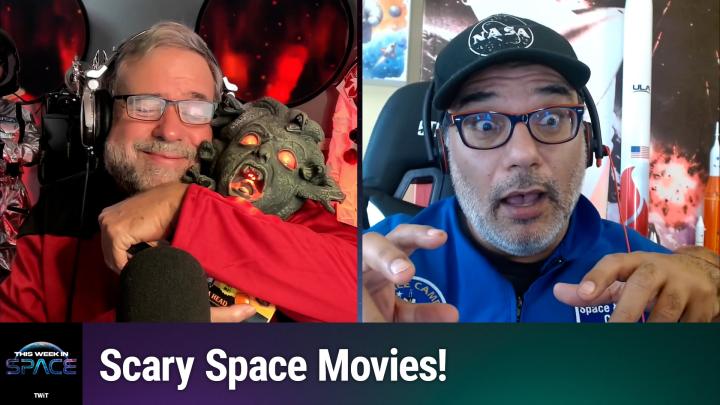
Coming up on this week in space, SpaceX says that they can simplify their Artemis 3 moon landing plan. But how? Also, it's Halloween, so the night sky is spooky, but there's some comets you don't want to miss. And because it's spooky season, Rod and I are going to talk about our favorite scary space movies. You don't want to miss it, so check it out.
Rod Pyle [00:00:19]:
This is This Week in Space, episode number 184, recorded on October 30, 2025: Space Is Scary. Hello and welcome to another episode of This Week in Space the Space is Scary edition.
Tariq Malik [00:00:42]:
I'm beautiful. It's okay to stare. I won't bite.
Rod Pyle [00:00:51]:
Happy Halloween, everybody.
Tariq Malik [00:00:52]:
Happy Halloween, everyone. Hello. I'm doing well, Rod. How are you doing? How is Medusa? Wait, all right, right? No, no.
Rod Pyle [00:01:02]:
She's a hard woman. I'm Rod Pyle, editor in chief at Astro magazine. I'm here with the original spooky space scribe, Tariq Malik, editor in chief of Space Dot Com.
Tariq Malik [00:01:14]:
No, no, no. I'm a NASA astronaut today. Clearly.
Rod Pyle [00:01:17]:
Yeah, clearly.
Tariq Malik [00:01:18]:
My garb. Right, let's.
Rod Pyle [00:01:20]:
Let's see a little bit more of it.
Tariq Malik [00:01:22]:
So, no, I don't know, but can you see?
Rod Pyle [00:01:24]:
You know you can screw.
Tariq Malik [00:01:26]:
I guess that you can see. You can see it all right here. There he is.
Rod Pyle [00:01:28]:
You can still zip up your Space Camp jumper. That's impressive.
Tariq Malik [00:01:31]:
Yeah, yeah, I told you I lost 30 pounds this that year. So. So I can actually fit into my clothes again, which is great.
Rod Pyle [00:01:37]:
So is it nice not to sweat all the time?
Tariq Malik [00:01:39]:
Oh, I tell you. Right. By the way, I'm wearing the wrong glasses. I'm going to change them out really quick, so I gotta do that right now. So there we go.
Rod Pyle [00:01:45]:
Drumroll. All right. This week we're talking about scary space movies, from the worst to the most sublime. Wrapping. Yeah. Before we start though, don't forget to do us a solid. Make sure to like subscribe and all the other cool podcast things because we're counting on you to make it to next Halloween. Yeah.
Rod Pyle [00:02:03]:
And now a space joke, which might be repeat. It's getting harder and harder to remember, but I don't think so. From Joshua Dornbush.
Tariq Malik [00:02:11]:
Joshua. I like that name.
Rod Pyle [00:02:13]:
Apollo 18. The movie Apollo 18. Hey, Tariq.
Tariq Malik [00:02:17]:
Yes, Rod?
Rod Pyle [00:02:18]:
What do you call a crazy blood sucking bug on the moon?
Tariq Malik [00:02:22]:
I don't know. I don't know. What do you call that?
Rod Pyle [00:02:24]:
A lunatic.
Tariq Malik [00:02:26]:
Oh, no, I don't think we've had that One before. No, that's good. That's good. Yeah.
Rod Pyle [00:02:31]:
Thank you for the theremin, John. You know, the scary thing is when I hear or see movies that sound like that, I realize I was kind of there the first time around.
Tariq Malik [00:02:44]:
Yeah.
Rod Pyle [00:02:45]:
It's a little shocking to me that I'm that old.
Tariq Malik [00:02:47]:
I just think about Neil Armstrong. Right. Because didn't he like to play the Thurman? Right.
Rod Pyle [00:02:51]:
Did he?
Tariq Malik [00:02:52]:
Yeah. That's what. I never saw that. Yeah. At least that's what they put in his biopic with that. That one actor guy that was in that LA dancing movie. Wow. I'm really bad.
Rod Pyle [00:03:03]:
Are you talking about First Man? Yeah, I don't remember him playing a theremin, First Man.
Tariq Malik [00:03:08]:
That's why the theremin music was all through that film. So they showed him playing at one time.
Rod Pyle [00:03:13]:
Well, that might be the one accurate thing about Neil Armstrong in that horrible film. Now, I've heard that some people want to bleed us into dry, desiccated husks. When it's joke time in the show, you can help. That was supposed to hinge off the tick comment by sending your best, worst, or most different space joke to us.
Tariq Malik [00:03:33]:
Ah, bring out the torches of the.
Rod Pyle [00:03:35]:
Pitchforks at TwistWit TV. And thanks to Joshua for sending in that joke. Now. Good grief. Let's get to headline news.
Tariq Malik [00:03:44]:
Headlines. Headline news. No, no. Oh, John says I got it wrong.
Rod Pyle [00:03:51]:
No. You know, last week you were early, but when I listened the playback online, it was perfect.
Tariq Malik [00:03:58]:
Yeah.
Rod Pyle [00:03:58]:
So you do have to jump it by half a second or something.
Tariq Malik [00:04:01]:
That's what the say. That's. Judy says I was spot on. Spot on. Spot on. Right. Spot on. Nobody saw anything.
Tariq Malik [00:04:10]:
Pay no mind to the man.
Rod Pyle [00:04:11]:
Judy also told us to cue the electric light orchestra. So what are you going to do? All right, let's talk. Let's do headline news.
Tariq Malik [00:04:18]:
Yeah.
Rod Pyle [00:04:19]:
NASA is sinking his flagship science center during the government shutdown. Good Lord. Breaking laws. What's going on?
Tariq Malik [00:04:26]:
Well, this is actually a huge story. This is actually from Space.com's own Josh Dinner. He's a friend of the show. He's been on the show for a while and. And Josh has. That's my thing, Rod.
Rod Pyle [00:04:38]:
I know, but I'm trying to catch.
Tariq Malik [00:04:40]:
I dig it. I dig it. But he. He actually has had about the last six months he's been working on this story, talking with people that are at Goddard now that have been let go from Goddard, that have taken the retirement from Goddard, just to try to find out what's going on there. The closure of the GISs, like the climate Earth Science center in New York and, and how like the President's budget proposal actually has that going away with some of the, some of the, the functions being, you know, funded in. There's just a lot to this story and it's really hard to like, parse it down. So the TLDR is that there are, is there is a Senate report and a lot of people working and, and no longer working for, for Goddard who feel that what's going on there, all of the cuts and stuff, while we still don't even have a budget and we're in the middle of a government lockdown, aren't fully on the level. In fact, the Senate report that came out recently says that they think that there's a lot of illegal stuff going down.
Tariq Malik [00:05:36]:
And we did hear from NASA saying no, they, they, you know, dispute all of those claims point by point. And it took a lot of doing to kind of put all of the different parts of the story together. So hats off to Josh for, for doing it. It's one of our longest stories, if not the longest story we've ever written for the site. And, and it's coming out at a really important time right now. So, you know, if you're worried about NASA, this is not going to, I think, make you any happier. But if you're, if you're trying to understand what's been happening behind the scenes, this story has like a lot of, of stuff that really puts things in perspective. It's a long read.
Tariq Malik [00:06:16]:
Very long.
Rod Pyle [00:06:17]:
How many words this time?
Tariq Malik [00:06:18]:
It's like 9,000 words long.
Rod Pyle [00:06:20]:
What?
Tariq Malik [00:06:21]:
Yeah, it's long.
Rod Pyle [00:06:22]:
It's writing for you guys. You said, okay, keep it under 1100 words.
Tariq Malik [00:06:25]:
Yeah, things are different now, Rod. Things are different now. I mean, like 10 years. Josh is, Josh is, you know, he, he, he attended protests where Goddard workers were protesting NASA headquarters. He has emails. He has.
Rod Pyle [00:06:41]:
Emails. Yeah, yeah, that's getting in deep.
Tariq Malik [00:06:44]:
He has anonymous sources that he's vetted. He has NASA sources, he has outside scientists, you know, Casey Dreyer, friend of the show, talking about the value and the impact of planetary science and this one, climate science, etc. One of the, the most telling comments is from a, an engineer that, that we called Claire, you know, because we're, these are anonymous source who said that, that the word climate, they see it as like the C word. They can't say it like outright. They have to like dance around it if they're going to try to get any kind of work done, you know, about understanding that that part of Earth Science right now. And it's a.
Rod Pyle [00:07:26]:
Really saying this is because the administration's sensitivities. Right.
Tariq Malik [00:07:29]:
Because of the admin. Yeah. About the, the kind of denial. Not denial outright, but just they don't make it a priority anymore, at least in the funding that's going on. But I will stress that we did talk to NASA, we did present all of the findings and have some, some, some back and forth. And then of course NASA has seen the, the actual article today and has responded even more so. So we've been incorporating all of those responses into the story as well. And I'll point out, you know, they do dispute that, that all of the claims from the Senate and from these workers that it's illegal.
Tariq Malik [00:08:05]:
They dispute that pretty strongly saying that everything is in line with appropriate actions.
Rod Pyle [00:08:14]:
So other than pushing back on that, which feels a little disingenuous, but. Okay, what about the whole, these massive layoffs during a shutdown when people are already furloughed. Aren't there some rules about that somewhere?
Tariq Malik [00:08:29]:
Well, I think that's the open question. NASA says that, you know, it's, it's, it's fine because they're following the Trump administration's directives for all of this and that. And meanwhile the unions, you know, are saying it's not fine and that these, these layoffs and these reductions, these budget reductions are going through improperly. Now remember, the unions are in their own kind of a bit of a, of a pickle because NASA's federal union was in the executive order that the Trump administration signed saying that they don't really have a right to collectively organize. And you know, I think it was NASA and NOAA and a couple of other agencies that were on that list. So we don't know where that stuff kind of lies right now and what the bargaining capabilities are versus what's allowed versus all of that stuff.
Rod Pyle [00:09:19]:
So we know just as much as they want us to. Now isn't Goddard where the Planetary Data System and the. There is a five letter acronym for.
Tariq Malik [00:09:27]:
That, the nd something something something nsa. I mean it may be, I have to admit, like that was one of the older databases, you know, that it had and the national something space, like it's like it's got all the.
Rod Pyle [00:09:43]:
So embarrassing because I quoted this to somebody yesterday and now become GSSDC or something. But it was, I mean it was great. You just had to, you're right, it was older and you had to have your own client software to actually decode the stuff. But if you A lot of that.
Tariq Malik [00:09:57]:
Stuff is still there.
Rod Pyle [00:09:58]:
Yeah, if you wanted to see a specific set of map coordinates on sunny Mercury, you could type it in gssdc. And there it was. Anyway, speaking of coordinates, not stuff like.
Tariq Malik [00:10:10]:
That that's being affected. It's like, you know, they ran the climate.NASA.gov. yeah, I know, they shut that down. It's like that kind of stuff.
Rod Pyle [00:10:16]:
There are things that Goddard that we would miss if it wasn't Goddard anymore. Speaking of missing things, you're going to miss us for about 30 seconds while we go to a break, so stand by.
Leo Laporte [00:10:26]:
Hey everybody, Leo Laporte here and I'm gonna bug you one more time to join Club Twit. If you're not already a member. I wanna encourage you to support what we do here at TWiT. You know, 25% of our operating costs comes from membership in the club. That's a huge portion and it's growing all the time. That means we can do more, we can have more fun.
Leo Laporte [00:10:52]:
You get a lot of benefits ad free versions of all the shows. You get access to the Club TWIT discord and special programming like the keynotes from Apple and Google and Microsoft and others that we don't stream otherwise in public. Please join the club. If you haven't done it yet, we'd love to have you find out more at twit.tv/clubtwit. And thank you so much.
Tariq Malik [00:11:16]:
We're back. I wasn't expecting it. I've seen you forever. Tis the dome. Wait, the snakes move.
Rod Pyle [00:11:28]:
Yeah, they got little.
Tariq Malik [00:11:29]:
I didn't see that before. I didn't see that before. How come it's not a space one? Like a, like a astronaut?
Rod Pyle [00:11:35]:
Because I wasn't doing this back then. My kid was 4 years old, so I could hold it up to him when he wakes up at night and go, that's classic. So this, this really caught my eye. SpaceX puts out a statement saying, hey, we're gonna streamline starship's human landing system, and then said, absolutely. About what they're going to streamline.
Tariq Malik [00:11:58]:
Yeah.
Rod Pyle [00:11:58]:
So for instance, so they said, okay, we're going to make it easier and faster, better, cheaper, blah blah, blah. They didn't actually say cheaper, but faster and better. But then why make it cheaper?
Tariq Malik [00:12:07]:
NASA's already signed the bill.
Rod Pyle [00:12:09]:
So let's see. Orbital refueling. They didn't mention that or life support systems, but they did release a really cool rendering of a highly imaginative interior that was about 10 times bigger than you need to land three astronauts on the moon. Which is ridiculous. Did I miss something there?
Tariq Malik [00:12:26]:
No. This was interesting. I think that this is the official response to Acting administrator Sean Duffy's comments about how SpaceX is going too slow and, and that they, you know, they need, they need to get there by any means necessary, opening up the Artemis 3 landing contract to Blue Origin, etc. And so this is like, kind of like a point for point. This is what we've been doing. And the reason that you all think that we're slow is because you're only seeing the starship tests. But they, they, they laid out how they've already like, achieved 49 of their milestones for the Artemis 3 contract. And, and their Artemis work in general.
Rod Pyle [00:13:05]:
Except for reaching orbit and refueling, except those two little things.
Tariq Malik [00:13:08]:
But they do say in this, in the, in the update, and this is, by the way, this is through. If you, if you want to read it for yourself, you go to the SpaceX.com website and they have like an updates tab and that's where you're going to see all of this stuff in there. But Mike Wall, our writer, kind of distilled it to kind of talk, talk about the really finer points that, that came out of it. And one of them was this, this acceptance that, yes, we need to make it simpler and more straightforward and therefore faster, and that they have ideas on how to do that. But they, as you mentioned, Rod, they don't actually say exactly what those ideas are. Maybe it's really trying to refine the number of refueling flights because, you know, like, like you said it was 8 and then it was like 24, and then it was 18 or 15 to 18.
Rod Pyle [00:13:55]:
There's 12 in there too, somewhere.
Tariq Malik [00:13:57]:
Yeah. And, and you know, there was a press conference prior to the start of this administration last December or so, where in the update SpaceX was asked how many flights it was going to take. And, and they, they didn't have an answer. And the NASA rep that dealt with them for the exploration system didn't have an answer. And, and Bill Nelson, then the NASA administrator straight up said, no, you didn't answer the question.
Rod Pyle [00:14:20]:
I believe what the young lady asked was exactly how many flats it will take to refuel this thing to go to the moon. Exactly have an answer for that.
Tariq Malik [00:14:32]:
They said, and they said 15 to 18. I think they said 15. They said 15 to 18.
Rod Pyle [00:14:36]:
She got very squeaky.
Tariq Malik [00:14:38]:
Yeah.
Rod Pyle [00:14:38]:
And it's funny, you know, if you're going to do, if you're going to do this kind of press conference, as I recall, it was another one of those PR death Friday afternoon press conferences. I think you send your, your best troops forward, you know, you don't spend, send. No offense to the person in question, but the kind of squeaky nervous young, you know, freshly post intern or something. I mean maybe she wasn't, but she just did not sound at all prepared for this.
Tariq Malik [00:15:08]:
No, I think it was. She was actually a pretty high ranking. She was really. Yeah, yeah, up in the, in the, in the human space flight and crew operations. So I got to know. I, I think, I think what this, what this says is, is it's, it's a, it's a show that, that SpaceX does has to show their work. Right. They can't just ride on the acceptance that, that of the performance of the Falcon nines and the Falcon heavies.
Tariq Malik [00:15:33]:
You know, that people know that, that that works and that, that, that's, that's, you know, filling, filling what they need. They have to show that they're actually doing this other stuff as well. And not just building starship to launch a bajillion Starlink satellites, which is all they've been talk in these, in these launches and testing all of that stuff. You know, testing the deployment of Starlink satellites for these early self serving. Yeah, right. I mean as opposed to, you know, doing. I think they did like some fuel transfer experiments on the, on some of the earlier flights to show that they could do it, but they.
Rod Pyle [00:16:07]:
Not with multiple spacecraft.
Tariq Malik [00:16:08]:
Just, no, just, just inside, it was like pumping inside the main one.
Rod Pyle [00:16:12]:
Yeah.
Tariq Malik [00:16:13]:
So I think that's what NASA has the problem with is that they're seeing these launches for Starlink and not these launches for Artemis overall or these. And so they want to know what they're doing. And SpaceX has said in this post, you know, we have a rendering of what our flight deck is going to look like. Like you said, it's a very cavernous space which is very different than what we've seen before. They showed images of their landing engines and test fires for that, images of rehearsals for getting in and out of the spacecraft on their elevator and their elevator technology testing and whatnot. So, so they, they kind of really did run down a lot of the stuff that's been going on in the background. Other work that will come together. But that's the question when is it all going to come together? You know, so that it's one vehicle and not a bunch of different programs that you'll just try to throw together at the last minute to, to, to reach a goal.
Tariq Malik [00:17:07]:
2028 is not far away.
Rod Pyle [00:17:09]:
If cool computer renderings would get us to other planets, NASA certainly would have had us to Mars in the 2010s.
Tariq Malik [00:17:16]:
Yeah, that would be nice, wouldn't it?
Rod Pyle [00:17:17]:
Enough of that. Okay, Pick. Pick our third story here if you want.
Tariq Malik [00:17:20]:
Yeah. I would just point out that it is Halloween and we can, we can talk about x59 next week, because that's really, really cool. But I, I just wanted to let everyone know that it's. It is Halloween, which means that there's a Halloween night sky. If you've got clear skies, go out, go look around. There's two comets that you can go and, and, and look for. One is you can't see with your unaided eye. That's Comet 3I, Alice, the interstellar visitor.
Tariq Malik [00:17:42]:
Uh, is it an alien ship? Rod, what do you think? Please, please. So, and the other one is the, the other one is Comet Lemon, which you can see, and it's being billed as one of the comments of the year for, for, for 2025.
Rod Pyle [00:17:58]:
I hear it's a bit of a lemon.
Tariq Malik [00:18:03]:
Now. That joke was the apple of my eye, Rod. You know, I just.
Rod Pyle [00:18:07]:
You're just a fruit.
Tariq Malik [00:18:11]:
Hey, you're not allowed to say that now, Rod. Sheesh.
Rod Pyle [00:18:14]:
Okay. You're just a cantaloupe.
Tariq Malik [00:18:17]:
Yeah. Anyway, I don't think that Comet Lemon is going to be back for like another thousand years, so.
Rod Pyle [00:18:22]:
Well, so where is it in the sky? When can you see it? And what will you need to see it?
Tariq Malik [00:18:27]:
Well, it's really good to have a, A telescope to see it, but it is, it's visible in binoculars in the northern hemisphere. You can.
Rod Pyle [00:18:36]:
Oh, this is the one that's circumpolar, right? It's circumpolar. It's up near Polaris.
Tariq Malik [00:18:43]:
Yeah, I think so. Yeah. It's, it's. It's been in. It's in. According to Forbes. Which is. Why did you choose Forbes for this man?
Rod Pyle [00:18:53]:
Because somebody had to go source. The story.
Tariq Malik [00:18:58]:
Has a definitive Comet Lemon. Everyone go there. Everyone go there.
Rod Pyle [00:19:02]:
I didn't see it there because your search engines a little funky.
Tariq Malik [00:19:05]:
But anyway. But no, it's, it's, it's, it's. It. It's far from the sun, so it's not as visible, but it is in. In. Oh my gosh. I'm like. I'm like.
Tariq Malik [00:19:18]:
I lost it. See, now you got me all off my game.
Rod Pyle [00:19:21]:
You have a game?
Tariq Malik [00:19:25]:
No, but it's, it's in the, it's, it's, it's near the, the constellation Keynes.
Rod Pyle [00:19:32]:
You really need to man.
Tariq Malik [00:19:35]:
Go to space.com. go to space.com and look up how to see Comet Lemon. You're going to see exactly how to do it.
Rod Pyle [00:19:41]:
Mayor Tranquil taught us. He says. Okay, and our last little bit here, we want to send our most sincere condolences to Buzz Aldrin. And, yeah, Buzz got married two years ago to his partner Anka Ferrer, I think her last name is pronounced. Who was a PhD level chemistry. Chemistry. Physicist, I think, chemist. And they had been together for a long time, and she was just a really superb woman and a great partner for Buzz.
Rod Pyle [00:20:16]:
Lovely family. She's got a son and a couple of grandkids, and she was 66, and cancer caught up with her, and she passed this week.
Tariq Malik [00:20:27]:
So, yeah, I'm sorry.
Rod Pyle [00:20:28]:
Sincerest condolences going out to Buzz because that's hard anytime. But, you know, when you're kind of in your twilight years, it's just got to be the absolute worst. So with that, let's sashay out to another break, and we're going to come back with scary space movies.
Leo Laporte [00:20:45]:
Hi there. Leo Laporte here. I just wanted to let you know about some of the other shows we do on this network you probably already know about. This Week in Tech. Every Sunday, I bring together some of the top journalists in the tech field to talk about the tech stories. It's a wonderful chance for you to keep up on what's going on with tech, plus be entertained by some very bright and fun minds. I hope you'll tune in every Sunday for This Week in Tech. Just go to your favorite podcast client and subscribe. This Week in Tech from the Twit Network. Thank you.
Tariq Malik [00:21:18]:
Go on, sneak a peek. It won't hurt for long. Wait, she said that last time.
Rod Pyle [00:21:28]:
Okay, well, the ranch randomizer is 30 years old. What do you want? Okay. It's almost Halloween. As we belabored into the ground, the question is, is space scary? It can be almost as scary as internal alarms when they go off. So I thought we'd kind of go through a parade of some of the best or worst movies of various decades. I probably have seen more of the 1950s movies than you have, Tariq, because I was alive in the 1950s.
Tariq Malik [00:21:59]:
You're gonna have to hold my hand for some of this stuff. But some of it I've seen, so.
Rod Pyle [00:22:02]:
You know, always the tease with you.
Tariq Malik [00:22:07]:
And so the first one, that's. That's. That's. That's our limit.
Rod Pyle [00:22:10]:
So the first one I dug up was. Sorry, I was looking at Discord for A second. They're trying to understand something.
Tariq Malik [00:22:18]:
It.
Rod Pyle [00:22:19]:
The terror from beyond space.
Tariq Malik [00:22:21]:
Beyond space. So like, not even. So should we even talk about it? Because it's from beyond space. It's not from space.
Rod Pyle [00:22:28]:
Well, but $50,000 is guaranteed. So this is. This is a Marshall Thompson spectacular from early 1950s.
Tariq Malik [00:22:38]:
I love this poster.
Rod Pyle [00:22:40]:
Yeah, so, and the poster is a depiction. And we'd show movie clips, but YouTube, you know, so this is a movie. Marshall Thompson. There was a mission to Mars. The spacecraft landed, Earth lost contact with it. They. So they sent another mission, all very Ray Bradbury, which landed and discovered only. Only Marshall Thompson left.
Rod Pyle [00:23:01]:
And they conclude that he murdered his crew. And he says, no, no, it was a guy in a big rubber suit. And so they take off and head back to Earth. And sure enough, there is a guy in a big rubber suit in the bowels of the ship. And he starts murdering people and smashing his way through hatch after hatch. And they finally have to figure out how to do him in because gunfire doesn't work. Because if you're flying to Mars or the moon in the 1950s, you're a white male with a.45 caliber handgun at your right side. Because what could be smarter in a spacecraft than firing.45 caliber slugs around?
Tariq Malik [00:23:37]:
I think I remember watching that. I mean, is this the one where the ship is in different levels? It's like levels, Right.
Rod Pyle [00:23:43]:
So he keeps smashing through hatch after hatch after hatch to get to Marshall Thompson, which of course we ever seen Marshall Thompson act. You would be going the other way, trying to back to the rocket. But what are you going to do? Black and white, kind of forgettable. What is not forgettable, however, is the 1951 original version of the Thing from Another World. And John, I think I have links for all these, although I'm not sure if this one's for it or the Thing. The Thing was a delightful Howard Hawks movie. And you know, when you got Howard Hawks at the helm, it's going to be fun. Black and white.
Rod Pyle [00:24:24]:
And you all know the story. If you saw the. The newer version of the Thing. There. There is the Thing himself.
Tariq Malik [00:24:30]:
Yeah.
Rod Pyle [00:24:31]:
Also known by the protagonist as. Oh, look, a giant carrot. That, my friends, is James Arness of Gunsmoke fame in his first movie role where he was so ashamed of what he was wearing, he refused to eat with the rest of the actors.
Tariq Malik [00:24:44]:
Yeah, he was a carrot man. Grown people carrot man. Yeah.
Rod Pyle [00:24:49]:
So there's an Antarctic. Antarctic or Arctic base. I think it's an Arctic base in the first movie. Small deployment of people there, of course, military, you know, lantern John. Men and one or two women who are playing secretaries and things of that nature because it was the 1950s. But they discover something buried out in the ice. And so the, the team that goes out to investigate sees this dark thing under the ice and. And they get in a big circle and join hands to try and figure out how big it is.
Rod Pyle [00:25:21]:
And it's round, so we know it's a flying saucer. Cue the sound effects. It's a flying saucer. Wake up the board up. It's a flying saucer.
Tariq Malik [00:25:33]:
There we go. There we go. I was trying to find the right one.
Rod Pyle [00:25:39]:
It doesn't really matter. Trust me. So they. Okay, that's good. So they put a bunch of thermite there and they melt it out. And while they do get down the spaceship, they also realize that a creature has been thrown from it when it crashed. And they stick that stupidly in a storage room. And there's a guy, you know, one of the dumb corporals, because you always have the dumb corporal chewing gum and talking like he's from Brooklyn.
Rod Pyle [00:26:09]:
Can't stand the thing staring at him through the ice while he's guarding it overnight. So he puts a blanket over it. Ooh. But it's an electric blanket. And melts. And it melts the creature so it attacks people and stuff like that. And it's great fun. Yeah.
Tariq Malik [00:26:23]:
I like how it's tongue in cheek, which is enjoyable. They do. Is it a spoiler? Can I say how it ends? This is right. This is the one where they shock him right at the end. They also killed the babies. The little baby plants. The plant carrot people.
Rod Pyle [00:26:39]:
Because it turns out he's. He is a plant, right? Yeah.
Tariq Malik [00:26:41]:
Yeah. And so he had planted other little babies.
Rod Pyle [00:26:44]:
So. Well, the, the, the sc. The, the cold hearted scientist decides he wants to. I think they. What did they do? They had little pieces of them and they fed. Oh. And they, they, they planted little bits of them in a garden to see if they grow and fed them human blood. The scientists did that without permission.
Rod Pyle [00:27:03]:
And then they take a stethoscope and lean over and they say, I can hear it. It's mewing like a baby. And then. Yeah, they burn that. And then the scientist, of course, runs out for everybody says, no, we can learn so much from each other. Let's talk James Arness tears. That's. That's the end of the science.
Rod Pyle [00:27:25]:
But wait, there's more. Huh?
Tariq Malik [00:27:27]:
I was gonna say this when you, you referenced the, the, the later one, you Mean, John Carpenter's the thing, right?
Rod Pyle [00:27:35]:
Yeah, yeah, 1982. Which, honestly, I didn't enjoy as much.
Tariq Malik [00:27:39]:
But it's still spirit. No, the spirit is great. I. I have a story about that. I don't know when we want to talk about that, if you want to talk about it now or not, but we can.
Rod Pyle [00:27:47]:
I will tell you that I found that version of the thing to be much more effective when viewed by me and seven other people in Pascal Lee's Arctic base.
Tariq Malik [00:27:59]:
That got the attention. I could get that. No, so, like, I. I had this weird thing where, like, when I grew up watching some of the. The older horror movies, you know, in my quote, unquote, formative years.
Rod Pyle [00:28:12]:
You had formative years.
Tariq Malik [00:28:13]:
I. I know, right, so. But like. Like things like the thing, I watched, like, this original thing. I remember watching it from, like, the library at the. On. On cassette, but I watched, like, the remake, too, with John Carpenter's. And I watched the Fly, and I watched a lot of that stuff, and a lot of it, I watched either, like, when it was being broadcast on TV or not, and I did not know until college that they cut a lot of stuff out because commercials.
Tariq Malik [00:28:40]:
For commercials, and because it's on tv and. And in John Carpenter's the Thing, when they're, like, trying to save one of the infected guys and they use the defibrillators to shock him away, and, like, his chest opens up and bites the guy's arms off, and then his. Oh, it's so awful. And I'd never seen any of that before until we were studying it in my science fiction class in college. I'm sorry, mom, that I took a science fiction class.
Rod Pyle [00:29:12]:
And not just a science fiction class, but a science fiction class at the University of Southern California, which means it's about $10,000 an hour.
Tariq Malik [00:29:21]:
But when I was absolutely horrified, it was as if I was watching that. That. That alien horror movie for, like, the first time. So it scared the bejesus out of me. That and the fly so brumble fight, like, eats a guy's hand. Oh, I'd never seen it before. Okay.
Rod Pyle [00:29:38]:
In the thing, I have to say, my favorite shot in the whole movie is the infected husky staring at the. At the north. At the. The Southern Cross out the window. It's just sitting there staring at that star. And then the next thing you know, it's turned to this pillar of eyeballs and faces and.
Tariq Malik [00:29:54]:
Yeah.
Rod Pyle [00:29:55]:
Gristle. And I just thought that was a.
Tariq Malik [00:29:56]:
Mixture of, like, three or eight different dogs. It was absolutely horrifying.
Rod Pyle [00:30:00]:
Yeah, it Was great, and I still love huskies. Next up, and actually better a movie than you might think called Invaders from Mars Invader.
Tariq Malik [00:30:11]:
I like it. I like it already.
Rod Pyle [00:30:14]:
That's the one where the meteor crashes beyond the fence in the backyard of this kid's farmhouse. And they cut to the same freaking shot of this fence going up over a hill about a hundred times. But the. The TLDR on this one is the critters in the. In the spacecraft can take over people and make them seem like they're still who they are, but they're not. They're all intent on invading Earth. And so the little boy who is the star of the film is the only one that knows what's going on. He's trying to find somebody.
Rod Pyle [00:30:48]:
But, you know, when you see this as a kid, it was really creepy because the military guys who you have the most faith in get taken over. His parents get taken over. And you could tell they're taking over because they have a little. Little pollywog out the back of their neck. You say, mom, mom, there's aliens up on the hill. You only think that. Billy, step inside the oven. Now.
Rod Pyle [00:31:10]:
It's preheated. So it was. It was pretty spooky. And Jammer B says, discord, Invaders from Mars is the first movie I remember freaking out over. I have to agree. Although it was followed very closely by the 1953 version of the War of the Worlds, which George Powell all night because I was certain they were out there. And we're going to land any second. And speaking of landing every.
Rod Pyle [00:31:34]:
Any second. Let's go to a break and we'll be coming in for a landing in just a few moments. Standby.
Tariq Malik [00:31:39]:
Yeah, nice segue.
Rod Pyle [00:31:41]:
Okay. War of the Worlds, 1953.
Tariq Malik [00:31:44]:
I laugh.
Rod Pyle [00:31:45]:
Young line 38.
Tariq Malik [00:31:47]:
Did you read. Did you read the book before you saw this movie? Or did you see this movie and then.
Rod Pyle [00:31:52]:
I think I saw the movie when I was like 6, so I wasn't reading novels by then. Graphic on line 38. He said, There it is.
Tariq Malik [00:31:59]:
I.
Rod Pyle [00:31:59]:
And I have that poster hanging in the other room. It's the original lobby art. And last I checked, it's. I think I bought it for 15 in Hollywood in the 70s. It's like $11,000 for that thing.
Tariq Malik [00:32:13]:
Wow, look at that. It's insane.
Rod Pyle [00:32:17]:
Great artwork.
Tariq Malik [00:32:17]:
But tell my mom that about the old black hole Disney horizontal key art that I used to have.
Rod Pyle [00:32:23]:
Well, no, wait a minute. So people have to actually have enjoyed the movie for it to be worth something.
Tariq Malik [00:32:29]:
Hey, hey, hey. And black do not do not, fat mouth. We should have the black hole on this list. That's a horror movie.
Rod Pyle [00:32:36]:
So the only horror was having to sit through it in. In Thailand when I was looking for anything to watch that wasn't in Thai. So War of the Worlds, 1953. Lift from the book. Modernized up to the 1950s. It all takes place in Los Angeles. And George Powell was the guy for science fiction back then because very few people were doing it. This was the most expensive science fiction movie of its time.
Tariq Malik [00:33:03]:
Yeah.
Rod Pyle [00:33:03]:
Almost $2 million. Count them, 2 million million. With over half of that devoted to special effects. And here you see the Martian War Machines. Very changed from the book, but just spectacularly spooky. These kind of manta ray things. I mean, if you're gonna put together two animals to freak people out, a manta ray and a cobra is a pretty good combination.
Tariq Malik [00:33:25]:
Yeah. Watching the ray, the heat ray come up like an antenna out of the pit was very, very creepy.
Rod Pyle [00:33:32]:
Oh, and they destroyed downtown Los Angeles, which I enjoy greatly. There's a very famous shot where the heat ray hits LA City hall and it explodes. And these miniatures were like 15ft tall. These weren't really tiny.
Tariq Malik [00:33:43]:
Yeah.
Rod Pyle [00:33:44]:
So it was quite a tour de force. If you've never seen it, you owe it to yourself.
Tariq Malik [00:33:49]:
Can I. Can I tell you a story about. About this film? And then we should. I want to talk a little bit about the other War of the Worlds films too. Because very of a time this one was. And when we studied this one in class, there's a scene.
Rod Pyle [00:34:02]:
Wait. Where you wasted money studying the War of the World to class?
Tariq Malik [00:34:06]:
It was a science fiction university of soaring film class. Yes.
Rod Pyle [00:34:10]:
Well, because why wouldn't one take one of those when they could be.
Tariq Malik [00:34:13]:
Hey, I have. You have to fill electives somehow. You know, like you've got spots. You could have. You already paid for them. So you could have taken basket weaving.
Rod Pyle [00:34:21]:
Retake a differential equations, but go ahead.
Tariq Malik [00:34:24]:
I did. I did. You know it, dude.
Rod Pyle [00:34:26]:
It's a hard.
Tariq Malik [00:34:28]:
No. So. So there's this scene right in this film where there's a pastor character, you know, like the voice.
Rod Pyle [00:34:39]:
You're talking about the original movie.
Tariq Malik [00:34:40]:
Yeah.
Rod Pyle [00:34:41]:
Uncle Matthew.
Tariq Malik [00:34:42]:
Yeah.
Rod Pyle [00:34:43]:
Walks with his bible up to the war machines.
Tariq Malik [00:34:46]:
Yeah. With his faith, you know, because he believes that the faith will protect them. And of course, the aliens have no truck with faith. And they zap him and he seems.
Rod Pyle [00:34:56]:
To be a little religion light. Yeah.
Tariq Malik [00:34:58]:
Yeah. So. So when that happened, when that happened in my class, this is Los Angeles. It was stunning because everyone cheers they're like happy that the priest got it right.
Rod Pyle [00:35:13]:
Wow.
Tariq Malik [00:35:13]:
And it was.
Rod Pyle [00:35:14]:
That's a cynical bunch.
Tariq Malik [00:35:15]:
It was really weird and apparently it made a lot of people in the class uncomfortable and they complained to the instructor who was a former Jesuit priest. And we all got a lecture the next week about, you have to be sensible to other people's beliefs, man. And just keep that in mind when you're in public.
Rod Pyle [00:35:39]:
But to be fair, that movie is pretty ham. The 53 verse is pretty ham handed when it comes to religion. I mean, towards the end they're hiding in a church and right as the church is collapsing around the two of them hugging, the war machines fall to the ground. And then they all run out and see the last Martian die. And then they look up and I forget the line, but it's like a greater power got them than us.
Tariq Malik [00:36:05]:
Placed on the Earth. Yeah, yeah, yeah. That's in the, that's in the book said amen. Yeah, yeah.
Rod Pyle [00:36:11]:
That is not in the book. Not like that. They have the curate who is a real creep.
Tariq Malik [00:36:17]:
Yeah, yeah.
Rod Pyle [00:36:18]:
So they actually is a vicar or something, but that.
Tariq Malik [00:36:21]:
No, but I mean, kind of a, A jerk. I think the, the God in his infinite wisdom part is in there.
Rod Pyle [00:36:26]:
Yeah.
Tariq Malik [00:36:26]:
At the end of the book.
Rod Pyle [00:36:27]:
So I think.
Tariq Malik [00:36:28]:
So what's interesting though is like you're talking about how you talk about how kind of heavy handed that is and then in, in what, 2015 or 2005. When did they remake it?
Rod Pyle [00:36:37]:
2005.
Tariq Malik [00:36:38]:
Yeah, in 2005 when they remade it with Tom Cruise. And it's all about like terrorism, domestic terrorism and all of that. Because the aliens are already here. They were underground the whole time and we didn't know it.
Rod Pyle [00:36:52]:
That was so convoluted.
Tariq Malik [00:36:54]:
Yeah.
Rod Pyle [00:36:56]:
You know, to wake them up you have to smack them on the head with a meteorite.
Tariq Malik [00:37:00]:
It's like what. Well, I think it was that the machines were there already and then the pilots went into the machine from the, from the meteorite. Is what, what the plan was. I thought that that remake was a bit closer to the actual book because you had the Tripods and you had, you had the, the, the night in the, in the, you know, hiding out in the basement of the house with the, the astronomer guy, you know, that, that, that freaks out and tries to kill them all and, and then you had the seeding of the land with the, the red weed. You know, that was creepy. That was really. But you don't have. They still haven't seen the, the black smoke.
Tariq Malik [00:37:37]:
Like there have been Other remakes where there was like a BBC miniseries where they have the black smoke, and that was okay.
Rod Pyle [00:37:43]:
There were a couple of other movies. I actually did a really awful War of the Worlds. Well, I did a fairly good War of the Worlds retrospective show that same year for History Channel. Yeah. We also did this really awful direct to video thing that.
Tariq Malik [00:38:00]:
Did you ever watch the TV show turn up? Did you watch the TV show in the 80s and 90s?
Rod Pyle [00:38:03]:
Yes, it was God awful.
Tariq Malik [00:38:05]:
Yeah. And then they rebooted it too, for like a season.
Rod Pyle [00:38:08]:
So, you know, just. But the one thing we haven't seen, with the slight exception that BBC1 is a really excellent one staged in Victorian times when it was originally done. Because we all want to see Thunder Child, you know, the. The little frigate go to battle with the tripod and blow its legs apart.
Tariq Malik [00:38:28]:
Have you ever listened to the rock opera? The War of the World's rock opera?
Rod Pyle [00:38:31]:
Oh, good God. There's a long story there. But we were interfacing with those people for that. For that History Channel show I was doing. And this is the. What's the guy's name that did it.
Tariq Malik [00:38:43]:
I. I actually own it, but I don't remember offhand. I'm gonna look it up because I forgot. We could do a whole.
Rod Pyle [00:38:48]:
Done in.
Tariq Malik [00:38:49]:
We could do a whole episode on.
Rod Pyle [00:38:50]:
War of the World in the late 60s, early 70s. It was a rock opera. And, you know, as Jeff Notkin told us years ago on the show, if you were a kid.
Tariq Malik [00:38:59]:
Jeff Wayne. Jeff Wayne.
Rod Pyle [00:39:01]:
Jeff Wayne. Yeah. If you were a kid back then, this was a seminal part of your upbringing. But it certainly wasn't for anybody in the US who had taste.
Tariq Malik [00:39:08]:
I was obsessed with that. I was obsessed with it. When I learned that this was like an actual thing, I found it. I don't know how. I don't think I. Oh, God. But I. John, if we want to talk about War of the Worlds.
Tariq Malik [00:39:23]:
Oh, yeah, that's the new one. Did you guys. I did. I did. I watched it. I watched it. It was like awful.
Rod Pyle [00:39:30]:
Two hours of liquor store security camera video of Ice Cube looking at the screen. Daughter, you got to get out of here. It was God awful. It was almost as bad as House of Dynamite.
Tariq Malik [00:39:43]:
I. I did not. I did not finish it. I. I watched about half of it and I just could not. I finished it.
Rod Pyle [00:39:48]:
And his acting, as in this GIF loop. If you're on the Discord, he's like, oh, my God. Oh.
Tariq Malik [00:39:53]:
Oh, you want to. Why? You want to know why he's acting so bad?
Rod Pyle [00:39:57]:
Because he's a bad actor.
Tariq Malik [00:39:58]:
No, it's because this is done during pandemic times, and no one was in the same room and the director was not. Not really like, there.
Rod Pyle [00:40:06]:
You know what? I have directed actors who are looking off at a C stand with a paper plate taped to the arm in front of a green screen. And they did better than that every time.
Tariq Malik [00:40:16]:
I mean, that's true. I mean, this is Ice Cube we're talking about.
Rod Pyle [00:40:18]:
Yeah, it was.
Tariq Malik [00:40:19]:
I mean, it's just the whole. The movie. It's not just. It's not Ice Cube.
Rod Pyle [00:40:23]:
Right. It was a bad.
Tariq Malik [00:40:23]:
Ice Cube is a good actor.
Rod Pyle [00:40:25]:
How cheap can we. Well, let's not stretch the point. How cheap can we make this movie by never leaving the one location that he's sitting in? I have a small story. I wrote a World War II submarine science fiction drama years ago, terrible script. Sent it to Roger Corman's company, Concord in the 80s, and they loved it. But being Roger Corman, they then came back and said, by the way, can you move the location into a radio station? I said, how am I supposed to stage a World War II submarine battle drama in a radio station? Well, we got a standing set. We got to use it. Why don't we get this.
Rod Pyle [00:41:04]:
Is this our last break coming up? No, we got one more. Okay, let's get this next to last break sunk along with my submarine script. And we'll be right back. Stand by.
Tariq Malik [00:41:26]:
Space is scary.
Rod Pyle [00:41:29]:
We're supposed to do that at the head of the show, but this is a good place.
Tariq Malik [00:41:31]:
Rod spent so much time on that, and we never got to use it until just now. So. Did you make it, Rod? Of course. Did you use AI?
Rod Pyle [00:41:39]:
No, but. But I did use the stock shot for the rocket ship.
Tariq Malik [00:41:42]:
And Rob was having way too much fun with Medusa.
Rod Pyle [00:41:44]:
Anyway, actually, in the. In the early 2000s, I think it was. Twit had a thing in an episode where. Of your Sunday show. I think it was of the TWIT satellite. And it was like sugar cubes and Styrofoam balls and toothpicks and tinfoil and stuff.
Tariq Malik [00:42:02]:
The classic launching the Twit satellite to reach millions of viewers. And it was essentially just a VHS tape. Yeah, no, yeah, it was great.
Rod Pyle [00:42:12]:
It was really something. Okay, so before we leave the decade of 50s or 60s, this might be in the 60s, one film I would really like to highlight was called five million years to Earth, also known in the UK as Quatermass in the pit. Strange name, huh?
Tariq Malik [00:42:33]:
1967.
Rod Pyle [00:42:34]:
Oh, thank you. Professor Quatermass is. It was a series of books and movies. This was the second movie in the franchise. The first one's kind of an utter bore, in my opinion. This one was spectacular, in essence.
Tariq Malik [00:42:49]:
There you will come.
Rod Pyle [00:42:52]:
There we go. Yeah, just show it without. Without mint out sound.
Tariq Malik [00:42:58]:
And of course, the trailers, the trailers.
Rod Pyle [00:43:01]:
Of the time never actually show you the things, right? It's like, oh, let's show you all the reactions. But basically they're. They're digging a new subway tunnel and they come across this really cool looking spaceship which looks kind of like a chrysalis. And suddenly it starts affecting everybody around them. And there are these little aliens in them that look like cross between a grasshopper and a cockroach. And the effects are nothing to write home about, but the script is really, really thoughtful and good science fiction. So the essence of it is these are Martians. They are the reason that part of the city was called Hob's End, because they were what people originally thought were the devil.
Rod Pyle [00:43:40]:
And basically we realized that we are descended from the Martians. And there were two classes of society, the Overlords and the Underlings. And the Overlords used to hunt the underlings. So as this thing begins to spread and take people over, they start hunting down the ones that are descended from the other side. So it's a really creepy.
Tariq Malik [00:44:00]:
I think this is the movie that I was telling you about about, like, the people being taken over and it's all in their mind.
Rod Pyle [00:44:07]:
Oh, maybe.
Tariq Malik [00:44:07]:
Yeah. I think that this is the one that I was. That I found to be very confusing. So, like, I didn't get.
Rod Pyle [00:44:13]:
I guess it is the first time, but I just remember thinking, this is some of the smartest science fiction writing I've seen in a movie ever. Wow.
Tariq Malik [00:44:21]:
Wow.
Rod Pyle [00:44:21]:
It was really something. All right. You need to take a turn, my friend.
Tariq Malik [00:44:24]:
Well, yeah, yeah. I think that we're. It's like. We're like almost like to the end of the episode and we haven't talked about something. I'm gonna grab some actual, like, horror movies. Okay. Since we've been talking a lot about science fiction movies that are just scary and I want to start. I'm going to skip all the way because we could talk about the Blob, we could talk about Andromeda Strain, but.
Rod Pyle [00:44:46]:
We could talk about Dream Slime.
Tariq Malik [00:44:47]:
I want to talk about Alien.
Rod Pyle [00:44:49]:
Right.
Tariq Malik [00:44:49]:
Let's talk about. Yes, because Alien. What was that, 79, right?
Rod Pyle [00:44:54]:
I think so. And then Aliens. The good one was 82 or 86.
Tariq Malik [00:44:58]:
Yeah. And. And the reason that Alien exists, and I saw that a lot of folks nodded to it, the terror from beyond space as like a precursor to that, is because Ridley Scott wanted to make a horror movie, but he didn't really want to make like a monster movie, like a, like a earthly monster one. So he was trying to figure out a way to build that. And, and so he reached out to HR Geiger to come up with ideas and whatnot. And then at the end result is Alien a, a movie which, taken with its immediate successor Aliens, are some of the greatest, you know, action slash horror slash space movies ever. And then it spawned like a 30 year, I guess 40 plus year franchise. That, that is still going surprisingly bad.
Tariq Malik [00:45:49]:
Yeah.
Rod Pyle [00:45:49]:
If I may.
Tariq Malik [00:45:50]:
Yeah. But you could say that we're in the middle of like a renaissance of it all. And, and so Alien is on line 49. I don't know if we've showed the stuff yet. Do we have anything for it? I don't know. Do we? Yeah, I think we do, of course.
Rod Pyle [00:46:03]:
Although I think it might be Aliens.
Tariq Malik [00:46:07]:
I think it'll still work. The issue with Alien and why it's so scary is because of how they marketed it. Because you only have one Alien in that movie, which basically plays the role.
Rod Pyle [00:46:19]:
Of the black cat in a haunted house film.
Tariq Malik [00:46:21]:
Yeah. Like it's out there trying to get you. There's jump scares. You've got, you've got the Enemy within, in ash, the, the, the, the, the robot, the synth. What do they call them? I prefer synthetic or we prefer to.
Rod Pyle [00:46:37]:
Be called artificial persons.
Tariq Malik [00:46:38]:
Artificial persons. There you go. So, and then, and then they, they turn that up to 11 with James Cameron in, in Aliens and, and take it from a horror movie into like an action sci fi phenomena. And I don't know, it's just, there's just like, there's like something of it because obviously Alien is, is that. What are you laughing at?
Rod Pyle [00:47:01]:
Look at the discord. If somebody put up.
Tariq Malik [00:47:07]:
It's a staple.
Rod Pyle [00:47:08]:
That is brilliant. It's a picture of Ripley with her head like this and somebody's got a stapler and then they eject the, the staple carrot. It goes.
Tariq Malik [00:47:17]:
Which by the way is from. This is from Alien 3. The, the one that comes out of a cat.
Rod Pyle [00:47:22]:
But we get it. So that was very inspired. I'm sorry.
Tariq Malik [00:47:26]:
No, it's good. That's good. Judy. Very, very nice. I hope you created that because that's pretty slick. So, but, but the tone of, of Alien is very much the tone of like every horror movie. You have your crew or like your group of kids or you're, you're in the cabin, woods, they're in the cab. Yeah.
Tariq Malik [00:47:48]:
And their cabin is the ship, you know, or, and they have to go down and they discover aliens. You never know why the aliens, you know, had crash landed there with these eggs. You never find any of that stuff out. They've gone and on to try to explain it all at length in all of the sequels. And I think that that's done a disservice to like the, the lore of just what made it so creepy because this stuff was just there and they found it and, and then it's, it's just like, you know, it's out there. It's just like death. It's out there and it's going to get you eventually and you don't want it to. And it's always, always looking, you know, so it's very scary.
Rod Pyle [00:48:27]:
Internal Revenue Service. Well, and moving on to a really good Aliens movie. So I, I re watched Alien for the first time in decades a while back on.
Tariq Malik [00:48:39]:
Are you gonna tell me that you like Aliens more than the original Alien? Is that what you're about to tell me right now?
Rod Pyle [00:48:44]:
I don't just like it more. I would claim that it's the only movie in that franchise that, that comes close to reaching its full potential.
Tariq Malik [00:48:50]:
But it's not a horror movie though. It's not a scary movie. It's an action movie.
Rod Pyle [00:48:55]:
Exactly as James Cameron said, it's like 10 miles of bad road. A little bit of an attitude there. He can be kind of a tough customer, but the guy is a visual genius. And I, I think you look at just about any scene in Aliens and Aliens great. Don't get me wrong, it's very, it's slow. I mean you have to be down for that long slow grow, which is fine. Aliens just starts bashing you in the head with a sledgehammer within 10 minutes and doesn't stop until the film's finished its third fake ending. Yeah, and I felt, I saw the theater originally, United Artists Theater in Pasadena, California and I felt like I had been grabbed, smashed against the ceiling, squeezed there for about two hours and then dropped, wrung out and wet on the floor.
Rod Pyle [00:49:45]:
I mean there isn't a moment in that film. Sorry I'm gushing here, but that doesn't to me just work brilliantly.
Tariq Malik [00:49:53]:
Yeah.
Rod Pyle [00:49:54]:
And a lot of it was kind of serendipity, you know. And the girl never acted before. Never actually again. The girl that played Newt.
Tariq Malik [00:50:02]:
Yeah, yeah, yeah. So we have A graphic for it.
Rod Pyle [00:50:06]:
That John's not gonna let me use.
Tariq Malik [00:50:07]:
Yeah, no, the. That. That Bill Paxton as Hudson saying Game over is like an icon. Like, it's like people that is in the lexicon now, and people probably don't even know where it came from. And it came from him freaking out the first time they.
Rod Pyle [00:50:22]:
Why did you put her in charge?
Tariq Malik [00:50:24]:
There's a bad call. Bad call. Ripley, it's another one with Paul Reiser. Paul Reiser of, Of a TV sitcom fame, you know? No, he was like a big baddie for the company and in Aliens, you know, that was the first time I ever saw him in anything. And then I saw him in. He was in that, that, that, that rom com.
Rod Pyle [00:50:44]:
Mad about you.
Tariq Malik [00:50:44]:
Yeah, mad about you. And I was like, this is the same guy, you know, don't they know the call that he made about Ripley, you know?
Rod Pyle [00:50:51]:
Now I want to watch Aliens again. Okay, we got to move on because. Yeah, yeah, you should go on Day of the Triffids because you actually read the book.
Tariq Malik [00:50:58]:
Yeah, Day of the Triffids.
Rod Pyle [00:51:00]:
We have a picture of that on line 47.
Tariq Malik [00:51:03]:
Day of the Trivets was a John, A Jonathan Windham book about basically this, this meteor shower that brings alien plants to the Earth and they grow and everyone's like, oh, look at these great alien plants. And then the next day everyone's blind and they're like, eating everybody, and it's like a whole big thing. And then they made a movie about that. And I remember seeing the movie and it's like, the movie is not as scary as the book is because the, the book, like, really freaked me out because you've got these alien plants, and I did not think that alien plants could be scary, you know, despite it, you know, the thing from whatever. But the, the. The way that. That Wyndham had wrote them, like, it was just like it was a written.
Rod Pyle [00:51:49]:
Wrote journalist.
Tariq Malik [00:51:51]:
Yeah, yeah. I don't know, you know, what's, what's words are.
Rod Pyle [00:51:54]:
Are hard conjuga. Jason.
Tariq Malik [00:51:59]:
It's because it's, it's. They were out there doing their own thing. They were off, you know, just taking over everything because they can and they're not trying to reason with anybody. You know, I think that's what makes Alien so scary is because the alien, like, there's no reasoning with it at all. It's just got its own thing to do and it's gonna do it. And that was the same in. In Day of the Triffids. And I, I really cannot for the life of Me remember how they beat them at the end, if they just died or if they found like a way to, to live with them? I can't recall, man.
Rod Pyle [00:52:34]:
Maybe they ground them up and smoke them.
Tariq Malik [00:52:36]:
Yeah, something, something. But it was weird.
Rod Pyle [00:52:39]:
You know, there's a certain. There's a certain metaphorical overlay between Day of the Triffids and what we're seeing going on around the country right now. I don't want to go any details because we are never political on this show. You know, mindless things coming after you. I don't know, there's. There's something touching me there. I would like to give an honor. Honorable mention to first Spaceship on Venus.
Rod Pyle [00:53:01]:
It was an international production with lots of very bad lips lip syncing because they were. It appeared they were dubbing multiple foreign languages. But again, yeah, isn't it cool? It's a cheaply made movie. Not a lot of big names in it, but a very intelligent script. Now, let me see if I can remember. There's an artifact found on Earth that, you know, buried deep, and they look at it and they go, oh my God, look, we're decoding something here. And it somehow ends up triggering transmissions from Venus or something. So they go to Venus to see what's going on.
Rod Pyle [00:53:39]:
Early shades of 2001, by the way, in the late 1950s, early 60s, 60s. And so they're wandering around Venus, which of course, you know, oh, it's windy here. No, it's 900 degrees Fahrenheit and 1000 psi. Get out of there. But they're wandering around and there are these critters that start coming after them. And it turns out that the Venusians, in trying to take over Earth, ended up creating things that destroyed them that are still dangerous. So a couple people have to sacrifice themselves for the spaceship to come home and so on and so forth. And there's a lot of pontificating by seeing because science was still trusted then by the American movie going public.
Rod Pyle [00:54:22]:
So science of the Capital S. There's a lot of time of the scientists pontificating about the fate of man and all that kind of stuff. But it's, again, it's just a very thoughtful movie. It's a bit of a chore to watch, but it's a very thoughtful movie and I think it's kind of interesting.
Tariq Malik [00:54:37]:
What year again for that?
Rod Pyle [00:54:39]:
I think it was like 1962 or something. Yeah, you can kind of tell there's a breakover point in very broad terms between the 50s and 60s, because they actually went to color yeah, because 1950s, if you're going to film a horror film or a science fiction film, you did it black and white. Do we have another break, John? No. Oh, boy. We can continue.
Tariq Malik [00:55:01]:
Yeah. Can I pick another one?
Rod Pyle [00:55:03]:
Yeah.
Tariq Malik [00:55:03]:
Because I was really happy that you had picked Event Horizon and I think it's really the precursor to some of the other ones that are, that came later, like Sunshine and Pandorum and, and Apollo 18. I wouldn't put Pitch Black on a horror list because it's a, it's a. It's more of an action type movie, but it's a survival. But I get it. No, no, no, no, no. We can, we can talk about it because it is. It is survival.
Rod Pyle [00:55:24]:
Yeah, but I'd rather talk more about Apollo 18. So anyway, go forward with your.
Tariq Malik [00:55:28]:
No, we, we could mention it. We can mention it, too. That's another franchise one, too. But I want to talk about Event Horizon as kind of like a spiritual crystallization. That's what we used to say in film class, Rod. Crystallization of the genre. Right, of course. Because, like, you know, some of these things we talked about, they could be just in a.
Tariq Malik [00:55:48]:
If you, if you change. If you take it out of space, like Star Wars. You take Star wars out of space and you put it like on the ocean, it still works. Right. So some people say that because you can do that. Or Star Trek, you can do the same thing. You put it on the ocean. It's.
Tariq Malik [00:56:02]:
It's like a swashbuckling adventure. So it's not really science fiction because.
Rod Pyle [00:56:05]:
Horatio Hornblower.
Tariq Malik [00:56:06]:
Yeah. It can't really happen on its own in the setting that set up. But Event Horizon is one. You were talking about trusting science. Where. And this was in the 90s, I think it was 90. I was in college when that came out. Oh, my gosh, this is going to drive me nuts.
Tariq Malik [00:56:23]:
But you got Sam Neill as a scientist who designed a ship that went out to. I think. Did they go to Neptune? They did it. Went out to Neptune to try to test.
Rod Pyle [00:56:37]:
Like sounds so happy with this, like.
Tariq Malik [00:56:38]:
A faster than light drive, like a new type of engine. And it had gone missing. And then all of a sudden it comes back and I think, I think Lawrence Fishburne is in that movie too. Laura Fishburne, I remember, is a Kathleen Quinlan. It was Lawrence Fishburne. The big ones. Yeah. Was it.
Tariq Malik [00:56:58]:
Oh, Jason Isaacs. Yeah, Jason Isaac.
Rod Pyle [00:57:01]:
I remember watching this was actually free.
Tariq Malik [00:57:03]:
On YouTube for like a couple. For the past couple weeks. So I rewatch it.
Rod Pyle [00:57:08]:
It's good I like it.
Tariq Malik [00:57:09]:
So yeah, so they basically, they send the event horizon out to Proxima Centauri, the closest star, which is like, ooh, scientific accuracy. Right? That's really exciting. No, but it shows up, it just repair. It comes back, it goes missing. It goes missing and they never hear from it again. And then the ghost ship, I guess it could be like on the ocean. Anyway, the ghost ship comes back at Neptune and they have to go figure out like what went wrong. And it's this whole big, just like kind of.
Tariq Malik [00:57:39]:
Is it a haunted ship? What happened? There's like hints about like everyone going crazy because they crossed like the threshold when they turned on the engine. And then is the ship alive? I don't know. Like all this really weird stuff. And it was so scary to me. And it was the first sci fi film that after and horror movie that I'd seen that I wanted to know like what happened like in all the things that they hinted at, you know, like the, the stuff that happened to that first ship, that first mission, like that drove everyone crazy and, and, and let everyone to just disappear or you know, kill each other. Who knows what happens? No one knows, you know, and, and I just thought it was really, really scary.
Rod Pyle [00:58:21]:
And it's a little bit of a monster movie, isn't it? Because the people end up getting turn less so melting.
Tariq Malik [00:58:27]:
There's like a whole undercurrent of dread that goes throughout. You know, like we talked about, there's like Sunshine is on, on this list about a mission to restart the sun and that's all like creepy, creepy, creepy. And then it turns into a monster movie, which I think makes it less scary.
Rod Pyle [00:58:46]:
Pivot. I remember, I don't remember much about it except that shift, it was like, oh, come on, you're onto something good here. Although the premise is pretty flabby, but okay. But then to turn, it's a little bit like. Was that John Carpenter movie? Oh, it's the one. It's at the church in la and Satan's taken over the church and blah, blah, blah, blah. And it's a very interesting setup. And then it just turns into a cheap horror film.
Rod Pyle [00:59:14]:
People running around with knives and that kind of thing. And it's like, you know, you had.
Tariq Malik [00:59:17]:
Something good going here, but Event Horizon doesn't have that. It has, yeah, this build where it just keeps getting scarier and creepier and like this is going on and this is going on. And meanwhile, why won't they just leave? Just leave the ship, you know.
Rod Pyle [00:59:32]:
Well, and go where I know Just.
Tariq Malik [00:59:35]:
Blow it up, go home, you know, because they have like they docked, they came there on the ship, so.
Rod Pyle [00:59:39]:
Oh, I see.
Tariq Malik [00:59:41]:
Because they're the recovery team, they're like the rescue team to kind of go and see like the salvage team, so. But anyway, so that's Event Horizon. You know, it kind of led to some of these other ones. I think Pandorum is a, is a, is a, is a, a successor to I think Event Horizon, which by the way pandorum on its own, that's a different one about, about a generation ship that goes out and Earth gets destroyed as they're leaving and like weird stuff happens, you know, when they have to wake up, wake up out of. What is it? Because suspension, suspended animation. That's a, that's a movie that has some really sick like good twists. I think some of them are forecast, but it's pretty good too. So.
Rod Pyle [01:00:26]:
Well, for the 2000s I had a few candidates, but I think I got to pick Apollo 18.
Tariq Malik [01:00:33]:
Yeah.
Rod Pyle [01:00:33]:
And seen it in years. But art friend of the show, Jerry Griffin was the technical advisor on that film. So it's a found footage docu, horror action film, I guess you'd call it. Apollo 18 is a DOD secret mission to the moon. And they go there and the two astronauts climb a lunar module and land and only to find out that there's a mystery. Hey, wait a minute, the Russians got here. What? The Russians actually landed a crater over from where they were. Of course we know the Russians never did succeed in sending people to the moon.
Rod Pyle [01:01:10]:
But in this case there's. They find a dead cosmonaut and there's the mystery as to who killed them and how and all that. And it turns out the moon is infested with giant rock sized ticks.
Tariq Malik [01:01:22]:
I thought they were spiders.
Rod Pyle [01:01:24]:
Battery ticks that crawl inside your spacesuit and eat you.
Tariq Malik [01:01:27]:
And that's like the big reveal, you know, I think that's, you know what I mean?
Rod Pyle [01:01:32]:
That's, that's fine. But the.
Tariq Malik [01:01:34]:
If, the if.
Rod Pyle [01:01:36]:
As long as you don't know that the found footage they found couldn't actually happen. And you told me when we were talking about this earlier in the week, they tried to sort of pass this off as, oh, it's a documentary with secret NASA footage. We even have a website for the film that'll tell all this was. And the problem is, you know, they didn't have TV cameras in the lunar module. They had a 16 millimeter movie camera. Hey, you can't see that film unless somebody brings it back to Earth. That it gets processed. So you know, there's a pretty high BS factor, but the hardware, the size of the set, the astronauts, the something movies always get wrong.
Rod Pyle [01:02:14]:
The ground could, the transmissions to MISH control and back. That's easy to screw up if you're just a film writer, don't have experience, but you get somebody like Jerry Griffin involved and, and it. They nailed it across the board, I thought. And it was pretty spooky.
Tariq Malik [01:02:31]:
Yeah, yeah. Is there a chapter on Apollo 18 in your book coming out at all?
Rod Pyle [01:02:35]:
No, it's mentioned, but it wasn't his favorite movie experience because he also consulted on and had a, a vignette moment on film in Contact. And I think what's the other one wasn't Fly Me to the Moon. Deep Impact.
Tariq Malik [01:02:55]:
Yeah. Deepest Impact. That's a good way to talk about those. Those are just sci fi movies though. Those are.
Rod Pyle [01:03:00]:
Yeah, they're not so spooky creepy.
Tariq Malik [01:03:02]:
But, but one, one more point about Apollo 18 is I, I agree. I think that the visual accuracy of the hardware, like the landers and the insides and like, like the suits that they wore, very, very fun. Whether or not. But you know, you, you believe we landed on the moon. The last real mission was Apollo 17. And so that was like my, that was my big pushback on when this movie came out is that the folks that were promoting it kept wanting to have us do interviews with like the talent as if it was a fact, as if it was like a real. That is such amateur by the prp, you know. And I was like, no, we can't treat it like that because that's not, not true.
Tariq Malik [01:03:47]:
You know, we can't write a story as if it was true. You know, when we, when you know this is just a sci fi movie, a horror movie, etc. And I think that because we wouldn't go along with that, like it was, it kind of colored the what, what we were able to do with it. But I really like the premise of that because there's other found footage films from like that era that I think are really, really fun. First on the Moon, which is a Russian film about the, the race to the moon and did the Russians get there first? And what really happened, you know, was really, really cool. And that was one that was creepy in its own right because it's really shot as if, as if it was, it was fact. But you know, you just never know what happens at all. And that's very similar to Apollo 18 is because you, you really don't get an idea of what was Actually going on.
Tariq Malik [01:04:35]:
You just kind of see what these guys saw at the very end and have to assume for yourself, like what was it? Was it these things? Was it something else? I don't know. I don't know. But I love, I love. I didn't know we had a still of the space spiders, you know, So.
Rod Pyle [01:04:49]:
I, I would like to mention that first on the Moon is also the name of my best selling 2019 book.
Tariq Malik [01:04:55]:
There you go.
Rod Pyle [01:04:56]:
That I think by casual calculation made the publisher something like, at least in gross revenue, a million three or something.
Tariq Malik [01:05:01]:
But nice, nice.
Rod Pyle [01:05:03]:
Well, nice for them, not so much for me.
Tariq Malik [01:05:06]:
By the way. I know, I know that we're gonna have to wrap up soon, but you mentioned Life earlier.
Rod Pyle [01:05:10]:
Yeah.
Tariq Malik [01:05:10]:
And when we're talking about fidelity of these horse like space movies, Life is another one where they actually nailed what the inside of the ISS looks like there. And, and I really enjoy that one. And that is another one that has another really solid twist in it. And I'm not going to say what the twist is or where it is because if you watch Life, I want you to out there listening to experience that for yourself because it is.
Rod Pyle [01:05:38]:
So how many golden pomegranates out of 10 would you give life?
Tariq Malik [01:05:42]:
Oh, I mean, I think that Life is like a fun movie, right? I don't think it's great like Apollo 18. I think it's a fun movie. I, I think also Terminator 3 is a fun movie. Like, I know, I know what I'm gonna get. Rise of the Machines. Come on. Like, you know what you're gonna get, right? I know what I'm gonna get when, when I'm, when I'm going there. And as long as I get that, I'm not disappointed.
Tariq Malik [01:06:03]:
I wanted for Life, I wanted for Apollo 18, high fidelity depictions of the actual vehicles and the life and stuff. I got that. And, and then of course you get the horror element mixed in there and then how do you deal with that? I thought that they asked some really fun questions there.
Rod Pyle [01:06:20]:
I have to say, I think Apollo 18 nailed the hardware and the interaction with the hardware better than first man did.
Tariq Malik [01:06:26]:
Yeah, you think so?
Rod Pyle [01:06:27]:
A lot less money.
Tariq Malik [01:06:28]:
I like the sound though. The sound of the ship.
Rod Pyle [01:06:30]:
Well, I was gonna say the, the sound design in Apollo 18. That should have been an Oscar contender. Yeah, I mean the mix is so good. The effects are so good. Things like hatches closing, moving around inside the thing, the master alarm, they're all spot on. They sound like that hardware was sound again because they had an advisor There who had intimate knowledge of that. And I thought the sound design was just brilliant. I mean, it's almost worth watching again just for that.
Rod Pyle [01:06:58]:
And the rock spiders.
Tariq Malik [01:06:59]:
Yeah.
Rod Pyle [01:07:00]:
But. Well, I have to say, so good on you for life. I haven't seen Sputnik. I put it in here because I.
Tariq Malik [01:07:07]:
Haven'T seen it either.
Rod Pyle [01:07:08]:
Made notes about it. Okay.
Tariq Malik [01:07:09]:
It's on Netflix. Netflix for a while, I think.
Rod Pyle [01:07:11]:
Is it?
Tariq Malik [01:07:12]:
Yeah.
Rod Pyle [01:07:13]:
I would say as a runner up, just as a Space is scary movie. Apollo 13.
Tariq Malik [01:07:18]:
Yeah, that's. It's not a horror film because it really happened. Yeah, it really happened.
Rod Pyle [01:07:23]:
Yeah. That's another one Jerry was an advisor on. And talk about, you know, nailing the hardware and the interaction with the hardware and the sense of claustrophobia, being jammed in a lunar module. I mean, you can't. There's no way in a film, unless you're going to show people in a phone booth, you can really get a sense of how small the limb is. So in the movie, it's a little expanded, but they actually. What a great film.
Tariq Malik [01:07:50]:
They actually filmed in weightlessness on the zero g. The vomit comet for that.
Rod Pyle [01:07:55]:
Parabolic flames.
Tariq Malik [01:07:56]:
Yeah, yeah. And. And I think they were nominated, if not best editing for that. So to keep the sense of it going. So very, very cool. And I think. I think it's right to put it in here because it's real terror like that those. Those astronauts had.
Tariq Malik [01:08:11]:
And we lost Jim level this year. Right. And yeah, and so that's. That's timely as well. And. And then I guess we'll have to. You know, hopefully we won't have a real life horror story like that in the. In the future going back to the moon, so.
Rod Pyle [01:08:27]:
Well, if we do have a real life horror story like that, I think the scariest yet to come would be an extended voyage with you and me heading off to Mars in a small spacecraft that would look something like this.
Tariq Malik [01:08:41]:
I don't know. I don't know. I am a delight, Rod. I am a delight to be with you would be. You would have a.
Rod Pyle [01:08:49]:
Says your mom. Says your mom.
Tariq Malik [01:08:52]:
Yeah, she. She does say I'm the smartest in the.
Rod Pyle [01:08:54]:
I would say, you know, if I had to pick somebody to spend that much time with, you would you would be on the short list. The question is, what would we talk about after you were done complaining about work?
Tariq Malik [01:09:05]:
Well, I know the only other thing to complain about is you, Rod. Is you.
Rod Pyle [01:09:08]:
Well, that could take up the rest of the.
Tariq Malik [01:09:10]:
Or maybe it's the alien hiding in the bottom hatches. Right.
Rod Pyle [01:09:15]:
Could it be? Would it be? Let's see, let's ask.
Tariq Malik [01:09:19]:
I'm beautiful. It's okay to stare. I won't bite.
Rod Pyle [01:09:26]:
She doesn't have much of a repertoire, does she? Well, did we finish it? Did we hit everything we wanted to hit?
Tariq Malik [01:09:35]:
We got through most of them. We didn't talk about the green slime or the Blob.
Rod Pyle [01:09:38]:
Well, we've talked about the green slime a number of times before. And to make it short, it's a international, I think it was Japanese, Italian and American co production of things. Living on an asteroid that get transported to a space station that is literally about an 8 inch model spinning on a thread that you can see little lights in the background of stars that would actually make them like 10 times the size of a galaxy if they were really that big. And the green slime look like people in large green plastic bags with car flares on the end of their tentacles and big red eyes. It was probably the most pathetic space movie I ever saw as a young man.
Tariq Malik [01:10:21]:
Yeah, well, the Blob, you know, in Pennsylvania, the town that they shot in the theater where everyone runs out of the theater when the Blob attacks, they actually have a Blob fest every year when they show the movie. And then when everyone runs out of the theater in the movie, they all run out of the theater, you know, in real life to start the festivities. But that was a 1958 movie that they made again 30 years later in 1988. And I think they would say that we're probably due for another remake of that film to see how it would. Good, because, you know, that's a. You know, I think they're.
Rod Pyle [01:10:52]:
They're doing a limited episode remake right now.
Tariq Malik [01:10:57]:
Yeah, I watch it. I made. There's. There's a fantastic 1994 homemade film made in my house in Stockton, California called the Slob. No, for it was called El Blobo Esta Aqui. For my Spanish class, we made. We made a. On all.
Tariq Malik [01:11:18]:
All on vhs. And the Blob in high tech sci fi effects was my bright blue beanbag that we would throw at people when it attacked them. It was wonderful that that exists somewhere in my house in California.
Rod Pyle [01:11:35]:
That reminds me on a vhs, the Fish man from Mars, which is a film I made in seventh grade. No more need be said about that. Well, I want to thank everybody for joining us today for episode number 184 that we like to call Space is Scary. Tarik, where can we find you? Haunting the binary highway these days?
Tariq Malik [01:11:57]:
Well, you can find me@space.com as always, you can find me on the Twitter and. And Instagram, all those fun things@tarikj. Malik this weekend. Well, it's Halloween, so I'll be giving out candy, you know, to kids, maybe some space facts as well, and then playing my video games. A lot of Halloween events In Fallout 76, in Marvel, rivals in Fortnite. New Simpsons season starts tomorrow. That'd be really exciting. Also, Election day on next Tuesday before our next thing.
Tariq Malik [01:12:25]:
So if you guys have to vote, go out and vote, because we're voting for governor in New Jersey. It's gonna be exciting.
Rod Pyle [01:12:30]:
You have a full and exciting life, my friend. I. For Thanksgiving. For Halloween.
Tariq Malik [01:12:37]:
You skipped Halloween.
Rod Pyle [01:12:38]:
We'll be packing to go to a conference next week and keeping my door locked and lights out, but because we live in a townhouse complex. I've been here seven years and never once has anybody knocked on our door asking for candy. And of course, you can find me at pylebooks.com or at adastramagazine.com or you can learn more about the national space society at nss.org Sign up, join up. But it's a good bunch. We do good things. Mainly an excellent magazine that I do all by my lonesome. Remember, you could drop us a line at twis@twit.tv. We welcome your comments, suggestions, ideas, or perhaps in the, in the case of today, your critique.
Rod Pyle [01:13:20]:
You guys talk too long. New episodes of this podcast publish every Friday on your favorite podcaster show. Make sure to subscribe, tell your friends, and give us reviews. Lots of good, fat, juicy reviews. You can also head to our website at Twit TV Twists. And you can follow the Twit Tech podcast network at Twit on Twitter and on Facebook @twittv, on Instagram. Tariq, do you have any parting words, my dear friend?
Tariq Malik [01:13:47]:
You know, I just. I just realized that we skipped two of the most seminal space horror movies of all time, and that is Leprechaun 4, Leprechaun in Space, and Jason X. The Friday the 13th where they go into space. Can you believe that? I completely forgot.
Rod Pyle [01:14:03]:
Thank God. We.
Tariq Malik [01:14:05]:
But I want everyone to tell us, what's your favorite scary space movie like? Send. Send a note to Rod and I like, what do you think? You know, Jason X? Yeah, yeah, yeah.
Rod Pyle [01:14:16]:
I can't believe nobody commented on my windows.
Tariq Malik [01:14:20]:
I think they're nice and creepy. You have lovely windows too.
Rod Pyle [01:14:24]:
Thank you. There are bloody smears all over them by the time we're done. But no harm. I thought those were your tears. But enough about marriage. Okay? Let's. Let's say goodbye, Tariq. Goodbye, everybody.
Rod Pyle [01:14:41]:
Thank you.
Tariq Malik [01:14:42]:
Goodbye, Tariq.