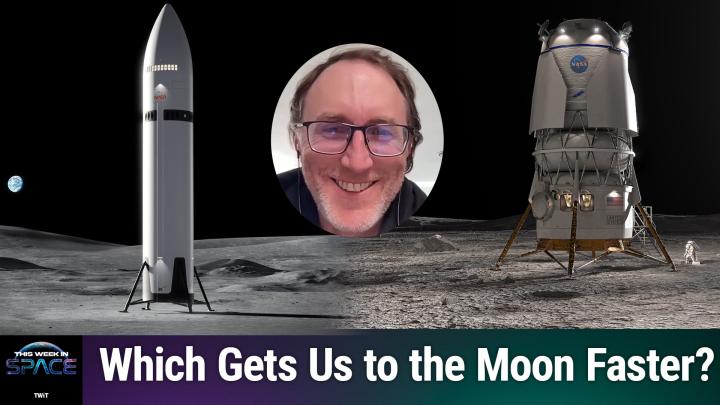
This Week in Space 183 Transcript
Please be advised this transcript is AI-generated and may not be word for word. Time codes refer to the approximate times in the ad-supported version of the show.
Tariq Malik [00:00:00]:
Coming up on this Week in Space, the battle over whether to chop up space shuttle discovery goes on. Artemis 2 is finally all together as a moon rocket. And we're gonna find out what acting NASA chief Sean Duffy really means about opening up the Artemis 3 moon landing contract. Aside from SpaceX with Mike Wall of Space.com. tune in, check it out.
Rod Pyle [00:00:23]:
Podcasts you love from people you trust. This is Turt. This is in space. Episode number 183, recorded on October 24, 2025. Lunar Lander Wanted. Apply within. Hello and welcome everyone to yet another episode of this Week in Space, the Lunar Lander needed. Apply within edition.
Rod Pyle [00:00:48]:
Yes, we're looking for a lunar lander. Where might we find it? Well, we'll keep looking. I'm Rod Pyle, editor in chief, Bad Aster magazine. I'm with my very own rocket man, the one, the only, the cleanly shorn Tariq malik. Hello, Chiefo, space.com who.
Tariq Malik [00:01:04]:
Oh, Rod.
Rod Pyle [00:01:05]:
For those of you listening to audio only, has shaved off his. His usual gristly, weak growth of beard and looks like he's about 14 years old.
Tariq Malik [00:01:15]:
I did. I shaved today. So, yeah, I could feel like a. A baby's bottom. Right?
Rod Pyle [00:01:21]:
Yeah.
Tariq Malik [00:01:21]:
Can you hear that?
Rod Pyle [00:01:22]:
Kind of. Unfortunately, yes. We're kind of missing your ruggedness. And we will be joined soon by that ace keyboard pilot@spare.com Mike Wall, senior space reporter at space.com Editor.
Tariq Malik [00:01:35]:
Space Editor.
Rod Pyle [00:01:36]:
Space editor now.
Tariq Malik [00:01:37]:
Yeah, Space and tech editor.
Rod Pyle [00:01:40]:
I got it wrong. Okay, well, before we start though, please remember to do us a solid. Make sure to like and subscribe and whatever else will give us positive kudos online for our podcast. Because. Because we love you. And we need you to show that you love us. And I'm about to cause you to hate us because I have yet another space joke from Andrew Logan.
Tariq Malik [00:02:03]:
Hey, Torren. Yes, Rudd?
Rod Pyle [00:02:06]:
What did he say when Captain Kirk asked? Scotty, hey, I heard you bought a couple of shuttlecraft engines at a yard sale while on shore leave.
Tariq Malik [00:02:14]:
What did Scotty say? I don't know.
Rod Pyle [00:02:16]:
I. Captain, it was an impulse buy.
Tariq Malik [00:02:18]:
I love it. I love. I love it. I love Star Trek jokes. I think that's great.
Rod Pyle [00:02:23]:
Yeah, we. We were talking before the show. That may have been a repeat. So for those of you who have listened since the beginning, my apologies, but I couldn't remember. And usually I. I have them annotated and I didn't now.
Tariq Malik [00:02:33]:
And if you didn't hear it, it's new to you, so there you go.
Rod Pyle [00:02:36]:
See, right now, I've heard that Some people want to frag our shuttlecraft when it's joke time in this show, but you can help send us your best work or mostly different space joke at Twist Twit tv just like he did, and we'll put it on the air and you'll be famous. To all 17 of our loyal listeners. Now it's time for headline news.
Tariq Malik [00:03:01]:
Headline news. Kevin, did I get it?
Rod Pyle [00:03:08]:
Well, I don't think Kevin could tell.
Tariq Malik [00:03:10]:
Oh, no, he's very close. Very close.
Rod Pyle [00:03:12]:
I think it's the downstream listener that has to tell us, but I mean, that's you doing the Apollo 17, Fred Fennell. Okay, I'm gonna tilt the camera just before the thing lifts off so I can track it all the way up. And I think you nailed it. So good for you. Speaking of nailing things, more headlines on Operation Shuttle Chop.
Tariq Malik [00:03:34]:
I wonder where you were going with that.
Rod Pyle [00:03:35]:
The battle between Texas and D.C. the Smithsonian in particular, heats up. Texas wants their shuttle.
Tariq Malik [00:03:45]:
Texas wants their shuttle.
Rod Pyle [00:03:46]:
Now, they like to say they want their shuttle back, but shuttles weren't built in Texas. They were built in where? California, right? That's right, yeah. North American. But Texas wants a shuttle. And just as a reminder to everybody, Texas has a shuttle at Space Center Houston down here at Johnson Space Center. But it's not a, quote, real one. It's actually kind of nicer than a real one. But it was.
Rod Pyle [00:04:14]:
I think it was a mate. D. Mate model, right?
Tariq Malik [00:04:17]:
Yeah, yeah, I think you're correct.
Rod Pyle [00:04:18]:
It was made for positioning on the launch pad, making sure the solids fit properly to the external tank, to the. To the orbiter and all that.
Tariq Malik [00:04:25]:
I've never seen that one. I should go check that one out.
Rod Pyle [00:04:28]:
It's kind of cool. But the coolest thing about it is setting on sitting on top of one of two real shuttle carrier planes. A 747 out in front and you can go and snoop around inside it and so forth, which you can't do with real shuttles. So this would give Houston area two shuttles. Problem is, to get it there, A, they need to raise twice as much money as they have, roughly according to the Smithsonian anyway, they being Texas. And B, they're probably going to have to cut up Discovery to move it. And these things are not designed, they're not Lego, they're not designed to be dismantled. They're designed to be in one piece.
Rod Pyle [00:05:03]:
And C, this is the best preserved of all the remaining orbiters. And Smithsonian's pitch is, you know, if you're going to study space planes in the future, this is the one. This is the one to have the.
Tariq Malik [00:05:18]:
Most flown of the orbiters.
Rod Pyle [00:05:20]:
Yeah.
Tariq Malik [00:05:20]:
We should probably point out there are people, Rod, who may not have heard, like, the rigmarole, like where this all comes from.
Rod Pyle [00:05:26]:
Give us the rigmarole, buddy.
Tariq Malik [00:05:28]:
Yeah. So Texas, it's Congressman or Texas Senators John Cornwyn.
Rod Pyle [00:05:36]:
Cornyn.
Tariq Malik [00:05:37]:
Corny. Cornyn. And Ted Cruz basically pushed to have a measure put in the one big beautiful bill that was signed on Independence Day this year that would have a flown US Spacecraft delivered to Houston so that it could be put on display there. And in, in his discussions, Ted Cruz has said they want Space Shuttle Discovery. And the only problem with that is that Space shuttle discovery since 2012 has been the property and the centerpiece of the space exhibit at the Udvar Hazy center, the Smithsonian Air and Space museum in Washington, D.C. in fact, I went to go see it earlier this year and they want that one and they're saying we deserve it. D.C. doesn't deserve it.
Tariq Malik [00:06:23]:
It should have always gone to Texas. So they want that. And now they're in a big fight with the Smithsonian over how they're going to get it because the Smithsonian pretty much owns it. Like NASA signed it over to them.
Rod Pyle [00:06:37]:
And the Smithsonian has, has like held up the paperwork saying, look, look, it's ours, right? NASA, the government agency, NASA gave us this shuttle, as they do all return spacecraft, at least initially, and they have property rights.
Tariq Malik [00:06:53]:
So now there's this dueling, these two dueling pushes. There's the Bring the Shuttle Home act, which is the act that the, the Texas senators put in this bill. And I think it's something like 20 million that they put aside that they're.
Rod Pyle [00:07:05]:
Saying it was 85 million, which is a. Not enough to move it and be certainly not enough to build a structure for it.
Tariq Malik [00:07:13]:
Exactly. And they're saying that it would be somewhere at a museum in Houston. The Johnson Space Center's Visitor center is probably like Space Center Houston, probably like the best place for it. But they don't have a structure there. I was just there last month. That could house it. And, and then there's the keeptheshuttle.org folks. That's the group that is saying, no, come on, you know, it's there, it's bought, it's paid for, all those things.
Tariq Malik [00:07:36]:
And, and moving it would do more damage than it's worth. So the latest, the latest chapter in this, and this is the story that we've got with Josh, dinner@spare.com and other folks have been covering it, is, is that the Smithsonian Sent a letter to Congress saying, hey, look, we look at this. Discovery is as it was when it, you know, as close to as it was when it landed. That's the whole point why it's in a hangar as if it roll off the tarmac. And it would cost, we think, up to 150 million. 120. 150 million, not this 80 plus million to move it to Houston. And because there isn't a plane that can carry it anymore.
Tariq Malik [00:08:15]:
The shuttle carrier aircraft, like you mentioned, are museum exhibits. One of them is already in Houston holding up its own mock space shuttle. The inspiration, I think, is what it is that you can go inside that. No one can carry it. So we'd have to ship it there on a barge. And in order to ship it there on a barge, you got to take the wings off, you got to take the tail off, you got to possibly even, you know, cut it in, in the midsection to get it to fit in a safe way to be able to transport it either through barge or across the land or in a ship or something like in a shipping plane kind of thing. And all that's going to do irreparable, irreparable damage. I believe they said, and I quote, you're.
Tariq Malik [00:08:52]:
Yeah, you'd be doing irreparable damage to this basically icon of space. And it's not just, you know, special Discovery, like we said, it's the most flown orbiter that we have. This was the return to flight mission orbiters for both 114 and SDS121. And so, you know, it keeps going on. Now, meanwhile, since this story has run, Senators Cornyn and Cruz have put out another statement saying that the Smithsonian is now locked in a illegal lobbying campaign to, to turn public opinion against the government for this move. Now that it's in like law that they have to look at this.
Rod Pyle [00:09:32]:
How shocking. We haven't seen any of that in the last nine months.
Tariq Malik [00:09:36]:
So, so it just keeps, it's like this spiral. Talk about like a waste of money. I mean, like the space shuttle is there already. You know, all, all museums had their shot to try to get these. So these orbits.
Rod Pyle [00:09:48]:
Excuse me, you just, you just put up an image of John Cornyn's webpage talking about the Smithsonian and their lies. You know, we just haven't seen this kind of rhetoric devoted at our prime national museum in the past. This is.
Tariq Malik [00:10:00]:
Yeah, they're saying that the Smithsonian is lying and trying to turn public sentiment against this plan and, and everything. It's, it's just, it's just, it's. It's childish what's going on. And meanwhile, you know, you know, the economy is what? The economy is 150. $150 million could pay for a lot of food for people that need it. You know, it could pay for a lot of school stuff or half of.
Rod Pyle [00:10:22]:
A White House ballroom or half of a white wall.
Tariq Malik [00:10:25]:
You know, did you see the satellite photos of that? Now they got satellite photos of it for them. Tearing it down. Yeah, that's the newest thing today.
Rod Pyle [00:10:31]:
Tearing down the east wing that they were going to.
Tariq Malik [00:10:32]:
Yeah. Yeah.
Rod Pyle [00:10:34]:
Okay, well, at the risk of drifting into politics, let's go to something. Oh, wait. This is political, too, but not quite so bad. Artemis 2 is stacked. That's right. Major step. The Orion capsule for the upcoming Artemis 2 mission has been plopped atop the SLS rocket, which had its solid rocket boosters affixed. Gosh, a year and a half ago now.
Tariq Malik [00:10:56]:
Yeah, you know, this is really sad because if there wasn't a government shutdown, we could have been there for this milestone event. This is the first ship of the 21st century to take astronauts back to the moon.
Rod Pyle [00:11:07]:
And now it's anywhere beyond Earth orbit.
Tariq Malik [00:11:10]:
Anywhere beyond. Yeah, that's right. Anywhere beyond Earth orbit. And now it's all fully assembled. So getting ready for rollout now. This is all happening at Kennedy Space Center. In fact, Lockheed just put out their announcement today about it as well, confirming that it all took place.
Rod Pyle [00:11:27]:
Lockheed Martin, builder of the Iran capsule.
Tariq Malik [00:11:29]:
Exactly. Yes. Thank you for the clarification. And so, so now basically they're all fully hooked up now. All of the integration stuff and steps are going to go on. They're going to do all the checks before they get ready for rollout. Rollout will be probably one of the next big steps. But what we heard last month that the big Artemis upfronts is that NASA kind of wants to do one rollout.
Tariq Malik [00:11:50]:
So they roll out to the pad and then they stay there until launch. So don't get your hopes up. Expecting a lot of action, especially now during a shutdown, because many of these people, if not most or all of them, are doing this work, not getting paid at all. Right. Because Lockheed Martin's a contractor and all the folks there are government workers. They're deemed essential. This Artemis work is deemed essential, as we heard from Sean Duffy, which we're going to talk about later today, the acting administrator of NASA. They're deemed as essential work to keep NASA on track for its.
Tariq Malik [00:12:22]:
Its plan to launch.
Rod Pyle [00:12:24]:
Excuse me, you say they're not being paid. But I thought that there was a set aside of funds specifically to keep Artemis going there.
Tariq Malik [00:12:31]:
There is, there is. It's not like inexhaustible though. They have to sign more checks. And so this week, I think is when the, a lot of the checks are being missed again. I, I, I don't see a lot of the ins and the outs of it. So I know that the, the military, they got to work around to get the military paid, but, and they're trying to find it for all of the other folks too, that were deemed essential, like air traffic controllers who were not getting paid, that kind of thing.
Rod Pyle [00:12:54]:
Oh, my lord. Yeah, we wouldn't miss them, would we?
Tariq Malik [00:12:57]:
Yeah.
Rod Pyle [00:12:58]:
Okay, next up, state funding for jpl, question mark.
Tariq Malik [00:13:03]:
This is, this is yours. Why don't you go ahead and explain this?
Rod Pyle [00:13:05]:
Yeah, this is a weird one. Yeah. So a California state senator representing the Pasadena district in Pasadena Lada. Flint Ridge is where JPL resides. It's, it's, I'd call it Pasadena, Jason, but Pasadena likes to claim it. And because it's run by Caltech for NASA and Caltech is smack dab in the middle of Pasadena. It's Pasadena. So this person has authored a bill requesting state funding to help keep JPL going in light of the massive federal cuts.
Rod Pyle [00:13:35]:
Now, I, I went on the website, looked to see what I could see. I did not see a specific amount. JPL is not a cheap field center to run. It's not the most expensive by far. They only get about a tenth of the NASA budget, as I recall. So it's still pretty small peanuts by that measure. But it's still a lot of money. And not sure how long the state, how much the state could put up and how long they could do it.
Rod Pyle [00:14:00]:
But I thought it was interesting. I'd never seen something like that before. And I thought, huh, that's, that would be very cool. Will it pass? I have no idea. But, oh, look at that big headline you just put in.
Mike Wall [00:14:11]:
Wow.
Tariq Malik [00:14:11]:
Yeah, I'm putting in some more because we're kind of ahead of schedule.
Rod Pyle [00:14:14]:
Okay. But, but I thought it was interesting, you know, is that I, I guess it's legal, you know, I guess the state decides. But I remember I was doing executive leadership training at Johnson Space center back in 2010, 2011, and we were in the then unrestored Apollo 11 mission control center. So it had, you know, cigarette burns of the seats and cigarette butts in the ashtrays and you know, the, the mission log books were still on the shelves. I mean, I Can't tell you how hard it was not to sneak one of those in my backpack. But while we were doing that, I said, you know, can we divert some of the revenue from this private program we're doing under a Space act agreement to the restoration of this center? And they, to, you know, to Johnson Space Center? And they snooped around and said, we cannot figure out any way to bring those funds in. So even if we had handed them a bag of shekels and said here, you know, here's a million dollars, I wish towards the restoration of this, they could not figure out a way to get it in. So it'd be interesting to see.
Rod Pyle [00:15:19]:
Maybe because JPL is run by Caltech, it's different because you're, you're basically just putting the money through Caltech, I suppose. But yeah, anyway, who knows? Can you, can you punch up the size of that type? A little bit.
Tariq Malik [00:15:32]:
So I'm just copying and pasting.
Rod Pyle [00:15:34]:
The Internet burn out completely.
Tariq Malik [00:15:37]:
I'm distracting Rod in the back end, everybody.
Rod Pyle [00:15:39]:
Sorry. So, you know, that's the extent of my knowledge. But, but I thought it was interesting, kind of heartening. So I hope goes through because I was talking to some JPL people last week and it's just, it's a morgue up there. You know, they've lost so many people. They're at I think about 24, 25% total cuts. And you know, JPL has contracted and grown and contracted over the years. Mostly though, that's contractors coming and going.
Rod Pyle [00:16:06]:
So they will slim down like I was a contractor, so they don't fire you, they just don't renew the contract. They say, sorry, we're out of money, we'll come back and we have some more cash in this case. These are people that have been there in some cases for many decades who have run major programs who are, you know, PhD scientists and engineers and have been working on, in some cases on something for more than a decade. And they just got their furlough. And of course because it's a federal installation, that means that security has to come over and you know, as nicely as possible stare at you while you stack all your things in a box and then walk you out the door and take your badge. It's, it's just shameful, you know. So, yeah, so anyway, that's that. All right.
Rod Pyle [00:16:49]:
You got any comments on that?
Tariq Malik [00:16:51]:
I just, I, I think that it's heartening. It's, it's, it's a very solutions based approach. Right. It says, look, look, the work needs to continue. What can we do right now in, in like this current environment to be able to figure out a way forward and on the state level? Right. And what do we have available? So, you know, I, I am heartened by it. I hope that they find a way around it. It is.
Tariq Malik [00:17:17]:
It doesn't sound like it's very rep. Re. Repeatable. Is that, is that a word? Was that the word I'm looking for? Like you can't also do it for other centers because JPL is so unique.
Rod Pyle [00:17:28]:
Oh, it's not reproducible.
Tariq Malik [00:17:29]:
Yeah, reproducible, that's the word. That's the word. Because. Because it's so unique.
Rod Pyle [00:17:34]:
So. Well, when California becomes a separate country, that will be our space program.
Tariq Malik [00:17:39]:
Do you remember when they were gonna like split California into two? Right.
Rod Pyle [00:17:43]:
Well, so we had two plans. There was Alta and, and Southern California, that was the original one. And now it's western and Eastern California, which is where the political divide is. So if, if you take the coast off to that side of the Highway 5, it's blue. And then if you go east of Highway 5, where 17 people live, it's red. Sorry I'm being snarky there. You know, there's a lot of really beautiful parts of California east of the five, if you've ever gone up into old gold rush country and stuff. But the money's on the coast, so it would be very tough, I think, for people east of the five.
Rod Pyle [00:18:16]:
And I'm just selecting that as an arbitrary denominator. I don't know if that's where it would be or not to function as a standalone economy, but, but who knows, you know, that may end up being part. Who knows, it's all silly. SpaceX launches its record breaking 139th mission of the year, which is, you know, I'm sort of mucking around here, but that is a lot. Now, I just got a press release the other day. Poor ula. Very proudly going to launch a rocket. But I think.
Rod Pyle [00:18:48]:
Have they had like one other launch this year? Two maybe?
Tariq Malik [00:18:52]:
Oh, I think they've had a couple. They've been really trying to get Vulcan, you know, back up to ground. But, you know, SpaceX has just blown everyone away and it's still only October as we're.
Rod Pyle [00:19:04]:
Yeah. And it's just astonishing. So, you know, despite the antics of Mr. SpaceX himself, Elon Musk, this country is plowing along. Well, thank you, Gwynne Shotwell, for your service. And it's just astonishing how quickly they launch. And I, I've said it before on the Show. But you know, being at Kennedy Space center where they launch two in one day, sometimes they launch two in a day from one side of the country and another from the other.
Rod Pyle [00:19:29]:
Over in Vandenberg, you know, these, this is an unheard of cadence of operations in, in rocket launching anywhere. Our closest competitor is China and they, they can't even come close to this yet. They will. Yeah.
Tariq Malik [00:19:42]:
And we should probably point out that for SpaceX in particular, they had to go back to like the FAA and to the, the powers that be to get new approvals this year for how many times they can launch. And they got up to 100, 100 launches out of Florida. And I believe recently, in recent weeks or months, they've got the same now for, for Vandenberg, which means they could go up to 200 when they really, I think last year they were saying maybe 150 is what they were looking for for this year. It seems like pretty clear that they're going to beat that if they need to.
Mike Wall [00:20:19]:
So.
Rod Pyle [00:20:19]:
And they'll potentially be launching Starship out of Boca Chica and Kennedy. Right?
Tariq Malik [00:20:24]:
That's, that's right. That's right. Because they are, they've been building the Boca Chica, the Kennedy pads for a while now and they're expecting their second pad to come online fairly shortly because the Starship Flight 11 that we just recently saw last month is the last one to fly from that current pad until they refit it so that it can handle more highly turnaround placements. Is that right? To faster cadence?
Rod Pyle [00:20:49]:
Yeah. Yeah. Well, and Boyd is the, this is an aside, but that, that new pad at Boca Chica looks nothing like the one that they had before with the big milk stool and all that. So I was kind of astonished at how, and you know, I'm really frustrated with SpaceX over the, the human landing system thing, which is a big part of our, of our second half today.
Tariq Malik [00:21:10]:
Yeah.
Rod Pyle [00:21:10]:
But I have to say, you know, when you see how the, the rate at which they're able to change and iterate and redesign even outstrips NASA in the 60s during the Apollo era, which is saying something. And they're doing it on nickels and dimes, the comparison.
Tariq Malik [00:21:25]:
Yeah.
Rod Pyle [00:21:26]:
So, yeah, it's pretty astonishing. All right, you pick the next one.
Tariq Malik [00:21:30]:
All right, well, we've got some time because we're waiting for our guest. I thought let's do a science one because we've talked a lot about spaceflight. So down over Kevin online, let's do line 30, if that works. And we have a new super Earth discovery rod of a planet that is super Earth. That's right, that's right. And it's 20 light years away. And they're really exciting, excited about it. It's called gj.
Tariq Malik [00:22:02]:
I think G is for glass, if memory serves. But GJ 251C and it orbits a red dwarf star about 20 light years away. I think the star is probably the same name, GJ251. So it's actually, it's 18.2 light years away in the constellation Gemini. And while the scientists, they say that they can't, and I quote, confirm the presence of an atmosphere or life on this planet, they think that it's one of the most promising targets for future explor because of the fact that it's, of its proximity around the red dwarf. And it's, it's, it's been interesting to watch the approach to red dwarf star planets that scientists have been taking because, you know, you think of a red dwarf as like a star that's kind of at the, what is it, the golden years of its life, right. Like near the, near the end of its lifestyle. But they're saying that these might be really good ones because the habitable zone is a bit more, what's the word? More forgiving for those planets because the red dwarf is much, you know, it's either much brighter or bigger or the plants are going to be closer to it.
Tariq Malik [00:23:11]:
And so they're able to see these, these more promising signs where they could have liquid water. And of course, on Earth, where we got liquid water, you've got life. And so they're kind of tagging this one as one that, that, that they want to make sure that they keep an eye on. And they've actually have something like 20 years of signs of this, this planet there, like looking back at the archived views of this star in that area, which really gives them confidence that, you know, it's got a. It's about 7.6 million miles from its star. It orbits every two weeks. And they were able to just trace its evolution and speed over what that makes them think that this could be a really great place for the potential life. Of course, we don't know if it has an atmosphere.
Tariq Malik [00:23:58]:
It could be a rock for all we know.
Rod Pyle [00:23:59]:
Hey, it could be, it could look like, sure, leave from Star Trek, you know.
Tariq Malik [00:24:03]:
That's right. That's right. You mean Risa, the sex planet?
Rod Pyle [00:24:07]:
Oh, you watch yourself. All right.
Tariq Malik [00:24:09]:
Ladies and gentlemen, the one planet.
Rod Pyle [00:24:12]:
Sorry, the only, the inimitable Mike Wall has entered the new ballroom so everybody stand by. We're gonna go to a quick break, and we'll be right back. Hey, everybody, it's Leo laporte.
Leo Laporte [00:24:22]:
Are you trying to keep up with the world of Microsoft? It's moving fast, but we have two of the best experts in the world, Paul Thurat and Richard Campbell. They join me every Wednesday to talk about the latest from Microsoft on Windows Weekly. It's a lot more than just Windows. I hope you'll listen to the show every Wednesday. Easy enough. Just subscribe in your favorite podcast client to Windows Weekly or visit our website at TWiT TV Windows WW. Microsoft's moving fast, but there's a way to stay ahead. That's Windows Weekly every Wednesday on Twitter.
Rod Pyle [00:24:54]:
And we are back with Mike Wall, the senior ace top dog space reporter, channel editor. What is your actual title, Mike?
Mike Wall [00:25:04]:
Like, I believe, like I'm the editor of Space Flight and tech@space.com. i think that's what it is.
Rod Pyle [00:25:09]:
Okay, that's. That's a pretty good title. I like it better than mine for Space.com, which is, as anybody who listens to the show knows, the preeminent website for all things space on the Internet. And that's saying a lot. So, Mike, thank you for joining us. Today. We are interested in learning. Well, kind of the burning topic writ large is what the hell are we going to do for Lunar Lander now that we've got everything else kind of more or less put together, except for spacesuits and Gateway and a few other things to get American astronauts and international partners down onto the moon over time? We're a few years behind, and this Lunar lander thing is getting kind of important.
Rod Pyle [00:25:50]:
So that's what we're going to talk about. But before we go there, I believe our partner Tarek has a question.
Tariq Malik [00:25:56]:
Well, we should probably remind people, Mike, who you are and how you got to space. So my question is always, who are you and how did you get to space?
Mike Wall [00:26:07]:
Yeah, I mean, I'm pretty simple to explain. I was. I don't know, I used to be biologist, but I always like to write. And so I worked as a biologist for a number of years, but I always wanted to write. So then I went and did like a science journalism course at UC Santa Cruz, and I applied for a job.
Tariq Malik [00:26:22]:
Banana slugs.
Mike Wall [00:26:23]:
Okay, yeah, go. Yeah, yeah, go. Banana slugs. And I applied for a job at Live Science to write about kind of biology stuff because that was my wheelhouse mostly. But Tarek asked me if I'd be willing to write for Space.com, which, which is a sister side of life science because there was more of a need there and that was like 15 years ago. I said yes. And I've been there ever since and learning more and more about space. And yeah, it's just been a lot of fun.
Tariq Malik [00:26:47]:
Big mad props, by the way, to my then editor Raw Robert Roy Brit, who said, you know what, this Mic guy is pretty good. We should probably keep him.
Rod Pyle [00:26:56]:
So I have two points I'd like to insert. One is I discovered some time ago when doing a post on Facebook, which was then pointed out to be dived by your also old friend Dave Brody, that it's very easy with a single keyboard slip to write it as lice science, which I had done on my Facebook post and was not particularly expressive. And Mike, I don't remember, was it the first or second time we met that we were doing that, that God awful Death Valley hike with John Curiosity?
Mike Wall [00:27:27]:
Yeah, I think that was the second time, I think. Yeah, but that was certainly. Yeah, but that was the first time we'd ever been out in the wilderness together.
Rod Pyle [00:27:35]:
So that's funny the way you put that.
Tariq Malik [00:27:38]:
The wilderness, desert. You guys are in the desert.
Rod Pyle [00:27:41]:
Look, I can see Brokeback Mountain from here. No, it was interesting because we went on this, this multi day excursion which was sort of a, it was a JPL gimme back in the day when they had money to do that kind of thing where they took some journalists out to Death Valley to sort of show what Curiosity might be prospecting on Mars. And we were there with the chief scientist of the mission, John Grotziger. Great guy, great. And you know, most geologists are great field guides of the sciences. Geologists are the ones that go out in the field and put their boots up and wear flannel shirts and smoke pipes and have campfires and you know, tell off color stories. So it was great fun.
Mike Wall [00:28:18]:
Wildlife biologists count too. Yeah, wildlife biologists do that too.
Rod Pyle [00:28:21]:
That's true. I was, I was thinking that in my head right as I said that, like, oh, archaeologists, field biologists, okay. But most of my experience with geologists, but during the daytimes we're climbing what for? Then extremely pudgy old me was fairly steep slopes to go see things. So I'm huffing and puffing with a stupidly heavy lead tripod and video camera and photo gear and all that. And at one point the very kind Mike Wall climbed all the way back down a mountainside to say, are you okay? And I said, I think I'm fine, but Invariably when we got to the top of whatever mountain we were climbing and this happened three or four times, Gratzinger would say, all right, now here you see a Paleolithic micro sheaf of the Hamidi Baba sedimentation. And it's very interesting because of the huba Jabba. But of course you'd never see this on Mars. Then he'd walk away, go to the next thing.
Rod Pyle [00:29:17]:
It's like, why did I come all the way up here? We'd go back down the hill.
Tariq Malik [00:29:21]:
But you know, hoopa jabba.
Rod Pyle [00:29:23]:
Right.
Tariq Malik [00:29:23]:
It was, it was interesting.
Rod Pyle [00:29:25]:
So, so that, that's part of our, of our non essential history. And I think the last time I saw you was for that high bay demo at jpl. I don't remember what we were looking.
Mike Wall [00:29:35]:
At was that we came down there for. That may have been a perseverance photo op like before the launch maybe. Right, right when it was being integrated and all that or being.
Rod Pyle [00:29:43]:
I think you're right.
Mike Wall [00:29:44]:
So that would have been like 2020 or 2019, maybe 19, I think.
Rod Pyle [00:29:49]:
Yeah. Just before the pandemic. So anyway, old friends and thanks very much for joining us.
Tariq Malik [00:29:54]:
So last minute too. Last minute joining us. So thank you.
Rod Pyle [00:29:58]:
Yes. Which we appreciate. So why don't we just jump in and if you could just kind of give us the groundwork here on what just happened with Duffy and then we'll go on to Musk's responses.
Mike Wall [00:30:10]:
Yeah.
Rod Pyle [00:30:10]:
Regarding the lunar lander.
Mike Wall [00:30:12]:
Yeah, it's been kind of a whirlwind. It's been all over, all over social media. So just, just the beginning of this week, I guess it was probably Monday or something like that, that the. Yeah, like the acting administrator for NASA, Sean Duffy, said that they plan to reopen the landing contract for the Artemis 3 mission, which was already awarded to SpaceX back in 2021. And so Artemis 3 is supposed, it's the big mission for Artemis. You know, it's the first, the first flight to put humans back on the moon since the Apollo days. It's been delayed a few times as part of that same announcement where Duffy said they're going to reopen it. He also kind of implied or kind of said directly that they're now targeting 2028 for that landing when it had been mid-2027.
Mike Wall [00:30:57]:
And that itself, that 2027 date was a slip from the original landing date, which was like late 2024 was the original one. And it slipped. It slipped numerous times. Now it's targeted for 2028. And so he said that on, I think CNBC on one of the morning talk shows. And so obviously Elon Musk did not really like to hear that and he took great offense and as part of that offense made a strong defense of SpaceX talking about how accomplished they are. Obviously with some justification, SpaceX has done amazing things. But the problem as NASA sees it, there are some kind of big tent poles for Artemis that are behind schedule.
Mike Wall [00:31:37]:
And one of them, in their view, or at least in the view of Duffy, is the landing system for Artemis 3, which is SpaceX's Starship. It's still in the testing phase. It's had two test flights in the last couple months and they've both been really successful, but it's still in the testing phase and it hasn't reached Earth orbit yet and it hasn't flown people yet. And so I think NASA is concerned, Duffy is concerned about Starship being ready to land astronauts on the moon in 2028. So that's what drove the announcement that they're going to see if some of SpaceX's competitors, he specifically mentioned Blue Origin, could they do it faster or better or cheaper or something. That's what provoked Elon's response about talking about he moved from beyond just a defense of SpaceX to broadsides against Duffy calling him Sean Dummy and talking about how he's got a two digit IQ and all this stuff. So went on the personal attack kind of mode which we, we have seen him do before.
Rod Pyle [00:32:37]:
Yeah, how unusual. So excuse me, Tarek, but let me just point out, you know, of the concerns on, on the using Starship as a human landing system. The other thing they haven't tested is orbital refueling. And as we've talked about a lot on this show, you know, what is orbital refueling? Well, in its essence, it's flying a spacecraft up, parking it in orbit and it's partially or fully empty at that point because it's expended large percentage of its fuel. Then you fly up other spacecraft to dock with it, pump fuel in and then return to Earth and make this loop. Now in the case of starship going to the moon, you have what is essentially a big cryogenic storage tank orbiting Earth, waiting to receive this fuel. And you're supposed to be flying, we don't know the number. It's been as little, as quoted, as little as six flights by SpaceX and as many as 24 by various fairly reputable sources.
Rod Pyle [00:33:33]:
So this is a little crazy sounding if you understand the choreography required to get multiple launches going in quick order, which SpaceX has got pretty good at, but not with Starship. This is a really big deal. Now all that time, however long it takes you to get all those flights up there to continue refilling this thing until it can go off and do its run to the moon. The fuel is boiling off because it's cryogenic and you can only keep it so cold for so long. So a certain percentage of it is venting out the sides of the tank while you're waiting for the next fuel tanker to come up. So it's always been kind of a, a crazy complicated design, but at the time that NASA awarded this, I think it was 2.6, $2.7 billion contract to get SpaceX started on the human landing system. It was kind of the only one that made sense because Blue Origin was at that point didn't seem to be making a lot of progress. Now they have a, a smaller version, cargo only Pathfinder version of their lunar lander coming up later in 26, right? Yeah, test flight.
Mike Wall [00:34:38]:
Yeah, that's, that's, that's what we think. Although we aren't, we aren't entirely sure when, When. Yeah, for the first time.
Rod Pyle [00:34:43]:
Well, because it wouldn't do for, for Blue Origin to actually tell us so. But you know, there's this big and. Sorry, Tarek, I'm jumping ahead a bit.
Tariq Malik [00:34:51]:
Here, but I know you're like so far ahead.
Rod Pyle [00:34:55]:
Anytime we've got this big top, heavy tipper, a tippy starship design, we still haven't seen landing legs for it. We still haven't seen a lot of things like life support and so forth put into it. It's supposed to land astronauts on the moon and bring them home. Meanwhile, we've got the Blue Origin design, which is a more traditional as much as tradition could be with one lunar, human, lunar landing system of the past, the Apollo lunar module with a wider stance of legs, lower center of gravity. I mean it just makes a lot more sense to the engineers I talk to. So I just wanted to give that background bit. And now Tarek over to you.
Tariq Malik [00:35:31]:
Yeah, I was going to tell everyone where Sean Duffy was making these claims. You know, we didn't say that earlier, you know, so all of this came out on Monday on, on in interviews that he was making the rounds with with CNBC Squawk Box, who's on Fox News too, doing the rounds. And I think that folks might have forgotten that SpaceX doesn't have just the contract, right, for Artemis 3, but for Artemis 4. Is that right, Mike?
Mike Wall [00:36:02]:
Yeah, the contract they signed back in 2021 it included Artemis III, but it was not just limited to Artemis 3. I think it was for Artemis IV as well. And then they. Yeah. And like a couple of years later, actually Blue Origin got like a human landing systems contract with NASA as well. That is like going to be for Artemis 5 and maybe one or two beyond that too, if, if that goes well.
Tariq Malik [00:36:27]:
So I have, I have a. This is for line 39, Kevin, just a reminder to try to illustrate what Rod was saying earlier about how, you.
Rod Pyle [00:36:37]:
Mean when I was stepping all over.
Tariq Malik [00:36:39]:
You, just the whole thing he said, by everyone. He said he had a follow up and then he just kept going.
Rod Pyle [00:36:46]:
I'm following in your footsteps is what I meant.
Tariq Malik [00:36:49]:
And he gave me the shush. Everyone heard that. They gave me this shush so that he could go on that tirade. So. But no, if we can show it real quick, Kevin, what Rod was saying about how the mission would be, because it seems like there's these two different.
Rod Pyle [00:37:07]:
Are you talking about Blue Origin?
Tariq Malik [00:37:09]:
This is the Starship 1 for line.
Rod Pyle [00:37:10]:
Starship.
Tariq Malik [00:37:11]:
Okay. Yeah, so, so you can see if for folks that are watching online and for folks that are listening, we have like the, the main starship launch which would, you know, go up into space. Then you have all of these refueling missions. Right now it only shows four Rod four, but it, it's just, it's just called the propellant aggregation mode of the mission. Then they actually launched the starship lander part and, and then they launched the, the Artemis III mission. So that goes up into space while, while they're refueling the lantern, it looks like here. Then they get the lantern all the way and you know, it looks, it links up with the Artemis and, or with the Orion spacecraft goes to the moon and then the, only the Orion spacecraft comes back. I guess the Orion moon, the starship moon lander just stays on the moon, you know, around the moon at that point in time.
Tariq Malik [00:38:03]:
But, but I mean this.
Rod Pyle [00:38:05]:
Well, excuse me, but that brings up an interesting point. So does that mean they're going to flip? I mean, how do you, if you have to refuel starship a dozen times to get it to the moon, how do you refuel it if it's in lunar orbit? Do you have to then have hundreds and hundreds of launches to. It's. It's weird.
Tariq Malik [00:38:22]:
So, Kevin. Yeah, for line 42 or. Yeah, 40. 42. Where's the one for, for 40? Was it 43? 43 for the other, the other Blue Origin graphic that we have, they actually lay out where they want to do the refueling stuff because they launched the refueler and, and this is, this is a separate graphic, but these graphics are from a 2023 report, by the way, everybody. I'll have to get the link, Kevin, for us to put it in the rundown because it said that there'd be moon landings this year. So keep in note that it's really dated. But the Blue Origin, the Blue Origin approach would launch a moon lander and then like a transit vehicle and then refuel that transit vehicle to get to the moon and then leave it at what I guess they expected Gateway to be there.
Tariq Malik [00:39:13]:
So they would leave that stuff up there at Gateway and the astronauts would get on at Gateway and then land and then the lander and the refueler thing come back and then it gets recycled all over again. They still seem really complicated, but it doesn't seem like that we're anywhere near either of these things. I mean, we don't know what Blue Origin is doing because they haven't even launched Mark1 yet for their Blue Moon mission.
Rod Pyle [00:39:35]:
But so, Tarek, excuse me, but before you ask Mike a question, we're way overdue for a break. So come break and then. Yeah, so let's go to a break, everybody, and then we'll refuel and we'll be right back.
Leo Laporte [00:39:45]:
Hey, everybody, Leo laporte here and I'm going to bug you one more time to join Club twit. If you're not already a member, I want to encourage you to to support what we do here at Twit. You know, 25% of our operating costs comes from membership in the club. That's a huge portion and it's growing all the time. That means we can do more. We can have more fun. You get a lot of benefits ad free versions of all the shows. You get access to the Club Twit discord and special programming like the keynotes from Apple and Google and Microsoft and others that we don't stream otherwise in public.
Leo Laporte [00:40:24]:
Please join the club. If you haven't done it yet, we'd love to have you find out more at TWIT TV Club Twit. And thank you so much.
Tariq Malik [00:40:33]:
So I guess the question that I had, Mike, after kind of going through those different kind of approaches, one that seems to rely on a Gateway space station, which we don't know if we're going to get, and one that doesn't seem like it needs it, but then we don't know what we do with the lander afterward. It seems like were nowhere near either of those things because as we're speaking, Blue Origin hasn't put like an actual functioning satellite into orbit, let alone their first lander. And, and like, as you laid out, Flight 11 was a success, so was Flight 10 for Starship, but they haven't orbited the Earth, they haven't done docking, they haven't done anything like that, let alone talk about crude stuff. So how do you open up a contract to reach 2028 for Moonlanders for astronauts, you know, when you don't even have anything near what seems like a vehicle astronauts could even ride?
Mike Wall [00:41:24]:
Yeah, I'm not sure. I can't get into these people's heads about why they do these things. You know, I mean, there's been some sort of speculation that the reason Duffy made this claim was, you know, to show Trump that he's, he's on it, that he's on the ball, that he knows that this is really important that the US Beats China back to the moon. Because that's something we haven't talked about in this discussion yet is what's sort of what's driving all the urgency for this mission and it's falling behind and we have to get there soon and blah, blah, blah. It's like, let's reopen the contract. It's because this current administration has made it a huge priority to beat China to the moon. China has moon plans of its own and has said repeatedly they want to land astronauts on the moon by 2030. And they have made a lot of progress toward that.
Mike Wall [00:42:06]:
They've had a whole series of successful robotic moon missions in the Chunk program. They're developing like a, kind of like a human lander that they're putting through tests and they're developing new rockets and testing them and they've, they're doing it sort of steady state, kind of one step at a time, getting there. And they're, they're taking more of, of the Apollo approach, which is like the flags and footprint sort of thing. Just design a lander just to get humans there, not to build like a, a sustainable base necessarily, which is what, what starship is supposedly all about. So China is doing it kind of the way we did it back in the 60s and early 70s, just to try to get there and do it. Whereas what the US has said it wants to do is bigger than that, it's tougher than that, it's to actually get a meaningful and long lasting human presence up and running near the lunar south pole. And that's a lot harder than just landing. So, yeah, that's the backdrop of it all.
Mike Wall [00:43:01]:
And yeah, it does seem weird to me knowing how hard this all is and how it's all new hardware. You know, it's not like we're just reusing Apollo. It's all different. And it's all coming from private industry for the most part, whether it be SpaceX or Blue Origin. Yeah, that's really challenging. And I mean, lighting a fire under people, motivating them, I don't know that SpaceX needs motivation to do it as quickly as possible because that's already how they work. So, yeah, it seems like it's just obviously NASA feels the pressure, Duffy feels the pressure, because this is a big, a big policy priority for the Trump administration to beat China to the moon. And he, he probably feels like he has to show that he's doing his bit and trying to, to motivate and trying to get everything going as fast as possible.
Tariq Malik [00:43:45]:
But is this similar or does it have the same weight as when Mike Pence got up at the National Space Council, Space Council meeting during the, the first Trump administration and basically said, look, we're behind on getting the Moon. We're going to get there by any means necessary. Which at the time felt like kind of like a, a dig at Boeing to say, get the SLS rocket ready, you know, we're going to replace that. But now they're talking about the lander. Does it carry the same weight or is it really more posturing to kind of set expectations?
Mike Wall [00:44:22]:
Well, I don't know. You know, I think it's meant to have the same effect, which is to, to get things moving faster. But, yeah, it's just, it's strange and it's, it's. I mean, it's not like Starship is the only part of this that needs to move fast. No, I mean, Rod, you mentioned spacesuits. Like, we, we haven't heard anything from NASA about spacesuits in a while, and spacesuits were, they're a key piece of this, you know, lunar spacesuits. What are the Artemis astronauts going to wear on the moon? That's a key piece of this. That has been behind schedule, too.
Mike Wall [00:44:47]:
And we don't really know how ready those are going to be or when they're going to be fully ready. So there are other pieces of these missions that need to come into place, too. It's not just Starship, obviously. And so, yeah, I mean, I don't know. I mean, having the same effect. We're in, we're in a different climate. Like the first Trump administration seems like a long time ago for a lot of people. I mean, just because so much is always happening.
Mike Wall [00:45:09]:
And this seems very different too because when Pence came out and said that, you know, like the, the, the, like CEO of Boeing didn't call him, I don't know, stupid or say he was stupid or say he had a two digit iq. I mean it's just different, different. You know, this provoked a different response because the target was a different person and a different sort of personality who is very used to kind of fighting these, these battles in the public sphere, so doesn't feel all that, all that similar. Even though maybe the, the, the like desired outcome is the same, is to get things moving faster. It just seems kind of worlds apart in, in several different ways.
Rod Pyle [00:45:46]:
You brought up the, the alleged goals of NASA wanting to build a more sustainable lunar bas near or at the lunar south pole, which is a whole nother conversation full of problems about operating in the cold and power requirements and what part of it's in sunlight, what part isn't. And the list goes on and on. And as our friend of the show, Pascal Lee points out from time to time, we still don't actually know what's down there. We just know, we think we've seen from orbit. But you got to prospect those regions to make sure there's really enough water and other stuff that you're interested in to go after it. But you know, it's, we've talked about this before on the show, I think when you were here as well. You know, this, this challenge of, oh, we've got to beat China to get humans back on the moon like we did in 1972, we wouldn't probably, I mean this conversation would be coming up, but not with the hot, with the white hot edge. It does.
Rod Pyle [00:46:41]:
Had there not been a proclamation in the first Trump administration that we're going to beat China, go back to the moon. He had just pivoted off of the asteroid redirect mission, which was okay with me personally because that was kind of uninspiring.
Tariq Malik [00:46:57]:
Oh, don't get me started. Yeah, lamest way, lamest way to get an asteroid. Okay, sorry.
Rod Pyle [00:47:04]:
Well, and you know, worth it to say, I mean, at one point they were going to go out and visit an asteroid where it lived, which is very cool. Then it was, no, actually we're going to send a robot out and bring back something the size of a beach ball and then we'll go visit that near the moon or wherever they were going to do it. It's like, seriously? Yeah, you guys expect to, to win public sentiment by having these two guys, you know, going over to knock on a rock that's, well, first they were.
Tariq Malik [00:47:25]:
Going to bring a whole asteroid back.
Rod Pyle [00:47:27]:
Yeah, sure they were. Yeah. And that was another one of those, those Hail Mary things. But so, so, you know, the Trump administration said, no, no, we're going to pivot to return the moon, which is fine. I mean, that's a laudable goal in many ways, but we wouldn't be having the discussion about the race and possibly cutting corners to sort of, in a, in a way, we're not repeating the sortie style missions that Apollo did. But by trying to compress the schedule, you are reallocating funds into, I think arguably, you tell me some things that are more oriented towards short term gains than this true bigger scope program they're talking about.
Mike Wall [00:48:06]:
Yeah, I mean, I'm not sure if we wouldn't have the same urgency if Pence hadn't kind of made that speech at the National Space Council because there are a lot of people saying similar things in the US Military too. It's been sort of a steady drumbeat from in, in like US Officialdom for the past like seven or eight years warning about the rise of China. And I mean with, with a lot of justification. You know, China has become a huge space player and they clearly have eyes on becoming the dominant space power. So all this concern, you know, it's not just from the first Trump administration to the second Trump administration, it's been from US Military officials too. And so I like, I think some form of this have to beat China, stay ahead of China kind of thing that we're seeing in full voice now would still have kind of come into play because I think it's always been kind of simmering in the background in the US Government circles. It's something that people notice and people talk about in the private sector too. And China is like, they're putting up tons of satellites.
Mike Wall [00:49:04]:
They're very secretive about it too. You know, most of their launches they don't say what's on it or they say it's just like Earth imaging sort of spacecraft for, for natural disaster monitoring or whatever. But they're almost certainly mostly some kind of spy satellites and they are getting very good. And the US Military is legitimately worried that their space capabilities are going to rival ours soon. And so this China thing, this moon thing comes to be kind of symbolic about if they beat us to the moon, even though it's going to look bad for our politicians because it's a, it's a public black eye in that way. But it's also just, it's symbolic of their space capabilities getting to a point that may exceed ours. And so that's just, that's, that's kind of scary and yeah, like, in a different way. I mean, that's what the space race with the Soviet Union was all about.
Mike Wall [00:49:52]:
Right? It was like, well, if you can land a man on the moon before we do, then that means that your, your, like, rocketry and sort of missile programs are probably better than ours. And that's going to manifest on the battlefield or it could, if it comes to that. So there's all these different kind of national security things going on in the background of these statements, too.
Rod Pyle [00:50:10]:
Well, we know the Space Force has a large budget. I think it's, it's larger by a fair shake than NASA's. They got plenty of money. I say let them handle all that orbital dominance nonsense and let's worry about the, the geopolitical smack of the face we're going to get if we, if we don't do this race properly. Let's. Speaking of racing, let's race to another break and we'll be right back.
Tariq Malik [00:50:32]:
It's really interesting, Mike, what you point out about the China stuff, because if I recall, during just the previous administration with Biden, Bill Nelson, NASA administrator at that time, was also rattling the sabers about China to try to really keep things on track. Very notable. Keeping the, the, what do you call it, the momentum. Right. Of the, of the program going after the first Trump administration, which we hadn't seen for a while where you, you kind of didn't change tracks as drastically as we'd seen before for, you know, you mentioned earlier about spacesuits, and if memory serves, Axiom Space has the contract, right, with Prada to, to build spacesuits for, for the Artemis 3 moonling. Is that right or is it somebody else?
Mike Wall [00:51:16]:
I'm not sure off the look, it's, it's been a while since it's Axiom.
Tariq Malik [00:51:19]:
It is Axiom. Yeah.
Rod Pyle [00:51:20]:
Yeah.
Tariq Malik [00:51:20]:
And we haven't heard a lot about that either. So.
Rod Pyle [00:51:22]:
No, we've heard nothing actually since. I can't recall actually hearing any news about that since they got Prada involved, which sounded silly when they did it. But they said, look, they know a lot about fabrics. They know a lot about assem and that kind of stuff. So it's kind of like, okay, well, that's a good PR move and probably makes some scientific sense. But yeah, the last thing I heard since the Prada Story was just that they were behind schedule. Behind schedule. Behind schedule.
Rod Pyle [00:51:46]:
Well, yeah, with both that and their space station, by the way, it can't be.
Tariq Malik [00:51:50]:
It can't be more than SpaceX though. So I don't know, it's a little sad to me and Mike, I think you were here for this to, to, to know at space. I mean, in the last 15 years that we were supposed to land back on the moon like five years ago. Right. With Constellation, if they had funded it all the way through and I thought it was 2016. Well, they were, they. It was 2020 was the goal to return astronauts to the moon. And, and so the.
Tariq Malik [00:52:22]:
All the rockets were supposed to be ready by 2018, if memory serves. And we ended up launching what we launched One Aries mission, Ares 1X, the candle on a rocket that was already canceled by that point. And.
Rod Pyle [00:52:40]:
Well, notably. Excuse me, but notably, Notably, that was the. Was it, was it an Orion capsule at that point for Aries 1x?
Tariq Malik [00:52:49]:
It was a, it was a placeholder. I think it was like.
Rod Pyle [00:52:51]:
Yeah, it was like a boilerplate or something on effectively an upgraded SRB from the Shuttle era that, as it turned out, if I recall correctly, would have killed the astronauts had they been in it by all the banging around and the G forces it generated.
Tariq Malik [00:53:06]:
Really?
Rod Pyle [00:53:06]:
Is that right?
Tariq Malik [00:53:06]:
I don't remember. Yeah.
Rod Pyle [00:53:08]:
Do you remember, Mike?
Mike Wall [00:53:09]:
I think this is.
Tariq Malik [00:53:11]:
It might have been before Mike joined us.
Mike Wall [00:53:12]:
Yeah, I was not around. I like, came on just after Constellation got canceled, 2011.
Tariq Malik [00:53:17]:
And so this must have been 2009. 2008.
Rod Pyle [00:53:21]:
I think it was 2008. Yeah. Anyway, it was. It was not successful and quietly got shelled. But yeah, it's. Talk about timelines.
Tariq Malik [00:53:31]:
Omega was supposed to be that, right? The Omega rocket was supposed to be a version of that, a commercial version of that by Northrop Grumman.
Mike Wall [00:53:37]:
All this stuff just sort of. It just puts into relief how tough NASA's job is. Right? Because. Yeah, because you talked Tarek about how during the Obama years there was, well, let's go visit, let's send astronauts to an asteroid. And then it was like, actually, no, let's bring an asteroid to Earth orbit. Or actually, no, now let's just go capture bits of an asteroid and bring it back. And then it's like, no, actually, we're going back to the moon. So when people get mad at NASA for how slow they're moving, they should keep in mind that NASA gets jerked around like this all the time.
Mike Wall [00:54:05]:
I mean, these are the directions coming from the top and they just have to react to it. So they were told to do Constellation. And then, then they were told, no, actually, we're not going back to the moon now. We're doing this asteroid thing. And then they were told, well, actually, we are going back to the moon, so let's do that. So it's just really tough for them. They're kind of like the fall guy for a lot of these comets. Like, why is it taking so long? We went to the moon 50 years ago.
Mike Wall [00:54:26]:
We can't do it again. It's like. Well, because all the priorities keep shifting and NASA just has to keep adjusting, so it's really tough spot to be in for them.
Tariq Malik [00:54:35]:
That's a very good segue. Yeah, go ahead.
Rod Pyle [00:54:38]:
And it's a trickle of money compared to what they had the first time.
Mike Wall [00:54:41]:
Oh, yeah, yeah, yeah. Just, just. Yeah, yeah. I don't mean to interrupt, but just to, for, for perspective, you know, during, like, the height of the Apollo days, NASA got about four and a half percent of the federal budget. And now it's like 0.4% or something like that. And going down, Down.
Rod Pyle [00:54:56]:
Yeah, down, down, down. And there, there still, as we say, a lot on the show, you know, back in the mid-60s, at the height of the Apollo program. So I think that that budget you decided was like 65. You know, when they were partial building Saturn Vs and so forth, they were flying the occasional inexpensive robot out to Mars or, excuse me, to the moon or to Venus. And they were just doing Mariner 4 out to Mars at that point. That was it. And a few satellites. Now we've got hundreds of satellites in orbit.
Rod Pyle [00:55:29]:
We've got orbiters around Mars. We have two rovers still working on Mars. We've got Juno out at Jupiter for as long as that lasts. We're still tracking Voyager on and on and on. I mean, there's stuff all over the solar system.
Mike Wall [00:55:39]:
New Horizons.
Rod Pyle [00:55:40]:
Yeah, and. Yeah, and beyond. And you're trying to do this Apollo follow up with mostly newer hardware, some of its legacy, unfortunately, for just a tiny percentage of the cost and involving private vendors in a way you never did before. So on the one hand, it's kind of revolutionary and, gee, we're trying all these new things. I hope they work. And on the other hand, and it's like, was this really the best decision? If you're trying to beat China, which, as you say, is following very much the Apollo footsteps almost lockstep in a lot of ways, except that it's multiple launches to get out to the moon, but they're doing A very methodical, step by step thing in stark blazing contrast to what we're doing. And speaking of starkness, let's get our last break out of the way so we can come back to Tarek with his next burning question. Standby, burn away.
Tariq Malik [00:56:34]:
Yeah, I thought all of that is a really good segue to just. Mike, what your assessment right now given a bit how tumultuous this week has been about where NASA is. We are still all of this has happened with the the background of a government shutdown going on. The Artemis 2 rocket is all fully stacked now. We, we you and I thought we'd have a writer, a reporter down there for that event. Obviously, you know, because of the shutdown they're not having any events around that. So you know, I guess this is a probably just a quick, you know, where are we right now with NASA? There's budget issues right that were that are going on. There's layoffs that are going on.
Tariq Malik [00:57:18]:
Seems like a lot of confusion. Plus, yeah, I guess Jared Isaacman is coming back from the zombie grave of NASA post. Right.
Mike Wall [00:57:27]:
Maybe that's the rumor is that he's back in the good graces perhaps and might come and get the NASA top job. And that's sort, that's that kind of colors some of yeah some of the Duffy Elon feud stuff because Elon was a backer of Isaacman supposedly and certainly knows him because Jared eisenman flew to SpaceX Missions to Earth orbit. And so I mean, yeah, it is tough. I mean it's tough to know exactly what's going to happen because we don't know how long the shutdown is going to go. I mean NASA, as we've just been talking about in the last segment has been pretty beleaguered. They've are there, I mean currently 15,000 of their 18,000 employees are on furlough. The, the sort of Artemis prep work has been exempted from the shutdown. It's viewed as a national priority.
Mike Wall [00:58:09]:
So that work continues. The whole Artemis 2 prep work which is going to launch for astronauts on a mission like around the moon, not, not to land on the moon or to orbit it, but to kind of do a loop around it and come back back that that's supposed to launch in like early February.
Tariq Malik [00:58:22]:
Do we know if they're getting paid the Artemis 2 workers? I, Rod and I were talking about that earlier and I thought that they.
Mike Wall [00:58:28]:
Weren'T but I don't know. I'm not sure. It's just tough to know because you can't Talk to any people.
Rod Pyle [00:58:35]:
So how would you like to be preparing to board a lunar spacecraft for your 4 to 9,000 mile pass beyond the moon, knowing that everybody working on it and tanking it up and preparing everything is working for free and kind of probably pissed off. Yeah.
Mike Wall [00:58:48]:
I mean, it's scary enough even if everything's going great, Right. You're still getting on a rocket that's going to take you beyond the moon and it's never, hasn't happened in 54 years or whatever. That'd be scary enough if everything was going perfect. But. Yeah. And it's just. Yeah. Going back to the, the NASA writ large, you know, NASA's losing or has lost or is scheduled to lose 21% of its workforce in general too, just from, just from the, like the deferred resignation programs and cuts that the Trump administration is making.
Mike Wall [00:59:14]:
So you're already looking at, I mean, thousands of people who are not coming back anyway, even before the shutdown stuff happened. So. And then there's talk also, we didn't talk about this in the Duffy v. Elon stuff, but, you know, there's rumors that Duffy wants to fold NASA into the Department of Transportation, which he also leads. And that would make NASA not an independent agency, but part of a larger one. And so there's just all this turmoil. I know it feels like all we do is talk about uncertainty and turmoil, but that's sort of, of, that's the world that we're kind of living in now is we aren't sure what's happening or what's going to happen. Just like who even knows how long this shutdown is going to last? You know, we talk about what, what, what was the longest, most recent shutdown? It was like 38 days or something.
Mike Wall [00:59:54]:
I mean, I don't know if we can use it as a precedent because it's a totally different climate now and you have two sides that seem pretty dug in. And I would be not confident at all making a prediction about how, but how long this is going to drag on, I have no idea.
Rod Pyle [01:00:08]:
Well, speaking of predictions, I will ask you what you think we might be looking forward to if Isaacman does get the top slot. Will things change or are we basically going to be on the same kind of countdown?
Mike Wall [01:00:23]:
I don't know how much things could change that. I mean, he, I think he'd be a good choice for the job. I'm not saying Duffy is not good. I don't know enough about him. But, but you know, Isaacman has a track record of, of knowing about space and caring deeply about it. And he has like a history with it. It's obviously a passion of his. And a lot of people in the spaceflight community, both on the agency side, like the lifelong employee NASA side and the industry side are big fans of his and think he would do well with the private space kind of nexus that NASA wants to strengthen over the years.
Mike Wall [01:00:56]:
So just in that sense, just seeing how broad his support is across the various kind of, yeah. Kind of spaceflight constituencies, I think it would probably be a good thing for NASA. But I mean, I mean who even knows? I mean it's tough to predict.
Tariq Malik [01:01:10]:
It's interesting because you know there's, there's, there's the entrepreneur side here is a self made billionaire who I, the diner I go to has shift four payment systems. So I think about Jared Isaacman.
Mike Wall [01:01:24]:
Oh yeah.
Tariq Malik [01:01:25]:
Every time I go there because that's the private primary company.
Mike Wall [01:01:29]:
And like he started that stuff when he was like 17. He started his first company.
Rod Pyle [01:01:32]:
He dropped out of high school.
Mike Wall [01:01:33]:
Yeah, yeah.
Tariq Malik [01:01:34]:
And so, so there's that part of it. Then he's the accomplished, you know, fighter pilot because he owns the largest private space. Space. Air Force, Air Force around that, that trains pilots. And then of course he's flown to space twice, done a spacewalk through these missions with SpaceX. So then that satisfies the folks that are like, like, you know, you're not serious about space because he's got that pedigree. And then overall we saw on the political side during his hearings and nominations, he has an appeal to kind of both sides of the political spectrum through the fact that he has donated to both parties in the past and everything was very plain about it.
Mike Wall [01:02:18]:
Yeah, well that's why Trump pulled his nomination in late May, I guess.
Rod Pyle [01:02:23]:
Allegedly.
Tariq Malik [01:02:24]:
Allegedly.
Rod Pyle [01:02:24]:
Yeah. Because he had only known about those donations for six months prior.
Tariq Malik [01:02:28]:
Yeah. And so, so like it really does seem on paper like a, A, a, a very clear decision that if, if you've got that as in terms of like having a, a full time administrator, not an acting administrator, like, like why not have that? I, I guess that, so I, I, you know, I was, I was skeptical of Bridenstein prior, you know, because of his own political leanings in the past as a Republican. And that really kick started and got things rolling, really getting the ball going to get, to get, you know, back to the, to the, to the moon. And I think everyone was, was fairly pleasantly surprised thinking that this was going to be someone that was going to be, you know, what do you call it? A rubber stamp for the administration. And it really wasn't that at all. But that's the difference that we see, I think.
Mike Wall [01:03:21]:
And yeah, so that just the fact Isaacman has widespread support from both sides of the aisle. He was on track to get confirmed by the Senate for the post before it was suddenly put out from under him. And also just the fact that he has the support of lots of people in the space community. Like I was talking about, like you were mentioning Tarek about, for, for what he's done. And this is obviously a passion for his. So I think, so I think people feel like once he, if, if like he gets into the job, he would attack it with like enthusiasm and integrity and lots of care. And I think part of the thing too, I mean Duffy is also, he's the head of the Department of Transportation, so he's like leading NASA as like a side gig. And I think a lot of people would like to see somebody with NASA as their full, their full attention.
Mike Wall [01:04:05]:
Their full attention. So I think that's, that's, that's also part of it is like, I mean I'm, I'm not advocating for anyone in particular, but that's, that's the argument for, for Isaacman, I think for, from a lot of people's perspective.
Tariq Malik [01:04:17]:
We talked a lot about Artemis 3 for this, this, this call. But as we mentioned, Blue Moon, Blue Origin had the, the Blue Moon Mark II at least initial contract for, for an uncrewed flight. And then the Artemis flight.
Rod Pyle [01:04:31]:
Lunar lander.
Tariq Malik [01:04:32]:
Yeah, Lunar lander for an unaccruited Blue Moon flight for landing. And then another, an actual crewed flight for Artemis 5. Is it too early? Talk about Artemis 4, 5 and 6. You think we got to figure out where things are.
Mike Wall [01:04:44]:
I think we can't talk about anything beyond Artemis 3. I feel weird talking about Artemis 3 before Artemis 2 because who knows when Artemis 2 is going to launch. I mean they say it's on track for early February. That's the earliest it could launch. There's like a February 5th to April 26th. There's something. I forget what the end of the window is, but.
Tariq Malik [01:05:03]:
25Th birthday launch. I'm just saying. NASA, right?
Mike Wall [01:05:06]:
Yeah, but it's like, let's get through. I mean each of these steps is so huge. You know, let's just not assume everything's going to go on time and on schedule with Artemis 2 and then we'll just slide right into Prep for Artemis 3. I think this is a very difficult and time consuming and complicated process. And I think each Individual milestone should be celebrated with the, with the enthusiasm that it deserves because, yeah, we can't take this stuff.
Tariq Malik [01:05:29]:
Yeah.
Mike Wall [01:05:30]:
For granted at all.
Tariq Malik [01:05:31]:
I think what you don't want is a launch in 2026 and then nothing for three years, you know? Yeah, I think that's the, that, that you don't want to stagnant like that. So.
Mike Wall [01:05:39]:
Yeah.
Rod Pyle [01:05:40]:
Yeah, I kind of, I kind of miss the old reflections of the 1950s Disney TV specials about how we're going to conquer space. With Werner von Braun flying 950 orbital shuttle missions to build the space station and assemble his moonship. And we get to the moon and we have a base there and then, oh yeah, by the way, we're sending our motto, 10 Ships to Mars with gliders that are going to go down and land on the surface and do a trans world hop from the pole down to the equator and blah, blah, blah, blah, because how hard can it be after all? And it turns out it's pretty, pretty damn hard. Mike, my last question for you is, do you have any other stories on your radar you're able to divulge to give us some, you know, happy insights into what's coming next?
Mike Wall [01:06:27]:
They got to know about. I mean, not about snappy insights. I think we're all just, we're all, we're all interested. I mean, we've been talking about starship a lot. So it's worth mentioning that this previous flight, Flight 11, which was like, I think like on October 13th, that was the last launch ever of version two of Starship. And so the next one's going to be version three, which is bigger, better, bigger, better, better. It's got like an advanced version of the Raptor engine, apparently. And so that's something we should at least like, at least mention is that with each iteration of starship, you know, Musk and SpaceX say each one's going to be a lot better than the previous one.
Mike Wall [01:07:01]:
So. And they, they have said, you know, all this talk about orbital refueling is a huge hurdle. Like, yeah, like you're saying, Rod, it doesn't matter how many times you have to do it, whether it's 6 or 8 or 12 or 16, doing it is going to be a big challenge to get those moon missions ready to go. And so they actually say, SpaceX says they're going to do orbital refueling for the first time on a starship flight next year with the V3 Starship. So that's a huge thing to watch for, is if and when they try that, how successful it is, if they're able to show that they can do that and also land the ship like the upper stage, like to come back to Starbase in Texas, the launch site, and be caught by the, the chopstick arms of the launch tower like they've done with the super heavy booster a few times. Now. Once they're able to do that, once they're able to do orbital refueling, that they still got to do life support, which I know Elon likes to explain away as it'll be easy. We did it with Dragon, but doing it for Starship, like, I don't know, that's, that's another big hurdle.
Mike Wall [01:07:55]:
But it's just like I was saying earlier, you know, celebrate these, these hurdles as they get knocked off or as they get surmounted because, you know, I mean, orbital refueling is a big one. And if they're able to do that next year, then we can talk about these moon missions with a little more confidence and start, start like maybe looking at real timelines for Artemis 3.
Rod Pyle [01:08:13]:
Yeah, well, tick tock, Mr. Musk. Well, I want to thank everybody for joining us today, Mike, especially you. Thanks for coming at the last minute for episode number 183 that we like to call Lunar Lander Wanted. Apply within. Mike, where can we keep up with what you're doing?
Mike Wall [01:08:32]:
Just come to space.com like you can find me there. I'm like, nominally on X, although I'm not very active. Yeah, just come to space.com I have stories there and you can, you can find out all you need about me there.
Rod Pyle [01:08:45]:
All right, everybody, you heard it here. Go to space.com speakingofspace.com Tarek, you.
Tariq Malik [01:08:50]:
Well, you can find me@space.com as always, just like Mike. Also on the Twitter and Blue sky and Instagrams and all of that @tarikj. Malik, you can find me on YouTube @spacetronplays. Having a good time playing all my fun video games. Outer Worlds 2 comes out next week, so we're gonna have to see if we can get Outer Worlds one in the can for that. And this weekend, hopefully seeing Tron. I'm a week behind on that Rod, the new Tron movie.
Rod Pyle [01:09:16]:
Tron. Yeah, I almost would see it yesterday, but decided to go see Black Phone 2 instead.
Tariq Malik [01:09:21]:
We could have seen it together.
Rod Pyle [01:09:24]:
That's right. We could have gotten on our phones and texted back and forth while we were watching. How many followers do you have or subscribers do you have on YouTube now?
Tariq Malik [01:09:31]:
I have 453 and I love every single one of them.
Mike Wall [01:09:34]:
Wow.
Rod Pyle [01:09:36]:
Wow, you are building it.
Mike Wall [01:09:37]:
Up.
Rod Pyle [01:09:38]:
And of course you can find me subscriberless@pilebooks.com or@astromagazine.com among other places. Please remember you can always drop us a line at twistwit tv. We do welcome your comments, suggestions, ideas, insults, challenges, whatever you got. And we do answer each and every email message. New Episodes this podcast publish every Friday on your favorite podcaster, so make sure to subscribe. Tell your friends at Gibbous Reviews we'll take whatever you got and as many stars or thumbs or whatever denomination you want to use to tell the world how much you love this week in Space. Our website is Twit TV Twist Twis. You can also follow the Twitt Tech podcast network at TWiT on Twitter and officially Facebook and Twitter TV on Instagram.
Rod Pyle [01:10:27]:
Gentlemen, thank you. It's been a pleasure. Mike, I look forward to seeing you again. Tarek, let's get that guy microphone.
Tariq Malik [01:10:33]:
Yeah, I'll work on it. I'll work on it on my end. So.
Rod Pyle [01:10:38]:
So thank you gentlemen. Thank you, Kevin for flying the board today and we'll see everybody next week.