This Week in Space 174 Transcript
Please be advised this transcript is AI-generated and may not be word for word. Time codes refer to the approximate times in the ad-supported version of the show.
Tariq Malik [00:00:00]:
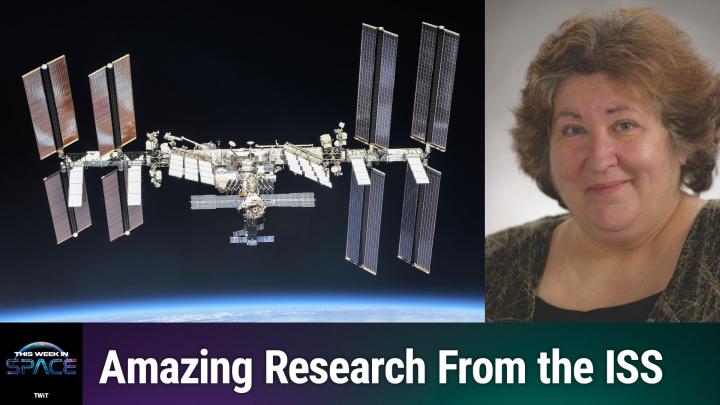
Coming up on this Week in Space, There's a new moon around Uranus. SpaceX's Starship is ready to fly again. And if you've ever wondered how those really life changing spinoffs come from the International space station, well, NASA's Lynn Harper is going to clue us in. Tune in.
Rod Pyle [00:00:15]:
This is this Week in space, episode number 174, recorded on August 22, 2025. Gifts From Orbit. Hello and welcome to another episode, this Week in Space, the Gifts from Orbit edition. And I should say special edition, because this one is extra crispy and extra cool. I'm Rod Pyle, editor-in-chief of Ad Astra magazine. And as always, I'm here with that orbiting personality himself.
Rod Pyle [00:00:47]:
Tarik J. Malik.
Tariq Malik [00:00:51]:
Yay. Hey, Rod. How's it going? How are things?
Rod Pyle [00:00:55]:
Things are okay, but things are going to be better in a few minutes because they're going to be joined by Lynn Harper, who is the lead for strategic integration for NASA's in space production applications or Inspire. And if you haven't heard of them, I won't be too surprised because I had neither until a few months ago. But this is a story about a lovely lady. This is a story about what's coming to us from the ISS. I mean, Malik, you and I are space journalists. We've been doing this a long time in our different channels. I've been right books. You've been running Space.com forever.
Rod Pyle [00:01:28]:
I didn't know most of this. Yeah, and I'm kind of embarrassed to say so. I mean, it's probably buried somewhere in the 1777 edition of NASA spin offs, but I honestly hadn't seen most of this. We're talking everything from, you know, growing new hearts and retinas and kidneys to literally curing cancer, Alzheimer's, dementia, better fiber optics, better micro semiconductors. Semiconductors, you know, and people making. Making money that. That makes Apple and Microsoft look like small players.
Tariq Malik [00:02:03]:
It's good stuff.
Rod Pyle [00:02:04]:
Yeah.
Tariq Malik [00:02:05]:
Good stuff.
Rod Pyle [00:02:05]:
So this is. This episode's got a little something for everyone. But before we give you that something, we need you to do us a solid. Make sure to like and subscribe and do the other things for podcasts that you do to let the world know how wonderful are. We're counting on you. And now another space joke, this one from Mark Turner.
Tariq Malik [00:02:25]:
Mark.
Rod Pyle [00:02:26]:
Hey, Tarik.
Tariq Malik [00:02:27]:
Yes, Rod?
Rod Pyle [00:02:28]:
What did the Italian space cowboys say to the other Italian space cowboy?
Tariq Malik [00:02:33]:
I don't know what?
Rod Pyle [00:02:35]:
That's not Europa.
Tariq Malik [00:02:38]:
Wait oh, oh, wait, I get it, I get it.
Rod Pyle [00:02:41]:
Maybe I should say the Italian space cowboy who was spinning his lasso. And I've heard that some people want to lasso us when it's joke time in this show or worse. But you can help by sending your best, worst or most indifferent space joke to us at TWiT TV, man. Certainly already on the Discord.
Tariq Malik [00:03:00]:
Robot robo means clothes, right?
Rod Pyle [00:03:04]:
No, it means rope in this context. Somebody already has the Pink Panther with a, with a lasso up on the Discord. That's. How do they do this so quickly? Wow. I think John tipped him off. All right, now it's time for headline news.
Tariq Malik [00:03:24]:
Headline news.
Rod Pyle [00:03:29]:
So, Tarik.
Tariq Malik [00:03:30]:
Yeah, I know.
Rod Pyle [00:03:31]:
Heal my wounded soul. So I don't know how to say this without sounding political. I don't mean to be, but Sean Duffy, our new interim God we hope administrator at NASA, who, who's also running the Department of Transportation, which kind of deserves a full time person on its own, in my opinion, has finally, I think, you know, we had a question as to what exactly would his role and purpose be at NASA. And we now know, at least I feel, I know, that it's to swing the hatchet.
Tariq Malik [00:04:04]:
Yeah, he said the quiet part out loud this week.
Rod Pyle [00:04:07]:
Yeah. Spend the money. So he just came right out and said it. We're going to kill all the Earth science at NASA because NASA has no business looking at Earth or the climate or topography or ocean temperature, anything like that. It's all about exploration and moving onward. And unfortunately, it's pretty clear that Sean has never read NASA's founding charter from 1958.
Tariq Malik [00:04:27]:
Yeah. In context for this last week, the FAA celebrated like 1001 commercial launches slash reentries. And as a way of kind of doing a victory lap about that, you know, for the Department of Transportation. Duffy, who also leads the Department of Transportation, was doing all the rounds about how great that was. And he was asked in a Fox Business interview about the purpose of exploration in space. And he said specifically it was the purpose of NASA is for the exploration of space, not to understand Earth's climate, even though understanding Earth is in NASA's charter. Like you just said, Rod. And it was a little bit disheartening.
Tariq Malik [00:05:07]:
I mean, he said very, you know, verbatim that all the climate science and all the other priorities of the last administration. So he's equating NASA with a political administration as opposed to being an independent agency for space exploration. We're going to, they're going to move aside so they're not Going to, they're not going to do that. We are here. We have NASA to explore space. He said that's why we have NASA to explore, not to do all those earth sciences. As if it's like a addendum or anything. The whole point is to understand our place in this universe and how not to mess it up.
Tariq Malik [00:05:41]:
Right. So.
Rod Pyle [00:05:42]:
Well, but if you don't have the data, then climate problems don't exist.
Tariq Malik [00:05:46]:
Exactly. I mean, now if he was going.
Rod Pyle [00:05:48]:
To take money, money from NASA, let's just say I'm Sean Duffy. What a horrible thought. I'm going to take the money from NASA and give it to noaa. Okay. You know, there's an argument to be made there, but that's not what's happening. They're all being cut.
Tariq Malik [00:06:01]:
They're all being cut. Yeah. And if you don't study the climate, it means that you're not really prepared for. You know, we just kind of dodged a bullet with Hurricane Aaron for the most part. That, that was out in the, the Atlantic. They're having problems with forecasting there, with disaster preparedness, all of that. That's, that's the cost that comes at this. It's, the costs are on Earth, they're not out in space.
Tariq Malik [00:06:20]:
So.
Rod Pyle [00:06:21]:
Well, if you've got a house on stilts somewhere on the east coast, I'm sorry for you because it's not going to be that much longer. All right, I love your next one. No jokes, please. Who are we kidding? Oh, wait, yes, all the jokes, please. Oh, just go ahead and take this one.
Tariq Malik [00:06:37]:
There's a new moon around Uranus, Rod.
Rod Pyle [00:06:40]:
Uranus, please.
Tariq Malik [00:06:43]:
So this one was really, really fun.
Rod Pyle [00:06:45]:
And one of you. Where are the cameras? In my house. Worried.
Tariq Malik [00:06:51]:
Yeah. So the astronomers with the James Webb Space Telescope found a new moon just outside the rings of Uranus. And it's called S20, 25U1. It's super tiny. It's like six miles wide. You could, I mean, my bike ride is 10 miles, you know, so I could ride my bike around. I mean, it would probably be a bit show off, a bit chilly. Right.
Tariq Malik [00:07:16]:
So, but, but they were able to find this out there with scientists at the Southwest Research Institute in Colorado with the 10 different exposures, 40 minute, 40 minute exposures of Uranus, Rod. I think it's time for exposures of Uranus anyway in infrared to find it. And so now, now there are now 29 uranian moons as opposed to 28 worse. What should we, what should we name it? What should this new moon around Uranus Rod.
Rod Pyle [00:07:48]:
And then I recently, I do probably seen on Facebook, it was a book that had a picture, I think it was of Uranus or Pluto, I forget which where. The, the gutter of the book was right in the middle of the planet. So no, it was Uranus because it looked like a patak. All right, let's move along, shall we? Which one do you want to do next? Well, probably, huh?
Tariq Malik [00:08:10]:
Let's, let's do, let's do Starship. Yeah, Starship. I wrote Star Shop.
Rod Pyle [00:08:15]:
No you didn't.
Tariq Malik [00:08:17]:
It says more Star Shop and then it says Starship. Oh, oh. I am not known for my grammar, people. That's what editors are for.
Rod Pyle [00:08:24]:
This is what happens when your partner comes in to prepare for the show about 15 minutes before the show.
Tariq Malik [00:08:29]:
You know what? I am offended.
Rod Pyle [00:08:32]:
Good.
Tariq Malik [00:08:33]:
It was like 12 minutes before the show. We all know this. No. As we speak, SpaceX is preparing for Flight 10 of their Starship flight test campaign. It is scheduled right now as we're recording this. It's a Friday. It's scheduled for Sunday night at 7:30 Eastern Time. So that's August 24th.
Tariq Malik [00:08:52]:
Hopefully by next week we'll be able to tell you how it went. And as you said Rod, before we started taping, hopefully it will be successful too. But this will be their fourth flight of Starship of the Year. Hopefully their first successful one of the year. They're going to.
Rod Pyle [00:09:06]:
Do we have to go slaughter some lambs at the base of the rocket or something? This is flight 10, you guys.
Tariq Malik [00:09:12]:
Interesting you say that they actually have, they put on the, on the base. We've got an image for, for viewers of the super heavy right now because they rolled that out to the pad earlier.
Rod Pyle [00:09:24]:
Yeah.
Tariq Malik [00:09:24]:
But each one of the Raptors on the first stage has a new like logo on it that I hadn't seen before. It just says Raptor on it with some wings. So they are, they are, they are, they are making some, some slight tweaks. They're. The goals are going to be the same as the last.
Rod Pyle [00:09:39]:
Wait, they're going to try tweaks or painting decals on the side of the engine bell?
Tariq Malik [00:09:44]:
Well, I mean it's just, it's pretty, it's a different thing, right?
Rod Pyle [00:09:46]:
Oh well, that'll help the flight.
Tariq Malik [00:09:48]:
This is their big return to flight mISSion. If you haven't been counting. They lost three starships, two during ascent, one that, that tumbled out of control and broke apart in May. That was the most recent one. Then as they were getting ready for this one, they were testing a Starship vehicle on the pattern, it exploded. Exploded without ever leaving the ground. So. So they're hoping to do a lot better with this one.
Tariq Malik [00:10:11]:
Coming up, they're going to launch to the Indian Ocean, try to do a soft landing out there, deploy eight mock satellites for Start Startlink and, and then land the, the super heavy booster offshore with a soft landing in the Gulf of Mexico.
Rod Pyle [00:10:25]:
So, okay, you want to do hello from Zantar or do we need to move along?
Tariq Malik [00:10:32]:
I think we probably need to move along, but we'll just let everyone know that if you were wondering about the mystery X37B space plane. Yes, one this week, the Space Force has a classified space plane orbiting the planet. Now to do some quantum science experiments can be kind of weird to track that over time.
Rod Pyle [00:10:52]:
And the X37B is uncrewed. But I think they learned a lot from the shuttle because it's really robust.
Tariq Malik [00:10:59]:
Yeah.
Rod Pyle [00:11:00]:
I haven't seen any specific data on the turnaround, but it's nothing like the shuttle was. And it's a much cheaper program and it stays up there for eight months at a time.
Tariq Malik [00:11:08]:
Yeah, much longer. In fact, they've done more than a year at one point in time. Plus, plus the Space Force has two of them. They were originally developed for NASA, then given to the Air Force and given to the Space Force. I believe so.
Rod Pyle [00:11:24]:
All right. Okay. Yes. We will be right back with Lynn Harper to talk about the bounty from the International Space Station. So go nowhere. And we're back with Lynn Harper, the lead for strategic integration for NASA's in space production applications, or INSPA. Now that's not the longest NASA credit that we've heard, but it's a pretty solid one. So thank you for joining us, Lyn.
Rod Pyle [00:11:50]:
It's really great to have you here.
Lynn D. Harper [00:11:53]:
It is really great to be here and to share some new information with the community. This will be the first time a lot of people will have heard this or breaking news.
Tariq Malik [00:12:03]:
Rod. Breaking news.
Rod Pyle [00:12:04]:
Yeah, we, we do that so rarely. And I think what excited me about this topic was, you know, I've been space journalists a long time. Not, I mean, Malik has to be a space journalist, like minute by minute. I only have to do it every once, every quarter for this magazine, but I was astonished at how much I didn't know about the work going on in the ISS. And that's, that's why we wanted to have you here today because there's so much going on. So before we start though, what exactly is InSPA and how does it work?
Lynn D. Harper [00:12:37]:
So NASA's In Space Production Application Program, known as INSPAW, is the only program in NASA where the entire funding is to use space to benefit terrestrial applications. So medicine, industrial competitiveness, new materials for semiconductors, and along those lines. And so it's to take the promise that We've seen through 60 years of microgravity research and apply it to contemporary problems today. And the first funds were ISSued in 2019. So what you're going to see is a progress that occurred between 2019 and today with things as recent as two weeks ago. So.
Tariq Malik [00:13:26]:
So we talking about like spinoffs then, Lynn, or like the stuff that makes spin offs happen? I mean, this is the stuff that.
Rod Pyle [00:13:34]:
I would call these mega spin offs because it's. I mean, I've been reading the spinoffs application publication that NASA's been doing since the 60s. Since the 60s. And you know, it's always interesting. Sometimes it's, you know, they figured out how to create lightning or something. And then the next thing is, oh, and we also learned how to make your sunglasses better. But the kind of stuff we're going to be talking about today is life changing. A lot of it.
Rod Pyle [00:14:03]:
But at first, I know you have a question.
Tariq Malik [00:14:05]:
I do, I do. I have a question, Lynn, that I ask everybody. And I'm just, I'm curious what your pathway to space was. Was it something that grew out of a childhood passion, or is it something that you discovered later on, either through university or real life? You know, like real life, I guess university is real life too, right? But like work, you know, work and whatnot. Or was it just a goal that you'd always had had in mind?
Lynn D. Harper [00:14:33]:
So I credit my father, who took me out at 5 years old in the middle of the night, you know. And you got dressed up. It was a big deal. He woke me up, got dressed up. We went down to the end of the driveway and of course it was all mysterious and dark. And he points across the lake. We lived across the street from a lake and so we had dark skies. And so he says, you see that over there? And it's a smoot star.
Lynn D. Harper [00:14:59]:
He says, that's the world changing. And it was, it was Sputnik. And so I was five and the world was changing. My father said so, so it must be true. And it was actually. But that began a lifelong love affair with space. And after that I. There's not been a night that I've actually been conscious that I haven't gone out and looked at the stars.
Lynn D. Harper [00:15:24]:
And then I got into space, believe it or not through the Boy Scouts of America. I was explorer executive for science and business for Boy Scouts of America and Fairfield County Council when a remarkable man by the name of Fred Wolf at NASA headquarters bought 5 cubic feet of space on the getaway special of the space shuttle and donated to the Boy Scouts. And my background was in cell and molecular biology, I had a technical background and I was a secret space enthusiast. And never in my wildest dreams that I think that my pathway to space would be through the Boy Scouts. But from the very beginning of the space program, NASA's gone out of their way to make space accessible to young people, which is hands on work.
Tariq Malik [00:16:08]:
Yeah, we should point out you mentioned the getaway specials. These were canisters on the space shuttle in the payload bay where they could have experiments that were fairly passive. The astronauts had not touched it. But folks like Lynn changing the minds of Boy Scouts and Scouts around the world. Sounds great. That sounds awesome.
Rod Pyle [00:16:28]:
And the coolest part about that was they were called gas cans.
Tariq Malik [00:16:31]:
Yeah, that's right.
Rod Pyle [00:16:32]:
When I first heard that I thought, oh, getaway special. I get it.
Lynn D. Harper [00:16:36]:
Yep.
Rod Pyle [00:16:38]:
Excuse me. So maybe we should talk just a little bit to bring everybody up to speed about the fact that the International Space Station is, it's quarter century now of being continuously crude. But generally, initially we were going to build Space Station Freedom and then that morphed in the ISS when the Soviet Union fell and we said, hey, instead of sending all your best scientists over to the bad guys, why don't you come work with us and we'll have a communal space station. And then Japan and other countries got involved, Europe. And so it's been operated continuously since then. And I think we all know that there's been science up there, but I think what you're talking about is sort of a special branch of that. Would that be fair to say?
Lynn D. Harper [00:17:23]:
Well, the special branch is its breakthrough science we're seeing. So we've seen it throughout the decades. But one thing about the ISS versus the space shuttle is the ISS changed everything. The space shuttle over 30 years, only spent three and a half years in space.
Rod Pyle [00:17:42]:
Oh, wow.
Lynn D. Harper [00:17:43]:
Over 25 years, the space station has been up 24 7, 365 and operating and operating well. And then lately over the past five years, the number of products and breakthroughs that they're achieving on a yearly basis are unmatched. So the space station right now, with everything that it's done, as long as it flies, its record is unmatched and unmatchable because it's been 25, an entire generation, kids born the first year of continuous human occupation have graduated college and probably gotten married and have kids already. And there's always been humans in space overhead. And so it's the existence proof that we can establish permanent settlements on other worlds. I don't.
Rod Pyle [00:18:33]:
People on their third marriages since the space station was launched?
Lynn D. Harper [00:18:37]:
Not.
Rod Pyle [00:18:38]:
But that's another topic. All right, Malik, Sorry.
Tariq Malik [00:18:42]:
Well, I'm curious, you know, Lyn, what changed in 2019 to make INSPA something that, that was going to like, push this effort, this, this application effort into overdrive? Because of course, by 2019, the space station was what, about 19 years old by that, by that time probably hitting a bit the, you know, the, the, it's, it's stride when it comes to science because you had the ability to get more people up in space, I think coming up with the extra transportation a year later with Dragon, that kind of thing. Was it the additional kind of capacity for science that led to a need for inspa? Or was INSPA a planning document to say, hey, we're going to get this. We should be ready to take advantage of what these scientists can cook up in space.
Lynn D. Harper [00:19:33]:
So in 2014, the first NASA space economist, Dr. Alex McDonald, worked with my group at NASA Ames Research center, the Space Portal. And we proposed to him to find out where gravity was impeding US industry. And so we reviewed absolutely everything that had occurred.
Tariq Malik [00:19:56]:
She said, where gravity was impeding industry, all that physics, you know, is that cool? It was in the way of everything.
Lynn D. Harper [00:20:03]:
And it was. So what absolutely shocked us is that we found areas where everybody wanted more bandwidth, faster processors, better performance in more extreme environments, personalized medicine, laser applications where any defect would seriously degrade the performance of the device. And this was 2014, and we didn't see any end to that demand in sight. And in 2014, we interviewed over 500 CEOs and CTOs from US leading high tech companies. And in order to get the group that the pool of candidate technologies that were being impeded by gravity. And already in 2014, the demands were pushing materials and processes to the point that defects at the atomic and molecular level, matter. And that's where microgravity really, really helps. And now at the beginning, we were relying on a lot of work by Dr.
Lynn D. Harper [00:21:13]:
Larry DeLucas in crystals and we didn't fully appreciate what all we were seeing. And by 2019, Merck had found in one flight, in one flight that they could change the formulation of their leading cancer drug to be much more effective and save patients and insurance companies and just the cost to the nation by over 40% by just injecting versus through an intravenous application. And what made the difference between the two is everybody always looked at crystals for how much. How much bigger you could get them. That's not what Merck was concerned with. They were concerned with how uniform you could get them. Because on Earth, the gravity causes the crystals to come up splotchy. They're different sizes.
Lynn D. Harper [00:22:14]:
And the problem with that is that different sizes are taken up in the body and used at different times and over different time periods. So if you can't control the size of the crystals, you have to administer through an intravenous method. And that takes time. And it's a burden on cancer patients because they have to go to a facility. They're there for a long time. So overall, they saw in one flight uniform keytruda crystals that were absolutely huge and easy to have differences. And they didn't see that in space. In space, they were the same size, and that was big.
Tariq Malik [00:23:01]:
Yeah. I just want to point out really quick that a lot of people may glaze their eyes over or roll their eyes when they hear, oh, in space, you can make better crystals. Oh, that's great, right? No, we're talking about cancer medicine. You know, it's not, like, just random crystals. This is the kind of science that your program and the folks that you work with are working. That like what Rod was talking about. That's amazing.
Rod Pyle [00:23:25]:
I had cancer on line 46. You blew my lead. Okay, hold on.
Tariq Malik [00:23:30]:
She just said it.
Rod Pyle [00:23:31]:
Hold on one second. We're gonna go to. And we'll be right back. Cancer free standby. Okay. Sorry. Please continue.
Tariq Malik [00:23:40]:
No, I was just wanting to make a point so that people make that distinction, that when they hear, oh, protein crystallization, that it's actually a serious thing that has real world impact. It's not just some eggheads and boffins marveling at the size of their crystals.
Lynn D. Harper [00:23:59]:
That's right. So. And that was when I first was asked to do a review. I had the same reaction. It's like, oh, no, not protein crystals again. But when Red wire. And when we saw the mercury treater results, one of the things we decided to do in INSPA is go for the killers. So we decided to go for the cancers, The Alzheimer's, the als, the Parkinson's disease, prefrontal dementia, the things that are killing people all over the the world, to see whether or not space can move the needle.
Lynn D. Harper [00:24:35]:
Because on Neurolab in the late 1990s, the space showed that they could do three dimensional cell cultures so much better that you can do on Earth. And the reason that's important is that 90% of all drugs fail in clinical trial because either the animal models or the cell culture models or the computational models are not good enough to predict how they behave in the body. Well, it turns out growing three dimensional organ cells, cancer cells, cancer tISSues, stem cells in space. The cells love space and they accelerate the disease progression. We just had a report on Monday to all of the government agencies that we inform when something significant occurs by Saatchi Bioworks of Connecticut working with Space Tango from Kentucky. And just right there, just right there, you're talking about two groups that nobody thinks of as space states. Well, they blew us all away in the results that they were having that shows that space was accelerating by 30 years in 30 days.
Rod Pyle [00:25:49]:
Wow.
Lynn D. Harper [00:25:50]:
So they could then test. Yeah, so then they could test the effectiveness of their treatments in a fraction of the time. And we're working with the FDA who is actually observing a number of these flight activities so that we can get to the FDA certification of the processes from space. So this has gone so far and we presented the data to so many groups, this is now leapfrogged over. This would be nice to have till these folks are actually looking to get into clinical trials and FDA certification so that they can make the product. And just for going back to the keytruda study, in 2017 is when they flew, 2019 is when they finished and reported the results. And in November 2024 they went all the way through past phase 3 clinical trials which is the last step before going into manufacturing production and use in people. And the overall was every bit as effective, if not better than the previous VERS version and much better patient experience and as I said, much cheaper.
Lynn D. Harper [00:27:01]:
But in addition, because the Keytruda IV patent would expire in 2028, they're expecting the Keytruda subcutaneous, that's the space one to start generating up to $25 billion a year in revenue beginning in 2030 or by 2030 and to go up from there. So in four years that key true to spin off and that by the way that's revenue. They also are looking at a savings of about the same amount for patients insurance and just reduction in the cost of administration. So just that one will pay for the ISS all of the taxpayers investments in four years. And then the story got better Smokes.
Tariq Malik [00:27:52]:
And then it got better Rod.
Rod Pyle [00:27:54]:
Then it got better. But can I ask a question before we go to that?
Lynn D. Harper [00:27:56]:
Yes sir.
Rod Pyle [00:27:57]:
So, you know, you're talking about Alzheimer's, you're talking about dementia, you're talking about cancer. I mean, these are the big things that terrify anybody over the age of 40. Right. Especially if it runs your family. Which means that for Big Pharma, there is a ton, a ton of money to be made here. So that being the case, and I'm sort of jumping to what I probably should talk about at the end of the show, but I can't contain myself, that being the case and this being so critical, you know, we got five years left on the space station. As things are currently planned with NASA, parts of it are over 40 years old. If you go to the Russian segment that is cracked or leaking or something, at some point does big pharma turn to the government and say, you know, we really need this thing, we want it to go to 2035?
Lynn D. Harper [00:28:48]:
Oh, you know, that's a really good question. To date, they haven't done that. But one of the recommendations I'm going to make because I have no career growth plans, I'm 73, so is that the US cannot afford a gap in the capabilities of the ISS and the clds. And the ISS is producing too much to take down now, and the clds are not quite ready to step in. They will be, but they're not yet. And what we want is it would be better to have overlapping ISS and clds than a gap. Because the volume that we're talking about, what should be happening now, is we need to double down on all of these, maybe triple down on all of these. Because let's go back to crystals really.
Tariq Malik [00:29:37]:
Really quickly, just to point out to some listeners if they, if they don't know the lingo, that when you're saying clds, you mean commercial low Earth orbit destination. So private space stations.
Lynn D. Harper [00:29:46]:
Right, right, Commercial space stations. And also a lot of the commercial companies are looking at basically a free flyer model. And that's good because some of the things that we've seen and were able to do on the ISS in very small volumes require temperatures and toxic environments that you can't do in large volumes. And manufacturing is large volumes. So in that case, you're going to want a free flyer totally tuned to your manufacturing output. Output. And that's for the new field of semiconductor. You're going to believe what semiconductors do in space.
Tariq Malik [00:30:22]:
Oh my gosh. I think, I think you're going to get an education rod.
Rod Pyle [00:30:26]:
So for as little as I know about this, that's a pretty easy thing.
Lynn D. Harper [00:30:31]:
To start Doing what? For semiconductors?
Rod Pyle [00:30:35]:
No, for me to get an education before we go to semiconductors. I remember years ago there's a gentleman, Robert Godwin, I think, who was working with plant germination in zero G, which had originally been done on the shuttle because apparently some of those strains of seeds would then come back much stronger. You know, the wheat would be more drought tolerant and wider branch of temperatures and all that because of shifts in the DNA as it germinated in zero G, if I remember correctly. Is, is that the same kind of thing you're seeing with biological structures in orbit? Is that why it's so advantageous for them is because of shifts in the gene structure?
Lynn D. Harper [00:31:19]:
Yes, but maybe not in the way that you think. So in the plants. Let me just talk about the ones that we're doing now. When cells are grown in space, they do get a different set of gene expression changes. Changes in the DNA expression, change in the protein complement. But what we found is not that they're more unusual. Okay. The whole.
Lynn D. Harper [00:31:47]:
Let me back up one. The holy grail of pharmaceutical development is to cure the disease without side effects.
Rod Pyle [00:31:55]:
Right?
Lynn D. Harper [00:31:56]:
That's perfect. In order to do that you need to exquisitely identify the cause of the disease so you can tailor, make a cure that only targets that and doesn't target anything else that's a healthy component. Well, it's very difficult to do on Earth. So the cells aren't smart, but they're extremely adaptable. And if you trick them and give them the cues that they get in the body, they'll behave as they do in the body and then in space because we can manipulate and make sure they get all of the growth and nutrients and growth meaning that they need, they accelerate their development in space. So we see it so they more like they do in the body and they do it faster. That's what happens in space. And we do it by tricking the cells because we never let them hit the bottom of a container.
Lynn D. Harper [00:32:49]:
They don't touch the containers. And the reason that's important is again, the cells are adaptable. If they're up against the container side, they're going to respond biologically to that. And it'll be medically misleading because that's a, a foreign cue. And so what we try to do, so what a number of really brilliant researchers have done is you're going to know this. You guys have been around the shuttle and material science in space. You know how all fluids in space tend towards a sphere. They're using it as a test too.
Lynn D. Harper [00:33:23]:
So they are putting the cells and growing the cells in a bubble combined of water and nutrients so that when the cells touch the side, they're basically touching an old friend water. And with that we're getting extraordinarily better results in extremely faster period of time against some of these diseases.
Rod Pyle [00:33:48]:
Well, we have to go touch an old friend, in this case a sponsor. So we'll be right back.
Tariq Malik [00:33:54]:
Well, Lynn, you know, one of the thoughts that your discretion, your descriptions there kind of sparked that you mentioned a red wire earlier. And one of the more fascinating experiments that I'd seen that could have applications on Earth was a red wire like facility on the space station where they were growing. They were growing heart tISSue stuff, heart cells and stuff like on their own in space as like organoids or that kind of thing, I think is what they're called because they're not actual true organs, but they're mimicking how organs would behave or how you would grow them. And I mean, that just seems like stuff out of science fiction to me about being able to grow tISSue like that in space at a way that is either a little bit better or more refined than on Earth with gravity. Like you mentioned as the problem earlier on.
Rod Pyle [00:34:45]:
I just want to say I want to have a spare heart instead of retinas on standby.
Tariq Malik [00:34:49]:
Right, right.
Rod Pyle [00:34:50]:
I really do.
Tariq Malik [00:34:52]:
And I'm just curious how an experiment like that happens overall. Because, I mean, I wouldn't be able to think of. I'm not a doctor, so I wouldn't be able to think about an experiment like that on my own. Much of the disappointment of your parents, probably, Rod. It's a sore subject. Don't bring it up again, please. But how is the relationship or the flow with these scientists and these companies to kind of work a product like that through to get some space, some time on the station? Or is it red wire that's doing the finding and just having the facility that INSPA works with to have that kind of applications process in the first place. Like, I'm very curious how an experiment like that happens.
Lynn D. Harper [00:35:42]:
So I can tell you exactly when we became convinced in NASA that 3D tISSue engineering was really only be able to occur in space.
Tariq Malik [00:35:54]:
By the way, when you say it like that, it sounds really science fiction.
Lynn D. Harper [00:35:56]:
3D tISSue it is. It happened on the space shuttle Neurolab mISSion by a group led by Dr. Timothy Hammond of Tulane University at the time for the va, who was looking for a better cell culture technique for kidney disease because it was the number one disease in the United States that was the most expensive to treat and it had no good opt. Your options were dialysis and transplant. And for those of you know the transplant statistics, there's more than 120,000 people on the transplant waiting list in the United States right now. There will be 14,000 to 15,000 donors. So most people will die before they get a transplant. What space offers is the ability to use a person's own cell so there's no rejection to develop organ bandages.
Lynn D. Harper [00:36:52]:
First, small groups of tISSue that are compatible that can then be placed into the organ and help it heal until recovery can occur. Because there's a lot of the organs where, especially kidneys that heal so slowly you die first, they do heal, but takes a long time. Whereas if you could put an organ bandage in, restore some of the function, support the individual, that was their holy grail. And on the neurolab mISSion they did the first genomic studies. It was the first time we ever used human genome projects in space. The results were so compelling that the program manager called me to conduct a farebroker analysis of the results and I brought in two Nobel prize winners to do it. And they confirmed the results that they were extremely important. We needed to go forward and we needed about 100 more samples.
Lynn D. Harper [00:37:46]:
Okay, okay, so we didn't get 100 more, but we did confirm. And then we had the Columbia accident. And all of this work went away for about a decade until the ISS National Lab turned the lights on in 2013 for the first set of investigations. And what they were looking at is in space for Earth. And it was based in large part of what we had seen in 1998. So everything that we're seeing now we have seen before, but only it's all a couple now. We're seeing everybody at all levels of the organization of matter in extraordinarily important life saving, wealth generating, opportunity creating ways. It's like nothing I have ever seen in my 40 year career.
Lynn D. Harper [00:38:34]:
It's like nothing anybody has ever seen.
Rod Pyle [00:38:37]:
So this is for me kind of a dope slap to myself moment of I should have known this, this is a big deal. You know, we need to grab all the people interested in tech careers and VCs and you know, let's just say anybody under 50 and say, hey, this is an area that is really to a large extent being driven by small business as well as large pharma and so forth. You can get really rich here and it's exciting work and you're going to be doing good things, which many of you aren't right now. So why don't you come look at this because it's really amazing. And hey, you people over there, over 50, this could solve about 90% of the stuff that's going to take you down before you reach 100. So you probably ought to care about this. And yet, you know, we're hearing about it here, a lot of it in the first time. Why is that?
Lynn D. Harper [00:39:30]:
Well, I think everybody who's hung around space for the past 40 years knows that in general materials got better in space. But you kind of knew it the way that you know that Europa is a moon of Jupiter. You know, it's in the background, it's good to know, but it doesn't move into your day to day life. And part of the reason you didn't know is that in all honesty, we didn't know. I didn't know. I was, we were putting together, INSPOC team was putting together the results from 2024 and all of a sudden we looked at it and we went, oh my God, we've never seen anything like this. Is it really this good? So we immediately invoked the Carl Sagan standard. Extraordinary claims which these were required extraordinary proof which the companies and the PIs delivered.
Lynn D. Harper [00:40:24]:
We had them both. Then we did the third thing that I think is just great that INSPA does and I'm so proud to be part of it because of this. When we want to know the right answ, the first fingers we take off the scale are ours. We got third party validations from other government agencies, from other subject matter experts and we tried not to tell them anything other than let them listen to what the presentation by the people that did the work. And in case after case after case after case they kept coming back until I got to the stage where I was about to make a presentation to senior leadership and I said, look guys, I'm about to get up and say that world class researchers from many world class institutions and world leading space innovators reported and provided compelling evidence that microgravity processing can significantly benefit brain cancer, breast cancer, colon cancer, ovarian cancer, blood cancer, metastatic cancer, Alzheimer's cancer, Alzheimer's, als, Parkinson's disease, prefrontal dementia and Rett disease. And I said, I don't want to over hype this. And somebody wrote in the chat, you're under hyping.
Rod Pyle [00:41:48]:
That'S a little speechless. So as long as I'm a little speechless, John, let's go to our last break and we'll be right back.
Tariq Malik [00:41:55]:
You know Lyn, you mentioned Alzheimer's a couple times. I think Rod mentioned it earlier as well, plus a lot of other diseases. And I did want to ask about the, I guess the pros or the conditions that the inspot has found that really lend the space environment to developing countermeasures to those types of neurodegenerative diseases there. You know, what sort of, of I guess buy in have you found from the folks you've been working with about what they're looking for and the types of facilities that they've been able to find on the space station.
Lynn D. Harper [00:42:33]:
So a lot of the innovators have never worked in space before nor did they want to for obvious reasons. It's not easy to get to space. You know, for a biologist I have to do this. I hope your viewers don't mind. But so, so there's not a biologist on Earth that takes their experiment and shakes it for seven minutes before they start doing sensitive biological investigations. So you have to overcome that. You don't get a pass on anything when you're doing this in space. Not only does a product need to be so much better than you can do on Earth, but it has to be so much better that it literally makes business sense to go to space to do it.
Lynn D. Harper [00:43:17]:
And that's what we're finding. And it's because we've gotten excellent over the years at managing cells tISSues in space. That comes from the experience in biological and physical sciences from STMD Space Technology MISSion directed from the early work. And definitely one of the primary pioneers in all of this is the ISS National Lab. At an astonishing $15 million a year delivering something like Keytruda with $25 billion potential. They have earned their keep and more than that, they have earned their place as this is what we want to do on other worlds as well because it works really, really well. And so what we learned is how to control the in space manufacturing process and processing process to the point that it really supports the cells very well. And we're going to get better at that with practice.
Lynn D. Harper [00:44:14]:
It's been practice on the ISS us. You know, I try to explain to people how hard it is to get the quality we're looking for. So think of this. Most people don't play the harp. So I'm going to give you a lucrative billion dollar contract and in three years you need to play the harp 10 times better than anybody has ever played it on Earth. But here's the thing, you need to reduce the size of it by 75% and you can't actually use a lot of the materials that you would normally use. And then we're not going to give you a chance to practice before you go up. I'm sorry, that's mean.
Lynn D. Harper [00:44:52]:
We're going to give you, you can practice 30 seconds at a time on parabolic flights before you go to space and before you have to give the performance in front of a worldwide audience, don't you think that you would at least want a couple of practice shots to tune the instrument before you start flight of the bumblebee? Because that's where they are and that's what they got through. And it's happened over 60 years, but it's really happened over the past 10. And it's especially happened over the past five. And one of the things INSPA did is we didn't just select proposals once they were selected, we helped them succeed. We brought into the first flyers other subject matter experts from around the agency who had experience in microgravity so that every single person did not have to make the same mistake every single time when they did work in space. So we shortcut the learning process significantly. And honestly, it's because they can control the in space manufacturing process to that level of excellence.
Rod Pyle [00:45:59]:
So one thing that always comes up when we have these conversations is, well, gee, can't they do that robotically? So we have Varda flying their very small robotic experimental platform, which I'm sure has its pretty severe limits. How much of the stuff you're talking about really needs human tending? It sounds like a lot of it does.
Lynn D. Harper [00:46:23]:
So where it really splits. For the first time in my career I could actually answer this question because we've gotten all the way through to commercial scale manufacturing on the ISS. So where you really need people, where you really need flexibility, and where you really need help is when you are looking for the sweet spot in microgravity and you don't know where it is because everything acts different in microgravity. The thermal distribution is different, the way fluids behave is different, the interaction of fluids, living materials, gases and solids is different. And the teams need to start working with that and practice and get better at it. Once you know where the sweet spot is, including for the biolog biologicals, nobody wants a human being to touch it. Okay, so then you just want to program the computer, let the robots go. And that includes for pharmaceuticals because it gives you higher quality control every time a human operates.
Lynn D. Harper [00:47:24]:
Even, you know, if you operate something three times in a row just because you're human, it's not going to come out three times the same way. So once you have the sweet spot you want to program it at that point, the clt, these shine, they take over. And then in some areas, like semiconductors, where you need higher temperatures of toxic environments, the commercial providers are the ones that are going to pioneer this field and make it happen. And it is, I mean, we're talking hundreds of billions of dollars possibilities because United Semiconductor just two weeks ago reported to agree group that they were able in processing in Subsa, which is a small furnace, it's only 2 inches, they operated an ampoule, that's 2 inches. But they can get 10,000 semiconductor devices out of it.
Tariq Malik [00:48:20]:
Wow. Yeah. I think NASA shared an image, like a super microscopic image of the stuff that they were making out of that, that we have out as an image of the day on Space.com recently, this week. So that's crazy.
Lynn D. Harper [00:48:39]:
Sorry, I'm sorry, did you need to go?
Rod Pyle [00:48:41]:
No, no, I just saying Tarik was doing a little product placement there. That's fine.
Tariq Malik [00:48:47]:
But it brings the point. Oh, sorry. Go ahead.
Lynn D. Harper [00:48:50]:
Let me, let me just finish what happened because it's amazing. So on Earth, the best they could do for a paying customer, they provide these to paying customers. This is United Semiconductor doct Partha Duda is leading is 5% yield. In the first time on subset, they got 90% yield.
Tariq Malik [00:49:10]:
Wow.
Rod Pyle [00:49:10]:
This is yield as in actually being able to make wafers properly.
Lynn D. Harper [00:49:17]:
Yes, exactly, yes. So it gets better. It got better and then didn't get a little better. It got a lot better because the material itself was so far superior to what you could do on Earth, it would have been considered a breakthrough, even at 5% yield. So what they got is 90% yield. Yield of a fantastically better product. Wow.
Tariq Malik [00:49:38]:
See, I'd like that rate of return at my bank rod, you know.
Rod Pyle [00:49:43]:
So this sounds like something, I mean, not to sidestep the ISS or CLD here, but it sounds like a lot of this could be done if you just took a starship up and left it sitting in orbit for a year. You know, you've got basically the same pressurized volume as the ISSuance if this whole CLD thing slows down. And I guess one of the questions I think it was yours, Malik, is how long do you think it makes sense? It's probably kind of hard to see for 2025, but how long might it make sense to extend the ISS in orbit instead of splashing in 2030? Not really knowing how long this CLD conversion is going to take.
Lynn D. Harper [00:50:26]:
So that's an important question. I think it's a question that we need to have a national dialogue given the results of the microgravity findings from 2024 and 2025. Because let's see, how to say it. I'm from NASA and I love hardware and we love hardware and we love spaceships.
Tariq Malik [00:50:47]:
We love spaceships here too, Lynn.
Lynn D. Harper [00:50:49]:
I know you guys do, and I feel right at home. But the purpose of a space mISSion is not to launch a rocket. It's not even to build a space station. It's to deliver people and equipment to extraterrestrial locations for the of discovery development and really making a better future. And so from that perspective, nobody starts with here's what we need, here's what the payloads need you to do in order to assure these types of successes in the future. It always starts with what can you put in our vehicles? So let's turn this one around because SpaceX, which is arguably best in class, I looked it up and they generated I think it was 13 to 14 billion dollars in revenue last year. Okay, Keytruda from one 30 day interval is expected to generate 25 billion a year starting 2030. And it's the first, it's not the only.
Lynn D. Harper [00:51:50]:
So the people that need to be up at the table as part of this dialogue are the folks that are going to be using space to deliver these life saving and wealth generating advances. Because that's what determin and the first thing that determines is, is they need to get up to space regularly. We need more rides, we need more mass up mass, we need more down mass and we need more time in orbit to go do the work that we need we don't need to turn down. The space station shouldn't go away. The space station should add other space stations to it that are extending the capabilities that we've seen and adding an ensemble of commercial free flyers and other types of vehicles that can carry out the work the best. So let the payload tell you where it needs to go. And then the second one is you need the ISS to feed the pipeline. The clds are doing their best to come down by a factor of 10, you know, to reduce their cost by a factor of 10.
Lynn D. Harper [00:52:53]:
But you know, there's a second way to affordability which is increase the value of the payload pound by 10x, 100x,000x a millionx or delivery of a product of a quality that you can't get on any price on Earth. And that's what the small payloads have done. And the biggest one we have that I'm reporting on would fit inside a tall kitchen garbage can and most of them will fit in a shoebox.
Tariq Malik [00:53:23]:
Oh, I love it.
Rod Pyle [00:53:24]:
So we've talked a lot about the gooey stuff, but there's also other products that are a little more tangible, not tangible, but physical, like Zblan, which I heard about, gosh, probably 10 years ago now. And it's pretty amazing. So can you explain what that is and why it's so much better if it's made in space?
Lynn D. Harper [00:53:44]:
Yeah. So Zeblan was the first tangible product that we had identified where we saw a direct benefit from microgravity processing even on parabolic flight. I mean, the improvement in the source media. So Z plan is a pain in the neck to work with, by the way.
Rod Pyle [00:54:02]:
So fiber optic, Right.
Lynn D. Harper [00:54:04]:
It is a fiber optic material made of five different density fluoride metals, metal fluoride products. And if you have bubbles or crystals, it damages the material significantly and so it reduces the transmISSion qualities. And when we contacted the world experts on Zblan back in 2016, they told us that our goal should be 20 meters of Zbland produced in space and go for 10x capability. Well, a number of people did try to get there. They didn't get to 20 meters. The first group that got there was in 2019 and it was Mercury physical optics system. And they hit 20 meters three times in their orbital period. Well, that's not what Flawless photonics did.
Lynn D. Harper [00:54:59]:
The record for ZBLAN production on Earth. First of all, Zblan, again, it's such a. It also does, it gets. Is sensitive to oxygen degradation, humidity degradation. So it's a real pain to work with On Earth they actually use a drop tower so they get microgravity to manufacture it. So we made it.
Rod Pyle [00:55:18]:
Probably doesn't give you very many inches of it at a time, does it?
Lynn D. Harper [00:55:22]:
They routinely sell 60 meters.
Rod Pyle [00:55:25]:
Yeah, from a single drop.
Lynn D. Harper [00:55:27]:
From single drop tower. Yeah, they've got it tuned so that they can, they've got it beautifully tuned. They just can't match what you can do in space. The world record for commercial Z bland production was on earth was 700 meters. Okay. Flawless photonics. And by the way, I gave him, I think, a really great talk at the beginning that said, look guys, we're just going for 20 meters, you know, and if you, you can't make it, it's your first flight. The first run that I witnessed and I did witness this and I brought.
Lynn D. Harper [00:56:00]:
And as soon as I did, I brought another witness. First time they hit 100 meters. By the second time they were up to 600. And then in nine out of 16 runs, they beat 700 meters.
Tariq Malik [00:56:14]:
Wow.
Lynn D. Harper [00:56:15]:
So they beat the world record on Earth. Not only that, when they got it back post, they were getting an average of five times better than they were on Earth. Some of them got up to 10 times better. Another company, Apsidal, showed how processing the preformed in microgravity can get you 10 times better. And they think that if you process the preform and pull in microgravity, you can get 100 times better. It at that point opens up all new applications and billion dollar markets and so forth. And flawless Photonics will be running again in a few weeks.
Tariq Malik [00:56:54]:
I'm really curious Lynn, where you see the future of inspa, the future of InSPAce production applications going like over the next decade. We're just past what, five years, about six years now for inspa. We've seen the space station kind of really evolve over time. And it makes me think of that movie Valerian. I don't know if it's anyone else here has ever seen it, but it's a sci fi movie.
Rod Pyle [00:57:21]:
I never heard of it.
Tariq Malik [00:57:22]:
You know, like the, the comic, the sci fi, the French comic, Valerian. Right, And Laureline. Anyway, the, the whole point is that they, they live on this vast, vast, vast space station. And at the core is the International Space Station, that it just evolved over hundreds of thousands of years or whatever it is with all of these different stations tacked onto it over time. And when I think about what the next like whatever 10, 20 years could bring for, for, you know, lunar destination or not lunar LEO destinations, I think about a station that would be a Z bland station and a station that would be the semiconductor station and one that is like the, the heart, zero G heart, you know, space station kinds of things. And I'm wondering if you see a model where instead of throwing the space station away, they just add to it and just kind of get rid of the old bits. But it's still one giant growing station that is now this industrial zone or, or even bigger than that, it has an industrial zone to build all these applications, plus the other stuff that you would need for, I don't know, tourists and whatnot too, where it's all one big resort slash industrial destination in space to make all of this commerce there. I mean, is that the end goal?
Lynn D. Harper [00:58:40]:
So great question, by the way. And it's a complicated one. Like for example, for semiconductors, you want perfect conditions because you want perfect materials. Actually, I can honestly say that when talking to high tech people, it doesn't matter if they're in Medicine or in materials, they want perfect materials. And the only place you can get close to that is in space in many areas. So, so when you are going between the Earth and the moon, you are going through a really low G area with really high vacuum. And honestly that's going to make a lot of friends because you can up the material quality that you can even get in LEO by taking a look and taking advantage of that. So where should INSPA go? INSPAW should continue to go to feed the pipeline from lab to market by proofs of demonstration, wherever they make the most sense doing proofs of demonstration.
Lynn D. Harper [00:59:34]:
And then we should extend beyond into other worlds, into resource mining, into resource utilization, microgravity processing, you know, settlements and all of the background related to that. In terms of the size of the space station, I think you're talking about a great concept. So right now the space station has 90 kilowatts of power and nothing else flying does. In fact, the Chinese space station is 15, roughly kilowatts. Okay, there's no reason that a visiting vehicle can't come up and plug in to the ISS, be able to be separate and protect a crew or the vehicles from whatever they're doing processing in there, and then just go home. So it's a real spaceport and kind of an RV park or an RV research park, maybe a space industrial research park might be the first space manufacturing, manufacturing complex in history. And I think it will be done by all of the above. A growing space station because there will be a lot of new things to do.
Lynn D. Harper [01:00:41]:
A growing number of free flyers because they're going to require conditions that only they can provide. And you are going to optimize on the basis of your product that you are seeking and the conditions necessary to get the quality you need. I think that's where it's going to go. It's going to swap from the vehicle determining everything to the payload determining.
Rod Pyle [01:01:03]:
So Lynn, I want to give you the last word here. If you have anything to say to the up and coming workforce or to mid career researchers, or to congress people, whoever you want to address, please feel free.
Lynn D. Harper [01:01:20]:
I would like to tell you about Encapsulate because it was the only time in my career where I ever reviewed flight data and cross. And in order to do that you need to understand that space microgravity is deeply, profoundly, uniquely still. So when Encapsulate brought cancer cells from six patients to space, they did all the standard measurements, but then they did something no one else had ever done done. They measured how far the Cells migrated from their point of origin till the end of their research time. Why was that important? Well, they found that cells from two patients didn't really move much, but cells from four patients moved a lot. And the two patients where the cells didn't move, they did not die of metastatic cancer. But the four patients that you did, they did die of metastatic cancer. And when we presented this to the oncologist, they said if the doctors could tell right now, today, they would change their treatment if they were treating their patient incorrectly.
Lynn D. Harper [01:02:35]:
You don't even need to get the results home. Either you have a camera that tells you whether or not they're migrating, or a crew member says, yes, they did, or no, they didn't, and you'd have the answer. And the reason that this is so important is it affects. The reason nobody could see it on Earth is because on Earth, all of the cell. They move down in the direction of gravity. And the metastatic cells aren't strong enough to fight that. In space, you could see it. So my message to everyone is right now, we've been spending billions of dollars every year trying to see things that gravity will not let us see and do things that gravity will not let us do.
Lynn D. Harper [01:03:13]:
And one of them is opening up an entire new field of industry called remote manufacturing. Because everybody that's working on this is working on the ground, sending messages to. Now, just suppose you were in, I don't know, Bridgeport, Connecticut, and you're manufacturing in Cleveland. You don't need to move to go get a job. We can start working remote manufacturing in different areas of the country, which allows everyone to be investing in their neighborhoods and in the growth of these areas. The other one is that the lights went on across the country for people who have extraordinary skills in. In space manufacturing. It is not the typical space state.
Lynn D. Harper [01:03:56]:
It's a dozen that you never would have thought would be the ones that would be pioneering these breakthroughs. So we're going to get better. This is the floor getting a lump.
Rod Pyle [01:04:08]:
In my throat here. I. We're out of time. But I want to thank you, Lynn and everybody, for joining us today for episode number 174, that we like to call Gifts from Orbit. And I think we can add, actually say with some conviction that Lynn is anti gravity. See what I did there? I'm gonna make her a bumper sticker.
Lynn D. Harper [01:04:31]:
Okay.
Tariq Malik [01:04:31]:
Sorry, it took me a while, but I got it. I got it. Very appropriate, very appropriate.
Rod Pyle [01:04:35]:
And. And audience. If any of you out there are connected with the organization, we need to get Lynn into some TED talks if you haven't already done a bunch because this is transformative to hear and where's the best place for us to track the developments from you and InSPA?
Lynn D. Harper [01:04:54]:
So I would recommend both the ISS National Lab website. They do a wonderful write up of everything that we're doing and most of InSPA's projects go through the National Lab. We use their allocation, they get 50% of the space station and they've been generous about helping Inspire use that. And we'll also have an in space protection production applications website as well. But I would go to the ISS National Lab first. They'll be the first ones with new information up.
Rod Pyle [01:05:21]:
Fantastic Tariq, where can we find your brain orbiting these days?
Tariq Malik [01:05:24]:
Well speaking of the ISS National Lab, we'll be watching the next batch of science launch to the Space Station over the weekend on a SpaceX Dragon with their their next CRS flight. But you can find me on the twitter or@space.com as always on the twitter or x sorry at Tariq J Malik this weekend I will be with the Anime denizens taking my daughter to a big expo in New York City.
Rod Pyle [01:05:48]:
But I hang my head in shame.
Tariq Malik [01:05:50]:
Probably mentioned it before. Looking forward for the Starship Flight 10 launch over the weekend. Be exciting.
Rod Pyle [01:05:57]:
Let's hope it's not just exciting. Let's hope it's successful. That would be really cool. And of course you can find me at pilebooks.com or at asking or nss.org I hang out at all three of those places always. Remember you could drop us a line at twis@twit.tv. That's twis@twit.tv. We answer every single message and we do it with pleasure and passion or something like that. But we do love getting your emails.
Rod Pyle [01:06:24]:
New Episodes this podcast publish every Friday on your favorite podcatcher. And that's just about all of them. So make sure to subscribe, tell your friends, give us reviews because why wouldn't you give us a review? We've kept you this long, don't forget. Also, we're counting on you to join Club TWiT in 2025. Besides supporting TWiT, you'll help keep us on the air. And how much more fun can you have in an hour doing almost anything than hanging out with us for this podcast. I'm not sure that sounded right, but I think you get the general idea. It's only $10 a month, so look up Club Twit.
Rod Pyle [01:06:57]:
Give it a shot. Lynn thank you very much. Much thank you Tarik thank you, thank you.
Tariq Malik [01:07:03]:
Thank you.
Rod Pyle [01:07:04]:
Rod, John, Ashley, thank you. No, no, no. Thank you. And we will see you all next week. Take care. Bye. Bye.
Leo Laporte [01:07:11]:
Get tech news at your pace with twit.tv's perfect pair of shows for quick, focused insights. Tech News Weekly brings you essential interviews with the journalists breaking today's biggest stories.
Leo Laporte [01:07:22]:
But maybe you need more.
Leo Laporte [01:07:23]:
That's why I'm here, Leo Laporte. Dive deep with me on this Week in Tech, your first podcast of the week and the last word in tech industry insiders dissect everything from AI to privacy to cybersecurity in tech's most influential and longest running roundtable discussion. Short or long, streamlined or comprehensive, Twit TV keeps you well informed. Subscribe to both shows wherever you get your podcasts. And head over to our website twit.tv for even more independent tech journalism.