Tech News Weekly 464 Transcript
Please be advised that this transcript is AI-generated and may not be word-for-word. Time codes refer to the approximate times in the ad-free version of the show.
Mikah Sargent [00:00:00]:
Coming up on Tech News Weekly, Jennifer Pattison Tuohy of The Verge is here. GTA 6 is also here, and 2 non-gamers talk about it. It's, it's me and Jen. Matthew Gorriglia, senior policy analyst at EFF, talks about Amazon's new Ring drone. And Scott Helm of Report URI, the company that found that malware in Optimizely, tells us about it too. All of that coming up on Tech News Weekly.
Mikah Sargent [00:00:34]:
This is Tech News Weekly, episode 464, with Jennifer Pattison Tuohy and me, Mikah Sargent, recorded Thursday, November 19th, 2026: GTA 6, Ring's Drone, and a Hacked Web. Hello and welcome to Tech News Weekly, the show where every week we talk to and about the people making and breaking the tech news. I am your host, Mikah Sargent, and I am joined this week by the wonderful And the brilliant Jennifer Pattison Tuohy of The Verge. Hello, Jen.
Jennifer Pattison Tuohy [00:01:06]:
Hello, hello. Happy to be here, especially that you're all holidayed up in that beautiful sweater. I should have worn mine next time.
Mikah Sargent [00:01:14]:
Hey, I can see you're trying to wrap wrapping paper. Would you like some help?
Jennifer Pattison Tuohy [00:01:18]:
Oh, it's Clippy.
Mikah Sargent [00:01:19]:
It's Clippy, yeah.
Jennifer Pattison Tuohy [00:01:21]:
That's fantastic.
Mikah Sargent [00:01:22]:
I love the Microsoft holiday sweaters that they come out with. And there are years where they're like, Eh. And then there are years where it's like, oh, and I buy them if it's those years. And this was one of the years— That was the insta-buy. Yeah, exactly. Exactly. Speaking of insta-buys, this is the part of the show where we share our stories of the week, the stories that we've been following and think that you all will— and hope that you all will find interesting. Jen, the hours and hours-long gamer that I know you to be, tell me about your story of the week.
Jennifer Pattison Tuohy [00:01:59]:
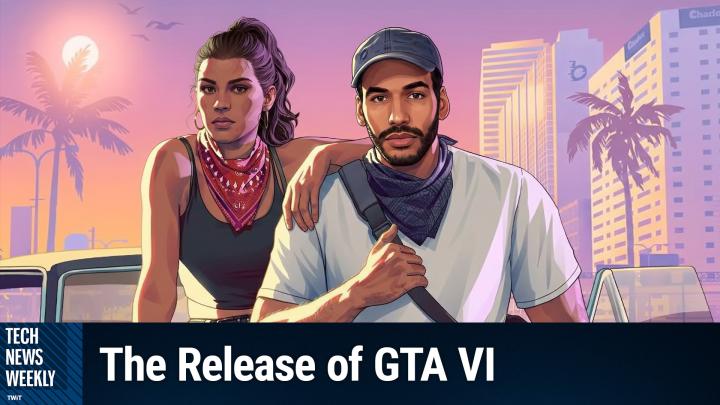
OK. Yeah, so this is slightly out of my realm, but it is just such a huge cultural phenomenon today that I felt like we really needed to talk about it. And I do have some personal connection here. I also feel a lot of empathy for the people that have been waiting 13 years for today, having just waited a very long time, not quite 13 years, for a big thing in my space, which was Apple's new Smart Display, which came out last week. We waited years for that. But you guys, You gamers have been waiting a really long time for today, for Grand Theft Auto VI. And I felt like we really needed to talk about what a huge moment this is for the gaming community, and also, I think, for technology. Because I don't know about you, Mikah, but I have— there's been so much negativity around tech recently.
Jennifer Pattison Tuohy [00:02:54]:
It's felt like tech has been in a really difficult place for a lot of people, for very good reasons.
Mikah Sargent [00:02:59]:
Yeah.
Jennifer Pattison Tuohy [00:03:00]:
And there's been a lot of disappointments. with new products that just haven't maybe lived up to the hype. But there is something in the air today when you read the reviews online for Rockstar's version, new version of Grand Theft Auto. I mean, 10 out of 10s, 5 stars. Wow. It lives up to the hype. It is the best game ever. It is really an amazing experience.
Jennifer Pattison Tuohy [00:03:24]:
And that just kind of warms my heart as a tech journalist. Me too. That there is something out there that everyone is really excited about, and I don't game, and I'm excited about it. Oh, yes. And the bit of backstory for me is that my son is a big gamer, and he did play Grand Theft Auto. I think he's played various versions, but he played 5 a lot. And I was very dubious about it, 'cause all I'd heard as a mom was, oh, this is a terrible game. It's all about degrading women and killing people and stealing cars.
Jennifer Pattison Tuohy [00:03:58]:
But, But he really always loved that game, and it really inspired a love of cars in him, which I, you know, it's been really interesting for me to see. And this last week, I got a text message from him with his Christmas list, and it had 3 things on it. And one of them was he wanted a new Xbox to play Grand Theft Auto 6. So I can imagine there are a lot of families in a similar position this Christmas with their children asking for this for Christmas. And reading the reviews, and especially our review on theverge.com by Andrew Webster, who's spent about 80 hours playing the game so far. It really does sound like this is really sort of the pinnacle of a new game experience in this space. And again, to my point about being a really sort of seminal moment for technology. And also, I think maybe reading between the lines, perhaps the last time we're ever going to see anything this important, really, in this space.
Jennifer Pattison Tuohy [00:04:59]:
Yeah. Because this was such a huge effort, it sounds like, to bring this game to fruition and to bring a game that, from all the reports and the reviews that I've seen, is really quite spectacular. And the other thing that I think is really interesting here is sort of something of a kind of cultural shift in the way the original Grand Theft Auto, as I mentioned, I kind of had quite a negative impression of it, not knowing a lot about it before my son started playing. But what I've seen about 6 is that this character has grown and has developed and now has, you know, you play a game, you can play and form a real relationship and work towards creating a better life for himself. And it also has things like reminding him to eat and to do his fitness. And like, it's like the woke, a slightly more woke version of GTA. Correct me if I'm wrong here. I'm sure there are lots of people yelling You know nothing about this woman.
Jennifer Pattison Tuohy [00:06:02]:
But anyway, I'm excited. What about you, Mikah?
Mikah Sargent [00:06:06]:
I have so many thoughts about this as also someone who doesn't game. First of all, you have your son. I've got my partner who is a gamer and was very excited that this game was out. I've been hearing about it for a while and knew that I was going to lose him last night at 9:00 PM. So something that really has stuck out to me about this, because I went in and watched the launch of the game and watched him work through the prologue and the start of chapter 1 before I got bored. And just watching, I imagine that if I was playing and if I was interested in this kind of thing, then it would have captured my attention. But the whole time, I'm asking him, now, is it railroading you in this instance? Are you able to walk around and do what you want to do here? How does this— I mean, I was loving the technical details of it. and learning about how they had set it up.
Mikah Sargent [00:07:01]:
Meanwhile, also trying to think about how people would receive it and think about sort of the audience for this game. And one of the things that kind of in the early parts stood out to me is I kind of like it when artists— and I do, I use that word with full awareness of it— They, they, they— it's almost like setting a— it's, it's setting an intention and saying you will do this. And so the beginning of the game, like, you don't just get to skip it. The story is getting set up and you got to learn the story. And for some people, that might be something they'd go, I just want to get into it. You know, they're saying, no, we've set out a story. We're going to make this happen. So I kind of like that.
Mikah Sargent [00:07:48]:
The other aspect is A lot of people worked on this game for a long time, and I think that this may— I mean, we'll see. This may be, uh, one of the last bastions, so to speak, of, um, non-AI game design at this level. Mm-hmm. Um, in terms of the writing and the NPCs and everything that's involved. Um, And so, like, I am— I celebrated in that case as well that, you know, I could only imagine having worked on it for so long in the past and continuing to work on it, and then generative AI hits in the way that it hit. And then you have all of these opportunities to use it and for the team to stay, you know, sort of heads down working through. Of course, we don't— I currently don't know the full extent of how exactly and precisely the game was involved. But from the reading that I've done, Yeah.
Mikah Sargent [00:08:49]:
They talk a lot about all of the people on the team who wrote these stories and who made these different NPCs. And yeah, the other aspect for me, Jenn, was seeing all of the positive, because I thought, surely, there's going to be some major outlet that's going to be like, well, here's this, this, and this. It's triumph this. It's jaw-dropping that. It's been very positive, and that's exciting.
Jennifer Pattison Tuohy [00:09:12]:
Yeah, yeah. I mean, like, The Guardian, not really a gamer rag, is like, gaming's most depraved work world is now also its greatest love story. And it's just like 10 out— and they gave it 5 out of 5, 5 stars. And then our review, Andrew Webster, he says, it lives up to the hype. And that really does to me sort of— that caught my attention because there are very few things these days in technology that really live up to the expectations that people have for them. And the idea that this has actually done that. And I think, to your point about where where gaming is going and what kind of games we may see in the future. There is something about the all-encompassing world that this creates, you know, that I think there are very few sort of true open-world games like this that where you can— and reading through Andrew's review, he's like, there's so many little things you can just go off and explore into, like, little rooms.
Jennifer Pattison Tuohy [00:10:11]:
And he was— I was listening to him describe it, saying, you know, I went up some stairs and down a corridor and into a room. And, like, this room was perfect. It was a really interesting— very intricate detail, but the chances of maybe 5% of gamers actually ever even finding this game— Right. —is so minimal. But still, the amount of attention to detail that has gone into creating this huge world and making it so realistic and so compelling is just— it's an art form, to your point. It is artistry. And, you know, that deserves to be celebrated. And I hope it's not sort of the last of its kind.
Jennifer Pattison Tuohy [00:10:50]:
And I don't know enough about gaming to predict that it is, but it— From my reading, it feels like we're entering a shift in gaming and in technology. And this started being developed a decade ago. And the idea that we're going to see, you know, a game of this magnitude ever again feels quite slim. So it's exciting to celebrate it now. And also, hopefully, it will be coming to the PC soon because I don't want to buy another Xbox for Christmas. And one of my reporters One of the reporters at The Verge wrote a piece this morning actually about predicting when it's going to come to the PC because obviously a lot of people are sort of excited for that and maybe not wanting to drop $80 and perhaps $750 on a new Xbox or a PlayStation this Christmas. And it does sound like that it is likely, the rumor is it's actually going to come early next year, which would be a lot sooner than the original Well, then the last version of Grand Theft Auto came to the PC, I think it took over a year before it ported. So that's kind of exciting for people who are willing to wait.
Jennifer Pattison Tuohy [00:12:00]:
Yeah. I don't know how many people are willing to wait right now, but I'm sure there'll be a lot of double dipping as well. But yeah, that looks like that's— the PC version should be rolling out, fingers crossed, a little sooner than Grand Theft Auto V. Well, I'm hoping anyway, although I think maybe an Xbox might be in my future. Another Xbox.
Mikah Sargent [00:12:21]:
As an aside, as an aside, um, I did find it interesting you said that your son wanted an Xbox. I don't know if you have any insight into that as opposed to the PlayStation. The reason that— because growing up, it, you know, the Ford and the Chevy, the, like, the Android versus the Apple. Growing up in, uh, my household, my stepdad was a gamer and he was very much Team Xbox and would, you know, hate on Sony. It's like Adidas and Nike too. It's like all that. And, uh, Given how poorly Xbox is doing overall and how they were supposed to kind of be celebrating their, what, 25-year, 15-year, whatever year anniversary, um, they were laying off a bunch of staff and we don't know for sure the future of the hardware. Yeah, I thought it was interesting.
Mikah Sargent [00:13:11]:
So is your household an Xbox household? Like, have you had Xboxes before?
Jennifer Pattison Tuohy [00:13:16]:
Yeah. Yeah. We started out with the Xbox 360. And then we have the Xbox— what we have, we have a current—
Mikah Sargent [00:13:24]:
One X or One S?
Jennifer Pattison Tuohy [00:13:25]:
We have one that I think could play it with cloud gaming, but I'm told that that is not the way you want to go.
Mikah Sargent [00:13:32]:
Sources are telling me that is not the way you want to go.
Jennifer Pattison Tuohy [00:13:35]:
Very definitively. Okay. Yeah, we have an Xbox. I had to check with him this morning. We have an Xbox One X right now.
Mikah Sargent [00:13:41]:
S or X?
Jennifer Pattison Tuohy [00:13:42]:
So it's oldish, but not really old. And we still use it as it's our only DVD player. Oh, yeah. And so, yeah. So I, I haven't talked to him about PlayStation. I would almost be inclined to do PlayStation just because it would be something new.
Mikah Sargent [00:13:57]:
Yeah. So for your sake, yeah.
Jennifer Pattison Tuohy [00:14:00]:
Just to try. Um, but we, yeah, very much, and we've got a ton of old Xbox games and lots of Xbox controllers.
Mikah Sargent [00:14:08]:
That makes sense.
Jennifer Pattison Tuohy [00:14:09]:
Um, we kind of invested in the Xbox ecosystem for many years, but then he got a PC 3 or 4 years ago for Christmas, which I put together. Oh, heck yeah. And he would say he helped me. Hi, Owen, he's watching.
Mikah Sargent [00:14:25]:
Hi.
Jennifer Pattison Tuohy [00:14:26]:
It's the first time he's ever watched me on one of my podcasts. So, you know, bringing the generations together. Yay,
Mikah Sargent [00:14:32]:
GTA. You said he would— you said he would say he helped you. What does that mean?
Jennifer Pattison Tuohy [00:14:37]:
Well, I ended up— I'm pretty sure I ended up doing most of it, but, um, he was there.
Mikah Sargent [00:14:42]:
Moral support.
Jennifer Pattison Tuohy [00:14:44]:
Moral support. He held the glue.
Mikah Sargent [00:14:46]:
And the thermal pads.
Jennifer Pattison Tuohy [00:14:48]:
But yeah, I don't know, would there be— from a gamer perspective, I would love— I know maybe someone in the chat could chime in. What would you choose if you were platform agnostic? Would you go PlayStation or Xbox if you were wanting to get the Grand Theft Auto 6?
Mikah Sargent [00:15:03]:
That's a good— I'm gonna keep an eye on the chat to see. I think for me, if I were to put myself in that space, Um, I would want it on the PC. That seems like the platform agnostic platform. It's more open source. It means that when the game comes out, when people come out with mods for it and people want to play with mods, they'll be able to do that. It's just a little bit more tinkerer friendly. And then also, if you've got a mom who can swap in some fresh RAM or GPUs or whatever, then it could also be improved over time. Yeah.
Mikah Sargent [00:15:38]:
But I think that—
Jennifer Pattison Tuohy [00:15:41]:
Looks like chat's saying PlayStation.
Mikah Sargent [00:15:42]:
Yeah, there's a lot of PlayStation in the chat. And I think especially—
Jennifer Pattison Tuohy [00:15:46]:
The PC's the one to go with. But we have to wait, you know? How long can we wait? That's the question.
Mikah Sargent [00:15:50]:
The wait is tough, especially if your friends are playing it and other people are playing it. You want to be able to play it too. Because that was— it got to be 9 o'clock last night, and I heard a little chuckle because we were finishing a show that we were watching. And I heard a little chuckle, and I leaned over, and he showed me that his friends had already set up sent a few screenshots of them playing, and he said, I gotta get in there, I gotta get on it.
Jennifer Pattison Tuohy [00:16:14]:
I know.
Mikah Sargent [00:16:15]:
So yeah, I can only imagine how your son must feel like, let's get on this thing. Um,
Jennifer Pattison Tuohy [00:16:20]:
well, I also would like him to finish college, so maybe I should wait a couple weeks.
Mikah Sargent [00:16:24]:
That's a good, good point. Yeah, college is in the way.
Jennifer Pattison Tuohy [00:16:29]:
Yeah, like, you know, that pesky thing.
Mikah Sargent [00:16:33]:
Um, any other thoughts on this? Uh, I, I mean, Again, I will say, watching it last night, it did make me think this could be— because I have a— I remember as a kid playing early versions of GTA with my siblings, and we would always— we would have to take turns on, like, I don't know, the first PlayStation or PlayStation 2, I think it was. We'd have to take turns, and we would always set up these kind of rules for ourselves within the game about, oh, you've got to drive as if you were driving on the road. Yeah. And all of this stuff. And it was a lot of fun, like, switching back and forth. Watching it last night reminded me of some of that, and it made me go, well, maybe I actually want to try this one out. Because this game in particular, with the themes that are involved, yeah, it's, uh, in, in the time from when I was a kid to now, I know that I kind of chose to not have anything to do with it because of, yeah, the womanizing and the, um, I mean, violence and—
Jennifer Pattison Tuohy [00:17:38]:
Reputation.
Mikah Sargent [00:17:39]:
Yeah, exactly. All this stuff. But watching this, um, while we were playing, I saw— we saw, uh, on screen this little notification popped up that said non-lethal. And that was like a little token added to the morality scores or factors or whatever in the background because he had moved through this space without killing any of these characters. Um,
Jennifer Pattison Tuohy [00:18:05]:
self-improvement. GTA 6 is— yeah, it's all about self-improvement. I'm right there for it. Yay, we can kill it in this time! I am tempted. If we did get it, I would like to try playing because it has, for the first time, a true female protagonist, which I think is, again, progress. I mean, I know there have been— you could play women in the past, but this is— she's Lucia, I think? I think so, yeah. She is— you can choose to play her throughout the game, or you can be Jason, or you can, I think, at times, actually be both of them.
Mikah Sargent [00:18:37]:
Switch between them, yeah.
Jennifer Pattison Tuohy [00:18:38]:
Which sounds really interesting. And I was very touched, Andrew, who reviewed it for The Verge, was talking about how you can hold hands and how the more you hold hands, the better your relationship becomes.
Mikah Sargent [00:18:50]:
Wow.
Jennifer Pattison Tuohy [00:18:51]:
This feels like a completely different game from the one that I've heard about. Exactly, it does. It does.
Mikah Sargent [00:18:55]:
There's so much.
Jennifer Pattison Tuohy [00:18:56]:
And I like that. I like to see that sort of maturity. And it's a mature game in more ways than one.
Mikah Sargent [00:19:03]:
Yeah, that M means a lot. It means a lot this time. All right, we have to take a quick break before we come back with even more. All right, we are back from the break. And for those of you joining us today, thank you for taking a break from GTA 6 to be here with us.
Jennifer Pattison Tuohy [00:19:23]:
And I did just get a correction from my son. It's Luc— it's Lucy—
Mikah Sargent [00:19:28]:
Lucia? Is that it?
Jennifer Pattison Tuohy [00:19:30]:
Lucia. I don't know how I pronounced it, but apparently I pronounced it wrong.
Mikah Sargent [00:19:33]:
I thought it was Lucia or Lucia or something.
Jennifer Pattison Tuohy [00:19:35]:
Okay, Lucia. Lucia. And also, yes, to John's point in the chat, it's the whole thing The love story is based off Bonnie and Clyde, which was actually something I loved. I'm a huge Bonnie and Clyde fan, so I think that's probably why I'm attracted to it. But I do hope they survive and don't die in the end.
Mikah Sargent [00:19:50]:
Yeah, I was gonna say, star-crossed lovers much? My goodness. All right. Now, you know what? This isn't for the show, but I am— No, it can be for the show 'cause it can go in the after effect. I'm just curious, do your kids—
Jennifer Pattison Tuohy [00:20:02]:
Why are you laughing at us? He's cracking up in the background.
Mikah Sargent [00:20:05]:
Who, John?
Jennifer Pattison Tuohy [00:20:06]:
Yeah.
Mikah Sargent [00:20:07]:
Do your children have any, uh— English accent at all? Like, do they have a mixture? No,
Jennifer Pattison Tuohy [00:20:14]:
no. My son did when he was very little because he spent about 8 months in an English preschool, um, got it, when we were living in England for a while. And he did have a little bit of a butter.
Mikah Sargent [00:20:25]:
So it requires more than just you. No.
Jennifer Pattison Tuohy [00:20:27]:
Yeah, my daughter can put on a good English accent, but, um, no, they both— they don't— they both sound very American but not Southern, which I feel proud of.
Mikah Sargent [00:20:37]:
Yeah, I was gonna say, yeah, I, I don't blame you. All right, let's get into this next story real quick. Uh, if your email died last Thursday, if your flight got grounded Friday, and then your bank app spun on Monday, you might have started to wonder whether someone was doing this on purpose, whether the universe was against you or some AI system somewhere. Over 4 straight business days, Microsoft's Exchange Online went down. The FAA called a nationwide ground stop. A JPMorgan Chase glitch rippled through other banks. United delayed departures, and the NSA's own classified network went dark. All of it during a war with Iran and growing fear of AI-powered hacking.
Mikah Sargent [00:21:22]:
But so far, there's no evidence that any of it was a cyberattack or that any of it was connected. Wired's Andy Greenberg and Lily Hay Newman wrote a guide that I think everyone should go read, uh, that talks about How investigators and reporters actually figure out whether an outage is an accident or if it's an attack. The short answer is that it's almost always an accident. So let's talk about it and whether we should be concerned about all of— I mean, we should be, but yeah. First and foremost, Wired does open by admitting that anyone could be forgiven for wondering whether this, you know— oh, actually, let me read it because it's funny. Anyone, quote, could be forgiven for wondering whether a Die Hard 4-style cyber war had finally arrived in the US. And that's because this timeline is pretty uncanny with all of those outages between what I, you know, all of the ones I just talked about. On Tuesday of this week, CNN reported that NSA Net, the agency's classified internal network, was down.
Mikah Sargent [00:22:32]:
Staff was told to stay home. and even stagger their arrivals. Of course, we've got everything else going on. And this is the thing. Wired says that this comedy of IT errors did feel like more of a coincidence, and a lot of people were asking about it. But it's important to know that vibes, as much as we'd like to believe it, aren't evidence. And so far, there's no actual evidence, just vibes, that any of these failures were related. I want to ask you, though, Jen, Did you at any point as a tech reporter, as someone who knows about the AI world, did you have a moment where you thought, is this, is this the one? Is this the big thing? Have we, have we lost everything?
Jennifer Pattison Tuohy [00:23:17]:
Yeah, I mean, it's been feeling more and more like we've been, I think we've been a lot, a lot more aware of the vulnerabilities that we have now that we are so reliant on technology in every element of our life. that when something stops, like, just the example of, like, when the Wi-Fi goes down in your house, you're suddenly so restricted, and there are so many things that you can't do anymore. Yeah. And my husband is very much a— he likes to always be prepared. I'm not gonna call him a prepper. But we could move in that direction. And, you know, he's been very much spooked by the rise in generative AI and the concern around what this could mean for our society, you know, following on from a few months back. Well, was it months or weeks? Time is all blurring when there was a lot of discussion about whether AI was going to ultimately extinguish the human race.
Jennifer Pattison Tuohy [00:24:20]:
Oh,
Mikah Sargent [00:24:20]:
Black October. Yeah, that was all during October.
Jennifer Pattison Tuohy [00:24:23]:
Yes. So, and that really got him thinking, you know, about wanting to be less reliant on technology or at least have backups for when technology goes down. You know, just as simple as having cash on hand rather than relying on digital, you know, relying on technology to access money. And it— I can understand, whilst none of these have been proven to have had anything to do with hacking or nefarious activities, it doesn't really in the long term matter whether they do or not. If we're vulnerable to systems going down, we're vulnerable. We're still stuck in a bad situation when technology fails us. And I know that the exact cause of the ground stop hasn't been fully explained, but it does sound like it it was a relatively simple thing that went wrong. Yeah.
Jennifer Pattison Tuohy [00:25:12]:
I mean, a router that was swapped out or a copper line that was cut. Like, things like this shouldn't— we shouldn't feel like we are hanging by such a thin thread.
Mikah Sargent [00:25:23]:
That's the thing.
Jennifer Pattison Tuohy [00:25:23]:
And that's, that's the fear I think that people have. And, you know, technology gives so much, gives us so much convenience, gives us so much ability to connect, to do things that we wouldn't ordinarily be able to do with the ease and convenience that we do with technology. But that flip side is when it goes away, have we lost the ability to do a lot of this stuff without technology? I mean, obviously airplanes, we weren't flying before airplanes, so we, you know, that's a different scenario. I was actually caught in both instances of the air traffic control systems going down in the last 2, 3 months. So the first one was in September in London. They had a they don't have the FAA, they have their equivalent. They had a software glitch that shut down the entire of the south, southeast, or southern UK's air traffic control system. So I was stuck on a plane on the tarmac for 9 hours.
Jennifer Pattison Tuohy [00:26:27]:
Oh my God. And then we all got kicked out of Heathrow and told to go away and come back the next day and hope we could get on a plane. And then this last Friday, I was flying came back from New York, and I touched down 20 minutes before the ground stop— Wow,
Mikah Sargent [00:26:41]:
that was lucky. —into effect.
Jennifer Pattison Tuohy [00:26:43]:
So I've definitely felt the close calls with both of those. And it's, you know, the amount of disruption that this causes, and, you know, small things like I had some medicine that needed to be delivered, and it was a week late because of the ground stop. Like the knock-on effect of when our infrastructure gets affected, whether it's by a cyberattack or whether it's just by someone doing something silly or system breaking. And the banking one is also one I think people are understandably very concerned about because you have very little recourse if you can no longer access your bank digitally. I mean, all the banks near me, most of them have shut down now. You can't go into branches easily anymore. And it's, yeah, it's really, it is concerning. And I can see why it's pushing a lot of people away from depending as much as they do on technology and trying to find resources where they don't, you know, where you have a backup.
Jennifer Pattison Tuohy [00:27:48]:
But it's increasingly hard to do in this day and age. Gold bars under the bed? I
Mikah Sargent [00:27:53]:
mean. Yeah. It's terrifying to feel out of control, to feel powerless in a situation. And when one feels that way, psychologically, one, to sort of calm their internal fears, looks for ways to reassert that control. And so when it's something as nebulous as, if this is AI, it's out there and it's doing its thing, and it could have an impact on me, and I have no, as you said, no recourse to do anything about it.
Jennifer Pattison Tuohy [00:28:28]:
Hmm.
Mikah Sargent [00:28:28]:
That anxiety sits there and rubs against you, and you don't want it. And so So yeah, I get the response, and I think it's very valid. And I think also it's good for more of the population to be paying more attention to these categories, these technology categories. It's just that when that happens, letting fear get in the way of reason Yeah, I mean, deception is unfortunately a human behavior, but it is also something that as evolved human beings, we try to address. And so that's why it's great that there are stories like this that talk about what happened.
Jennifer Pattison Tuohy [00:29:13]:
Yes, help you break down and understand why this is happening.
Mikah Sargent [00:29:16]:
And yeah, it's hard in the moment to know, right? So there were 3 things at the root of a lot of this: a software defect that was introduced in a July fix for Microsoft 365 networking gateway servers, then a surge in load on that gateway after teams failed over to it about 15 hours earlier and then not having the server capacity. All of that resulted in the Microsoft issues. The FAA's explanation, according to the agency's own Q&A, legacy equipment becoming unstable. And then it was—
Jennifer Pattison Tuohy [00:29:52]:
One router, or for the chat, router went bad. Yeah, it
Mikah Sargent [00:29:58]:
was a radar site in Amarillo, Texas, and a radio site in El Dorado, Arkansas, where contractor L3Harris had been installing a new Juniper router during routine work moving lines from copper to fiber. Instability hit 17 of the FAA's 22 en route centers— or excuse me, en route centers— and operators canceled those flights. So yeah, it all ends up coming around to that. But everyone should go read this story. I think it'll help calm some of the nerves. And it's, it's a, it's a really great piece that I found helpful as a means of kind of having a playbook that I can follow when these things are going on and maybe help out my local network of people feel at ease with all of this. Jen, unfortunately, it is time to say goodbye. I want to thank you so much for taking the time to join us today.
Mikah Sargent [00:30:51]:
It's always a pleasure to get to chat with you. If people want to keep up to date with your great work, where should they go to do so? do so?
Jennifer Pattison Tuohy [00:30:56]:
Yes, you can read all my stories at theverge.com, and you can click on my author page and hit follow, and you can get all my articles emailed to you. Please subscribe. Um, and you can also follow me on the socials @SmartHomeMama. And, um, I also— I've recently done a couple, um, big, big long mid-form YouTube videos, um, on The Verge's YouTube channel. So go check that out, um, if you wanna see more of my work. And yeah, Happy to be here and glad— hopefully didn't make too many mistakes talking about Grand Theft Auto 6. But I felt like it was too big a moment to let pass. So—
Mikah Sargent [00:31:35]:
Absolutely. Yeah, I'm glad we got to talk about it. Thank you, Jen.
Jennifer Pattison Tuohy [00:31:39]:
Bye.
Mikah Sargent [00:31:40]:
Bye-bye. All righty, folks, we have another interview in just a moment. But first, let's take a quick break so I can tell you about our next sponsor. All right, we are back from the break. And as I promised you, we've got an interview next. 6 years after it first teased flying indoor security camera. Amazon's Ring has finally announced it. 6 years.
Mikah Sargent [00:32:02]:
The $250 Ring Drone Cam flies preset routes through your home, takes off when a sensor or alarm is tripped, and is set to ship in January pending FCC approval. Ring says privacy is the default. The Electronic Frontier Foundation, well, sees it very differently, arguing the device simply isn't compatible with privacy. Back on the show to talk about it is EFF Senior Policy Analyst, Matthew Corriglia, welcome back to the show.
Matthew Guariglia [00:32:32]:
Hi, yes, happy to be back talking about Ring.
Mikah Sargent [00:32:34]:
Absolutely. So for anyone who missed the launch, and yes, I do intend the pun, what exactly is the Ring Drone Cam and how is it supposed to work inside of someone's home?
Matthew Guariglia [00:32:45]:
So it is a small flying device with a camera that pops up out of a docking station and does patrols of your house. It could respond to a person saying that it should go check out a specific room, or it could respond to a sensor or alarm being triggered. But it is a small flying surveillance device.
Mikah Sargent [00:33:06]:
Understood. Now, you write in this piece, at a basic level, these devices are, quote, a window into your house that can be accessed by anyone with access to your account. What has Ring's track record looked like on that front in particular? And why does it matter more for a camera that moves from room to
Matthew Guariglia [00:33:26]:
Yeah, Ring's device track record is not great. You know, they have been scolded by the government for lax security. They have had to fire employees who have gotten access to, uh, footage from users. Uh, people have had their accounts broken into and have been harassed and yelled at and spied on and threatened by hackers who have gotten into their Ring accounts and have had access to their indoor and outdoor cameras. And they have a long chummy relationship with law enforcement where they facilitate access to their customers by law enforcement who can request footage directly to the users.
Mikah Sargent [00:34:05]:
Hmm. Ring's AI Pilot is a new sort of feature tied to this, and it maps routes and it builds a model of the inside of your home. Kind of reminds me of Roomba. What could a company learn from that map and those patrol patterns? And do we know what happens to that data after you delete the videos that are tied to it?
Matthew Guariglia [00:34:31]:
Yeah, a good question, uh, mostly because we don't know. We, we, you know, these companies are big and they are secretive, and so, you know, we don't really have a lot of tools to pry information out of them. But I think you're asking exactly the right questions, which is, if this AI pilot knows, has a map of your entire house, and uses that map to fly around, to navigate, um, what happens to that, you know, really well put together map of your house if you cancel your account or if you delete the footage? And also, how else could Ring use that data? They are a, you know, a for-profit company that wants to sell you devices that go in every room of your house. What else can they sell to you? Can they market to you? How can they somehow monetize all of this data they have that to some people is very valuable? Blueprints of your houses.
Mikah Sargent [00:35:25]:
Wow. Yeah, that makes sense. And I think this is a big aspect of it. Ring renewed its police partnership through Axon. Can you tell us how a police request for Ring footage works today? And then, do we know what would change if those requests extended to a drone that flies inside the house?
Matthew Guariglia [00:35:47]:
Yeah, I mean, Ring has a long history with law enforcement where they used to have these police partnerships where they would create kind of platforms for police for free who could then request footage from users in a certain area. They could click and drag on a map and those users would get requests. Used to be through their email. Ring walked away from that. They had some reforms for a while where for a few years they decided they were out of the business of facilitating access to their customers for law enforcement. And with the old CEO Jamie Siminoff coming back, they have created a new partnership with Axon, which is one of the largest surveillance police tech vendors in the country. They make body-worn cameras, they make all sorts of devices, they make tasers. And they have created this partnership where police can, again, on a map, search for and request footage from Ring users that I believe shows up as a push notification on a user's Ring app.
Matthew Guariglia [00:36:57]:
So you would get a push notification that says, like, police in your area are looking to investigate. Sometimes it says what the crime they're investigating is. They'll show you how much footage they want. And with a click, you can acquiesce. You can just give over the footage, or you can deny them, which is what we request people do, that they say no and they wait for a warrant, that the police really do need that footage. But the jury is still out, I guess, pun intended a little bit, on whether or not police can have that same request access for indoor footage. You know, I have seen in the past people get requests from police for footage that has included both indoor and outdoor drones— or outdoor cameras, excuse me. Um, but where the drone would fit in that system is still very much unsettled.
Mikah Sargent [00:37:47]:
Yeah, it's kind of worrisome. Now, Ring says that drone video will be protected by its new throw-away-the-key encryption But EFF doesn't think that goes far enough. Tell us about that and how it affects whether police can go to Amazon instead of you. Because Apple, of course, well known for saying, and I think other tech companies, hey, look, we can't access this because we don't have the key to it. And that becomes part of the, you know, promise of lack of compliance, so to speak. Um, tell us about this though with Amazon.
Matthew Guariglia [00:38:26]:
Yeah, so I mean, a few years ago, after a big push by people who were concerned with their privacy policies, Amazon rolled out end-to-end encryption, not by default, but that you could turn on for your Ring footage, which meant that sitting on Amazon servers, your footage was accessible only to you. So if law enforcement wanted it, they had to come and knock only on your door. They could not send a request to Amazon for it because Amazon could not access it. The problem with this new version is in order to have both a style of encryption and also not break features like, you know, some kind of analytics tool that allows you to search for through data or through footage. Amazon gets access to your footage for a little bit of time, it sounds like, before it becomes encrypted on their servers. And so the question is, when Amazon gets this 24-hour window of access to your footage, can they Can they keep it? Can they archive it? What can they do with it? Can they acquiesce and give that footage to police if it's still within the 24 hours since that footage has been created? These are all questions we don't know. And the answer we have for it is mostly just trust us. We're Amazon.
Matthew Guariglia [00:39:39]:
We know that we realized our old end encryption was more strict and more easy to understand. But now, in an attempt to not break features, we've rolled out this new model and the new model is trust us.
Mikah Sargent [00:39:53]:
One of the most striking questions in your piece is whether a warrant— I mean, we kind of talked about this, that like you talked about the first full home search in history and it being about a tech company rather than the residents. And that is a rather frightening prospect that if they were able to determine that inside the house there was a camera that could— I mean, How, in all honesty, is there any precedent when it comes to this kind of thing? And how, for example, has there ever been an instance that we know of, of microphones inside of homes that are there because they're part of a smart device being used to listen in? Or is, like, what is the gap between having this camera in your home and then police actually being able to access it? this camera in your home and fly it around and look at your house?
Matthew Guariglia [00:40:54]:
Yeah, I mean, so when it comes to, like, smart home appliances and things like that, we— there's just endless, endless, endless, endless evidence of police getting historic data of footage, of audio from, you know, smart home devices, from audio assistants, whatever. So there's a ton of evidence of police being able to present warrants to get historic footage. When it comes to live streaming, I think that's a little bit more ambiguous. ambiguous. And I don't know if it's because there is a legal restriction or if it's because of internal policies by the company. But whenever that's the case, whenever it's just, you know, a company says, we draw the line, we won't do that, then eventually we're going to see a company that does not have such qualms, right? Like, if the taboo of it is the only thing keeping us safe, then we're not really that safe. Absolutely. And so my big concern, as you mentioned, is a scenario And I'd love to ask the CEO of Ring this, like, under what scenarios would you allow police livestream access to this equipment? And even further, under what specific scenarios would you ever give somebody the controls to that drone so that they could pilot it or send it to specific rooms without the resident's permission, without their explicit consent? Yeah.
Matthew Guariglia [00:42:17]:
Consent.
Mikah Sargent [00:42:18]:
Hmm. Lastly, Ring founder Jamie Siminoff pitches the drone as a deterrent, given that spotlights and then something flying past the window, it may deter. But you call that security theater and marketing. So I want to ask, because there likely will be folks who do choose to purchase this device and use it in their home, so for someone who is still tempted by one, um, or if one is a guest in a home and in that home there is an Amazon Ring drone, um, what should, what should folks be weighing? Like, what do they need to be thinking about with this, uh, in order to make the decision for themselves?
Matthew Guariglia [00:43:03]:
Yeah, I mean, first of all, when it comes to safety, I will say that it's hard to prove a negative, right? I mean, I could say that my mailbox scares away Bigfoot, and because I've never seen Bigfoot before, it's a success, right? Like, we don't know for a fact— I love that. We don't know that Ring cameras deter crime. We just don't. And we actually have a lot of evidence to the opposite, which is that we have a tremendous amount of Ring footage of people stealing packages, of doing crime. And so if Ring cameras, cameras in general, are supposed to deter crime, footage of crime happening shows that it's not doing a very good job of that. And I think to some extent it's kind of like magical wishful thinking. Mm-hmm. Like you see promotional materials for Ring cameras in general, but also specifically for this drone.
Matthew Guariglia [00:43:53]:
And it's of somebody grabbing a package on a porch or kicking in a door or breaking a window. And then they see a drone flying up to them and they say, uh-oh, and they turn around and run. But really, we have no evidence that somebody will see a small flying device and be dissuaded from committing the crime they've already started. Like, it just— I don't— if you're investing in this because this is what's going to give you peace of mind, I like— I would not put all your stock in this keeping you safe and preventing crime from happening to begin with. The other thing I'll say is that privacy is a team sport. You know, you are making a decision for yourself, but it doesn't mean that you have the right to make the decision for everybody around you, be it members of your family, house guests, or your neighbors who your Ring camera on your front door is actually pointed at. And so I would think I would just be acutely aware of what your devices are actually filming and who they're actually filming. You know, a drone inside your house might be your choice and it's just filming your property.
Matthew Guariglia [00:45:03]:
But if you have a cat Do they want to be filmed all the time? Do they want footage of them sitting on a server somewhere that neither you nor they control? And from my understanding is the drones don't actually have microphones for, so that's actually a good thing. But I will say to be acutely aware that most of Ring's products also have microphones and sensitive microphones too. So just to think about even your own devices, what conversations Well,
Mikah Sargent [00:45:34]:
I want to thank you so much for taking the time to join us today. I'm glad that you folks are keeping an eye on things. If people would like to stay up to date with the work that you and the EFF are doing, where are the places they should go to do so?
Matthew Guariglia [00:45:47]:
Well, EFF is a membership-supported organization, and, uh, we would love to have you as a member. Come support our work defending civil liberties at eff.org/join.
Mikah Sargent [00:45:57]:
Awesome. Thank you so much for your time.
Matthew Guariglia [00:45:59]:
Thank you.
Mikah Sargent [00:46:00]:
Alrighty, folks, we've got another interview coming up in just a moment. On Monday, malicious code turned up on some of the most visited websites in the world, including CNN, the BBC, Zoom, Salesforce, Fox News. For several hours, simply loading one of those pages could put your crypto, your card number, even your iPhone at risk. And the researchers who spotted it also traced where it came from, the answer points to a tool many of those companies trusted completely. Joining us today to talk about it is security researcher Scott Helm of Report URI. Welcome to the show.
Scott Helme [00:46:40]:
Thank you for having me.
Mikah Sargent [00:46:41]:
Absolutely. So first of all, let's start with this. For folks who haven't heard of it, what is the elephant in the room, Optimizely, and why do so many big websites load its JavaScript? script on every single one of its pages.
Scott Helme [00:46:57]:
So yeah, I think everyone's heard of them now, haven't they?
Mikah Sargent [00:46:59]:
Yeah.
Scott Helme [00:46:59]:
Um, but Optimizely, they do A/B testing. So the idea is, um, you know, maybe if you're a news organization or you write an article and you want to try what is the response to 2 different headlines, so you load up the Optimizely product, you can have these 2 different headlines and it will substitute them, it will A/B test them. So it will test one on a subset of test the other on another subset, and you can see which one is performing better. You might do that with the layout of the page, a color choice, something that you want to see. We've got these 2 ideas, we want to test them against each other and see which one performs better. And that's what A/B testing is, and that is what the Optimizely product allows you to do.
Mikah Sargent [00:47:39]:
All right, now could you please walk us through, um, where the attacker's code actually ended up? Why did it still look like a perfectly legitimate file coming from Optimizely's own servers? And if you could kind of start us out by your work of discovering this, because I think that that aspect of it is always incredibly fascinating. I mean, was it kind of like, you know, the signal from space and you sort of put exclamation points next to it? Tell us about that part. of it too.
Scott Helme [00:48:14]:
Yeah, so the first thing is, it's kind of interesting because you asked like, how does the code get in and how do we know it's legitimate kind of Optimizely code? And I always think that's a really interesting question because when, when you build a website like some of the big brands that we saw and they're loading code from other people like Optimizely and lots of other tools as well, they all work in the same way. All that you know is that the code came from Optimizely. Or these other tool providers, but you never actually know is it legitimate. And it's kind of an interesting question to think: What do you mean by legitimate? Because the web browser is like, "Hey, we need to go load this thing from Optimizely," and all you know is that it came from them. You don't know what is it supposed to be, what is it supposed to do. So it's kind of hard to say, you know, why does it look legitimate? Because there's not really any question of legitimacy. The big question is: Did the code come from Optimizely? And the answer is yes, and that's why the browser will run it. So this is why these attacks are so effective.
Scott Helme [00:49:10]:
We've seen them happen to multiple organizations before Optimizely. They're targeted because of their large presence on many big websites, and I'm sure we'll see many more of exactly the same thing as well. So that's why it's difficult to say, you know, how did this code look legitimate? And it's unfortunate because there's no question of legitimate or not. Did it come from Optimizely? Yes, the browser will run the code in terms. terms of, you know, how did we kind of find this? Uh, so we specialize in website security for some large companies and organizations, and one of our customers' websites was impacted by this. So this is the first thing that tipped us off, is that one of our customers' websites had this malicious code running on it. So the alarm bells for us ring, the alarm bells for them ring, and, you know, very quickly we were able to determine that our customer wasn't the, the direct target of the attack, but our customer's website loads the code from Optima. So this is what kind of began us on this investigation thread.
Scott Helme [00:50:03]:
Once we realized it was a third party that was breached, it then immediately kind of points out, well, anybody else that loads this third party is possibly in the same situation. And one of the other things that we have is a crawler fleet that goes around the internet looking for bad things that are happening. So we alerted it to say, hey, go find anybody that's happening to be using Optimizely. And this is how we came up with the list of impacted organizations, is we just went out there and looked at everybody
Mikah Sargent [00:50:32]:
Wow. Wow. Optimizely has since told Bleeping Computer that the attacker exploited a vulnerability in its account signup flow. And so I'm curious for you as a security researcher, what does that explanation answer for you? And then what are you still left going, okay, but what about this? What about this? What about that? That?
Scott Helme [00:50:54]:
Yeah, there's definitely, you know, it's kind of early stages. They did release a preliminary report, so of course we can't lean on that, you know, too hard. It's never going to have the, the full details, but it's, you know, it's kind of better that they're at least giving us a, you know, a bit of an update early rather than just leaving us hanging for the full update towards the end. So I do get that, you know, the information they've provided so far doesn't answer a lot of my questions, you know. So we know, as you say there, how they did it. They abused this account Registration feature, and kind of you know reading between the lines, it's like somebody could register on their website, perhaps for a new account, but then maybe make it look like they belong to one of these teams or organizations because the attackers were clearly able to go in and modify the code for these other big companies. So yeah, unfortunately, there's just not enough technical details to give a definitive answer, but it does sound like the attackers registered and then were somehow able. to make it look like they were somebody else that they were not.
Mikah Sargent [00:51:52]:
Wow. Now, once that script was running on a site like CNN, like Zoom, what was it actually doing to the people who were visiting? It sounds like some pretty scary stuff.
Scott Helme [00:52:06]:
Yeah, and this is the interesting thing for me is because once the attacker gets to the point that they're running code on the page, they can basically do anything that they they want. Given that they could do anything that they want, I feel like what they actually did, even though it was terrible, some of the actions they did, we actually got off quite lucky. There were 4 main avenues that they went down. They were clearly financially motivated because, number one, if there were any crypto addresses on the page, the attacker would substitute them with their own crypto wallet addresses. If anybody was making a transaction or if you were going to copy that address and then maybe make a payment later, you've now copied the wrong address, so you're going to be sending money to the wrong place. So stealing cryptocurrency. If we look at the attackers' wallets, because you can do this for a lot of cryptocurrencies, we, we can see, you know, loose translation in today's money, about $7,500 of cryptocurrency was deposited into their wallets during this attack. So they did appear to have made some money.
Scott Helme [00:53:09]:
The other avenue was a credit card skimmer. In the old days, you would have, like, you know, the gas station, you'd have a physical credit card skimmer on the payment terminal, right? You put your card in, and it skims the details. Now, we have digital card skimmers that go on websites.
Mikah Sargent [00:53:21]:
Mm-hmm.
Scott Helme [00:53:22]:
So, when you're making an online purchase, you type in your credit card number, and the skimmer is watching you type the keys, and they skim the credit card number. That was the second one. The third one was, it would take screenshots of the website. Maybe you weren't necessarily typing sensitive information, but if you go to Equifax and load your credit file, and the malware is taking screenshots and sending them, they can screenshot all of your sensitive data. The final one was an iPhone exploit, more specifically an iOS exploit. If you had a slightly older version of iOS, you've not been updating your iPhone or you've not been updating your iPad, then this exploit would be able to install spyware on that device, and that would stay with you, of course, after you'd left the website question. So yeah, you know, given I have an old iPad downstairs that's out of date because they don't release updates anymore, and I just use it to browse the web and do stuff. And yeah, unfortunately, that would, that would be a big problem.
Mikah Sargent [00:54:20]:
Wow. Um, I think that the, yeah, the iPhone and the iPad part of this really stands out. Um, can you tell us more about that? And I think in particular, Was there any sign for a visitor to notice that something was up?
Scott Helme [00:54:40]:
Yeah, one of the big problems here is— and these attacks by design are obviously built to be stealthy. The attackers don't want you to know that they are there so that they can stay undetected for as long as possible. So unfortunately, yeah, for the innocent people visiting these websites, there's no visual cues. There's nothing that you could have looked for. And, you know, of course the attackers want it to be that way because they don't want somebody to spot something and tip off the authorities or, you know, raise the alarm. So I can kind of understand they've built it to be stealthy, and as a result, it is stealthy. There's pretty much nothing that your typical person could do to have detected this. And unfortunately, these iPhone exploits are— they're becoming more popular.
Scott Helme [00:55:21]:
So we believe that the threat actor group that has breached Optimizely— we've been tracking them earlier through the year breach other organizations. Wow. Because the code that they're using for the iPhone exploits is exactly identical to the code that we've seen in previous attacks earlier this year. So either they stole it from somebody else and it's an exact replica, or it's the same people using the same code to attack a different organization.
Mikah Sargent [00:55:46]:
Wow, wow, wow. Um, your team checked the affected sites' content security policies, and this seems to be a big aspect of it. Only about 15% actually blocked the payload. Can you tell us what did those sites do right and why, of course, didn't trusting optimized least domain help anyone?
Scott Helme [00:56:11]:
Yeah, so it kind of is related to one of the earlier questions and points as well because a content security policy allows you to say lots of different things about your website and one of them is where should we be loading code Who should we be loading code from? So if you have a content security policy that says, on my website, we should only be loading code from Optimizely, when the browser loads the page, it knows that's supposed to happen. Now, we refer to Optimizely in that scenario as a third-party dependency. They're a third party that we're loading code from. But then Optimizely might have their own dependencies, so they may load other people's code as part of their product. And we refer to those people as fourth-party dependencies. So it's like code is loading code. Code, and it gets wider. And in this scenario here, what the attackers had done is the code that they'd injected into Optimizely instructed the browser to go and load code from yet another domain externally.
Scott Helme [00:57:06]:
And if you've seen in our blog post, this is the one with the, the crazy numbers. It's just like a random domain that they purchased. And this is the thing that a content security policy could pick up on and say, okay, well, we were expecting to load code from Optimizely, But we don't know what this other domain is, and it like it's foreign to us. We don't recognize it, so we're going to block it. We're not going to allow the code to load, and that was the code that initiated the attack. So the websites that successfully blocked that fourth-party dependency were the ones that were protected, and the ones that didn't unfortunately did not get that protection. And the biggest problem is that the majority of websites have no content security policy at all, so there was no chance. chance of blocking anything.
Mikah Sargent [00:57:48]:
Yikes. Lastly, and I think this is the one that everybody's wondering, for someone who visited one of these sites on November 16th and for companies that served them this code, what, especially for the individuals, what are the things that you're recommending that people be doing right now?
Scott Helme [00:58:10]:
So fortunately, I think the crypto crowd is a bit smaller. So I would say, you know, if you do have cryptocurrencies and you You may have interacted with one of these organizations. Not many of them have crypto payments either, so it's very small. But just double-check if you have made any transactions during the time window. Go back and double-check that you've made the transaction to the correct place, you sent the crypto to the correct place. That one's a much smaller one. If you have made a purchase online with a payment card, which I think is much more likely given the organizations impacted, I I would definitely just keep an eye on my statement. If any transactions pop up on my credit card statement that I can't account for, I'd be straight onto the bank, let them know, and upon seeing some kind of evidence of suspicious activity like that, just cancel the card and get a new one.
Scott Helme [00:58:57]:
I don't think you need to do that preemptively. I would only do that if I became more suspicious, but that's definitely a possibility. The other 2 are pretty tough because the screenshot thing, you know, it's like, how do you know if somebody took the screenshots when you were on the website? It's very, very hard. It's almost impossible to give some good advice here. And then finally, the iPhone and iPad exploit one. If you think you're running an outdated— and it would have to be an old iPad or something that's not getting updates anymore— if you think you are running an outdated device like that and you went to one of the infected websites during this time window, you know, I'd consider that it's Black Friday soon and it might be time for a new device.
Mikah Sargent [00:59:41]:
Yeah, indeed. Scott, wow, thank you so much for taking the time to join us today, for telling us about the experience of that, and for keeping an eye on things. It's all fantastic. If people would like to stay up to date with the work that you and the folks at ReportURI are doing, where should they go to do so?
Scott Helme [01:00:02]:
Yeah, both of our blogs. So blog.report-uri.com is the company blog with our official reports. And then my personal blog where I give, you know, a little bit more kind of off-the-record commentary on things that are happening, which is scottholm.co.uk.
Mikah Sargent [01:00:17]:
All right. Thank you so much. We appreciate it.
Scott Helme [01:00:19]:
No problem. Thank you for having me.
Mikah Sargent [01:00:22]:
And with that, folks, we have reached the end of this episode of Tech News Weekly. I want to thank you all for being here with us today. If you would like to get the show in audio and video formats, you head to twit.tv/TNW. That is where you go to subscribe to the show. If you'd like to follow me online, I'm @micasargent on many a social media network, or you can head to chihuahua.coffee. That's chihuahua.coffee, where I've got links to the places I'm most active online. And of course, be sure to check out my other shows on the network, including Hands-On AI and, well, this show right now. We waved goodbye to both iOS Today Day and Hands-On Tech.
Mikah Sargent [01:01:03]:
And so for now, my non-club shows are this and Hands-on AI. Thank you so much for joining us today. I look forward to seeing you all again next— not next week because it'll be Thanksgiving. Wow. But the— ding, ding, ding, ding. But the week after, we'll see you again. Bye-bye. Bye.