Tech News Weekly 401 Transcript
Please be advised this transcript is AI-generated and may not be word for word. Time codes refer to the approximate times in the ad-supported version of the show.
Mikah Sargent [00:00:00]:
Coming up on Tech News Weekly, Amanda Silberling of TechCrunch is here. We talk about T and T on her and the security issues with both applications. Afterward, I talk about how a number of very well known tech publications have had to pull articles that seem to be written by an AI journalist. Afterward, Patrick Holland of CNET stops by to tell us everything we need to know about Google's made by Google events. It's Pixel 10, it's Pixel Buds Pro, it's Pixel Watch, and of course, AI. All of that coming up on Tech News Weekly.
Mikah Sargent [00:00:52]:
This is Tech News Weekly. Episode 401 with Amanda Silberling and me, Micah Sargent. Recorded Thursday, August 21, 2025. Made by Google: Pixel 10, Watch 4, and More. Hello and welcome to Tech News Weekly. This is the show where we talk to and about the people making and breaking that tech news. I am one of your hosts. My name is Micah Sargent and I am joined for this episode by TechCrunch's own Amanda Silberling.
Mikah Sargent [00:01:24]:
Hello, Amanda.
Amanda Silberling [00:01:26]:
Hello. I am here. How are you doing?
Mikah Sargent [00:01:29]:
I'm doing well. How are you doing?
Amanda Silberling [00:01:32]:
You know, just, I think we have two sort of demoralizing stories set up for us to talk about. So.
Mikah Sargent [00:01:41]:
Yeah, yeah, so just get right into it. So for people tuning in for the first time, the way that we kick off the show is by talking about our stories of the week. These are the stories in some cases that have been written by one of the people or are just stories that we think are interesting and worth sharing with all of you. Amanda, and tell us what's going on in the world of apps.
Amanda Silberling [00:02:10]:
Well, this is not what I was going to talk about, but in the world of apps, there's good news and bad news. The bad news is the app I'm going to talk about, but the good news is that the number one app in the App Store is an app that Hank Green made where you have a little bean and the bean knits and it distract it. If you distract yourself from your work, then the bean gets distracted and drops its knitting. However, we're not talking about that. We're talking about two other apps that are in the top 10 of the app Store for the last few weeks called Tea and TeaOnHer. And so. Okay, have you heard of these apps?
Mikah Sargent [00:02:51]:
Yes, I have. I'm pretending as if I have not. Yes, tell me about the audience.
Amanda Silberling [00:02:56]:
So Tea is an app that is inspired by this network of Facebook groups that have existed For a while called are we dating the same guy? Where women will like, post guys hinge profiles or whatever and be like, is this anyone's boyfriend? Or like, did anyone go on a date with this guy and was it weird? And then people will be like, oh, that guy's nice. Or they'll be like, oh, that guy is terrible. And then it got turned into an app, which there's already obviously a lot of like, privacy ethical concerns just with the Facebook groups. And then making it an app kind of just exacerbates that. But then there is tea on her, which was the reaction to of course, like 4chan. And those sides of the Internet got mad that women were sharing information about men. Which I do think it's different because there's like a power differential here. But that's.
Amanda Silberling [00:04:01]:
Yeah, yeah. But so then there was like a rival app created called T on her, which was the same thing, except men were posting about women. But also, like, just the content on the app was troubling. But then upon looking at it further, uh, my colleague Zach Whitaker and I realized that the content wasn't the most alarming thing. The most alarming thing was that we were within 10 minutes able to see the driver's licenses of every man who had created an account on that app.
Mikah Sargent [00:04:38]:
Okay, okay, okay, that was a big preamble. There's a lot going on and I want to get into that. But we're going to make people wait a little bit because holy moly. Can't wait for everyone to hear about how you. I mean, you just said, oh, you found it. But I want to know as well about how. Because you talked about the. The content being troubling on T on her.
Mikah Sargent [00:05:08]:
Can you talk a little bit about that before we get into this new bit of information?
Amanda Silberling [00:05:16]:
Yeah, I mean, there were pictures of women not wearing clothes, and it was not clear if they were taken consensually or shared consent. So I originally was looking into the app because I was like, this shouldn't be on the app Store. Like, this violates app store guidelines. Are people going to use this app to harass women? There were just some very nasty comments on there, which again, it is tricky because, like, I'm sure that not everything on T was super great either, but it's one of those things where like, two wrongs don't make a right necessarily.
Mikah Sargent [00:05:57]:
Right.
Amanda Silberling [00:05:59]:
But yeah. So the content itself on the app was not great, but I also couldn't see all of it because you have to make an account where they have to Verify that you are indeed a man. So you have to take a selfie and then upload a picture of your driver's license, which is also the same way that T operated. So I do not have a driver's license that designates me as a man. So I made an account and I took a picture of. I looked up driver's license on my computer because sometimes the text is not good and you can get around it pretty easily. But my account did not get approved. But in the process of just looking at this, I reached out to our security editor at TechCrunch, Zach Whitaker, who is like a complete wizard wizard at, like, open source Intelligence and looking into, like, how do you see if an app is secure and how do you make sure, like, how do you make sure that an app is not vulnerable to, like, very easy exploits that can violate people's security? And then I was like, hey, Zach, what's up with this app? And then he was like, this isn't looking good.
Amanda Silberling [00:07:22]:
This isn't looking good.
Mikah Sargent [00:07:25]:
So even without an account, he was able to gain access to this stuff. So, yeah, let's talk first, if you could confirm that, but you can then talk about what you ended up finding within the app, within the service as you were looking through T on her.
Amanda Silberling [00:07:46]:
Yeah, so basically this is operating by, like, you can look at, like, public facing DNS records that kind of just point to, like, traffic signals of where data is going. And then within that, there were URLs that we were able, like, URLs that were exposed that we could then put into any web browser. And it was just like public images of people's driver's licenses. We also very quickly found admin credentials for the app, which we did not use because that is illegal. But in a later article where Zack Moore outlined the whole process of finding this information, at first we did not reveal this because the issues were not resolved when we first published, but then now we can reveal that the admin credentials we found, the password was password, exclamation point 1.
Mikah Sargent [00:08:53]:
Wow, wow, wow.
Amanda Silberling [00:08:56]:
That's my favorite detail of the story.
Mikah Sargent [00:08:58]:
That is wild. That is so wild. The thought that what fascinates me the most when it comes to stuff like this is how much domain knowledge can play a role in stupidity. By that, I mean, I suppose I should say ignorance, not stupidity, because this is someone who was able to create an app and service and was able to make this available, and yet the aspect of it involving server side protections and, you know, keeping stuff locked away and knowing what needed to be done to protect people's. Because you don't have that knowledge or enough of that knowledge, then that stuff is enough to have that. Like, one would think we know that password, exclamation point 1 is never a good password.
Amanda Silberling [00:10:01]:
Well, there were unique characters in it, so it passed.
Mikah Sargent [00:10:06]:
It passed.
Amanda Silberling [00:10:07]:
The.
Mikah Sargent [00:10:08]:
The sort of built in thing that says you have to have a password that has these. That is ridiculous. I. Can you tell us a little bit about finding who TechCrunch believes to be the creator of this. This app?
Amanda Silberling [00:10:28]:
Yeah, this was basically just. We went on the App Store listing. They had a terms of service that was published as a Google Doc, and then the Google Doc had an email address and it also had a name of the company that was producing the app and the email address bounced. So sometimes the very technical tech reporting is I typed the guy's Name in on LinkedIn and I said, hello, we would like to talk to you about the fact that there are some security vulnerabilities in your app. And then he was like, who's this? And I was like, I was like, I'm just trying to. Just trying to say, hi, who's this?
Mikah Sargent [00:11:11]:
I don't want to hear about security issues.
Amanda Silberling [00:11:14]:
Yeah, it's tricky because, like, I don't normally report on cybersecurity as my main beat. Like, this was a collaboration with Zach Whitaker, who, like, this is his main thing that he's like one of the best at. And it's tricky because you can't publish about security vulnerabilities on an app without sort of accidentally, potentially giving people information about how to exploit those vulnerabilities. But then at the same time, you want to publish quickly because this app was like number eight in the App Store at the time. It's like still around there, I believe. And like, you want people to know that if they're signing up for this app and are putting personal information into it, which you have to do in order to make an account, then you are exposing yourself to a lot of privacy concerns. And then it also just kind of is so full circle with the fact that this is what happened to the original Tapp as well. Yes, but in that case, it was exploited by hackers who then were harassing the women on the service and publishing, like, private messages about, like, pregnancy and STIs and like traumatic experiences that people were having and talking about on the app.
Amanda Silberling [00:12:33]:
Whereas this was us being like, oh, no, we, we found this thing and we want to let you know so that people that are bad don't find it.
Mikah Sargent [00:12:42]:
Yes, yes, especially, I mean, as you, as you point out, the original app required some, required a lot more than here, where you, like many of the viewers and listeners, probably have the wherewithal to go about it. Because, you know, I can take my Android phone, for example, and plug it into my computer and run a little app that when I open an app and do anything in the app, shows me the different URLs that the app is communicating with. And so I see, oh, it's talking to this server here, talking to that server there, or it's talking to this part of the server and then by way of understanding how typical server setups are arranged, guessing, playing around with different URLs and then suddenly being able to gain access to those parts, especially if the stuff is not encrypted, as it should be. It's egregious. And it is perhaps at the same time one of these situations where you go, well, what did we expect? So it is good that, you know, this story is out there to warn off people who are maybe considering doing this, because in at least in every state I've lived in, my, my driver's license has quite a bit of information about me on it. And so that is something that I would not want certainly to have exposed to the Internet. And it is pretty wild that it was.
Amanda Silberling [00:14:32]:
Yeah. And I worry that maybe like, I think potentially a takeaway from this whole saga both with T and T on her is perhaps we don't know if these apps were Vibe coded or just like people using AI software to just kind of quickly make apps and then be like, hooray, we have an app. But I think that Vibe coding could potentially be leading to more apps having issues like this where you can Vibe code something that looks like an app and feels like an app. But is it going to have the security measures that an app should hopefully have?
Mikah Sargent [00:15:16]:
Yeah, absolutely. So be wary everyone out there. All right, we are going to take a quick break before we come back with my story of the week. But first I want to tell you about US Cloud. Bringing you this episode of Tech News Weekly. US Cloud, the number one Microsoft Unified support replacement. Now we have been talking for a few months about US Cloud, the global leader in third party Microsoft support for enterprises now supporting 50 of the Fortune 500. Switching to US Cloud can save your business 30 to 50% over Microsoft Unified and Premier support.
Mikah Sargent [00:15:50]:
I remember talking to the folks at US Cloud and saying that seems like quite a bit of a difference. That is pretty incredible. And hearing about you know what they're able to provide. I thought that is awesome. So here's the here's something else to know. It's faster. Two times faster. Average time to resolution versus Microsoft but now US Cloud is excited to tell you about a new offering, the Azure Cost Optimization Services.
Mikah Sargent [00:16:20]:
So let's take a moment. Be honest. If this is something that you pay that you deal with, when was the last time that you evaluated your Azure usage? If it's been a while, you probably have some Azure sprawl, a little spend creep going on. But good news, saving on Azure is easier than you think with US Cloud US Cloud offers an eight week Azure engagement powered by VBox that identifies key opportunities to reduce costs across your entire Azure environment. With expert guidance, you'll get access to US cloud senior engineers with an average of more than 16 years with Microsoft products. At the end of those eight weeks, your interactive dashboard will identify, rebuild or downscale opportunities and unused resources, which will allow you to reallocate your precious IT dollars towards needed resources. Or you can invest your Azure savings in US Cloud's Microsoft support like a few of US Cloud's other customers and completely eliminate your unified spend. Sam, the Technical Operations Manager at bead gaming, gives us Cloud 5 stars, saying, we found some things that had been running for three years which no one was checking.
Mikah Sargent [00:17:31]:
These VMs were, I don't know, 10 grand a month. Not a massive chunk in the grand scheme of how much we spend on Azure. But once we got to 40k or 50k a month, it really started to add up. It's simple. Stop overpaying for Azure, identify and eliminate Azure Creep and boost your performance all in eight weeks. With US Cloud, visit uscloud.com and book a call today to find out how much your team can save. That's uscloud.com to book a call today and get faster Microsoft support for less. Our thanks to US Cloud for sponsoring this week's episode of Tech News Weekly.
Mikah Sargent [00:18:11]:
All right, we are back from the break, joined by Amanda Silberling this week, and it is time for the next story. A freelance journalist going by the name Margot Blanchard has been exposed for submitting AI generated articles containing fabricated sources and fictional case studies to major publications. What publications? Oh, just Wired, Business Insider, and the index on censorship. The discovery, which was first reported by Press Gazette after a tip from Dispatch editor Jacob Fetti reveals how sophisticated AI written content has infiltrated legitimate news outlets, with publications now scrambling to remove the fraudulent articles and review the editorial process. So what? What's going on here. This is, this is a wild story. The investigation kind of kicked off when Jacob Freddie, as I mentioned the editor of the publication Dispatch received what Feretti called or described as an almost perfect pitch for this publication. It was from Blanchard, and it came in early August.
Mikah Sargent [00:19:29]:
The pitch promised an expose on something called Gravemont, which was described as a decommissioned mining town in rural Colorado that had been repurposed into one of the world's most secretive training grounds for death investigation, which I'm already going okay, wait. Death investigation? What is that? I want to know more. So here's what Blanchard, this person, alleged person, wrote in her pitch. I want to tell the story of the scientists, ex cops and former miners who now handle the dead daily not as mourners but as archivists of truth. I'll explore the ethical tightrope of using real human remains in staged environments, the shadow economy of body donations, and the emotional toll on those who make a living from simulated tragedy. Here's the problem. As far as the investigation has been able to tell, Gravemont doesn't exist. When Feretti pressed for evidence, including public records requests Blanchard claimed to have filed for the location, she deflected and eventually stopped responding entirely.
Patrick Holland [00:20:43]:
Pres.
Mikah Sargent [00:20:44]:
Gazette's investigation, and that's where this, this article comes from, uncovered at least six publications that had actually published Blanchard's work since April of this year as we record the show in 2025. The articles consistently featured named sources with no online presence or verification, detailed quotes from experts who appear not to exist, and case studies of people whose identities cannot be confirmed. There was a Wired article about couples getting married in online spaces that cited an individual who was who was described as an ordained officiant based in Chicago who specialized in ceremonies across Twitch, Discord and VR chat. But no such person could be found. Many of these publications were removed. Wired was the first to act, replacing their art article with an editor's note stating after an additional review of the article, Wired editorial leadership has determined the article does not meet our editorial standards. It has been removed. Business Insider removed two first person essays within two and a half hours of being contacted by Press Gazette.
Mikah Sargent [00:21:57]:
They now have notes that the articles didn't meet Business Insider standards and the Index on Censorship admitted admitted falling victim to the very threat they'd warned against. A spokesperson had this to say. Index has warned for a long time of the dangers of AI impersonating people and its threat to journalism. We have sadly become the victim of the very thing we've warned against. Amanda, I sent this to you and you said your blood was boiling. Can you tell me kind of what are your, what's your initial reaction here?
Amanda Silberling [00:22:33]:
I guess I feel like I didn't expect that it was going to be other writers that were going to do things like this. I guess assuming that this Margot person even is a writer and that's not like a fake name or fake person. But like, I feel like we've spent so much time worrying about how like the Google algorithm and like Google's AI searches and like ad revenue and how that's going to impact the journalism business, but then like it's like the call is coming from inside the house.
Mikah Sargent [00:23:13]:
Yes, yes, yes. So that was kind of one of my initial thoughts as well. That felt like someone who, because I think it takes someone with some sort of publication knowledge to be able to get AI to give the proper instructions to AI to even be able to do this right. So you have to think about what do we do? We've got to download a bunch of articles, say from a site, feed those into the system, say, check out these articles now, help me pitch stories to this publication based on previous writing. That's one example of how I could think this could be done. Right. And having that knowledge in the first place, I think would require at least a little bit of understanding of how the pitching process works, what these publications are about. It doesn't feel like it's someone who's just, you know, finding some new way to scam.
Mikah Sargent [00:24:16]:
And when you're thinking about like what, what would be the reason for this? Well, there are quite a bit of financial incentive behind the scheme because Wired's narrative long form reporting fees are reportedly start at approximately $2,500. So that's a quick buck to be made. Business Insider pays. I'm not surprised. Business Insider pays around $230 for commissions. The index on Censorship and Naked Politics can confirmed that they had paid for articles as well, not how much. And when Blanchard reached out about the Gravemont piece for the, the publication in that Blanchard requested $670 for the publication. The problem here is you have a, you, you have the right mix that works against, against the sort of vulnerabilities in these cases, because you have someone who is doing what we talk about when it comes to AI, letting it be an augmentation of a human's ability, but then you have someone cleverly making use of it.
Mikah Sargent [00:25:36]:
The good news is the person who got this pitch that, you know, kicked things off, as I mentioned at the beginning, who was able to to kind of pick this out. It was Jacob Ferretti getting that pitch from the get go. Seems like Jacob's hackles were raised. It felt too good of a pitch for this specific publication and included language that felt a little bit too, just not human. And so all of that together resulted in this, this happening, where you went from going about and seemingly being able to get these pitches through to not being able to do so. Ferretti's observations kind of talk about this little bit of a vulnerability in modern journalism. Says you can't fake it. It requires talking to real people and going to real places.
Mikah Sargent [00:26:33]:
She could get away with writing an op ed for a politics site. She could get away with writing some AI slop about mental health for Business Insider, and perhaps even to an extent, she could write about the world of online for Wired. But if it's about going to a place and speaking to people, you can't fake that. That's what Ferretti says. And certainly it played out in, in, in Freddie's case, we saw that Ferretti was able to go, ah, something's wrong here. But this is just the start of where we're seeing generative AI. And I thought about yours earlier, where you said, I went to Google and typed in driver's license. What happens when the AI gets good enough that you're able to use an open source model? Because a lot of these online models are going to have protections in place, right? But an open source model to generate a convincing driver's license, and then in this case they could generate, you know, public records information that perhaps someone with the right knowledge would be able to try to go to the source and find that.
Mikah Sargent [00:27:42]:
But someone who's looking at 100 pitches a day sees, oh, they've got their ducks in a row. I don't need to follow up any more than that. You've got resource constraints, you've got overall, like an erosion of on the ground reporting in the first place. So then there's a priority, oh, this is a story that is happening right there locally, that sticks out, that's something we want. And that sort of bright, shiny gets you distracted and not paying attention to what's going on. So here's kind of what, what the takeaway needs to be for publishers, according to Naked Politics director, and forgive me, Bon seca Kayembe, who says more broadly, we recognize that the rise of AI generated content and the limited resources available to smaller outlets make due diligence increasingly challenging across the industry. But we remain committed to strengthening our processes in Response. Yeah, I think that that's going to have to be done reviewing your editorial processes to make sure that Generative AI does not slip through the cracks.
Mikah Sargent [00:28:51]:
Because these are major publications who in theory have quite a few resources at their disposal to stop this from happening. And I think that the only way that this goes forward personally is not to just put on your page that this article failed our standards because you're ashamed and you don't want to reveal that really what happened is you got duped by AI. I think it should be named. This is what happened. We got it wrong. And here's why. Not just this post did not hold up to our standards. No.
Mikah Sargent [00:29:24]:
Spill the tea, sis. That's how I feel.
Amanda Silberling [00:29:27]:
Yeah. I think like this is tricky because as someone who works at a news publication, like I know that with the amount of layoffs that have happened in the journalism industry over the last several years that most publications are a little understaffed right now. And that means people are doing more work than they're used to doing, a lot faster than they're used to doing. So I feel like the editors that approve these pieces, they have to know better, but maybe they're just too swamped with work to do the due diligence necessary. And that's not an excuse because you have to fact check things. What does this all mean if people can't trust what we're doing? But I feel like this is another way in which sometimes people cut corners because of a lack of resources and then that can implode significantly. And in this case, like this is pretty bad. But what if this happened with something about like Donald Trump and Jeffrey Epstein and blah, blah, blah, and just all the like something that blows up and has like massive implications, which those sorts of stories do get fact checked with a lot of scrutiny because they're just really hard to prove generally.
Amanda Silberling [00:30:57]:
But then if it's something like this person told me about Disneyland and whatever, like you can make that up, but you shouldn't because that's not journalism.
Mikah Sargent [00:31:12]:
Right? Yeah. Yeah. Well, this is something again, we. There's just a lot that needs to happen here and a lot of self reflection in publications. And I think ultimately, yeah, I hold to what I said before. You've. It's not like a moral failing that this was missed. It is instead an opportunity to sort of collectively say this is a threat to real journalism.
Mikah Sargent [00:31:47]:
And if it happens, we've got to tell people that it's happening so that they're aware of it happening, so that it becomes part of an understanding that that is just part of the process that we're making sure that, you know, sources are not wholesale fabricated. In any case, I want to thank you, Amanda Silberling, for taking the time to join us today on the show. Of course, people can head over to TechCrunch.com to check out the great work that you're doing. Where else should they go to keep up with you?
Amanda Silberling [00:32:17]:
Yeah, I am mostly on Blue sky where my handle is at. Amanda omg lol. A URL that does not get less weird every time I say it. And you can also find my Internet Culture podcast. Wow. If true, wherever pods are cast, as they say.
Mikah Sargent [00:32:38]:
Thanks so much and we'll see you again soon.
Amanda Silberling [00:32:40]:
Thank you. Bye.
Mikah Sargent [00:32:42]:
All right, we're going to take a quick break before we come back with Patrick Holland of cnet, who will be joining us to tell us what was actually announced at the Made by Google event. Let me tell you about ThreatLocker, though, bringing you this episode of Tech News Weekly. We know ransomware is harming businesses worldwide, but ThreatLocker can prevent you from becoming the next victim. ThreatLocker's Zero Trust platform takes a proactive, deny by default approach that blocks every unauthorized action, protecting you from both known and unknown threats. Trusted by Global enterprises like JetBlue and Port of Vancouver, ThreatLocker ship shields you from zero day exploits and supply chain attacks while providing complete audit trails for compliance. As more cybercriminals turn to malvertising, you need more than just traditional security tools. Attackers are creating convincing fake websites that impersonate popular brands like AI tools and software applications distributed through social media ads and hijacked accounts. Then they use legitimate ad networks to deliver malware affecting anyone who browses on work systems.
Mikah Sargent [00:33:52]:
Traditional security tools often miss these attacks because they use fileless payloads that run in memory and exploit trusted services that bypass typical filters. While ThreatLocker's innovative ring fencing technology strengthens endpoint defense by controlling what applications and scripts can access or execute, containing potential threats threats even if malicious ads successfully reach the device, ThreatLocker works across all industries, supports Mac environments, provides 24.7us based support, and enables comprehensive visibility and control. Jack Senisap, Director of IT Infrastructure and Security at Redner's Markets, says when it comes to Threat Locker, the team stands by their product. ThreatLocker's onboarding phase was a very good experience and they were very hands on. Threatlocker was able to help me and guide me to where I am in our environment. So get unprecedented protection quickly, easily and cost effectively with ThreatLocker. Visit threatlocker.com/twit to get a free 30 day trial and learn more about how ThreatLocker can help mitigate unknown threats and ensure compliance. That's threatlocker.com/twit Our thanks to ThreatLocker for sponsoring this week's episode of Tech News Weekly.
Mikah Sargent [00:35:06]:
We are back from the break and I am excited to be joined by the wonderful Patrick Holland of cnet. Welcome back to the show, Patrick.
Patrick Holland [00:35:14]:
Hey, thanks for having me again. It's great to see you.
Mikah Sargent [00:35:16]:
Yeah. I'm so glad you're here because I have to tell you, Leo Laporte and I watched the Made by Google event live and sort of provided some commentary for our Discord Group or Club Twit members. And I came away feeling like every time there was a little bit of information given to me, it was so quickly followed by some sort of joke or other thing that it all just kind of fell out of my head immediately. So I really don't know what Google even announced yesterday. So I'm glad you're here to tell me what they announced.
Patrick Holland [00:35:53]:
Did you call it an event? Because I kind of felt like it was more like an infomercial.
Mikah Sargent [00:35:57]:
Yeah. Was it not? Yeah, I actually before we even get into the tech, I would love to hear your thoughts. I mean I'm sure you've attended or watched many a tech event and you know, product announcement and I would love to hear what you thought about this way of doing things and how many different celebrities there were. Just your initial thoughts.
Patrick Holland [00:36:25]:
Yeah, I guess there's a couple parts to this one. There's the tech journalist side which we want. These events are to launch a device or to explain to us a little behind the scenes. Google, like many companies will pre brief journalists. So a lot of us got pretty pre briefed about all the products before the event and therefore we have stories and videos ready to go. Another some behind the scenes is our embargo was an hour before the event, so all of our articles dropped. We actually do a live show at cnet. So for the first time ever we got to talk about the products and what they were versus like I think there's a rumored Pixel Watch or whatever.
Patrick Holland [00:37:03]:
Right. So there's that part of it as Patrick Patrick, the former like filmmaker and theater director. There's the entertainment side of the event. So having someone like Jimmy Fallon host it was initially a lot of fun. I thought like he brought a lot of energy and humor to it, but it kind of felt like it maybe washed out some of the info that the people watching that event would have gotten if they hadn't read, like, our stories or videos about the phones and stuff like that. And then about a third way through, it kind of turned into an infomercial, which was a little charming but also a little annoying because there were just so many things being thrown our way. And I was just waiting for, like, the, you know, ShamWow kind of style. Like, how much would you pay for a Pixel phone? 1200? 1300? What if I told you you could get it for a thousand? Right.
Patrick Holland [00:37:47]:
It's like, it was kind of wild. So it's wild seeing the reaction you're talking about your discord just in general on social media. Some people absolutely hate, hated this style. Some people loved it. And I'm kind of somewhere in between, I think. Yeah, it's probably a lot less dry than some other tech events I've attended. But at the same time, I have to respect that it was live. They did it live.
Patrick Holland [00:38:11]:
And, you know, I'm a fan of Lando Norris. It was so cool seeing him. And of course, I'm in San Francisco, so. Big step Curry fan.
Mikah Sargent [00:38:18]:
Yes. I here's. I'm not a huge Jimmy Fallon fan, per se, but I afterward, I found myself in looking back, thinking about the difficulty that he had as someone who is trying to bring that energy, bring those beats, bring those moments without a deep knowledge. Right. Of the technology. And that makes it difficult to know, you know, how much needs to get put. Put out into the air before I should jump in with a little thing. Because I've been hired to be here to jump in with a little thing now and then.
Mikah Sargent [00:38:57]:
And yeah, I think that that's very difficult. In the end, Google did announce stuff, and so I love to hear what. What's going on in the world of Pixel 10, because that's a big number. Number 10. That's.
Patrick Holland [00:39:12]:
That's right. And this segueing a little bit, I think that also is kind of tied. Why they maybe wanted to have like a celebrity there, a host or an emcee, and having those celebrity guests was the fact that this is the tenth Pixel phone. And speaking of that, so we have the Pixel 10, the Pixel 10 Pro, and its bigger brother, the Pixel 10 Pro XL, as well as the Pixel 10 Pro Fold. How many times did this say Pixel 10? Right. If this was a drinking game, I'm sorry, you're probably drunk.
Mikah Sargent [00:39:41]:
Yeah, you're gone.
Patrick Holland [00:39:42]:
But I would say for the Pixel 10, just tying it back a little bit to that 10th anniversary, it actually comes in the indigo color that the original phone was available in that very like saturated blue color. But yeah, all these phones bring some new things and some different way of looking at the Google lineup as well.
Mikah Sargent [00:39:59]:
Yeah. So let's start with the, the Pixel 10 and kind of go from there. Tell us about price changes, if there are any, about any improvements. Because I think that one of the, the regular takeaways that I was seeing afterward was almost a skepticism that the reason it was so celebrity packed was not because it was a moment of recognizing the anniversary, so to speak, of the Pixel, but instead was a distraction to the fact that there weren't that many new things to talk about. So would you argue against that first and foremost or perhaps a group like where do you, what's your take on that in terms of were there big updates for the Pixel 10 and what were they if the what it was.
Patrick Holland [00:41:02]:
I think, you know, it's interesting because as technicalists, we want that hardware, we want that hardware change and none of these phones have a big change. Arguably we'll talk about the fold, but there's a significant change there that no other foldable has and that's impressive. But it's software. The camera hardware is the same on the Pro models, but it's the software. It's that ISP on that tensor G5 chip that is bringing you new features, bringing you better photos, bringing you like 50 megapixel images. I got to go down to Google Headquarters. Abrar Al Heedi, another popular guest on the show who works with me, we got to go down to Google Headquarters and do a two hour photo walk with those devices and all of it was just about the software. But I think when you get to like something like the Pixel 10, there are some subtle things going on there and maybe it is a bit of a distraction.
Patrick Holland [00:41:53]:
I'm not sure. I don't work at Google, but I would imagine they probably don't view it that way. But it is saying like, hey, this looks just like the phone from last year. But and speaking of the Pixel 10, there are some changes. It has for the first time ever, A3 rear cameras and it gets a telephoto camera, 5x telephoto camera for the very first time on an entry level Pixel. Speaking of the price, same price as last year. The past two years, the Pixel 9 and Pixel 8, the price increased. So it's nice to see that, especially when a lot of people were concerned about tariffs affecting prices.
Patrick Holland [00:42:26]:
But. So I'm getting a phone with an extra camera and then a brighter screen, a bigger battery and then a more powerful processor. And while people are going to like dig at the gpu, which I get, I think Google's looking at like, hey, we're more concerned about AI and doing that on board. So you have the same chip in this $800 phone that you do in these thousand and the thousand dollar Pro models and things like that. But I'll say also like, I think what's interesting though is the Pixel 10 is changed. It used to be that like the Pixel 9 and 8 before it was kind of just a scaled down version of the Pro phone. And you're like, I could save 200 bucks and get the same cameras. I lose the telephoto.
Patrick Holland [00:43:05]:
But that sounds great. This phone actually, all the cameras on the back are new. It's actually replacing the main camera and the ultra wide with the cameras that were on the Pixel 9a that cost $500. So in a weird way, Google kind of made this more of a hybrid between a budget model and the Pro models than we've seen before. And while I like a good deal, I still think it's it on paper seems like a good value, but it's definitely kind of shifting people like, hey, for a couple hundred dollars more, you can get this upgraded version with a newer processor, bigger battery, all this stuff.
Mikah Sargent [00:43:37]:
Yeah, interesting. Okay, so yeah, there's a lot to kind of to break apart there whenever you're trying to make the decision. So then let's talk about the Pixel 10 Pro. We put the Pro on the end. What do we get with that Pro moniker?
Patrick Holland [00:43:53]:
Yeah, and I think this is where some of that criticism we're talking about might come, where it's like, okay, the cameras are the same, the screen is the same, the body is the same. Like what am I getting again? I think a lot of it comes down to software and you can't get through a phone event these days without talking about AI. And that's going to be the big stuff. So they have this AI for the cameras and this actually goes on the regular model too, called Camera Coach. And it allows us to like use Gemini to inspire us and do things. There's a. We'll talk more about AI in a moment. But so that's part of it.
Patrick Holland [00:44:29]:
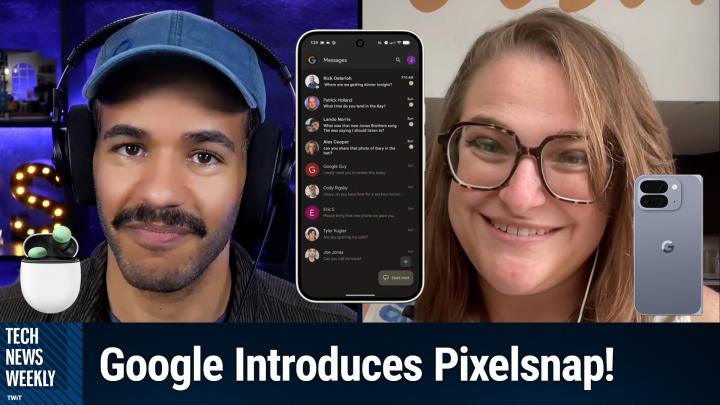
And the other part of it is also you're getting Android 16 on there again, kind of leading up to that criticism. But let's talk about some hardware changes. There is hardware changes. This phone supports Qi 2.2. Wireless charging, means you can hook it to a wireless charger up to 25 watts. But the more exciting thing that people want to hear is the phones have magnets in the back and who'd have thought that'd be the big technology of the year? And these magnets are called Pixel Snap and they allow support like magnetic accessories. You can even put MagSafe accessories. Fun fact, when I go to CES, one of my favorite booths to go to is the Wireless Power Consortium, made up of hundreds of companies including Google and Apple, who are behind this G2 standard.
Patrick Holland [00:45:12]:
So to see that and see some of these fun accessories that you could put on your iPhone now, or put some iPhone accessories on your Pixel phone, I think that's pretty exciting. But again, not a huge compelling change over last year. But the price is the same and I think that's smart as well.
Mikah Sargent [00:45:28]:
So when it comes to this, then if somebody's looking to get the latest phone going for the, let's say they had last year's Google Pixel Pro. Okay, you would want to kind of follow from that to this year's Pro. Or would you recommend in this case, kind of waiting because in that specific instance not much has changed. Or is this really just a matter of you'll get access to the new AI stuff that you wouldn't otherwise get?
Patrick Holland [00:46:04]:
Yeah, and I have to say I'm very bullish on recommending upgrades and a year over year upgrade. I don't see that happening here unless you really want that, that those magnetic accessories and things like that. But you know what, you could buy a case and it does largely the same thing. It's not the same, but it's, it's close and it saves you hundreds of dollars. I would say this phone's probably aimed at someone upgrading from maybe something more like this. I think this is right 6pro and 7pro a few years ago and I think that makes a lot more sense. Even if you're really into generative AI and onboard stuff. While it's impressive the year, year over year processing that they've done on the Tensor, I think this is a sit back.
Patrick Holland [00:46:46]:
Unless you're going to get a fantastic deal on this and get some return on your old phone, there's no reason to do a year for your upgrade on this.
Mikah Sargent [00:46:53]:
Understood. Then there's the standout, right? There's the stand up. In this case, the Pixel 10 Pro Fold, it looked very thin. The camera bump was massive. What's going on with the fold? I loved the part about how many years of folding you can do before you have to worry about the screen.
Patrick Holland [00:47:19]:
I mean, and that's a trope that's happened since 2019 when those early Galaxy Z. I don't think it was Z Fold. It's this Galaxy Fold units came out and people had problems with the screen and the peel on top of the screen and all that stuff. That's kind of like first impressions. Right. It's stuck with not only the tech journalists who've tested it, but obviously the people looking at it. So speaking of that, like you talked about years of being able to fold, probably the biggest feature on this is something that's so mundane and so boring, but kind of groundbreaking. This is the first foldable Phone to have IP68 rating for water and duster sensor.
Patrick Holland [00:47:56]:
Meaning it can actually go to the beach with you. You can. If you were touring a salt factory, you could have this phone. You couldn't do that with a Galaxy Z Fold 7 or any other foldable phone. Even like something like the Motorola Razer Ultra. All of those have a smaller or lower dust resistance that's not really this. So this matches most flagship phones like iPhones. Pixel.
Patrick Holland [00:48:20]:
All these other phones have IP68 dust resistance and the Fold is the first one to do it is as exciting and thin, as sexy as the Galaxy Z Fold 7. I think that other phone probably looks better and feels more like a normal phone. But yeah, I'm not going to be able to take that to the beach. Right. So I think that's part of it. I also think the Android 16 software on the fold, especially when we get to test that, that's going to be a big deal. It was so much fun playing with that on the Fold 7. But yeah, that camera bumps there.
Patrick Holland [00:48:50]:
Get a case that'll keep it from rocking. Is that extra device?
Mikah Sargent [00:48:56]:
Yeah. How do those cases typically have sort of. Is it just open in the middle?
Patrick Holland [00:49:02]:
Yeah. So it's kind of like a two piece or like the first is this kind of like a frame that goes around the COVID screen. But the part that goes around the back, usually they have a cutout for the. I don't know what you want to call it, a camera bar. But the camera square and because of the thickness of the case, it helps make it less like there's a giant domino stuck to the back of your phone.
Mikah Sargent [00:49:22]:
Yeah, that makes sense. And then lastly we touched on it a little bit there. The updates to provide the magnetic accessories, the pixel snap accessories. I thought it was interesting. I think more and more I see the now of course, right as I'm Talking about this, I'm forgetting the name of it. PopSocket. I see more and more people with PopSocket accessories, and I'm not surprised to see the company stepping into that area. Can you tell us about Google's accessory game? Is this a company that is well into making accessories for its Pixel devices, or is it more.
Mikah Sargent [00:50:05]:
Has it in the past kind of been more about just, here's the hardware, go to third parties to get your accessories?
Patrick Holland [00:50:12]:
Yeah, I think a little bit of both. I think previous to this week, it was like their cases were nothing special, but they were just fine. They're like silicon cases, and they've helped the camera bar be a little less protruding and things like that. But I think, yeah, the big. Well, Google does have its own accessories. They're branding them called Pixel Snap, which is kind of cute. And the one that you refer to, there's a thing called the Pixel Snap ring stand. And when it's on the back of the phone, it's basically like Google's version of a PopSocket, but you're using what almost looks like a binder clip, a binder ring to hold your fingers in.
Patrick Holland [00:50:50]:
But then that binder ring pulls back and it acts like a stand. So you could use it for watching a video or for filming yourself and things like that. But I think the big deal is that there's already a ton of magnetic accessories and some that are branded MagSafe that will all work on this. So it's more like bringing those things to the Google phone. It's the first major phone to do it. The only other phone that I know that has, like, this magnetic stuff that's not an iPhone is the HMD skyline. And I guarantee most people don't even know what that is.
Mikah Sargent [00:51:22]:
Yeah, I was gonna say, but what.
Patrick Holland [00:51:25]:
Those are the guys that made the Barbie phone, so.
Mikah Sargent [00:51:28]:
Oh, you know, the Barbie phone people.
Patrick Holland [00:51:30]:
You know the Barbie phone people.
Mikah Sargent [00:51:33]:
Well, there's, believe it or not, more to talk about. We're gonna take a quick, quick break before we come back with the wonderful Patrick Holland joining us to let us know what was actually announced at the Made by Google event. But let me tell you real quick about Pantheon, who are bringing you this episode of Tech News Weekly. We know your website is your number one revenue channel, but when it's slow, when it's down, when it's stuck in a bottleneck, it's also your number one liability. Pantheon keeps your site fast, secure, and always on, which means better SEO, more conversions, and no lost sales from downtime. But this isn't just a business win, it's a developer win too. Because your team gets automated workflows, isolated test environments and zero downtime deployments. No late night fire drills, no orcs on my machine headaches, just pure innovation.
Mikah Sargent [00:52:27]:
Marketing can launch a landing page without waiting for a release cycle. Developers can push features with total confidence. And your customers, well, they just see a site that works 24. 7, Pantheon Powers, Drupal and WordPress. Sites that reach over a billion unique monthly visitors. Visit Pantheon.io and make your website your unfair advantage. Pantheon, where the web just works. Thank you, Pantheon, for sponsoring this week's episode of Tech News Weekly.
Mikah Sargent [00:52:56]:
We're back from the break, joined by Patrick Holland, who has the Made by Google lowdown for us. It's time to move to our wrists and our ears before we end things on the AI of it all. Pixel Watch 4. When I was talking to Leo about this during the show, one thing that I love about the Android side of things with the watches, I just love a circular watch. I just think it looks so good and I think this one looks quite good too. What's new with the Watch four and what are your initial impressions, by the way?
Patrick Holland [00:53:32]:
I could join both of you in that endorsement. I love circular watches. Or that's kind of what wristwatches have been for years, right?
Mikah Sargent [00:53:38]:
Yeah.
Patrick Holland [00:53:39]:
You know, but having that I think really stands out. Obviously they keep refining that like that kind of domed, like I wouldn't call it quite a waterfall display. It's very close to that, if you want to call it that for a watch. But it's really just, it looks really sharp. Right. I think one of the you're about talking, you were joking about putting things on your wrist and ears and things like that, but it's like, yeah, if you think about we got our Gemini in our pocket, we got Gemini on the Pixel Watch. Now we'll talk about buds and stuff, but it's like, okay, next they're going to probably bring us some glasses. So at some point all of our senses are going to be having an easy access to Gemini.
Patrick Holland [00:54:13]:
I think the neat thing about the Pixel Watch 4, it's kind of like the Pixel 10 where we get Android on the Pixel 10, Android 16, we're getting Wear OS 6. And that visual overhaul with that slight redesign on the watch looks really impressive to me. I'm excited to test it, but I think the big thing and it's going to be a different kind of AI is they have an AI personalized. I wouldn't say trainer, but Like a coach. Right. So we've seen some taste of that over the past few months. Apple for WatchOS has, excuse me, workout Buddy, which basically is a cheerleader. So if you're going for a bike ride or you are going for a run, it's like, hey, Micah, you just set a new PR on this run.
Patrick Holland [00:54:59]:
Way to go. It's not really going to be the one guiding you, it's just kind of encouraging you. Samsung with its Galaxy Watch 8 had running coach, which I think that's right. There's so many coaches and buddies in these, pardon me if I get wrong. And that's literally just telling you kind of like what your rate is, what you're going for and kind of like having like a personal trainer there with you for specific workouts. Google is taking a more interesting approach, which I know for our our wearables reporter Vanessa Handriana. We got excited about this because this is looking at everything. So you could ask it like, hey, how can I raise my VO2 max? Or hey, should I sleep an extra hour or should I get a up and do that workout this morning and things like that.
Patrick Holland [00:55:40]:
And I think a lot of this is inspired by this little buddy, the Oura ring. And while the hardware is not a ring, you get that software. So I think that's huge because Google is now in front of both Samsung and Apple in terms of this AI and health fitness coach. And while we haven't tested it yet, it seems like it's going to be very close to what Ara's health coach is.
Mikah Sargent [00:55:59]:
Okay. Yeah, I did see some initial excitement about this health coach for sure from tech journalists who got briefings and kind of had an early understanding of what was going on. Let's kind of quickly go through the in ear situation because this also felt a little bit like here's some quick things, we got some quick updates there. Not huge changes. But again, as I said, maybe I missed it as it was going by what's new with the Buds 2A and the Pro 2.
Patrick Holland [00:56:35]:
You don't remember what Jimmy Fallon was saying about this. It was so clear and it wasn't interrupted with by ad libs. But no, I think, yeah, you're right. So the Buds did not get even. I don't think they would have gotten much attention had it been a non celebrity driven event. But there's a brand new pair of Buds called the Pixel Buds 2A. These are their budget model. They come with ANC.
Patrick Holland [00:56:55]:
It's not the newest ANC that you can find on the Pixel Buds Pro 2 or 2 Pro part if I get the name wrong, but it's based off the original Pro Buds, so that's pretty exciting. Also, you can probably guess Gemini is on there. So you could have those conversations with Gemini, you could have that access to it even without pulling your phone out of your pocket. The other interesting thing is they did launch a new color of the Pixel Buds Pro 2. It's in this moonstone color which is meant to match the phones. So that's there. It's interesting that the Buds, the watch and the fold are going to go on sale in October, so that might also partially be some of the reason we didn't hear more about them.
Mikah Sargent [00:57:38]:
That makes sense. Now let's just go to the grand finale, the grand kind of end of this all which I was kind of surprised. I thought that we would hear more about AI AI AI AI throughout. And it kind of caught me off guard that it was sprinkled throughout, but it wasn't as much of a focus as we've seen from other companies. Something that I was personally excited about because I host a show called Clockwise and it's a show where everybody, there are four people and everybody brings like a question to the table. And so you ask like, you know, what do you hope this company is going to announce at its event? Da da da da. And something that has always, always been my response when someone's asking like, oh, Apple has an event around the corner. What do you hope they announce is an AI Photo Coach.
Mikah Sargent [00:58:32]:
And so when Google started showing this off, I was so excited. Also sad because I wasn't getting it, but so excited that someone finally did this because typically it's been when you've thought about like sort of the photo coaching mechanism, it's an after the fact kind of a thing where you take a photo and you hit a button and it automatically crops in some cases and changes the color. We've seen that before. It was also shown off with this. But the cool thing is let me help you take a bunch of photos while you're taking photos. Based on what I'm seeing in the scene, tell us about Camera Coach. But then also if you'd like to get into some of the other AI announcements that perhaps didn't even make it to the stage, like the Pixel Journal, although maybe it was mentioned in passing. I missed that.
Patrick Holland [00:59:25]:
Yeah, I gotta say, like I was talking about Camera mentioned Camera Coach earlier when we did that photo walk. And yeah, what it basically is, is in the camera app there's a button you can tap and it uses Gemini. And if I'm holding to take a picture of a group, maybe it. It would then come up with some recommendations for you, like, hey, maybe change the angle or take a step closer. Right. And it offers this information step by step so you can do it. That being said, this is not something. If you're trying to take a picture of a kid real quick, you're not going to use this feature.
Patrick Holland [00:59:56]:
It's not, like, meant to be fast. It's meant to really take time in that moment to frame things. In fact, there's a get inspired button that I was a big fan of when I got to test it. That just gives you some options that you might not have thought about before. And it might be doing, like, more of a macro photo for a certain, like, landmark, or it might be trying to, like, bring down the highlights or something. It's really fascinating how it works. And I don't think this is aimed at something you would use every day. I could see it be aimed at people who just want to experiment with something or want to be that kind of slow photographer and be more contemplative and think about it.
Patrick Holland [01:00:34]:
Also, for just people who might not have ever had someone tell them, like, hey, yeah, there's this thing called the rule of thirds. Move their subject's eyes down a little bit. It's neat to see it work. It's all powered by Gemini. And yeah, I got more testing to do, but I'm excited to have something soon, hopefully. Oh, and then, I'm sorry, there's so much other AI, but let me just talk about two more real quick. One is Magic Q, and this has a lot of potential. I didn't get to test this out, and in the demo yesterday, you saw it.
Patrick Holland [01:01:04]:
But the idea is, as opposed to, like, let's say Micah, you and I are going to dinner and we're on a text thread and you're like, hey, where's the address of this place? And then I might go into, like, Google Maps and search it, copy the link, and then share it with you. Right. This is able to use the context of that conversation and be like, he's looking for this. And maybe, maybe I made a reservation. It's able to find the name of the restaurant and the address all in my email and suggest it on my phone. This is not using the cloud at all. So none of this information is going there. This is basically like a more powerful search tool on your phone.
Patrick Holland [01:01:39]:
I think of it like on the iPhone. You get those. Someone sends me Like a calendar invite. It gets that little ad to your calendar thing. It's like that on steroids, maybe.
Mikah Sargent [01:01:49]:
I didn't realize it was local. That's cool.
Patrick Holland [01:01:51]:
Yeah, right. And if it even lives up to like, like 50% of its promise, I'm impressed.
Mikah Sargent [01:01:59]:
Yes. I am now even more impressed. I find those features in the limited ways that they already are on the iPhone. You know, if someone asks me my address, it'll pop up a little thing telling me, you know, just auto fill autofill with my address. Even just those little things are very helpful. So taking that to the next level, that is kind of what we've seen as the promise from other companies as the future of the, you know, virtual assistants there. So I, again, that's pretty mind blowing to me. That, and I wish that that had been made more clear because I was thinking, Google is doing this.
Mikah Sargent [01:02:38]:
Sure though it can do this because it's got all this information from all these places and the sort of classic Google narrative from those who, you know, pay attention to the company. So the fact that it's doing that processing and everything locally is I think, something that they should really tout as, as part of what makes that magical.
Patrick Holland [01:02:58]:
Yeah. And I think that it's interesting too because like that kind of stuff, it's like that's the AI I want. It's the stuff like, you know, it's the stuff that's going to fold my laundry, do the things I don't want. Yes. Save me time. Save the stress of like being like on, on a subway and trying to find that address or picture or whatever it is that someone is asking me for. Can I mention one more to you? I got one more, please. So this, I have to say, this is where I like that we had Jimmy Fallon yesterday because they showed off a new feature called Voice Translate.
Patrick Holland [01:03:24]:
Now we've had Voice Translate on phones before. We've had it powered by AI, we've had it powered through the cloud, all this stuff. What this does is take it another step. So what they did is they had a demo with Fallon talking to someone who is a Spanish speaker and a YouTube influencer. And basically what it does is as Jimmy's talking in English, the Spanish speaker is hearing an AI version of his voice speak Spanish and he's hearing an AI version of her voice on his phone speak English. So it's not just translating, it's actually making the tone of the voice and stuff. It might be potentially creepy, but it, I would have to say I was kind of blown away by that, I don't know how well that works. I don't know how many times it would be in a scenario like that.
Patrick Holland [01:04:06]:
But that seemed kind of cool.
Mikah Sargent [01:04:08]:
I thought so as well. Obviously. Yes, there, there are certain implications and concerns. I think though that one or two. Yeah, I think that is, that is the sort of tech promise that many of us have been waiting for, that we've been reading about and you know, from Douglas Adams and others. And that is a super, super potentially cool feature with the caveats that many people will talk about, of course. But yeah, any opportunity to be able to reach more people and communicate with more people I think is a neat, neat opportunity. Lastly, if there's anything else that you want to mention from the event or in the pre and post briefing and understanding that you got from Google, now's the time to do so.
Patrick Holland [01:05:01]:
Yeah, I'll just say that, hey, all these devices are available for pre order now. The 10 Pro, 10 Pro XL all will be in stores. Was it August 28th? The rest of the products will be, I think it's October 9th, so there's that little delay there. But I have to say it's impressive. Google's one of the only companies that still just does that one hardware event a year and they just bring out everything. I mean you look at something like Samsung, they have one for the S series, one for like the A series at mwc. The folds and flips. Right.
Patrick Holland [01:05:32]:
So it's neat to see Google do that. I read an article on the Washington Post that was saying that Google has like a 4% market share. So it's still very small in terms of overall but the significance of their devices. And I think part of this goes back to their like Nexus stake is this is like the optimized version of hardware for Android and you totally see that on the Pixels. It's got that weird Pixel stuff that a lot of us love and you don't necessarily see that on a Galaxy phone.
Mikah Sargent [01:06:01]:
Yeah, very true. Well, Patrick Holland, thank you so much for taking the time to be here with us today. Of course. Folks can head to cnet.com to check out your work. Is there anywhere else they should go to keep up with the awesome stuff you are doing?
Patrick Holland [01:06:15]:
Yeah. Find me on. You can find me on some socials like Instagram and threads directed by Patrick and say hi to me. That'd be nice. I'll say hi back.
Mikah Sargent [01:06:23]:
Sounds good. Thank you Patrick, we appreciate it.
Patrick Holland [01:06:26]:
Thank you so much. Thanks for having me. Great to see you.
Mikah Sargent [01:06:28]:
Good to see you as well. And it's good to see all of you out there. I can totally see you. It's in my head though. Of course. This is the show that publishes every Thursday at TWiT TV. That is where you can go to subscribe to the show in audio and video formats. If you would like to get all of our shows ad free, just the content, none of the ads, well, join our Club Twit TV.
Mikah Sargent [01:06:50]:
Club Twit $10 a month, $120 a year. And with that you gain access, as I mentioned, to your own personal feeds that have all of the ads pulled out of them, just the content. We also give you access to our Twitch plus our Club Twit feeds that include special behind the scenes stuff. We also have all of our news events published there so you'll get to see Leo and my coverage of the Made by Google event yesterday. And you will have access to our special club Twitch shows that we do, including book club, Stacey's Book Club, the camera stuff that we do with Chris Marquardt, My Crafting corner, and so much more. And you also get to hang out in our Discord, a fun place to go to chat with your fellow Club Twit members and those of us here at twit. If that sounds good to you, join the Club Twit tv Club Twit, we would love to have you. If you'd like to follow me online, I'm @mikasargent on many a social media network or you can head to chihuahua.coffee, that's chihuahua.coffee where I've got links to the places I'm most active online.
Mikah Sargent [01:07:56]:
Be sure to check out my other shows that'll publish today, iOS today and hands On Apple. And every Sunday you can catch Hands on Tech as well. Thank you for being here. Thank you for being awesome and we'll see you again next week. Bye bye.
Leo Laporte [01:08:14]:
The tech world moves fast and you need to keep up for your business, for your life. The best way to do that is with twit.tv. On This Week in Tech, I bring together tech's best and brightest minds to help you understand what just happened and prepare for what's happening next. It's your first podcast of the week and the last word in tech. Cybersecurity experts know they can't miss a minute of security now every week with Steve Gibson. What you don't know could really hurt your business. But there's nothing Steve Gibson doesn't know. Tune in Security now every Wednesday, every Thursday, industry expert Micah Sargent brings you interviews with tech journalists who make or break the top stories of the week on Tech News Weekly. And if you use Apple products, you won't want to miss the premier Apple podcast, Now in its 20th year, MacBreak Weekly.
Leo Laporte [01:09:07]:
Then there's Paul Thurrott and Richard Campbell. They are the best connected journalists covering Microsoft, and every week they bring you their insight and wit on Windows Weekly. Build your tech intelligence week after week with the best in the business. Your seat at Tech's most entertaining and informative table is waiting at twit.tv. Subscribe now.