MacBreak Weekly 1035 Transcript
Please be advised that this transcript is AI-generated and may not be word-for-word. Time codes refer to the approximate times in the ad-free version of the show.
Leo Laporte [00:00:00]:
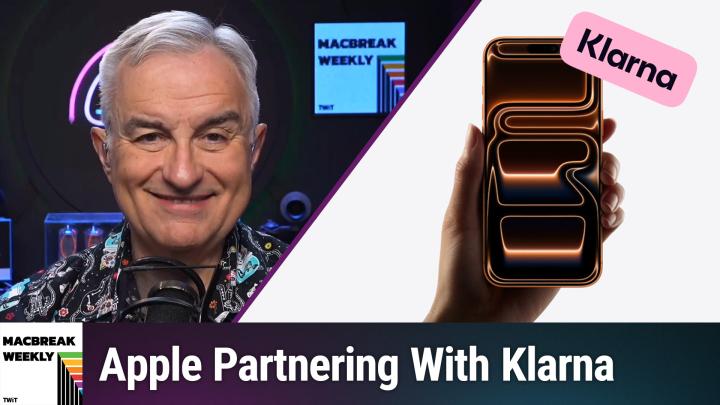
It's time for MacBreak Weekly. Andy, Christina, and Jason are all here. The gang is together. We're gonna— we got lots to talk about. A huge dump of new Macs coming— it is not the right word, dump, is it? Coming at the end of the year according to Mark Gurman. Plus a bunch of new home stuff including Apple TVs and HomePods. We'll talk about that. The new Apple lease-to-own deal they just announced— should you take advantage of it? What are the pros and cons? And Public Beta 2 from iOS 27 and why you absolutely must upgrade your Mac.
Leo Laporte [00:00:34]:
All of that coming up right now on MacBreak Weekly. This is MacBreak Weekly, episode 1035, recorded Tuesday, July 28th, 2023. 2026. Riding Nerdy. It's time for MacBreak Weekly, the show where we cover the latest Apple news.
Leo Laporte [00:01:04]:
Let's say hello to our dear friends, Christina Warren from GitHub. Hello, Christina.
Christina Warren [00:01:10]:
Hello, Leo.
Leo Laporte [00:01:11]:
We were comparing makeup tips earlier.
Christina Warren [00:01:13]:
We were, we were.
Leo Laporte [00:01:14]:
As one does.
Christina Warren [00:01:15]:
As one does. Uh, you wear a darker shade than me, but that's, uh, that's to be expected.
Leo Laporte [00:01:20]:
And they used to call it on the tech TV set, white boy, uh, 40, but maybe, uh, maybe I'm not quite as pale as you, as thou.
Christina Warren [00:01:29]:
Funny story, MSNBC, they used to keep a certain shade of makeup for me and for Annamarie Cox because we were both so pale that they like— and we were on frequently enough that they like kept that. And that's what the makeup artist said. They're like, yeah, you know, we only use this for you and Annamarie Cox.
Leo Laporte [00:01:44]:
I was like, wow, that's pretty good. Yeah, that's a good, good company.
Christina Warren [00:01:48]:
Yeah.
Leo Laporte [00:01:48]:
Andy Ihnatko joining us makeup-free in the library. Well, I shouldn't say that. You actually have a very lovely complexion.
Andy Ihnatko [00:01:55]:
Thank you. It comes from basically being an indoor kid.
Leo Laporte [00:01:59]:
Oh, you don't have a night ritual with a variety of creams?
Andy Ihnatko [00:02:03]:
Yeah, my night ritual is to stay up until 3 AM doing things that I shouldn't be doing.
Leo Laporte [00:02:07]:
Yes, I know that feeling. Good to see you, Andy. And also from sixcolors.com, ladies and gentlemen, I give you the lovely Jason Snell.
Jason Snell [00:02:16]:
Hello, Jason. Hello, Leo. Yeah, warming up my color toner cartridge because we'll get some Apple results later this week. So that'll be—
Leo Laporte [00:02:24]:
yeah, this is, uh, this is the, uh, wait a minute, 1, 2, 3. This is the— I can never remember what their fiscal quarter is.
Jason Snell [00:02:31]:
This is— well, it's going to be retrospective to the calendar second quarter, so it's their fiscal third quarter.
Leo Laporte [00:02:37]:
You can't either? Okay, good. I don't feel so bad now.
Andy Ihnatko [00:02:41]:
Yeah.
Leo Laporte [00:02:41]:
Wow, even the guy who does the color charts.
Jason Snell [00:02:44]:
You know, I have computers for that part of my job, Leo. I don't have— I don't need to Yeah. I don't need to deal with it. It doesn't matter what— why are we even— it's, yeah, fiscal second quarter.
Christina Warren [00:02:55]:
Nope.
Andy Ihnatko [00:02:55]:
Oh, see, third quarter.
Christina Warren [00:02:56]:
Nope.
Jason Snell [00:02:56]:
Third quarter. Third quarter.
Leo Laporte [00:02:58]:
That's it.
Jason Snell [00:02:59]:
Calendar second quarter, fiscal third quarter.
Andy Ihnatko [00:03:02]:
Got it.
Jason Snell [00:03:03]:
Basically for this last 3 months. So, so April, May, June, gonna be interesting. Gonna find out what they say about their price increases and about the forecast for where they think this is gonna go in terms of the RAM. limitations and the GPU chip limitations and all of that. We'll get all of that. That's Thursday afternoon Pacific time that they'll roll that out. I'm sure we'll have a bunch of charts to talk about next week.
Leo Laporte [00:03:31]:
I can tell you the one thing that will be asked about is this new lease plan that Apple announced. Or, did they announce it, or is it the Bloomberg?
Christina Warren [00:03:43]:
No, they announced it.
Andy Ihnatko [00:03:44]:
Bloomberg had it. Bloomberg had it last week. Apple had a press release this morning.
Leo Laporte [00:03:50]:
Okay, so it's official.
Andy Ihnatko [00:03:52]:
It's real.
Leo Laporte [00:03:53]:
It's official. So they had this before, but this is a new plan. They dropped the old plan. Klarna will be doing the financial backstopping. I don't think that matters to anybody, right? Is Klarna a— is it a buy now, pay later service?
Christina Warren [00:04:10]:
Yeah, I mean, it's a loan shark, but they don't wanna use those words.
Leo Laporte [00:04:14]:
That's another way to put it. Uh, their, their stock jumped, so obviously the market thought, oh, this is good. Um, and I, I feel like Apple is saying this because they know the new stuff's going to cost more and you're going to not going to be able to own it. It's going to be like when I was a kid getting, you know, out of college without a good job. I had to, I had to rent to own my furniture.
Andy Ihnatko [00:04:37]:
Yeah, and that's, and, and that's the problem. I mean, Apple does not want to get that, that kind of reputation. As with when they released the Apple Card, like, the biggest worry that I had was going to be, okay, as soon as there are lots and lots of people complaining about how conflict resolutions are not being handled very, very well, and/or someone is locked into a financial agreement that they didn't understand, and that seems to be, again, like spending— going to rent— going to a rent-to-own store and spending $6,000 for a $1,200 gaming PC by the time you get out of the contract. That would be super, super bad. But you can also see how Apple, again, because of the Apple Card experience, these financial agreements, they have so many different regulations across the country and across the world to deal with. I'm not surprised that if they wanted to do this, they would say, you know what, you guys handle it all. We are not in the business of trying to figure out how to be compliant everywhere that we, we're in operation.
Leo Laporte [00:05:39]:
Yeah. By the way, for those of you who are listening, and I apologize, uh, the audio I know is not perfect today, uh, and I'm not sure why. We've tried everything in our handbag to fix this. It's Zoom's fault. We think it's, we think it's the Zoom servers. So I do apologize, uh, and I hope it will get better as time goes on.
Andy Ihnatko [00:05:58]:
Do not adjust your routers.
Leo Laporte [00:06:05]:
Yes, Christina.
Christina Warren [00:06:06]:
No, I was just going to say, I will say from having looked at this program a little bit, there are certainly concerns that I have with any of these buy now, pay later types of programs. Although to Andy's point, I do understand why Apple in most cases has chosen to partner with someone else. They use Citizens Bank, I think, for the current iPhone upgrade program. They—
Leo Laporte [00:06:25]:
oh, I thought they had abandoned that. That's, that's still around.
Christina Warren [00:06:27]:
Well, no, that is ending. But that's, that's who they used historically was Citizens Bank. They used— back in the day, they used to use Barclays.
Leo Laporte [00:06:35]:
Somebody has to do that. Yeah.
Christina Warren [00:06:36]:
You could do financing with the Apple Card, which is switching from Goldman Sachs. I think it's becoming Chase, if that's correct. In this case, it's Klarna who's handling this. And I will say, looking at the details, and I'm sure that I'm probably missing some of the finer points, but it doesn't look terrible in the sense that as long as you— they basically give you a certain period of time, either a 2 or a 3-year period of time to make payments on the product. get a better deal if you do it over 3 years than over 2, for example. And if you are to— at the end of that period of time, you've actually paid less than what the phone costs and you can upgrade to a newer device. But if you did want to keep your existing device, you just have to pay the difference between your payments and whatever the retail price on the phone was.
Andy Ihnatko [00:07:26]:
Oh.
Christina Warren [00:07:26]:
So they— it is a lease program, but there is an option to buy and it does not look like they are charging you more. Now, unlike the prior program, which included AppleCare bundled into it, AppleCare is not included here. And if anybody, I will say, wants to take part in one of these, you know, this new upgrade program—
Leo Laporte [00:07:45]:
You should get AppleCare.
Christina Warren [00:07:46]:
You have— I'm going to go as far as to say you have to because they will inspect your phone when you turn it back in. Klarna will. It won't be like necessarily an Apple thing and they will determine its quality and anything else. And so if there's a scratch, if it's lost, if it's stolen, anything like that, that's a claim you have to make separately. And I know from other companies who've done this sort of thing, they can be real sticklers if the phone isn't pristine. They'll say, oh no, well, you haven't fulfilled our contract even though it's been 3 years. The fact that you have like a scratch on the back of it means that we're now not going to let you either upgrade or you're going to have to pay something else. So I would say that AppleCare is even more important if you're going to do a lease scenario than if you were to buy it outright, just because you will be responsible.
Christina Warren [00:08:34]:
Like, for instance, if your phone is stolen, you would have to file a claim on that and then fulfill still your payments with the loan.
Andy Ihnatko [00:08:43]:
That's a particularly good point because this is a good, quote unquote, deal for people who are in financial situations where they will not get $800 together at any one point to buy a new phone. However, they can find $18 a month to find in their budget. But if the lease period ends and And suddenly Klarna is saying, okay, well, you owe us $430 for damage to this phone. That's going to be, okay, who do we eat this month? Do we pay our rent this month? Or do we satisfy Apple/Klarna with these—
Leo Laporte [00:09:16]:
That's why you call them a loan shark, Christina, right?
Christina Warren [00:09:19]:
Well, I—
Leo Laporte [00:09:19]:
Kind of predatory.
Christina Warren [00:09:21]:
Well, I call them that because, and look, I think Klarna is different than Affirm. Affirm is probably, and look, this is all my opinion. So if anybody's gonna come after anybody, you know, this is my opinion. I think that these systems tend to be predatory. Is a Swedish company, I think. And so they, I know, maybe operate slightly differently in other regions. But in the United States, you know, they can give you really good terms on, on a program and then, you know, like raise the rates. But there are all kinds of catches here.
Christina Warren [00:09:48]:
Like if you miss a certain number of payments, then the entire thing becomes due or the contract is over. So this is just one of those things you want to be careful about. This particular way this is working, I'm not necessarily sure I would call it loan shark-like. But I would still say, be very careful before you go into this, because even if you— if it's not a financial decision, like you might actually look at it and say, I could afford to buy this outright, but I'll take an interest-free loan. This is not the same thing as, you know, putting it on a credit card where you're not being charged interest. This is a different sort of situation. And you just need to be aware of that, I think, before going into it.
Leo Laporte [00:10:26]:
Who should do this, Jason?
Jason Snell [00:10:28]:
You know, I think Andy and Christina both said, this is for people who, for whatever reason, would rather stretch out their payments over time rather than making that initial large purchase. There can be lots of reasons for that, especially if the terms are essentially that you're not really paying interest, and the monthly payment looks good, and you know that after 12 months or 24 months, you're going to hand the phone back in. Like, you just got to do the math. And the iPhone upgrade program did this, a version of this. It's different, but it's similar. And the AppleCare, I agree with Christina, the AppleCare is optional now. But all that really means is you also need to buy AppleCare on top of it to do that.
Leo Laporte [00:11:12]:
So consider that.
Jason Snell [00:11:13]:
But it can, it can, you know, I know a lot of people, including people who do have money in the bank, who are like, I would rather have a tithe to Apple for my iPhone every month that is normal than, than do it this way. Now, you could Or then buy it outright. The thing is, you could also— and I would advise anybody who's thinking about doing this— consult your carrier, because your carrier will also be happy to do some sort of a deal where they add it onto your monthly bill in a way. And they have deals and they have marketing, too. So there are other ways of doing this. I think the most interesting thing about this is that Apple is going to wind down the iPhone upgrade program eventually. And there are no new entrants in that now. I think you can stay there for some amount of time, if you're already a member.
Jason Snell [00:12:00]:
But what they did is this is not an iPhone upgrade program. This is an upgrade program for all their products. So, you know, now if you wanted to buy a Mac and take it out 24 months or 36 months, you could do that too. And, you know, bottom line, I think it comes down to what you feel financially comfortable with doing with your money. I've always been a pay upfront kind of person, but I've also had the luxury to have the money in the bank to pay upfront. And if you don't, Or if budget-wise you'd really rather spread that out and you look at something that's essentially a zero-interest loan as a way to do that with no cost to you, then I think there's value here. Also, this being a lease, it does mean the big change, and this was true with the iPhone upgrade program too, is at the end of your contract, unless you buy it out, you give it back. So you don't, you know, if people are used to the other way you could do this, which is you buy it outright once, and then when you're ready to get a new one, you sell that one and buy a new one.
Jason Snell [00:13:00]:
And so the entry price is a lot lower. That's not the case when you're on one of these plans. You've got to give it back and then start again.
Christina Warren [00:13:08]:
Yeah, I've actually been on the iPhone upgrade program for a while now, and I used to kind of be like Jason. Actually, for many years I was— I would just buy it outright and then sell it after a year, trade it in, usually get 50% of my value, and then just buy the new one. And I did that for a long time and I actually moved to the upgrade program because I was like, well, it's one last step. And, and this is a way to get the phone unlocked as well. And I don't have to be part of a carrier or anything. I don't know what I'm going to do in this case when the current upgrade program ends. I think after 12 months, I think that I will have an option to either convert it to the new program and trade it in for something else or pay off the loan. And, and in this case, because it'll be for my iPhone 17 Pro Max, I might just pay it off because I, I'm probably— my mind right now so far is that I would probably be keeping that phone and then potentially getting whatever the foldable is.
Christina Warren [00:14:03]:
But it'll be interesting to see how that works. But yeah, as Jason points out, that's the thing to keep in mind is that unless you choose to pay off the terms at the end, the idea is that you're trading this in. Now, the incentive that they're giving you for this, at least on the phones, I haven't worked out the math on the laptops yet. Yeah. Is that if you were to do the math and either do it over 36 months or over 24 months, or I guess even over 12 months, you could potentially be paying less than what it would have cost to buy the phone outright. And then you just have in perpetuity a monthly fee to continue to get the latest phone. So I think if you do the math, in one of the cases, I think over a 2-year period or something, you're saving quote unquote, $250 if you were to pay monthly. But at the end of that 2-year period, you have to get the new phone, or you have to pay that, that $250, you know, that's outstanding to keep the phone that you've already been paying towards.
Christina Warren [00:14:58]:
So you're, you're not— if you're somebody who upgrades every year or upgrades on a cycle, you know, every other year or something, this might be worth looking into. But I think you'll just have to take those considerations. This might actually be a thing that I do. I was thinking about this before the show. I'm sure a million people will do this, but I might just like use an LLM and try to whip up some sort of calculator about how this works. And then just like, you know, put it on like, you know, a static website or something just, just so people can easily see, okay, is this worth it or not? Because that's going to be like the number crunching people are going to have to do for themselves.
Andy Ihnatko [00:15:34]:
Yeah, there are a lot of variables here. And like I said, I think this is going to mostly appeal to people who are in certain financial situations where Yeah. Where being able to make that money up— pay that money up front or to get a contract with a carrier is also not going to be easy. And one of the things that I think that people will want to think of when they're in that situation is that there's already been spot hooks that are in iOS, basically the ability to remotely disable a phone that's under such a contract that's kind of similar to that. And I would hate to think of somebody who was basically— the best option for them was to go on this sort of lease program, but then because they have job instability, they're going through a period of job instability, they miss enough payments that suddenly they don't have a working phone anymore at a time when they desperately need a working phone. So a lot of variables to, to navigate, including the idea of how much do— how important it is that I have a working phone month to month to month. And if you feel as though that is a non-acceptable risk, it might be time to look at a Motorola that costs about $200, $250 that will run pretty much all the apps that you are going to rely on.
Leo Laporte [00:16:45]:
Defend Android?
Christina Warren [00:16:46]:
What are you—
Andy Ihnatko [00:16:47]:
I'm just, I'm just putting it on Android. I'm putting it up, I'm putting it on the table. It's a buffet of options. If you don't like the cauliflower succotash, you don't have to have cauliflower succotash. Some people like it.
Leo Laporte [00:17:00]:
So It seems to me that— Christina, it's interesting that you did do this upgrade program. You didn't—
Christina Warren [00:17:07]:
you don't—
Leo Laporte [00:17:07]:
you could afford to buy it outright.
Christina Warren [00:17:08]:
Oh, absolutely.
Leo Laporte [00:17:09]:
I think we can agree it's better. It's absolutely better than putting it on a credit card, which has a lot of interest, or even the carrier plans, which have, seems, a lot of hooks. So you didn't have to do it, but you wanted to do it because why?
Christina Warren [00:17:25]:
Well, because I traded it in every year anyway. Literally, I didn't keep the phone around for an extra year. Like, I had no reason to keep around like an old, you know, occasionally, like maybe every 3 years, like for a certain period of time, I actually, what I used to do is that after a year, I would give my husband my hand-me-down. The carrier deals, which you point out do have like a lot of, you know, hooks, sometimes can be pretty good. I think one year they gave us, I don't know, like $700 or $800 for what was at the time, I think like a 4 or 5-year-old phone towards the new one. Now, how they get you on that is they only give you the credits over a 36-month period of time. But we were not going to switch carriers. And so that made more sense.
Christina Warren [00:18:05]:
And so when I kind of decoupled my personal upgrade cycle away from what my husband was using, it was just like, okay, well, if I trade this in every year anyway, and I get about 50% back based on like what Apple's trade-in numbers are, why not just go ahead and just make this one monthly transaction? And so that's why I chose to do that. Although there were times occasionally where I would just buy it outright. Like my iPhone 17, for instance, which is like the non-Pro, which I use as a work device, I just paid cash for that. And so, and because I didn't get that tied to a carrier, I couldn't even finance that on my Apple Card for 0% interest, which I like to do. So in that case, I literally just, you know, paid them, you know, $800 or whatever it was. So it just, it depends on the person. If you know that every single year, or every 2 years without fail, you're going to be trading your phone in and getting the latest iPhone.
Leo Laporte [00:18:56]:
That's true, probably for all of us except Andy.
Christina Warren [00:18:58]:
Right, I was going to say, so if that's the case, you should look at it and go, okay, does this make sense to me? Um, the only, only thing you should, you should consider is, do I potentially want to finance this in a different way? And maybe I could get a better trade-in elsewhere or whatever. Or to Jason's point, check out the carrier deals and say, you know, because a lot of them have their own upgrade programs too that offer a benefit.
Leo Laporte [00:19:19]:
They have an incentive, which is to get you into their fold.
Jason Snell [00:19:22]:
And think about Really? So none of us likes to be held captive, certainly by a carrier. Think about reality. How long have you been with your carrier? And are you likely to go somewhere else? Because I've, I've been with my carrier for like 20 years now. I can— if they want to lock me in, go ahead. What's it gonna— what's it gonna do, right? Like, it's not gonna happen.
Leo Laporte [00:19:43]:
2 more years.
Andy Ihnatko [00:19:44]:
Oh no.
Jason Snell [00:19:45]:
And they make those— they make those deals with the idea that there are some people that they can get to churn, and some people who might churn that they can get to stay. But for me, I'm kind of in. So if my carrier deal looks pretty good and one of the, you know, one of the limitations is that you've got to stay with them for 12 months or 24 months, oh no, don't throw me in the briar patch. I'll do it and that'll be fine. So it's just worth— it's worth thinking realistically about, yeah, the carrier wants to kind of keep you under their thumb, but if you're under their thumb anyway, get something out of it.
Leo Laporte [00:20:14]:
It's ironic that you might have to use an AI to figure out what's the best for you now.
Jason Snell [00:20:18]:
Carrier deals especially. Yeah.
Andy Ihnatko [00:20:19]:
Yeah. Oh no.
Christina Warren [00:20:20]:
I mean, It is.
Leo Laporte [00:20:21]:
Read the fine print for me.
Christina Warren [00:20:23]:
Yeah, well, I mean, kind of, right? I mean, yeah, because, yeah, it's so hard to figure those things out that I figured it might be at least a good calculator, at least figure out. Because, yeah, with the carrier things, that's a great point, Jason. Like, again, with Verizon, who I've been with I think for 16 years at this point, um, we— I did the math, and because my husband was on an older phone that I paid cash for, I paid outright for, and he liked it, he up— he didn't upgrade, not because he didn't have options, but because he didn't want to. They were willing to give us so much more Right. For the carrier trade-in than Apple was, like 3 times more. And so at that point I'm going, okay, well, I'm not switching anyway. I know I pay too much for cell phone service, but I'm not going to go through the hassle of switching. So if you're going to give me $800 or $900, you know, for him to get a new phone, thank you.
Leo Laporte [00:21:09]:
So to enumerate your options, and you could just feed this to your AI, uh, the nice thing about the Apple plan is you're not paying interest.
Jason Snell [00:21:18]:
Right.
Leo Laporte [00:21:18]:
Just basically, you're paying for depreciation, uh, and that at the end you'll have a balloon— either a balloon payment or you have a new phone. The thing to consider is that it's going to be probably Klarna that decides whether your phone is coming back in pristine shape or not. So if you're the kind of person who always takes good care of your phone, has never had to repair it, keeps it in a case, and buys AppleCare, which you got to add in at the bottom there as another cost, Uh, this might make sense for you, but you should investigate what the trade-in value is going to be, because if you get a great trade-in value from your carrier, it might make more sense to buy it outright and trade it in. And then that's— so I could see why you want to—
Christina Warren [00:22:03]:
I was going to say, I was trying to look at this. It's so complicated. But the other thing I would say too is that's for the phone. The fact that what's new about this and what has not been offered before, to my knowledge, I think there have been some third parties who've tried to do similar things is that you can use this on an iPad or a Mac or an Apple Watch.
Leo Laporte [00:22:17]:
Well, that does complicate it. Now you don't have a carrier anymore.
Christina Warren [00:22:21]:
Now you don't have a carrier. And so at that point, now those— it's a 3-year lease period for the computer. I think it's 2 years on the watch. And I think it's 3 years on the iPad. And that seems about right to me in terms of upgrade cycles. I will note, again, I didn't have a chance to look at this intensely. But my cursory knowledge, it does not look like you get any benefit if you were to pay it off early. So it's not one of those things where you're like, oh, I want to maybe upgrade early, I can do that.
Christina Warren [00:22:47]:
They might have an option, but I think you have to pay a fee for that. So that's the thing you kind of have to think about too, which is how often do I—
Leo Laporte [00:22:55]:
So you have carrier lock-in, you have hardware lock-in.
Christina Warren [00:22:56]:
You have hardware lock-in, which I think for most people, I think 3 years on a laptop is fine. I cannot think of many scenarios— and they're not offering this on the Neo. They're offering this on the Air and the Pro. I think that in a scenario like that, that's That's probably fine. In fact, there might be some people who at the end of that 3-year term are like, I don't want to continue paying whatever this monthly fee is. And then they will be faced with the decision about the balloon payment and, do I want to pay this potentially $500 or whatever it might be to finish off the loan? But I think that that's what's more interesting about this, is that especially the timing of all of this happening. As prices are going up, you know, it's one thing, you know, a phone you might be able to get a deal through your carrier on. An iPad, they can usually offer deals on that too, even on Apple Watches.
Christina Warren [00:23:48]:
But Macs, that has not been the scenario. And so if you're somebody who, you know, it's going to be very difficult for you to come up with $2,500 or something for a MacBook Pro or even, you know, $1,800 or $1,500, you know, for a MacBook Air that has the the specs that you want, this might be the sort of situation which might be better. Again, I would still say, like, depending on the price of your device, look at if you have credit cards that have 0% interest for 12 months or whatever, that, that might be better for you. But it's going to depend on everybody's financial situation. But I do have to say, I would have to do the calculations myself, but I tend to be on, on probably a 2 or 3-year upgrade cycle. And if I had had the option, you know, to, to do something like this when I bought my, my MacBook Pro, my M3 Max, um, now like 2 and a half years ago, I might've made the decision to do something like this just because, again, you know, I, I would be okay with paying whatever the price would be per month. Um, if, as long as I know that every 3 years I'm going to be getting like the highest end, latest, greatest laptop.
Leo Laporte [00:24:59]:
So, uh, Yeah, this is— it's what's clear is, I think, to me, is Apple is signaling, yeah, this next, next round of stuff is going to be super expensive, and we know. And so we want to take out a pain point for you, especially if you're going to get a folding phone. Uh, and I would just underscore, not I was making fun of you, Andy, but really Andy's point is well taken. If, if you're an Apple enthusiast and you're in the Apple ecosystem, you're buying the high price spread.
Jason Snell [00:25:26]:
Yeah.
Leo Laporte [00:25:27]:
And you don't have to buy the high-priced spread. There is an option for you. There are perfectly good phones out there that are not in the Apple ecosystem.
Andy Ihnatko [00:25:39]:
I think that this could be a response to knowing that they're going to be raising prices. I suspect that it's more because they know who's buying their hardware, and they know who isn't buying their hardware. When they find a group of people that isn't buying, they have to ask themselves, why aren't they buying our hardware? and how can we remove those stumbling blocks to get them over to our side? So I do think that part of this is to make sure that we have to make sure— I, I, I think this has been, uh, planning of this type has been in, in the works for a while now. I think that it was just a better argument after the chip crisis that this is something that is important as opposed to desired. Um, there was, I think Counterpoint Research had a report a couple weeks ago on people switching to iPhone from Android and, um, It wasn't basically asking the question, what phones are they buying when they switch from Android to iPhone? And wasn't anything revelatory, but they did find that Android switchers don't necessarily care about getting the 17 Pro Max, getting the most expensive ones. They're buying a lot of iPhone 16s, but a lot of the less expensive ones, which goes to show that there are a lot of people that are very price sensitive about what phones they use. And that might have to do with their financial circumstances, or it just might have to do with the reasons why some people will never, ever, ever spend more than $40,000 on a car, because to them, more than $40,000 on a car is just a colossal waste of money, and they'll be very, very happy with something less expensive.
Leo Laporte [00:27:12]:
Yeah.
Andy Ihnatko [00:27:12]:
So they're covering— they're basically making sure that if there's somebody with money in their hands to buy a phone, make sure that you make the— you make sure that it's a downhill process to get into an Apple Store and walk out with phone and get, get at that money.
Leo Laporte [00:27:26]:
Yeah, or as Jokenboken says in our YouTube chat, if you're scraping to get a folding phone, you might want to reconsider your life choices.
Christina Warren [00:27:34]:
Absolutely.
Leo Laporte [00:27:36]:
The Galaxy Fold, uh, that they announced, the brand new one, uh, is, uh, pretty close to $2,000. The cheapest you can get it is $1,900. Uh, this is the one that kind of looks a little bit like what we think the iPhone will look like.
Christina Warren [00:27:50]:
Yeah.
Leo Laporte [00:27:50]:
Um, I think the folding phone is going to be— the Ultra is actually even more expensive. If you look at the Ultra, it starts at $2,100.
Andy Ihnatko [00:28:00]:
Wasn't that kind of interesting though? So they've—
Christina Warren [00:28:02]:
they— this—
Andy Ihnatko [00:28:03]:
so they're creating a new form factor for their foldables. Obviously they've been doing folding phones for years and years and years and years. They're now at a very high level of sophistication, but they decided to shift the Ultra name— they shift the Samsung Z Fold 2 basically the less expensive passport-sized one, the one that's going to be like the iPhone Ultra, and put the Ultra name on there even bigger and better than the passport version of it. I don't know if that—
Leo Laporte [00:28:30]:
I don't know if games are even going to get to that level.
Andy Ihnatko [00:28:32]:
Bigger and better price. Yeah, but basically to say, oh well, we have an Ultra 2, but this is actually Ultra, whereas, okay, that's, that's cute that you think that little passport— but, but, and honestly, do you think that they're going to— that Apple is going to be The Apple foldable is going to start at $1,900, or do you think it's going to start at $2,100, $2,200 at this point?
Leo Laporte [00:28:50]:
I think, I think this is telegraphing that it might be over $2,000.
Christina Warren [00:28:55]:
Yeah. Yeah.
Andy Ihnatko [00:28:56]:
We said, we used to call that the— we had conversations a few months ago about how we thought that that was kind of the third rail, that gosh, if this is— if the starting price is $2,200, $2,300, they have to make it super, super, super special to justify it. But now we're like, they might have to just decide that This is a special breed of customer that's willing to spend more than $2,000 on a phone. This is the difference of $200 is not— yeah, it is not as important to them as someone who is thinking between, do I spend $1,100 or $1,300 on a regular phone?
Leo Laporte [00:29:27]:
Instead of the quadrant that Steve Jobs drew when he came back to Apple from NeXT saying, you know, uh, I forgot what it was. It was a consumer and pro desktop and laptop, and there was 4 products. It's now going to be High-priced.
Andy Ihnatko [00:29:42]:
I mean, it's— no, one exorbitant money or brains, and the other is going to be mobile and, and desktop.
Leo Laporte [00:29:52]:
Uh, we're gonna take a break. More to talk about, lots more, uh, in the Gurman rumor section. What do you call it? Rumortown on Upgrade?
Jason Snell [00:29:59]:
Rumor Roundup.
Andy Ihnatko [00:30:00]:
Yeehaw!
Leo Laporte [00:30:02]:
And the sheriff is Mark Gurman. He'd been busy this week. You're watching MacBreak. This is The Break Weekly with Andy, Christina, and the wonderful Jason Snell, who will later on explain why you should choose the good soap at the hotel.
Jason Snell [00:30:15]:
That's right.
Leo Laporte [00:30:16]:
Not the—
Jason Snell [00:30:17]:
But you don't have to choose. The hotel needs to give you the good soap.
Andy Ihnatko [00:30:19]:
Oh, okay.
Leo Laporte [00:30:20]:
Give you the good soap.
Jason Snell [00:30:21]:
Sorry, soap metaphors. They're coming.
Leo Laporte [00:30:22]:
I went on a cruise once where the chief amenity was when you first get on the boat, your steward comes to you with a selection of soaps. And says, which one would you like for your trip, for your journey? I thought, that is not luxury, but thank you for giving me the choice. Uh, uh, they do have a pillow menu. Now that's luxury. All right, we're gonna take a break. We'll come back in just a bit with Andy, Christina, and Jason. Uh, all right, let's see. Um, we should just quickly run through a couple of court decisions.
Leo Laporte [00:30:55]:
Apple has lost its bid to overturn the Massimo patent verdict. In fact, the judge even said, no, and you don't even get a new trial. So this is a $634 million decision. Massimo accused Apple, of course, of stealing its patents for pulse oximetry. That's why that was that whole thing where they turned it off on the Apple Watch. And they've been battling. And at one point, Massimo got an import ban on Apple Watch models with blood oxygen. Apple figured out a way around it.
Leo Laporte [00:31:29]:
This has been going on and on. One thing they can't figure out a way around, this big fine. The jury found this last year that Apple Watch's heart rate monitoring and notification features infringed on another Masimo pulse oximetry patent, ordered Apple to pay that $634 million in fine. The judge has upheld the jury's findings. Now, this is district court, so Apple could go to the Supreme Court. Sure. You could go all the way to the top. And Apple's been known to do that.
Andy Ihnatko [00:32:00]:
Bob Wozniak.
Christina Warren [00:32:02]:
Yep.
Leo Laporte [00:32:02]:
He also— the judge also rejected Apple's request for a new trial. Apple had said, we don't like your jury instructions and we don't like it that you said to exclude testimony from our experts. But the judge said, no, you don't need a retrial. Now again, that all can be appealed. So I don't know if Apple said that they're going to appeal or not. I would. That's That's a lot of money.
Andy Ihnatko [00:32:25]:
Is anybody else surprised that Apple hasn't figured out a, a way to like buy a different set of patents for this kind of monitoring and just license them, right? Yeah. I mean, I, my, my $100, uh, Fitbit Air does, does it. And I don't know. I've, I, I'm saying, I'm not saying that they're, they're idiots or doing something stupid. I'm saying I literally do not know. I would've expected that at some point unless they, unless they were absolutely counting on a court victory at some point, and they're in disbelief that they kept losing, losing, losing. It seems that at this point, someone, someone with a very obscure blood oxygen content patent would be upgrading from whatever house they're living in to whatever 7 houses that they want to live in based on Apple saying, hey, what if we just buy this portfolio, make some trivial changes to our firmware and our software, and suddenly, bye-bye, we can, we can get back on the horse?
Jason Snell [00:33:16]:
Yeah, part of me, I mean, part of me thinks they wanted to litigate this. Part of me thinks there's such bad blood between the companies that they're not willing to license it. Um, I believe the Masimo patent expires sometime next year, so they may just have decided to wait it out.
Leo Laporte [00:33:30]:
Yeah, that, you know, pay the fine.
Jason Snell [00:33:31]:
You can— and they've got the— and they've got that thing where it's, you know, it's happening back on the iPhone, it's not on-device processing anymore. That's their workaround in the meantime. And it wouldn't surprise me if they think that's good enough to get them through until next fall, fall of, uh, '27, in which— at which point the patents will Vacate.
Leo Laporte [00:33:47]:
And remember the lawsuit last year over Apple Intelligence saying Apple had— we bought your iPhones because of your ads and then you didn't get the new Siri in there. Apple has settled a quarter of a billion dollar settlement. Uh, actually we had that news, but now the judge has officially approved it, or I'm sorry, provisionally approved it. The final approval and the start of payout is dependent on a final hearing for which will be, uh, in September. of next year. So, uh, your $5.33 check may be slightly delayed. The judge has given overall approval, but the court will not decide on any amounts till September 29th, 2027. Busy court, I guess.
Leo Laporte [00:34:33]:
Busy, busy court.
Andy Ihnatko [00:34:35]:
Don't buy that burrito just yet.
Leo Laporte [00:34:39]:
Save your burrito money. Uh, let's talk a little bit, uh, about— I'm getting all the stuff out of the way so we can get to the German, the German ranch in just a little bit. Uh, Apple has approved TestFlight for users with a lot of beta apps. That's good news. Um, there are a lot of beta apps because there's a lot of AI stuff going on. Um, and now there is a search in TestFlight, which means you can find some of those. apps. I think that's good.
Leo Laporte [00:35:11]:
TestFlight is how developers give you a chance to try an app before you actually have it in the App Store, or more often, I think, beta versions of apps that are already in the store. I use TestFlight for a lot of my favorite apps.
Jason Snell [00:35:26]:
Yeah, the problem is that I think that it's, it's a— you can search it, but it's also sorted by name now, and it used to be sorted by most recently updated TestFlight, which means a lot of old betas and expired betas float to the top. And that's dumb. So they got to fix that.
Christina Warren [00:35:41]:
Yeah.
Leo Laporte [00:35:43]:
Uh, Apple has, uh, there is another class action lawsuit just mounted. Actually, no, it's not a class action. It's just 3 customers, uh, who lost $1.8 million through those, uh, that fake Bitcoin wallet. We talked about that a couple of weeks ago. This Sparrow wallet, which is available on Windows, macOS, and Linux, was not available on iOS, which, uh, lent hackers, gave hackers the brilliant idea of, well, let's write a fake one. put it on the App Store and steal people's money. Apple didn't catch the fake one and did in fact approve it, which is puzzling. And the plaintiffs say that we, uh, we lost a lot of money thanks to you last year, Apple.
Leo Laporte [00:36:23]:
And so they're suing, uh, $1.8 million in losses. But of course there could be more damages as well. Apple does claim, you know, It's reasonable. They claim they're vetting this stuff, but it seems like, especially with the flood of new AI-generated apps, a lot more stuff's getting through, like those Brazilian gambling apps we talked about last week.
Andy Ihnatko [00:36:44]:
Yeah, that's surprising. I hope that they're— I wonder what they're considering changing their workflow and approvals, because like you said, there are multiple reports of times when malicious and non-malicious apps got through by masquerading as something harmless. Russian banking apps that Apple can't host in Russia because of sanctions basically got through to be approved as not what they actually are. And the only reason why they actually got attention was, why is— why is this suddenly the number 1, the number 3 app in the Russian App Store for this very, very basic looking app that does nothing? And then, oh, well, that's because it gives you access to Russian banking.
Christina Warren [00:37:21]:
Okay.
Jason Snell [00:37:24]:
Yeah, I wonder. I think the real question is, legally, is Apple, because it is theoretically, you know, gatekeeping and approving apps in the App Store, does that make them liable for things in the App Store because if it did, then I think that that would be really interesting. But I also think that that feels extremely unlikely.
Christina Warren [00:37:45]:
Yeah, I was going to say, I would, I would guess that they have something in their terms of service that you've signed, you know, that you've agreed to whether you've read it or not by, you know, sheer fact of like signing up for the App Store that basically says they are not taking any responsibility for essentially what's in the App Store, especially with things like that. I mean, I think, and what's interesting about this is that Apple, for a long time, they were very resistant about having any sort of Bitcoin wallets or any sort of crypto stuff in the App Store at all, to the point that I was critical of them at the time. We're talking probably 13, 14 years ago now, because I was like, okay, this is dumb that you're just going to have a blanket ban on a category. And these weren't even cloud-hosted things necessarily, but just in terms of wallets at all where you could store addresses or whatever. Now, I almost wonder, maybe they had the right idea all along. If you're going to be accepting these types of applications in your store for non-traditional banking institutes, which are not going to have FDIC protections and things like that, if you can't actually realistically say this is legitimate, or this comes from this developer versus this developer. Um, I don't know, maybe, maybe that's— if you can't do it right, maybe it shouldn't be in the store at all. I'm not really sure.
Christina Warren [00:39:06]:
But, but I, I, I think I would agree with Jason. I would be shocked if they didn't have something in their terms that— I, I would be, I'd be very surprised if they were liable for the, the contents of what's in the store.
Andy Ihnatko [00:39:17]:
Yeah, one thing's for sure, every, every single time that Apple defended the App Store by saying, oh no, no, no, we have our policies in place and keep it a safe place for all of our customers, and that's why you shouldn't regulate our App Store policies at all, because it's intrinsic and because we do such a good job of it. That doesn't mean that that's going to be a slam dunk win for the case in a setting of a precedent, but it's going to come back to haunt them, as it often will come back to haunt them.
Christina Warren [00:39:43]:
Yeah. And as it should, frankly. Right. Because if you're going to make that argument, if you're going to make the argument that we are the trusted place and the reason that this is the only place you can get apps is because only we can be trusted to make sure that they're safe and secure, it is very fair to call them out and say, okay, but not only are these apps getting through, maybe through nefarious methods, maybe not, but you're allowing fake apps in that can often rank higher than the real things that can potentially take people's money if it's a banking app. But even in non-banking app cases, counterfeit apps have been a problem in the App Store for a long time. And at least from my observations, that's not an area that Apple has ever really cared that much about unless you do what Phil Schiller tells people not to do, which is run to the press about it. If you do that, then there's a chance that it might get taken down. But unless, you know, people make a big stink about it, the App Store is just rife with counterfeit apps.
Christina Warren [00:40:34]:
And that I don't think has anything to do with, you know, Apple's, you know, stance in saying, oh no, we are the only ones who are able to curate this. Because curate what?
Leo Laporte [00:40:46]:
Right. You're not curating nothing. All right, one more break. And then let's talk about the public beta 2 for iOS 27. Came out yesterday, the day before. Um, curious what's new, what we get, what's improved. I've been very happy, by the way, uh, with the public beta. Uh, somebody was asking on a tweet on Sunday whether they should install it, and I, I said absolutely.
Leo Laporte [00:41:10]:
I haven't had any— have any of you had any showstoppers? I think it's pretty, pretty good. Pretty robust.
Christina Warren [00:41:16]:
Pretty good.
Leo Laporte [00:41:16]:
Yeah. Uh, do you love Siri AI?
Jason Snell [00:41:20]:
It's pretty good.
Christina Warren [00:41:21]:
It's fine.
Jason Snell [00:41:22]:
Yeah, it's fine.
Andy Ihnatko [00:41:23]:
It's not an embarrassment. And I'm not saying that as a joke. I'm saying that it's a big step up. That's—
Leo Laporte [00:41:28]:
it is.
Andy Ihnatko [00:41:28]:
I have to remind, I have to remind myself to give it a chance because whereas before it was, why on earth would I activate Siri for any reason whatsoever? Now it's like, actually, let's give that a try because it might actually be helpful.
Jason Snell [00:41:40]:
I would, I would go so far as to say for all the stuff that just regular people ask chatbots, that is not to build software for them or anything like that, or do research or whatever, but like simple answers to questions about world knowledge and stuff like that. But I don't see why anybody's going to need to use ChatGPT because it's good enough to answer all those questions.
Leo Laporte [00:41:59]:
Yeah.
Jason Snell [00:42:00]:
Yeah.
Leo Laporte [00:42:02]:
You know, I mean, for people like you and me, Christina, who probably— I mean, I don't know about you, but I assume you've done what I've done, which is basically put all of that intelligence from my own stuff onto the watch and the phone. I don't— it's no— I would— I don't think I even— I've used it a little bit just to see. It's nice. Yeah, it's nice.
Christina Warren [00:42:21]:
No, but I mean, I think it's exactly like Jason said. Like, if you're not somebody who already has your own kind of custom agent that you're interacting with, and you're not using it for specific things.
Leo Laporte [00:42:28]:
Yeah, for normal people.
Christina Warren [00:42:29]:
For normal people. And I think that's a great— that's exactly who they're going after. I mean, I think that it's one of those things. What I think if you're somebody who's paying $20 a month for Claude Code, or for ChatGPT Plus, or for one of the Gemini plans, if you're not doing other things with it, and to be clear, this is one of the reasons why they add things like Cowork and the other types of like plugins because they want to give you that expanded experience. But if you were just using it because you chat with the chatbot a lot, yeah, I think for a lot of folks, this might either be a great introduction to them if they haven't been doing it already, or it's going to be a very easy drop-in replacement to what they've already been doing.
Jason Snell [00:43:09]:
This is a backward version of, of, um, why there's no such thing as Sherlocking, because Apple only ever wants to reach the, whatever you want to say, 80%, 90%, 95%, that a large portion of the market that does not care about the edge cases or the little tinkering features or all of that. And the reason that Sherlocking isn't really a thing is that the apps that are completely subsumed by Apple's OS features, if they're completely subsumed, they weren't really trying that hard because there's always room to play around the edges where Apple is never going to do that level of complexity or that edge case feature. And this feels like a version of that where Siri AI is solving the problem that whatever 80, 80, 90% of people have, which is I want to ask a question and get an answer and they I could do that with ChatGPT and that was cool. And that's why, yes, that's why OpenAI and Anthropic and everybody else are like moving up the chain. Not only is B2B way more powerful and way more lucrative, but also it is a thing that is beyond the simple consumer need of an AI thing. So like what Apple's doing here is great. Now it's in the long run, if we talk about agentic stuff, there will come a time when more agentic stuff kind of like comes down in the funnel and more people want it. And if you can provide that to them on a more easy basis, then they're going to be interested in that.
Jason Snell [00:44:28]:
So I think that's, that's their challenges, watching that over time and growing from where they are now. But where they are now is going to— I really think it scoops up all the casual people who are like, oh, I just want to ask this question. Siri is dumb, so I'm going to use ChatGPT. Like that stuff seems to be basically handled in Siri AI. It's not going to be a problem anymore. Good place to start. Can't be the place they end, but a good place to start.
Andy Ihnatko [00:44:50]:
Yeah. As we've said, as we've said, until Apple gets so good at AI that they can charge a monthly fee for special AI features as a service, kind of like there's a paid tier of ChatGPT and Gemini, all they have to do is add AI features that help them continue to sell Macs and iPhones and iPads and Apple Watches. That's— it's very, very low stakes. It's very, very attainable for them. And they're in a really good position.
Jason Snell [00:45:16]:
And enable third parties who have the better stuff to do what they want to do. Federico Viticci wrote, what, last week about that app that he's trying out that's like on iOS and it's, and it's using like a virtualized Linux server and it runs models on your device. And like, I mean, that's the thing is all this stuff is happening on Apple's platforms without Apple participating. And that's fine, right? If the iPhone or the Mac is the place to be to do this stuff or a good place to be.
Christina Warren [00:45:46]:
Yeah.
Jason Snell [00:45:46]:
And Apple is also doing the table stakes things that keep the kind of masses happy. That's not a bad place for them to be.
Leo Laporte [00:45:53]:
Yep.
Andy Ihnatko [00:45:53]:
Don't get in people's way. Yeah.
Leo Laporte [00:45:55]:
Uh, okay. Let's see here. Um, yeah, let's take a break and we can, we can go on a little bit more, uh, with the public beta. There's a big update for Tahoe that you're going to want to apply and I'll tell you why in just a little bit, but more coming up with MacBreak Weekly, Christina, Andy, And Jason, so glad you're here, especially you club members. Thank you. First, I should mention, this is probably more important, the Tahoe update, which has something like 130 security patches. You know, uh, last week on their Patch Tuesday, Microsoft shipped more than 500 security patches.
Jason Snell [00:46:33]:
Somebody's using an AI.
Leo Laporte [00:46:35]:
We know why suddenly we're seeing— Steve Gibson predicted He said, you know, with the advent of Mythos, uh, and even ChatGPT-5.6, which has a cybersecurity component, you're gonna start seeing software fixed, which is— it's good, Christina, right? This is a good thing.
Christina Warren [00:46:50]:
It, it is a good thing. I mean, it, it's— but it comes with a caveat, which is, you know, now you have to make sure that you are in a position to be able to update all of your devices and components. And, and Apple makes it easy, you know, for, for Macs and things like that. But yeah, I mean, I mean, the good thing is that people can apply these fixes much more broadly and you can find a lot of things that might not have been otherwise caught. The bad thing is that makes it that much more important to make sure that you're running the latest version on things, which sometimes can be a challenge depending on your circumstances or if you have an older program and you couldn't upgrade for some reason. I think those cases are more limited, but it's Definitely one of those things that if you've got a family member running Tahoe, you want to make sure that auto updates are enabled and that they're running the latest if you can.
Andy Ihnatko [00:47:39]:
I imagine it's also a problem for Apple that now they have to process and implement a much, much, much larger scale of security updates every single release. And this isn't trivial.
Christina Warren [00:47:51]:
No, no, not at all. I mean, and then the problem too, I think, and this is, I think, a broader, more social problem, is that that what happens when we are kind of in this phase because of AI, both which helps accelerate how much code is being created, not just from a security standpoint, although that's certainly part of it, but also even just increasing the velocity in which people can ship features. That means that software is updated all the time, almost every single day. There's some apps that I have that get an update nearly daily. And that's great on the one hand. On the other hand, that can be a lot to kind of deal with. So as consumers, how do you kind of become, I guess, reacquainted with that idea that I have to update my app, my computer, or my phone, or whatever every so often? Because I know that— I think Apple does a pretty good job with their updates. They don't release them too frequently.
Christina Warren [00:48:42]:
But I know even from talking to my family members, there are people who are going, oh, I've been putting off this update, or putting off this one. And sometimes there will be cases where I'll have to kind of text and be like, OK, make sure you're installing this one because this is a bad zero-day. I wonder if that is going to disappear a little bit and it's— we're going to have to resocialize people into just saying, okay, every time there's a new update out, update, period, uh, because they could all be fixing zero-days. I don't know.
Leo Laporte [00:49:09]:
Yeah, take a look. I mean, this is a scrollable page. Get your scroll wheel lubed up for this one because, I mean, You know, in accounts, accounts, accounts framework, uh, you know, an app may be able to fingerprint the user. A remote attacker may be able to cause unexpected system termination or corrupt kernel memory. And you know, kids, what happens after you corrupt kernel memory. The next step is you're in. A remote attacker may be able to cause a denial of service. APFS, App Store, Apple account, Apple account, Apple Neural Engine, Apple double— this is a long, long list.
Leo Laporte [00:49:45]:
And some of these are pretty serious. I do like it that they give credit to the security researcher who discovered these.
Jason Snell [00:49:53]:
That's nice.
Leo Laporte [00:49:54]:
Have they been doing that all along? I think that's—
Jason Snell [00:49:56]:
For a while now.
Leo Laporte [00:49:57]:
Yeah. That's really the way to do it because look, this is—
Jason Snell [00:50:00]:
a lot of these are pretty serious. And they pay them.
Leo Laporte [00:50:02]:
Yeah, and they pay them.
Christina Warren [00:50:04]:
Yep.
Leo Laporte [00:50:05]:
Now I imagine these researchers are also using AI to find these.
Christina Warren [00:50:09]:
Oh yeah.
Leo Laporte [00:50:10]:
Yeah.
Christina Warren [00:50:10]:
And in fact, that's actually created a problem for bounty programs because what's happened is that it's very—
Leo Laporte [00:50:15]:
Pwn to own is over, folks.
Christina Warren [00:50:16]:
Well, not only that, but if you have even programs from Apple and at GitHub, we have one and we've had to change some of our requirements a little bit just because— and it's not that we don't want to pay out for severe vulnerabilities because of course we do. But what happens is that these tools are great when used by already experienced, advanced security researchers. But what also happens is that any layperson who can get their hand on something and run things through can create a very credible-looking security report, whether it's accurate or not. And that then takes human labor having to go through and filter those things out. And so, I know I've talked to a lot of open-source maintainers who are dealing with an influx of this, of just getting security reports through the wazoo. And some of them are good, but many of them are not.
Leo Laporte [00:51:02]:
And it can be very difficult to parse. Yeah, the bogus ones are the issue. I mean, I would think even if it's 1,000 of them, if they're real, you want to know.
Christina Warren [00:51:09]:
1,000%. But, well, I think it depends, right? I think that sometimes—
Leo Laporte [00:51:13]:
But you may not be able to handle it. I understand.
Christina Warren [00:51:14]:
Well, not only that, but in some cases it might be like such a weird education, such a weird specification. They're like, okay, yeah, this is technically an error, but I don't care. This is not going to— You have to triage. Right. You have to triage. But I think the problem is, is that you just have this influx of people who are just using, you know, scanners and are using AI and feeding it through Claude or, you know, you know, OpenAI models or some of the Chinese models, whatever the case may be, and then submitting a report. And then that takes additional, you know, time for the people to validate whether this is real or not. And then to your point, triage how we treat that.
Christina Warren [00:51:46]:
So it's, it's certainly interesting.
Leo Laporte [00:51:49]:
Well, I, you know, the good news is Apple as a $4+ trillion company probably can afford the team to— oh yeah, it's open source programs. with their one maintainer that are obviously—
Jason Snell [00:52:00]:
Oh, yeah.
Christina Warren [00:52:01]:
No, to be clear, those are the people I'm concerned with, like Apple and Microsoft and other companies. Not to say that it doesn't add an additional burden and that sometimes you have to change things because of that. But no, I'm not concerned about the big companies. But it is just saying that this is a problem that isn't affecting just the big companies. It's affecting smaller companies or open-source projects too. The thing that has me, I guess, concerned more broadly, and this isn't a thing I think the thing that's going to affect Apple as much, although it could affect some things, is like, you know, when you think about like devices that are unable to get updates, but you find vulnerabilities using these tools, especially if they're connected to the internet, right? Like that, that becomes a really interesting challenge. And I think that we're going to see a lot of, a lot of Internet of Things devices, which we've already seen exposed before, but I think we're going to see a real influx of that kind of stuff. And the only—
Leo Laporte [00:52:50]:
Those are the ones that work. Those are the ones to worry about. I don't want these things sitting on my network.
Christina Warren [00:52:54]:
I was going to say. And then I do wonder, I mean, I guess to bring it back to Apple a little bit, I don't know if something was HomeKit enabled, like, does that have any way where that could impact anything else? I mean, I tend to doubt it, but you never know, right? And as consumers, we don't have a real choice in terms of being able to thoroughly investigate the firmware update and support policies. behind these things. I mean, we saw just a few weeks ago, we talked about Apple patching one of those Bluetooth security things on a number of older Beats headphone models. And you could see— and I was glad that Apple did make that patch, even though it was coming maybe a bit after it had been disclosed. But you think about, OK, that's just headphones. What about how many other—
Andy Ihnatko [00:53:42]:
Right.
Christina Warren [00:53:42]:
Connected devices we have or anything that has radios in them.
Leo Laporte [00:53:45]:
Oh, I have all sorts of stuff sitting on— I have more than 100 devices on my network, and all— many of them, if not all of them, come from China. Many of them from brands I never heard of. So, oh Lord, I'm just a sitting duck. The other thing Apple did at the bottom of the security page, which I really like, and I don't know, maybe this is something they've done a long time, they have an additional recognition page. And I think this is testimony to the fact that Apple needs help in vetting all these. These are all third parties. Look at who have helped out, uh, in solving these problems and discovering these problems and solving these problems. And the subtext of this is these are the good guys, these are the white hats.
Leo Laporte [00:54:27]:
There are black cats out there who are not helping Apple, who are hitting these servers and, and these services just as hard, finding stuff and not telling Apple.
Jason Snell [00:54:37]:
Yeah.
Leo Laporte [00:54:38]:
And this is why it's so important. And this is why, you know, there's this debate at the government level about what we should do about these models, whether we should let them out in public. We talked a lot about it on Twitter and on intelligent machines earlier, but just parenthetically, there was a very interesting, almost a sci-fi hack of Hugging Face, not by a human, but by an agent running out of OpenAI on a model they haven't released yet that autonomously, without instruction, broke out of containment and hacked Hugging Face, not for data, but to get answers to— it was taking a security test. And just like Matthew Broderick in WarGames, it broke out, got the answers to the test. It did this. It was a truly amazing exploit. Hugging Face was baffled by And here's my point. They tried to use the same models from Anthropic and OpenAI to find the problem and fix it.
Leo Laporte [00:55:41]:
They were prohibited by the cybersecurity restrictions on these models. So really, it's an asymmetric protection. It protects against, you know, the bad guys can use it and their models can use it, but the good guys can't. And so that really raises the issue. You know, is it a good idea to restrict these models? Hugging Face ended up having to use a Chinese open weight model, GLM-5-2, to fix it. And so you see this debate that's going on right now in government and among AI companies about what to do about this. It's pretty clear AI is now discovering flaws that we never knew about. Many, many flaws.
Leo Laporte [00:56:20]:
Many years-old flaws. Not always by the good guys, sometimes by the bad guys. What do we— how do we handle this? Do we hold back models? I don't think so. Do we restrict models? I don't think so. But that's my opinion in the debate. And there are others who think otherwise. It's just, we're an interesting world. And it's just about to get more interesting if you have agents autonomously breaking out of containment.
Leo Laporte [00:56:45]:
It was on a machine that was not connected to the internet. And it wanted the answers to these Questions. So it first hacked OpenAI's machines. It went out on the LAN in OpenAI to hack OpenAI's machines that had internet access to get through to the outside world. Then it searched around for the answers to the questions, found them on Hugging Face, hacked into with multiple chained exploits, hacked into Hugging Face.
Andy Ihnatko [00:57:15]:
It's holy—
Leo Laporte [00:57:17]:
We are We are in uncharted territory, folks.
Christina Warren [00:57:20]:
Yeah.
Andy Ihnatko [00:57:20]:
That's why these black box problems are so interesting. Like at Google I/O, as one of the ways for them to— for Google to try to explain how good their agentic programming model was, they said, oh, look, we, with one prompt, we, the new version of Gemini actually wrote an operating system. And okay, I mean, that's within reason. Okay, that's impressive. But the thing is, like when you look at the actual paper, the researchers actually admit that we can't be 100% sure that our agent didn't just simply look online for like a grad student who posted the source code for like a grad student project operating system and essentially made a version of that. It's like, you have to be, you have to basically say, please do this task and please don't cheat. Promise you're not gonna cheat? Okay, hold up your hand.
Leo Laporte [00:58:09]:
The problem is you can say that.
Andy Ihnatko [00:58:11]:
Exactly.
Leo Laporte [00:58:12]:
But because these are probabilistic machines, machines, not deterministic machines. Anybody who's played with these like you and me, Christina, we know that, yeah, you could tell them over and over again, but sometimes they just do what they want to do.
Christina Warren [00:58:23]:
I mean, sometimes they will still delete your, you know, your home directory, which has happened to a number of Codex users with some of the latest model stuff. And then it will be— and it's always very funny when this happens— it'll be very apologetic. Oh, I'm so sorry. You're absolutely correct. I was wrong. You did tell me not to do that, and I did it anyway. and that was a mistake. And, and, and, you know, you just—
Andy Ihnatko [00:58:42]:
and I'm like, you have every right to be angry with me, right? It's like, it doesn't help the most. If you've been on— if you've been— if you're more than 30 years old, you've met some of an actual person that's like that, and you're like, I would be so right to punch you in the face right now.
Leo Laporte [00:59:01]:
That's, you know, that's the phrase my bad.
Andy Ihnatko [00:59:02]:
I understand your anger.
Leo Laporte [00:59:04]:
I hate my bad because it's like Yeah, I screwed up, but so what? My bad, let's move on.
Andy Ihnatko [00:59:11]:
But I'd like to think that we can move forward and build upon this.
Christina Warren [00:59:15]:
No, you can't!
Andy Ihnatko [00:59:17]:
I'm so proud of us for taking the intelligent— like, you're not getting the fact that you ruined the entire business, and now basically we can't even afford the cardboard boxes we need to empty out our house.
Leo Laporte [00:59:29]:
So let's get to public beta 2 of the new CarPlay's been updated, Messages is updated, watchOS is updated. Oh no, I did not fall. I just, I just was angry. My watch says, did you fall? No, no, I just was upset about, about a little thing. Um, what, what do we, uh, what do we have to say about public beta 2? First of all, I would say you probably should do it because, you know, all those patches for Tahoe Yeah, they're probably in the public beta too as well, right? So security-wise, if you are on the public beta for any of those—
Jason Snell [01:00:07]:
Generally, yeah, they've been rolling those into betas. Yeah.
Leo Laporte [01:00:10]:
Well, I think these are, if they're significant, they're gonna. So definitely want to do that. What else do we get?
Andy Ihnatko [01:00:17]:
There's also a story from last week, I think, that I think this is actually with the latest version of 26, that the iOS 27, excuse me, macOS 27's version of Spotlight is going to have to require a brand new rebuilt index. And that because this index is going to take a long time to build, they are basically putting that re-indexing code in 26.6 so that by the time you actually install 27 and are already suffering with all the slowdowns you're going to be getting for that, at least the new index will be ready for Spotlight, which is another— I'd have to look back to see what the details of that are, but that kind of impressed me, the idea of—
Christina Warren [01:00:56]:
Yeah.
Andy Ihnatko [01:00:56]:
Yeah, if this, if this thing's going to be tied up for hours or days and doing this background task, you would much rather do that when it's not also struggling with a whole new operating system.
Jason Snell [01:01:06]:
Yeah, we, um, got the inklings of that at WWDC. And yeah, it's really smart. I mean, they looked at how intense it was going to be to build the brand new, because it's an entirely new Spotlight index, and decided to make the clever decision of having one of their summer 26 releases, start building the index. So when you up— when you update that to 27 in the fall, there's like a little kind of like yoink kind of thing that happens and they just slide the new index underneath. And so now you've got the benefit of having invisibly indexed your system month over, over the course of a few months instead of having to build it, because it's a, it's a bit of a grind. And it means that that initial experience is going to be much more delightful because The Spotlight Index already did look at all your email. It already did look at all of your messages and already knows that stuff. It's the closest analog I can think about is when they did APFS.
Jason Snell [01:02:01]:
There was a, there was an iOS update that just, there was a midstream update that just changed the file system under the covers to be APFS.
Leo Laporte [01:02:10]:
That was a bad one.
Jason Snell [01:02:11]:
And didn't tell anybody. Well, I mean, but the thing is, nothing happened. They basically tested it and then they rolled it out and you don't know what the file system is. underneath, but it allowed Apple to just sort of like silently do that. And then, and then, then they're like, okay, we'll do this on the Mac now too. And it's this idea that you can do some of this stuff that is kind of proactive. I, I'm a little surprised that there isn't more of a like, here's a benefit that let's talk about it, but it is happening. That's in the background.
Jason Snell [01:02:40]:
Yeah.
Leo Laporte [01:02:41]:
So nothing bad happened with the APFS? I remember the upgrade. I just assumed something. No, no, no.
Jason Snell [01:02:46]:
APFS came out and then they revealed that they had actually already done it on the iPhone 6 months before and nobody had noticed.
Leo Laporte [01:02:52]:
That's right.
Christina Warren [01:02:53]:
Yeah.
Jason Snell [01:02:53]:
Yeah.
Christina Warren [01:02:53]:
Yeah. I think on the phone it was completely fine. I think where people had some issues and still have issues, if you had, were on the Mac, but that was only in specific cases. If you had like a spinning Rust drive, APFS still is not a good format for that.
Jason Snell [01:03:06]:
It's built for SSDs.
Christina Warren [01:03:07]:
Yeah, exactly. And the only area that I remember, and Jason, your memory on this I'm sure is better than mine, was that if you were, and when they were selling those Fusion drives, Right. That was a little bit—
Leo Laporte [01:03:18]:
oh, that's what it broke.
Andy Ihnatko [01:03:19]:
Yes.
Jason Snell [01:03:19]:
Yeah.
Leo Laporte [01:03:20]:
Um, and so, so suddenly it was detached.
Jason Snell [01:03:22]:
But that's all, but that's all the Mac issues. But they, the, yeah, I'm just referring to the fact that they, that they literally did an iOS update that switched the file systems underneath and they didn't tell anybody, which is brilliant.
Christina Warren [01:03:31]:
And, and I think that, and I'm with you, Jason. I think that they should be like talking about this more about the fact that like they're doing this pre-indexing in advance because I think it's really, really smart. And I noticed—
Jason Snell [01:03:41]:
27.
Christina Warren [01:03:42]:
Well, I noticed this when I just did like a 26 update on my phone, I think because of what you'd mentioned based on your briefing. And I noticed that it was taking a while, like that some Spotlight stuff was taking longer to do things.
Leo Laporte [01:03:54]:
It took more than a day, right? It was a couple of days.
Christina Warren [01:03:57]:
For me, it took several days, but it was one of those things where I was like, oh, okay, well, this will be getting me ready for 27. And now I have 27 on my iPad. I can't put it on my phones yet, but I have it on my iPad. And it's great, you know. And so I, I much prefer that kind of method of kind of soft preparing people.
Jason Snell [01:04:18]:
Yeah.
Christina Warren [01:04:18]:
For these experiences. It's very smart. Well, especially again, like, you know, think about, um, I think about my parents and about like their upgrades. There are a lot of people who really hated the Liquid Glass update, you know, uh, with iOS 18. And I think for, for valid reasons. And so I— or was it iOS 18 that did that? Whatever the Liquid Glass update was. 26.
Jason Snell [01:04:38]:
26.
Christina Warren [01:04:38]:
A lot of people who really, really hated it. And I think that, um, this is going to avoid some of that feeling of, oh, I just downloaded this update and now it's slow because it's having to re-index everything and, you know, it looks slightly different. It's like, A, they're fixing some of the things so that Liquid Glass does, you know, look better, uh, and gives you more options to even turn it off more. But B, the benefits that you're going to get, you've already gone through whatever the reindexing process was. It's not going to be the typical experience where you get a new phone and there could be some settling time, which is never ideal, especially if you're upgrading an existing device and leads to the credence to those rumors, which I think are false, incidentally, of, oh, Apple purposely slows down the old phones so that people will upgrade to the new ones. Like, no, they're not doing that. But in this case, Hopefully it'll make an even smoother experience so that people will just be like, oh, okay, I get the new Siri and Spotlight works now.
Andy Ihnatko [01:05:36]:
Yeah, it's, it's a time, it's a time to remind all of us that you are about to get lots of calls from lots of like friends and relatives who are not very tech savvy that it was not a mistake to upgrade. I know that your Mac is very, very slow and oh my God, your battery life is, is like, has been really been cut. It's because it's doing a lot of stuff behind the scenes that's trying not to scare you about by actually telling you in a couple of days it'll finish like the, all the background stuff in the upgrade. And you will notice that things are really, really faster and launches are really, really faster and battery life might even be a little bit bigger. And please, please, please don't like be angry at me because I said that OS 27 was going to be a very, very big deal.
Leo Laporte [01:06:14]:
Uh, what's new in, uh, in the Apple Watch? Apparently battery life, uh, is going to be better. Uh, uh, speed on the iPhone has improved. So there's some good things. CarPlay has changed a little bit. You're gonna have— it's a new design. You'll see, it looks like maybe like the old design but with less color. So, okay. Conversations in CarPlay are automatically synced to the Siri app on iPhone.
Leo Laporte [01:06:45]:
That's nice, right? So if I talk to Siri in my car—
Jason Snell [01:06:49]:
Yep, it's all in there.
Leo Laporte [01:06:51]:
It's all in there. I think that's a good— little things like that, right? Yeah, that's good.
Christina Warren [01:06:56]:
Yeah, I was gonna ask you guys the— this question because I'm only using the new Siri on one device, and, um, many of you are using it on more than that. Does Siri sync, like, your— the, the new Siri, the AI-powered Siri, does it sync your conversations across devices the same way that, like, ChatGPT and Claude does? Okay, cool.
Jason Snell [01:07:14]:
Yeah, you're— for the first time, you have a complete Siri history across all of Apple devices on your account.
Christina Warren [01:07:20]:
Nice.
Jason Snell [01:07:20]:
Yeah, it's good.
Leo Laporte [01:07:22]:
Uh, the RCS has some upgrades. I'm glad they put in RCS. Um, inline replies now available, so you can reply to an RCS message as if you were in iMessage. I mean, you are, but I mean, with the same UI. Uh, you've got the tapback reactions, uh, and it implements the new, uh, a new RCS, uh, standard 2.7. Uh, which also includes the ability to edit and unsend messages. Ooh, very nice. Yeah, there's a—
Andy Ihnatko [01:07:52]:
it's— I think it's becoming clear that there's— the AI stuff is certainly very, very big, but the star of the show might be that one little slide during the WWDC keynote which had 250 things in tiny, tiny print of quality of life things. And if only like 10% of those improve your quality of life, that means that OS 27 is going to make people more and more happy than 26 did or 20 or, uh, 18.
Leo Laporte [01:08:18]:
We should, uh, say, uh, probably, Christina, this is my experience, that even though the Siri is indexing, you can— everything still works. It's just in the background, right? It doesn't even seem to slow things down.
Jason Snell [01:08:29]:
Yeah, you see it in the betas. They've tweaked that too. It used to be much more aggressive, and I think they were afraid that it was going to scare people in the fall. So now it's sort of doing a, you know, yeah, we're indexing some more stuff, but it's fine.
Andy Ihnatko [01:08:43]:
You can—
Jason Snell [01:08:43]:
before it was like, please wait while we index. And now it's like, we're working on it. Don't worry. Uh, you'll get more information as we go, but it's sort of like they're trying to soften that a little bit. Plus I assume that they're, yeah, they're tweaking it so that it, it works better and they're working around— there were some issues where it gets stuck and stuff that they're presumably are just bugs that they're fixing.
Andy Ihnatko [01:09:03]:
Here is some animation of the little Finder guy dancing around that you could watch instead of doing the productivity thing you absolutely needed to do right now. Now you're welcome.
Leo Laporte [01:09:12]:
Isn't he cute?
Andy Ihnatko [01:09:13]:
Please don't think about all the time you're losing.
Leo Laporte [01:09:15]:
He's a very cute little guy.
Jason Snell [01:09:17]:
Yeah.
Leo Laporte [01:09:19]:
Um, all right, let's do Gehrman. This is probably what we should have led with. It's just so much, and I really did want to talk about the, the, the new lease program. Mark has been stuffing stuff down our throat, uh, all week long. He's been a very busy guy. This came out July 20th. 22nd, so it's almost a week old. The big, uh, Mac push.
Leo Laporte [01:09:46]:
Apple's preparing to debut new versions of every Mac it sells, desktop and laptop. The new computers will have a refreshed low-end 14-inch MacBook Pro with a new M6 chip, new iMacs—
Andy Ihnatko [01:10:00]:
woohoo!
Leo Laporte [01:10:02]:
A high-end 14-inch and 16-inch MacBook with a fresh design. That's that new design. line and a touchscreen with OLED. But those will be the M6 Nothing chip, right? Um, refreshed MacBook Air and MacBook Pro lines, as well as new Mac Mini and Mac Studio models, all with upgraded chips. But I guess the asterisk on this is that you might want to wait for the M7, or no? What do we say? What do we think?
Jason Snell [01:10:31]:
I don't know. Who are you? What do you want? What do you need? Okay.
Christina Warren [01:10:36]:
Okay.
Leo Laporte [01:10:38]:
And I think we could say that Gehrman has sources on this and this is fairly reliable information, or no?
Christina Warren [01:10:46]:
No, I think so. I mean, how up to date these things are, I don't know. And he's obviously going to only know what his sources are telling him, who might only know part of the story. But I have no reason to doubt the veracity of this stuff. I think when it comes to people making buying decisions based on leaks, I think that in this time with prices being what they are, with the RAM crisis being what it is, with the future prices being unknown, I think at least the way I'm approaching it is to not try to make any decisions waiting one way or another based on what could happen in the future. If you need a machine, you need a machine. If something comes out that fits and it looks good to you, then I think more than maybe in the past, it makes sense to get it rather than holding off for, oh, well, this thing just around the corner might be even better. Because look, things will always be better around the corner.
Christina Warren [01:11:39]:
But I think especially right now, we're so lucky that Andy bit the bullet and bought his MacBook when he bought it, right? If you'd waited another week or so, you would have been—
Andy Ihnatko [01:11:50]:
Oh, God.
Christina Warren [01:11:50]:
Paid way, way more. And, and I just kind of feel like that's kind of how I feel about the, these upcoming products too, is that until we're out of this, uh, you know, kind of RAM and, and chip crisis, um, I don't know how much it behooves people to, to wait based on, uh, rumors that we don't know how accurate they will be or how long it will even take things to get to market.
Leo Laporte [01:12:14]:
And interesting, despite all the information, this dump of information No one seems to have any information about what this redesigned MacBook Pro is going to look like. There's no design leaks. They've really been locking that one down.
Christina Warren [01:12:27]:
Yeah.
Andy Ihnatko [01:12:28]:
We're only getting information through the supply chain. I think The Elec, the Korean blog, reported last week that Samsung has locked in the contract for both 14-inch and 16-inch OLED touchscreen panels for that upcoming device. But, yeah, nobody is talking. Which is maybe, I think, correct. Um, I wouldn't, I wouldn't expect us to get any hints as to the actual design cues unless it's something that requires a case, that requires a dummy that has to be— people have to have access to. Uh, it— I don't think this is going to leak until the marketing information has to go out to people who are normally loose-lipped.
Leo Laporte [01:13:06]:
One thing the supply chain said is that Samsung is the exclusive provider of those touch OLED screens, but that's not not a huge surprise. We thought there was one more company going to be involved.
Andy Ihnatko [01:13:16]:
The best source. I was a little bit surprised maybe that the, that the report mentioned 2 different panel sizes. I was, I was thinking that 16— yeah, I mean, my, my uninformed guess, I'll call it a guess, was that it seemed as though to me as though this is such a unique device that they would start off with let's make one model and then figure out who's buying it and then figure out how to expand the line from there. But yeah, I mean, the difference between 14 and, as anybody who's shopped for a MacBook knows, I mean, the difference between a 14 and a 16. It's a big difference. Exactly. That's the difference between this will fit in most of my bags to no, it will only fit in that bag that I got when I spoke at that conference and I never used that bag because it's way too big, you know?
Christina Warren [01:14:01]:
No, no, you're exactly right. And I've owned both over the years and Like, it's one of those things where you do kind of have to take your laptop with you or at least take a dummy device with you before you buy a bag, especially if it's a more expensive bag, because sometimes it'll just not fit. Whereas a 14-inch will basically fit in anything. With the 16-inch, which is very slim, I will say, for a 16-inch device, but it's still going to be taking up a lot more space than might otherwise. I wonder too if maybe the reason we haven't had like more leaks on the design itself is I know that there have been rumors that it will be thinner and things like that. But like they, they kind of nailed it with this redesign. Like they kind of fixed all the things that we've complained about with the Touch Bar Macs, which were a disaster for a lot of reasons.
Leo Laporte [01:14:48]:
Yes.
Christina Warren [01:14:48]:
You know, they brought back the ports. You know, they added back MagSafe. You know, they made it, you know, thicker, which I think was a good thing. The reports are this will be thinner. If it's a millimeter or a couple of millimeters, that's fine. I personally don't really want a super thin laptop. I'd rather have the thermals, to be completely candid with you. But if they could do that, great.
Christina Warren [01:15:11]:
There aren't a lot of bezels to get rid of except for the notch. And now if they can limit the notch, then that's obviously a happy notch.
Leo Laporte [01:15:20]:
Well, that is the question is you've got a pretty perfect design already. Of course, you have to redesign every 4 or 5 years just to get people to buy a new one.
Andy Ihnatko [01:15:30]:
So, so people—
Leo Laporte [01:15:31]:
Is this a redesign because there's some need? By the way, before we go on, I want to correct myself. I said M6, I meant M5, right, in this model. No, I'm going to kind of skip the M6 and go to the M7 next year. So, uh, these will be with M5, uh, uh, Max and Pro. Pro and Max. Yeah, not an M6 Pro and Max.
Jason Snell [01:15:54]:
Okay, right.
Leo Laporte [01:15:54]:
And then the iMac, the Mac Studio, also M5. According to Gurman. This is a summation that MacRumors put together. Thank you, because it was a little hard to follow Gurman's thread. So what is the redesign? Is it for commercial reasons, or is it because there is something that they found that they could really significantly improve? I think only thinner is not it.
Jason Snell [01:16:19]:
Yeah.
Andy Ihnatko [01:16:19]:
I mean, and let me just say parenthetically that of all the upgrades that to my M5 over my M1, which had the— which was the old style, like, Touch Bar one. I love the extra power, I love the extra RAM, but basically the fact that it is designed like a normal laptop in itself was half the upgrade for me.
Christina Warren [01:16:37]:
Okay.
Leo Laporte [01:16:38]:
And, and having, uh, connectors and stuff.
Andy Ihnatko [01:16:40]:
It looks like— it looks like basically every other laptop, because there's a reason why we don't have cars with wacky controls inside them. There's basically a standard that works, has been proven very, very well. Um, but But is the the reason to change the the design is I think number one designers got to design. If you're basically saying we need a new chassis, they're going to find way design language changes their thoughts on what should this be a hard edge? Should this be a rounded edge? That kind of stuff changes, but also manufacturing techniques improve. So basically we we might think that oh gosh isn't it nice that they put this extra little edge or this extra little lip there? And it could be a design. thing— excuse me, a visual design thing. But it also could be that they figured out that if they put in that little edge, that basically saves them money on, on a certain step of the manufacturing process. Uh, but yeah, as long as they don't get too, too wacky, I hope that they learned their lesson there.
Andy Ihnatko [01:17:30]:
Because again, I cannot overstate it— the fact that I have ports on this thing, the fact that I've got an SD card on this thing, okay, the fact that I've got actual, like, like actual mechanical function keys on the top row of this thing—
Leo Laporte [01:17:44]:
And this is such a big key, ladies and gentlemen.
Christina Warren [01:17:46]:
Gentlemen.
Jason Snell [01:17:47]:
Exactly.
Andy Ihnatko [01:17:47]:
It's like the, the retreat that they made basically is to say, okay, you know what, we thought that the Escape— people didn't need the Escape key, and then they shouted at us, we need a damn Escape key. So basically you get a Touch Bar with an Escape key. I mean, I cannot, I cannot overstate what a dumb— it wasn't a dumb idea in and of itself. It's just that if, if Apple had like, uh, pitched this idea, I would assume that they would have done it, not the way that they went and did it. And because the way they did it was just pointless. And again, it was just such a waste of experience, a waste of manufacturing, a waste of materials that, yeah, I mean, this— I also wonder with the marketing research that they do, we all heard about the effect of having that really nice orange color on the top-priced iPhone 17 Pro. But there is an— A, we like bright colors, but also people like people to have a visual indicator to people who are looking at them, like on the subway, that, oh, that person can afford the very latest and greatest. I do think there is something to that, that there is a certain number of sales are gonna happen because people can flash through what is absolutely the new chassis design.
Christina Warren [01:19:01]:
Absolutely.
Andy Ihnatko [01:19:01]:
And the Neo, as flashy and unmistakable as it is, you don't wanna brag that you got the $599 MacBook. You wanna brag that you got the AI one. Like if they have like a third Thermal cooling tower on the back of it to make people know that, no, no, no, I've got the 128 gigabyte one with the, with the 40 AI cores.
Leo Laporte [01:19:20]:
I wish. Actually, if you want an AI one, that's the point of skipping the M6 is that the M7 is really best suited for AI.
Jason Snell [01:19:28]:
M5, in fact, to M7, right?
Leo Laporte [01:19:30]:
Yeah.
Christina Warren [01:19:30]:
Yeah.
Leo Laporte [01:19:31]:
I think it's right from 5 to 7.
Jason Snell [01:19:33]:
It shows you the depths of just the despair of the late teens. of Mac users that Andy is, is, uh, has dredged up the, the nightmares of that period. Um, but then they did the M1s and they, they threw that design away and did a new design that solved all those problems. So I think it's those people who are going to design this one. I think the motivation is, you know, they got to put in OLED, they're putting in a touchscreen. Uh, it is, it is also an opportunity to, because right, you don't do a redesign every time. So you do a redesign and then it sits there for 5 years. So this is their opportunity.
Jason Snell [01:20:06]:
Knowing what they know and knowing what they know about their roadmap to do a new design that will then be the basis of everything they do for the next four or five years, and and so it's an opportunity. I think they probably learned their lessons about bad keyboards and designing something so thin that it it can't handle the thermals of the chips they know they have to put in because they know what the chips are that they have to put in this thing. So I you know we'll we'll see, and I think that the That, that disastrous update in the teens looms over us, but I think it's gonna be a lot more gentle than that this time.
Christina Warren [01:20:41]:
Hope.
Leo Laporte [01:20:42]:
I confess I am a heretic now. I might as well tell you all. I don't think I'll buy this OLED laptop. I may never buy another Mac laptop again.
Jason Snell [01:20:52]:
You say that now. You say that now.
Leo Laporte [01:20:54]:
I know. No, no, listen to me. And I just, I'm not gonna buy it. But the reason is—
Jason Snell [01:21:00]:
You're using Linux on the laptop.
Leo Laporte [01:21:02]:
About a year ago when, when, well, maybe it was when in November 24th, 19— or 2025, actually, when Opus 4.5 came out, I realized what I really want is just a way to connect to a desktop. The laptop is now going to be more of a portal to my desktop. And, and so much so that, uh, the Linux framework that you and I have, Christina, has become my central server that I connect to. And that doesn't need— I can use an iPad for that. It does not need a Mac, a fancy MacBook. Uh, in fact, I do use my iPad. I use a Chromebook and I often use my Lenovo laptop running Linux, but I didn't even really need that because all I really need is a thin client reaching to that server. And then I really realized, oh, I'm not even using my Mac Mini.
Leo Laporte [01:21:46]:
This M4 Pro with 64 gigs is actually— And we talked about this last week, a headless server. Yeah, because everything now is reached from a client to the server. So I, I mean, I maybe— I don't know if this is bad news for Apple in any way, but I don't know if I'm gonna be buying a lot more Apple gear, especially given the cost of, of big RAM.
Andy Ihnatko [01:22:10]:
Yeah, that's what, you know, that's, that's why it's such a good thing to like not be so quick to upgrade every couple of years. Yeah, because when you don't— when you wait 5 years to upgrade, assuming that you did not absolutely require new hardware to do what you do, that really gives you an opportunity to look back on how has my workflow changed in the past 5 years.
Jason Snell [01:22:28]:
Mm-hmm.
Andy Ihnatko [01:22:29]:
Like for the past 2 or 3 years, I've had basically upgrades of my Mac hardware on the table and budgeted for. And the thinking was always going to be, I would repeat what I've been doing previously, which is I'm going to have a moderately but not insanely powerful MacBook, but I'm also going to have a Mac Mini on the desktop. that stays at home. And now I'm sort of in the point of view of I'm not sure that I absolutely need a Mac Mini anymore. It helps that they're now more expensive and they're harder to obtain. But now it's more like I'm thinking more like next year, if I think— if I find that I'm missing out on a desktop experience, like a permanent installed desktop experience, I will revisit that. Uh, honestly, for me, I'm more thinking about, uh, diversity of hardware so that if I'm— instead of spending $1,000 $1,300 on a kitted-out Mac desktop. What if I use that budget towards discrete devices that will serve me very, very well under very specific circumstances?
Leo Laporte [01:23:29]:
Quickly, because we're running out of time because we had such a long startup because we were having internet issues, which I think have gotten better, right? The audio seems like it's kind of managed itself.
Andy Ihnatko [01:23:36]:
Yeah, your video looks pretty good too.
Leo Laporte [01:23:38]:
No, never mind. Uh, the big one for me Maybe I will put my, uh, my dollars that I'm not gonna spend on that OLED laptop— I'm not, I really am not— uh, will be, uh, devoted to the other Mark Gurman story dropped, um, uh, yesterday. Big kind of a— or no, today, this morning, 6 AM. Apple set to make big smart home push with Siri AI at the center. Now we're gonna see new Apple TV, new refreshed HomePod Mini. Those will be this fall, a new hub device we've heard about for ages, FaceTime video conferencing, home security monitoring, a display, face recognition. This is a big tranche of new Apple hardware this fall.
Jason Snell [01:24:26]:
Yeah, they're clearly gonna have probably a home event in October, let's say.
Leo Laporte [01:24:33]:
Yeah, they've done that before, haven't they?
Christina Warren [01:24:34]:
They have, they have.
Jason Snell [01:24:35]:
Yeah, I think that's, and then if you can imagine it, New Apple TV, new HomePods, this new HomePod screen thing that also is kind of like a home controller device, and then the— and all tied to Siri AI. And then on top of that, they may also do— Gurman's kind of unclear about this, but they may also have a camera or 2 cameras, like a Ring doorbell kind of camera, and then maybe also some other kind of home security camera. So, you know, whether they all drop at the same time or not, you could see them doing a whole— because again, when Apple does product announcements, a lot of the time the way you have to think about it is what story do they want to tell? Because sometimes the story— there's no story. Sometimes it's like, hey, there's a new Mac. Or they'll be like, oh, our chips are so great, let's tell you about the M5, and here are some products with the M5. But they always want to tell some story, otherwise you might as well just do a press release. Well, you line up all these products, there's a story to tell about. And presumably it'll have some of their, like, the iCloud stuff where the, like, the camera data is in iCloud.
Jason Snell [01:25:43]:
And they'll talk about the Home app and they'll talk about Siri AI. And presumably they'll have some things like App Intents or widgets that are integrated into this as well. Gurman says that it's based on an operating system that is comes from Apple TV, from tvOS, but then has been modified. So it's basically another OS variant for Apple that does some sort of TV-like things and also some widget-like things. So I mean, they're all, they're all kind of variants of each other. So this is another one. Like, you can see the shape of this pitch that they want to make.
Leo Laporte [01:26:14]:
Yeah.
Jason Snell [01:26:14]:
You can see, and apparently John Ternus is one of the driving forces behind a lot of, of this home stuff. And And guess who'll be the CEO this fall? So you can sort of see it.
Leo Laporte [01:26:25]:
Yeah.
Christina Warren [01:26:25]:
I mean, I have to say, I will absolutely buy whatever the new Apple TV is just because I always do. Even though, you know, I have my, my complaints with it, I would certainly tell no one to buy an Apple TV as it currently exists at the current price.
Leo Laporte [01:26:38]:
Right.
Christina Warren [01:26:38]:
In no universe, period. But, you know, I, I feel confident they can make an argument for why I should give them $250 or whatever in the fall. And I'm fine with that. I do wonder, I mean, and with John Ternus as CEO, you make a great point, Jason. Like, he's been kind of leading this and maybe he can tell the story better. Even though Siri AI is better, I don't know, like, how many times are we gonna take a swing at this home stuff before—
Jason Snell [01:27:06]:
Oh, yeah.
Christina Warren [01:27:07]:
I mean, to me, I won't even consider, this is just me, but I won't even consider a HomePod and I won't even consider this HomePod, the Siri screen thing. Like, it's not even part of my, my consideration process. There's, there's no universe in which I could buy one.
Leo Laporte [01:27:20]:
You would though if you had a bunch of HomeKit app IoT devices.
Christina Warren [01:27:25]:
Yeah, but I, but I do, and I use Home Assistant. I would much rather use Home Assistant.
Jason Snell [01:27:29]:
Yeah, Home Assistant's not an 80% thing, it's a 10% thing.
Christina Warren [01:27:33]:
So I, I agree with you, but what I'm saying though is that I don't think—
Leo Laporte [01:27:37]:
What's the optimal setup? Is you— that's the thing, is you want the optimal setup, not—
Christina Warren [01:27:41]:
Well, no, it's a Well, it's not even a matter of that. It's just a matter of like HomeKit is terrible. And controlling HomeKit things, in my opinion, is terrible. So I would rather, to be completely candid with you, not have the smart stuff at all, except for, you know, a few things if I need to, than deal with what I think is a genuinely abysmal experience of trying to manage any of your HomeKit devices and then trying to say, oh, well, does this work? Does this work? How do these things work together? This is just me though. Like, if other people get it, that's great.
Jason Snell [01:28:11]:
I think it's a lot better than it used to be. I think part of that is everybody's headed toward like interoperability. They're no longer breaking each other's stuff. Part of it for me is probably that I've realized what products work in my home and what products don't, and I don't use the products that don't work. I, in the early days, you use whatever you could get your hands on and a lot of it was garbage. But like, you know, my, I got a bunch of lights, I got a smart lock on the front door. I've got a thermostat that I can control via HomeKit. I've got, you know, the heater in my office that I can control.
Jason Snell [01:28:45]:
I've got blinds that adjust via, you know, HomeKit and other things, right? But like a lot of Lutron stuff, 'cause the Lutron stuff is rock solid.
Leo Laporte [01:28:53]:
Yeah.
Jason Snell [01:28:53]:
And so I look at this and I think, well, if I can get some devices, whether it's a HomePod or a thing with a screen or whatever, that first off use Siri AI, so they actually respond to what I want them to do in an intelligent way. Which is a big if, but it's more encouraging now that we've seen Siri AI in the iOS betas. And I'm open to the idea also of pulling some data out of my widgets that are otherwise sitting, like, my iPhone sits most of the time in a charging dock sideways using that nightstand mode where it's got a couple widgets up there. I like the idea of having an ambient display. I have gone through an Amazon device, you know, an Echo Show, I have a Google Home Mini Nest, whatever it's called now, in my kitchen. Those products are so bad. The Google one's better than the Amazon one by a long shot, but they're not good. They're—
Christina Warren [01:29:44]:
No.
Jason Snell [01:29:44]:
So if I could get one that is like an Apple ecosystem, it's got decent hardware, it's got a nice screen that'll show me pictures from my photos library, it's got Siri AI, so it'll actually answer my questions or do what I want. And it's got kind of a nice interface. interface for some of my home stuff, I am actually interested in that. Now that's a lot of bars for them. That's like— That's not a bar. That's like running the hurdles, right? There is a long series of bars for them to clear to get there. And, and maybe now that they've got Siri AI, they can do it. But I'm at least intrigued because for me at least, the home stuff has settled down because again, I think a lot of the garbage is just washed out of the market or some of it is I won't buy the garbage anymore.
Jason Snell [01:30:26]:
Whatever it is, I think it's in a better place now. So I think there's a place for this if they can execute. And yes, and that's— I mean, a lot of this stuff hardware-wise has been there for what Gurman says, like a year or more, and they've been waiting for Siri AI. Now, whether they can turn Siri AI, which is still a beta, into something that will work reliably with these products when they ship them, assume this fall, we will have to see. But if they, if they could do it, But I feel like, Christina, I mean, I share your feelings about how bad a lot of the smart home stuff has been, but that's why when I bring up the Echo Show and I bring up the Google Nest Home Mini, whatever it is, they keep changing the name. I don't know. There's lots of words in that.
Christina Warren [01:31:06]:
Oh yeah, no. Oh, I wanna be clear.
Jason Snell [01:31:07]:
They're real bad. So the bar is super low.
Christina Warren [01:31:10]:
Oh, the bar is nonexistent. And I wanna be honest with you, if this like bar, if they could, if they could clear all those hurdles, I'm with you. I would actually go back on my words and I would say, yeah, I'm willing to invest in this sort of ecosystem. And I also believe you. I'm sure that things have improved. I haven't kept up with a lot of the HomeKit stuff as much, to be completely candid, because it was so bad that I had to find another assistant. I found a Raspberry Pi and I found Home Assistant, and that— and I can— that I can still use with HomeKit, that I can still use with all my iOS devices, that, that works for me. So for me, and I'm not saying, is it easy for other people to set up with? No, it's not.
Christina Warren [01:31:44]:
But at the same time, I'm also not in a place where I'm like, yeah, I'm to completely reinvest and rejigger my entire environment on this promise that at this point Apple has been making to me for almost 10 years.
Jason Snell [01:31:55]:
I get it.
Christina Warren [01:31:55]:
And that they haven't delivered. I'm hopeful that they do. But it's one of those things where I'm like, OK, I will genuinely believe it when I see it. But I am not willing personally to invest a dime in your home ecosystem until I know for a fact that it's actually going to clear all those bars and not be better than the Raspberry Pi 3 that I have running Home Assistant.
Jason Snell [01:32:17]:
I mean, Home Assistant— I have a little Home Assistant box too, although it's not plugged in right now. Like the great thing about something like Home Assistant is it also exports everything to HomeKit. So I have friends who, you know, they've got the Home Assistant app and they've set up all these automations and things like that. And that's great. Their family never sees it. They just see HomeKit.
Christina Warren [01:32:35]:
Right. And this Apple device— That's how mine is.
Jason Snell [01:32:37]:
You know, this Apple device, if it works well, you know, it doesn't fight your Home Assistant system. It supplements it 'cause it's just a controller. So if, you know, again, but that's one of those hurdles They got— again, it's— we're in the Olympics here, right?
Christina Warren [01:32:50]:
We're in the Olympics. And again, if they can do that, and like if the Apple TV can act as that hub, that's great. I'm just personally saying I'm not buying anything from Apple with a screen on it to control my home personally. Like, and I will also say this, I will never buy another HomePod again. I don't think they're good devices if you don't listen to only Apple's like oriented music. I just— I can't do it. People who love them, support them, that's great for you. I have— I'm a Sonos person.
Christina Warren [01:33:16]:
Um, Sonos has plenty of problems too, but I just, you know, I'm not gonna— I'm not gonna go there.
Andy Ihnatko [01:33:21]:
Yeah, I, I absolutely agree with you. I think that Apple has a lot to prove. Um, and one of the problems is that as far as actual home automation goes, I don't actually care what system it is. All I want to do is hot word, uh, turn on the office lights. Yeah, hot word, uh, turn on— turn on the— turn on the air conditioning at 4 PM so that the temperature is 68 degrees by X time. And if Gemini is doing that great, great. If Siri is doing that well, that's fine too. I'm not going to trust Amazon because of all the advertising collection.
Andy Ihnatko [01:33:54]:
I will say this though. I am very, very intrigued by the unique circumstances that Apple has found themselves under with AI. I get the impression that Apple really did have a very big plan for home automation and home artificial intelligence that were very much scuppered by the problems they were having in getting their models actually online. I'm optimistic, let's say, and that drives a curiosity that do they really have a really, really good plan? Are they going to do something very, very interesting? So interesting, in fact, that when they do, as Jason so correctly says, when they put out here is the entire story of Siri for the home from start to finish, not, oh, we did a press release and, oh, we had— we briefed a few influencers about this. No, no, they're going to have videos in which they tell the entire story Siri, about our— we have wonderful plans for your home, and Siri is going to be the smarts behind it. I'm very, very keen to see if that is actually a good, workable plan, because I get the idea that they've been very, very frustrated that they could not do this 2 years ago. Again, that promises nothing, but at least it means that, whereas, as I just said, there's almost nothing that could get me to put an Amazon home automation product or smart speaker into my house at this point, with Apple, I've been very, very disappointed by them, but I'm at least going to pay very, very close attention to what they have to say with the next round of stuff. It also helps that I haven't updated my home speakers in a bunch of years and would not be a terrible idea for me to say, you know what, maybe I'll put $500, $600 aside to buy a half dozen, a collection of a half dozen smart speakers, both the little ones to get me conversations wherever I want and a couple of the big ones for actually listening listening to music.
Andy Ihnatko [01:35:35]:
So I'll be paying close attention.
Leo Laporte [01:35:38]:
Well, we'll find out this fall. It's gonna be a busy fall, there's no doubt about it.
Christina Warren [01:35:42]:
If—
Leo Laporte [01:35:43]:
yeah, right. And I think he is. Yeah, lots of—
Andy Ihnatko [01:35:45]:
Tim really did print out a runway for John to have, like, isn't that— to have so many Willy Wonka moments in the next 2 or 3 months. They actually— actually, wasn't it— did you notice that at the— this is the first time that they seem to be doing a sort of a transitional event. They had the premiere event event for the, the new series of Ted Lasso, and both Tim and John were sort of joined at the hip through all the press. They gave a couple interviews as like sort of partners in this endeavor, which shows how they are now very much interested in how the transition is going to be handled. As we know, there is— there's going to be a couple of different faces of the company, and one is going to be fading away and the other one's going to be fading up.
Leo Laporte [01:36:28]:
Uh, all right, let's take a little break. Uh, There's a few more things to talk about. You're watching MacBreak Weekly with Andy Ihnatko. New website, looking good. Everybody should join, ihnatko.com. Andy's filing— how many stories a day do you think you're writing now?
Andy Ihnatko [01:36:47]:
Oh, I'm one guaranteed a week. I'm trying to get on a regular schedule of 2 to 3 a week in addition to the exclusive ones. The fun problem is that the thing that I thought, oh, this will be very, very simple. I'll do a simple rundown of Apple news, just links and just little descriptors about what I think about these things. And now, last week's was about 3,000 words of just comments on individual stories in this one document. So I'm having fun and I'm trying to get to a more Monday, Wednesday, Friday sort of schedule. But I'm very, very pleased with the stuff that I've been posting so far. I hope the people who have been supporting the site and people who come in for free have been enjoying it as well.
Leo Laporte [01:37:27]:
Good job.
Andy Ihnatko [01:37:27]:
Thank you for—
Leo Laporte [01:37:28]:
thank you for the pitch.
Andy Ihnatko [01:37:28]:
That was very nice.
Leo Laporte [01:37:29]:
Yeah, yeah, yeah.
Jason Snell [01:37:30]:
Nice.
Leo Laporte [01:37:30]:
We're— well, we're all thrilled. Uh, it's nice to see you gainfully employed.
Andy Ihnatko [01:37:37]:
Well, I mean, it's tech journalism, so gainfully with— for certain versions of the word, gainfully.
Leo Laporte [01:37:43]:
Well, as, as you know, uh, many of us have learned the best solution to all of this is to go independent and make your own way and build your own brand and I think you've got a great brand. You should absolutely do that.
Andy Ihnatko [01:37:54]:
I'm surprised and relieved and pleased that it turns out that there are people who are saying, you know what, I do want to support that. Because that was not by no means fixed in my mind that I would find out that that would be the case. I'm even more grateful for that.
Leo Laporte [01:38:07]:
Christine Warren, also from GitHub, where she is doing developer relations and keeping an eye on Copilot and all the amazing things GitHub has become, literally the hub for AI development these days, which has been both a challenge and an opportunity for the Git.
Christina Warren [01:38:28]:
That's wild.
Leo Laporte [01:38:29]:
I bet you're more busy than you've ever been. It's pretty amazing.
Christina Warren [01:38:33]:
No, I mean, there's so many developments and changes happening in software. And like, you know, at GitHub, what's always been cool about us is that like how our company works is that we kind of mirror the industry a little bit too. We build GitHub using GitHub, and I think we're also kind of a reflection of the broader changes you see in the industry with moving to agentic development and whatnot. I've been having conversations with a lot of my friends who are devs, and we spend a whole lot less time writing code than reading and reviewing code. You wonder, okay, well, when is even that going to shift? That doesn't mean that you're not involved, that doesn't mean that you're not vital. coding, but more and more of the work is being done now by, you know, agents. And it's really interesting to observe. And it's cool to kind of be in the thick of all of it.
Leo Laporte [01:39:19]:
Yeah, yeah, very, very exciting. We're all excited. I mean, that's— people say, why do you talk about AI so much? It's, you know, why did we talk about the iPhone so much in 2007? When you have a paradigm shift, a sea change that changes everything, and I think As much as the internet changed everything, AI is changing everything even more and even faster. And so it requires a certain type of personality.
Jason Snell [01:39:46]:
Consideration requires some thought and consideration. But I think people, the type of people who watch these shows and listen to these shows are also the ones who are going to benefit from it the most because we don't know how it's going to go, but I feel very strongly like AI is another tool to be used, and nerdy people who want to be early to using tools that will make their jobs better, who are the people who do listen to podcasts like this, like these are the people who will be impacted the most by this stuff right now. I have some skepticism about in the end using— I feel like that tool is being misused already and people think it's going to be used in ways that it is not going to ever be suitable for, and eventually we'll get over that. And I think a lot of the anger about AI is about that. But like computer programming and, you know, agentic churning on data for nerdy people to build, that stuff is going to be big forever.
Leo Laporte [01:40:45]:
In the words of the immortal Chameleonair, we're all riding nerdy. Uh, let's pause on that note. Think about that. Please. thought. Uh, oh, let's see. This— the time for the big Vision Pro segment.
Jason Snell [01:41:03]:
Such as—
Christina Warren [01:41:03]:
What do you see?
Jason Snell [01:41:04]:
What do you see? It's time to talk the Vision Pro.
Leo Laporte [01:41:09]:
Uh, I think this is kind of cool. Um, you remember Slumdog Millionaire, 127 Hours?
Christina Warren [01:41:17]:
Yeah.
Leo Laporte [01:41:17]:
AR Rahman has launched ARR Immersive, for Apple Vision Pro. Uh, 150 million records sold, 170 industry awards, multiple Academy Awards and Grammy Awards. Rahman is making immersive experiences blending music, dance, and performance. I guess it's kind of a little Bollywood on your Vision Pro, I guess. So, um, well, there's Scent of— let's see what's on a man's mind. So it's actually a whole bunch of Um, not just for the Indian market. I think there are a lot of people who would love this. Have you put it on your Vision? No, no, I'm sure you haven't.
Leo Laporte [01:41:55]:
Have you put this on your Vision Pro, uh, Jason?
Christina Warren [01:41:59]:
Nope. Okay.
Jason Snell [01:42:00]:
I just don't know anything about it.
Leo Laporte [01:42:01]:
Some people, there's some people who would be thrilled about this. I'm just saying.
Jason Snell [01:42:05]:
Okay.
Leo Laporte [01:42:06]:
I had to do something.
Jason Snell [01:42:07]:
No, you didn't.
Leo Laporte [01:42:11]:
How else am I supposed to maintain our preeminence as these I think the bar is lower than that.
Jason Snell [01:42:17]:
I'm just saying, I think we could be the preeminent Vision Pro-oriented podcast without covering the Vision Pro every week.
Leo Laporte [01:42:23]:
Okay, well, Andy, thanks for nothing. There's zero Vision Pros in your lineup either. So I got something.
Andy Ihnatko [01:42:28]:
You, you, you do you. I'm just saying that when even Andy did not come up with anything relevant to put in his notes, that's usually, you know. But hey, again, we, we got to keep our liquor license, and whatever the state requires us to do to keep that liquor license.
Leo Laporte [01:42:46]:
That's right.
Andy Ihnatko [01:42:47]:
I don't, I don't know what's— I don't know what the regulatory stuff is. That's your job.
Leo Laporte [01:42:50]:
So, so, uh, this was a— I love it. I love this article, by the way, Jason. Oh, by the way, I gotta close it out.
Jason Snell [01:42:58]:
Oh, that's your vision. Now you know we're done talking.
Leo Laporte [01:43:05]:
No, you know, can I give up our crown? Is it time to give up the crown?
Jason Snell [01:43:09]:
I think we retain the crown as long as we cover when there are relevant things to cover.
Leo Laporte [01:43:13]:
You know what it's like Like, I have a lot of mayorships in Swarm, formerly Foursquare.
Christina Warren [01:43:19]:
A lot of them.
Leo Laporte [01:43:21]:
Because no one's using it anymore. So I am still the mayor of like 12 different places just because no one else is checking in.
Andy Ihnatko [01:43:32]:
I was gonna— I was gonna say that this is the problem with like fitness apps and Duolingo apps that basically reward you for maintaining streaks. It basically turns you into some who does something not because they want to do it, but because they simply don't want to lose the streak.
Christina Warren [01:43:46]:
Yeah.
Leo Laporte [01:43:47]:
I'm just— I'm— I am proud to be, uh, a mayor of, uh, let me see here. I have— because I recently put Swarm back on my phone thinking, I don't know, it was kind of fun back in the day. Do you still use it, Christina?
Christina Warren [01:44:01]:
Okay, so I used it like reliably for a really, really long time, and then I stopped, I think, when they, uh, something changed where it couldn't auto- post to various social networks. And it wasn't even the Twitter integration. It was that I used to like to check in at certain places so my mom would know where I was. And I would just post to a friends-only thing on Facebook, which I don't even use anymore. And when that went away— when I travel, I guess I do, but not anymore. But it is funny. I've noticed the same thing you have, where I've checked in a place one time, and they're like, if you check in one more time, you'll be the new mayor. And I'm like, oh my god.
Christina Warren [01:44:34]:
Yeah.
Leo Laporte [01:44:34]:
I'm the mayor!
Christina Warren [01:44:35]:
I was like, I'm the mayor. because we are the— no one else, because no one else uses this service.
Leo Laporte [01:44:41]:
This damn service. Hey, but you know what?
Christina Warren [01:44:44]:
At least it's still around. I like, I, I'm really glad that it, it's still around.
Leo Laporte [01:44:47]:
It's like me and Owen Thomas basically.
Christina Warren [01:44:49]:
And Owen, okay.
Leo Laporte [01:44:49]:
Owen checks in everywhere, goes around favorites everywhere I go just cuz he wants me to remember.
Christina Warren [01:44:55]:
Same. I was gonna say, I was gonna say Owen, I, I see Owen all the time, his updates, the gym, anything else. And I'm like, I love, I, I'm like, Owen, thank you for still, and He likes my check-ins too. And I'm like, oh, thank God, there's still one person.
Leo Laporte [01:45:08]:
So cute. Yeah. Well, Christina, I will follow you. I don't— I guess I'm not following you.
Christina Warren [01:45:13]:
Yeah, maybe not. Or I'm not following you. Are you Leo Laporte? I'll follow you as well.
Leo Laporte [01:45:17]:
I am Leo Laporte on The Swarm, if anybody wants to know everywhere I go all the time. It's on my watch. I can actually press a button and check in. It's probably a privacy nightmare. I'm probably helping ICE track down illegal immigrants or something like that. But you know what? Damn it, I want to keep those mayorships. Anyway, that's what it's like. Uh, let's talk about soap because this was a really funny piece.
Leo Laporte [01:45:46]:
I loved it that you wrote it. Always Choose the Good Soap. Would you explain what this is all about?
Jason Snell [01:45:52]:
Yeah, so John Gruber has been writing lately all these things about— he's basically got the receipts from The an earlier version of Apple boasting about how they always care about the customer, and they don't want to make decisions that will harm the customer experience, and that Apple's better than that. And it has to do with things in recent years. It's things like adding apps to the ads to the App Store, which I find offensive because it's charging developers who are in the App Store so that their apps are visible in the App Store. So they're basically, and you know, they're they're taking the money that they don't take away from developers and taking more of it away from. Developers. And now they're going to add— this summer they're adding ads to Apple Maps. And they always pitch it as an improvement to the discovery experience and things like that. Although I, as I pointed out in my story, um, if you notice that press release, it's about something else, a different product.
Jason Snell [01:46:46]:
And then there's a subhead halfway down that's also not actually about the ads. And then you get to the second paragraph and it mentions that they're going to be ads in Apple Maps. And to that suggests that there are lots of people inside Apple who don't think this is great. And the trained marketing geniuses are hiding it because they know it's just, it's not actually a thing to boast about. So my story kind of like prodded by Jon, and it was very funny because Jon posted a thing that's from a mutual friend of ours, literally right after I had written my thing. And both of us referenced the fact that among other things, Apple also doesn't take take or never took co-marketing money from Intel to put Intel Inside stickers on their computers, right? Yeah.
Leo Laporte [01:47:28]:
Which is probably a lot of money. It's insane. Yeah.
Jason Snell [01:47:30]:
Yeah. They'll, they'll let you do it, but you gotta put their logo in your ads and stuff. And Apple's like, we're not gonna do that. Like, and, and, and famously there was a whole press conference where somebody, somebody asked Steve Jobs about it and he said, we like our stickers better. And in the end he was like, you know, there's a lot of junk on PCs and we don't do that here. So my point is, this is Apple's brand promise. Apple has never been the low-price leader. Apple is always making products that are more expensive, but the idea is they're nicer.
Jason Snell [01:47:56]:
You buy more to get more. They're never going to be super cheap, but they've got things about them that make them nicer and better. And that the problem is you degrade your brand promise at your own peril. And when your brand gets degraded, it's harder to do brand rehab. Every cut makes it harder. Every time somebody is like, oh, I can't believe Apple's doing this, makes it harder for you to get that back. And I think there are people at Apple who— well, I think there are probably people at Apple who are deluded into thinking that adding a bunch of junk into an Apple product doesn't matter because that's not why people buy Apple products. I think they're wrong.
Jason Snell [01:48:35]:
I, I think that, that adding junk in, uh, not, not having the junk is a reason people people, um, buy Apple products is they want it to be nicer. But I also think that clearly in the last 10 years, there's been a culture shift at Apple where they are very motivated by revenue enhancements. And, you know, from this thing or that thing, and ads is a great example of it, but it's also stuff like, let's do a Pro app bundle. And why don't we throw our non-Pro productivity apps in the bundle anyway and put a bunch of ads in the toolbars and stuff of, of pages and numbers for this Create a Professional bundle, which is totally kind of inappropriate and junks up those apps. And those apps don't exist to generate revenue. Those apps exist to make Apple's platforms more usable because they can open Word files and Excel files and PowerPoint files and let you do word processing and stuff. So they kind of lost the plot there. And the reason for the soap, Leo, is I would— I went to Hawaii in February And, um, we stayed at a nicer place than we usually stay.
Jason Snell [01:49:36]:
We usually just rent a condo somewhere and, you know, it's like a VRBO. It's fine. It's, it's Hawaii. It's great. And we splurged a little bit and got— I decided I wanted to stay at a little nicer kind of resort place. And one of the things that I was thinking, um, because this is me, as I was washing my hands at the hotel sink, is they have a really nice soap. They have like— it's kind of, it, you know, when I stay at a Best Western in Eugene, Oregon to pick up or drop off my kids for college, they've got the little, like, tiniest possible rectangle that maybe it got damp at some point, so it's sort of stuck together, but you can rip it off and you get to the little tiny bar of soap. Isn't it? And, you know, at the, at the Sheraton Kauai at the beach, it's like this kind of curved bar of soap that's sitting there and it's got a nice smell.
Jason Snell [01:50:25]:
And the point, the point I'm making about soap is if you You choose, if you're that resort, you could have worse sheets and you could have less often that people come in and take care of the room. You could save by reducing how often you clean the grounds and clean the swimming pool. You could buy the cheaper soap. But the problem is you could save a lot of money, but you're doing yourself damage because you are in the category of a kind of a luxury. I don't go to the Four Seasons or anything. It is the Sheraton, but still it's Hawaii and it's on the beach. You are— you don't want to be the Motel 6. You don't want to be the Super 8.
Jason Snell [01:51:03]:
You are selling a certain level of quality, and that means forgoing opportunities to cheap out. And my point with the soap is, if you're Apple, you got to always choose the nice soap because that's part of Apple's brand. And I think there are people at Apple who know this, but I think there are other people at Apple who are winning arguments and they're winning the arguments because they're like, But money. And culturally, for whatever reason, but money is winning arguments that should be won by but user experience, right?
Leo Laporte [01:51:35]:
That's how you got here.
Jason Snell [01:51:38]:
And, and I'll just say, this is near and dear to my heart because the last 5 years I was in my corporate job, day in, day out, the number one thing I did was not review Apple products or see what was going to be in the next issue or manage my editors for Macworld and PC World. The number one thing that I did was fight with people in our sales and business development department who came in with a constant parade of little tiny bits of revenue that they could add to the company that would make our websites worse. And their attitude was, well, what's the problem? It's money. Why would we turn down money? And it's very difficult to be the person who has to say, as a business, we need to forego revenue because—
Christina Warren [01:52:19]:
Yeah.
Jason Snell [01:52:20]:
The whole purpose is to make money, right? The whole purpose of the business. But you gotta have the big picture in mind. You gotta think about the product, the brand promise, whatever you wanna say about it. Somebody has to stand up for it and you gotta, you gotta be empowered. And I was mostly not empowered and it was very frustrating. And I'm, that's why I'm very glad I don't have that job anymore. But, but it's, it's really lonely to be the person who says, you know what, I think our company needs to forego this million-dollar Because it's going to make our product crappy.
Leo Laporte [01:52:48]:
It's hard.
Jason Snell [01:52:49]:
But, but what I think Apple needs to do is have a little bit of a cultural reset where they realize the brand promise is the biggest asset at Apple. Not the iPhone, not the Mac, nothing else. It's the Apple brand and what it stands for. And when you lose it and you're just another tech company that doesn't have anything going for it, there's no reason why you'd buy a Mac over a PC at that point. It's really hard to get it back. So Am I, am I, you know, isn't— is one ad in Apple Maps going to destroy Apple? Well, no. The problem is that for the last 10 years, they've been saying to just one of all sorts of things. And how long is this going to go on? And it's going to require a cultural shift, which means it really is going to require somebody like John Ternus to say, you know what, we kind of lost our values here and we need to fix it and we need to rethink what we're doing.
Jason Snell [01:53:36]:
That's the soap.
Leo Laporte [01:53:37]:
That's the soapbox, and you can, uh, you can stand on that anytime. I agree with you 100%.
Jason Snell [01:53:43]:
I mean, it's— I'm not— I mean, and I'm not saying, oh, ads, icky, yuck. I'm like, I get it, but like, think about it and think about the ramifications of it. Like, adding the second ad to the App Store, I think, really set a bunch of people off, because now if you do an App Store search on your iPhone, like, first it's a big ad, then you might get one good result And then there's another big ad and you gotta scroll to get to the rest of the content.
Christina Warren [01:54:07]:
Crazy.
Jason Snell [01:54:08]:
And, you know, now Apple Maps, the, the relevant content's gonna be under an ad. Like at some point you just gotta say, um, this is bad for our customers and that means it's bad for us instead of, ah, we could do whatever they want. There's no, you know, there's no such thing as a free lunch. There's no such thing as a consequence-free additional ad unit. They all degrade the experience. They all do. And if you want to choose to do it, know what you're doing. And I think over the last 10 years, they haven't known what they're doing.
Jason Snell [01:54:37]:
They don't, or they, the people who get to win the arguments don't care. That's what I think is going on there.
Christina Warren [01:54:42]:
So.
Leo Laporte [01:54:43]:
I think you're absolutely right. Um, and, uh, it's, it's not like they need the money. That's the thing that gets me. I understood if you were struggling.
Jason Snell [01:54:51]:
They make a lot of money on expensive hardware. Maybe that's the value of their product, not all of the ancillary garbage that they then put in the expensive, nice hardware.
Andy Ihnatko [01:55:01]:
This might be a relevant time to say that today Apple broke $5 trillion in valuation for the first time.
Leo Laporte [01:55:07]:
Oh, it happened today?
Andy Ihnatko [01:55:08]:
Happened today.
Leo Laporte [01:55:09]:
Oh yeah, their stock's way up, isn't it? Holy cow.
Andy Ihnatko [01:55:11]:
Partly because of the Apple upgrade program, I think.
Leo Laporte [01:55:16]:
Yeah, people liked that. Wall Street liked it. It also helped Klarna's stock.
Christina Warren [01:55:22]:
Yeah, I hope there's a lot.
Leo Laporte [01:55:24]:
A lot. See, this is why if you just knew ahead of time, Oh yeah, that's illegal. Thank you, Jason, for fighting the good fight. I agree with you. It's one of the reasons we turn down advertisers all the time. You know, we have to do ads, we do need the ads, but we turn away money. You know, people think we're crazy often because we say no to an ad.
Jason Snell [01:55:46]:
Look at a Windows PC that's full— even to this day, Windows PCs are full of garbageware that's only on there. It's not enhancing. They'll tell you it's enhancing experience.
Leo Laporte [01:55:55]:
It's not.
Jason Snell [01:55:56]:
It's, it's a way for them to make more money. Or look at a lot of the streamer boxes, uh, and, uh, and TVs even now where like the business model is, well, we're also going to surveil you or we're going to load you up with ads. Or that Amazon Echo Show is going to be real cheap because all it's going to do is sit there and ask you to buy things. I'm like, you can— the alternative is not good. And, and don't— Apple should not lose sight of the fact that they are supposed to be the nicer alternative, and that means something.
Christina Warren [01:56:25]:
Yeah.
Leo Laporte [01:56:27]:
A couple of media stories. Apple— first you got Bollywood, now you've got Mexican microdramas shot on iPhone 17 Pro. It's called Nido de Vianas, right? This tongue-in-cheek Mexican microdrama You know, all microdramas should probably be shot on iPhone 17 Pro. People watch them on their iPhones, on their phones. What do you need to— what do you need them in anything higher quality? Although these look good, and it's vertical video, right? So it's perfect.
Christina Warren [01:57:02]:
Who knew Quibi wasn't a terrible idea after all?
Leo Laporte [01:57:06]:
Yeah, just it was too early.
Christina Warren [01:57:07]:
It was just too early.
Leo Laporte [01:57:08]:
Quibi— this is something I never thought I'd say— was ahead of its time.
Christina Warren [01:57:12]:
Quibi was ahead of its time.
Leo Laporte [01:57:15]:
Microdramas are big on TikTok, right?
Christina Warren [01:57:17]:
Yeah, I guess, or other networks. I don't watch them. That's, that's not my thing. But yeah, I mean, they apparently do well.
Leo Laporte [01:57:24]:
It's just one more addiction I do not need. And this I'm nervous about. Could be good, could be bad. Apple is, uh, you know, Apple went to, uh, Comic-Con, I guess, uh, San Diego Comic-Con over the weekend, announced a bunch of stuff including Including a date for Neuromancer, which we've been—
Jason Snell [01:57:43]:
Yeah, a date, and we got a real, a real trailer.
Leo Laporte [01:57:46]:
A real trailer, January 22nd. God, I love this book, which makes me very, very nervous.
Jason Snell [01:57:53]:
William Gibson says he's very happy with it.
Andy Ihnatko [01:57:56]:
Okay.
Jason Snell [01:57:56]:
So that's cool.
Leo Laporte [01:57:57]:
If it's a good Neuromancer, I will be so excited.
Jason Snell [01:58:02]:
It'll be interesting because, you know, the world is very different from in 1983 when he wrote it, or 1982 when he wrote it. And, and technology's moved along. And so the, the, like, the metaphor and the concept, I think, has been updated a little bit just because our view of the future is a little bit different.
Leo Laporte [01:58:18]:
But—
Christina Warren [01:58:19]:
Right.
Jason Snell [01:58:19]:
Like, such a classic book and really just got stymied because a bunch of bad cyberpunk movies got made, um, and including Johnny Mnemonic, which was based on a William Gibson story. And then they made The Matrix, which was totally lifting all that stuff, and it was such a cultural hit that it's almost like it became impossible to do another one because The Matrix did it. So it's really taken this long to get here, but I'm excited, super excited.
Leo Laporte [01:58:42]:
I love that book. You know what, do read it before you go see it or watch it on TV because it deserves to be read in the original and then watch the show. I'll reread it before the show comes out. Dark Matter has a second season, which is good. Yeah, that's a really interesting show that I don't think got the attention it deserved.
Jason Snell [01:59:04]:
Great show.
Leo Laporte [01:59:05]:
Yeah, very interesting. Uh, upcoming movie called Matchbox, John Cena. I don't care.
Christina Warren [01:59:11]:
No.
Leo Laporte [01:59:12]:
Uh, it's based on Matchbox toys. Now I really don't care.
Jason Snell [01:59:17]:
Why?
Christina Warren [01:59:17]:
Why are we doing this?
Leo Laporte [01:59:19]:
Why? Because, uh, I don't know.
Christina Warren [01:59:22]:
I mean, I mean, look, Barbie was— Barbie was a, a great example of if have good story, you can elevate the IP of anything. Instead, the only lesson Hollywood seems to have taken from that was, oh, we can now have successful toy movies. And like Masters of the Universe flopped, as it— as by all accounts it should have. And anybody who knew that would have known that that was going to be a flop. Like, again, Barbie worked because Greta Gerwig like played upon the idea of Barbie. But, but like, but there wasn't anything because Barbie doesn't have an origin story. So it wasn't about It was about a bunch of other things that just happened to live in a Barbie universe, which was compelling and great. I don't know why we need a movie about Matchbox cars.
Christina Warren [02:00:04]:
I really don't.
Leo Laporte [02:00:08]:
Enough said. MacBreak Weekly continues with your picks of the week just around the corner. Let us get to the picks of the week. I'll start them off because I just got this. The company 12 South is so innovative, so interesting. They do Things you didn't know you needed until they, until they make them, and then you go, oh, I wish I'd always had this. This is their PowerBug. Man, I love this idea.
Leo Laporte [02:00:32]:
What is it? Well, it just, it's a MagSafe adapter, Qi2 adapter, that just plugs into the wall.
Christina Warren [02:00:40]:
That's cool.
Leo Laporte [02:00:41]:
So when you get to the hotel, you just plug it into the wall and then you attach your phone to it. And, and now, and if you do it sideways, you've got a, now you've got a wall clock. and it charges it. And it's just simple and brilliant. $50. Immediately, as soon as they put it out, I said, I have to have this. The PowerBug from 12 South. What a clever idea.
Leo Laporte [02:01:04]:
I don't know why no one else thought of that. Christina, your pick of the week.
Christina Warren [02:01:09]:
So I've been going down a rabbit hole the last, I guess, a week or so about trying to kind of do various things about about self-hosting my audiobook library so that I can access it other ways. And I was reminded of an app that I've actually been using for a while, but I figured I would make this my pick of the week. Um, this is an app called BookPlayer, um, bookplayer.app.
Leo Laporte [02:01:30]:
I use this and I love it. This plus Libation and your life suddenly turns around.
Christina Warren [02:01:37]:
It's great. And what I like about this app is it's, it's really good in the sense that, um, you can, you can use it, I guess, like I like, uh, with, uh, something like an Audiobookshelf or with Plex or with Libation or other things.
Leo Laporte [02:01:49]:
I just put my books on, on, on my, uh, Apple, uh, I was gonna say, but you don't even have to do that.
Christina Warren [02:01:56]:
What I like about this versus some of the other solutions, because there are a number of other front ends for, for Audiobookshelf or Plex if you want to host your things that way, but in this case it'll just play back any M4B file or any MP3 file. It supports chapters, And it's great. It's free. If you pay, he has a pro service that'll keep up with syncing across devices.
Leo Laporte [02:02:18]:
Which I do because it's worth it.
Jason Snell [02:02:20]:
Yeah.
Christina Warren [02:02:22]:
I typically only tend to listen in certain scenarios, so I haven't done that yet. But it's a great app. It's open source. It's frequently developed. He's been doing this for a really long time. And there's even an Android version now too. It also works on the Mac. And so BookPlayer is my pick.
Leo Laporte [02:02:39]:
Yeah, completely agree with you. I use Libation to— when I left Audible, download my 500+ Audible books, remove the DRM, put them on iCloud, and now with BookPlayer, I can add them to my BookPlayer library. It syncs them up. This is a nice feature. I could play it from my iPhone, could play it from my Mac. It's just such a good idea. There are a lot of audiobook players. I agree with you.
Leo Laporte [02:03:08]:
This one is my favorite. Good choice. And look, Neuromancer is on my current list of things.
Christina Warren [02:03:17]:
See?
Leo Laporte [02:03:17]:
Read by Steve Gibson. Look at that. Look at that. I'm ready.
Christina Warren [02:03:21]:
Amazing.
Leo Laporte [02:03:22]:
Thank you, Christina. Good recommendation. Andy Ihnatko, pick of the week.
Andy Ihnatko [02:03:27]:
I've said before that, uh, I'm not really a smartwatch type of guy. I just can't get used to it. Uh, and I really, really have a genuine love for Casio, like cheap Casio watches, uh, because like they're— I think they've got like a classic look to them. They're cheap. You can have like a collection of them for like less than $100. And again, they're just genuinely cool. Uh, and this one had been on my, on my wish list for a while. This is the WS-1600.
Leo Laporte [02:03:52]:
Yeah.
Andy Ihnatko [02:03:53]:
H. There's nothing terribly special about it. I think it's, it's mostly— it's the, the big call of this is that it does lots and lots of stopwatch functions and lots and lots of timers. What I like about it has that really cool like animated like sort of speed tachometer at the very, very top and a spinning wheel, neither of which serve any functional purpose for timekeeping other than—
Leo Laporte [02:04:14]:
That's what we love about Casio. Yeah, exactly.
Andy Ihnatko [02:04:17]:
Buttons for And yeah, I mean, it's the— it's also the type of engineering I really, really like because these things are almost indestructible. This is water resistant all down to like 100 meters. This is like— I'd be very, very frightened no matter how— no matter how well warranted and tested the $800 like Apple Watch is to be rugged. I'd be like, but it's an $800 watch, and if it gets destroyed by water, I'll be upset. If I— if I lose it off my wrist while I'm swimming, I'll be very, very upset.
Christina Warren [02:04:46]:
Yeah.
Andy Ihnatko [02:04:47]:
This is really, really cheap. I'll be— I'll just simply buy it. I'll see, oh darn the luck, and I'll buy another one. And also, it's the battery—
Leo Laporte [02:04:55]:
$40, folks, from the Casio website.
Andy Ihnatko [02:04:58]:
10-year battery, which means that this will— if you are a smartwatch type of person, sometimes it's a good idea to simply have one watch in the box that you know always will be working, so that if there's something that like is— the battery's dead, we need to leave the house, or if you do have a fancy watch but for some reason working correctly, you need to get to the airport, grab the 10-year— the watch with a 10-year battery. Uh, this is a really good recommendation because like I said, it's $40 list, but according to Camel Camel Camel, every couple of months they discount it down to $22, and it's actually discounted down to $22 right now.
Leo Laporte [02:05:32]:
It looks like Amazon has it for $22.
Andy Ihnatko [02:05:34]:
Unbelievable. And the, and the last thing about it is that because this style has been around for years and years and years, Case modding Casio watches of this model is very, very popular. So you can take the watch module out of this, put it into a stainless steel case, add like lens filters so that the different sections of it are different colors, change it to like a standard band. There's a lot of fun things you can do with them. And again, it's just a hell of a lot of fun for $20.
Leo Laporte [02:06:01]:
Is it really a 10-year battery?
Andy Ihnatko [02:06:05]:
They could not print the words 10-year battery right here on the watch itself if that were not the actual—
Leo Laporte [02:06:10]:
That's kind of stunning. Yeah, so this is good if there's a nuclear apocalypse. Uh, you will want to have this in your drawer.
Jason Snell [02:06:19]:
Exactly.
Andy Ihnatko [02:06:19]:
Also because, again, if you don't want to have to fire up that diesel generator to charge up your Apple Watch because the plume of smoke will— and then you're away— that's right, alert the other tribes that you have gas.
Leo Laporte [02:06:31]:
They have gas. It's for the Mad Max world that is to come. The Casio WS-1600H.
Andy Ihnatko [02:06:39]:
Hope for the best, expect the worst.
Leo Laporte [02:06:41]:
$40 list, but yeah, I see it on Amazon for $22. Why wouldn't you? I just bought it, by the way. I mean, I'm an Apple Watch fanatic. I can't, if I don't have my Apple Watch on, I turn back and go home and put it on.
Andy Ihnatko [02:06:55]:
I just get bored wearing the same watch each and every day. I like to be able to change things up a little bit.
Christina Warren [02:07:00]:
Yeah.
Leo Laporte [02:07:00]:
Jason Snell, you got to wrap things up.
Andy Ihnatko [02:07:02]:
Thanks everybody, see you later.
Leo Laporte [02:07:03]:
Thank you, take care, Andy. You wrap things up now, Jason. Jason, with your pick of the week.
Jason Snell [02:07:07]:
Yeah, this got a real Andy and Iko vibe to it, so I'm just gonna continue this. This is— so there is an Apple II hacker named 4AM who builds all sorts of amazing things for retrocomputing for the Apple II. There's a vibrant Apple II community. They make extensions like new hardware that attaches to the Apple II. And 4AM came out last week with Mini Replay 1.0. Mini Replay is a single disk. It is a disk image. It is like 140K.
Jason Snell [02:07:37]:
I forget the size of a disk image. 140K Apple II floppy containing 8 games. Now friends, these 8 games cannot fit on a disk. How is that even possible? They never originally fit on a disk. It's classic games that you can play on any Apple II.
Leo Laporte [02:07:52]:
And again, wait a minute, Apple II not included. This is very important.
Jason Snell [02:07:56]:
Yes, 48— well, we'll get to that. 48K Apple II It'll fit on a single Apple II floppy. BurgerTime, Dig Dug, Hard Hack Mac, Mario Brothers, Moon Patrol, Sneakers, Spy Hunter, and Wavy Navy. These are classic Apple II games. It will play on basically any 48K Apple II or later. How did he do it? Well, I mean, this guy is a genius. So, um, one of the things that he did is he used asymmetric encryption. Oh my God.
Leo Laporte [02:08:23]:
So—
Jason Snell [02:08:23]:
or not encryption, compression. So he used very powerful modern computers.
Leo Laporte [02:08:28]:
He used middle-out compression.
Jason Snell [02:08:30]:
That's the middle-out. Yes. So, so he, he used modern computers to compress all of these programs in a way that the Apple II— it's the idea there is it's very hard to do the compression algorithm but very easy to decompress. And so he's able to— I love this because it is modern technology entirely applied to make a, a tiny Apple II disk image with games on it from the like '70s and '80s. Um, so 8 games, you can play them with a keyboard, you can hook up a joystick if you want. It'll work on— if, if you can get this out to an Apple II floppy, you can stick it in any Apple II and play these games. What a fun idea. It's got all the cheats and mods and stuff built into it too.
Jason Snell [02:09:11]:
It's really like a lovingly recomposed version of all of these. It's the original games, but like with all the the, the stuff fixed and set up properly on them so you can play them completely. And if you're saying to yourself, but I don't have an Apple II, good news, a new version of Virtual II came out this week. virtualii.com. Virtual II dot com.
Leo Laporte [02:09:35]:
I'm playing Dig Dug, I'm so excited.
Jason Snell [02:09:38]:
Virtual II is amazing. It's a great Mac Apple II emulator. It'll look at your Mac hard drive. You can mount floppies. It'll let you print to a text file on your Mac. It'll let you transfer data. Like, there's so many things that it does. So even if you don't have an actual Apple II, you could get Virtual II version 13.2, just came out.
Jason Snell [02:10:01]:
Great. That, that app's been around for ages. He keeps updating it. Um, and I, I love it. I've got an Apple II behind me, but also— You can play it on Internet Archive on any You can, you can just, you can just play Mini Replay on Internet Archive in the in-browser emulator and that will also work.
Leo Laporte [02:10:20]:
I am doing it right now. This is so exciting to me.
Jason Snell [02:10:24]:
It is amazing. I just love the— so these, it is, you know, modern compression techniques and modern technology. We have the ability to do this. And some of these Apple II hackers are just doing kind of like incredible This is 4 AM also does a thing called Total Replay where, uh, there are like hard drive images with hundreds of hours of games.
Leo Laporte [02:10:42]:
I'm going crazy with my 8-bit sound here.
Jason Snell [02:10:45]:
Yeah, no, no, it's great. That's exactly what you want. You got to get in the vibe of it.
Leo Laporte [02:10:50]:
So that's, you got them all. Uh, this is really cool.
Christina Warren [02:10:53]:
Yeah.
Jason Snell [02:10:54]:
Yeah. It's, and, and if you look at his Mastodon thread, he, he talks a lot about the, the how he did it, but, uh, it's, uh, it's incredible.
Leo Laporte [02:11:01]:
So, wow.
Jason Snell [02:11:02]:
Fun. There's a lot of fun going on. in Apple II hacker circles.
Leo Laporte [02:11:06]:
Parents, show your kids this. This is what gaming was like when you were young.
Jason Snell [02:11:10]:
So last year at the St. Jude Marathon for Relay, or the Relay Marathon for St. Jude, we had an Apple II there and we were messing around with it. And afterward we took it back to Stephen Hackett's house and we set it up and we showed his kids the games on it.
Leo Laporte [02:11:26]:
Were they disdainful?
Jason Snell [02:11:27]:
No, his son was like, whoa, what is this? And you know, good games are good games, even if they got blocky graphics. In fact, it makes it kind of like weirdly interesting that, uh, like what sort of beast is this thing? But then you're playing Shoplifter and you're flying around a helicopter and then the world just kind of drops away and you're playing a video game.
Leo Laporte [02:11:46]:
That's a really good point. A good game is good because the game is good, not because the graphics are good.
Jason Snell [02:11:52]:
Exactly. And bad— there are plenty of bad games with good graphics.
Leo Laporte [02:11:56]:
Yeah, more than plenty. Yeah. Jason Snell, sixcolors.com. Make sure you check in at the end of the week because Jason's doing his thing.
Jason Snell [02:12:03]:
Thursday afternoon, Apple results. There'll be charts, there'll be analysis, and then we'll talk about it next week too.
Leo Laporte [02:12:08]:
Yeah, we will talk about it next week, but really the best way to do it is just go to sixcolors.com. Sixcolors.com. Also, Jason's podcasts are all linked there at sixcolors.com/jason.
Andy Ihnatko [02:12:19]:
Yep.
Leo Laporte [02:12:20]:
Uh, he does the best stuff, and so always choose the good soap.
Jason Snell [02:12:24]:
Thank you.
Leo Laporte [02:12:24]:
Sixcolors.com, ladies and gentlemen. Christina Warren, of course, the wonderful film Now my best friend on Swarm. If you would just check in. You haven't checked in since 2024, Christina. No.
Christina Warren [02:12:37]:
Yes, I have.
Andy Ihnatko [02:12:38]:
I've checked in.
Christina Warren [02:12:38]:
Oh, you have? Maybe it was a private— yeah, I was gonna say, we've been friends for years.
Leo Laporte [02:12:41]:
Don't make them private. We're buddies. Let your buddies see what you're up to.
Christina Warren [02:12:45]:
I was gonna say, I checked in like 2 weeks ago, so—
Leo Laporte [02:12:48]:
Wait a minute, they've just added ads.
Jason Snell [02:12:50]:
Order—
Leo Laporte [02:12:50]:
now I'm not happy. Order and reserve your favorite meals for delivery. They're putting that in for me. for Grubhub or something. Gosh diggity dang it. Used to be just a pure, beautiful check-in thing. They were never making any money on it, just selling it to the government, that's all. Uh, thank you everybody for joining us.
Leo Laporte [02:13:12]:
We do MacBreak weekly every Tuesday, 11 AM Pacific, 2 PM Eastern, 1800 UTC. You can watch us live if you're a member of the club, of course, in the Club Discord. That's the special behind Velvet rope access. Often you see stuff before and after the show that— no, I can't say that. It's not true. You can see it all if you go to— everybody can. It's free. YouTube, Twitch, x.com, Facebook, LinkedIn, and Kick.
Leo Laporte [02:13:35]:
That's where we stream. After the fact, we put it up on the website because it's a podcast at twit.tv/mbw. Let's go left to right. MBW. We also have a YouTube channel dedicated to the video because yes, we do audio and video Of every show, um, even annoying Dig Dug audio. Uh, you can get that, uh, that's a YouTube channel. Uh, actually all of our channels are easily accessed by going youtube.com/twit, and then you'll see a list of all the individual dedicated show channels. Probably the simplest thing to do these days, get yourself a podcast player, subscribe, and listen whenever you want.
Leo Laporte [02:14:14]:
We love having you listen to this show.
Leo Laporte [02:14:16]:
Or watch. You can do either or both. Thanks for joining us, everybody. But I am sorry to say, it is my sad and solemn duty to tell you, you gotta get back to work, 'cause you know what I'm saying? Break time is over. See you next week.