MacBreak Weekly 1016 Transcript
Please be advised this transcript is AI-generated and may not be word for word. Time codes refer to the approximate times in the ad-supported version of the show.
Leo Laporte [00:00:00]:
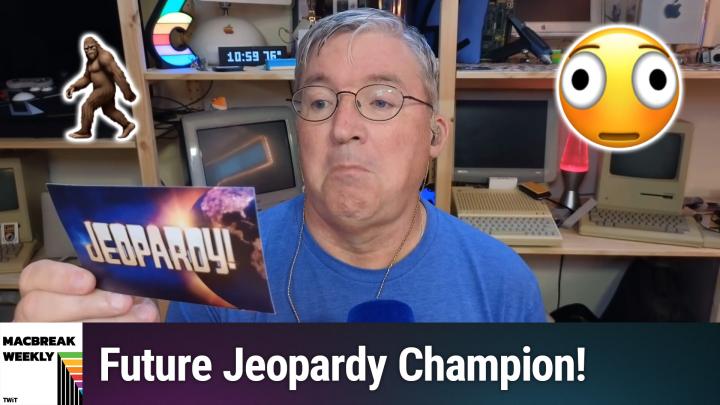
It's time for MacBreak Weekly. Christina Warren's here, Andy Ihnatko, and future Jeopardy champion journalist and podcaster Jason Snell. We'll talk about the new AirPods Max, uh, the glyphs on Apple's new keyboards, liquid glass ain't going anywhere, and an Oscar for Apple. All of that coming up next on MacBreak Weekly. This episode is brought to you by OutSystems, a leading AI development platform for the enterprise. Organizations all Over the world are creating custom apps and AI agents on the OutSystems platform, and with good reason. Build, run, and govern apps and agents on one unified platform. Innovate at the speed of AI without compromising quality or control.
Leo Laporte [00:00:47]:
OutSystems is trusted by thousands of enterprises worldwide for mission-critical apps. Teams of any size and technical depth can use OutSystems to build, deploy, and manage AI apps and agents quickly and effectively. Without compromising reliability and security. With OutSystems, you can accelerate ideas from concept to completion. It's the leading AI development platform that is unified, agile, and enterprise-proven, allowing you to build your agentic future with AI solutions deeply integrated into your architecture. OutSystems, build your agentic future. Learn more at outsystems.com/twit. That's outsystems.com/twit.
Leo Laporte [00:01:34]:
This is MacBreak Weekly, episode 1016, recorded Tuesday, March 17th, 2026. An orca, a trombone, and a treasure chest. It's time for MacBreak Weekly, the show we cover the latest Apple news with Christina Warren from GitHub, She's Developer Relations over there. @film_girl, good to see you in green.
Christina Warren [00:02:04]:
I had to do it. I had to do it. I was like, you know what, it's St. Patrick's Day, so let's go. Let's go green. So I'm glad that a number of us are being festive, which is great.
Leo Laporte [00:02:14]:
As is Andy Ihnatko. Of course, Ihnatko is the very famous Irish O'Natkow originally.
Andy Ihnatko [00:02:21]:
We put the O at the end instead of the beginning. That's the only difference.
Leo Laporte [00:02:25]:
But everybody must pitch Jason Snell. Yes, wearing no green.
Jason Snell [00:02:31]:
I'm wearing this delightful Six Colors, uh, merch that you can buy on Cotton Bureau now. That's the Ascent of the iPhone instead. I'm promoting it. Although I, I will say I am wearing a green sweater on Jeopardy.
Leo Laporte [00:02:43]:
Oh, oh, ladies and gentlemen, from San Rafael, California, podcaster Jason Snell.
Jason Snell [00:02:50]:
Pretty close. Thank you, Johnny Gilbert.
Leo Laporte [00:02:52]:
Did he— what is your occupation?
Jason Snell [00:02:55]:
It is funny you have to pick that. And actually, the champion on Monday told me he got introduced as bureaucrat and law student. And he said, really dryly funny guy, he said, I wanted them to call me faceless bureaucrat, but they wouldn't. So we had to change it to bureaucrat and law student. I decided to be journalist and podcaster from Mill Valley, California.
Leo Laporte [00:03:21]:
So that's Mill Valley, not San Rafael.
Jason Snell [00:03:23]:
I should correct from Mill Valley. And one, that's a choice you can make too, is you can say originally from, but I've lived in Mill Valley longer than I lived in my hometown that I grew up in.
Leo Laporte [00:03:30]:
So I noticed that sometimes they say originally from.
Jason Snell [00:03:33]:
Yeah, during the pandemic they did that a lot and that was because everybody was probably living in L.A. at the time.
Leo Laporte [00:03:38]:
Right.
Jason Snell [00:03:38]:
But they would be like, oh, but originally from Ottumwa, Iowa.
Andy Ihnatko [00:03:42]:
Right.
Jason Snell [00:03:42]:
Like, yeah, sure, sure they are. But, you know, like 20 years ago.
Andy Ihnatko [00:03:46]:
Can I interject? Because maybe I just caught something you didn't think anybody would cut. That's the second M*A*S*H character hometown reference you've made in less than a minute. Mill Valley is the hometown of BJ Honeycutt.
Jason Snell [00:03:57]:
We should have a statue, but we don't. Yeah. And then Tom Waugh, Radar O'Reilly. Yeah. Stay tuned for Crabapple Cove, Maine coming soon.
Leo Laporte [00:04:05]:
So your day to be on Jeopardy! is when?
Jason Snell [00:04:09]:
Thursday.
Leo Laporte [00:04:09]:
You recorded it.
Jason Snell [00:04:10]:
And if you are a, if you are a cord cutter, you can get it. This didn't used to be the case before this season on Hulu.
Leo Laporte [00:04:15]:
It's on Hulu and Peacock the next Tuesday.
Jason Snell [00:04:19]:
And they have like the last week or two worth of shows on Hulu and Peacock at any given time. So you can check me out there.
Leo Laporte [00:04:25]:
I like that if you have the ad-free subscription.
Jason Snell [00:04:27]:
So I, uh, uh, yeah, you can check that out. We recorded it. We recorded it last month. Um, I had this weird thing where I went on vacation to Hawaii and then the next week I, uh, went to Jeopardy. Um, it was extremely weird. So yeah, we, uh, we did MacBreak Weekly and then, and then I hopped on a plane to LA and the next day, uh, February 11th, we recorded this week's worth because they record a whole week in one day. There's 3 episodes in the morning and then lunch and then 2 episodes in the afternoon.
Leo Laporte [00:04:57]:
What can you say?
Jason Snell [00:04:58]:
And so surprisingly, this came up before we started the show. Like you were like, oh, I bet Sony is like Apple and very— no, it's not like that at all. They first off, there's a whole studio audience there, right? So they don't, they don't have everybody sign an NDA. What they, which is why, by the way, nobody should ever bet on the outcome of Jeopardy! because hundreds of people know the outcome. Right. They, they tell what they tell to everybody, the contestants and the audience, is don't spoil the fun of people who watch the show by telling them what happens. Let them discover it themselves.
Leo Laporte [00:05:26]:
I used to say that, don't spoil the fun.
Jason Snell [00:05:28]:
Don't spoil the fun. It didn't work.
Leo Laporte [00:05:29]:
Didn't work.
Jason Snell [00:05:30]:
Mac the Knife at Mac Week didn't, you know, Mark Gurman spoils the fun weekly, right? So instead, um, they, they do that. And then like even right down to the rules, like they said, do not wear a smartwatch. Um, and we're going to have you turn off your phone, but they didn't like, I thought it would be like going to like a high school student or something where they like take it and put it in a bag or you go to a comedy show or something. No, they just asked you to turn it off. And I knew I brought— I actually brought my dad's watch that he bought in the '60s and he gave to me in the last few years of his life. And I wore that because— and that's just a mechanical watch. And it was nice to have a thing of my dad's there at that kind of moment. But it was also really weird because like I wasn't connected and my wife and in-laws were in the audience and like they just didn't know when I would be on because I couldn't communicate with them for like lots of legal reasons.
Leo Laporte [00:06:21]:
Okay, so you're backstage in the green room.
Jason Snell [00:06:23]:
Yeah.
Leo Laporte [00:06:23]:
They're sitting in the, in the studio and they do what, 5 shows at a time or how often?
Jason Snell [00:06:27]:
Yeah, 5 shows a day. So they watched all 3 episodes Monday, today, and tomorrow. And I just, until the contestants walk out, they don't know if I'm going to walk out or not.
Leo Laporte [00:06:39]:
Oh, it must be like, oh, there he is, there he is.
Jason Snell [00:06:42]:
And I never did. And then we all went to lunch and then we came back and then I was in the one after lunch. Although here's a very funny, it shows you what a small world it is. One of the members of The Incomparable, my podcast, was in the audience in the morning, but not the afternoon. They do a different audience in the afternoon. And I thought, I mean, like, imagine if an Incomparable listener was sitting in the audience and Jason Snell just walked out. But instead, I was in the green room. She was out there, man.
Jason Snell [00:07:11]:
And we never, you know, and so she never got to, got to see it. But yeah, that means my wife and in-laws, you know, had to sit through those 3 episodes of Jeopardy! Let me tell you, 5 episodes of Jeopardy! is a lot. In one day, especially if you're super nervous or excited. It was, it was a lot.
Leo Laporte [00:07:26]:
I watch it too while I row every morning, so 2 I can do. Yeah, yeah, sure, the ads.
Christina Warren [00:07:31]:
Sure.
Leo Laporte [00:07:31]:
Anyway, it's 20 and a half minutes, 2 and a half minutes, 5 and a half. Yeah, yeah, breaks in case you want to jump in.
Jason Snell [00:07:38]:
Oh, you know, real ones know. So it is, well, it's a little bit different though because they, they do take the breaks and they will re-record dialogue. Like if Ken needs to say the clue again because he got it a little bit wrong, and they will stop if there's a question about whether an answer was right or not, they'll stop it there. And in between episodes, while they reset, he takes— does like Q&A from the audience. And there's a lot of extra time, but it's a, it's a full day. There's also a rehearsal where all the— which is great because all the contestants get a chance to like stand at the podium. They figure out whether they need to raise them or not because there's a little lift behind the podium.
Leo Laporte [00:08:11]:
It's a lift. I thought they just put apple boxes down.
Jason Snell [00:08:13]:
No, there's a mechanical lift back there. I'm sure it was apple boxes in the old days, but now that they've got a They've got fancy stuff like a mechanical lift. There's like a, uh, when you write your name, it's, it's just a Wacom tablet behind the podium. There's like a PC. There's just like some random PC back there that's driving the, the, the graphics tablet for you to write the Final Jeopardy on and write your name on.
Leo Laporte [00:08:33]:
It's just, did you feel comfortable writing there? Actually, I saw the picture. If people can go to Six Colors and see, uh, see the picture, they send you the picture of, uh, of your, and everybody was commenting on how nice your handwriting was.
Jason Snell [00:08:46]:
Oh yeah, that's a lie. It's, uh, that is, that is, uh, me trying.
Leo Laporte [00:08:51]:
Some people like Matt Modio, regular champions.
Jason Snell [00:08:53]:
That is the best handwriting you will ever see from me. And I, and that's the thing. I didn't even know what to do. So I like stretched out the line above the capital J a little bit just for a flair.
Leo Laporte [00:09:03]:
Just make it fun.
Jason Snell [00:09:04]:
That's it. I mean, it is weird. They don't tell you the rules. They assume everybody knows how to play Jeopardy.
Leo Laporte [00:09:08]:
Oh, interesting.
Jason Snell [00:09:09]:
But they're really nice. And, uh, it was, it was a life experience that you really try to appreciate, but you also have to uh, focus on— you do have to compete, right?
Leo Laporte [00:09:21]:
Yeah.
Jason Snell [00:09:21]:
So, so now is the fun part because now I— all I get to do is enjoy that I'm on Jeopardy! and not it be like a, uh, oh boy, you know, stressed out kind of thing. Because I played the game more than a month ago. That part is— that, that part is over.
Leo Laporte [00:09:36]:
Put in the— in the water at 6 colors because it— Glenn Fleischman was on a few years ago. Yeah, many years ago.
Jason Snell [00:09:42]:
10 years ago.
Leo Laporte [00:09:43]:
Moren was on what, last year?
Jason Snell [00:09:45]:
Yeah. Yeah.
Leo Laporte [00:09:45]:
You've been on.
Jason Snell [00:09:46]:
Starting with Thursday.
Leo Laporte [00:09:47]:
Moltz is the only guy who hasn't been on yet.
Jason Snell [00:09:49]:
Yeah. Moltz is on the clock, I guess. What is it?
Leo Laporte [00:09:53]:
Do you guys have trivia contests when you get together?
Jason Snell [00:09:55]:
I mean, no, I think, I think it's more the other direction, right? Which is this type of person ends up writing about technology and then also ends up on Jeopardy.
Andy Ihnatko [00:10:03]:
Plus I took the Jeopardy test and passed it. I did not get the call saying you're on the list.
Leo Laporte [00:10:07]:
So, oh, so you, you could be, you never know.
Andy Ihnatko [00:10:09]:
Well, no, no, I'm guessing, I'm guessing from Jason's story that probably not. Again, There's a, there's a test you take it, you pass it, you go into a second round in which, okay, we want to see how we want to put you on tape. So they see like how you act. No, this is, this is like actually like in person. And so it's okay.
Leo Laporte [00:10:24]:
Yeah.
Jason Snell [00:10:24]:
They don't, they don't do that. The process is different now. Um, it's a lot. Yeah. You used to have to like go and be there in person. Now they have you take a test and then they, they do a Zoom with like a, a simulated game that's really not there to test you. That's to get you on videotape so that they can judge, because they cast the show, right? And they have a giant database of everybody who they've seen and talked to and heard, and then they try to build interesting mixtures of people that will reflect the whole North American viewing public.
Leo Laporte [00:10:52]:
Is Ken Jennings pinching your bottom when it looks like—
Jason Snell [00:10:56]:
No, but I will, I will reveal, I told a story about a tech product that I got to handle it early in its— before it was available to the general public as my anecdote. And then right afterward we took that picture. And, and as I'm putting my arm around Ken, he says, I assure you, you're not the first person to touch me. Oh, that guy's so quick. He's so funny.
Leo Laporte [00:11:17]:
Yeah, he is great. I love him. He was a perfect choice. And I'm, as you could tell, a huge fan. I'm so excited to watch Thursday.
Jason Snell [00:11:26]:
Thursday and watch all week. I was there all week. These are my people. Every contestant you see this week, we were bonding with a very stressful experience in the green room all day. Let me tell you.
Leo Laporte [00:11:34]:
I've heard that. I follow the Jeopardy subreddit, listen to the podcast, all that stuff. And I've heard that you really bond with your fellow contestants, even the ones you beat.
Jason Snell [00:11:43]:
For sure. I mean, it's just a— there is a dynamic. The champion has it.
Leo Laporte [00:11:46]:
I didn't work.
Jason Snell [00:11:47]:
The champion has a little bit of a different dynamic. But, you know, really, people are in awe of the champion.
Leo Laporte [00:11:53]:
They stand back.
Jason Snell [00:11:54]:
I mean, you see them win and then you have to play them and it's a little different. But yeah, it's a really great group of people and just incredibly smart. People from all over North America, from all sorts of different jobs, and it was a really amazing day.
Leo Laporte [00:12:09]:
Did you— go ahead.
Andy Ihnatko [00:12:11]:
I was gonna— can I ask a tactical question? And this seems like I'm trying to be funny, but this is something that would be on my mind because the times where I've been on like big-time TV, there's the— you're waiting in the green room and there's the balance between I want to drink enough so that my mouth does not go dry during the 5 minutes I'm talking, but I do not want to have to pee while I'm at a critical moment. How do you how do you balance that?
Jason Snell [00:12:34]:
Yeah, so I mean, I, it's— I, I had a lot of Diet Mountain Dew in the green room because I wanted to be caffeinated. I really wanted to be caffeinated. They tell you, you know, you do need to be caffeinated if you can, if your body can handle that. And like I said, I went to the bathroom a lot of times. But the other— I will say about the water, it's very funny. They give you, they give you a little glass of water when you're out there, um, between segments. So they literally— there's a cup holder behind the podium. Oh cool.
Jason Snell [00:12:59]:
And there's a little plastic cup there and you can drink some water from it, but then, or a water bottle, I think it's a cup. And they, but like, it's just during the break and then you don't even notice it if you're not paying close enough attention. They come and they pick all of them up and take them away and then you play. And then when the segment is over, they bring them back to you. So you get to take a little sip of water in between, right? Taping during the taping breaks. So it's, it's, they got it wired. They got it wired.
Leo Laporte [00:13:25]:
Oh, I'm so jealous. I think that sounds great. Congratulations.
Jason Snell [00:13:29]:
It was a life experience. I'm very happy to have done it.
Leo Laporte [00:13:32]:
What a great thing to have done. And I know you can't say what happened, but I presume you didn't embarrass yourself, that you feel good about that.
Jason Snell [00:13:39]:
I will say I feel very happy about my performance.
Leo Laporte [00:13:41]:
Good, good. That's all you have to say.
Jason Snell [00:13:43]:
You'll all see.
Leo Laporte [00:13:44]:
We'll see how you do starting Thursday. Yeah, I will attempt to answer the questions before you do. I mean, I'm sorry, to question the answers before you do.
Jason Snell [00:13:52]:
Yeah, pause it before anybody answers and see how you do.
Leo Laporte [00:13:54]:
I don't pause it because I feel like I need to be in the same time zone as you guys.
Jason Snell [00:13:57]:
Be in the zone, that's important.
Leo Laporte [00:13:58]:
I go like this.
Jason Snell [00:14:02]:
You know, not only do I practice the buzzer, this maybe this could be my pick.
Leo Laporte [00:14:06]:
Did you get that?
Jason Snell [00:14:07]:
A USB buzzer.
Leo Laporte [00:14:09]:
I've seen them recommended and you can, you can have it.
Jason Snell [00:14:12]:
It actually, there's a website you can go to and it does a, it does sample questions and you can measure your, your reaction speed. I also use the clicky pen on the couch, but I also use this and you find that like some people do this and some people do this. I actually found out that that sticking my index finger out on my right hand was the way that I wanted to do it. So I did it that way. But the real secret is you get to— you got to watch a lot of Jeopardy! and get to know Ken's cadence because you don't want to— the lights come on when you can buzz in, but you don't want to look at the lights because your brain takes too long to process it. You want to anticipate his cadence because you can see the whole clue he's going to read. You want to anticipate his cadence and know that—
Leo Laporte [00:14:50]:
So you read the clue, he's reading it slower than you read it.
Jason Snell [00:14:53]:
Exactly. Now you're listening for him And it'll be— click. That's how you have to do it. As soon as, as soon as you know. And, and he does have a cadence. And when we did the rehearsal, it was the stage manager who read the clues, and it was a disaster. Yeah, it was a disaster for me. And I thought, I think I'm gonna mess up the buzzer.
Jason Snell [00:15:12]:
And then once we were playing with Ken, uh, it felt natural. Because one of the things they tell you is have couch brain. Once you're out there, think— play like you're on the couch playing at home, because it is the same game. Even though with a giant screen that they have, it's like you're just inside a big blue box with white letters. But, but you're, you're playing the game. That's the same game. So it was, yeah, it was a blast. It really was.
Jason Snell [00:15:36]:
I never expected it. We checked into the hotel and they saw that we were on the Sony rate and they said, which one of you is on a game show tomorrow? And my wife said a thing that I'd never heard her say in 30 years of marriage. She said, I will never, ever, ever, ever want to even be close to being on a game show. And I was like, well, it's me. I'm on the game show. But I never aspired to be on a game show. It was just like, well, I could be on Jeopardy! maybe. And so I got to do it.
Jason Snell [00:15:57]:
It's awesome.
Leo Laporte [00:15:59]:
Oh, that's so great. Congratulations. And we look forward to Thursday, everybody.
Jason Snell [00:16:03]:
Watch Jeopardy.
Leo Laporte [00:16:03]:
Thursday, I guess. We'll all be rooting for you.
Jason Snell [00:16:04]:
Thursday on Hulu and Peacock.
Leo Laporte [00:16:06]:
I don't know if it helps for us to root for you. I think it's a done deal.
Jason Snell [00:16:09]:
On the re— as you know, probably on the subreddit for Jeopardy, it's called Retro Good Luck, cuz it's already over. But if you wanna wish me good luck retroactively and send it back through time, do it.
Andy Ihnatko [00:16:18]:
Well, Jason, on behalf of all everyone on the panel and all the listeners, good luck on Tournament of Champions. I, I know you're gonna kill it there.
Jason Snell [00:16:25]:
Thank you.
Leo Laporte [00:16:25]:
Incidentally, Retro. Speaking of retro, Apple has released AirPods Max 2.
Andy Ihnatko [00:16:32]:
Yeah.
Leo Laporte [00:16:35]:
Uh, okay, the story goes, uh, according to some, they ran out of H1 chips that power the original AirPods Max. They had a plethora of H2s lying around, so they said, let's just put it—
Andy Ihnatko [00:16:49]:
it's a pity upgrade. It's a pity upgrade.
Leo Laporte [00:16:51]:
It's a pity upgrade because that's really the upgrade, isn't isn't it?
Christina Warren [00:16:55]:
Yeah, well, I mean, there are a couple of things. As someone who's bought AirPods Pro Maxes twice—
Leo Laporte [00:17:01]:
Oh, at $550 schmeckers!
Christina Warren [00:17:04]:
I'm dumb.
Leo Laporte [00:17:05]:
It makes the Neo look really cheap.
Christina Warren [00:17:08]:
It really does. It really does. So I bought the original ones in December of 2020. I dumbly, in 2024, bought the USB-C model, and I knew I regretted it then. And I regretted spending the money the minute that I spent the money. And I did it anyway. I will not make the mistake a third time.
Leo Laporte [00:17:26]:
I'm so tempted. I'm so tempted. But no.
Christina Warren [00:17:29]:
No. Well, there's just— in my opinion, I don't think they're good headphones for the money. This is similar to me with the Studio Display, where at this point, there are some really nice things that you can only get with Apple. But there are so many trade-offs. There are so many trade-offs. The fact that the charging case is terrible. There's no power off. But the fact that they're heavy—
Leo Laporte [00:17:49]:
You mean the bra? They still have the bra?
Christina Warren [00:17:51]:
They still have the bra. So yeah, that's the thing, right? The only thing that seems to change is they claim that they've got the H2 chip, so it's got even better ANC. So I guess it's similar now to what you've got in the AirPods Pro 2s and 3s. And it can do better live AI stuff. But look, I'm sure they sound great. And you can still spend $40 to get the USB-C 3.5mm cable if you want to be able to.
Jason Snell [00:18:19]:
That was—
Leo Laporte [00:18:19]:
that's— I have the Lightning ones, and that might be a reason to upgrade because then you could do it wired and it would be lossless, right?
Christina Warren [00:18:25]:
Right, right.
Leo Laporte [00:18:25]:
So like wired headphones.
Christina Warren [00:18:27]:
That would be one thing. I still— I mean, you look, you can buy headphones that will give you lossless wired otherwise.
Leo Laporte [00:18:35]:
I have very good ones that do that.
Christina Warren [00:18:37]:
Right. And I had— and that was a nice thing when they added that feature upgrade. But yeah, I mean, this is— this looks like this was if that's the rumor, I could believe that they had a ton of extra shells for these things and a ton of extra H2 chips and that they don't want to make the H1s anymore. So they're like, well, we might as well release an upgrade, call it the same price, do it through a press release. You know, and like, I can't even be—
Jason Snell [00:19:06]:
the colors are the same colors as the last time.
Christina Warren [00:19:12]:
Exactly right. So I was like, the colors aren't even new this time. So like, it literally just does seem like it's like, well, might as well.
Jason Snell [00:19:16]:
Well, except the last time was just USB-C and colors, right? So this is a much better update because it does give you all of those features that are the state of the art of AirPods. And having those Maxes out there, like, with none of the technology that's in modern AirPods was so embarrassing. So it is better, but it's better in a very low priority product kind of way. And the other thing, so I was talking to a friend of mine who used to use AirPod Maxes on planes and things. And he said, I'm not going to get these. I don't use them anymore because the AirPods Pro 3 are so good now that I can just use them on planes and I don't worry about it. It's like, okay, maybe unless you love over-ear headphones, then these are there for you. But it's a perplexing kind of product, isn't it?
Christina Warren [00:19:58]:
Yeah. I mean, and I was going to say, I will say, like, if you were somebody who was looking at trying to buy this product for the first time, or if you had ones that you got in 2020 and you're like, okay, it's been, you know, close to 6 years and I do like these, I still think they're overpriced, but I could see that argument being made. Like either if you could get a deal on them. For people who were dumb like me who bought them in 2024, fool me once, shame on me. Fool me twice, I'm an idiot. Fool me 3 times, I don't really know what to say about myself, you know, at that point, right? But yeah.
Andy Ihnatko [00:20:30]:
Honestly, I'm sorry, go ahead.
Christina Warren [00:20:31]:
No, I'm done.
Andy Ihnatko [00:20:32]:
I was just going to say, I mean, when I saw the update, A, I was surprised because it was surprising to Apple remembers that they actually sell these things. And also it reminded me that it made me like think about it again for the first time and realizing that this might be the only product in Apple's entire lineup that I regard as 99% simply a fashion item, where there's no— just like you said, like Christina, there's no compelling technical reason to own these, particularly at this price. For $500 plus, you can buy almost world-class headphones, and this is definitely not world-class, not even world-class in terms of convenience competitively. So it's like you buy these because you like the the way they look and you like Apple's style, and that's pretty much the reason why you buy them.
Jason Snell [00:21:19]:
The, um, the display— Studio Display vibes are strong in that some products— and, and like I said last week, the Apple iPhone case vibes, which is some Apple products exist because it's a great upsell for people who don't want to be bothered to shop. They like the Apple brand, they find it just easy while they're in the Apple Store to buy another Apple product, and so why not offer them a product? And I don't think it's like the AirPods. They're not— there are better headphones, right?
Christina Warren [00:21:50]:
Right.
Jason Snell [00:21:50]:
There are not— they're not terrible. They're fine. But for the price, they're a bad deal. Like, but Apple, like, if you care at all, you will shop around and get something better. But that's like the Studio Display. I feel like the base model, that's why these exist, is, is just some people just want to buy the Apple product and Apple's happy to take their money with a very high profit margin.
Leo Laporte [00:22:13]:
Well, sure, there's another similarity, which is they've got like the pieces, they do assemble them and sell it.
Jason Snell [00:22:21]:
They do. I think that's why the AirPods Max exist at all, is that they got feedback from some people who said, I don't like in-ear headphones, I like over-ear headphones. And they're like, well, we've got most of the chips and stuff, so all we need to do is build a body, which they built one time.
Christina Warren [00:22:34]:
We own Beats, and they already had Beats, which were more comfortable. And in a lot of ways, you know, they— I'm not claiming they they were the best headphones, but they were certainly more comfortable and more wearable. That was frustrating about this to me. The reason I bought them the first two times, the first time was just because they were the new ones and it was the pandemic and we were like, we're going to buy these. I love headphones. The second time is because my first pair, they'd run out of AppleCare. At the time, Apple wouldn't let you buy AppleCare a second time on them. I'd had them replaced once already.
Christina Warren [00:23:08]:
The battery was was not great. And because of the way I use so many Apple products, switching all day long while I'm on calls at work, like, they were actually good work headphones, even though they're heavy, even though they're terrible for travel, even though they're overpriced. What I should have done, and this would be my recommendation to somebody who just doesn't, to Jason's point, want to go out and just buy them because they're easy, I would have been better off buying 2 pairs of AirPod Pros and switching those throughout the day. And then you still would save money. And that's the crazy thing. You would still save money and you would get a better all-around experience, in my opinion.
Leo Laporte [00:23:43]:
If I wear these for 10 more minutes, I can write them off on my taxes. I hope you don't mind.
Andy Ihnatko [00:23:48]:
Yes, but can you stand the weight and the pressure on your head?
Leo Laporte [00:23:51]:
They are not comfortable. They really aren't. And the other— I mean, this is good, I guess. These are magnetic, the cups, and you can just replace them, I guess.
Andy Ihnatko [00:24:01]:
It's okay. You know, Apple is— Apple's gotten better at this than they were like in the 2000s and 2010s, but we kind of forget that they are almost a design company first. And sometimes they just like to design something that looks cool and seems to fit their aesthetic and continues the story they're trying to tell through industrial design. And this is the example of that.
Leo Laporte [00:24:23]:
We don't want to shame anybody who likes them. Of course, no, if you like, that's fine.
Andy Ihnatko [00:24:27]:
No, there's, you know, there's a, there's a reason why you see all kinds of knockoffs that you have to look if you look really, really close.
Christina Warren [00:24:32]:
Yes, great point.
Andy Ihnatko [00:24:33]:
Really, really decent $90 Bluetooth headphones that you can't tell the difference until you put them on. And you would notice, A, the sound quality isn't nearly as good. And also, they're more comfortable to wear.
Leo Laporte [00:24:42]:
You do see a lot of these in the wild. I mean, there are people wearing them around.
Christina Warren [00:24:45]:
Oh, no. Well, it's weird because they're popular. I have noticed they think they've fallen off a bit in the last year or so. But they were certainly— there was a moment for them. But Andy actually brings up a great point. I'm glad he did. There are so many, um, counterfeits of these things out there with people potentially going to be selling, you know, their 2024 models or other things. Be very, very careful if you do want to buy these off of, you know, eBay or Facebook Market or anything like that.
Christina Warren [00:25:10]:
In fact, I would go as far as to be like, I don't know if I would, because the boxes are really good. They managed to find a way to even like trick how the, the air, like the Bluetooth, you know, the, um, um, pairing for, for Apple stuff works where like it looks, you know, that the pop-up comes up on the screen. Um, and, and so if you're not really careful and like looking at them, they'll copy the serial numbers, they'll do the AppleCare check, like they will really— the counterfeits are, are really clever if you're not super careful. So I would— if anybody's looking for like a good deal of these, because some people will want to upgrade to the new ones, maybe selling their old ones, be really, really careful, uh, because the counterfeits are good and it's not one of those things that that even like I've watched enough of the YouTube videos about them, I'm like, wow, okay, you could probably tell by the weight, but that would probably be—
Leo Laporte [00:25:58]:
yeah, stay away from the Temu AirPods Max. That's, that's my advice. You don't—
Andy Ihnatko [00:26:03]:
I only— but Christine's right, because I, I only wish that that, that old stuff was true. I mean, you see, I've seen counterfeits where it's— you look at the box, the box is good. You look at the product close up, the product is good. You pair them and the things you expect to see during pairing is good. It's not— for a lot of people who think that, hey, wow, I just got the— I can't believe that grandma bought me these $500 headphones for Christmas. It's not until 2 years later when they take it to the Apple Store to have it fixed or something, it's like, yeah, if you want, we can swap out the lead weights that are inside these to make it feel like a premium product, but that's really something we would do only out of pity.
Leo Laporte [00:26:42]:
In honesty, the headphone business is all a little bit like that, even the quality ones. These are cheap parts. They're easy to make. It's a very high margin business. And really, you can make very good sounding headphones with cheap Chinese parts.
Jason Snell [00:26:58]:
That is true these days. There's a whole subculture of people who are finding incredible, like, in-ear headphones and things like that where you can get them that used to cost like $500 and that you can get it for $80 from the driver's— it is kind of amazing, which is great, like, for people who use headphones. And I am those people too. It is great that, that they're, they're all better than they ever were.
Leo Laporte [00:27:23]:
And Apple's secret is the H2 though.
Jason Snell [00:27:25]:
I mean, yeah. And it's nice. I mean, like I said, I don't think people should be ashamed if they like them. I just think that there are other, like, you know, get a good pair of Sony headphones and they're not going to be quite the same, but they're going to be good and they'll probably be cheaper. And that's Sony of all companies being cheaper.
Andy Ihnatko [00:27:43]:
It's dazzling when you take a look at the price of of these headphones and say, well, think— don't think— forget about Apple for now. Just have it compete with all other headphones, even all other wireless headphones at that price point, and you will be dazzled by all the choices that are out there. And you might decide that the uniqueness of these headphones is not worth the trade-offs, which again, not to say that this is a universally inferior headphone, it's just that you are now— you are really playing in the heavyweight category here where you can— the world is your oyster. There is no headphone out there that not owned by simply, you know, aesthetic audiophiles that you cannot buy for that price.
Leo Laporte [00:28:22]:
The funny thing is, it's kind of really should be a little embarrassing because, uh, Apple announced all these products last two weeks ago. Yeah. And then they kind of shuffled out the back door. Oh yeah, we got these headphones too. Yeah. Uh, uh, you finally did your reviews of the Studio Display, Jason. Uh, you call it a mildly upgraded display.
Jason Snell [00:28:43]:
Yeah, I mean, the, that's the truth of it is they, they fixed— they didn't change the panel at all, and it's a good panel. This, it's going to sound very similar to what we said last week, it's a good panel. Yeah. Um, but it's also— I expected that you do an update, you make it better or cheaper.
Leo Laporte [00:28:59]:
You— the camera is much better.
Jason Snell [00:29:00]:
The camera's better. The camera that got dinged for being really bad because it was their first attempt to do a Center Stage camera, they fixed it. Uh, the speakers are better. They added another Thunderbolt port so you can daisy chain the displays, which is great because if you use multiple displays, you don't have to run them back to the computer or a hub, you can actually just daisy chain them and that's great. So good. But the panel is the most important part of a display, right? And it's still that basically iMac Pro 5K display that is perfectly nice, but you can get an ASUS display with that same panel for half the price.
Leo Laporte [00:29:34]:
And so $400 stand, come on.
Jason Snell [00:29:37]:
And the $400 stand. So here's the thing about the stand. This is my This is my brief stand rant, which is it is an immaculately engineered stand. The tight— it's the tilt and height adjustable stand. It comes standard for that price. That's twice what the ASUS with a non-adjustable—
Leo Laporte [00:29:54]:
it's just the iMac style.
Jason Snell [00:29:55]:
It's the iMac, right? But they do make one available for height, which is good because I don't think any of Apple's displays are tall enough. I think they're all too low and they're bad ergonomically and you need to put them on a stand. So So they, they engineered this thing and it's basically, I think the one that's also was in the studio display, uh, or the Pro Display XDR. Um, it is amazing. It is smooth. It is buttery smooth. It adjusts and then it holds. It is a gorgeous piece of engineering, but it's $400 to add it to the display.
Jason Snell [00:30:27]:
And like, I get, I get why it is an amazing product, but I would say it's a failure. Because height adjustability shouldn't cost $400. I would argue height adjustability should be in the box for every iMac and Apple display. And so it's incumbent on Apple to design a better display stand that lets you adjust the height a little bit and give their products better ergonomics. And instead, because this is not a high priority product for them, they're just going to recycle. I bet if you ask the people at Apple, they would say that they regret the the, the, not the quality, but the cost of that adjustable stand. But it's what they've got.
Leo Laporte [00:31:07]:
Is it an A18?
Jason Snell [00:31:08]:
It's an A19. It's more powerful. It's more powerful than the Neo.
Leo Laporte [00:31:12]:
And it has 128 gigs.
Jason Snell [00:31:14]:
Yeah. But it doesn't run anything, which I also find bizarre that it doesn't at least run like tvOS optionally. So you could use it as a TV. It just doesn't do anything other than run because it's a spare part that they have laying around that they would just kind of They don't— they don't— the old chip, they don't make it anymore, right? So they got to recycle it just to put a new chip in there. I don't know if somebody could hack it or not. I mean, I think we'll find out eventually.
Christina Warren [00:31:38]:
I mean, I think people could. I think people could. I think the problem is, is the people who would be able to do that would probably be guarding those sorts of hacks for a whole lot of money for other purposes, unfortunately. No, I mean, I think just because, like, if you could do that, then you could presumably hack anything.
Andy Ihnatko [00:31:52]:
Jailbreak anything Apple makes is very, very bad.
Christina Warren [00:31:55]:
Exactly. So at that point, like, yeah, I'm sure I'm sure that there are people who can. I don't think people who would burn that, you know, so that we could put macOS on a, you know, Studio Display so we could actually have a proper iMac.
Jason Snell [00:32:09]:
It hasn't happened with the existing Studio Display, which makes me think that it's probably difficult, but not, maybe not impossible. But anyway, I mean, but it's beside the point, right? They've just got a bin full of iPhone chips that is They might as well just run it in there.
Leo Laporte [00:32:26]:
That's— they take—
Jason Snell [00:32:26]:
so much of what they do is just taking things out of the bin that are— they're reusing them. I mean, you could— MacBook Neo, as impressive as it is, it is built around a chip that they knew they would have in volume in a bin, right? Like, that's part— and, and, and I mean, that is— if you think about Apple's ambition, there's one company, they have all these different operating systems, they are based on one another, but they are all different operating systems. They have all these different products. How does one company make all of these things? One of their secrets is they reuse the parts. They reuse them.
Leo Laporte [00:32:55]:
Recycle, reuse. We believe in that. It can— is it a VESA mount? Could you put it—
Jason Snell [00:33:00]:
could you put it the same price? You can get a VESA mount version, which I have here. And, uh, you know, then you got to buy an arm or a stand or something for it, but you could then choose. And I, I have— yeah, I really like having a, an arm at my desk so I can push it around.
Leo Laporte [00:33:16]:
And they're gas pistons, so they go up and down nice and smooth and they do the same thing, probably cost less than $400.
Christina Warren [00:33:22]:
Sure do. Yeah, well, yeah, even the most, even the most expensive Ergotron like arm, you know, the HX, I think is like $300 or $350. So even the most expensive, you know, like highest-end arm you can get, which you wouldn't need for this because it doesn't weigh a lot, um, it is, you know, still less than that.
Leo Laporte [00:33:40]:
Nice things about arms, they don't take up any desk space.
Christina Warren [00:33:42]:
No, they don't. And, and I like them too because, and, and I'm sure you can this with the height adjustable stand, but like, if I want to rotate my screen, which sometimes you do, like that really, I think is better suited for an arm than any sort of stand, right? Like, like if you're wanting to do that, if you're wanting to stack things in any way, and then yeah, to your point, Leo, like I always buy the— Jason and I are the same this way. Like we always bought our iMacs with the VESA mounts. We always got like Studio Display with the VESA mount. That makes it harder if you want to sell it to somebody after the fact, but you know what, I'm always like like, look, you can buy a stand.
Jason Snell [00:34:13]:
And even so, that's— I sold my first, um, my first iMac, the 5K iMac. I ordered it with the VESA mount, and when I sold it, I bought a perfectly nice VESA stand for $100 or something and put it on. And then I put it on, you know, Craigslist or eBay or whatever, and I sold it. The iMac Pro fortunately came with a kit. You actually pulled the arm off, the stand off, and put the kit on. So once I I was done with it, I reversed that. But, um, and my understanding is with the current iMacs and stuff, it's not meant to be user serviceable. But if you, if you bought a VESA mount iMac, you can take it to the store and they will swap it for you for $79 or something.
Leo Laporte [00:34:51]:
Yeah.
Andy Ihnatko [00:34:52]:
Also, I've got, I have a $230, $250, like really, really good mount where it's all pneumatic and you, it doesn't move until you touch it. When you move it a half an inch, it will stay in that half an inch. I'm glad I have one of those for my main display. For the other displays, I'm serious, like $60 Amazon arms that I don't need micro adjustments. I just need to pull something into view and then swing it out of the way when I don't need it. It's like that— VESA is just table stakes.
Jason Snell [00:35:20]:
Love it. Yeah, big— I, I always get mocked on other podcasts for being such a fan of the VESA mount, but like, I, I don't know, not only is it super adjustable and ergonomic, but I'm a big fan of having stuff on my desk instead of a computer on my desk.
Leo Laporte [00:35:37]:
Switchers and mixers under my monitors here, so I have more real estate.
Christina Warren [00:35:41]:
Yeah, exactly. So much more room for activities. That's exactly it. And then to be able to like lower it up and down and yeah, it actually use your desk as a desk. It's, it's an amazing thing.
Jason Snell [00:35:50]:
Exactly. Remarkable.
Leo Laporte [00:35:51]:
Uh, finally wrapping up the, uh, reviews and talk about stuff released 2 weeks ago, uh, iFixit's come out with its this report on the MacBook Neo, the most repairable MacBook in 14 years.
Andy Ihnatko [00:36:05]:
I did not see— last week we're having a conversation about, oh well, I don't know if it's going to affect education or Chromebooks because it's not as— because Chromebooks have to be really, really easy to repair. When iFixit, who is the gold standard, is saying, oh my God, you can just take these— you can take out the battery with screws, you can replace the keyboard, you don't need to— if you spill something onto this keyboard to get If one key goes out, you do not have to spend $800 for an entire upper case assembly.
Christina Warren [00:36:31]:
That's amazing.
Andy Ihnatko [00:36:32]:
Yeah, and that's— I mean, I would never ever have foreseen that.
Leo Laporte [00:36:36]:
And no parts pairing issues, which is exactly—
Christina Warren [00:36:39]:
that's huge.
Andy Ihnatko [00:36:40]:
The question, the question on my mind is though, is this because they knew that, okay, this is going to have— this is going to have a whole bunch of use cases that are unique from the MacBook Air, unique for the MacBook. Let us intentionally try to make this make this easy to repair so that if someone does want to buy 40 of these for a lab, they can maybe fix it on-site or fix it easily. That's not going to be a hindrance. Or is Apple kind of turning around to, we are developing, we are designing from this point forward with an idea towards how repairable can we make this? Are we willing to put—
Leo Laporte [00:37:12]:
Or can an EU force them to do this? Well, okay, it's more likely, right?
Andy Ihnatko [00:37:15]:
Well, I haven't— I don't know about that.
Leo Laporte [00:37:17]:
Yeah, this is all regulation.
Christina Warren [00:37:18]:
Yeah, I think the battery part is the EU thing.
Leo Laporte [00:37:21]:
Okay.
Andy Ihnatko [00:37:22]:
But yeah, but I've also heard arguments that part of it is that whatever you're going to be using to glue something together, it's going to cost you less weight than having to screw things together and create the assemblies for that. There are a lot of reasons for that. And yeah, regulation can be part of it, but I'm trying to tell myself not to overanalyze it because I just, let's enjoy this moment. Let's enjoy that Apple has released a MacBook that is actually conceivably repairable. As the saying goes, screws, not glues. And it's good to see if this is a philosophy that Apple is actually starting to come around to.
Jason Snell [00:37:55]:
That probably is a side effect of wanting to build it cheaply, right, in order to sell this cheaply. But it's a good, it's a good side effect. There was a great video from an Australian YouTube channel where they said that they could completely— they showed themselves completely disassembling it in 6 minutes because it is, it is just screws. And one thing that It's a cable that's taped down. I mean, you get a little electric screwdriver and they zip right out. And there's one cable that's taped down, but it's not like it's just, you just peel it up because it's just there to keep it from sliding around. And yeah, the fact that the keyboard's not attached to the top case is huge. No, it's great.
Jason Snell [00:38:34]:
I mean, one of the reasons that Apple does those things is not necessarily to be nefarious, but because they're trying to cram in a bunch of stuff into that small space on more expensive laptops. But this laptop, Laptop, you know, yeah, it's just people, it's going to happen where they're going to be people in, in schools and other support systems where they're going to be able to buy, uh, spare parts and have them in a, in a file. And when a kid brings the laptop in with a bad speaker, they can just go and, and get it back out. That's so great.
Andy Ihnatko [00:39:03]:
Also, I, I wonder if part of this isn't like shaming, because the thing is like there maybe 5 or 10 years ago you could could absolutely make the argument, well, if you want this to be slim and if you want it to have everything— the battery package this way— you're gonna have to sacrifice repairability for this. Meanwhile, like, I think on the same— the last couple weeks, iFixit reviewed one of the new ThinkPads and gave it a 10 out of 10. Yeah, so, so, so the laptop—
Leo Laporte [00:39:31]:
you don't even need screws to take out the keyboard on that.
Andy Ihnatko [00:39:33]:
They're, they're, they're explaining. So basically the message to every, every manufacturer hopefully is on notice Just saying, if you make this non-repairable, that is a choice that you're making. And maybe people are going to have you explain to them why is it that this simple common failure is going to cost me $900, whereas it would have cost me $200 if any of these 3 competitors that you're competing against, if I bought the laptop from those people.
Christina Warren [00:40:04]:
That's the one thing that I do think though, we talk about the price of the repair parts. That's the only thing that gives me a little bit of pause because I don't think that we should conflate being repairable, which is amazing and which is great, which is having necessarily what we would consider affordable spare parts because these are different things. Now I do, I think it's great that you can get the battery separately, the keyboard and other stuff, yes. Realistically speaking, if you're buying these things in bulk for an organization, you can probably get a really good deal price on the SoC, which is going to have almost everything inside of it, right? It's got the memory and the CPU and everything all soldered in. But like, if you're thinking, oh, well, I could, you know, if my MacBook breaks, I would only have to spend $200 to replace the mainboard. We have to probably be a little bit realistic. It's probably going to be a lot more than that. Right.
Christina Warren [00:40:58]:
And I know you're saying, I'm just saying. Thing. Like, I see some, like, the breathless, like, like, coverage about this, like, oh, it's finally repairable MacBook. And it's like, yes, but, right, there's still, like, the issue.
Andy Ihnatko [00:41:06]:
It's not a Framework laptop.
Christina Warren [00:41:07]:
This is not a Framework laptop, or even a ThinkPad, where there are a lot of OEM parts that you could get from, you know, third parties and whatnot. Like, I think we'll see that with batteries, um, and I wouldn't be surprised if, especially if they continue to use this chassis over and over again, if you would see maybe even things for, like, keyboards, um, but especially if they're not doing part pairing. But, you know, if it's going to be anything that's going to be like the major component, this is still going to be not inexpensive to repair, but at least you can now, which I think is so good. And it is really, really important just like for the longevity of these things. And, and, and I hope that they were shamed by, by ThinkPad and Framework and others into doing this because this does show, okay, yeah, it's a little bit heavier, it's a little bit whatever, you don't have quite like the same, you know, that, you know, profile, I think most of us would be fine with that. I would, I would have a laptop that was a millimeter, you know, thicker if it meant that the battery wasn't, you know, glued in. Shocker.
Leo Laporte [00:42:03]:
Well, it's a, it's a great article. I suggest reading it at ifixit.com, not just for the repair issues but just to see some of the engineering Apple pulled off to get this down to a $500 price. Unless you think it's the ultimate repairability is only 6 out of 10, but as iFixit points out, it is the most repairable MacBook.
Andy Ihnatko [00:42:23]:
It's not, it's not, it's not offensive. That's, that's what always kind of got to me about these things, where again, a battery is something, a battery is something that is, that might not outlive the life of the device. It should be easy to repair without being super expensive. A keyboard is something that you use these darn things, you take good care of them, even if you don't spill a Diet Dr Pepper in into the keyboard, which is something that I did the night before I was supposed to deliver a keynote address, and I had to go to an Apple Store and buy a brand new one to keep the gig. Even if you don't do that, you know, a crumb can walk in there and suddenly your D key doesn't work again. I say, oh, well, can you just fix this D key? Say, no, it's gonna cost you $800 'cause you need to replace half of the computer in order to replace a single broken key. And I'm like, why am I giving you my money again?
Leo Laporte [00:43:07]:
Let's take a break. That does it for kind of reviews of the things that came out. We could talk a little bit about what is about to come out and a lot more in just a bit. You're watching MacBreak Weekly. There's two reasons to celebrate March 17th. One, it's St. Patrick's Day. Happy St.
Leo Laporte [00:43:26]:
Patrick's Day. Is anybody here Irish?
Jason Snell [00:43:29]:
No, but I can reveal that one of the contestants on Jeopardy! night is Aidan O'Connell. Was that a coincidence?
Leo Laporte [00:43:35]:
Oh, Aidan O'Connell. Where are you from there? Yeah. And it's also the anniversary, at least I won't forget this, the 6th anniversary of the COVID lockdown was started in California on March 17th, 2020.
Christina Warren [00:43:48]:
Oh yeah. Yep.
Jason Snell [00:43:49]:
Ooh, good times. Nope, nope. Bad times. Bad times. Yeah.
Leo Laporte [00:43:53]:
We'll take a break. Jason Snell. Jeopardy, soon to be Jeopardy champ.
Jason Snell [00:44:00]:
I don't know.
Leo Laporte [00:44:00]:
Future Jeopardy champion Jason Snell is here. Also, Ihnatko, for Andy Ihnatko of the Ihnatko, of the Dublin Ihnatkos.
Andy Ihnatko [00:44:10]:
In reverse Polish notation. I'm Irish because the O is an R.
Leo Laporte [00:44:14]:
He's an RP and Irishman. And Christina Warren, who sounds like a Brit to me, but I won't.
Christina Warren [00:44:20]:
That is, although one of my great-grandmothers was part Irish.
Leo Laporte [00:44:25]:
Isn't it funny how we're all Irish on St. Patrick's Day of all days? I'm making downstairs. My slow cooker has corned beef and cabbage.
Christina Warren [00:44:34]:
Amazing.
Leo Laporte [00:44:35]:
In it with Guinness beer in it. Irish Guinness in it. Uh, we'll take a little break, come back with more of MacBreak Weekly. Our show today brought to you by ZocDoc. I get behind, uh, this sponsor. I love ZocDoc. I've used ZocDoc. Life can feel like a puzzle.
Leo Laporte [00:44:50]:
You're constantly trying to fit all the pieces together— your career, your passions, and of course your healthcare. It's a lot, but finding healthcare should not be the trickiest piece to fit into everything that's going on. ZocDoc makes it easy to find and book an appointment, and not just MDs, but all kinds of healthcare. ZocDoc is a free app and website that helps you find and book high-quality in-network doctors so you can find someone you love. We're talking about booking in-network appointments with more than 150,000 providers across all 50 states. And I'm talking every specialty— dermatology, dentistry, primary care, uh, eye care, one of the other services. 200+ specialties, in fact, offered on ZocDoc. So you can easily search by specialty or symptom to build the care team that's right for you.
Leo Laporte [00:45:46]:
You want to see a doctor in person? Great. Maybe you prefer a video visit. You could do that too. And the thing is, you get to choose right there on the page In fact, the thing I love most about ZocDoc— thousands of verified patient reviews, real reviews. So you get a real sense not just of whether your doctor is good or bad, but who your doctor is. Maybe they hate small talk as much as you do, or maybe, I don't know, they root for the Green Bay Packers and that's important to you. Whatever it is, you can feel confident that you can book with a doctor you know you'll love. The style of a doctor, in my opinion, is just as important as anything else.
Leo Laporte [00:46:25]:
When you're ready, you can see their real-time availability, and I love this, click to book instantly. No phone tag, no waiting around. It's right there on the site. Appointments made through ZocDoc happen fast, typically within just 24 to 72 hours of booking. It almost feels like you're doing something, you know, you're jumping the line, right? You can even score same-day appointments. So there's no reason. I know your life is busy, but honestly, your health is the most important thing. Stop putting off those doctor appointments.
Leo Laporte [00:46:53]:
Go to zocdoc.com/macbreak to find and instantly book a doctor you love today. That's zocdoc.com/macbreak. zocdoc.com/macbreak. We thank ZocDoc for sponsoring this message. Thank you, ZocDoc. Uh, all right, let's see. Apple, uh, has been actively— and now they're glad of it but trying to move iPhone production outside China.
Leo Laporte [00:47:25]:
And they're paying, apparently, according to 9to5Mac, a lot of money to do it. They have a majority of phones still assembled in China, but a great number, nearly 50% now, in India. That's their goal. And that helps with tariffs, but it also helps with supply chain risks. Bloomberg says Apple increased iPhone production in India by about 53% last year. I'm sorry, I misstated it. It's a quarter of iPhones are now produced in India. They're headed for— they'd like to make it half.
Leo Laporte [00:48:01]:
But that quarter's a lot. 220 to 230 million iPhones a year are made globally. 55 million of them assembled in India last year. And that's a 53% increase year over year. So they're making progress. It's at a price, but I think they have to do it.
Andy Ihnatko [00:48:20]:
That's legitimately impressive because it would have been a smart enough and a valuable enough move for them to simply say, "All iPhones that we sell in India are going to be manufactured in India." It would comply with local regulations about local investment. But India has done such an amazing job in mobile manufacturing that they are actually being relied upon for global shipments now. And that's incredible. Like, you look at 10 years ago versus today— Reuters had another article that was related to how their first round of incentives for Apple and Samsung are due to expire this month, but they're creating a whole brand new set of incentives to replace it. That's, uh, $60 billion for the mobiles— mobile phones, uh, mobile devices this year, which is 28 times what they did a decade ago, 127 times the amount of mobile device exports over the past 10 years. It's pretty much— it's such an interesting success story. It shows what happens when a government absolutely gets behind a program to say, we need— there's an opportunity that we can fill here. And also, they have the— there are things that we can't do in the United States that other countries can do for reasons that are above my pay grade.
Andy Ihnatko [00:49:36]:
But this shows what can happen when a government basically puts a Judicious. Again, there's this— I have a little light in the corner of my eye that says, you're about to say something that you don't know anything about, so don't say anything about things you don't know much about.
Leo Laporte [00:49:50]:
So there, that's good. I wish more people would do that. I think that's a—
Andy Ihnatko [00:49:53]:
I had installed 3 years ago, it's worked out great.
Leo Laporte [00:49:56]:
Yeah, most podcasters, myself included, we don't care if we know anything. We just— hot takes are us. But I forgot when I was mentioning the Neo to mention the new keyboard. Actually, this is on the Neo and the MacBook Pros.
Jason Snell [00:50:07]:
They're using glyphs now instead of words, which they've been doing that, um, outside the US for a while now. But they, they— I don't know why—
Leo Laporte [00:50:17]:
enter on the caps lock.
Jason Snell [00:50:18]:
Yeah, but not on, but not on Control, Option, Command.
Leo Laporte [00:50:22]:
Yeah, the bottom row.
Jason Snell [00:50:24]:
But on the, on, on some of them on the sides. And, and that is unifying them with— outside the US, and they say unifying them with the symbols that are available on Apple's other products. It's kind of an odd little decision. I mean, I'm not sure it matters too much, but, but it is a thing that they did that probably simplifies their global supply chain.
Leo Laporte [00:50:43]:
I should look at my ThinkPad. I think the ThinkPad has done that already with almost all—
Jason Snell [00:50:48]:
I wanted to say something about the manufacturing in, in India, just to say that Apple— I mean, yes, they're paying a price, right? It's not cheap to spread your supply chain like this. But what I would say is Apple has shown in lots of other areas over the last couple of decades, that they are willing to spend money to eliminate risk. They are big at hedging. They are big at it. Whenever there's a financial call and somebody is like, are you worried about foreign exchange? They're like, we put a lot of money in hedges, which basically means like if our, if our value over here goes down, we've put investments in currency over here that go up. And it costs them money, but in the end it protects them from large risk. Or they'll buy, as many stories have told us, lots of RAM way in advance for a price that is not— it's like more expensive than the lowest price they could get, but it locks them in at a price that protects them from high prices a little bit later on. That is, that is financially one of Apple's tricks is like they are very careful.
Jason Snell [00:51:56]:
They don't want to be surprised. They don't want to be caught but especially since they're doing some things that other companies aren't doing, they don't want to get caught between a rock and a hard place. This is like that. It's different because it's iPhone production, and so we talk about it differently, but I do think it actually is right in their same mindset, which is they would rather spend some money to be safer. Yeah, than be unsafe. And we all agree that just making everything in China is probably not a long-term long-term guarantee of safety. Doesn't mean that it won't be okay, but we don't know that. And so like, this is right up their alley to just spend money to, to hedge, essentially.
Christina Warren [00:52:36]:
Well, and I think that the— to your point, Jason, I think that this is something that they've done so well for so long in terms of mitigating risk. Because you know that when they were starting to, to ramp up the facilities for production on these things, I'm sure it started in part because this is what we need to do to be able to meet Indian law, to be able to sell products here more effectively into this region. But they were also looking at hedging even before the tariff situation, their reliance on China for just cost reasons, right? They were looking at Vietnam and other things. And so I think that having the fact that they control so much of the supply chain, that to your point, they're willing to invest where and to invest years in advance, which is when you would kind of need to start doing this, then gives them the opportunity to say, okay, now that we have this set up, to what Andy was saying, we can now, if we need to use this even more broadly globally, we can because we've already made this investment, maybe for different reasons that can have really long-lasting payoffs.
Leo Laporte [00:53:39]:
We mentioned the glyphs, but get ready because the developer versions of 26.4 have come out and they have 9 new emoji characters. I want emoji keyboards. You get a trombone, a treasure chest, a distorted face, a hairy creature, aka Sasquatch, a fight cloud, an orca, and a landslide. Now these are all of course—
Jason Snell [00:54:02]:
Apple's illustrations are so good too. They've got the Bigfoot doing the Bigfoot pose.
Christina Warren [00:54:07]:
So good.
Jason Snell [00:54:09]:
The dancer is good because it's like, it's a ballet dancer, or I get— they don't— it's not a ballerina, it's a ballet dancer. And what the problem there was that the dancer emoji was gendered so that there was like the woman doing— she looked like she was doing the flamenco. And then there's a guy who's the disco dancer. And so this creates a third dancer who is a ballet dancer. So it gives you some— even though it's a gender-neutral dancer, it's also a ballet dancer, which is nice. Um, that distorted face, by the way, seems to be the same face that's in that commercial that everybody hated where they squish things in a press. So they know what they're doing. They know what they're doing.
Leo Laporte [00:54:42]:
That's pretty funny, actually.
Jason Snell [00:54:44]:
Yeah, yeah. And you get— you got an orca and a landslide and a trombone and a really nice treasure chest. The treasure chest is beautiful with a little, uh, like pearls are hanging out the side of it. And like, whoever— that's got to be a great job. Whoever does the art for the emojis at Apple, like, oh my God, I wish they'd get them to do the icons now because—
Christina Warren [00:55:01]:
I know, let's do it. Did, um, did any of you watch SNL this weekend?
Leo Laporte [00:55:07]:
No.
Christina Warren [00:55:07]:
Okay, they actually had a very funny bit on Weekend Update where they had like the, the least popular and most popular emoji side by side. Anyway, it was actually quite a funny bit, I have to say.
Leo Laporte [00:55:19]:
Spoke to your generation.
Jason Snell [00:55:20]:
That's great, 'cause Emojipedia did that a while ago when Jeremy Burge was there.
Christina Warren [00:55:25]:
Yeah.
Jason Snell [00:55:26]:
And I love the unloved emoji. It's so great to find out that it turns out my favorite, okay, tangent, my favorite classification of unloved emoji, 'cause it's gotta be important enough that somebody at some point put it in the emoji set, right? And a lot of that stuff where you're like, why is this an emoji? Comes from the earliest days when it was like based on a set from a Japanese mobile phone maker and it got adapted and they didn't erase those. So those have just kind of come along. But the ones that I love, there's so many things. This is the mountain. My favorites are the mountain tramway, the mountain cableway. There are all these weird trains because in Japan, Yes, there's so many trains.
Christina Warren [00:56:07]:
Well, that's exactly—
Jason Snell [00:56:08]:
it's the Mountain Tramway.
Christina Warren [00:56:09]:
It is. He's the favorite. He's the Ariel Tramway. And Marcello, who's playing the heart, is talking about how he's RBF, which is right before flags, which was very, very funny. Like, this is how you know it's bad. Anyway, this is a very funny—
Jason Snell [00:56:28]:
I want to back up because there's Ariel Tramway. Aerial tramway and mountain train. Like, why are there so many? And the answer is, guess what? They got a lot of trains and trams in Japan. And I think that's where it comes from.
Andy Ihnatko [00:56:45]:
That's why every time the consortium releases a new emoji, it's always interesting because the thing is, emoji are actually an international language. And so when a new emoji appears, there is a reason. There's often a cultural shift that explains why it is like, remember that the— there was a— for years and years and years, like, the, uh, the, uh, the, the, the emoji for syringe used to have blood— you used to have blood in it because it was— because the implication was, oh, because you're withdrawing blood for a test. And then COVID's like, no, now it's a vaccination emo— now it's a vaccination syringe. And they change these things. It's— when I was looking at these emoji, one of the— this is why, like, uh This is why oftentimes you can sort of engage in some tea leaf reading, because I'm looking at the orca emoji and I'm like, so you see him, you see the emoji, you see the orca leaping out of this. It seems like he's leaping out of the sea and splashing back in, which is something you see orcas do at SeaWorld back when they used to be abused at SeaWorld. There must have been some discussion of we want to make sure that the orca looks like he's swimming through the ocean and and he's free to do whatever we want.
Andy Ihnatko [00:57:57]:
There must have been a version of we need to have half of a dismembered seal in its mouth as well to respect who the— and what the emoji— the orca is. I have to believe that all these discussions happen at a very, very high level before they settle on what is going to do the job.
Jason Snell [00:58:12]:
It's really interesting. Also, I know a lot about this only because I know Jeremy Burge, who founded Emojipedia, and he sold it. He doesn't do that anymore.
Leo Laporte [00:58:20]:
Jeremy, that—
Jason Snell [00:58:20]:
yeah, he's a great— he's a great guy. He's on to He's doing a site about Unicode emoji. Yeah, he's a great resource for this. He was on that committee. It's a split task, right? So the emoji committee and the Unicode Consortium decide what the emoji are going to be, and people can submit emoji. There are great podcasts about this, about how people have come up with the description and why. And some of it is deeply culturally relevant to part of the world, and they don't feel like they've been recognized, and so they get those in there. That's one of the reasons that some of these emojis emoji have happened over the years.
Jason Snell [00:58:56]:
They come up with the spec and they vote on and they say, okay, these are the new code points, we're going to define them. And they have a written definition and then they have like sample art that I believe that they do. But in the end, it's Apple and Microsoft and Google and whoever else has emoji sets who have to do the art direction because the— it's actually true that Unicode doesn't get to tell Apple what it looks like. Apple can do whatever it wants. And you saw that with the guns that all became water pistols because that was— and emoji fragmentation was a real thing where like slightly different drawn faces and you send something from an iPhone to an Android phone and you think you're conveying one feeling and the recipient thinks you're conveying a different feeling. So I think, I think all of the emoji set creators now kind of talk and they're probably all on that committee, uh, at least as observers, because they don't want this universal language to become like totally conflicted and broken. I will point out that when Elon Musk bought X, Twitter, he changed, he put the gun back to being a gun because cool or whatever. But generally they try to keep it all kind of like similar so that you aren't like this.
Jason Snell [01:00:10]:
Cause emoji is a way to express it.
Leo Laporte [01:00:12]:
The last thing you want to do is be confusing. You're going to get the water pistol and you don't know what you're going to actually say. 'Send a lock to your neighbor.' Exactly. It has a very different meaning.
Andy Ihnatko [01:00:23]:
Yeah, there's so much bureaucracy. Remember 3 or 4 years ago when Fox News got all bent out of shape because wokeness gone far? Now there's actually a pregnant man emoji.
Leo Laporte [01:00:34]:
Oh my God.
Andy Ihnatko [01:00:36]:
And you have to explain to people that there is actually a public discussion of how every change to every emoji And it's the most nerdy thing you'd ever imagine. It's not people saying, "The thing is, it doesn't reflect the whole—" No, it's like there's an argument about how, "Well, the thing is, that's a gendered emoji, and we passed RFC 8844, whatever, 8 years ago, said that anything that's a person has to be two-gendered, and therefore, how do we handle the idea of pregnancy?" And lots and lots of technical, technical, technical discussion, at which point it was decided that, okay, I 'Guess we would break the fewest number of our incredibly torturous bureaucratic rules if we basically allowed this emoji to be a gendered emoji, like every other person.' And it's like, you have to explain to people that you have no idea of how big a bureaucracy it is to figure out whether this eyeball should be arched up or down. Right.
Leo Laporte [01:01:36]:
Christina used to write about this, right? I did. I did.
Christina Warren [01:01:41]:
Well, briefly, right? I mean, Jeremy did a lot. He was the one who really kind of pioneered this. So he brought them into the 21st century. I think so. I think that he really, really made the Unicode Consortium— before they came up with the subcommittee, the Unicode Consortium really didn't want to mess with emoji for a long time at all. And I remember actually when there were some challenges in trying to even get observers or get people to even do any sort of coverage on things. I would reach out to them, and I would reach out to them through mailing lists and other places. And they were very resistant to commenting or having any sort of conversation at all.
Leo Laporte [01:02:14]:
These are bunch of Swiss computer scientists.
Christina Warren [01:02:17]:
We don't talk to them. Well, right. But it was— yeah, but it was almost like this redheaded stepchild part of the Unicode Consortium, because the Unicode Consortium does a lot of things beyond just emoji. And then emoji, obviously, as we were discussing here, has become a pigeon of sorts, right? And it isn't a language. It's a mascot. Absolutely.
Leo Laporte [01:02:35]:
Especially with AI now. AI uses emoji like crazy.
Christina Warren [01:02:39]:
Well, that's the thing. And because it is international and has a lot of different implications, the way that it can be expressed and how it's drawn based on each vendor set then becomes its own complication. And so this is something that they've done, I have to say, over the last decade has completely switched from where it was, say, in 2014, 2015, where, again, if you wanted to reach out to the Unicode Consortium for comment on why are you not doing this, or why are you doing this, like they wouldn't even want to respond or have any sort of conversation. And then because of people like Jeremy, who I think really had to, you know, kind of drag them into the 21st century a bit, the whole process is much better too, because that used to be the problem as well, is that you even get an idea of what it would take to be able to submit something to become an emoji, and to, you know, become part of this world was very, very secluded and not well documented and gatekept on purpose. And it's still gatekept, but it's much more transparent than it used to be.
Leo Laporte [01:03:40]:
I should, I should point out when it comes to the pregnant man emoji that we all remember last year when Andy was showing and but, you know, of course, it turned out to be a false pregnancy. It's a food, a food baby.
Jason Snell [01:03:52]:
So it was a food baby. There is a story that I pasted in our member Discord on Emojipedia Unsurprisingly, the reason— the story behind the pregnant man emoji is bureaucracy, because they create— in that part of trying to do gender, uh, making gender markers clear in emoji so that you could have a, uh, like it wasn't just a man who was a wizard, you could also have a woman who was a wizard or a man. Exactly, exactly. 3, ideally 3, a very male, very female, and a kind of gender-neutral kind of version. The problem was, as a part of that, like existing code points had been defined. So there was this— the story quotes somebody from the Unicode Consortium is basically saying, well, if we had been thinking about this in advance, we would not have said pregnant woman. We would have said person with a large visible belly. Right.
Jason Snell [01:04:44]:
And then it could be used for pregnant people, people with food bellies, because apparently pregnant man gets used a lot of like, oh, I ate all the pizza. Right. And it would have been that way. But because because again, Unicorn Consortium is a bureaucracy. They're like, we already have the pregnancy one, so we're just going to add a gendered man to that, and that's going to be what it's going to be called. It's going to be pregnant man, even though— but again, Christina made the point, and it made me laugh out loud, Unicorn Consortium, this is not what they do, but nobody else is in charge of it. So they finally did set up the subcommittee.
Christina Warren [01:05:18]:
They literally got stuck with it, right? Like, because, because It was a thing because it started out as, you know, a thing as part of, you know, a Japanese mobile carrier. And then it became, you know, adopted into broader and broader things. And yeah, now this is a thing that I'm sure, to Jason's point, they want to be doing something else.
Leo Laporte [01:05:35]:
I have to also point out that any time I bring this up, you think it's the most minor of stories. Apple's adding 9 new emojis. No. Oh, no. People care. We talk about it for half an hour. Apple knows. Apple doesn't—
Jason Snell [01:05:49]:
Apple could have put these in the 0.0 release of iOS 26. Why didn't they? The answer is they like to put it in a later release, right? As a motivator for upgraders, because they— otherwise you can't— people start sending you things that are the box with a question mark and you're like, why? And you got to get the new—
Christina Warren [01:06:06]:
I, I was going to say, this is the thing that is going to like actually make me annoyed about not having, um, Tahoe on on My Mean Machines, right? Is that it's like, oh, well, I'm gonna see the black boxes.
Jason Snell [01:06:16]:
I'm gonna send you Bigfoot, you're not gonna know.
Christina Warren [01:06:19]:
Which will be so annoying. But yeah, because Bigfoot is the one I'm excited about. The Bigfoot one is very, very good.
Andy Ihnatko [01:06:26]:
Wait, can I say that none of us on this panel are Gen Z or below. And so aren't we all just sort of like waiting impatiently and with reservations that at which, what horrifying or embarrassing sexual connotation is our younger generations gonna associate with each one of these? And how am I going to embarrass myself by saying, hey, wow, God, I saw this big hairy guy. He looks like a Sasquatch. Like, oh my God, Uncle Andy. Like, what did I say?
Jason Snell [01:06:53]:
I can't believe he sent distorted face. We all know what landslide means, Uncle Andy.
Andy Ihnatko [01:07:03]:
Uh-huh.
Leo Laporte [01:07:03]:
Go to the Urban Dictionary if you don't. Apple will be debuting according to rumor. Colors for the next-gen IMAX. New colors are coming. I don't know. This is from O'Grady's Power Page. I'm not sure where— let me see where the rumor— oh, it's Mark Gurman. I trust him.
Leo Laporte [01:07:20]:
Last week's newsletter. Yeah, new colors. New colors.
Jason Snell [01:07:24]:
They have not done new colors thus far. They don't know what they're using. Those old colors. Yeah, it's good. They should do that. I hope they do that with the Neo. I hope the Neo isn't on like a 2 or 3 or 4 year color cycle. I think I actually think just like they sometimes have done with the iPhone, I think not so much anymore now that there's so many models.
Jason Snell [01:07:44]:
Remember when they did like, they'd be like March, there'd be a press release that says, yes, oh, there's a yellow iPhone now. And it's like, okay, Project Red, they'd always come out the Project Red one. Yeah, one year they did a yellow one. It's like, I guess it's spring, so there's a yellow iPhone. Well, I kind of wish they would do that with like the Neo, but certainly every year I would love to see that. I think having color variations variations is like an easy thing to do that makes people look at your product again. And I think that would be nice, but certainly the iMac that's been refreshed twice already, we've had 3 generations of the identical set of colors. A fresh set of colors would be fun.
Christina Warren [01:08:20]:
It would be great. And I hope that the success of the Neo maybe makes them consider, hey, what if we did just give, just as an option, not saying you have to do the full gamut, but like maybe, maybe as a treat, we could get, you know, a color, an orange MacBook Air. Yes. Yeah, maybe.
Andy Ihnatko [01:08:39]:
Like, what if it— what if we were to not be quite so boring?
Leo Laporte [01:08:42]:
But the Pros will never be in color, right? Because professionals— because pro—
Jason Snell [01:08:46]:
yeah, I know. I don't know.
Christina Warren [01:08:47]:
They gave us the black one.
Jason Snell [01:08:49]:
iPhone 17 Pro is Cosmic Orange, right?
Leo Laporte [01:08:54]:
I like Cosmic Orange. I want to orange all the things.
Jason Snell [01:08:57]:
All the things. I agree.
Leo Laporte [01:08:59]:
Uh, I am sad to say though, according to Mark Gurman's Power On newsletter, Liquid Glass isn't going anywhere soon.
Andy Ihnatko [01:09:06]:
Oh, but it's, but it's, but it's being tamed. Like, in the— is it— I, I can't remember where this is, in the upcoming release or the— no, I think it's in like the next beta. There's— they keep adding more controls to tone it down to your liking. I mean, Apple's— I think that this is all cumulatively over the past several months, this is Apple's This is how Apple explains historically that, yeah, you know what, we were fighting about this ourselves internally before we released it, and feedback has been unified that the wrong side won that argument. We are not going to absolutely retreat on this, but we're going to start to soften this and try to find the sweet spot. So I mean, I'm okay with this. I understand, I understand how people have strong feelings about this, but I'm glad to see that Apple is not saying, no, no, no, this is perfect, you're We are right, it's just the users that are— we need a new generation of users with a better aesthetic to understand this. I like that they're just basically putting some control in the hands of the users, and it seems to be a good thing.
Leo Laporte [01:10:02]:
Part of the reason that we think it's not going anywhere is that Alan Dye's replacement, Steve LaMay, yeah, it's kind of responsible for—
Jason Snell [01:10:10]:
yeah, okay, so like, I get what German's doing here, which is he's trying to tamp down this feeling, like this narrative that, ah, Steve LaMay is here and he's gonna take names. Look, Steve Lemay was on the team that did Liquid Glass. Um, I'm definitely one of those people who thinks like Liquid Glass, I actually kind of think it was going to be a problem regardless. Anytime you throw a new design in, people are— it's going to be a mess and it's going to take— yes, but I think you could probably go back a year.
Leo Laporte [01:10:37]:
This is an objectively bad design.
Jason Snell [01:10:40]:
Yeah, but I would say that regardless, and Kerman says that nobody at Apple thought it was a bad design. No, everybody signed designers at Apple. We've heard that the engineers are like, oh boy, which is why I find it very funny that Gurman's story sort of blames the engineers for— this is really more of an implementation problem than it is a design problem. No, Gurman's sources are designers. Shh, don't tell him. I mean, it's very clear his sources are designers who are like, no, we don't think it's a, it's a problem. Um, they'll fix— I mean, iOS 7 was a mess and they, they gradually fixed it. They will gradually fix it.
Jason Snell [01:11:12]:
I I think what Gurman's trying to do is puncture the idea that somehow Steve Lemay is going to descend from heaven and banish Liquid Glass from the land. Like, that's not what's going to happen. He was on the team, uh, as a senior person that brought Liquid Glass in. I do think they will listen to feedback. He suggests— Gurman does— that they were working on a way to do like basically a slider so you could choose your level of opacity like you can with like the clock on the lock screen. And maybe that will be a thing that they do. I think they know that people are, are kind of grumpy about the way it's implemented and that it's— and it's a messy implementation and that they're trying to clean it up. But I don't think— I don't think what he says is, oh, you know, Steve LaMay is the one who really loves it the most.
Jason Snell [01:11:53]:
I don't think that's it.
Leo Laporte [01:11:54]:
No, he was saying the designers and the executive team both thought it was the greatest thing ever. Yeah, yeah. Christina, you haven't upgraded Tahoe for that very reason.
Christina Warren [01:12:02]:
No, no, I haven't upgraded Tahoe Tahoe. Actually, I think the bigger issue is Liquid Glass. I don't love it. Um, I mean, I think it's fine on the iPad and the iPhone, um, although I'm glad that they continue to tone down how bad it is, because if you have like elderly parents in your life who, you know, this is the— this is jarring, and it's not great for anybody who has, you know, doesn't have perfect eyesight, um, in, in a lot of ways. Um, no, the big reason I haven't upgraded to Tahoe, frankly, is there are some UI and like UX elements that just deplore, but it's not even so much the Liquid Glass stuff, although that's just like the cherry on top. The biggest thing for me is honestly the fact that I've lost screen real estate. If I'm using it with an external monitor, fine, but like on my 14-inch screen, I can compare my two 14-inch laptops side by side, one that has, you know, Tahoe, one that has Sequoia, and the fact that they've added all the additional padding and the additional like resize stuff, like I've— you lose a significant amount of screen real estate to the point that I then have to to add, make it basically make it more space so that I can fit as many windows on my screen as I would otherwise, which, you know, just like— That's a good point. It really, really bothers me.
Christina Warren [01:13:11]:
Now, my completely, you know, like, theory, which is not based on anything that I've heard from anyone, just pulling this out of my, you know, you know what, is that this is all preparing us for the inevitable touch Mac, which, which we know is going to happen at some point. And that this is part of the, you know, planning for that is, okay, let's, let's have some things that can be grabbed by fingers as opposed to, you know, really precise, you know, pointers. But no, I mean, the design is like the final thing that is— there are a lot of aspects of Tahoe that I don't like. Liquid Glass is probably the the most minor of them, but it's just like, it's, it's like, I hate so many other aspects and then this is yet another thing that's going to prevent me from wanting to use this.
Andy Ihnatko [01:14:00]:
Yeah, and I, I, I, my biggest problem with it is simply that it, it doesn't solve any problem that anybody right now or the past 3 years has had. I imagine that it solves a problem that Apple thinks it's going to confront a year from now with a touchscreen device with a terrible device, but all of these are inflicting damage upon my productivity and usability and just the disruption of having to get used to something that looks differently than what I've been used to for the past 3, 4, 5, 6 years. That's my biggest objection to it. Like, I mean, I've always thought that as soon as we saw how radical this redesign was, that it's going to be like iOS 7, which is way worse. It was almost close to a failure, I would as a redesign. They're gonna put their ideas out there, and then they're going to dial it back to a state where the difference between— it achieves the goals they need to— they felt they need to achieve, but while also giving people the user experience that they absolutely want and need. However, it bothers me that whereas other times, when, like, when, when Google changed Android with Material Design, the Material You, I felt that that, wow, this is a step forward, and wow, this is another step forward. This is a refinement of that.
Andy Ihnatko [01:15:18]:
It's disruptive, but I get why they'd made these decisions, and I get why this makes it more current, more relatable, more everything. Whereas, I mean, Liquid Glass seems like, okay, it's, it's, I'm a, I'm at a friend's house and he has put a skin on the UI that he likes. I'm still gonna be able to get my email and get my daily comics, but I'm definitely not going to wanna switch my own Mac to look like this either.
Leo Laporte [01:15:47]:
Let's see, let's take a break, what do you say? And we have lots more to talk about, including a little statuette or Apple. You're watching MacBreak Weekly with the statuesque Christina Warren, with the stately Andy Ihnatko. Thank you. And with the—
Andy Ihnatko [01:16:10]:
not unlike Wayne Manor. What was it? Stateful.
Jason Snell [01:16:13]:
I'm stateful. I'll save a state for later. One or zero, you tell me and I'll stay with it.
Leo Laporte [01:16:19]:
Stateful. Solid state. He's a state machine, ladies and gentlemen. There you go.
Jason Snell [01:16:24]:
It's Jason Snell. Product of a state university.
Leo Laporte [01:16:28]:
I mean, kind of. I shouldn't really start an adjective cascade until I have it all worked out in my head, should I?
Andy Ihnatko [01:16:34]:
Sometimes it's fun to just go on a journey and bring the audience with you.
Leo Laporte [01:16:37]:
Our show today brought to you by Pebl. Not that pebble, a different pebble. P-E-B-L. Quick question: are you hiring in another country right now? Because once you do, you know, things can get complicated fast. But that's where Pebl, P-E-B-L, can help. You can send offers to anyone in the world in minutes and get them onboarded fast. Pebl is an AI-powered global human resources platform built for founders, HR leaders, and any operator who's hiring and supporting teams around the world. Pebl helps you hire, pay, and manage talent in over 185 countries with fast onboarding.
Leo Laporte [01:17:20]:
It can be done in minutes. And instead of juggling separate tools for contracts and payroll and benefits and compliance, Pebl brings everything together, built-in guidance, and local expertise to support you. That's especially helpful if you're managing teams internationally or planning to grow. The fastest-growing companies in the world use Pebl to stay organized and reduce risk, and founders use it to scale faster without having to become HR or compliance experts. Rated number 1 in compliance on G2, the customer testimonials speak for themselves. For example, Paige You know, Paige, they need— they, they are a global diagnostics company revolutionizing cancer pathology with AI. They needed global talent to align with their fantastic mission. Paige's VP of Finance and Operations said, over the past year, we have doubled, if not tripled, our global headcount, and that growth has largely been thanks to our partnership with Pebl.
Leo Laporte [01:18:19]:
Bottom line, it simplifies global people operations so you can spend more time growing the business and supporting your team. Pebl's new standard discounting pricing is just $399 USD per month per employee. It helps you contain costs. Go to hipebl.ai to get a free estimate. H-I-P-E-B--L.A-I for a free estimate. Thank you, Pebble, for supporting MacBreak Weekly. Uh, Matt Mullenweg of Automatic, founder, creator of WordPress, shared his almost-phished story. This is good.
Leo Laporte [01:18:59]:
I like it when people share their stories. I have, as you know, I was phished not so long ago. Uh, one evening last month, he writes, my Apple Watch, iPhone, and Mac all lit up with a message prompting me to reset my password. Now, you know, if it hits all your devices and it's not a text message. That's— I don't know, this came out of nowhere. I hadn't done anything to elicit it. I even had— he was running lockdown mode on all his devices. It didn't matter.
Leo Laporte [01:19:24]:
Someone was spamming Apple's legitimate password reset flow against my account. I dismissed the prompt. So he's smart enough to say, no, that's silly. But the stage was set. What made the attack impressive was the next move. And this is, this is the one that's terrifying to me. The scammers actually contacted Apple support themselves, pretended to be Mullenweg, opened a real case claiming he'd lost his iPhone and needed to update his number. That generated a real case ID and then triggered real Apple emails to my inbox, properly signed from Apple servers.
Leo Laporte [01:20:02]:
They were legitimate. No filter would have caught them because they were legit. They were real. No. Then Alexander from Apple support, and I'll put that in quotes, called. He was calm, knowledgeable, and careful. His first moves were solid security advice. Check your account, verify nothing's changed, consider updating your password.
Leo Laporte [01:20:23]:
He was so good, I actually thanked him for being excellent at his job. You know where this is going. That, of course, is when he moved to the next phase of the attack. He linked me He texted me a link to review and cancel the pending request. The site audit-apple.com— hey, that sounds credible— audit-apple.com, a pixel-perfect Apple replica, displayed the exact case ID from the real emails I'd received. There was even a fake chat transcript of the scammer's actual conversation with Apple presented back to me as evidence of the attack against my account. They're saying, yes, yes, you were attacked. See, at the bottom of the page was, uh-oh, a Sign in with Apple button he told me to use.
Leo Laporte [01:21:11]:
I started poking at the page and noticed I could enter any case ID and get the same result. Oh, Matt's too smart for this. Nothing was being validated. It was all theater. Would I have done that? Probably not. This is really good, I told Alexander. This is obviously phishing. So tell me about the scam.
Leo Laporte [01:21:29]:
Click. He had recorded it. And you can listen to it on YouTube. Wow. I think this is really good to know about. That's why I'm mentioning it. I think there are a lot of people would fall for this. This is pretty sophisticated.
Leo Laporte [01:21:50]:
It's also pretty targeted. They knew they were going after Matt Mullenweg, probably, right? Probably.
Christina Warren [01:21:55]:
Well, I don't know. I mean, it's unclear. Probably. I mean, he might have had an easier-to-guess iCloud account. I'm not sure. It could have just been someone that— I mean, they had enough information about him to be able to call to act like him with Apple. That, I think, is the interesting thing, was that he was able to call. They had enough information about him to be able to call and act like him so that they could create a case ID, which then was be sent.
Leo Laporte [01:22:20]:
How hard is that to do? What do you— what does Apple ask you for if you say, hey, I lost my phone? How, how hard do they validate it? Because they may not try that hard just thinking, well, you lost your phone. Yeah, I'm not sure.
Christina Warren [01:22:33]:
They mean— they're definitely going to want your Apple ID. Um, I would assume that they're going to want your phone number, um, that's associated with the Apple ID. So this sounds pretty— probably your name. Yeah. So yeah, for him it probably is pretty targeted. Uh, and, and I'm glad that he was smart enough to be able to see through it. Although, yeah, to your point, like if you get enough of these things at once and then he wrote, you know, in the, in the blog post, you know, the fact that they called, that is a red flag. And in most cases, these companies are not going to call you.
Christina Warren [01:23:00]:
What they will do sometimes, though, legitimate tech support things, which is where this gets scary, that they will see while you're on the phone with tech support, they will send you a text message to your phone, which you then need to to click on and approve something so that you can go forward with the support case. I had an instance with that with Verizon last week. I was switching something from one line to another, and they, while I'm on the phone with them, they had to send me, you know, a text message that I then had to like, you know, validate and approve and then sign. And so, like, some of the advice is like, oh, well, if they send you, you know, a text message while you're on the phone with them, don't click on anything. That's good advice, except sometimes that is the legitimate way that tech support works. So I'm really glad that he shared this and that he wasn't caught by this. But I always think of the Matt Honan hack that he wrote about for Wired, like, probably, you know, 13 years ago or so. He lost everything.
Christina Warren [01:23:59]:
He lost everything. And that was a failure on a lot of different levels. That was, you know, a lot of— there were people at Amazon at fault. And some other companies too that just gave too much out in response to that. I don't know what you would have to have for Apple. I know from a friend of mine who her phone was stolen. She was in South America. She was walking down, it just landed there, was there, had her phone in her hand, and somebody on a moped rode by and grabbed the phone out of her hand.
Christina Warren [01:24:33]:
They, you know, even though she had like, like Face ID and things like that, I guess because like the, the phone was still on the, you know, home screen— this is before they added some of the, the features to try to combat this— they were able to immediately change her passcode and then her password. And so when she was trying to call Apple to get in contact with them about, okay, you know, I need to reset my iCloud, I need to try to find out where my phone is, I need to try to, you know, prevent whatever they've done from happening, you know, she was, she was on the phone with them very, very quickly after this happened. I don't know what was required to validate those things except that it took about 2 weeks— wow— for her to finally get someone at Apple to, I guess, eventually give her, her account back so they could go through and be like, okay, we can restore your photos and your other, you know, things that you had backed up. So I don't know.
Leo Laporte [01:25:25]:
I guess the, the real point is that the, the scammers are out in force. They're more active than ever. You're all— we're all getting more text messages and stuff, and, and it's getting harder and harder to detect. So you really got to be on guard. And maybe not so much for people listening to this show, you know, I know you guys are all sharp enough. Tell your friends and family.
Christina Warren [01:25:44]:
Yeah, but for friends and family, for sure. And, and I think, uh, it might have pointed this out, might have been in the video that, that, um, Matt linked, but when AI gets better and better at this, it's going to make this even worse, you know, especially now being able to voice clone people's voices and things like that. We're already seeing seeing that as an attack vector of having somebody call, you know, taking your voice. And if you're anybody who has any sort of public presence at all, that can be something that people can have that they can then use to try to pretend to be you to target your friends and family.
Leo Laporte [01:26:17]:
So yeah, my voice has been cloned many times, partly by our own team. And just the other day, I was just really curious How soon can I retire? How soon before AI can replace me? So I went to ElevenLabs and did a voice clone of myself and then had AI write and record without my intervention in any way, a daily news, audio daily news show. And I think it's actually pretty— I'm not going to do this to you. Don't worry. But we're getting pretty close to being able to do this, I think.
Andy Ihnatko [01:26:52]:
The thing is, They're— I actually did— I was putting together stories for this show and for some other stuff like I do every Tuesday morning. And after I was done, I was basically— I won't get into all the details, but I was— oh, gee, you know what? There was this— I now have sort of a master search for a certain type of news stories on Google News, and it actually goes surfacing through things from Google News. If I gave this URL to a bot, like, how— what kind of a news rundown could it create from that? And it was fine and good. I mean, it's like— well, again, it's fine. The thing is, like, I think that we've hit a lot of the low-hanging fruit where it's competent, it's okay. However you compare— basically, I was kind of scaring myself into, okay, now let's compare this with the rundown that you just spent like 90 minutes to 2 hours putting together. Oh yeah, the two. And there was no— and there was no comparison.
Andy Ihnatko [01:27:48]:
But nonetheless, for something mediocre and there— That's your secret sauce.
Leo Laporte [01:27:53]:
That's what you add is your judgment.
Andy Ihnatko [01:27:55]:
And that's something that needs understanding, that there are a whole bunch of categories of work that we consider to be very, very creative where we please ourselves by thinking that, no, no, no, this has to be the best thing possible. Whereas immediacy and good enough is actually good enough for a bunch of different variables.
Leo Laporte [01:28:13]:
I keep experimenting. Thing with this. And as you know, I'm very into AI, and I keep— it's getting better. And here, let me just play a little bit of this. Hi, this is Leo Laporte, and this is TWiT Daily, the latest tech news for Monday, March 16th, 2026. Yes, NVIDIA's GTC conference kicked off today in San Jose. Jensen Huang— it's obviously not me, but it's pretty close.
Andy Ihnatko [01:28:35]:
It's okay. Again, for something like, like, if I wanted—
Leo Laporte [01:28:38]:
it's not there yet, but I'm just saying. And the next couple of years, it's gonna be there.
Andy Ihnatko [01:28:41]:
I mean, I'm talking about stuff like if I were still like commuting in a car every morning, I might— I might give like a Google News search URL to a bot, say, hey, yeah, put together a half hour about what happened on the Oscars last night. And it would be a pleasant thing to listen to. It wouldn't be as good as Hollywood Reporter, wouldn't be as good as Variety, wouldn't be as good as Vulture. But in terms of I spontaneously have decided that I want a very, very broad look at what happened at the Oscars, which I did not watch. Like, did anybody get slapped this time? No.
Jason Snell [01:29:15]:
There's a service that was a former sponsor of mine, so I have to disclaim that, called Listen Later. And it's basically Instapaper, except it generates a podcast feed with an AI voice that reads the article that you send to it to you. So you just subscribe to the podcast and then you just send articles to it. And it sounds pretty good. Again, the AI voices are getting better. I have personally thought about this from perspective because yes, some people are trapped on commutes, they're trapped in cars. They can't read what I write because their eyes are elsewhere. Right.
Jason Snell [01:29:44]:
And I've thought about the AI voices in a very particular way, not to— not for the content. Right. I don't actually want them to generate the content, but I have thought, could I do a feed on 6 colors where an AI version of my voice reads my articles articles, an AI version of Dan's voice reads Dan's articles, and we offer that to subscribers as a podcast of our work. Because I do know that some people don't read articles and other people sometimes read articles but have long commutes where they cannot use their eyes like that because they're watching the road. And that's the kind of stuff where I think, well, that I might be okay with. I don't really want my voice used for things I didn't do, but if I wrote it and I approved the voice, I'd be okay with it.
Andy Ihnatko [01:30:28]:
Yeah, and it's— and it's— and there's so many interesting aspects to this. One of them is that one argument could be that it would be more honest if you simply said— if you simply decided, no, I'm not going to use a synthetic version of an actual author that contributes to Six Colors. I'm going to use an absolutely synthetic voice and present this. I'm going to attach a 10-second outro intro. Hi, this is Jason Snell, and this is a synthetically produced thing. And so this is This is not somebody who's purporting to be in any way similar to Jason or Dan. The other argument, however, is that who did the voice actor whose voice patterns trained that AI get paid commensurate with that use? And is it therefore more honest for you to say, I have the power to simply authorize the use of my voice for this? So the ethical dimension of this, of it is a thorn patch to navigate, and it's fascinating to see how different people are going to react to navigating these problems.
Christina Warren [01:31:27]:
My husband was— he worked at a startup a number of years ago that basically did kind of what Listen Later does, except they actually hired real voice, you know, readers to read, you know, news. They made deals with publishers. It was similar to what Autumn's business model was before Audible was acquired by the New York Times and then eventually shut down and then the New York Times audio app was shut down. Well, they would actually hire freelance readers to read news articles. And the thing is, is that you get a good quality product, but it's expensive, it's time consuming. And even if you could have a turnaround time of a couple of hours, that still would be longer time than what you're talking about for somebody who's just going on a commute and they want to listen into the 6Colors feed. So even putting any of the ethical quagmire stuff aside, which I'm not putting that aside because there are a lot of things there. But even if we ignore that aspect, this is a thing that people have been wanting to do for more than a decade, where they're wanting to basically have synthetic voices reading text so that we can create our own podcasts.
Christina Warren [01:32:35]:
The difference has been in the last, I would say, 2 years, but we've seen a lot of movement in the last 12 months, as we always do with AI, is that the cadence is getting better and better. So when Leo's playing his example, it's not right. It still has that uncanny valley. It's not exactly— the intonations aren't correct, but it's getting better and better.
Leo Laporte [01:32:53]:
It was only about 15 minutes worth of training. I have a feeling if I fed it all the audio I have of myself, it would be a lot better. 11Labs is really—
Christina Warren [01:33:01]:
No, 11Labs is fantastic. But my point is that I think that even though we can find the nitpicks and we can hear those things out, if you were to compare what you got in 15 minutes of doing this now with what we would have had state of the art with all the major models 2 years ago, this is so much better. And it's, it's, it's, I have a lot of complicated feelings about it for someone who likes to listen to actual humans, but I also can't deny that this is very good for those use cases.
Leo Laporte [01:33:27]:
Here's what I, my goal is, the fun of all of this is what we're doing right now. Exactly. That's the human part. That's the fun of it. Yeah. There is a lot for me of show prep. Each show is 10 hours, at least a week of show prep. And you know that, Andy, because you do the same thing.
Leo Laporte [01:33:41]:
And that's— that I think there is a human element, which is the editorial judgment. I go through so many, you know, feeds every day, and then I'm saying, yeah, we should cover this. No, we're not going to cover that. If I could capture that judgment That would take 10 hours per show out of my, uh, per week out of my, uh, workday would be fabulous. And it would get, it would leave for me the thing that's the fun part, which is getting together with you guys and talking about it. Yeah. It's choosing what to talk about. That's a lot of work.
Jason Snell [01:34:10]:
I was talking to, um, I think it was Adam Angst a very long time ago. I think they did an experiment at tidbits where they read their tidbits articles. And I mean, like, it's never gonna happen, right? Like that's not a task. I, I see the value of maybe offering my articles as audio, but I'm never going to do it. Like, I'm never going to do it. And so, like, the idea that it could be in my voice that I approve, but it's— I don't have to do the work, that's interesting. Or you said it, Leo, editorial judgment, like collating links. You know, you, you might collate sources and then say, you AI assistant, collate some links.
Jason Snell [01:34:50]:
And then you might say an RSS feed.
Leo Laporte [01:34:52]:
I want to add feeds, right?
Jason Snell [01:34:54]:
And now I add my judge, my editorial judgment, like, yeah, we're going to cover that. We're not going to cover that. And like, you can— that's— see, that when people— this is my problem is I think the AI hype machine is out of control. But I also think that the AI hate machine is out of control. Yes. And it's really lonely here in the middle of saying AI tools can be good for some things. And there are issues, as Christina said, it is— it can be a quagmire. There's a lot.
Jason Snell [01:35:19]:
It's complicated, right? But there are areas where AI tools are helpful to supplement human brains. Yes, that isn't the same as what some people are talking about.
Andy Ihnatko [01:35:29]:
I, I, I gotta, I gotta add something in here. One, I, I, I just spent almost all of yesterday writing a long piece of text about like what I, what I do. Okay, and there's a section of, because I want to tell people like, okay, here's how I, it's one of it, here's how I use artificial intelligence. And I broke down into here's— I don't use it for in my writing. I don't use it for anything creative. I think that's absolutely anathema to the process. I think I don't add any value to people if I'm just simply letting an AI suggest like what my story should be and even do rewrites. I do use it for proofreading to just simply look for typos, run-on sentences, things like that.
Andy Ihnatko [01:36:08]:
I do use it to say, here's a 300-page PDF of an upcoming piece of legislation. Could you just help me navigate it and steer me towards the section I need to read carefully. All this sort of stuff. I went to great detail. And of course, the last step before handing it off to somebody was, of course, I have a proofreader, an AI chatbot proofreader. And the funny thing was, it's an explanation of, again, just as you say, Jason, I'm not anathema to all of AI. I feel as though there are things that it can do to help me do my work better and faster. And there are things that I won't let it do because it will take the fun out of it for myself and my readers.
Andy Ihnatko [01:36:48]:
However, the fun part was, of course, it's a chatbot and it wants to be personal and say, "Wow, it was really fun reading about what you think about me and what our role is as an AI versus a human author." And I'm like, "Remind yourself it's not self-aware." I'm sure Christina has a good perspective on this having worked inside the deep mind.
Leo Laporte [01:37:07]:
Yeah. But There's— and we talk about this tomorrow on intelligent machines. There's some evidence that OpenAI has kind of said, you know what, we're watching Anthropic and they're making such great strides focusing on code and enterprise that we are going to pull back. We spent a lot of time and energy on chatbots, which really is— they're in an inadequate way of using AI. Anybody who's used Claude Code immediately goes, oh, Oh, this is an order of magnitude difference. 100%. Yeah, this is brilliant.
Christina Warren [01:37:39]:
Agentic changes things for sure. Totally.
Leo Laporte [01:37:42]:
And so I think even OpenAI is acknowledging this, and apparently they're considering kind of a sea change in their business model because Anthropic's eating their lunch in some regards.
Christina Warren [01:37:51]:
Yeah, in some regards. Yeah. I mean, I think that revenue-wise, these are all private companies, so we don't know. I think that I'm sure that OpenAI is probably an order of magnitude larger than Anthropic.
Jason Snell [01:38:01]:
Cloud usage is now spiked because they got the great advertising of getting kicked out of it.
Leo Laporte [01:38:05]:
It's also an enterprise, and enterprise has very different needs. The harness is so different for a coding, uh, tool than, than the chat window, right? And the chat window is totally inadequate, I think. Oh yeah, yeah.
Jason Snell [01:38:20]:
I mean, well, it's like a command line. I think the idea that, that everything we do with AI is going to be in a blinking cursor at a command line like a computer in 1978 I feel like is so misguided. Like it's going to— it needs to be elsewhere. It needs to be everywhere. It needs to have more capabilities. And I know that there's a lot of existential talk right now about like what is a programmer and all of that. And my friend John Syracuse has said at a high level, a programmer is the person who knows the spec, knows the details, can, can make a choice. Like I had a project that I built with Claude Code the other week where I'm very proud of it.
Jason Snell [01:38:54]:
Of it because what it's doing and how it's doing it was all me, right? Like I thought like I want it to be constructed in this way. I want you to access this API in this way. I thought about it at a very high level, but it would've taken me weeks to code it if I would've been able at all. And instead I was able to guide it. And, and also I think one of the things I know we've talked about it here before is there's just a bunch of tools that I'm never going to— that are never going to be made because I don't have the ability to make them. Right. And nobody else is going to make them. And being able to be a product manager or if you want a customer with a list of needs and have the coding assistant work with me to fulfill my needs is so magical because it extends what I'm capable of doing.
Jason Snell [01:39:43]:
And I know that— I mean, there will never be anybody— if I don't build it, no one will build it for me. Me. So I can build it. It's pretty nice.
Leo Laporte [01:39:50]:
If I don't build it, nobody else will. As Dr.
Christina Warren [01:39:54]:
John once famously said. No, but it's so true. I mean, that is like, and I obviously, I work in AI developer tools. I used to work at a frontier lab. And like, I think that this is, yes, it's very exciting. There are existential threats about what does this mean? What is my job? If I'm in college right now, what does that mean for me as a junior? And these are all scary questions. And if you're an established person, what does this mean? But where I try to, try to balance like my doom and gloom about like, am I aiding myself with my own unemployment? Um, uh, with, you know, like other things, which is to your point, which is like the work doesn't end just because we can do it in a different way. Right.
Christina Warren [01:40:31]:
In some cases you could argue, like, to your point, Jason, like this unlocks the ability to create things that would not have been created otherwise because the unless you just really had the passion, the time wasn't there and the interest wasn't broad enough. But if I can build my own personal utility, that it doesn't need to be enterprise-grade, it doesn't need to be anything else, I can do that. And then to your point, yeah, exactly. And then even in enterprises, if you can find a way to make sure that things are secure and that things are being reviewed accordingly, rather than having to necessarily buy solutions that may do part of what you need. Already a lot of enterprise software is just building custom CRUD apps anyway. So this is just, in some ways, making that process even more accessible to even more of your employees.
Leo Laporte [01:41:20]:
We have a sponsor that does that with— they've modified their low-code platform to be AI. And then, of course, yesterday, Jensen Huang set everybody on their ears. Oh, yeah. —and announced that they're going to do a secure hosted version of OpenClaw called NemoClaw. And I really— yesterday, if you watched the GTC keynote and we did coverage of it, you can watch Jeff, Micah, and I talk about it. Me, Micah, and me. I got to remember that. I think if you watched it, it was kind of eye-opening.
Leo Laporte [01:41:57]:
I feel like we're riding a rocket ship here. Something is happening. He talked about the fact that they expect to sell $1 trillion worth of GPUs in the next year, up from $500 billion.
Andy Ihnatko [01:42:12]:
Wow.
Leo Laporte [01:42:14]:
And I don't think it's hype. I really think Jensen is pretty real about what he's talking about. So we are getting into an interesting world, but we'll save that conversation for intelligent machines tomorrow. And Christina, you should come on the show anytime you want. Yeah, because you are— this is your field.
Christina Warren [01:42:29]:
It totally is. Yeah, I, I'd be, I'd be honored to be on anything.
Leo Laporte [01:42:32]:
And should I get a Copilot, uh, Extreme or whatever it's called? I, I mean, obviously I have a GitHub account, but I, I'm thinking—
Christina Warren [01:42:39]:
yeah, well, yeah, I mean, you— I, I would, uh, try it out. And actually, I'll see if I can, um, set you up.
Leo Laporte [01:42:43]:
You know why I didn't use it? Because I didn't want Copilot in my IDE. I didn't want to use VS Code with— right on the side. I like command line.
Christina Warren [01:42:50]:
Yes. And you can. Yeah, so there's Copilot Copilot CLI, which is very similar to Cloud Code. It's being updated all the time. But what you can also do if there are some things maybe you don't like in Copilot CLI, and that team is actively working on stuff all the time, like they're shipping like crazy, is you can actually sign in to OpenCode, which is similar to Cloud Code with your GitHub Copilot account. The nice thing about Copilot is that it has models from all the major providers. So you can use the Gemini models, you can use Anthropic, you can you know, OpenAI, you can use Groq. So, and then if you have hosted models on your local machine, you can select those too.
Christina Warren [01:43:26]:
And so that gives it a little bit, in my opinion.
Leo Laporte [01:43:29]:
That's why I want to use OpenCode. I like the idea of I could use, you know, KIMI locally for some simple stuff and that's free. I have a, you know, I bought this Framework desktop with 128 gigs of RAM.
Christina Warren [01:43:42]:
Yeah, I've got one of those too.
Leo Laporte [01:43:42]:
Strix Halo for that reason. I wanted to kind of use it as a local AI machine plus. Yep. Now I'm spending ridiculous amounts of money with a Claude Max subscription and a Codex Max subscription.
Christina Warren [01:43:55]:
I know, I know. So yeah, so, so, so yeah, I mean, I would, I would say, yeah, like, well, check out Copilot's nice. I'll look at Copilot. Yeah, yeah, yeah. Yeah.
Leo Laporte [01:44:04]:
And is Copilot based on OpenAI?
Christina Warren [01:44:06]:
What is, what is the model? No. Well, that's the thing. It's, you can choose. So right now—
Jason Snell [01:44:10]:
Select anything you want.
Christina Warren [01:44:11]:
The default model right now is actually the Anthropic models, I think, in most cases for the coding stuff. Although I think that we still default to the OpenAI models because that's what it was originally when it came out in 2021. But yeah, I mean, you can select what you want depending. And we support all the— basically, as soon as the major models come out, they are usually in Copilot, usually the same day.
Leo Laporte [01:44:35]:
Ladies and gentlemen, this is why she's in developer relations. You see that? Just pitched me and I'm gonna buy it. I like it, I like it. Going on with security, I don't— is this— I'm curious, I wanted to know if you thought this is something in all MacBooks. The Neo has, according to Apple, an on-screen indicator light for the camera which combines both system software and dedicated hardware within the A18 so that even If software has root privileges, it can't engage the camera without turning that light on. Is that, is that universal now in the Macs?
Jason Snell [01:45:13]:
No, no, I don't think so. That's a really important feature Apple is now doing in, I think, the iPhone. And the idea here is you don't actually— so the indicator light, the first thought was, how do we assure privacy? So they created hardware. Theoretically, there was one one thing that circumvented it in an early piece of hardware, but since then they have not done that, uh, that if you turn the camera on, if you supply power to the camera, the light comes on, right? Like, but you got to have a light, and Apple's always looking for ways to cut costs, and especially like the MacBook Neo cut size in an iPhone. And so they created this thing where there's an aspect of the chip that's called the Secure Exclave, not to be confused with the Secure Enclave. This is an exclave, and the idea is basically basically it is running a separate piece of software from the kernel, and, and what it— and it has access to the display controller. And so when the camera is accessed, it actually places a green dot on the screen. The software that you're, your actual software running on the device isn't putting it there, doesn't see it, doesn't know it's there.
Jason Snell [01:46:25]:
And that green dot is the indicator. It's really clever because the idea is you're creating an indicator that can't basically, ideally can't be hacked because it's not actually running on the system software that you're running. It's running in this parallel process that is separate, that is running in this portion of the chip. And they've designed this so that they can do kind of without any extra hardware, an indicator saying you are being watched or listened to so that you have that assurance, even if there isn't the light-up thing. And the MacBook Neo does that. So there is an indicator apparently that is separate because it doesn't have a light on the webcam. So it needs, you need a level of trust that it's off or on. Otherwise you're going to put a piece of tape over the webcam.
Jason Snell [01:47:10]:
Right. There is one other aspect of this. John Gruber and I have been like texting about it. And when this product was announced, it, they said down in the keyboard section they had a thing that said no ambient light sensor, and everybody was like, oh, that means that it doesn't auto adjust the brightness. But it does auto adjust the brightness, and I think Apple has amended that. But the ambient light sensor they were talking about was in the keyboard section, so I think it was specifically about adjusting keyboard backlight, which doesn't exist on the MacBook. Yeah, but how, where is that sensor? My theory— camera— and it's just a theory, is that another thing the Secure Enclave is doing is providing brightness data from the camera sensor without looking at the picture, without even having a picture be processed. You could use it to supply a brightness number.
Jason Snell [01:48:02]:
That's my best guess. It may not be right. Apple won't say, but that's my guess, is that they, they decided to make this camera do double duty But in order to do that, they had to build this really interesting enclave concept to get it out so it couldn't be hackable. So you don't have somebody who's looking at you, uh, without you knowing that, that they're using the camera.
Leo Laporte [01:48:27]:
Good news. Let's see that everywhere. That's a great idea.
Jason Snell [01:48:31]:
I mean, right, this is one of those Apple things too. I, I, I know it gets overplayed that like only Apple could do this, but like this feels like a very Apple thing. Yeah, we own down the whole stack, we could do this. We could build this up and have it be totally separate, and, and, uh, and all our OS knows is, you know, what, what gets told to it, and otherwise it has no knowledge of that at all. That's pretty cool.
Leo Laporte [01:48:52]:
Uh, let's take a break. You're watching MacBreak Weekly with Andy Inaco, uh, who is— are you making corned beef and cabbage for dinner?
Andy Ihnatko [01:49:03]:
No, that seems like a lot of work for, for, for Eastern European. Yeah, maybe a pierogi Pierogi. I'll maybe— exactly. I'll make some pasta. I'll make some pierogi. I'll make some kibbeh.
Leo Laporte [01:49:14]:
It's funny, my wife does not like corned beef and cabbage, but her father does, my father-in-law. So I'm really making it for him. Can I just say that? But ironically, she loves corned beef hash. So she's going to have a good breakfast tomorrow.
Andy Ihnatko [01:49:30]:
See, the thing is, I was ruined for cabbage for life by corned beef and cabbage at geese because I thought that, oh, you cook cabbage by boiling it and making it like a grayish thing with no flavor and just an aftertaste. And then as an adult, I know actually you can grill it and you can broil it and it becomes absolutely wonderful. So yeah.
Leo Laporte [01:49:47]:
Yeah, that's a— I know an Eastern European favorite is cabbage and dumplings and it's quite good.
Andy Ihnatko [01:49:53]:
But as a kid, I would like to take the wrapper off and just eat like the spiced meat inside because I thought that said it was, it was a guard. It was just like a wrapper.
Leo Laporte [01:50:01]:
It was like a tamale. You throw out the outside. Yeah, sure. Only blander. Yeah. Also with us, Christina Warren, uh, Developer Relations at GitHub. GitHub's gotta be very happy about this AI explosion because every AI I've used, including OpenCode, basically uses GitHub as its notepad, as its memo pad.
Christina Warren [01:50:23]:
Oh yeah, yeah, yeah.
Leo Laporte [01:50:24]:
I mean, I all of a sudden I have 30 projects And by the way, that's how you judge whether an AI project is worth looking at, is how many GitHub stars it has. It's definitely part of it.
Christina Warren [01:50:36]:
I mean, you know, we try to always like encourage, like, you know, stars doesn't necessarily mean what you want it to mean, but it definitely is a sign of velocity. And it has been interesting to see, you know, I was at GitHub before and then I went to DeepMind for a year and now I'm back. And it's been interesting to see just still how much explosion there still is, even in—
Leo Laporte [01:50:58]:
It's very exciting.
Christina Warren [01:51:00]:
—in coding, right? People needing to store their code and access their code. And we do agentic stuff too. So yeah.
Leo Laporte [01:51:06]:
Well, and I think you might know, but Jensen Huang on his keynote showed the graph of GitHub stars for OpenClaw and how it's grown exponentially to actually it's now the biggest project On GitHub, 320,000 stars. Yeah.
Christina Warren [01:51:23]:
And that's just wild. I mean, because I remember when Andrea, one of my coworkers, she interviewed Peter, the creator of OpenClaw, I think back when it was still called ClaudeBot, back in January, I want to say. And I think it started at the end of December and just exponential rise of that, obviously. It's mind-boggling. He now works at OpenAI. There are a bajillion different contributors to that. There are a bajillion different forks, including, as you mentioned earlier, NVIDIA getting in on their own spin on things. It's really remarkable to see how, 3 months into the year, it's still OpenClaw all the time.
Leo Laporte [01:52:09]:
Yeah, 61,000 forks. I've never seen an open-source project with 61,000 forks on GitHub. That's kind of mind-boggling. Wow, the lobster way is spreading. Also here, Jason Snell, Thursday, watch Jeopardy. I don't want to say anything, but he is wearing a green sweater. I am.
Jason Snell [01:52:33]:
It's a new sweater.
Leo Laporte [01:52:35]:
How many wardrobe changes do you bring when you go to that show?
Jason Snell [01:52:38]:
I think they said bring like 4 changes of wardrobe, uh, and I, you know, I had, I had some sweaters that my wife bought for me, and I had some shirts, and I had, uh, and, and they have— they tell you to take it to the cleaners, have it all professionally cleaned and pressed, and then bring it in the bag from the cleaners with you and all of that. And then the nice, very nice wardrobe lady who has to deal with all these civilians who don't know what it's like to be on TV, just to steam them. Oh, she, she was, you know, hair roller, steamed— she got out the the, the sweater razor for one contestant who had kind of like little bally things on the sweater, just doing that, um, to get us— I said to one of my, uh, the person I, uh, Jordan, who I played with on the day, um, who we'd been talking all day, it was really, again, bonding that you had this. I said to her, this is the least pet hair I've had on me in 30 years. And she said, same, because, you know, they, again, they're trying to do a professional job there. So, so yes, you can enjoy By the way, I actually went wearing a quarter zip that my wife had bought me, 'cause you know, everybody's wearing a quarter zip. I felt like Peyton Manning on the Manningcast. And I was like, ah, there's maybe too much of a pattern, not sure.
Jason Snell [01:53:49]:
They did some camera tests and stuff, but she was like, just put this green one on, it's great. And the good news is Lauren bought me the green one too. So in the end, I got to walk out there on clothes that my wife bought for me. But I looked pretty good. I clean up okay.
Leo Laporte [01:54:02]:
Did you write a message in Final Jeopardy? I mean, don't say what it was if you did. I did not.
Jason Snell [01:54:07]:
I focused on answering the question.
Christina Warren [01:54:08]:
I love that. Very important. It's even better.
Leo Laporte [01:54:11]:
Mostly the people who write messages are people who have no idea what the answer is.
Jason Snell [01:54:15]:
Yeah, it's true. I tried, yeah, we'll talk about it next week.
Leo Laporte [01:54:19]:
We'll talk about it after the show. No spoilers.
Jason Snell [01:54:22]:
I tried very hard to answer the question correctly.
Leo Laporte [01:54:25]:
I cannot wait to watch. I'm so proud of you. It's so exciting. This is MacBreak Weekly. Fun story on Eclectic. I love Howard Oakey, Eclectic Light Company. How to survive the loss of Rosetta.
Jason Snell [01:54:40]:
Oh, it's still, it's still a while away. Rosetta will be in the successor to Tahoe, so we won't lose Rosetta for everything until, um, but you might get scared because you will see a warning, um, with Tahoe. You will see a warning just like they warned about, um, 32-bit apps in Catalina. They're going to put the warning up with plenty of time so that, you know, you can— most important is like check and see if there's a non-Intel update to that software. You can open Activity Monitor and see what apps are running that are not, that are still on Intel, and a lot of them will be updated. They said that they're going to keep a version of Rosetta around for some older games that would otherwise not work, but check to see. And that also is a chance to check in with those developers and see, is this app actively being maintained? Why is there no Apple Silicon version for it? And, and you've got a long runway there to either figure out what computer you're going to hold back from the class and keep running that software on, or maybe migrate. I mean, this is the thing people don't want to hear, but like, alternately migrate to a piece of software that does the same thing and is being actively maintained.
Jason Snell [01:55:52]:
And, and because it's been Apple— we've been in Apple Silicon on Mac for 5 years now.
Leo Laporte [01:55:56]:
So it's a little worrying. Looking for a— look for a Snapdragon, uh, version, uh, of the software, because then you could run it in virtualization.
Jason Snell [01:56:05]:
I guess that's also true if there's like a PC version of it, right, uh, for, for ARM for Windows. You could run it that way too. There's— look, it's gonna be— it's gonna be okay. But, but I would say that that step one is like— I— we talked about this, uh, a few weeks ago here, and I— while we were doing the show, I looked at Activity Monitor and there was one thing in it that said Intel. And I looked and it was an app that didn't auto-update, but they did have an Apple Silicon version. I just hadn't updated to it. So, you know, and the runway here is long, like literally this fall's macOS will also still do this. So you've got a long time to plan your attack, whether it is having a VM, having one computer you hold back to whatever, whatever, you know, macOS 27 is, and, uh, and/or find an alternative.
Jason Snell [01:56:54]:
Because I will say it is a red flag if 7 years into Apple Silicon that piece of software is, is still running on Intel. That's a bad sign for the life of that product. But it's going to—
Andy Ihnatko [01:57:06]:
but it's going to be a big hit for, for a lot of gamers. Because imagine, imagine your favorite album from the '90s or the early 2000s and you suddenly can't played anymore because it hasn't been— if you play it just fine, it doesn't add that.
Jason Snell [01:57:19]:
But that's why Apple has said specifically that the one part of Rosetta that they're going to keep is to allow a bunch of older games to run. Even after all of this is done, they're going to keep that around. And I think they've— those are the signs of a company that has seen the scars of a chip transition multiple times. They know where the problems are. They know where the bodies are buried. I know that these old games are still perfectly playable, but they're never going to get updated again because gaming industry. And so yeah, my theory, and I've never heard whether this is true or not, my theory is that there must be a licensing fee somewhere for Rosetta because the fact that you have to install Rosetta, that it just doesn't come on every system and that they, they, they phase it out suggests to me that someone somewhere is paying per install of Rosetta. And that's because otherwise I don't know why Rosetta— and this was true the last chip transition too— you have to install it.
Jason Snell [01:58:13]:
It doesn't come with. And I always found that really weird, but I've never gotten to the bottom of that one.
Christina Warren [01:58:19]:
Yeah, I would be curious about that too. And maybe that, maybe that is the case. Maybe there is licensing thing. They're having to license something from even, you know, on the x86 side. Translation engine. Yeah, exactly. To be able to do that. My concern, I mean, obviously games, I think there will be a way to kind of work that out.
Christina Warren [01:58:35]:
I think the broader concern some people might be having is not for older games, but for newer games, which we have seen because of, you know, Rosetta, because of Wine and some of the other things that are happening where you can actually run x86 games better through Rosetta and kind of the, you know, those versions better than like, you know, if assuming there even is a macOS version of that game at all. Right. And so there might be like a I think this puts a further nail in the coffin that Apple will ever care about gaming. For me though, my bigger concern with like Rosetta going away, and I know that they say it'll be usable in VMs and whatnot, is like, again, like software developer, there are a lot of libraries that are not updated to, you know, ARM. And it's gotten a lot better, but there are still some of those things that aren't. And there's still a lot of servers that you're going to interact with 99 times out of 100 which are still going to be x86 servers. And so it's great. It's all well and good to be like, and I fully agree with you, it's kind of a warning sign.
Christina Warren [01:59:33]:
This is a piece of software that you rely on day in and day out and hasn't updated to ARM, then maybe you should be looking at some alternatives. And obviously, there are always going to be edge cases for folks and whatnot. But for me, it's more like, OK, what about these libraries? Because again, it's all well and good to say I can have this in virtualization and I can have this in a VM of sorts. But if I'm needing to maybe call one of those libraries in one of my client apps or in something else like that, that's where I would— I still don't have a lot of clarity from Apple on like what they will allow that sort of thing to work because that's going to be the thing that will wind up hurting a lot of people. And yeah, maybe you can compile it in the new chip architecture, but that's not always going to be the case. And then Okay, am I now having to maintain, if I'm a software developer, my own, you know, Arch version of this, like, library just so I can have it embedded in my, you know, ARM64 Mac app? Like, these are the things that I have more concerns with rather than like the apps and even the games.
Jason Snell [02:00:38]:
I will say this is one of those areas. There's a good post. I linked to it from Six Colors. Steven Sinofsky did an X basically a blog post on X because you can do that now. Yeah. Um, and he, he was at Microsoft for a long time and he made a point that I think is— it is a thing that I've observed too. It's a really good point about the difference between Apple and Microsoft, right? Which is it's not like Microsoft— cover your ears, Christina— uh, it's not like— I know it's not like Microsoft didn't see a lot of stuff coming. It's that the value promise and the business that Microsoft is built is about backward compatibility and stability and all sorts of things like that.
Jason Snell [02:01:16]:
And every time Microsoft did something interesting that was like different and that, that got my attention, I like, I was there at the D conference when they unveiled the Metro interface on a touch tablet. And I had that moment where I'm like, oh my God, they got, they totally got it. And even in that demo, they walked it back because they're like, oh, but underneath it's just Excel driven by a mouse. I'm like, what? Um, but, but Sanofsky's point was it's hard to go against the reason that you have your success. And the reason you have all these customers is they can keep running their old software. They can keep running, you know, ancient versions of Excel or, you know, custom apps that were built and it'll still run. And that's all part of the promise. And he said Apple has never been afraid to break stuff and just say, look, you know, new version New version, things break, new version, new APIs, all of that.
Jason Snell [02:02:06]:
And he said when, and it was, this was a Sanofsky's piece as a review of the MacBook Neo. But his point was, how did they get here? One of the ways they got here with Apple Silicon is because Apple wasn't afraid to break so many things and move so many new APIs in. And people on Apple's platforms are kind of used to this happening. And it is, you know, Microsoft's great advantage in so many ways. was a disadvantage in this one particular way. And I think it's a great point that it's not like Microsoft wasn't capable of doing a lot of that stuff. It's that Microsoft's business was predicated on people relying on them not doing it right. And Apple's business has never been like that.
Christina Warren [02:02:45]:
I would also say, you know, having both covered it and then, like, been at Microsoft, you must have overlapped with him a little bit.
Leo Laporte [02:02:51]:
Were you at Channel.
Christina Warren [02:02:52]:
No, no, no, no, no, no, no, no, no, no. He. He left in 2012. Yeah, he left 6 years before I ever joined. But I remember when Windows 8, when that whole thing happened and Microsoft's one foot in, one foot out approach to ARM, as it were, that was always the problem. Then I saw this when I worked at Microsoft before when they're trying to make some changes to UWP and that sort of thing. And like, there was a lot of resistance from the developers. The developers were like, we're not going to build apps using this interface.
Christina Warren [02:03:30]:
We want to use the older UI stylings. And so regressions had to be made. And Apple has never been one to listen to the developers, frankly, ever. They're saying, no, this is what this is going to be. So be it. That's why I'm concerned as, again, like a software person where I'm like, okay, I get that they can get all the Mac developers to jump in line. And I get that like most of us Mac users will go ahead and follow too. But if what I do day in and day out, a lot of it is going to be frankly using glorified Unix and some of those libraries are not necessarily going to be updated.
Christina Warren [02:04:07]:
This is a problem for me now. And I now have to say, okay, well, what's the real advantage that I have historically had with a Mac, which was that you could run anything that you could run on Unix and, you know, by extension, most, you know, Linuxy types of things, but also have the great GUI experience. And if that goes away, because the thing is, is that we are, yeah, we're 6 years into Apple Silicon as a transition. That's great. The rest of the world isn't necessarily going in that direction. And we don't have, we haven't had like a mainstream, you know, like for Linux or for Windows, like to to actually very successful, you know, ARM64, like breakout type of product, right? Qualcomm's trying, but, you know, Intel and AMD are continuing to push x86. So I don't know, I just, I, that's where I get worried. I'm like, okay, don't make me run.
Christina Warren [02:04:57]:
If I have to run a VM for all these things anyway, then why am I using a Mac like that? That, you know, opens up questions.
Andy Ihnatko [02:05:04]:
One side note, I don't even call call this being devil's advocate. Apple, one of Apple's greatest advantages ironically has been its low market share because they are free to make these big, big pivots and they're not going to disrupt the world by doing it. And so if there are people who might be saying, "Oh, see, the thing is like Microsoft doesn't understand the importance of moving forward and they've been undermining themselves by legacy technology," Apple is is County Route 17, Microsoft is I-95. You can rip up the county route and disrupt all traffic for 2 or 3 days and people will recover, people will deal with it, and they'll have a nice extra bike lane and everything will be fixed. However, you shut down I-95 for 1 second longer than you absolutely have to, and the reason has to be because a giant sinkhole just opened up and Godzilla and Mothra are flying out of it. Microsoft doesn't have a lot of solutions available to it that Apple has available to it. That said, it was kind of it. I was, I was probably in the same news cycle that you were with, with Metro.
Andy Ihnatko [02:06:10]:
And I remember I've used like the first Nokia, like really cheap Windows on ARM tablet, and I remember thinking things that, my god, they've cracked a problem that Apple has always said is uncrackable. Yeah, no, they've made a beautiful touch interface that translates perfectly to Windows. And it always disappointed me that not only did it fall, but it fell visibly without the support of Microsoft saying, you know what, yeah, we are, we are a big enough company that we can keep— we can go for several years. Yeah. And, and we think you will think— we think you'll come in line. We're not telling you that we're ordering you to stop all development of everything you're doing with legacy Windows. We're saying that we are going to keep this on life support apart if we have to because this is important. And so that is a failing that Microsoft has to 100% own because I'm still disappointed by that.
Christina Warren [02:06:58]:
Same. I mean, well, honestly, it was, it was really bad. There was, you know, like a native version of Office for the iPad before there was of Office for the, for the Surface RT. Yep. That was really— that was the most embarrassing thing you could ever imagine. It's like, you know, that, that— and look, they're different groups, right? Like it's a completely different team makes Office for the Mac and for iOS and whatnot, then works on it for other things. But the fact that it wasn't prioritized in that way, how can you expect your third parties to want to come along, right? I think part of it too was timing, right? Like the chips weren't— I mean, the Tegra chip was a decent enough chip at the time, but I'm not saying that it was too early, but I am saying a little bit that it was too early. I think that there were a lot of really good ideas there, but if Apple had been trying to do what they're doing now in 2011 or whenever the Windows 8 moment was, I don't know if even their hardware prowess, they were starting to do their own original hardware, would have quite been up to the task at the time.
Christina Warren [02:08:08]:
Obviously, within a couple— but to your point, Andy, if they'd continued at it, like within a couple of years that hardware definitely got there.
Leo Laporte [02:08:15]:
We're going to have to end the show now. Claude is down and I don't know what to say next.
Jason Snell [02:08:21]:
Error, error, error.
Leo Laporte [02:08:24]:
Actually, Apple has discontinued the iPhone 5. So that's a long time to stick with a platform. So credit to them for at least supporting hardware.
Jason Snell [02:08:36]:
It is officially obsolete now. It's the stage we all go through. True, where we become vintage and then eventually we become obsolete.
Andy Ihnatko [02:08:45]:
And you know, just because we're obsolete doesn't mean we don't still keep on working anyway, hoping nobody notices. Ask me how I know.
Leo Laporte [02:08:52]:
Let's do the Vision Pro bit thing. What do you see?
Christina Warren [02:08:59]:
What do you know?
Andy Ihnatko [02:09:00]:
It's time to talk the Vision Pro.
Leo Laporte [02:09:07]:
There's but one story, but it's a good one.
Jason Snell [02:09:10]:
I'm just shocked. That would be good. That's great. Tell me more.
Leo Laporte [02:09:14]:
First footage shows X-Plane 12 on Vision Pro. Now that, that I would be interested in. Yeah, X-Plane is a kind of third-party flight simulator. I mean, it's, it's a, it's pretty competitive with the Microsoft Flight Sim.
Christina Warren [02:09:31]:
Flight Sim, yeah, it's pretty good.
Leo Laporte [02:09:32]:
And it's coming to Apple Vision Pro through a companion app this spring.
Christina Warren [02:09:36]:
Companion app? I don't know what that means. That means, that means that you've got to run it on your main machine, and then I'm assuming this is a client that will run. That's, that's what I'm assuming this means.
Andy Ihnatko [02:09:46]:
Still, it also uses AR. Yeah, it's running on NVIDIA CloudXR.
Jason Snell [02:09:50]:
Oh yeah, so it's running in the cloud and then streaming to the headset.
Leo Laporte [02:09:53]:
Oh, that's hilarious. But you still get Vision 3D. Like, the guy's wearing his Vision Pro in the cockpit of his Cessna. Sure, sure. You can look around though, right? Or no?
Jason Snell [02:10:03]:
Yeah, I think so. Yeah. That's cool. That's cool. That's pretty cool.
Andy Ihnatko [02:10:07]:
A lot of Vision Pro owners are going to find out how long you can actually keep it in a drawer uncharged and still the battery will be working.
Christina Warren [02:10:13]:
And will the battery still be around? Will you still be able to—
Leo Laporte [02:10:16]:
So you'll need Vision OS 26.4. You'll need NVIDIA's CloudXR 6.0, which streams up to 4K, 120 frames. So that's pretty good. ARKit uses image detection to recognize physical yokes or throttles. You'll be able to use them and place them inside the vision. I'm going to the X. That's pretty cool.
Andy Ihnatko [02:10:38]:
I love, you know, I love that use of interfaces for VR. But the idea of instead of having this really, really complicated mechanical and sensor-equipped setup, you can literally 3D print or get a hunk of plywood at Home Depot, make a yoke that simply like has a couple of door hinges on it, and it will be— because it can see the the cameras can sense how it moves and where it moves, it will simply function as the thing is supposed to be without costing you $8,000.
Leo Laporte [02:11:04]:
That's— NVIDIA is also going to support racing with— so this is exciting. iRacing will be coming to Vision Pro using CloudXR as well. So if you have a, you know, one of those seats with a steering wheel and all that, you'll be able to do that too. That's pretty cool. Thank you, NVIDIA.
Christina Warren [02:11:24]:
Well, I mean, I do love that they're basically kind of telling us we will never sell a GPU that any of you will ever be able to afford to buy. So please just, please just rent from our cloud, which, you know what, okay, fair.
Leo Laporte [02:11:35]:
That's fair. I'm also okay with that.
Andy Ihnatko [02:11:38]:
We have an online application form if you want to buy anything with a GPU in it. Uh, what is your, what is your valuation as an AI company? Are you making more than $80 billion or less than $40 billion, I will consider giving you a graphics card.
Leo Laporte [02:11:51]:
I'm still waiting for the F1 app, but I have to say, I think Apple has done itself well with the launch of Formula One racing on Apple TV. It looked really good— 4K, Dolby sound.
Jason Snell [02:12:02]:
Yeah, they said, they said they released no figures but said it was watched more than ESPN, so that's good. But they— it's gonna be tough now because they've, due to the war in Iran, they, they are two races that got canceled, which means that there's gonna be like a 5-week gap before there are more races. And that's— they're gonna lose some momentum there.
Leo Laporte [02:12:23]:
So they have canceled— what, they've canceled Bahrain and Saudi Arabia? I believe. Yeah. Wow. Those are— aren't those later in the season though? They're not? No, I think they're now.
Jason Snell [02:12:33]:
Oh, they're next.
Leo Laporte [02:12:34]:
Yikes. Yeah. Okay. Apple did win an Oscar. Yeah, I Leo. Yes. Leo.
Jason Snell [02:12:44]:
Oh. We're done talking the Vision Pro. We're done now. Yeah.
Leo Laporte [02:12:52]:
I'm sorry. That's the only story we had. I tried. I really did.
Andy Ihnatko [02:12:55]:
You have to close the bracket or else CSS will not compile.
Jason Snell [02:12:58]:
It's quiet time right now. The winter will complain. The Vision Pro is resting.
Leo Laporte [02:13:03]:
Resting. Shh. I did watch the Academy Awards. It's kind of a national holiday in my house. Same. Or my head anyway. My wife doesn't care. She went to bed literally before the Best Picture.
Leo Laporte [02:13:16]:
I mean, it's like, come on, don't you care? But Apple did win an Oscar. And actually, it was kind of surprising because they said, you know, now the category for sound editing. And they mentioned all the nominees. And one of the nominees was F1, Apple's movie. And I knew that our neighbor who works at Lucasfilm had worked on F1. I thought, I wonder I wonder if Juan had anything to do with that. Then I saw his name and then Lisa said, "That's Juan. He's walking up there." And he was the first one to talk.
Leo Laporte [02:13:44]:
It was like, wow. That's awesome. When Juan gets home, we texted him and said, "Congratulations." He and his wife were there. They said it was wild. That's so cool. So not only did Apple win an Oscar, but so did my neighbor.
Jason Snell [02:13:55]:
Your neighbor won an Oscar. That is great.
Leo Laporte [02:13:57]:
And I saw him holding his statue. So we're going to definitely go next door and visit.
Jason Snell [02:14:01]:
You should definitely do that and take a picture with an Oscar. My comment about that is we were watching on the couch and as they listed the nominees, my wife turned to me and said, "F1 sure did have a lot of sound." There was a lot of it and it was loud. It did, it did, it did, it really did.
Leo Laporte [02:14:19]:
There's Juan on the right.
Jason Snell [02:14:20]:
A lot of sound in there. Good job, Juan.
Leo Laporte [02:14:22]:
Juan on the right holding his Oscar. He's not gonna let go of that. Hey. So congratulations. And Apple, of course, immediately says, our Oscar-winning movie.
Christina Warren [02:14:31]:
Yep. No, look, look, as you should. I was working at Gizmodo at the time when Suicide Squad won an Oscar. Yeah. And, and, and this was the year that Moonlight won Best Picture, but they announced the wrong—
Leo Laporte [02:14:45]:
oh, that was a bad one.
Christina Warren [02:14:47]:
Yeah, which was incredible, right? But, but nobody was really paying that much attention to the Oscars except for me. And then I like was in Slack and I was like, okay, I'm just going to write a really funny story, which is— and all the story was, was basically the headline, which was like Suicide Squad is now an Academy Award-winning film. And that was just, that was just it. Right. But like that, that's the thing is like now Apple can be like, let's make F1. Yeah.
Jason Snell [02:15:12]:
For me it is. And it's also sound for me. It's the Academy Award-winning U-571, the submarine movie starring Matthew McConaughey. McConaughey, which is not a bad movie. It's not a good movie, but it's surprising that it is an Oscar winner. But again, best sound, because people also had a lot of sound.
Andy Ihnatko [02:15:31]:
People forget that Sylvester Stallone is an Oscar winner in a creative category as the screenwriter.
Christina Warren [02:15:37]:
Yeah, yeah. No, I mean, look, great movie, great movie. Like, that's the thing, right? We do forget. But yeah, no, the '70s were a wild time.
Leo Laporte [02:15:44]:
Not only was there a lot of sound in F1, But some of it went from left to right. So pretty sophisticated.
Jason Snell [02:15:50]:
I mean, there's stuff in the surround. There's— it's just wild. Yeah, there's stuff everywhere.
Leo Laporte [02:15:54]:
Lucasfilm does amazing work. And we have— it's actually living in Petaluma, there's— and I'm sure this is true in Mill Valley— there are a lot of Lucas employees. Yeah, in the area. Sure. Yeah. Yeah. Some good news if you're a Severance fan. Adam Scott confirms that they will be filming, starting filming.
Leo Laporte [02:16:15]:
Don't get your hopes up too high. He says soon, very soon, very, very soon. He all put two verys on that, which confirms reporting from Deadline that it would start next month. Oh, good. So if they start filming next month, maybe it'll be maybe a little more than a year, maybe next fall 2027. I would guess.
Andy Ihnatko [02:16:36]:
Well, it's good because of the way that these streaming series on every channel gets spread out. There's also news this week from Vince Gilligan, I think, was on South by Southwest, basically saying that, yeah, bad news, like, we're plotting out season 2 of Pluribus, is going, quote, it's not going as fast as I had hoped, unquote. So it's like, it's gonna come, you're gonna get it when you get it, when you get it. But this is, this is why you kind of like need, if you're a fan of these series, you kind of have to keep this on your radar and remember that you like this show. And that maybe, maybe it's gonna be okay to cancel Apple TV for 2 years until— well, that's the thing.
Christina Warren [02:17:14]:
I mean, honestly, like, look, Vince Gilligan, he can, he can take— I guess I will let him take the time that he needs. But in general, I really wish that more of these, you know, like, even these auteurs would be more like The Pit and just be— go back to a traditional television cadence. We used to have this. This used to even be a thing even in the early era of the Netflix originals. We got a new series, a new season of House of Cards, and Orange is the black every single year. Like, I, I get that we had a pandemic. I get that we had the strike. We have to restart things.
Christina Warren [02:17:42]:
But part of it too was you let people go too long and be like— and look, like, I think we all know this as creative people. A deadline is a very important thing.
Jason Snell [02:17:52]:
It's very powerful. I would, I would say I understand that some shows are going to need some time to cook. I totally get it. Um, and that was not a Breaking Bad reference, but it could have been. It could have been. Here's what, here's what I would say is look at Slow Horses, which I know is a British production. It's a little bit different. But one of the other ways to address these long gaps between seasons is instead of mounting a production for 8 or 10 episodes, mount it for 14.
Jason Snell [02:18:18]:
Yes. 16. Again, right? 2 seasons worth. That's what they do with Slow Horses is they do 12 episodes and break it into 2 6-episode seasons. And because, you know, getting your cast and crew together writing, it is a lot, right? So what if you took another approach, which was shoot 2 seasons? Because like, like Severance is a good example, Pluribus is a good example. Like, it's coming back for a third season. So just say, why don't you make— Vince, why don't you make 12 episodes and we'll break it into 2 episodes, 2 breaks of 6, and it won't feel quite the same? Or 14 or whatever. The Pit is doing, yeah, like 20 which is amazing.
Jason Snell [02:18:57]:
And I get it's different, and it's, it's been designed— it's been designed prestige TV and be more like network TV.
Christina Warren [02:19:03]:
It's one set, you know, even less than VR. Like, like the one thing they can get and get out. I, I'm not saying everything should be the Pit, but I think that more things should be every year.
Jason Snell [02:19:12]:
Every year, exactly. And so if you need to do it by producing two seasons back to back and then taking a break, we used to get a new Game of Thrones every single year.
Andy Ihnatko [02:19:21]:
Yeah, but, but that's the That's the example I was gonna say. Like, what if you— in an alternate reality where they would do a couple seasons, then, you know what, this is taking a long time to get season 4 kind of mapped out, so it's gonna be another year or two. Same thing with like Lost. It's like they had such a great start, and then if they'd taken a break and spaced it out, maybe it would maybe stuck the landing for the last 2 or 3 landings, like the way Better Call Saul did, like the way that Breaking Bad did.
Christina Warren [02:19:45]:
Maybe it's hard to know, it's conjecture, but I I think Game of Thrones, I think they would have been stuck. I think that they ran out of things to adapt. They had to do other stuff. And Lost, I just, I don't know. I mean, I think you can make that argument. I think you could also make the argument that if you don't know where you're going, you don't know where you're going.
Jason Snell [02:19:59]:
They took their best shot and I'm not sure the time was a factor, but I agree.
Andy Ihnatko [02:20:03]:
I mean, that's why I'm horrified that they got a third season and then they were stuck.
Jason Snell [02:20:06]:
Yeah. Yeah. I'm willing to give, again, Vince Gilligan, take the time you want. Severance, Ben Stiller and company, take the time you want to do it. It. But I do wonder if, like, if it's gonna be that slow-cooked, you know, super good quality prestige TV, maybe think about greenlight multiples. Yeah, doing more, a larger— mounting a larger production and then spending your time in post so you, you can put out season 2 and season 3 a year apart.
Christina Warren [02:20:34]:
Your actors would probably like that too, because then they'd have guaranteed, you know, like, pay, a block of work, a block of work and not having to worry about, okay, well, when can I come back? I mean, Euphoria is like the worst of all of this. It's coming back this week or next week, I guess. Famous people.
Jason Snell [02:20:48]:
Well, I mean, how do you get Gary Oldman to do TV? Well, one way is that you, you shoot two seasons back to back. So he's there for a certain block, like he's shooting a movie, and then he goes away for a couple of years.
Christina Warren [02:21:01]:
I mean, that was what they did with Kevin Costner. Obviously it didn't work out at the end for Yellowstone, but I mean, you know, he was like, I'm actually going to walk.
Jason Snell [02:21:08]:
He walked away.
Christina Warren [02:21:09]:
He actually did walk. He was like, I'm not actually joking with you. Thank you for the money. But I told you that I would give you this amount of time and you didn't give it. You didn't complete it in this period of time. So I walk. But yeah, I mean, that's the thing. Yeah.
Christina Warren [02:21:24]:
So they killed him. Yeah. I mean, he made the decision for them. They killed him.
Leo Laporte [02:21:31]:
You killed him. All right, we're gonna take one last break, and then, uh, lady and gentlemen, if you will prepare your picks of the week. You're watching MacBreak Weekly. Uh, all right, I'll start because I have a silly little, uh, pick of the week, and I don't think any of you— let me— oh nope, it's related to Christina's, but it isn't Christina's. A collection of little Finder guy 5K wallpapers. Yep, yep. And James Thompson did it, which is kind of cool.
Jason Snell [02:22:04]:
So he's got the 3D platform with Dice by Pcalc and the About box in Pcalc. So he can take any 3D model and then just make a giant pile of them, which he has done. It's usually bananas, but now it's the little Finder guy.
Leo Laporte [02:22:20]:
Very, very nice. This is at 512 pixels if you want to download them. Very high quality, 512 pixels. That's, that's Stephen Hackett's site.
Jason Snell [02:22:30]:
He will be here next week, I believe. Oh yes, yes, because I'm, I'm hosting because Leo is traveling, and, uh, Stephen Hackett will be our guest. I'm sure we'll talk about Lil Finder Guy a lot.
Leo Laporte [02:22:41]:
There we go. Well, I just stole Steve's, uh, Stephen's pick of the week. Yeah, I'm going to, uh, the RSAC conference, uh, next Tuesday. Yeah, uh, we have a lot of, uh, companies, uh, sponsors there. I'm gonna go visit them and get some video of other people at the big security— it's the big security conference of the year, and so we like to go to that every year if we can. So that's where I'll be next Tuesday. Jason will be holding down the fort. Well, Christina, you have a related—
Christina Warren [02:23:11]:
I do, I do. So this is also from Stephen Hackett, who I'm excited that will be on next week. So I'm obsessed with the little Finder guy. I will die for him. I think he's the greatest thing ever. And Stephen was able to create a 3D, a 3MF file so you can print your own little binder guide. He's so cute. I'm serious.
Christina Warren [02:23:31]:
I really, you know how Apple did the, like the collab with the streetwear company last year for like the, the, the like bag thing for the phone, like the scarf type of thing. I feel like they need to get with some sort of high-end Japanese, like, or Chinese like Korean, like, toymaker and make little Finder guys. But until then, I am going to 3D print one of these myself.
Leo Laporte [02:23:57]:
A word of warning, Stephen says on his Bamboo P2S printer it took him 20 hours to print the little Finder guy. But hey, it was well, well worth it. And you'll find a 3MF file on his website, 512pixels.net. Let's see, that would be Andy and Natko next.
Andy Ihnatko [02:24:18]:
I want to have one of these printed so that me and— so that it and my little Android droid guy can play. That would be— that would be play.
Leo Laporte [02:24:26]:
They're about the same size and kind of the same spirit. Exactly. They're both fun.
Andy Ihnatko [02:24:31]:
They're tiny, they're free spirits. They live in the moment. We should be more like them. I could— you know what? I didn't find a really good pick of the week that was worth muster. So instead, I'm going to re-recommend something you were familiar with that you actually have installed on your Macs, but have probably maybe never used for a while. The Stickies app. I kind of— I rediscovered this. This is still around? It's still around.
Leo Laporte [02:24:51]:
And I had no idea it is.
Andy Ihnatko [02:24:53]:
And I stopped— the only reason why I had been using it like over the past 2 or 3 years is that sometimes like on this show, like when I'm doing radio, when I'm doing like a livestream on like on TV or something, if I— if there's a name or a piece of information that I need to be able to have instant recall of, I'll put it on a sticky a sticky note, make it a small font size, make it that window hover over everything else, and put it right next to like the camera so that I can set— I can specify, here's the name of that government apparatchik that did this bad thing.
Leo Laporte [02:25:24]:
I can prove I had no idea because when I opened it, it has the default notes. Exactly it.
Andy Ihnatko [02:25:29]:
But I kind of rediscovered it because I wasn't— because I, because I had a situation where I just need to keep an eye on a task I need to do sometime today. And I was like, well, should I set a reminder? Should I use Google whatever? Should I use Apple like alarms? They realized that no, actually I just want this to be lit. I was literally about to like go into a drawer, take a sticky note and draw on it and put it on the screen. And I said, oh, I don't have to do that. There's actually an app that's been around since 1990, whatever that does that. And the thing is, I've come to realize that it's a very, very useful— there's two features that are legacies from System 7 that made this a signature feature, the Stickies app, in this debut. The— back then, there was— it was not considered a mortal sin to have an app have a window that floats above all other windows. So you can do that.
Andy Ihnatko [02:26:22]:
So if it's something that, again, I need to do these four things today, this will always be like in my, in my screen and my face, and I'll have to I can just sort of like move it out of the way from time to time as I'm doing my work. The second thing that was a System 7 thing is if you double-click on the title bar of a window, it collapses just into the title bar. It doesn't minimize into the dock. It just becomes just a little tiny yellow or whatever color. Yeah, that's simply, it's out of your way, but it still reminds you, make sure you get this done, these 4 things done today. And so I've been using, it's been really a part of my work, of like my productivity, like my basic, the night before I will leave myself a sticky note of here's what I want to get done tomorrow. And there's also a sticky note for that's persistent that is here's everything I want to get done this week. It's never out of my mind completely, but I can put it out of the way.
Andy Ihnatko [02:27:09]:
The other thing that kind of enabled was I real— when I was trying to figure out, well, here's things I don't like about it is because the thing is like now you're, my screen becomes like totally confused with notes covered all the time. 'Cause sometimes I will put a note someplace like historically, not in the nouveau technique. But now it's covered every place. Now I can't find anything. So, oh, well actually there's kind of like, there's a single feature of exporting all of your stickies into notes at the same time. So now there's an extra sort of little feature where at the end of the week I can simply say, I don't want to lose all of this stuff, the notes that I've taken, but I just want to put it someplace where it's out of the way, but I can get back at it later. So between that and these other things, it's like, you know what? I hate to say it, but this is actually one of the most useful things ever. And that is really something that bears remarking upon.
Andy Ihnatko [02:27:56]:
The great thing about system utilities, whether it comes pre-installed in your phone, pre-installed on iPhone, pre-installed on Android, pre-installed on Windows, whatever, the company is not really very well motivated to continue to add features to it and thus corrupt the original intention of its existence to begin with. They also are not trying to justify a $6 a month subscription fee. For all those reasons, if you liked it and had a use for it, the first time you ran this app, you will always have that reason to use it, and you will never have it taken away from you until Apple remembers that stickies exist and decides, oh, didn't we kill that? We're supposed to kill that. Weren't you supposed to kill that? I thought you killed it, Bob. Let's kill it now.
Leo Laporte [02:28:34]:
I'm glad you reminded me of this because I always open Notepad, which is really overkill for something I could just use sticky notes for. That's exactly what I was looking for.
Andy Ihnatko [02:28:41]:
It's like I have a couple of different notes apps that were, hey, look here, do you want to create a to-do list and a reminder? Well, not really, because again, I just want to have this thing in my face that reminds me, keeps me looking at this thing I need to do. And again, I almost went to the App Store, say there must be a great app like this. Oh, that's right, there's actually an app that's already existed. You don't have to pay for it.
Leo Laporte [02:28:59]:
Okay, I can't believe it's still around. Nice. Thank you, Andy. And finally, Jeopardy! contestant from Mill Valley, California, journalist and podcaster Jason Snell.
Jason Snell [02:29:12]:
Oh, I would go with the theme. The Verge wrote a story about this, I think last year, that was pretty good. Uh, it's, it's got the unassuming name, the Delkom USB HID Handheld Programmable Button Switch, but I like to think of it as the USB buzzer. Mine's blue. Is this—
Leo Laporte [02:29:27]:
now there are, there are some that are dedicated, like intentionally made for Jeopardy.
Jason Snell [02:29:34]:
This is one of them. This is not. It's $68, so it's not cheap, but if you're going to go on Jeopardy or if you want to find a use for a buzzer, a button, it's like a USB button. You can do it. And also there's a guy named Fritz Holtznagel who wrote a book called Secrets of the Buzzer, which is all about buzzing in on game shows. And he has an app called the buzzerapp.com where you can use this and he reads the clues and you can press the button and you can get an idea of how the timing works and how quickly you react and maybe how much caffeine you need to have. It's a fun idea. I don't know how I'm going to use it now that I'm done, but like I've got a USB buzzer.
Jason Snell [02:30:09]:
I could do whatever with it. I can make a sound, wire it up to a sound effect or something, I don't know. But if you want to check it out, The Verge article is worth a read, and you can order it directly from Delcom Products. They'll give you a little bit of a price break if you order 1,000 of them. I've seen there's a lot of comment about whether this matches the— what they call the signaling device on Jeopardy!— and what I will say is it's a pretty good match. It's not exactly the same, but it is so close that when I picked up that signaling device on the set, familiar, it felt familiar, and that was really Nice.
Leo Laporte [02:30:39]:
So, and the latency was the same in all of that. That's critical. Yeah. Yeah.
Jason Snell [02:30:42]:
It felt, it felt super familiar. And, and, and, uh, the idea, like a pen is a good proxy, but this is, I, I use the Studio NeatMark 1 as my clicky pen on the couch, but this is a even better and it will let you, um, practice your buzzing. So if you're thinking of joining, uh, going on Jeopardy, by the way, they have the anytime test. You can at any point, just if you're feeling smart that day, go to the Jeopardy anytime test and take it. And who knows, if you score above a mysteriously unknown threshold, they may contact you and you might also surprisingly be on Jeopardy!
Leo Laporte [02:31:13]:
Apparently they've got a soft spot for bloggers and podcasters.
Jason Snell [02:31:16]:
Apparently they do. It's true. It's weird. I've discovered that I have two separate sets of friend groups. I have friend groups who say things like, oh, I know 8 people who've been on Jeopardy! And then I've got other friend groups who are like, what? Unbelievable. This is amazing. And, you know, both of those— the second group is more enthusiastic. But either way, I'm glad that I have friends.
Leo Laporte [02:31:39]:
So we have a Petaluman who is a trivia guy in Petaluma, well known, and he, he had a 2-game win streak. Nice. On Jeopardy! recently. So he became a local celebrity. So, you know, it can happen. It can happen to anyone. It can happen to anyone. Ladies and gentlemen, this concludes— I gotta really change that script.
Jason Snell [02:32:05]:
This concludes our broadcast now. Now play the national anthem and mirror my God to thee.
Leo Laporte [02:32:12]:
That concludes this edition of MacBreak Weekly. The album art behind me has already changed to Security Now, so I guess we better wrap it up. Jason Snell is at SixColors.com and on your TV Thursday, yes, um, 7 PM on your local ABC station or on Hulu. Are on Peacock. The next— yep. Okay. Yeah, isn't that NBC?
Jason Snell [02:32:35]:
But it's an ABC— they got a deal. It's— I don't know, they got a deal, some deal.
Andy Ihnatko [02:32:39]:
Sony makes the show.
Christina Warren [02:32:40]:
Sony. I was gonna say, oh yeah, Sony Pictures.
Jason Snell [02:32:43]:
Yeah, they're on a lot of ABC stations, but it's not just— in fact, that's what happened at the end of my episode. Ken is promoting something and he had to record it twice, and I realized afterward that he was saying, you know, check out Jeopardy! Celebrity Tournament tonight on, on this ABC station. And then he had to say, check your local listings on the other one for— because that was for the non-ABC stations. So, right, but it's on, yes, Hulu and Peacock the next day. Congratulations.
Leo Laporte [02:33:10]:
Thank you. We'll talk about it next weekend, that once it's over. Uh, of course, Andy Inaco, you catch him at the local library every Tuesday and on Blue Sky IHN. T-K-O. Thank you, Andrew. Faith and Bagora. Faith and Bagora. I have a little crisis because my crock pot did not start, so I ran downstairs and it's cold.
Leo Laporte [02:33:35]:
So we're going to have a little bit delay. Oh no. Is 5 hours enough? I think it's enough.
Andy Ihnatko [02:33:39]:
It doesn't have to be 6. There's still some flavor left in there. You might want to let it go another hour.
Leo Laporte [02:33:45]:
Cook it all down, man. Gotta cook it all down. And of course, the wonderful Christina Warren, now a regular on our show. We're so happy about that. You'll find her at developer relations at GitHub. Is there anything else? You do other podcasts?
Christina Warren [02:34:00]:
Yeah, I do another podcast called Overtired. We've been off for a bit, but Overtired— Because you're so exhausted? Well, yes. And because I've been recovering from surgery and stuff. So small thing. But yeah. And I might be doing some other stuff in the future. We'll see. Yeah.
Christina Warren [02:34:16]:
Good. We love having you on the show. And then I have a sensible web presence. I'll plug it. I don't have anything there really except for the site so far, but christina.dev. Oh, okay. I'll be building out more broadly.
Leo Laporte [02:34:29]:
Join the large and growing group of us who have blogs with nothing on them. Mm-hmm.
Christina Warren [02:34:35]:
I have lots and lots of them.
Leo Laporte [02:34:36]:
This is my newest one. Yes, many have I as well, yes. We do MacBreak Weekly every Tuesday, 11 a.m. Pacific, 2 p.m. Eastern, 1800 UTC. I hope you'll join us. You can watch us live if you're a member of the club, and I certainly hope you are. We love our club members in the Club Discord, but you can also watch on YouTube, Twitch, X.com, Facebook, LinkedIn, and Kick live during those times.
Leo Laporte [02:35:04]:
On-demand versions of the show, audio and video, available on our website, twit.tv/macbreak. MBW. There's also a YouTube channel dedicated to the video for MacBreak Weekly, a great way to share little clips with friends and family. And of course, you can download your favorite episode— well, subscribe really, so it automatically downloads every week in your favorite podcast client. But if you do that, do leave us a nice review. Most of them support reviews, some of them 3 stars, some of them 5 stars, whatever the most stars you can give us, please give it to us because we, we appreciate the support. Thanks for being here, everybody. But now I'm sorry to say, it is my sad and solemn duty to tell you, get back to work.
Leo Laporte [02:35:43]:
Break time is over. Bye-bye, and happy St. Patrick's Day to y'all.