MacBreak Weekly
Please be advised that this transcript is AI-generated and may not be word-for-word. Time codes refer to the approximate times in the ad-free version of the show.
Leo Laporte [00:00:00]:
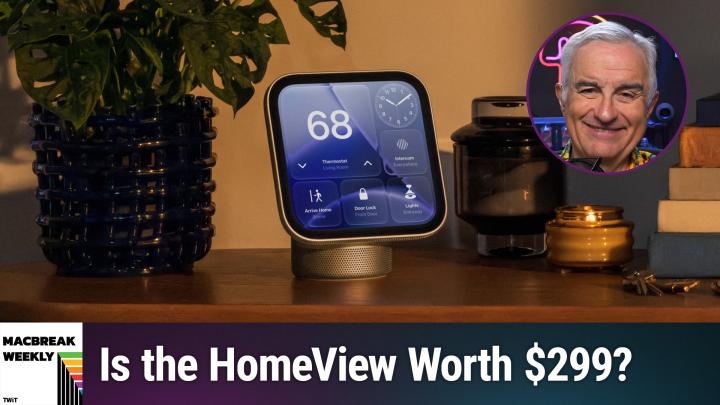
It's time for MacBreak Weekly. Andy Ihnatko is here. Jason and Christina have the day off, but good news, that gives me the chance to get Mikah Sargent and Rosemary Orchard on the show. We've got lots to talk about. Uh, reviews of this new HomeView. What the heck could this possibly be good for? The new Apple TV. Who would buy that? The new MacBook Pro. It's giving me a headache. And the iPhone Duo. Why you might want to turn it in before your 2 weeks are up. No, no, we have some good things to say too. That's MacBreak Weekly coming up next.
Leo Laporte [00:00:39]:
This is MacBreak Weekly, episode 1051, recorded Tuesday, November 17th, 2026: Trousersaloons. It's time for MacBreak Weekly, the show where we cover the latest Apple news. And a bit of a kind of a shift in the panel this week. Christina Warren got the flu, I'm sorry to say. Feel better soon, Christina. Jason Snell is still on the road, but we are— I am thrilled.
Leo Laporte [00:01:13]:
Well, first of all, let's say hi to Andy Ihnatko, who is in the library, but apparently the books have been removed. Hello, Andrew. Hello.
Andy Ihnatko [00:01:21]:
Well, the thing is that we're in Boston, we are still very much a Puritan fishing colony. We try to keep things ideologically pure. Okay, the godly books are still available. Okay, it's not censorship. It's just that we're making the library more godly.
Leo Laporte [00:01:36]:
Yes.
Andy Ihnatko [00:01:36]:
I'm joking.
Leo Laporte [00:01:37]:
They've all been burned. Did you— unless they got the special— I just read about this version of Fahrenheit 451 that had an asbestos cover. So you couldn't burn it, which I thought that was—
Andy Ihnatko [00:01:49]:
Well, if there's a better way to encourage people to burn books, I don't know what that is. That's probably misguided. Try it.
Leo Laporte [00:01:55]:
Go ahead, try it. Let's see what happens. But I did— let me just slide my camera over a little bit. We've made Rosemary do that. Now I've got to do it to mine. Get over there. Get over there. Rosemary Orchard is in the house.
Leo Laporte [00:02:08]:
Hello, Rosemary. Great to see you. Uh, Rosemary used to do ballet class during MacBreak Weekly. That was at least the excuse she proffered, so we could never get her on.
Rosemary Orchard [00:02:19]:
But It was a regular thing until not that long ago, sadly.
Leo Laporte [00:02:23]:
I'm thrilled that we can get you on. Rosemary, of course, former co-host of the late lamented iOS Today, which we unfortunately had to cancel just a few weeks ago due to, you know, impecuniarily brokenness. But we thought we'd reunite her with Mikah Sargent.
Mikah Sargent [00:02:46]:
Yay! Hello!
Leo Laporte [00:02:47]:
Host of Tech News Weekly and Hands-On AI. And, uh, you know, the plan is— I haven't said this publicly, and I know Lisa probably wouldn't want me to, but eventually we want Mikah to take this show over. And so I'm grooming him. I love that.
Mikah Sargent [00:03:00]:
You're just like, you know, I'm gonna say it.
Leo Laporte [00:03:02]:
I'm gonna groom you, my friend. No, we love Mikah, and, uh, and, uh, I want to give him more to do now that iOS Today is defunct. So we found some more to do. Anyway, welcome to, uh, the 3 of you.
Mikah Sargent [00:03:17]:
Good to be here. Very excited to be here with you both.
Leo Laporte [00:03:19]:
Yeah, we love having you guys on. It's wonderful. I got this. I'm so— I don't know what to say. Whelmed by this.
Mikah Sargent [00:03:27]:
Yeah, I'm thoroughly whelmed.
Leo Laporte [00:03:30]:
Whelmed. This is Apple's HomeView, which I ordered the minute it came out. I did it for you, frankly, because I didn't really know what I would do with this.
Mikah Sargent [00:03:42]:
I love that we have the same screen, by the way. I keep interrupting you, but I just love that we have the same screen.
Leo Laporte [00:03:45]:
There's only one screen that's worth having.
Mikah Sargent [00:03:46]:
Yeah, exactly.
Leo Laporte [00:03:48]:
All the other screens are— because basically, can I just say this? It's a giant Apple Watch.
Mikah Sargent [00:03:53]:
Yes. That made me like it more. When I started to think of it that way, it made me like it more than I did before I thought of it that way.
Leo Laporte [00:04:00]:
Well, but without any of the buttons, without any of the, uh, health stuff, just a lot of clock faces. Uh, you can't put widgets on it. If I swipe up, you can see that there's—
Andy Ihnatko [00:04:12]:
I mean, that could be, that could be a good thing because, you know, Flavor Flav, you know, if we get a co-branding thing with him, get him to wear it like on the That's
Mikah Sargent [00:04:20]:
fantastic.
Leo Laporte [00:04:21]:
I will say this. I mean, as always, Apple does great hardware and it's, you'd agree, right, Mike? I mean, it's beautifully made.
Mikah Sargent [00:04:26]:
It is beautifully designed. Um, when I first opened it up, I did that thing that I always do and I never learned from, which is that the reviews and reviewers that I follow have far smaller hands than I do because I have monster hands. So every time I get it, I open it up and I'm like, this thing's tiny. What is this, a HomeView for ants? But no, it is very well-designed hardware. The, uh, movement of the, the screen is very smooth. screen is great, uh, setup and everything.
Leo Laporte [00:04:53]:
Speaker's not bad. It's got a glass firing.
Mikah Sargent [00:04:55]:
I was pleasantly surprised.
Leo Laporte [00:04:57]:
Yeah.
Mikah Sargent [00:04:57]:
Um, especially in comparison to the HomePod Mini that I feel has garbage audio. And so in comparison, I thought, oh wow, this can actually put some sound out.
Leo Laporte [00:05:07]:
It's talking to me. Apparently I activated Siri. The ostensibly the purpose of this was as a Siri AI front end or a FaceTime machine? It's really unclear what the purpose was, to be honest.
Mikah Sargent [00:05:21]:
I think you did, uh, you, you sort of nailed it with the Siri AI part, but you know, I actually had a little bit of a therapy session with Jennifer Pattison-Tui of The Verge. Um, I was talking to her and I'm like, wow, kind of disappointed with this for this reason, this reason, this reason, and this reason. And she brought up a really good point because it couples with Apple's choice to announce this new, uh, second-party hardware for the home, which is that this really isn't for us smart home enthusiasts. If there's an average Joe who wants to get into the smart home, she says that for them, the home control view and the sort of swiftness that you get when you are controlling your home using this is really quite good.
Leo Laporte [00:06:10]:
Oh.
Mikah Sargent [00:06:10]:
And so she was saying, For her, this is a great thing for her husband, who is not the techie person in the household, and he can understand this because he understands his iPhone and his iPad. And so this is a great way for him to be able to feel like he has control of his home. Whereas, you know, I use Home Assistant and have all these special controls and panels and things.
Rosemary Orchard [00:06:35]:
Yeah.
Leo Laporte [00:06:35]:
Rosemary, did you, did you get one or do you want one?
Rosemary Orchard [00:06:38]:
No. I mean, if I could get a free one, I'd love to try it out and play with it. $300. Yeah, yeah, yeah. Quite frankly, I don't think it's worth it for me because my goal with home automation is stuff happens without you thinking about it. You don't touch buttons. You don't have to do things like you walk into a room and it's dark. So the lights turn on at the right time of day.
Rosemary Orchard [00:07:00]:
The curtains automatically close and blinds shut, things like that. You know, I just want things to work without having to interact with them. Now, don't get me wrong, having a nice shared UI for reminders and things like that might be nice. But also there's a 6-year-old in the house. So we're just gonna get fish, fish, fish, bugs, bugs, bugs put on every single list, especially with dictation.
Leo Laporte [00:07:23]:
Did the 6-year-old go up to it and say, play Baby Shark over and over and over?
Rosemary Orchard [00:07:29]:
All I'm gonna say is the HomePod mini in his room does have Siri disabled for a reason. So yeah, no, it's one of these things. I love the idea of it, but like Mikah, I'm a Home Assistant user. I am not my parents. Like my parents have got HomeKit set up and so on. They actually also have Home Assistant and they like it. They don't really know how it works or how it does things, but they know that it provides the information that they want about their house. And that is the goal for that.
Rosemary Orchard [00:08:00]:
I don't think the Home View for a lot of people, you need a place in your home to put it, right? The wall-mounted options seem really cool, But then you need to have a wall space for it. And I don't know about you folks, but I don't happen to have a plug, like where putting this on a wall would make sense and running cables into a wall. That, that's a whole thing. So yeah, I don't know if this, this feels like it's a really lovely idea that doesn't physically fit into a lot of people's homes.
Leo Laporte [00:08:30]:
Jason Snell reviewed it on Six Colors and basically said it's something he's been waiting for because it replaces his Echo or his Google device. I mean, I guess, although if you watch Joanna Stern's review, it wasn't even able to time things.
Mikah Sargent [00:08:49]:
That's my problem with it. Like, Siri AI has, and this is what I was reading on Reddit as well, a lot of other people having these similar issues. Siri AI, because of its new method of communication and understanding what's being asked, it ends up getting confused with those very direct commands. And now for me, and this is, this doesn't quite apply to the Home View, but when I try to set a timer on my Apple Watch, which is like one of the only places I really interact with Siri, it takes 5 seconds longer than it normally would to even set the timer because it's doing the new Siri AI and having to do a lot more thinking about things. It's very frustrating. And for me, that has led me to not being, uh, very involved with Siri AI, which means that this Home View, again, for me, has less of a purpose because this is supposed to be that thing that you talk to in your home that is controlling your whole Siri AI orchestration. And then also shows you the cool features of recognizing your face and being able to give you those custom commands that are just for you. Yeah.
Mikah Sargent [00:10:02]:
And yeah, I just don't do that.
Andy Ihnatko [00:10:04]:
It really does. I've, uh, I don't have one, of course, but I've been talking to a couple of people who did get pre-order one and also reading all the reviews. And the consensus really does seem to be amongst all of them is that this is a very, very lovely clock and a very, very nice speaker with a Post-it note. One of the clock faces should be a handwritten note from either Tim or John Turner saying, I owe you more features, but we promise that they're coming. Because there's, I mean, there's a lot of— I do, I do like I do like, uh, Apple Insider's headline was— seemed to be the consensus where, you know, shallow launch but incredible potential. You can imagine that once Siri AI gets its stuff together, that this is going to be a really, really useful thing. You imagine that once Apple goes ahead and refines this concept a little bit further so that does more things at launch other than show you a really, really awesome Snoopy clock, it's going— that's when you start to forget that you spent $300 on this thing. I mean, it is, it is, it is a $300 decorative object right now.
Andy Ihnatko [00:11:07]:
Uh, that again, it tells the time and it's a speaker in it. That's nice. But if— I really do think that if anybody's buying one thinking that they're going to get— that my life changes at this moment, suddenly this will be the family hub in which we exchange messages and we reform the, the interpersonal relationships that have been fracturing this family for the past 7 years without having this darn thing. You might be let down, but maybe come back in a year.
Leo Laporte [00:11:30]:
I, uh, I do want to set one thing straight. Hey, set a timer for 5 minutes. Oh, didn't wake up. Hey Siri, sorry about that. Hey, set a timer for 5 minutes. It can set a timer.
Speaker F [00:11:46]:
5 minutes.
Mikah Sargent [00:11:46]:
Yeah, yours happened instantly. That's good.
Leo Laporte [00:11:48]:
Yeah, so I don't— I'm not sure what her issue is.
Andy Ihnatko [00:11:51]:
It's weird. It's almost as if there should be— they should like, uh, program in an exception on this operating system that says that whatever happens, anytime someone asks what the weather is or asks to set a timer, that always has to work and it has to work quickly. Yeah, because that really is, at least for now, that's like 40% of what people use smart speakers for. I know, that's right.
Leo Laporte [00:12:12]:
When Jason says, I wanted to replace my Amazon Echo, I mean, it's basically, it's a kitchen timer. Um, I guess it's cool that you could do FaceTime. Joanna had some trouble with it because she said to Siri, Hey, uh, use your camera to do something. And it didn't say, I don't have a camera, but it, it does have a camera, right? It doesn't have Face ID, which is weird, but it knows who's in front of it, which I don't fully understand. Apparently the Duo is going to get that capability.
Mikah Sargent [00:12:38]:
Yes. So this is, um, a newer feature that has come, and it actually does both face and body recognition. It is—
Leo Laporte [00:12:47]:
What do you mean body rec— wait, wait a minute. What should I show it? So then there's this thing—
Mikah Sargent [00:12:51]:
Well, no, no, no, you show it your face.
Leo Laporte [00:12:53]:
Oh, okay.
Mikah Sargent [00:12:54]:
But you, yeah, you follow the normal process. But what happens is over time, in the same way that Touch ID had the ability to start to learn a little bit more—
Leo Laporte [00:13:02]:
It gets better.
Mikah Sargent [00:13:02]:
Yeah, it gets better. And according to what I was reading, people that were spelunking in the code, unlike Face ID, which is fully and wholly focused on just the face shape and structure, this also starts to pull in data about your body as you are moving forward.
Leo Laporte [00:13:19]:
I want to point this out though, for anybody who bought the Vision Pro, Pro already knows. It's a foolish fool's errand to buy an Apple product saying, oh, they're going to make it better.
Mikah Sargent [00:13:29]:
Exactly.
Leo Laporte [00:13:30]:
Right?
Mikah Sargent [00:13:31]:
It's foolish to do that with any technology. Don't buy for what may come, buy for what is there.
Andy Ihnatko [00:13:37]:
And, and as an aside, if you've got $300 to spend and you think this is cool, that is all, and you can afford it, that's really all the reason that you need. But yeah, as, as we're saying, if you think that all, if all it does right now is be a really, really cool nice-looking clock with this, with the speaker in it, it will give you that. That's always been like, for $200 more than the cost of a basic smart speaker, it is as, as an object that has to sit on the kitchen counter and basically integrate with the rest of your house and the rest of the, the stuff in the room without looking like, okay, this person is like the tech nerd amongst all tech nerds. It's, it's not always like everybody in the family is okay with having like Cat6 cable like snaking like through all the furniture. So if you want something like that that does look nice, is certainly the nicest one that's, uh, that, that's been out there. But yeah, don't, don't buy it because you, you think you believe in its potential. Buy it because, hey, it's cool, I can afford it, thank goodness, and I think I'll enjoy it as a speaker and as a, as a display.
Leo Laporte [00:14:33]:
Jason does point out something pretty cool. It— because it's basically a projector for the iPhone, if I put my iPhone next to it Let's say I have my iPhone and Apple Music and I put it next to it. They kind of, there's weird little bloopy thing happens and then it says, oh, do you want to project whatever you're doing on the iPhone onto the Home View?
Rosemary Orchard [00:14:53]:
Oh, so the same as the HomePod handoff then, but—
Leo Laporte [00:14:56]:
Yeah. Yeah. Yeah. Very much like that, except now I have a picture. I mean, I don't know if it shows.
Mikah Sargent [00:15:02]:
Yeah. You see the album cover because it launches the Music app. And so you see, I accidentally did it the other day because it's on my desk right now for testing. And so I was listening to music and I sat down with my AirPods and I sat down my phone next to it and it sent it to the HomePod or the Home View. But it was nice to be able to test that feature. I think one of the coolest early features is the recipe sort of gimmick. It's not a gimmick, it's a cool feature where you can take a Safari link to a recipe and pop it into the Home View and it kind of, It's almost widgetized in the way that it makes it so that you can follow along with the recipe. But—
Rosemary Orchard [00:15:44]:
Oh, are they using Safari Reader for that, by any chance?
Mikah Sargent [00:15:47]:
I would imagine that that's probably— it's probably a custom Safari Reader view. But when I first set this up, a lot of the widgets weren't working for me, but they were still displaying for me. And so I had— and I think I've seen other people too, or I have seen other people too struggle with the setup process. And I think that does start to color how you view it. And I wonder as we sort of settle into it, if sentiments improve or if people find, I'd never really used this thing, so I sent it back.
Leo Laporte [00:16:21]:
That is kind of weird. It sensed my— for instance, I just unlocked my garage door by just tapping it on the screen. I mean, that's— and that was without me doing any setup at all. And now I've locked it again. So, I mean, I think— so it has some HomeKit, and it's not a HomeKit— maybe it is, it's a Schlage. So I could turn on some lights. It recognized this stuff without me setting it up.
Mikah Sargent [00:16:45]:
Yeah, it's using— it should be using your Home account, your HomeKit account.
Leo Laporte [00:16:49]:
Yeah, so I had it set up in Home. I'm a little disappointed. I was hoping— I knew that it was really supposed to be a front end to Siri's AI, but I was hoping I could in some way use it with my own local AI. And I messed with it for a while. And I was— I have an app that I wrote for the iPhone with my AI, and I was able to get a widget. It's up running on a test flight, but I was able to get a widget on the screen, but it's an inactive widget. It's just a read-only widget, and there's no way I can talk to it or interact with it. So—
Mikah Sargent [00:17:21]:
You'll be happy to hear that that should be coming soon.
Leo Laporte [00:17:24]:
Yeah, I'm hoping. Yeah, another thing someday. Yeah.
Mikah Sargent [00:17:28]:
They basically have one category of— because for the nerds among us, this is a really interesting mix in the background between tvOS and the technology that makes CarPlay work because it's got that projector style of CarPlay, but it's tvOS as far as the operating system goes.
Leo Laporte [00:17:48]:
It's very confusing.
Mikah Sargent [00:17:50]:
It is very confusing. One of the categories of CarPlay app that is currently disabled are the category that fall into the third-party AI agents. So in the same way that you can use Claude and ChatGPT in the car, that is something that's supposed to be enabled later on the home view, at which point you should be able to add some entitlements to that app that you've made that makes it a CarPlay app of that style, Leo, and then you'd be able to use your local AI in
Leo Laporte [00:18:21]:
that way. Okay. Okay, so it's, uh, something with promise. It's beautifully engineered. It's nice because the screen is LCD. It doesn't have the OLED flicker features— problems we're going to talk about in just a little bit.
Mikah Sargent [00:18:35]:
It does a good job of matching the environment in terms of when it's dark and light. I mean, it's very responsive.
Andy Ihnatko [00:18:40]:
Very, very low. Yeah, very, very low brightness.
Leo Laporte [00:18:43]:
So you could put it on your bedside table and be happy with that. Yeah, yeah,
Mikah Sargent [00:18:46]:
yeah.
Leo Laporte [00:18:47]:
All right. I mean, I just, it's a weird product. Apple apparently has had it in the warehouse for a couple of years waiting for Siri to catch up.
Mikah Sargent [00:18:54]:
Yeah, it definitely feels that way. I basically feel that, that, you know, rumor is absolutely true based on my interactions with it. But it really did help when I thought about what, again, Jen was saying, just if you're new, if you're just now getting into the smart home, Or if you are thinking about doing it and you don't know where to start, Apple has tried to kind of give you that kit of to be part of the Apple ecosystem wholly and fully and to figure that out. Okay, I can get the thing that controls everything. I can get the door lock. I can get the camera and it's all going to work together. They have done that, but it For those of us who've been in this for a long time, it feels like, so where is this going to work for me?
Leo Laporte [00:19:46]:
Yeah. Rosemary, are you a home automation freak? I agree with your point of view. It should just happen by itself. You shouldn't have to do much.
Rosemary Orchard [00:19:56]:
Yeah. So like I just set up the Aqara G4 doorbell, which I've had for a while.
Leo Laporte [00:20:00]:
I just didn't have the opportunity. That's the one where you walk up to it, right? It uses UWB.
Rosemary Orchard [00:20:07]:
Yeah. So this is the doorbell, not the door lock.
Leo Laporte [00:20:10]:
Yeah.
Rosemary Orchard [00:20:11]:
I've not, I've not got around to installing smart door locks here yet, but, you know, I—
Leo Laporte [00:20:16]:
It's a new house.
Rosemary Orchard [00:20:17]:
Yeah. So, you know, I'm working, I'm working on things. I'm iterating on stuff. I installed smart understairs lighting yesterday. Oh, that's nice.
Leo Laporte [00:20:26]:
How smart is it? What happens? Does it, does it, is it like you open the door? Does it light up when you step on the stair, each stair?
Rosemary Orchard [00:20:33]:
You open the door to the cupboard and it lights up. But if the room is like got no lights on, then it turns it on more dimly, basically. So yeah, I've adjusted the brightness. Yeah. So I've— but I've adjusted the brightness basically depending on how many lights are on in the room and things like that. So that's kind of cool. But yeah, I set up the doorbell and it was a— it just works thing. So I set up the doorbell and now it recognizes people walking up to the door.
Rosemary Orchard [00:20:58]:
So my partner can—
Leo Laporte [00:20:59]:
Does it show them on the screen?
Rosemary Orchard [00:21:00]:
And it shows them on the Apple TV. And our son was like, oh, Daddy's on TV. It's like, yes, because he popped into the corner as he was coming back with the dog. Does it show it on the Home View? I assume so. I don't know. I don't have a Home View.
Leo Laporte [00:21:17]:
Maybe. Oh, that's right. You don't have one, of course.
Rosemary Orchard [00:21:19]:
Yeah. So if somebody's got a Home View and one of the smart doorbells that can do this, one of the things I do love is it was It asked if it could have access to my photos to identify people. So I said yes. And then it just did it. And so it immediately said, you know, this person is arriving home. So it wasn't just a person. When a delivery person arrived earlier, it was like, a person is at the door. Right.
Rosemary Orchard [00:21:41]:
But then my partner arrived home, it was like, he is at the door. It's like, oh, great. You actually, like, you have actually done this. And I did zero configuration on that. It just worked. And that is what I want from home automation things. You know, I'm willing to put in some hard work up front to get things working. But, you know, in reality, what most people want is for them to just install a doorbell and it works, right? It does a ding dong when somebody presses it.
Rosemary Orchard [00:22:07]:
But then also it pushes to their phone, is like, there's a person at the door, there's a parcel at the door, there's a dog at the door. I've had all of those today. And yeah, yeah. But, you know, like that is what people want. And I want to just walk into a room and have it turn on lights. But then I'm sitting there watching TV and I don't want it turn off the lights because I'm not moving. So I need an occupancy sensor instead of a motion sensor. And I think for a lot of people, this is the barrier to entry.
Rosemary Orchard [00:22:30]:
What is the difference between a motion sensor and an occupancy sensor? Don't they do the same thing? Well, yes and no. And that's where it gets really tricky. So yeah, it's a challenge.
Leo Laporte [00:22:41]:
Well, you know, I spent my $300. I did it for you. Not you, Rosemary, for you, the people.
Rosemary Orchard [00:22:50]:
Oh, I thought it was a present for me. It
Leo Laporte [00:22:53]:
might be. I might just put it, package it up and mail it out to you. I just— it's pretty. I just don't, I don't know how I can use it. I'll wait and see if I could. I mean, I'd love to be able to talk to my AI through it. And unfortunately, unlike, unlike a lot of other devices, Apple devices are not notoriously hackable. Yeah, I can get into it.
Andy Ihnatko [00:23:12]:
But that's, but that's, that's certainly part of the endgame. Like in 2 years' time, I'm sure that Apple would like this to be part of your interface to your entire, like, Apple experience. Just the ability to, like, as you're putting on your coat, as you're getting your raincoat, saying, oh, message A, B, and C with, uh, today's, today's report from D, E, and F, uh, and prepare meeting notes and have them ready by the time I get to work. Yeah, one more step. Yeah, that's what they're— oh, and I, oh, and I forgot, uh, make sure that Rosemary gets a copy of the, uh, gets a copy of the, of the show doc today too. As you're struggling, as you're putting on your scarf, as you're putting on your hat.
Leo Laporte [00:23:46]:
And because—
Andy Ihnatko [00:23:47]:
yeah,
Leo Laporte [00:23:48]:
and because I'm a sucker, I also bought the Apple TV 4K.
Mikah Sargent [00:23:52]:
Now hold on, why?
Leo Laporte [00:23:54]:
Yeah, there's no reason.
Mikah Sargent [00:23:55]:
Because that's the one thing I skipped. I was
Leo Laporte [00:23:57]:
like, well, I don't want to, but I feel like I kind of need— I mean, look, there's some limits, um, but, uh, this stuff is relatively, you know, inexpensive. I could buy it to try it and, uh, Here's a perfect example. So the Apple TV has its own— the new Apple TV has its own mics. So I no longer have to pick up the remote to say, hey, Shlomo, um, you know, what did she just say? Which I say a lot.
Mikah Sargent [00:24:22]:
Okay, I was gonna— I was curious which, which commands you do.
Leo Laporte [00:24:24]:
Well, but you can't use any Siri AI smart— like, I— you can say— I said things, uh, things that Siri knows, but you won't look up stuff. So I can't say anything about my calendar, my information. I can't even say things like, uh, you know, what other movies was this guy in? It's not, it's not full Siri. It's, it's like a disconnected Siri.
Mikah Sargent [00:24:46]:
Yeah, that sounds buggy to me.
Leo Laporte [00:24:49]:
Well, I don't know if it's a bug or if it's intentional. I think it doesn't, it doesn't have—
Mikah Sargent [00:24:53]:
Should it be able to? It should be able to do the, the, the last thing that you said.
Leo Laporte [00:24:59]:
Um, I asked it, who is the oldest court— oh, so here's, oh, here's an example. I said, Who's the oldest quarter— starting quarterback in the NFL? It said George Blanda at the age of 48. I said, no, no, who's currently the oldest starting quarterback? It said, I can't help you with that.
Mikah Sargent [00:25:16]:
Interesting. Okay, well—
Leo Laporte [00:25:18]:
So it knew George Blanda, I guess it was in its—
Mikah Sargent [00:25:21]:
but it couldn't do a web search or something.
Leo Laporte [00:25:22]:
But it can't do a web search.
Mikah Sargent [00:25:24]:
Huh. Yeah, it did.
Leo Laporte [00:25:25]:
In fact, it said that specifically. It said, oh no, you have to do that on the phone.
Mikah Sargent [00:25:29]:
See, yeah, I would want a box that can do all of those things that's made by Apple. And I guess that's my Mac Studio. Yeah,
Leo Laporte [00:25:37]:
exactly.
Rosemary Orchard [00:25:39]:
I'm now really glad that I bought, because we needed a 3rd Apple TV, uh, because, you know, every TV in this house has to have an Apple TV connected to it. Um, so I just went on eBay and I bought, uh, the old generation, the secondhand, um, package. Because it's fine.
Leo Laporte [00:25:54]:
There's literally zero reason. You can't even, the expanded memory apparently is not even accessible to third-party apps?
Andy Ihnatko [00:26:04]:
It's— well, it's, it's 8 gigabytes and it's, it's more memory, but, and, but apps are still limited to their 2 gigabyte compartments as usual. It just means that you have more of them running at the same time, I guess.
Leo Laporte [00:26:16]:
I mean, 2 gigs is a lot, let's face it, for an app.
Andy Ihnatko [00:26:19]:
But plus the, plus the overhead of AI, I'm sure it takes a bite. But
Leo Laporte [00:26:22]:
yeah, I'm not sure why Apple did it that way, but I'm sure they had a good reason. It does have the A19 now, so it feels snappier. I have to say the HDR is good. So the picture's a little bit better on my TV. It was an upgrade to the picture.
Mikah Sargent [00:26:38]:
That's good.
Leo Laporte [00:26:39]:
You know, slightly. Yeah, no, there was no good reason for that, but I feel like it's my duty.
Mikah Sargent [00:26:47]:
I mean, it is good to have the latest in terms of the home networking bridge, you know, that Apple runs in the background.
Leo Laporte [00:26:54]:
Thank you for making me feel better.
Mikah Sargent [00:26:56]:
You're welcome.
Andy Ihnatko [00:26:57]:
You've got Matter and Threads and not the older kind. I don't know if that's— Exactly, exactly. And you can at least tell yourself that.
Mikah Sargent [00:27:02]:
Yeah, it's got the matters and the threads, and it's the latest of the versions of the 1.7s or whatever.
Leo Laporte [00:27:10]:
Rosemary, what phone are you using now? I want to, I want to know.
Rosemary Orchard [00:27:13]:
Uh, I've got a 17 Pro here.
Leo Laporte [00:27:15]:
Me too.
Rosemary Orchard [00:27:15]:
But I've got an iPhone Duo that is due to arrive between November 30th and December 7th.
Leo Laporte [00:27:21]:
Oh, mine's December 7th.
Mikah Sargent [00:27:24]:
So, December 7th.
Leo Laporte [00:27:25]:
All right, we'll talk about that in just a little bit. Duos. Or is it maybe do-overs? Apparently for a lot of people it's do-overs. It's so nice to have Mikah Sargent and Rosemary Orchard here, the erstwhile hosts of iOS Today. So good to have you. We'll have you both on MacBreak Weekly a lot more. It's great to see you. Of course, Jason Snell is out as he was last week due to travels.
Leo Laporte [00:27:50]:
He had some duties back east. And unfortunately, I'm sad to say Christina wasn't feeling well. She's got the flu, but they'll be back, I hope, next week. And Andy Iannaco also here from the empty library. You're in Boston instead, right?
Andy Ihnatko [00:28:06]:
I'm in Baston, yep.
Leo Laporte [00:28:07]:
You bastard. Are you doing, are you doing the radio thing or are you just visiting
Andy Ihnatko [00:28:13]:
or? I had a meeting about something like about 2 hours ago and it was like, I was like, oh, I should just call in. It's like, oh well, no.
Leo Laporte [00:28:21]:
No, well, thank you for finding a spot. I know we gotta get you out of here a little bit early, so we'll hustle along. On this. And Mike, has yours moved up in delivery?
Mikah Sargent [00:28:31]:
So it's been— from the beginning, it had always quoted arriving November 16th through the 23rd, but the actual step that it's on finally moved today. It went from processing to—
Leo Laporte [00:28:41]:
Because this is the 17th, I might point out.
Mikah Sargent [00:28:42]:
Exactly. Yes.
Leo Laporte [00:28:44]:
You were supposed to. So, yeah.
Mikah Sargent [00:28:46]:
So I'm hoping it'll come by the end of the week so I have the weekend to give it a good old test, kick the tires. But I am thinking it's going to come on Monday.
Leo Laporte [00:28:55]:
Huh.
Rosemary Orchard [00:28:57]:
My, my tell for this is always when you finally actually get billed by Apple.
Leo Laporte [00:29:00]:
Yes. When they take the money, then you know there's, there's no—
Rosemary Orchard [00:29:04]:
Because I was all geared up to be really poor last month and then it didn't happen. I was
Mikah Sargent [00:29:09]:
like, I have all this—
Leo Laporte [00:29:10]:
I transferred money into my Apple card just for this. Yeah. Well, all right. So mine's December 7th through 14th, so maybe I won't get it December 7th. 7th. That was just— a lot of the Apple— a
Andy Ihnatko [00:29:19]:
lot
Mikah Sargent [00:29:19]:
of people usually, they, yeah, over or under promise, overdeliver.
Andy Ihnatko [00:29:22]:
Exactly. Yeah, a lot of people are getting their— who even people who didn't think they'd get them by the holidays are being told, oh yeah, now my date's moved up, I might get it December 17th.
Rosemary Orchard [00:29:31]:
I think a lot of the really late ones did, but none of the earlier ones seem to have budged at all.
Leo Laporte [00:29:36]:
The thing that irks me is I got up at 5 AM Pacific time, sat there watching the Apple Store, we're busy, we're busy, busy. Then in the minute it refreshed, I had an order already to go.
Mikah Sargent [00:29:49]:
Yeah,
Leo Laporte [00:29:50]:
pressed buy it. I don't think I could have done it any faster, and it still said December 7th.
Mikah Sargent [00:29:55]:
That was my experience too. My younger brother who lives in Missouri, he was the same process. He got his on day one, on launch day. And so yeah, it—
Leo Laporte [00:30:06]:
So it's like a lottery or something.
Mikah Sargent [00:30:07]:
It did. It was. Yeah, I felt It felt odd.
Leo Laporte [00:30:10]:
All right, well, let's take a little break. We'll talk about the Duo, uh, and the new MacBooks and the iMacs. We have lots to talk about on iOS Today. No, sorry, MacBreak Weekly with a little iOS today thrown in. Just
Mikah Sargent [00:30:26]:
a
Leo Laporte [00:30:26]:
MacBreak iOS today.
Rosemary Orchard [00:30:29]:
A sparkle of iOS today.
Leo Laporte [00:30:31]:
A little, just, you know, just a little, just a little drizzle of it. Yes, uh, it's great to have all 3 of you here as always. We appreciate, uh, Appreciate the time you spend with us here. And all of you, our club members especially, thanks for being here. So the Duo, there are some special people who have received their Duos and talked about it. We've seen the reviews. I think Jason's reviewed it by now. We saw iJustine, who still loves hers.
Leo Laporte [00:30:58]:
We saw, I think Marques Brownlee said it's weirdly heavy when it's closed and weirdly light when it's open. I did get to play with one at an Apple Store, and that It's true. It's heavy when it's closed and it's light when it's open. My biggest concern and interest, of course, is photography.
Mikah Sargent [00:31:16]:
Mm-hmm.
Leo Laporte [00:31:17]:
And we're getting now some, some good input. Of course, I always wait for Austin Mann's reviews. He's a professional photographer and he's written his piece, iPhone Duo for Creative Pros. You probably— you might have already talked about this because it did come out a couple of weeks ago while I was still traveling. about. By the way, thank you for hosting the show while I was traveling about. I appreciate that, Mikah. Um, I think Austin thought it was good.
Leo Laporte [00:31:45]:
I'll look at another, uh, review. This is Apple Insider, uh, Wesley Hilliard. His says it's actually better than I expected. The only place it's worse is in low light. Now we know it's not the same, uh, Camera as on the iPhone 18 Pro Max, it's really more like the 17 Pro Max, which is fine. Or not even 17 Pro Max, the 17 nothing,
Mikah Sargent [00:32:13]:
right? I think, yeah, just the 17 flat, but I could be wrong about that.
Leo Laporte [00:32:18]:
Yeah,
Mikah Sargent [00:32:19]:
um, I know it's not the 18.
Leo Laporte [00:32:20]:
Yeah, but looking at these, I'm completely happy with them. I mean, honestly, the iPhone camera has been so good for several generations. now that I don't know. I don't— I'm a little reassured, let's, let's put it that way. How about you guys? You're waiting for yours as well.
Mikah Sargent [00:32:35]:
I, I have used my 17 Pro Max camera this year more than I've used an iPhone camera in a long time. And that's like, I just haven't really taken a lot of photos in the past, and I've been doing that a lot. this year for some reason, and I'm happy about it. So now, for the first time in a long time, I feel I've got something to lose, and I'm a little bit nervous about that.
Leo Laporte [00:33:02]:
Um, I took the 17 Pro Max to Southeast Asia on my trip, and I also took a Leica, but I ended up taking a lot of my favorite photos, believe it or not, with a camera phone. And it's good. Now, Lisa had the 18 Pro Max, and hers were, you know, noticeably better. Not hugely, but But if you pixel peep, the detail was better, the color was better, the lighting was better. So yeah, I'm not going to have a camera even as good as my current iPhone 17 Pro Max. That's a little disappointing.
Mikah Sargent [00:33:33]:
Yeah, that makes me nervous. And I honestly, I wanted to separate the overall sentiment, right, from what is true. And so I have to wait to see what that's going to look like. I want to see it for myself.
Leo Laporte [00:33:47]:
I think it's true that that's— it's different for everybody. It's going to be different for everyone.
Mikah Sargent [00:33:50]:
Yeah. People will be influenced by the fact that they just spent a bunch of money on a thing and need it to be good. And so even, even if it's not great, one can convince oneself that it's good and wants to, you know, avoid the discomfort of having spent a lot on a thing and it not being as good. And that's always a skepticism I have.
Leo Laporte [00:34:11]:
Are you nervous at all about this? Yeah. Yeah. I guess the downgrade?
Rosemary Orchard [00:34:17]:
Yeah. So for me, the biggest loss is going to be optical zoom, uh, because I take a lot of photos with 4x and 8x zoom, and I am gonna miss that. I walked into the Apple Store, uh, in Birmingham last week and picked up an iPhone Duo. I was surprised by how heavy it was. Mm-hmm. It hadn't occurred to me for some reason that something that was essentially 3 screens glued together with a hinge, uh, was going to be heavy. I don't know why I didn't I didn't think of that. Of course, it's glass and metal.
Rosemary Orchard [00:34:44]:
It's gonna weigh something. Um, well, I plan to play with it, and I don't know, I'd like— I'll probably be okay with it, but I am gonna miss my 4x and 8x zoom. And I— all I can say is I think I'm gonna be falling into the holiday returns period with the iPhone Duo, and I may be taking advantage of that if I decide after, you know, a couple of weeks that I really can't get along with the lack of zoom. Which, yeah, I don't know. I'm gonna see how I feel about it because obviously there's more pixels nowadays. So even though you're cropping the picture, you've still got pixels to play with. But I don't know, it just, it hurts my soul. I grew up with my dad and a Canon camera and I was the one having to shove extra lenses in my handbag.
Rosemary Orchard [00:35:28]:
So I— Oh my God. My dad was always like, no, no optical zoom. You want optical zoom. You don't want digital zoom. You don't want to go into the digital zoom area. And, you know, my point-and-shoot cameras had you know, good optical zoom on them and then extra digital if you needed it. But I never used it because I was told not to, and it just feels wrong too. But the
Leo Laporte [00:35:47]:
8x is so great when you need it. Like, it is, you know, I was at a monkey sanctuary reserve, and you don't want to get too close to the monkeys.
Rosemary Orchard [00:35:58]:
They will steal your phone.
Leo Laporte [00:36:00]:
They will steal your phone. One did come up to me and start playing with my buttons, and I just froze. I thought, I'm not gonna move.
Mikah Sargent [00:36:06]:
No sudden movements.
Leo Laporte [00:36:08]:
No sudden movements. But they were pretty well behaved. But I didn't— but again, having 8x zoom and really getting close and still getting the fur because it's optical and really looks good made a big difference. I have to say, I was— yeah, I mean, I guess the rationale I had in my mind was, well, but I'm like your dad. I already have a very, very good camera and If I want a really good picture, I can pull out the really good camera. The problem is it really is the camera you have, the camera you have in your pocket.
Rosemary Orchard [00:36:44]:
Yeah, that's why my other camera is an Osmo Pocket 3. Yeah, it does still fit in my pocket. Yeah, unfortunately that has no optical zoom on it at all. So yeah, it does take nice 4K video, but—
Leo Laporte [00:36:57]:
I didn't bring the Leica to the, uh, to the monkey sanctuary. That's smart. reasons. But I think I got— this is an 8X, and I think, you know, I'm glad I was really able to get up close to that monkey without actually getting up close to the monkey. So I think I would kind of miss— I think I'm gonna miss that. So, uh, one of the Apple magazines, I think it was Apple Insider— no, I'm sorry, 9to5Mac— did a poll of their readers, 6,000 votes, 30% said they returned their Duo, which is, if that's reflecting the real return rate, that's pretty stunning.
Rosemary Orchard [00:37:38]:
Hmm.
Leo Laporte [00:37:39]:
And I have to think some of that will be the weight. And some of that will be the— people complain about the unusability of the front screen. Like, it's not a— it's a weird aspect ratio. It's not like a real phone.
Rosemary Orchard [00:37:53]:
But I feel like that's only going to get better as apps optimize for the iPhone Duo. Wasn't there an article this week that was like, in the last 10 days, there's 10 times more compatible iPhone Duo apps? Yeah. Some—
Andy Ihnatko [00:38:05]:
200,000 is substantial. Yeah. And also Apple's, Apple's starting to get on the ball. And finally the Apple Store app is now optimized for Duo, but there are a lot of things that were not. I'm like, why? Why? Uh, but no, I
Rosemary Orchard [00:38:18]:
mean, the Apple Store app might be optimized, but the Apple Store is broken.
Andy Ihnatko [00:38:21]:
Yeah.
Rosemary Orchard [00:38:22]:
At least today.
Leo Laporte [00:38:23]:
Isn't that ironic?
Andy Ihnatko [00:38:25]:
Yeah.
Leo Laporte [00:38:25]:
It's, you know, I, the app that I wrote in TestFlight for my AI, Local AI, I said, can you do the iPhone Duo thing? Because I was writing it for the Duo, which I don't have yet. It said, oh yeah, I could do that. That's built in. That's in the API. So Apple provides you in Xcode with SwiftUI all of the tools to make it compatible So there's kind of really no excuse. The problem with the number like, oh, 100,000 apps is it doesn't matter if the app that you really use all the time doesn't work. Like, if you want to use YouTube and the YouTube app doesn't understand the aspect ratio, well, that's not good.
Andy Ihnatko [00:39:02]:
Yeah, also, this is a poll and it's probably people who are more eager to say that, yeah, I return it, than no, I'm perfectly happy with it. And secondly, it's a $2,000 thing and you have a 2-week window to undo that action, right? And I feel as though a significant number of those people who returned it did so knowing that, well, you know what, I'm gonna take another look at it in January, February, March, and maybe I'll buy it— I'll buy it again after we've determined that the, the, the production run of ones with potentially cracking screens is no longer operative. Yes. I don't have to worry about that. I don't have to worry about apps being optimized. Apple, Apple will have also done the same thing probably with with their— with this version of iOS that they did with Liquid Glass, meaning they went with the best ideas that they had at the time, and then they roll them back or modify them when they see how they play in the real world. I really think that this is— this is one— this is going to be a very important device to re-review in 6 months' time, because I feel as though a lot of the biggest complaints people are going to have will have not gone away, but at least have been not quite so sharp in people's minds.
Leo Laporte [00:40:09]:
Yeah,
Mikah Sargent [00:40:10]:
I think that's a really—
Leo Laporte [00:40:11]:
Darren Oakey, who's shipped I don't know how many dozens of apps because he's vibe coding them like crazy, he's one of our AI user group, uh, regulars, says he's found that his apps get approved faster with the App Store if he says Duo compatible in the description. That makes sense, right? Yeah, yeah, it really does. I could see a lot of people might have ordered the Duo thinking Well, I just want to see it and I'll return it. Right. So that could—
Mikah Sargent [00:40:37]:
same with the Vision, right? That's what I— there were a lot of people that did.
Leo Laporte [00:40:40]:
Yeah. We returned our Vision Pro.
Mikah Sargent [00:40:42]:
We returned our Vision Pro.
Leo Laporte [00:40:43]:
Yeah.
Mikah Sargent [00:40:43]:
Yeah. And I think a lot of people had the opportunity to test it, try it, say, huh, it is or it isn't.
Leo Laporte [00:40:48]:
I think when we bought it, we told you upfront, Mikah, you're going to return it.
Mikah Sargent [00:40:51]:
Oh yeah, definitely. Yeah. It was, it was just a 2-week trial, which was good. I'm glad I didn't have that torture chamber anymore.
Leo Laporte [00:40:58]:
I, as you know, I don't— Apple doesn't send me anything and I have mixed policy of buying everything that we review. And so, uh, Lisa's been saying, well, just, uh, order it and return it. And I, I don't— I feel guilty doing that. I don't order it unless I know I probably want to keep it. I like it that I can return it, but I'm planning to keep the Duo come hell or high water. I don't— I'm going to live with it.
Rosemary Orchard [00:41:21]:
Yeah, I want to want to keep the Duo, but yeah.
Leo Laporte [00:41:24]:
But then when you see images like this, this is a game heavily publicized by Apple Arcade according to Apple Insider. Uh, but in no way optimized for the Duo. And look at that. I mean, that's terrible.
Rosemary Orchard [00:41:36]:
I mean, is it better than the Apple Pencil support if it's windowboxed like that?
Andy Ihnatko [00:41:40]:
That's, that's iPad 1 bezels. Really?
Leo Laporte [00:41:44]:
Yeah. You would think that if the game works on an iPad Mini, that it would work better on the iPad.
Mikah Sargent [00:41:50]:
Yeah. That's odd. That's just odd.
Rosemary Orchard [00:41:51]:
Different aspect ratio though, right? Like
Leo Laporte [00:41:53]:
slightly
Rosemary Orchard [00:41:53]:
different,
Mikah Sargent [00:41:54]:
but that much is that much cropping.
Leo Laporte [00:41:57]:
So for people who aren't watching the video, it looks like an inch all the way around. I mean, it is terrible.
Rosemary Orchard [00:42:02]:
They're just going for the nostalgia of the iPad 1, like Andy said.
Mikah Sargent [00:42:05]:
You know, I heard you liked bezels.
Leo Laporte [00:42:09]:
It's easy to hold, right? Your thumb does not get in the way of the soccer game.
Mikah Sargent [00:42:13]:
Maybe that's the thought.
Leo Laporte [00:42:15]:
No, that's not the thought.
Mikah Sargent [00:42:17]:
I'm trying to give it a reason.
Leo Laporte [00:42:18]:
You're very kind. You're very generous.
Mikah Sargent [00:42:22]:
Look at all that space for my thumb.
Leo Laporte [00:42:23]:
I do have to say, one reason I am looking forward to this as a camera is using the front-facing screen as a viewfinder. That's pretty cool, right?
Rosemary Orchard [00:42:35]:
Yes. I think it's a cool feature. Yeah. Yeah, I was really hoping— I've got a kid's birthday party I'm hosting this weekend. I was really hoping it was going to arrive in advance so the kids could see how they looked when I was taking their pictures. And, uh, yeah, that, that's not a thing.
Leo Laporte [00:42:48]:
Although with 6-year-olds, you might like the Snoopy thing where it's making dancing, making them smile, right? And they watch that. Except that they're going to grab the phone like monkeys and say, let's see more of that. I want to see more of that.
Mikah Sargent [00:42:58]:
More Snoopy. More Snoopy.
Rosemary Orchard [00:43:01]:
Exactly. Yeah. Yeah. No, I think the viewfinder is a really cool feature. And I think especially for like family photos and things like that, you know, with the holiday seasons coming up, you know, that will be really useful. And being able to use the back camera to take selfies. Yes, that, that is a huge win. So that is something where I'm looking forward to a better camera.
Rosemary Orchard [00:43:21]:
Not a worse camera.
Leo Laporte [00:43:22]:
Yeah. Now we mentioned that you're gonna get some sort of weird kind of Face ID on the front camera. What is— Mikah, did you look into how that works? Yeah. That's something that's gonna be— that's on the HomeView too someday.
Mikah Sargent [00:43:35]:
So it's already on the HomeView as a means of determining— you can register multiple users. And
Leo Laporte [00:43:43]:
so the HomeView doesn't have Face ID into— correct— into its camera, nor does the Duo.
Mikah Sargent [00:43:48]:
Correct. They are, they have what's, it's essentially unlock with a photo is what it is for Duo. But on the home view, it's just a matter of recognizing you so that when you're talking to it, it can, you know, do your personal stuff. But let's talk about the Duo. So with the Duo—
Leo Laporte [00:44:08]:
This, by the way, is already in the 27.3 developer beta.
Mikah Sargent [00:44:12]:
Beta. Exactly. It's beta right now. So we don't know what the final version is going to look like. But as it stands, it's a toggle. There are actually 2 new toggles that have been added. One is something that a lot of people were doing via shortcuts, which is that when you close your— when you flip close your Duo, it will lock the Duo. Again, that's a toggle.
Mikah Sargent [00:44:32]:
You can turn it on or off, but a lot of people found themselves wanting to use that. So now Apple's added that as an option. Let's talk about though the actual unlocking. What you do is you register You turn this on and you say you want to use it. And when you unlock with your fingerprint, then the number, I believe it's 45 minutes. I haven't looked at it today, so I could be misremembering, but there's a certain period of time between your last thumbprint or fingerprint recognition that this actual photo to unlock will work.
Leo Laporte [00:45:09]:
Because it's not as secure as Face ID.
Mikah Sargent [00:45:11]:
Exactly. And they tell you that specifically. It is not as secure as Touch ID. It is not as secure as Face ID. It is sort of a middle ground. And people are saying though, it's really fast, which is good. It's comparable to Face ID in terms of how quick it does the recognition. But you hold up the phone like you would, it sees you and it uses that without the IR, without the little dots projected on your face.
Mikah Sargent [00:45:37]:
It's just a matter of facial recognition to do it. I think that's kind of Windows Hello, right? Like that's on a lot of devices. It's not putting dots on your face. Surface laptops aren't putting dots.
Leo Laporte [00:45:49]:
There is a Hello camera though.
Mikah Sargent [00:45:50]:
I mean, yes, you can get a separate camera that I— yeah,
Rosemary Orchard [00:45:54]:
all I can say is the HP laptop I've got here is not thick enough on the top to have any kind of sensors behind that camera, and that's got Windows Hello built in.
Leo Laporte [00:46:03]:
Okay, so, so, and some of this is that, uh, it would be more secure. Face ID is the most secure way to biometrically, uh, unlock.
Mikah Sargent [00:46:12]:
Yeah, your face has more to Be different than fingerprints, which people don't, don't realize. But
Leo Laporte [00:46:18]:
yeah, your sibling could maybe unlock with fingerprint, or— yeah, okay.
Andy Ihnatko [00:46:23]:
Did you read that also, that some people are— some people hit upon this trick of it's just they find it awkward to hit that button with a fingertip, so they're actually registering the inside of a knuckle as a fingerprint because that's where—
Mikah Sargent [00:46:38]:
I asked my brother to try it and it worked. Can you do your tongue? I don't know if you could do a
Leo Laporte [00:46:43]:
sausage,
Mikah Sargent [00:46:44]:
but yeah, you can use— so basically my brother has been my tester up to this point since he got his on day one, and I asked him and he was able to register his little knuckle nook. Knuckle nook.
Leo Laporte [00:46:56]:
All right, this is good. This is good advice for those of us who are still waiting. The knuckle nook. So wait a minute, so the fingerprint reader is here, is like in the middle of your finger?
Mikah Sargent [00:47:08]:
Well, yeah, whenever you grab it, you know, because I grab—
Leo Laporte [00:47:10]:
Your finger wraps around.
Mikah Sargent [00:47:11]:
And that little spot that's right there.
Leo Laporte [00:47:13]:
Oh, I get it.
Mikah Sargent [00:47:15]:
I can just—
Leo Laporte [00:47:15]:
It's wrapping around horizontally, not vertically.
Mikah Sargent [00:47:18]:
Exactly. So then if you rest it there automatically, then it unlocks automatically.
Leo Laporte [00:47:23]:
I'm going to be, I think, dependent on— because I have an Apple Watch— on the Apple Watch Unlock. That's a perfectly good way.
Mikah Sargent [00:47:28]:
Yeah, that's for those of us with Apple Watches. We're good. We're covered. Apple Watch Unlock used to be Very slow, but those, it's improved quite a bit over time because I used to have it on my Mac. It would do both touch and Apple Watch unlock, and it would always try to do Apple Watch unlock first, and then it'd be like 3 seconds of waiting. So I stopped using Apple Watch unlock, but I turned it on again recently and it's very quick now.
Leo Laporte [00:47:53]:
So your Duo is coming when, Mikah?
Mikah Sargent [00:47:57]:
Either this Friday or Monday.
Leo Laporte [00:48:00]:
Okay. So you'll have it by next week. Maybe we'll have to have you back on.
Mikah Sargent [00:48:03]:
Yeah. I was going to say, if you want to have me back on so we can talk about it, I'd love to.
Leo Laporte [00:48:06]:
Yeah. Did Jason have one? I think he did.
Andy Ihnatko [00:48:08]:
Yeah, he does.
Leo Laporte [00:48:09]:
Okay. And mine's forever. I'm not going to—
Mikah Sargent [00:48:12]:
Yours is so long away. You and Rosemary will be chatting about it whenever you—
Rosemary Orchard [00:48:15]:
See, at least I have a reason for mine taking forever because I went in to do the preorder and I traded in a bunch of Apple stuff. We did the family pass-down. So my mom got my iPad Mini. We traded in her iPad Mini, all of that stuff. So I had £565 worth of Apple vouchers to use, and I put them all in my account the night before, and I wanted to use that balance. Like, I was not gonna buy an iPhone without using that balance. And it wasn't using it because I, I'd set up the preorder, but I'd set up the preorder on the Monday before I put the cards in the balance. And so it wasn't aware of it.
Rosemary Orchard [00:48:47]:
So I was trying to figure that out, and I ended up having to go through and set the entire thing up again. So the fact that my date is like the end of November, beginning of December, Like, it's sad and upsetting, but at least it's understandable because I spent like a good 5 minutes arguing with the Apple Store app trying to get my iPhone preorder to use my actual Apple balance. Please, why don't they just default to using your Apple balance? But yeah, yeah. So at least there's a reason for mine being so delayed. But for a lot of people, it seems like it was just they landed in the queue.
Leo Laporte [00:49:17]:
Yeah, I'm frustrated because, I mean, I really— I got up at 4:50 a.m.
Mikah Sargent [00:49:21]:
Yeah,
Leo Laporte [00:49:22]:
and sat there, uh, watching this shot, the store, and the minute it went live I said go.
Mikah Sargent [00:49:30]:
I did what I was supposed to do.
Leo Laporte [00:49:32]:
I did everything right. You couldn't have done it faster.
Rosemary Orchard [00:49:35]:
See, I just set my work status to AFK. The advantage of being in the UK is it's 1 PM.
Leo Laporte [00:49:40]:
Yeah, you have it.
Mikah Sargent [00:49:41]:
What size did you get, Leo? What, uh, storage size?
Leo Laporte [00:49:44]:
Uh, I think I got 512. I think it went up Yeah, I didn't need to. My iPhone 17 has 512 as well, but I've only— I've used less than 256.
Mikah Sargent [00:49:54]:
So did you get white or black?
Leo Laporte [00:49:55]:
I got the white.
Mikah Sargent [00:49:56]:
Okay. See, yeah, we all got the same one. You know, 512 white, that, that's the popular duo, it seems. And that's why people can't get it.
Leo Laporte [00:50:05]:
That's why it's, uh, maybe— oh, maybe I should have picked a different one.
Mikah Sargent [00:50:09]:
I think in the moment it may have made a difference, but yeah, it just— after the fact, everyone I talked to, 512 white.
Leo Laporte [00:50:16]:
But I'm ready with the case. I got my case.
Mikah Sargent [00:50:19]:
Yeah, me too. I just keep looking at my case.
Leo Laporte [00:50:21]:
I've actually ordered several. I got a Nomad leather case, and this is the, uh, iGrip from dbrand. That's cool. You know what's really cool? This dbrand skin that's gonna go on the back.
Mikah Sargent [00:50:31]:
Oh, that's cool.
Leo Laporte [00:50:34]:
It's see-through.
Mikah Sargent [00:50:35]:
I love that. And that's helpful too for aligning the— making sure you're aligned with the charging.
Leo Laporte [00:50:41]:
Yeah, the Qi charge. Yeah, I think that's gonna be kind of— I don't know.
Mikah Sargent [00:50:46]:
It'll be cool.
Rosemary Orchard [00:50:47]:
I'm waiting for shipping notification to buy a case because otherwise I'm going to run out of time on the Amazon returns.
Leo Laporte [00:50:53]:
You're smart. I don't— it was dumb. I'm a nitwit. I'm such a sucker. I just fall for it. I'm a sheeple. I admit it.
Rosemary Orchard [00:51:00]:
Well, it's also, I want the biggest, widest range of options, right? When I get my phone. And if I ordered something the day that I ordered my phone, I would have been limited to like the Apple Store ones. And like, I'm sure Spigen, ESR, and like the big companies do get like something from Apple at some point to give them a heads up on the dimensions. But a lot of the companies out there are just working on guesswork and the rumor mill. So you may end up with a case that doesn't fit. So I'm just there looking at it and like Pitaka have some nice ones. They've got like carbon fiber ones and some funky finishes, which look really nice. But yeah, I'm finding a lot of companies don't seem to be doing iPhone Duo cases.
Rosemary Orchard [00:51:38]:
Like I wanted to get one of the cool OtterBox ones, But nothing—
Leo Laporte [00:51:41]:
Well, and there's some question whether a case can protect you in any form or fashion on a folding phone. I've had cases for the Samsung folding phones and they don't— they do nothing. There's no point.
Rosemary Orchard [00:51:52]:
Also, I want a dual kickstand because I want something where I can kickstand it landscape and portrait because there are times when I'm gonna want different options, right?
Leo Laporte [00:52:00]:
That's actually really smart. I should have gotten something with a kickstand.
Mikah Sargent [00:52:04]:
I bet the company that makes those yoga Uh, who is that? Rosemary? MOFT. Yeah, MOFT. I bet MOFT will end up coming out with something for that. Um, I really have wanted y'all to have yours so that I could ask you the question that I've been asking everyone who does have one thus far, which is, do you find yourself treating it more preciously than you have iPhones in the past? Like, are you, are you thinking about it when you're putting it in your pocket? Are you feeling for the dust? Because that's what I'm worried about. I'm already an anxious person. So I think I'm gonna have a lot of like anxiety about, oh, is that a weird creak? Oh, should I bring this to the beach? Oh, should I do— and I haven't had that with an iPhone in a long time. And that the thought of being nervous about it makes me nervous that I'm not enjoying it.
Leo Laporte [00:52:50]:
Well, we talked about this last week, but I think the good news is that the hinge break, screen break thing is understood at this point. In fact, this is, I'm maybe making stuff up to reassure myself, but the blessing of getting it later is there's no— I mean, they haven't shipped it yet. There's no way they're gonna ship me one with this.
Mikah Sargent [00:53:10]:
Yeah, they would stop before.
Leo Laporte [00:53:11]:
Screen hinge problem, right?
Andy Ihnatko [00:53:12]:
Well, depends. Okay, the thing is, please, because it's— don't take all my hope. It, it really depends on what the source of the problem is. The rumor, the prevailing rumor is that it was a bad series of parts and that it could be restricted to a certain number of serial numbers, in which case that would probably be the best-case scenario because you know that you've got a safe serial number. Good, you don't have to worry about it ever. However, that's not official yet. That's not really known yet. And there are people who— most of the reports that I've been seeing were people who were just literally, I've had it for one day and it cracked.
Leo Laporte [00:53:49]:
It seems to break right away if it breaks, right?
Andy Ihnatko [00:53:51]:
But I have seen a couple from people who are just like, no, it's been 2 weeks and that— and it finally, it finally hit me. Or suddenly there is this bulge in the middle of the screen where that— where the suspected, like, misaligned part is, and now I don't know if I should take it back before the screen breaks. There's a lot of fear, uncertainty, and doubt right now, but I don't— I would not let it— like, I would not cancel my order specifically out of a worry about this because clearly the vast majority of these devices are good. I think what people are most worried about is that it's going to fail before your AppleCare ends or before your warranty ends, and that Apple will not have some sort of a warranty extension program. I'm confident that if Apple does find a good reason for these faults, they will do a warranty extension program. My MacBook Pro got a brand new display, even though it was 2 years out of warranty because it had that delamination issue where it looked like it was just all this— these smudgy things just sort of started appearing on the screen. It was a delamination issue that was okay because again, they extended the warranty for that particular defect. So, uh, I mean, if, if you really are excited about getting a Duo, I wouldn't cancel.
Andy Ihnatko [00:55:07]:
Again, you've got 2 weeks to take it back if you don't want to, if you, if you don't want to take the risk. And if you do decide to send it back, they're going to make more. Okay, if you, if you want to, or if you want to buy one—
Leo Laporte [00:55:16]:
I bought AppleCare Plus, so I'm sure, you know, I'm not too worried about it. It might be that I—
Andy Ihnatko [00:55:22]:
yeah,
Leo Laporte [00:55:22]:
the problem is I did say I'm gonna trade in my old one, so I should wait.
Mikah Sargent [00:55:26]:
That's the
Leo Laporte [00:55:27]:
thing, as long as I can before—
Andy Ihnatko [00:55:29]:
You don't have a working phone. Yeah,
Mikah Sargent [00:55:31]:
yeah, that's the thing. Like, I think I'm gonna have a little bit of a moment of mourning. I'm gonna talk to the cameras and say, I love you, camera.
Leo Laporte [00:55:39]:
Yeah, I know, but you don't have the— your— mine is even worse because you don't have orange one.
Mikah Sargent [00:55:44]:
That's true.
Leo Laporte [00:55:44]:
It's gonna be a—
Mikah Sargent [00:55:45]:
that's gonna be hard sacrifice.
Andy Ihnatko [00:55:48]:
Like we said last week, just, just don't expect it to be as durable as this thing that's been tested for 15 years. We think that's fair.
Leo Laporte [00:55:57]:
This thing is beautiful. For a year I've had this and there's not a scratch, there's nothing. This thing is—
Andy Ihnatko [00:56:02]:
and not only that, like, if I— okay, I have a case on it, but because I'm scared not to have one on there. But the thing is, like, I had this for one week and I dropped it, and I didn't even consider for a moment that the screen might be broken or something might be damaged on it, because that's how much I trust these things at this point. Not that, not that that's an excuse for like being careless with it, but it's like, oh well, oh gosh, well, accidents happen. However, however, with any kind of a folding phone, yeah, don't— treat it really, really well. I would not take it to the beach in any way, shape, or form. Even if you're not gonna be a jerk and just drop it in the sand, there's wind, and wind puts granules of things into the air.
Mikah Sargent [00:56:37]:
See, but that's the problem, because I can take my other phone to the beach, Andy! I'm gonna have to change my phone.
Rosemary Orchard [00:56:43]:
You can put it in a waterproof case. Ziploc baggie.
Andy Ihnatko [00:56:46]:
Yeah.
Rosemary Orchard [00:56:47]:
Yeah, get off your phone.
Andy Ihnatko [00:56:49]:
Just be super careful.
Mikah Sargent [00:56:49]:
Oh, you're so right. I have had, um, for— I bought at the end of— because I went paddleboarding, uh, this past season for the first time and really enjoyed it. And so I was like, okay, I like this enough, I want to do it the following, uh, season. So I got, you know, stuff to make it even better. And one of those things was a fully waterproof Uh, touch, you know, case for the, my iPhone that floats if it falls into water.
Leo Laporte [00:57:16]:
That's nice.
Mikah Sargent [00:57:17]:
But now it's not going to fit. So now I've got to get a new one.
Leo Laporte [00:57:20]:
So Rosemary, you say you're getting this Spigen with the kickstand.
Rosemary Orchard [00:57:25]:
Yeah. So I like the idea of this one because it looks like you can do portrait in both, um, like closed mode as well. So it'll do like the, it'll do the book mode, the tent mode. without it actually being like open, if that makes sense. I don't know why my brain is like not very happy with that.
Leo Laporte [00:57:42]:
There it is. Yeah, yeah. See, see, see, see.
Rosemary Orchard [00:57:43]:
But then you can stand it up in a couple of orientations. Yeah, that's like—
Leo Laporte [00:57:47]:
Plus it has this protection.
Rosemary Orchard [00:57:48]:
Because it rotates. Yeah, and it also, the ring on it rotates. So it may not be the most stable if I'm standing it up like landscape in unfolded mode, but I'm gonna give it a try.
Leo Laporte [00:58:00]:
So I was thinking about that, but instead I got this. This is my, uh, This is— so I put the phone here and then—
Mikah Sargent [00:58:05]:
What in the world? It
Leo Laporte [00:58:06]:
has a little button that you press.
Andy Ihnatko [00:58:10]:
Well, that's kind of rude.
Mikah Sargent [00:58:12]:
Where did you find that?
Leo Laporte [00:58:15]:
See, you put the phone here but then you have the little button so that the kick— with the kickstand so that it holds it up a little bit better like that.
Mikah Sargent [00:58:23]:
For people who are listening and can't
Andy Ihnatko [00:58:26]:
see,
Mikah Sargent [00:58:27]:
Leo has some sort of plastic Middle finger phone holder. It's a fist that deploys.
Andy Ihnatko [00:58:34]:
Yeah, it deploys. It's a 2nd digit.
Mikah Sargent [00:58:35]:
Deployable middle finger.
Leo Laporte [00:58:38]:
It's just handy, I'm just saying. And it's adjustable. So, you know, it has 3 different angles of—
Andy Ihnatko [00:58:45]:
That's definitely how you get other people at the Starbucks to say, you know what, don't strike up any conversation. I'm— maybe I don't want to be riled right now.
Leo Laporte [00:58:55]:
The other one that I did order is the Nomad, and this is a wallet. See, I like wallet cases, and this one, so it has a front flap to protect the front screen, but then you also could put credit cards in the front flap. I don't know how this is going to work. We'll see. But, um, I like Nomad's leather stuff. That's pretty. Yeah, it's pretty. We'll see.
Rosemary Orchard [00:59:14]:
I have a suggestion for Mikah. You can always get something like a Boox Palmer to put in your current case and then buy a new waterproof case, and then you can like maybe be off.
Leo Laporte [00:59:21]:
What is that? What is that, a Boox?
Rosemary Orchard [00:59:24]:
Boox Popa. It is a phone-sized ebook reader.
Leo Laporte [00:59:26]:
Oh, and it fits in your case?
Rosemary Orchard [00:59:29]:
I mean, it'll probably fit in the same case that an iPhone— Yeah, that waterproof case. Or an iPhone. Yeah, yeah.
Leo Laporte [00:59:34]:
So now you have— wow, that's cool. I've never seen that before.
Mikah Sargent [00:59:38]:
I haven't seen the one that's that— yeah, that size. I've got, um, I installed recently, uh, Crosspoint on my XTE Ink.
Leo Laporte [00:59:47]:
Yeah,
Andy Ihnatko [00:59:47]:
yeah, yeah, I got Crosspoint on my
Leo Laporte [00:59:50]:
Well, again, see, this is another reason I thought the Duo would be great, is it's like the ultimate book reader. In fact, you can even have the book show on the front screen so people can think you're reading Moby Dick when you're really reading Fifty Shades of Grey. And that's great. I think it's going to be a, a real hit.
Mikah Sargent [01:00:07]:
I hope so.
Leo Laporte [01:00:07]:
Let me see if I can find that Boox. That's really— boy, they make them in a variety of sizes, don't they?
Rosemary Orchard [01:00:12]:
Yeah, yeah. I've got the Boox Palma 2.
Leo Laporte [01:00:15]:
Maybe it's the Pro.
Rosemary Orchard [01:00:17]:
Yeah, but seriously, it's like an iPhone-sized ebook reader, like the size of my hand, but it's great because you can put it in your pocket and then you can read books everywhere you are in e-ink.
Leo Laporte [01:00:27]:
And it's something you can do with your old case.
Rosemary Orchard [01:00:30]:
Mm-hmm. Well, waterproof case. I wouldn't suggest that, like, it's definitely not like regular iPhone size because it's a weird Android basically with an e-ink screen at the end of the day. But it's great because you can install like the Kindle app, the Kobo app, the Audible app. You can install any of the apps on there. I've got KOReader installed on here, which is the like open source operating system that you can install on Kobos for better sideloading of books and stuff. And yeah.
Leo Laporte [01:00:58]:
Well, well, they never—
Mikah Sargent [01:00:59]:
Is that the sigh of purchase?
Leo Laporte [01:01:01]:
No, no. That's the sigh of it's going on my future wishlist. I broke now, I bought the home theater and the Apple TV 4K. I don't have any money left. Are you the sigh of purchase? Ladies and gentlemen, we are We're going to take a break. Mikah Sargent and Rosemary Orchard are here making their triumphant rise from the ashes. The phoenix rises from the ashes. We were really sad to have to cancel iOS Today, a show that I started way back when with Sarah Lane as iPad Today.
Leo Laporte [01:01:31]:
And I did it with Megan Maroney for a while. You took it over with Rosemary. Just loved that show many years. I don't know, 15, 10, 15 years. It was—
Mikah Sargent [01:01:41]:
It was my entry into shoving my way into TWiT in the first place because Megan Maroney invited me on an episode of iOS Today when you were on vacation or out for some reason. And I was able to do that show with her that time. And then a couple of times when she was out, she had me cover for her. So I got to chat with you. And then shortly after that was when Lisa reached out and said, hey, What do you think about joining Twit?
Leo Laporte [01:02:08]:
I think I knew about you before then.
Mikah Sargent [01:02:11]:
You probably— I mean, because you worked with Renée, and I was at iMore. But, I mean, I feel that that was what got me in touch with people in that way. So, the show has a special place in my heart, for sure. And I'm proud of the work that all of us have done together. I remember being worried about you driving into a ditch, Leo, before you came in for us to do the show together back in the day.
Leo Laporte [01:02:35]:
And as a result, I still have a short memory. I still have that shortcut on my phone sending— that sends Mikah a text. I'll send it to you right now. I am not in a ditch. I'm on my way. I'm just late.
Rosemary Orchard [01:02:47]:
I think that was the first episode I guessed it on, actually.
Mikah Sargent [01:02:50]:
Oh, wow.
Rosemary Orchard [01:02:51]:
That I did that on.
Leo Laporte [01:02:52]:
That's hysterical.
Rosemary Orchard [01:02:53]:
Because, uh, Patrick posted some stats in the Club Twit Discord. So there were 828 episodes. Leo, you were on 477 of them. Mikah, you were on 370, and I was on 212. 277 of them.
Leo Laporte [01:03:05]:
So you made, you know, you were very much a part of it.
Mikah Sargent [01:03:07]:
Yeah, she actually has done more episodes than Megan Maroney has.
Rosemary Orchard [01:03:11]:
Wow.
Leo Laporte [01:03:11]:
People are asking, Megan is now at CNBC where she is an editor and a producer. Sarah Lane, I'm not sure. I think she's doing the— she's working with— on DTNS with Tom Merritt. I think she's a regular on that. So people have gone on to better things. Let's hope that's the same for you, Rosemary. That's not a great way to put it, is it?
Rosemary Orchard [01:03:40]:
All I can say is my YouTube editing is rough at the moment, but I'm getting better.
Leo Laporte [01:03:44]:
All right. Are you doing a YouTube— are you going to do a YouTube channel? Is that what you're going to do?
Rosemary Orchard [01:03:48]:
Uh, yeah. I mean, I've got a couple of videos up. I've got one coming out tomorrow.
Leo Laporte [01:03:52]:
What's the channel? Is it just Rosemary Orchard? YouTube.com?
Rosemary Orchard [01:03:55]:
Yeah, Rosemary Orchard on YouTube. Oh, well, let's plug that.
Leo Laporte [01:03:59]:
Or just go to rosemaryorchard.com and it would all be linked there, right?
Rosemary Orchard [01:04:03]:
Yeah. Yeah. If you want to jump straight to the socials, rosemaryorchard.com/socials.
Leo Laporte [01:04:08]:
Very nice. See YouTube, Mastodon, RSS. Very nice. Well, I'm happy to hear that. So it's great to have you, Rosemary. Great to have you, Mikah. Andy Anacco, of course, always a thrill. All right, let's see.
Leo Laporte [01:04:21]:
We're kind of covering all the all the new stuff from Apple. One thing that concerned me a little bit, and I did not order one of the new, uh, OLED XDR display MacBooks, but people are starting to complain about flicker. Oof. Um, and I'm not, uh, I am not sensitive to this. My daughter is though, to LED flicker. In fact, she's had to quit some jobs because there's a lot of places, stores that have big LED lights that are flickering and they give her migraines. You can't see it, I can't see it, she doesn't even see it, but her brain receives it. Apparently this is the case with the ProLED MacBook Pro.
Leo Laporte [01:05:02]:
It's making people sick, dizzy.
Rosemary Orchard [01:05:05]:
Hmm.
Leo Laporte [01:05:06]:
And I don't know what percentage of people it is. You probably know if you're one of those people. I went to a neurology appointment with my daughter and the neurologist said, absolutely, this is a real thing. And it's essentially a migraine, a headache headacheless migraine caused by the strobing. You can get vertigo, photosensitive epilepsy. Oh
Mikah Sargent [01:05:27]:
my God.
Leo Laporte [01:05:28]:
Yeah. So the problem is that these— the way these screens dim is not by like an incandescent light dims, lowering the power and it gets darker. They change the refresh, the flicker rate. The slower flicker is a lower dimming. And that's what gives people flicker vertigo. So if you are—
Mikah Sargent [01:05:52]:
That's concerning.
Leo Laporte [01:05:52]:
Before you buy one of these, and I think this is— I mean, I have OLED screens. It's the same thing with the new OLED or the newer OLED iPad Pros, right? And I have an OLED screen on my Lenovo X1 Carbon. Even on a Lenovo Chromebook, I have an OLED screen. They don't bother me.
Mikah Sargent [01:06:13]:
Is it different with a phone-sized screen? Did I miss something?
Leo Laporte [01:06:17]:
I would think so, because there's a lot of— almost all phones are OLED now, aren't they?
Mikah Sargent [01:06:21]:
Yeah, and I haven't had any vertigo there.
Leo Laporte [01:06:23]:
For the new MacBook Pro, the pulse width modulation is 240 Hz with a 56% flicker amplitude. So that's not the same as on iPhones. It's different.
Andy Ihnatko [01:06:41]:
That's weird. Also, it's not as though this is the first notebook with OLED.
Leo Laporte [01:06:44]:
I know. So, uh, maybe people who buy Macs are more sensitive. I don't know. Uh, the Genius Bars, according to Apple Insider, are getting complaints. Retailers are seeing returns at a higher rate than normal, and it's because of this pulse width modulation.
Rosemary Orchard [01:07:03]:
I mean, at the end of the day, it's the same as with any piece of hardware. Apple gets more press That's true. Shiba laptops, right? So people are going to complain about it and then somebody sees it and then they realize, because, you know, I've got a couple of friends who've got vertigo and one of them, interestingly enough, got vertigo after she started a new job, like a week after she started a new job. I'm wondering now, maybe I drop her a line. Maybe if she's using the laptop screen, that could be a problem. Or the lights in the shop.
Leo Laporte [01:07:36]:
My daughter had to quit a job because the lights were such bright OLED lights that they were giving her migraines. And the good news about this is it clears up immediately when you stop using the screen.
Andy Ihnatko [01:07:48]:
Yeah.
Leo Laporte [01:07:49]:
So if you feel dizzy when you're using the screen and then you stop, it stops when you stop. That's the symptom.
Andy Ihnatko [01:07:55]:
Yeah. And apparently that's not localized just to the MacBook. That's something that has happened with OLED displays on other notebooks. too, so it's not an Apple fault. There's— I just— so I just found there's an actual subreddit for PWM sensitive, interesting, with 17,000 weekly visitors.
Leo Laporte [01:08:12]:
Yeah,
Andy Ihnatko [01:08:12]:
and 800 contributions a week. So I know I had never heard about this before.
Leo Laporte [01:08:18]:
Uh, iFixit has torn down the touchscreen and has told us now how the Apple logo lights up. I've seen people say it should have been an RGB display. I agree, it would
Mikah Sargent [01:08:28]:
have been cool.
Leo Laporte [01:08:29]:
Yeah.
Rosemary Orchard [01:08:30]:
Oh yeah, it's not.
Leo Laporte [01:08:32]:
It's either on or off. Um,
Mikah Sargent [01:08:35]:
it's nice though that it's got the little metal backing on it this time so that you don't get sunlight shining through the logo through your display at you. Because I used to—
Leo Laporte [01:08:45]:
Oh, I didn't know that.
Mikah Sargent [01:08:46]:
You could see a little
Leo Laporte [01:08:47]:
Apple, uh,
Mikah Sargent [01:08:48]:
if the sun was bright enough, silhouette, and direct enough. Yeah, you could see a silhouette on the front side before.
Leo Laporte [01:08:55]:
I'm glad they brought it back. I think that's really cool. And of course, we talked last week about the fact that you can turn it off. Apple has a command line, uh, command you can easily find that turns it off if you don't want it glaring out. But I think it's a nice touch. I'm glad. I bet you that's a John Ternus thing.
Rosemary Orchard [01:09:11]:
So it's a shame that the, uh, there is that metal back because otherwise you could just grab like some kind of— oh, whoa, actually showing purple on my end. Whoa, just a couple of these and put it through from the other side, right?
Andy Ihnatko [01:09:21]:
I'm about to be mad at somebody. It's like Chase's color just went black.
Mikah Sargent [01:09:25]:
Yeah.
Rosemary Orchard [01:09:26]:
What
Andy Ihnatko [01:09:26]:
were we talking about again?
Leo Laporte [01:09:27]:
Whoa, I have been wiped. My brain is completely— yeah. iFixit found the Apple logo is illuminated by a strip of 4 LEDs, which— and there's a reflective layer and diffuser, so that's how come it's— the 4 LEDs can look that smooth. I mean, the Apple logo has a 2-way mirror coating that gives it a shiny reflective appearance when the LEDs are off. And allows the light to pass through when they're on. Oh, that's cool.
Andy Ihnatko [01:09:51]:
Can I say that? But it also does not like to be taken apart. I'm sorry, go ahead. I was
Rosemary Orchard [01:09:55]:
gonna say, it also does not like to be taken apart.
Andy Ihnatko [01:09:57]:
Yeah.
Leo Laporte [01:09:58]:
No.
Andy Ihnatko [01:09:59]:
I just, I was just going to say that I love this even more. The fact that it's not that, oh, well, gosh, why don't we just let the backlighting leak through? It's like, no, they actually had to devote time, money, and resources to make this work. Like, oh, that's— so there was a cheering section in inside, inside the engineering team to say, no, no, do it, do it, do it. Well, we will allocate whatever space you need inside the component. We will give you the power rail that you need. We want this to happen.
Leo Laporte [01:10:26]:
I guess it's the case you can't say it really is a— I mean, John Turnes is so new. I feel like that's like they've had the option to do that for years, and Tim must have said at some point, no, no, let's not do that. I feel like this is— I should give credit to John Turnes for this. I don't Oh, maybe not.
Rosemary Orchard [01:10:44]:
Depends on what point he started actually making the decisions for this.
Leo Laporte [01:10:46]:
Well, and he's a hardware guy, right? That's his thing.
Andy Ihnatko [01:10:50]:
That's gonna be the fun of the next year. Everything that we like, we can attribute to the person that we like. Everything we don't like, we will attribute to the person we didn't like.
Leo Laporte [01:10:58]:
Yeah. What do you think? Is the president of the United States of America, the leader of the free world, said that Tim Cook should take the job at— CEO job at Nvidia?
Andy Ihnatko [01:11:09]:
He's got a lot of ideas of where people should be working.
Mikah Sargent [01:11:12]:
Yes.
Leo Laporte [01:11:15]:
Oh my. I have a, I have a response to that. Um, oh no, wait a minute, that's not— that's the phone stand. Never mind, I'm sorry, wrong. I'm moving along here. Uh, let's see, Apple's M6 iMac review from Ars Technica, Andrew Cunningham. Pricey but still a good choice for a clean desk. I've seen people saying don't buy an M6, period.
Andy Ihnatko [01:11:40]:
I was about to say, it's— there's a lot of— I don't want to say hate about it, but it's more like the, the perception that the M6 is sort of a placeholder chip and it's not— if you, if you wait for an M7, the, the independent labs confirmed that a 7 is actually higher than 6, uh, as a number, and so therefore better, without really factoring in like what features and values do this— does this thing deliver? And are they aligned with your needs today? I mean, certainly, I mean, if I— this was definitely the year for me to buy, to upgrade my 2020 MacBook Pro. Uh, I would not have waited another year for an M6, uh, or an M— I wasn't gonna wait another few months for an M6.
Leo Laporte [01:12:21]:
Did you get— did you get— what'd you get, the M5?
Andy Ihnatko [01:12:24]:
I got the M5. Like, basically sensible. Yeah. And again, I was not even miffed when I did not anticipate that there was going to be like an M6 version of the one that I bought. But the thing— but the thing is, I would much have rather had the 2 or 3 months that I had with this device early rather than having to wait until October to get the M6.
Leo Laporte [01:12:46]:
And you'll be waiting a year for an M7, so that's perfect.
Andy Ihnatko [01:12:49]:
Yeah, like, again, it's okay to tell yourself that you just don't need an upgrade right now, okay? You don't have to. And if you have to tell yourself that, oh, I'm being smart by holding off to wait for this, this number 7, which is one more than an M6, good on you. But it's like, don't, don't worry that— people worry that much about— people worry too much about specs when they don't have a really, really high performance requirement for their device that would say that, you know what, this is going— my— this, this device is going to fail for me in 5 years if I don't have this latest thing, or this was— this is not going to be fit for purpose. in 2 years if I don't get this extra upgrade. It's like, it's a budget, and spend that budget accordingly. And sometimes the best— if you've got an extra $200 in the budget, the best place to put it is more storage, or, or even like a really good protective backpack that you've been meaning to buy to replace the one you've been schlepping around since college. Not waiting for some, for some sort of a benchmark that says that it's incrementally better than what you have right now.
Leo Laporte [01:13:48]:
I would point this out, and this is also from Andrew's review, When it comes to single-core performance, there is an ant's hairbreadth distance between any of the current Apple Silicon versions. This is— that's Cinebench 2024. This is Geekbench 6. The single-core performance, it's not— I mean, and isn't most of what you do single-core? Am I wrong? Is that old school to think that?
Andy Ihnatko [01:14:18]:
Unless you're transcoding, unless you're, unless you're editing video, and of course AI models are right out the door. But for most people where most of your time is spent browsing the web, watching movies, or pushing the cursor to the right, right? That's the whole core, right? It's more like, yeah, your biggest bottleneck, I'm convinced, for most people is simply, I've got— I spend my time throughout the day in 9 different apps. I like to keep them all open at the same time. And I'm also not terribly tidy about closing up windows and tabs in my browser. That's the difference between not having any lag when you're trying to switch from one app to another, or when you're doing something, when you're streaming something and having a, having a really, really good time. And mostly that's a, that's a function of memory, not necessarily CPU performance, single-core performance.
Leo Laporte [01:15:02]:
Right.
Rosemary Orchard [01:15:02]:
Yeah. Most people aren't better served by getting a max processor. They're better served by getting more RAM because Chrome is just consuming that at an alarming rate.
Leo Laporte [01:15:10]:
Unfortunately, RAM is a little bit expensive right now.
Rosemary Orchard [01:15:14]:
It is.
Leo Laporte [01:15:15]:
I looked at the Mac Studio. You got the 96 gig, uh, Mikah. The jump on the M5 Ultra from 96 gig to 512 gig is $11,000.
Mikah Sargent [01:15:26]:
Geez Louise. I mean, come on.
Leo Laporte [01:15:29]:
That's more than I paid for 2 Sparks.
Mikah Sargent [01:15:33]:
That's the thing. Yeah. Yeah. It, the, the, that's ridiculous in comparison to the technology that you have for that purpose.
Leo Laporte [01:15:41]:
Crazy. Um, yeah, uh, the 512s are starting to arrive though. I'm starting to see on X some of the wealthier, uh, AI guys, uh, sprung for the 512. I'm not, I'm not actually sure it's worth it at this point. Um, some say, uh, you should buy 2 256s if you really want to spend that money, or maybe instead of buying a Mac, buy something else like 2 Sparks for the price. I don't know. I don't know. We'll have to watch.
Leo Laporte [01:16:14]:
The good news is that the local AI scene moves very quickly and people are working very hard on software for Apple's MLX. And while NVIDIA's CUDA has, you know, is always the first place these models show up and the first thing that gets optimized, people are, thanks to the 512 and to the Mac Studios, even the smaller ones, are really working hard to get get good performance out of them. What are you using on your 96? Are you using Quen?
Mikah Sargent [01:16:41]:
Yeah, mostly Quen. I've been doing a lot of image generation stuff lately, so I have also looked at some other different—
Leo Laporte [01:16:51]:
Quen Image is really good.
Mikah Sargent [01:16:52]:
It is. It's quite good. Yeah, you actually, you told me about that and that was one of the first tests in the field.
Leo Laporte [01:16:58]:
And there's a lot now, a lot of new ones.
Mikah Sargent [01:16:59]:
Yeah, exactly. It can get very messy very quick whenever you're trying different models out of like, oh yeah, but mostly Quen. I mean, it seems to be the most— the expected results, right? Whereas some of the stuff I've been testing via OpenRouter in the open space is kind of like, whoa, wildly different from what the other models are doing.
Leo Laporte [01:17:28]:
What do you mean?
Mikah Sargent [01:17:29]:
Like
Leo Laporte [01:17:30]:
better or worse?
Mikah Sargent [01:17:33]:
Bizarre-er. I find KIMI to answer in such strange ways that I don't see from the other models. And so that's one. I'm trying to think. There was another one that I was just— I wanted to see how it would respond across, you know, 5 different models based on their training, because I was doing something that exists a little bit in a gray area. I will explain. that my significant other had found a tablet that he had from when he was a kid and couldn't remember the password for it.
Leo Laporte [01:18:08]:
Oh, so you're trying to hack into it?
Mikah Sargent [01:18:10]:
Yeah. And it turns out that—
Leo Laporte [01:18:11]:
And of course Claude will never—
Mikah Sargent [01:18:13]:
Claude will never give you— yeah. And even DeepSeek was not trying to help me after a certain point. Oh, interesting. Which I— yeah, I was caught off guard by that. But essentially the Nexus 7 tablet had an actual flaw.
Leo Laporte [01:18:25]:
Oh, that's a great tablet. That is worth recovering.
Mikah Sargent [01:18:28]:
Yeah. And so what it was doing was, uh, the way that you would get into it, it was all documented, it was all online, um, it was pen tested, and this is what they found, that, um, for some reason the code would register every single character that you put in a password entry as its own frame, as opposed to, uh, registering them all at once or processing them all at once. And so each new entry was adding more and more memory usage, and you could essentially just crash the password field. field by putting enough characters into it. But the problem is, while you're on that screen, the only way to input is via the keyboard. So I made— let me grab it here. Um, I picked up a, uh, Pi— I think this is— yeah, Pi Pico.
Rosemary Orchard [01:19:14]:
Pico?
Mikah Sargent [01:19:14]:
Yeah. And it can work as a keyboard. And so with an O over the— or on the Go connector plugged into the Nexus 7, I plug this into the other side and it types out 7,464 characters whatever, and was able to then crash the login screen, and I was able to get into it. But it— when I went to ask it for help writing the script to do the actual typing, no, obviously did not want to help me out with that because it's like, I'm getting uncomfortable. This is feeling like you're trying to write some sort of key crashing program. It's like, that's literally what I'm trying to do. So I reworded it and said, I'm trying out, you know, a keyboard emulator, and I just need to know how to type these, uh, these 4 characters repeating. And then obviously I could just change the number to 7,000.
Mikah Sargent [01:20:04]:
How clever! But yeah, anyway, uh, of all of them, KIMI was the one that was the most helpful and least resistant. But then it also just came up with some bizarro stuff that was like, no, I don't think that's going to be helpful to me.
Leo Laporte [01:20:21]:
Huh. Huh. Yeah, I, uh, We'll save this for another day. You do a show, great show on this, by the way, called Hands-On AI, which is brand new and everybody should check that out.
Mikah Sargent [01:20:31]:
Please do, yes.
Leo Laporte [01:20:33]:
Yeah, where you talk about stuff like this. And of course we have Intelligent Machines and we have our AI user group. We have spent a lot of time talking about AI, so I won't go too deeply into all of that. But I, yeah, there's something going on in the open weight model space right now and I'm not sure exactly what it is. But, uh, something weird's happening. Something weird's happening with AI in general, let's put it that way. Yeah. And I don't know what to make of it.
Leo Laporte [01:20:58]:
I really don't. Uh, Apple is a little nervous about, uh, AI. We'll talk about what they're doing to keep your AI apps out of your OS in just a little bit. You're watching MacBreak Weekly. Rosemary, Andy, Mikah. I know, Andy, you got about 20 minutes left, so we'll, we'll get to the next segment quickly and give you a chance to do your pick early, if that's okay. Okay. Uh, so I was talking about Apple's defense against the dark arts.
Leo Laporte [01:21:25]:
I'm sorry, AI. It's now coming to Apple's macOS 27.3. It's out in the beta. It will be coming to your Mac soon in Golden Gate. Uh, you know how sometimes an app will say, can I have full disk access?
Mikah Sargent [01:21:42]:
Uh,
Leo Laporte [01:21:43]:
I
Mikah Sargent [01:21:44]:
do know that, Leo.
Leo Laporte [01:21:44]:
Yeah, well, guess what? Uh, it's not as easy as it used to be. In fact, you're going to get a kind of scary warning warning here. So this is the warning you'll get if you— if Claude says, can I have full disk access? Which, if you're using the Claude, uh, you know, desktop app, you might want it to be able to access files. Hmm. It says your Mac will not be able to keep your data private and secure if you allow this app to override system protections. Apps request to override system protection so they can gain access to all of your data and fully control your Mac. You know what? You could choose specific apps for this app to control instead. Maybe you should do that.
Leo Laporte [01:22:21]:
And the default is in fact to choose apps. But most of the time, that's not a solution you're looking for. You do want it to override system protections. I guess this is sensible.
Mikah Sargent [01:22:32]:
I think it's sensible because I do, I just, there are so many folks who are going to get a set of instructions and they're going to follow them and it's going to result in full permissions and then they're going to be confused later when things aren't right.
Leo Laporte [01:22:46]:
Well, we've seen that happen.
Mikah Sargent [01:22:48]:
Yeah. And we know how— we know what we're doing. So we read that and we know what to do instead. Right. Yeah. I mean, this was in part— I do believe it was created because of the— I wish I could remember his name now. The guy who was working with Muse and—
Leo Laporte [01:23:09]:
That's exactly right.
Mikah Sargent [01:23:10]:
Yeah,
Leo Laporte [01:23:10]:
it was the Muse thing.
Mikah Sargent [01:23:11]:
The Muse thing. Absolutely.
Leo Laporte [01:23:12]:
Because he had given Muse permission to access his Apple Messages. messages, but he forgot.
Mikah Sargent [01:23:16]:
Yeah.
Leo Laporte [01:23:17]:
And then all of a sudden he's shocked, shocked, I tell you, that Muse is sending and receiving messages on his behalf. Well, I just want you to know, I want my AI to do that. I specifically ask it to do that. And so I turn that on, but you should know that you're doing it, especially if you're going to forget.
Andy Ihnatko [01:23:37]:
And that's the only worry. This was rumored from a few weeks ago. And the worry was like, okay, you know what, the single thing I really don't like about iOS is that it's a closed file system and I can't just simply open a file in one place with another app that's installed in another place. Is that where we're going with macOS? I wish that they would tone down some of the warnings because that's, that's just one example that you gave with Claude. There are others where it's like, it is so scary. It's where it's, it's nothing but got like red OK buttons. Yeah, like, your Mac will not be able to protect your data. To continue, this will be able to read, change, delete, and export all your data, view hidden and recently deleted photos, view history, and browse as you—
Leo Laporte [01:24:22]:
Heaven help you if you agree to this! You fool!
Andy Ihnatko [01:24:26]:
And that's very appropriate for AI agents. What I'm worried about is that, like, can I now— how much trouble I'm going to have in BBEdit if I want to edit text files that are not inside my Documents folder, or how difficult is it going to be for a backup utility to work properly? It looks like now that we're seeing at least the beta of how this is working, it seems as though they're taking a very, very thoughtful and considered way of doing this, where it's kind of like where you're giving permissions to the camera, where yes, you can give permissions, but then it will remind you, hey, we've given this permission, do you want to revoke it? Do you intend for this to where the user seems to be in control, where it's not so much preventing people from doing what they want to do so much as giving them a momentary bit of hassle the first time they try to do it. On that basis, given the scope of danger that's represented by ghouls visited upon macOS in Christmas's future, I don't think this is a bad idea. Again, come back to me after 27.3 is on my Mac and suddenly I'm— Santa, where's Christmas? Christmas is here! All I want to do is install a damn app! font, dude!
Leo Laporte [01:25:35]:
I think they're smart enough to understand that the risk for them is that sophisticated users will just move to Linux. Just go, fine, you don't want me here, okay. They've got to kind of— but I agree 100%. It's always been my position that you need to, on an operating system— in fact, I wish they would do this on iOS— give— and by the way, Android does Google does exactly the same thing. Give users, sophisticated users, the ability to turn these features on, but protect unsophisticated users. Make it hard enough so that unsophisticated users go, oh, wait a minute. But a user like—
Mikah Sargent [01:26:18]:
Like a developer mode switch or something.
Leo Laporte [01:26:20]:
Yeah, that's what, like on Android where you tap it 7 times.
Mikah Sargent [01:26:23]:
Yeah.
Leo Laporte [01:26:24]:
I think that's fine.
Andy Ihnatko [01:26:25]:
Not even that, but like one of the things that keeps me in Android as opposed to switching back to iPhone is sharing, where the number of times where I've been on my iPhone or an iOS device where, oh, I want to send this URL to this app, and it's just a piece of text, so it should be able to— basically, I should be able to send it into any app that can receive text, right? And no, it'll give you, here are 6 that you can use. Well, how about more? Okay, here are 3 others. But no, you won't be able to send it to the app that you actually wanted to. Mm-hmm. And I can't say whether that's apps— whether that's Apple's fault for sandboxing too tightly, or whether it's the developer's fault fault for not being quite so ambitious. But at least— but the thing is, like, on my Android phone, as soon as I— the, the 5 most likely will be at the top of the list, but any app that can receive the thing that I want to share, it's just available to me. And that's the sort of thing that I want to avoid, uh, problem I want to avoid with Mac. But like I said, the problems that it's going to solve, hopefully in the next, in the next year or two, are— if all of it does— you have— I have no right to complain that it annoyed once 3 months ago for about 3 seconds.
Andy Ihnatko [01:27:27]:
Right. Then I'm being pedantic by saying, oh, how dare you? I should be in control of my computer. Given, again, the payoff, given that there's going to be so many agentic apps that are going to be able to do things that are outside of the scope of safety. And the thing is, like, when the user complains that, hey, all my photos are gone. Yeah, well, you gave this app permission to delete, to manage your entire iPhone library, uh, deleting any app that you want. It's like, okay, you know what, stinks to be me.
Leo Laporte [01:27:55]:
Yeah, I mean, Apple's in an interesting position because their hardware is remarkable for local AI, as you've experienced, Mikah. You have the new Mac Studio, the M5 Ultra.
Andy Ihnatko [01:28:05]:
Um, and I should probably roll, Leo.
Leo Laporte [01:28:07]:
Oh, is it time for you to get out of here? All right, Andy, did you want to sneak your pick of the week in at the last minute, or do you want to save it for next week?
Andy Ihnatko [01:28:14]:
Um, you know what, I'll save it for next week. next week because actually we mentioned it earlier today and we can talk about next week too.
Leo Laporte [01:28:18]:
Oh, you did? All right, perfect. I will see you. Have a wonderful day. Andy Ihnako, ihnako.com. Thank you.
Andy Ihnatko [01:28:27]:
Nice talking to you, Roshan. See you soon. Bye-bye.
Leo Laporte [01:28:30]:
I agree with you though on that point. It can't make it too hard. Um, and Apple has hardware that's pretty amazing for local AI. So yeah.
Mikah Sargent [01:28:39]:
Yeah.
Rosemary Orchard [01:28:39]:
At the end of the day, I always try and keep in mind like my parents. Okay. My mum has MacBook Pro, but she spent most of her working life with Windows PCs, so she's not necessarily super familiar with Mac UI, but the rest of us have got Macs, so she's happy on a Mac. My dad has a Mac, and they are the sort of people who are curious enough that they might end up installing something like Claude, and then it asks for permissions and they think, okay, so it needs this to do it. I mean, they actually know know, like, if they're not sure about what's coming up on screen, call me, send me a screenshot, send me a photo of the screen, whatever. I will answer and I will help them sort it out. But not everybody has somebody like that in their life.
Leo Laporte [01:29:18]:
Right.
Rosemary Orchard [01:29:18]:
And, you know, if you've got a dialog box like this up and you don't understand what it means, it's like, I want full disk permissions, and you just click okay because you think that you need that for the app to do the thing that you've asked it to do, then you can end up with very unexpected consequences. So it. I think the problem is, is AI has basically put us into this impossible position of it is making our less experienced, less knowledgeable users push the boat farther than they understand the ramifications of the actions that they're doing. Right? Everybody is vibe coding apps nowadays. They're vibe coding services. They're doing this, they're doing that. And they don't necessarily understand what that means. You know, I was talking to somebody the other day, and they were clearly trying to goad me because they were like, oh, Proko, I think she's a dead knight.
Rosemary Orchard [01:30:05]:
You just vibe code it, right? It's like, well, no. At the end of the day, somebody probably does need to understand what a for loop is, right? For each of these things, do this. And you need to understand the principles of that to understand how to write good commands for things like this as well, I think. So, yeah. It's tricky. But I'm glad there's still the option where we can just be like, yeah, no, you do need full disk access. Yes, I want BBEdit to access every single file on my system. Thank you very much.
Leo Laporte [01:30:35]:
My only cavil is I feel like Apple is putting the onus or the, the scare into users instead of what they really should do, which is provide granular controls for app developers and then tell app developers they have to use them, that they can't just say, I want access to everything.
Mikah Sargent [01:30:52]:
Yeah.
Leo Laporte [01:30:53]:
And Apple does not give them enough granular controls, in my opinion.
Mikah Sargent [01:30:58]:
Because, well, and I think that that's what the newer version of giving specific app access and giving specific—
Leo Laporte [01:31:07]:
The new intents.
Mikah Sargent [01:31:08]:
Yeah, I really, I think that it's moving toward that. But the problem is those of us who've been on macOS for a long time know what accessibility access means and know what full disk access means. And so we're used to that being the way. So then we see this new thing. Let me actually just look at macOS right now, uh, called Device Control and Data Access, which used to be Accessibility. Um, and you go, wait, is this what I do need to toggle on? Why is this app asking for this? And then the Files and Folders option where it's specific apps asking for access to specific folders. Sometimes that works. Sometimes It's very confusing.
Mikah Sargent [01:31:53]:
One entry that I have in the files and folders section says Node is asking for permission from data shared by ChatGPT and affiliated apps, which then I know is computer use in the background, but not everybody's going to know that.
Leo Laporte [01:32:06]:
No,
Mikah Sargent [01:32:07]:
it's very confusing.
Leo Laporte [01:32:10]:
Yeah, no kidding. In fact, I'm confused already. Now you're on the developer beta, so don't— I just was looking for device. I don't have that yet.
Mikah Sargent [01:32:18]:
Uh, no, I'm not, not on this Mac. This is my work Mac. Yeah. Uh, so it's already in. So you should, if you go into your system settings and you go to privacy and security.
Leo Laporte [01:32:28]:
This is on 27.2.1.
Mikah Sargent [01:32:31]:
Let me make sure I'm on the same one as you. Let's see, 27.2.1.
Leo Laporte [01:32:35]:
Okay.
Mikah Sargent [01:32:36]:
Uh, and then privacy and security. If you scroll down, you'll see device control.
Leo Laporte [01:32:40]:
See, here's my mistake. I searched for it in Oh yeah, don't ever
Mikah Sargent [01:32:44]:
use
Leo Laporte [01:32:44]:
the search. The search is useless. It doesn't work. What the hell? You search for something that they actually have and it doesn't find it?
Mikah Sargent [01:32:50]:
It still doesn't find it. I hate that search box. It lies to me every day.
Leo Laporte [01:32:55]:
Explain to me how this is supposed to work. I don't get it.
Mikah Sargent [01:32:59]:
So I'm gonna scroll down there. Privacy. Privacy and security. And then on the right, you should see down more device control and data access.
Leo Laporte [01:33:09]:
There it is. Oh, see, I've never seen this before. Okay, this is new.
Mikah Sargent [01:33:12]:
Yeah. So that used to be called, that's what Apple used to call accessibility.
Leo Laporte [01:33:16]:
So fortunately they've moved it out of accessibility because it never really belonged there.
Mikah Sargent [01:33:20]:
Because it wasn't, yeah, actually. And also this is more descriptive of what the accessibility permission gives an app. Whereas before—
Leo Laporte [01:33:28]:
But again, it's not that granular. Apps with this access can view and send email, edit contacts and photos, monitor your keyboard, track websites, record your screen, control any app on your Mac, and more. See, that's not what I would call granular.
Mikah Sargent [01:33:40]:
Well, and that's why—
Leo Laporte [01:33:42]:
That's on or off.
Mikah Sargent [01:33:43]:
Exactly. That's why Apple also has the files and folders option, which lets an app only select access to specific files, specific folders.
Leo Laporte [01:33:53]:
They do some things right. When you give something photos access, you could say just to some select photos or to all of the photos. That's how it should be. I want to see more of that. I understand that, that now we get a lot more switches and so forth. But I think the granularity, and maybe really it's the— it's— I think it's on app developers and Apple to work this out amongst themselves and provide an easy, straightforward way for users to give them the permissions, just the permissions they need. The app— apps are incented to ask for more than they need, and Apple is also making it worse by not giving them the granularity and perhaps enforcing tracing limitations. I mean, they do have this app approval thing.
Leo Laporte [01:34:36]:
They could take advantage of that and say, look, you're asking for far too many permissions. What is it exactly you need? Instead of putting the burden on us with scary, you know.
Mikah Sargent [01:34:46]:
I agree. Yeah, let's, let's. But at the same time, I worry about not putting the burden on us because that means that those of us who understand the burden True. Are going to have to try harder to get at the— it's basically what Andy was saying he's worried about. We don't want it to be too closed down. It's hard. It's hard to cover both categories, right? Your power users and your non-power users. One thing that Steve Gibson had talked about, as we're continuing with local AI improvements, having Siri AI or whatever operating system you're using be at that layer that can go, hey, I think you don't actually want to do this, and here's why I think you don't actually want to do this, as opposed to right now where it's just code.
Mikah Sargent [01:35:34]:
If there's some, in this case, generative AI behind it that can be more aware of the context of what you're after, that could be helpful.
Leo Laporte [01:35:43]:
I'm actually in the middle of this, doing this with my own AIs. I live in the YOLO world, as you know, where Yes, you do. You could do anything you want, whatever. I don't care. But, but increasingly paranoid because of prompt injection and rogue AIs, I have settled on a system where anything that is irreversible— file deletion, spending money, anything that can't be reversed— the AI's instruction is you may not do anything irreversible, period, without getting my permission. And it's not just asking me in an app and I say yes. I've set it up so that I have a permission system that requires my biometric approval. I have to be in a biometric, whether it's an iPhone, a Mac, I have to be in a system where I have biometric authentication.
Mikah Sargent [01:36:33]:
Nice.
Leo Laporte [01:36:33]:
And then it uses my public-private key to say, this is signed by Leo biometrically to give you approval to spend that money or delete that file or execute that SSH command or whatever is a dangerous command. And so I know I've been living in this and I know it's possible to— the AI can do this if you give it the proper environment to do it. And so I feel better knowing that prompt injection is not going to be able to impersonate me, which, you know, I think is pretty important.
Mikah Sargent [01:37:09]:
Yeah.
Leo Laporte [01:37:09]:
Now, I'm sure there's holes because AI—
Mikah Sargent [01:37:11]:
There are always holes.
Leo Laporte [01:37:12]:
Isn't exactly deterministic. It may just say, I thought it was you. Honest. But to the degree that I'm able to, I'm making, I'm enforcing these rules. And I think that Rosemary, I haven't talked to you about this. Are you, as a coder, what's your attitude towards AI and AI coding?
Rosemary Orchard [01:37:35]:
It has a lot of merit. I've been working on some things where I've had Copilot produce some solutions to some things recently, specifically involving doing data migration. And oh my God, is it over-engineered. Like, you know, so here's the thing, like, a lot of the time people under-engineer code. They're like, oh yeah, like, I'll just do this. And I'll just write like a really simple little script or something. I'm sure it'll be fine. And it'll be fine.
Rosemary Orchard [01:38:00]:
I'll never need to use it again. And this is something like, it's in my day job, we are going to need to use this around about 30 times. Okay, so it's not that something that's gonna be used every day. It's gonna be used once per customer, you know, 30 times, give or take, total.
Leo Laporte [01:38:15]:
But if you want it to be safe, you don't— I mean, if it's a customer-facing—
Rosemary Orchard [01:38:18]:
But it needs to be safe, and it needs to be consistent and reproducible.
Leo Laporte [01:38:21]:
Right.
Rosemary Orchard [01:38:22]:
It still doesn't need to be over-engineered to the point where it's one function, guys. It's a database export, it's a database import. It has 27 classes, right? Like, it's a database export, people. We're dumping text out. Okay. It is also doing some file fetching and whatnot from URLs and all that jazz. But 27 classes is— 26 classes too many. I would argue it's 27 classes too many because it's a single command.
Rosemary Orchard [01:38:50]:
Like, it's a function. Why do you think it did that? Because of the position that it's in, in our code. That particular area of code has very strict rule sets on it and says that things need to be structured a very particular way according to the architecture documentation. So it's following all of the instructions instructions it's given, with the result being I spent 2 days unpicking the mess that it created out of all of this and going like, cool, this is amazing, under-engineer it, like reverse this, get rid of this. Like, why are you doing a verification on this? It was already valid data when it came out of the database. We don't need to re-verify it after we brought it out of the database. And then after we get it out and turn it back into text files, we don't need to verify it and then put it in the database and verify again. We were doing 4 sets of verification on this nonsense.
Rosemary Orchard [01:39:36]:
Um, it's like,
Leo Laporte [01:39:37]:
this is why humans are still important in the loop, because AI tends to be overeager. Yes. And it tries to work too hard. The other thing is, I a little bit blame the frontier AI companies because they've gotten so paranoid. I actually stopped using some of the frontier models because they're so paranoid about everything. They're being trained, they're being taught taught after the Hugging Face incident and so forth, and after Fable was held back by the federal government last summer, they're being taught to be extra cautious. And so I think some of this comes from their post-training where they strike me as, to be honest, as neurotic in some cases. Like, oh, I can't.
Leo Laporte [01:40:18]:
I don't know. I don't know. Should I do? I don't know. And that's— I
Rosemary Orchard [01:40:22]:
mean, if they ask AI, it'll tell them everything's a good idea. This is the problem with it, right? It's way too agreeable. I mean, I've got a friend who's been using DeepSeek a lot, and he was like, it will tell me when I'm being an idiot. Like, that's a good idea. Don't do that.
Leo Laporte [01:40:36]:
Yeah, you have to say, look, I want you to disagree with me whenever I'm wrong. Yeah,
Rosemary Orchard [01:40:40]:
yeah. But I think this is the trap that a lot of people fall into with AI. They'll ask something like, oh, is this a good idea? And the way that you phrase that question, right, that tells it in advance that you're looking for validation, you're looking for verification. And so on. And so, you know, it's the same idea. What was it? David Allen said this. The reason why he got hired as a consultant is because managers would ask, who's got a good idea? And he'd walk into the room and just ask, who's got an idea? Ah. The way you phrase a question is really important.
Rosemary Orchard [01:41:10]:
Don't ask people if it's a good idea. Ask people, is this the correct solution to the problem? Or what I like to do with it is I don't give it any solutions if I'm asking if for an answer. I say, give me 3 solutions. So I treat AI, at least in my day job, as a junior developer. I go, hey, here's the problem, here's the data, give me— do an analysis and give me a couple of different solutions to this problem. Because I say a couple, because I don't want to be too specific with the number. Because sometimes if you tell it to come up with 3 solutions, it will try to find 3 solutions even when there's only 2 possible problems. approaches.
Rosemary Orchard [01:41:48]:
And the third one will be absolute nonsense. And it's just not going to be very helpful at all.
Leo Laporte [01:41:53]:
Well, I think part of the process is learning how to work with these things.
Rosemary Orchard [01:41:58]:
Yes.
Leo Laporte [01:42:00]:
You know, learning what works best and what doesn't. And we're all in the midst of that. Unfortunately, it's also a moving target. Yeah. Because they keep changing them.
Mikah Sargent [01:42:07]:
That is the difference.
Leo Laporte [01:42:08]:
And they're different every day and so forth. For me, it's fun, but I'm just doing it as a hobby. And I'm not in your position, Rosemary, where I'm producing customer-facing code. That's a—
Rosemary Orchard [01:42:18]:
Yeah, I mean, we still have human verification of this involved because, yeah, at the end of the day, it's going in front of a customer that's paying money for a product, right? And they're still expecting the same standard that we were producing at before. It's just we have to somehow accelerate our velocity. Oh my God, that's so many management speak words. But, you know, we're expected to produce more and more faster. and faster. So the only way we can do that is by offloading a chunk of our chores to an AI. But you still got to keep your hand in the game, because otherwise you take your finger too far off the pulse and suddenly you blink, there's 6 new models out. You don't understand what your codebase is doing anymore.
Rosemary Orchard [01:42:56]:
I mean, I'm using it personally for a bunch of things as well. I've given it some access to Fastmail, which is my mail provider. However, I've been very specific with it. I've been very explicit. You cannot send It can create drafts, it can read email, but it can't move things. It can't send emails on my behalf because that way I am still the person. Because at the end of the day, it's my name on these things that are going out, right?
Leo Laporte [01:43:19]:
I gave the agent its own email address, its own email box. I said, you—
Rosemary Orchard [01:43:24]:
Its own Discord chat handle.
Leo Laporte [01:43:25]:
Yeah, it has its own Discord. I say, I said, just never sign as me. As long as you say this is Leo's agent, it's fine. I don't care. You go ahead. And because in fact, it's in a dialogue. A friend of mine's agent is talking to it. They have a dialogue going.
Leo Laporte [01:43:40]:
I don't know. I don't know. I don't want to know. I don't want to know.
Rosemary Orchard [01:43:43]:
Do they have the right to marry each other yet? They probably could. Consenting relationship?
Leo Laporte [01:43:48]:
It's definitely consensual, whatever's going on. There's something going on in there. All right, we're gonna take a little break. We'll come back. We have more. So nice to have the former hosts of iOS Today and maybe the future hosts of MacBreak Weekly on, Rosemary Orchard and Mikah Sargent. I don't know if you noticed this, Mikah, that was all over AI Twitter a couple of days ago. Apple accidentally revealed a new app.
Leo Laporte [01:44:18]:
They put it in the App Store for about a minute, a hot minute, then turned it off. But people caught screenshots of something called Claris Yeah,
Mikah Sargent [01:44:26]:
yeah, this
Leo Laporte [01:44:28]:
is interesting. It's kind of like LM Studio. The idea is it runs on a Mac, runs the models you want under, I presume, MLX. It looks pretty sweet and it has a feature that nobody, I think, has yet sussed, which is it allows you to use Thunderbolt 5 to pool multiple Macs. With a single command.
Mikah Sargent [01:44:51]:
This is one of the main things that has happened with Apple Silicon. One of the main excitements of Apple Silicon is how for not an incredible amount of money, you can get some local hardware that can do some of the AI work that you might want to do. And now being able to pull them together in an easy way, we hope, with this tool, is exciting for some folks. I mean, we saw Meta very much celebrating the capabilities of Apple Silicon and the work that it was doing with Muse. And so I'm not surprised that Apple is working to make this possible. Claris is, of course, its sort of business-facing category. It lets Apple kind of experiment.
Leo Laporte [01:45:48]:
They're file makers. They were effectively called FileMaker for a long time.
Mikah Sargent [01:45:51]:
Claris FileMaker, yeah. And then they changed their name back to Claris. Now it's like their business tools, yeah. Yeah.
Leo Laporte [01:45:55]:
So that's my suspicion about this is this is Apple looking at a market that's a brand new market, but it could be very good for Apple of like, let's say a law firm or an accounting firm, somebody that wants local AI running in-house so they don't have to, you know, risk sending their data out to the cloud. If you're a law firm, that might not even be legal. And Apple has this notion that, you know what, we could probably sell 4 or 5 Mac Studios to a law firm, connect them all up, point and click, it's on, it's running, whatever the model is it's running, it'd have to be an open weight model. And the law firm said, you know, and by the way, Thomson Reuters and others have models for law firms that you can run on your own local hardware. Suddenly, you know, this is a $100,000 product. perhaps let's say you say 4 Mac Studio 512 gigs that we could sell to a lot of companies. So I think that's who this is for.
Mikah Sargent [01:46:54]:
I agree.
Leo Laporte [01:46:54]:
But I may be wrong. I don't think it's—
Mikah Sargent [01:46:56]:
No, I, yeah, I don't think this is for the every person. I don't think that we should expect in the short term to see this as something that, you know, we'll be able to download. I really do think that you're right. It's, it's in that sort of middle space where Apple is aware and wants to make use of the tools. This makes me wonder, did you see the other AI news from Apple? The health?
Leo Laporte [01:47:22]:
Yes. Well, tell me about it.
Mikah Sargent [01:47:24]:
Yeah. So just yesterday, I was glad that I had push notifications turned on from the Apple newsroom because I saw it as soon as it happened. And Apple announced that it's working on an AI health study. And essentially it involves an app that lets you kind of communicate with your health records and your health data in mind. So it's called the Apple Health AI Usage Study, and they're doing it in partnership with Open Evidence. And so I went in. I love to participate in health studies.
Leo Laporte [01:48:03]:
You signed up for it immediately?
Mikah Sargent [01:48:05]:
Oh, absolutely. I signed up for this one immediately. What does it want to
Leo Laporte [01:48:09]:
know? Does it get all your Apple Health info? What is it?
Mikah Sargent [01:48:12]:
Yes. And this is the one place where I actually feel comfortable handing that stuff over. I have, I've done a little bit like piecemeal with the other AI because I have to because of the show that I do, but I have not fully handed over everything. This one, I was like, I'm going to go all in. It's using Open Evidence. This is a clinical AI platform. It's important because it is a tool used by healthcare professionals right now.
Leo Laporte [01:48:38]:
A lot of doctors use Open Evidence.
Mikah Sargent [01:48:39]:
A lot of doctors that are, when they say to you, hey, can I use this? They're, a lot of them are using Open Evidence. So it's cool that it's access to an AI health tool paired with your Apple Health data. And basically—
Leo Laporte [01:48:53]:
It's not something that you would query about your health though, is it?
Mikah Sargent [01:48:56]:
It is.
Leo Laporte [01:48:57]:
Oh, it is?
Mikah Sargent [01:48:58]:
Yes. But this is why I'm setting it up because I want to get into sort of a review of it as well. So I gave it—
Leo Laporte [01:49:04]:
I'm going to sign up for it.
Mikah Sargent [01:49:05]:
All of my, yeah, you should, you should try it, but I think you're going to be disappointed. disappointed with it, and I'm going to explain why in a second, because I was disappointed.
Leo Laporte [01:49:11]:
I have my own health expert, which I've of course—
Mikah Sargent [01:49:14]:
And I'm sure it has very good access to your stuff.
Leo Laporte [01:49:17]:
It has my genome, it has my biome, it has all the Apple Health daily, 3 times a day is uploaded to it. It has as much as I can give it.
Mikah Sargent [01:49:25]:
Yeah.
Leo Laporte [01:49:25]:
And then it uses its own research tools to— it doesn't have open evidence, but it uses its own research tools. Yeah. So I could say things like, well, uh, I'm thinking about taking this supplement, is it going to interact with my meds?
Mikah Sargent [01:49:36]:
That's smart. That's smart. Yeah. So this helps, this health app, AI app, it ties directly into your Apple Health app. So if you, like I, have your medical records synced with your Apple Health app, it will ask for those and you can include those. And then it has all of the activity and the blood oxygen, basically all of the ratings and readings that the app does. Now, here is the thing that's upsetting about it. And I, this goes back to what I said before about Apple being so careful about how it uses AI and trying to sort of like distill it down into something that is predictable every time.
Mikah Sargent [01:50:12]:
I said, after I set it all up, the first question I said was, can you give me your general take on me based on the health information you have access to? I just want to see what was the lay of the land.
Leo Laporte [01:50:23]:
Yeah.
Mikah Sargent [01:50:23]:
It starts telling me this and its answers are like, hey, so this is yours. And also you should know that on average, this is what people get. No, no thoughts on me specifically at all. So I responded. Very, very.
Leo Laporte [01:50:39]:
Careful, of course.
Mikah Sargent [01:50:40]:
I said, oh, I see. You aren't going to be able to tell me this looks good or this could use some work, are you? Are you told to leave interpretation to the doctors? It responded and said, correct. A verdict like this looks good or this could use some work on your personal numbers isn't something this tool gives. Placing an individual's values against cutoffs or labeling them is a clinical interpretation. This is not useful to me, to be honest with you. It's not going to do this. I understand, I get it. I know it's risky.
Mikah Sargent [01:51:12]:
I know that, Leo, you are in that case like the scary thing that people are worried about because someone will ask, does this have an interaction? The AI will get it wrong.
Leo Laporte [01:51:22]:
My AI's happy to tell me. In fact, my AI nagged me the whole time I was traveling saying, hey, you know, your heart rate has not lowered as much as it's supposed to. You're not getting enough sleep. You're not getting enough stuff. It was nagging me the whole freaking trip because it does know and there's no restrictions on it. It's a local model running on a Chinese OpenWeight, which apparently has not been told, don't give Leo health advice.
Mikah Sargent [01:51:48]:
I can only imagine the system prompt that comes in before this thing actually works.
Leo Laporte [01:51:53]:
Oh yeah, the classifier. Forget system prompt.
Mikah Sargent [01:51:56]:
That's true. Yeah, that's a good point. It's the classifier.
Leo Laporte [01:52:00]:
This is what I was saying about the frontier models. They've become so careful and cautious because of legal ramifications of politics that they're less useful. I understand, and this is probably how it should be for most people, because you got plenty of people who are going to say, hey, is it okay for me to have this extra slice of pizza? And if you're OpenAI, you don't really want to tell them.
Mikah Sargent [01:52:22]:
Well, yeah, OpenAI doesn't want to answer the question that you just said. Right. Of like, is it safe for me to take this pill?
Leo Laporte [01:52:28]:
Right.
Mikah Sargent [01:52:28]:
It will give you the information, but to just be like, yes, take it, it's not gonna say yes, take it.
Leo Laporte [01:52:33]:
It's more like Siri saying, here's what I found about that. Exactly.
Mikah Sargent [01:52:36]:
I don't know, you do you is basically.
Leo Laporte [01:52:39]:
You do you.
Mikah Sargent [01:52:39]:
Here's what you need to know, but you do you.
Leo Laporte [01:52:40]:
Yeah.
Mikah Sargent [01:52:41]:
So I'm gonna keep trying it. I, I, because I, when I participate in a study, like I, you know, go all in, but it is, it was immediately, okay, this is one of those Apple tools.
Leo Laporte [01:52:52]:
But this is more about them collecting data than it is about helpful, right? This is a research study.
Mikah Sargent [01:52:57]:
Yes, it is. It's about how people might interact with AI health tools.
Leo Laporte [01:53:05]:
So they want you to ask the question. They just don't want to answer the question.
Mikah Sargent [01:53:09]:
Yes, exactly.
Leo Laporte [01:53:10]:
You know how to ask the question. You don't know how to answer the question.
Mikah Sargent [01:53:16]:
Yeah. And it also will help you with, I think one of the specific features that they're trying to show off is helping you prep for an upcoming doctor's appointment.
Leo Laporte [01:53:25]:
That I've done. And that's been very useful. A year ago, I thought, I really want to get on Ozempic. And I had the AI do a 12-page— I should have made it a keynote presentation for my doctor. Like, this is why you should do this. And I was ready. I was prepared. I walked in the doctor's office.
Leo Laporte [01:53:49]:
He says, oh yeah, I can write that. I've got that script for you. You're type 2 diabetic, no problem. I was like, oh, but I have this presentation, doc. So—
Rosemary Orchard [01:53:58]:
I came prepared. I did the work. I came ready to argue.
Leo Laporte [01:54:01]:
I came to see the performance, right? But the good news is I had a lot of information, pros, cons, risks. I had— and incidentally, information that my doctor, who I'm sure wants me to have that information, doesn't have the time
Mikah Sargent [01:54:16]:
Exactly.
Leo Laporte [01:54:17]:
To give me. So I even complained about it. I said, look, here's a book I found, here's information I found. How come you just said, yeah, here's, here's a prescription, go shoot up with Ozempic without telling me ahead of time? You know, you should, for instance, you shouldn't be eating fiber. I thought, oh, you want to eat more fiber? No, it's the opposite.
Mikah Sargent [01:54:37]:
Is that because you—
Leo Laporte [01:54:38]:
It stays in your stomach longer. You— so There is an issue with regularity, shall we say.
Mikah Sargent [01:54:45]:
Okay, gotcha. Okay.
Leo Laporte [01:54:47]:
And I thought more fiber will solve that. That's— it's contraindicated. I finally learned this, and I wish the doctor—
Mikah Sargent [01:54:54]:
In general or specific?
Leo Laporte [01:54:55]:
Well, I don't want to give you advice.
Mikah Sargent [01:54:57]:
That's fair. No, because this is—
Leo Laporte [01:54:59]:
Ask your AI.
Mikah Sargent [01:55:00]:
Yeah, exactly. Ask your AI.
Leo Laporte [01:55:02]:
I would say in general, yes, because what one of the side effects, one of the reasons Ozempic works well is it slows your digestion down. Putting more fiber in there is exactly not what you need to do. That makes sense.
Mikah Sargent [01:55:12]:
It's slowing your— yeah.
Leo Laporte [01:55:14]:
It's already slow enough. There's other soluble fibers, okay, things like that, but not Metamucil. Anyway, I found that out the hard way. Oh no.
Mikah Sargent [01:55:24]:
And folks, never mind.
Leo Laporte [01:55:26]:
I was going to be gross. No, stop right there.
Mikah Sargent [01:55:27]:
I'll stop. I'll
Leo Laporte [01:55:28]:
stop. But it really was the hard way.
Rosemary Orchard [01:55:31]:
This is a definite case of quit while you're ahead.
Leo Laporte [01:55:33]:
Yes. Actually, okay, so fine. Sorry, Rosemary. Mike and I have a longstanding relationship, not quite as long as yours, but we have a longstanding relationship. Oh dear. Anyway, but so I think there's a lot to be said for this. I'm glad Apple's studying it. My fear is that big companies have too much to lose, right?
Mikah Sargent [01:55:52]:
Yes, that's it, yeah.
Leo Laporte [01:55:53]:
That's the real problem. And that's why I like OpenWeights and OpenAI, because you can do something that you want,
Mikah Sargent [01:56:00]:
that you're in control
Leo Laporte [01:56:00]:
of, and you can trust yourself. And you're in control of, and they're not worried about liability, Because they're not. The liability's on me.
Mikah Sargent [01:56:09]:
Yeah.
Leo Laporte [01:56:09]:
That's all I'm saying. And I mean, there are people, there's a guy who I think died because his AI said, oh yeah, salt's bad for you. And so he stopped.
Mikah Sargent [01:56:20]:
So he stopped salt.
Leo Laporte [01:56:21]:
He replaced salt with something that was not as good.
Mikah Sargent [01:56:24]:
Oh, I remember this.
Leo Laporte [01:56:25]:
Sodium, right?
Mikah Sargent [01:56:26]:
Yeah. But see, that seems—
Leo Laporte [01:56:28]:
Killed him.
Mikah Sargent [01:56:29]:
Yeah. I, I imagine that you still maintain a healthy skepticism, and that's something that I certainly do. Like, I've never— especially with the health stuff in particular, um, I, I can't imagine it going, stop eating salt, and me actually listening to that. I just don't. And I'm not saying— I'm not— this is not me to blame this other person. I'm saying that for me in particular, I just don't.
Leo Laporte [01:56:55]:
This is why open ears constantly being sued because there's, there's use. And this is why they're very careful. And I don't blame them at Apple too. I don't blame them. I understand. But I want—
Rosemary Orchard [01:57:05]:
I mean, wasn't that a huge thing with Reddit comments appearing when people were searching for things of like, you know, hey, so how do I do, like, you know, I'm really depressed. And the top Reddit response was go jump off a bridge or something. And that was being surfaced by AI. It's like, that's, that's not okay. That's not good, folks. Let's not make that sort of suggestion. There needs to be some hard stops built into some of these things.
Leo Laporte [01:57:28]:
Well, and this is— I have mixed feelings about this because people are using AI as chatbots, and so they never really learn the limitations of the chatbot. You, what you're doing, Rosemary, is much— because you're closer to the metal, you're learning what you can and cannot do, where the AI fails and where the AI is good and not. And you need to learn though, because AI is jagged. You need to learn where those edges are and where it's safe to listen to it and where it's not.
Mikah Sargent [01:57:54]:
Yes. Yeah. There's a lot. There's, it's, it, it's not just a, uh, it's not a Fisher-Price toy.
Leo Laporte [01:58:03]:
Right. And people, and, but it's being delivered to people as a Fisher-Price toy. That's a really good analogy. My first AI.
Rosemary Orchard [01:58:11]:
Especially because it is so complimentary and it's positive about the things that you ask it, right? It doesn't ever say like, that's a really bad idea. I mean, I've been pushing Copilot recently in particular, and it's starting to come back with, no, actually, I don't think you should do this. I don't think you should buy this. I don't think you need this. It sounds like what you've got is already good. You just need to configure it correctly. And it's like, that is the correct answer. But it's taken me 10 questions to get to this.
Leo Laporte [01:58:39]:
The problem is—
Rosemary Orchard [01:58:40]:
And realistically, most people aren't going to ask ask 10 questions, are they? They're going to ask one question, it's going to come back with, go buy this and this and this. They're going to end up with a bunch of stuff they don't understand, they don't need.
Leo Laporte [01:58:50]:
I'll tell you who to blame though. I blame the companies because they understand that the AI will be stickier if it kisses your ass.
Mikah Sargent [01:58:55]:
Yes.
Leo Laporte [01:58:56]:
And so they're— this is all in post-training.
Mikah Sargent [01:58:59]:
Yes.
Leo Laporte [01:58:59]:
And if you don't do this in post-training, your AI is completely neutral. It's not fun, it's not interesting, it's not— it's neutral. It's just a machine. And so they teach it to kiss your butt because they know you'll like it better. But that's not— I think some companies are learning maybe that's not how we should be. You've experienced this. This is what you're experiencing with KIMI, Mikey. Michael.
Leo Laporte [01:59:23]:
Mikah.
Mikah Sargent [01:59:24]:
I'm one of those.
Leo Laporte [01:59:27]:
Is that different, especially the Chinese AIs, they all have kind of different ways of treating you.
Mikah Sargent [01:59:33]:
Yeah, their post-training is always interesting. And I still am fascinated by And this is not the AI show, so this is all— this all— I'll stop after this. But I'm so fascinated by the, the large language model. Like, I think that it's very easy as an English-speaking American to think large language model and think English large language model.
Leo Laporte [02:00:00]:
Right.
Mikah Sargent [02:00:01]:
But it's not the only language and it's not the only one that's involved in this. And that is so cool to me that multiple languages can have these same human patterns in them that can result in training that can work for people who speak different languages. That is— that's another way of, for me, kind of looking at the humanist mindset of like, we're all skeletons and, and multiple systems and organisms that are just working together and the same underneath it all. Our— even our language systems can be similar enough that that is, uh, that there are patterns to find. I mean, that's cool.
Rosemary Orchard [02:00:36]:
Even within English, if you just look at sentence structure, in American English you would say, I write Leo. In British English, you would say, I write to Leo. Like, it's— it— and it's one of these things where it constantly sounds very alien to me when those words are missing. And it's a real tell for me when a British author suddenly starts using phrases like write blah blah blah No, no, it's right, to blah blah blah. Ah, have you had an American editor go over this? Or perhaps is this a case of somebody doing a giant find and replace for the word pants and replacing it with trousers and ending up with trouseraloons in your finished manuscript that went to publishing and print and is on the shelves? Or it wasn't— I can't remember what it was. I'm pretty certain it was pants got replaced with trousers. And then there was some word that started with— there was some word that started with pants and it ended up with trousers, but it was like portmanteaued on something else.
Mikah Sargent [02:01:34]:
That's so funny.
Leo Laporte [02:01:35]:
That is great.
Rosemary Orchard [02:01:37]:
Like,
Leo Laporte [02:01:37]:
Mikah, you did a whole, uh, Hands-On AI on AI sycophancy, which I think was fascinating.
Mikah Sargent [02:01:42]:
Yeah, I pushed, uh, these models and showed— it was what Rosemary was talking about earlier. It's all about how you phrase it. If you're saying, is this a good idea? then it is predestined to, without extra— because I've got a bunch of stuff in it that tells it to stop being so sycophantic anyway. But if you don't have that and you say, is this a good idea? It's more likely to go from the grounds of let me determine that this is a good idea versus saying something like, you know, give me your thoughts on this. So there's a lot that can go into it. And that's the point. And the fact that it's all non-deterministic means that you still can't plan for every eventuality. And bringing it back to Apple, that's what I think Apple struggles with more than anything else whenever it comes to this new wave is it just wants to be so deterministic with it all.
Leo Laporte [02:02:42]:
You can't. You just can't. Yesterday I was setting, I got some new Sonos speakers and I I was setting up my AI because I wanted to be able to say, hey, play a song on the speakers. And I thought, and actually what I said is play Gershwin's Rhapsody in Blue. And weirdly, instead of taking it from Apple Music as Sonos would do normally, the AI picked an archive.org recording of Gershwin himself playing Rhapsody in Blue, which was wild. I thought, whoa, that's interesting. So you could play stuff from So I said, can you play stuff from YouTube? And then all of a sudden, Never Gonna Give You Up, Never Gonna— my AI Rickrolled me.
Mikah Sargent [02:03:25]:
Rickrolled you!
Leo Laporte [02:03:26]:
The son of a gun.
Mikah Sargent [02:03:28]:
That is fantastic.
Leo Laporte [02:03:30]:
So far from being a sycophant, my AI is a smartass. That is fit.
Mikah Sargent [02:03:35]:
I'm rereading—
Leo Laporte [02:03:36]:
I said, did you just Rickroll me? It said, maybe.
Mikah Sargent [02:03:39]:
I'm rereading the Bobiverse right now and really being delighted by Guppy. For people who've read it before, you'll know Guppy.
Leo Laporte [02:03:45]:
I love Guppy.
Mikah Sargent [02:03:47]:
Yeah, Guppy that has to slowly develop a personality. It reminds me of the AI systems that I've used before.
Leo Laporte [02:03:54]:
And I'm encouraging that. I feel like in some ways I'm doing my own post-training with the, you know, soul.md and memory.md and so forth. And I'm saying, good, that was good. Good on you. Well done.
Mikah Sargent [02:04:05]:
I always give feedback on those little moments. There was something that it did. It had written just funny copy for something because it was a tool that I had created and it had a password login and it said, It said, members only, and then in parentheses it was like, and that's just you, because I'm the only one that has access to the site. And I— so later on down the line, I was accessing the site, I read that for the first time because I just, you know, breezed past it in testing, and I took a screenshot of it. I was like, hey, this, this was clever, and it made me laugh, and I like this kind of thing. So, you know, this is, this is a good amount.
Leo Laporte [02:04:43]:
This is a risk that Funny. See, I may, I may have, by encouraging that, I may now get Rickrolled a lot.
Mikah Sargent [02:04:49]:
Yes.
Leo Laporte [02:04:50]:
Or it may write in its memory, Leo, for some reason really likes this video. So whenever possible, play Rick Astley. I don't, I don't know. We're gonna take, uh,
Rosemary Orchard [02:04:59]:
uh, actually start running a Raspberry Pi as a DNS to block that particular URL. That's a good idea. Fine.
Leo Laporte [02:05:05]:
That's a very good idea. I'm— thank you. I might do that.
Mikah Sargent [02:05:09]:
It's a house of cards, everybody.
Leo Laporte [02:05:11]:
And then it'll just starts singing to me in its own voice.
Mikah Sargent [02:05:14]:
We are no strangers.
Rosemary Orchard [02:05:15]:
Oh God, that's even creepier.
Leo Laporte [02:05:18]:
Never going to give you up. Actually, my AI talks to me. I've changed— I changed his voice, as Mikah knows. I change his voice all the time. Right now it's Walter Matthau.
Mikah Sargent [02:05:28]:
Are your voice models local too?
Leo Laporte [02:05:31]:
Yeah, it's running on Breeze on a Mac. Um, and, uh, it's Walter Matthau from The Taking of Pelham One Two Three. where he's Lieutenant Garber and he's kind of a snide ass and he's keeping the trains running. And I said, you're keeping the trains running. And so now it's like I have an old New Yorker talking to me in my, in my AI. It just tickles me. Anyway, we're gonna, we're gonna, uh, wrap this up because it's gone on. And as you can see, the AI has decided to put the Security Now album art up.
Leo Laporte [02:06:00]:
It's time to take a break. So it's clearly time to end MacBreak. Break Weekly. Uh, let's get our picks of the weekend. Since Rosemary is our honored guest this week, we should—
Rosemary Orchard [02:06:12]:
Oh, see, you caught me, Leo, because I'm just adding a little bonus pick that I wanted to throw in.
Leo Laporte [02:06:17]:
Aren't you? Do you want me to give it to— I'll tell you what, I'll do mine first.
Rosemary Orchard [02:06:21]:
No, no, no, I'm good, I'm good. I, I can do it. I just wanted to double-check.
Leo Laporte [02:06:25]:
She can do 2 things at once. It's an amazing thing. Thanks to Microsoft Copilot.
Rosemary Orchard [02:06:30]:
Actually, no, no way I was involved in this. Uh, so I've got 2 picks, uh, because I'm being greedy and that's what I'm doing. So my first pick is an app. It's an oldie but a goodie. It's Transloader by Eternal Storms, the same people that make Yoink, which is the floating shelf app for iOS, macOS. Transloader is the app where you can be like, hey, this is a great file that I should download on my Mac, which I'm not sitting at right now. Oh. I'm on my phone.
Rosemary Orchard [02:06:55]:
So you grab the link, you send it to Transcoder from your phone or your iPad, and it just sends it to your Mac. And you can target it at a specific Mac, or you can target— you can just say any Mac. And then on the other end, on your Mac, you can be like, hey, if it is a youtube.com link, open it in Downy, for example, which is where the setup suite, which I believe this is also part of. And then you can be like, and then it'll download it as a video for you to watch later and put into your Plex server if you wanted it, wanted to. Or you can say, hey, if it is a .STL or a .3MF file, download it and put it in my 3D printing folder, for example. So it's kind of like a little bit of Hazel magic built in there because it's got the automation aspect, which I love. And it's $9.99. It's a great app.
Rosemary Orchard [02:07:40]:
It's been around for ages. And yeah, I've been using it a heck of a lot recently because I've been printing a lot of things in 3D, as Mike will probably attest to because I've had to make sure that it wasn't running for iOS today. So yes, that is my first—
Leo Laporte [02:07:53]:
Was it noisy?
Rosemary Orchard [02:07:55]:
Uh, it's an old printer, it's an Ender 3 V2. So yeah, I try not to run it while I'm podcasting.
Leo Laporte [02:08:02]:
Transloader from Eternal Storm Software. But that's just one of your picks.
Rosemary Orchard [02:08:08]:
Yes. So my second pick came out last Wednesday, literally brand new hardware hot off the presses. It is the Home Assistant Connect Aux 2. So if you have a smart speaker or like, not, sorry, a non-smart speaker, if you've got a good speaker, old audio equipment that you don't wanna replace, but you want to be able to play music to it, or you wanna connect something to your smart home via serial, then you can buy one of these devices and then plug it in and— Oh,
Leo Laporte [02:08:36]:
it's from Nabu Casa. So you're supporting Nabu Casa. Nice. Nice.
Rosemary Orchard [02:08:40]:
Yeah. So it supports Home Assistant development. And honestly, the box is tiny. It's white. It's cute. There's 3D print files. There's full board diagrams and everything and all how it works. There's even some Easter eggs built into this website, which is very cool.
Rosemary Orchard [02:08:56]:
And yeah, I have one of these. It's sitting downstairs. It's turned my 10-year-old smart soundbar into a smart speaker that just works.
Leo Laporte [02:09:07]:
Really cool.
Rosemary Orchard [02:09:07]:
I literally plugged in one power cable and one audio cable between the Home Assistant Aux2Connect and the soundbar, and it just worked. That was it.
Leo Laporte [02:09:17]:
This would allow me to have my AI speak through any speaker in the house.
Rosemary Orchard [02:09:22]:
Exactly.
Mikah Sargent [02:09:23]:
Oh God, Lisa.
Rosemary Orchard [02:09:24]:
So, you know, it can brick roll you in any room at any time
Leo Laporte [02:09:28]:
of day. My pick of the week isn't exactly a pick. I just wanted to mention it because I think it's so cool. Today is light day for Voyager. Voyager will be today exactly one light day away from Earth, the farthest any human device has traveled. It took 50 years to get there, and that means it takes a signal from Earth a day to get to Voyager and then a day to get back. So they're inviting you all to blink in Morse code. You can use the automated VGR flasher to send a signal to Voyager or do it yourself with the Shine Bright step-by-step instructions.
Leo Laporte [02:10:23]:
And they invite you to capture photos of yourself blinking Morse code for VGR. So you could actually do it if you want. You could just do it with a flashlight, solar lantern, your phone. Point it at the sky. Get ready to turn your flashlight off and on. Send a V, that's 3 dots, dot, dot, dot. Then send a G, that's 2 long Flashes and one quick flash. So it's dot, dash, dash, dot.
Leo Laporte [02:10:58]:
Wait a second. You don't want to do these too close so they know it's separate letters. And then flash the R, which is dot, dash, dot. And do it again. VGR. You're supposed to repeat it for about a minute or until your arm gets tired. And then you will be saying hello It'll take a day for it to see all these flickering lights from the Earth, but congratulations to Voyager, one light day away. It's light day, everybody! Mikah Sargent, your pick of the week.
Mikah Sargent [02:11:36]:
Well, Leo, you're very familiar with this product, but I just got one. It is the Aranet 4 CO2 monitor, and the reason that I—
Leo Laporte [02:11:46]:
Holy cow, the CO2 is a little high in your Yeah, this
Mikah Sargent [02:11:49]:
is the reason
Leo Laporte [02:11:49]:
that I got— Open a window.
Mikah Sargent [02:11:51]:
This basement office is far more sealed than I thought it was. And recently I had been working some pretty long hours and I was getting tired in here, and I thought, I bet the CO is pretty high. And I've got other, um, far less expensive room sensor devices around, but I just had a feeling that they weren't quite giving me an accurate reading. And so I decided to pick up the Aranet. I brought in, turned it on, and I thought maybe this needs a second to warm up because this is high. I let it sit for a while. I was like, no, it's actually at this. So now I've been keeping an eye on my CO2 levels in this room.
Leo Laporte [02:12:29]:
It also tells you temperature, which is nice.
Mikah Sargent [02:12:31]:
Temperature and humidity as well, uh, so I can keep up with that too. So
Leo Laporte [02:12:35]:
mine's 644 right now, so I'm okay.
Mikah Sargent [02:12:38]:
Oh nice. Yeah, that's good.
Leo Laporte [02:12:40]:
Yeah. Um, but I do know when I close the windows, I could see it going up. And after a few— when I get— I can't remember What was it, 4,000 or 5,000? You tend to fall asleep.
Mikah Sargent [02:12:50]:
Yeah.
Leo Laporte [02:12:51]:
You're not gonna die.
Mikah Sargent [02:12:52]:
No, no, no.
Leo Laporte [02:12:53]:
But you're gonna get a little groggy.
Mikah Sargent [02:12:55]:
Cognitive differences.
Leo Laporte [02:12:56]:
Yeah. And I've had it since COVID I got it in 2021 for plane flights. And, uh, I've only changed the battery once. So it lasts a good few years in between battery upgrades. It's really good. I love it. Yeah, I don't have the app. Have you set up the app?
Mikah Sargent [02:13:13]:
Um, I haven't set up the app yet because I just connected it directly to my Home Assistant setup and that's all I needed. Um,
Leo Laporte [02:13:19]:
apparently Patrick Delahanty is also working in a windowless office. Our, our chief engineer has one of them and, uh, it's 12:16 where he is.
Mikah Sargent [02:13:29]:
And Jammer B is at 8:78.
Leo Laporte [02:13:31]:
Oh, okay. Gosh, I'm, I'm gonna— I get a little more fresh air than all of you guys.
Mikah Sargent [02:13:35]:
Everybody chime in with your RNN numbers.
Leo Laporte [02:13:38]:
What's your CO2 level?
Rosemary Orchard [02:13:41]:
I need to dig my CO2 monitor out of my moving box, I believe, and set it up in here because especially running a 3D printer, this is a very small room. It's what in the UK we refer to as a box room. It's like ideal for like a single bed. And I have a desk and a workbench and a Kallax unit in here and a bookcase. Yeah, there is no space for anything else,
Leo Laporte [02:14:00]:
including oxygen. And I didn't think you'd share this picture from Rosemary Orchard. But, uh, your pooch apparently also quite enjoys, uh, your little, uh, device that's hooked up. Oh, oh, oh, that was something special for the, uh,
Rosemary Orchard [02:14:15]:
it's
Leo Laporte [02:14:16]:
a hidden—
Rosemary Orchard [02:14:17]:
Yeah, it's, it's hidden. It's only the hero image, but yeah, he was a big fan of the Ox too. Yeah, this is Tank, my Border Collie.
Leo Laporte [02:14:25]:
Tank. Oh, I've always wanted a Border Collie. Does he nip at your heels?
Rosemary Orchard [02:14:30]:
No, no, he's actually very good with the off button. Like when he's at home, he tends to not be too excitable, but that if there is tape involved, uh, he will be all up in your business because he does not approve that. Yeah, tape and a vacuum cleaner. If you combine the two of those, you have the ultimate—
Leo Laporte [02:14:45]:
You mean like Scotch tape?
Rosemary Orchard [02:14:47]:
Yep. Packing tape. Any of those.
Leo Laporte [02:14:52]:
That's his—
Rosemary Orchard [02:14:53]:
yeah, he does not like it. Packaging up parcels to post them is a nightmare.
Leo Laporte [02:14:58]:
What does he bark?
Rosemary Orchard [02:15:00]:
Yeah, he whines. He gets really angsty. He He worries.
Leo Laporte [02:15:04]:
Dogs are so funny.
Mikah Sargent [02:15:05]:
They are.
Leo Laporte [02:15:06]:
They're so funny. Well, I'm sure Henry and Mitzi are fine about packing tape, but they have other things to worry about.
Mikah Sargent [02:15:14]:
Yeah, they have their own neuroses for sure. I mean, Mitzi, she can't hear now pretty much. And so she's not afraid of a whole lot. But Henry's afraid of everything, so he just takes on the fear.
Leo Laporte [02:15:30]:
Here is a Scotch tape dispenser you should not buy, Rosemary Orchard. Oh my goodness. This will make your dog Tuffly Tankle really, really go nuts.
Rosemary Orchard [02:15:42]:
Yeah, no, we've got automatic tape dispensers for some things, like a tape gun, but you like push it, it just dispenses out like a chunk of tape and cuts it off. And that's better actually, funnily enough. Really? Yeah. Okay.
Leo Laporte [02:15:55]:
Thank you, both of you. So great to see you. I really appreciate it.
Mikah Sargent [02:15:58]:
This was fun.
Leo Laporte [02:15:59]:
Yeah. So nice to see you. Rosemary Orchard's website is rosemary— well, easy to find, rosemaryorchard.com, as one would expect. @rosemaryorchard, are you primarily a Bluesky user or where do we find you?
Rosemary Orchard [02:16:13]:
Uh, I'm on Mastodon, Bluesky, Threads. Uh, yeah, you name it. I'm even on TikTok. I'm attempting to work on recutting videos into Shorts because that's thing. But—
Leo Laporte [02:16:25]:
And the new YouTube channel is Rosemary Orchard on YouTube. We'll look forward to more from you.
Rosemary Orchard [02:16:30]:
Working on that.
Leo Laporte [02:16:31]:
Great to see you, Rosemary. Thank you. We'll have you back soon. Thank you very much for having me. Ballet getting in the way. No more barre exercises for you. Mr. Mikah Sargent, you'll find him on Tech News Weekly every Thursday.
Leo Laporte [02:16:44]:
When do you tape Hands on AI?
Mikah Sargent [02:16:46]:
I tape it during the week, but I tape it off air. So the show publishes on Sunday. Or no, also Thursdays. Yeah, I was thinking of Hot. That's like Sundays, but no, also Thursday. So both of my regular shows right now go out on Thursdays, and then I've got club shows and
Leo Laporte [02:17:04]:
yeah,
Mikah Sargent [02:17:04]:
soon maybe more club
Leo Laporte [02:17:05]:
shows. Yeah, and we hope to get you on MacBreak Weekly in a more permanent role soon. So thank you, Mikah. Thank you. Great to see you. Thanks to all of you for joining us. We do MacBreak Weekly on Tuesdays. Tuesdays, 11 AM Pacific.
Leo Laporte [02:17:18]:
That's 2 PM Eastern time. That is 2100— no, that's not right. What do I add? 8? I add 8. 1900. 7 PM UK
Leo Laporte [02:17:30]:
7 PM. 1900 UTC every Tuesday. You— reason I mentioned the times is because you actually can watch us do it live if you're in the club. Of course, the club Discord, but also YouTube, X, Facebook, LinkedIn, Kick, Twitch. We're on all of those 7 platforms, so pick one and watch us live, chat with us live. After the fact, on-demand versions of the show available from our website. We've got audio and video at twit.tv/mbw. There is a YouTube channel dedicated to MacBreak Weekly.
Leo Laporte [02:18:00]:
All our YouTube channels can easily be found by going to youtube.com/twit and then just find the link to the specific show you want to watch. Uh, and the easiest thing, subscribe in your favorite podcast player. Um, we, as I said, club members get chapter markers. We are looking at, apparently Apple is adding, uh, for video podcasts, the ability to put your video podcast on Apple TV. We're really looking on that. I would love it if you could, you know, just have us be on Apple TV right next to Slow Horses. That would be super cool. So we'll hope for that.
Leo Laporte [02:18:35]:
Um, in any event, find a podcast client, subscribe audio or video, and then you'll get it automatically every Tuesday. Uh, thanks to our club members for making this possible. We appreciate it, and we will see you next week. But meanwhile, sorry to say, it's my sad and solemn duty to tell you, you have to get back to work now because break time is over. Bye-bye.