Windows 10 at 10: A Decade of Innovation & Controversy
AI-created, human-reviewed.
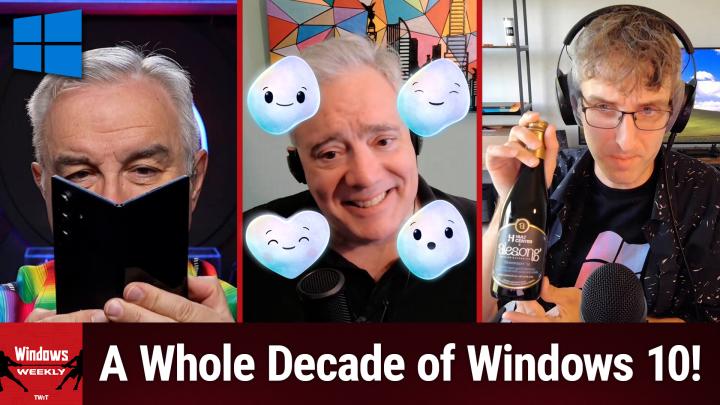
Ten years ago last week, Microsoft released Windows 10 to the world with grand promises of being "the last version of Windows" and delivering "Windows as a Service." As the operating system reaches its 10th anniversary, the hosts of Windows Weekly took a deep dive into what turned out to be one of Microsoft's most complex and controversial releases.
The Promise vs. Reality of "Windows as a Service"
Paul Thurrott was quick to dispel one of the most persistent myths about Windows 10: that Microsoft officially called it "the last version of Windows." As he explained, this was actually a comment from a single Microsoft employee who "shouldn't have said that" and wasn't a brand decision maker. However, the confusion was understandable given Microsoft's revolutionary approach to updates.
"Windows 10 was releasing a major new version every six months, which was unprecedented," Thurrott noted. The idea was to transform Windows into a service-like platform with continuous updates, rather than the traditional model of releasing major versions every 3-10 years.
Chris Hoffman, filling in as guest host, remembered the rocky early days: "The first big Windows 10 update actually uninstalled some programs on people's computers because they weren't supported. It's Monday morning, I have to work, and you just uninstalled my hardware driver."
The Good: Innovations That Stuck
Despite the early turbulence, Windows 10 brought several genuinely transformative features that we now take for granted:
Windows Subsystem for Linux (WSL): Hoffman highlighted this as "huge" for the developer community. "We could have a whole comedy thing about what Microsoft used to say about Linux - the property cancer that's attached itself to Windows," he joked, referencing Microsoft's dramatically changed stance on open source.
Winget Package Manager: Both hosts praised Windows Package Manager (Winget) as an under-appreciated gem. Thurrott uses it extensively when reviewing laptops, describing it as "awesome just to have for blasting a bunch of apps on it automatically."
Improved Update Mechanism: While the journey was bumpy, Microsoft eventually achieved their goal of seamless, faster updates. As Thurrott put it, "It's death by a thousand cuts instead of getting hit by a brick."
The Controversial Stuff
However, Windows 10's anniversary also highlighted its more problematic aspects:
Advertising Creep: Thurrott pointed out that while Windows 8 was the first to ship with ads (limited to bundled modern apps), "Windows 10 brought that out to the file system, to the operating system itself." His prediction about this being a "slippery slope" proved accurate.
Forced Telemetry: The introduction of mandatory data collection raised privacy concerns, though Thurrott noted many were "kind of made up, frankly."
The App Platform Struggles: The Universal Windows Platform (UWP) never achieved its cross-device vision, partly due to the failure of Windows Phone and the complexity of supporting multiple form factors.
Touch Screens: A Solution Looking for a Problem?
An interesting tangent emerged around touch screens on laptops - a direct legacy of Windows 10's tablet-first design philosophy. Thurrott admitted his perspective has evolved: "When this started happening, I used to say 'if you don't like it, just don't use it.' Since then I can't stand touchscreens. I would give anything not to have a touchscreen on every laptop I own."
Hoffman offered a balanced take: "The touchpads have gotten better now. When I had a Windows 8, 10 PC and it didn't have a precision touchpad and it was horrible... I used the screen to scroll because I could not be using that touchpad."
Windows 11 and the Hardware Requirements Debate
The conversation inevitably turned to Windows 11's controversial hardware requirements, particularly the TPM 2.0 mandate. Hoffman argued this creates artificial obsolescence: "A lot of computers that could run Windows 11 fine aren't getting offered the update officially."
Thurrott, while acknowledging the e-waste concerns, took a pragmatic stance: "The people complaining about this are the same enthusiasts who are, by nature, into the latest thing... You are technical enough to know how to get by the restrictions in Windows 11 and can run Windows 11 on that computer just fine anyway."
The hosts noted the irony that many of these complainers could easily install Linux on their older hardware but choose not to, undermining their own arguments about sustainability.
The Current Copilot+ Confusion
The discussion touched on Microsoft's current AI push with Copilot+ PCs, which both hosts found poorly executed from a messaging standpoint. Hoffman was particularly critical: "It's like Recall... everyone wants, everyone loves... The worst thing about Recall is how boring it is."
The complexity of Microsoft's AI feature matrix - spanning Copilot+ PCs, Copilot Pro subscriptions, and built-in features - exemplified what Thurrott called a "unique Microsoft problem" of over-segmentation.
A Complicated Legacy
As Windows 10 approaches its end-of-support date in October 2025, its legacy remains complex. It successfully rescued Microsoft from the Windows 8 disaster and introduced genuinely useful innovations. However, it also marked the beginning of advertising in the OS, mandatory telemetry, and the commoditization of personal computing.
Perhaps most tellingly, despite all the criticism, Windows 10 achieved something remarkable: it lasted exactly 10 years, matching the traditional Windows lifecycle that Microsoft originally claimed to be abandoning.
As Thurrott concluded: "I don't know what to say about these 10 years of Windows 10... The user interface was clearly designed to match what was on the phone... It made tons of sense on a phone, still would today. It made no sense for Windows."