What's Next After the ISS?
AI-generated, human-reviewed.
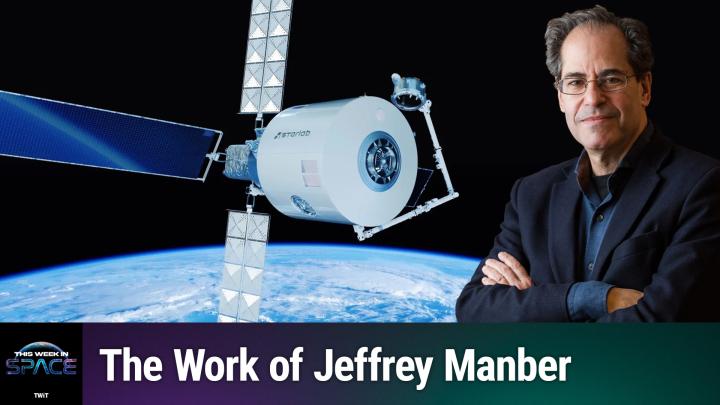
Commercial space stations are transitioning from vision to reality, and the groundwork for this transformation has roots reaching decades into spaceflight history. On This Week in Space, aerospace pioneer Jeffrey Manber shared how his firsthand experience connecting US and Russian space sectors starting in the 1980s, and now his leadership role at Voyager Space is directly influencing the emergence of privately operated orbital outposts like his own StarLab.
How Commercialization of Space Stations Began
The journey toward commercial space operations did not start with SpaceX or 21st century tech moguls. According to Jeffrey Manber on This Week in Space, the first serious steps originated from unexpected places—including his own pioneering work with the former Soviet Union in the late 1980s and early 1990s.
Manber detailed how his early contracts with the Russian space industry, specifically for the Mir space station, were critical. These collaborations enabled non-government research, technology demonstrations, and even the first commercial astronauts. Leveraging commercial agreements and navigating governmental regulations, he helped demonstrate that space stations could support private enterprise—not just national programs.
Why StarLab Could Change Everything
As the International Space Station (ISS) prepares for retirement around 2030, the question of "what comes next?" is pressing. According to Manber, StarLab, the commercial space station project by Voyager Space, intends to prevent any gap in human presence in low Earth orbit.
StarLab distinguishes itself in several ways:
- Scale: Planned as a single-launch, fully integrated station, StarLab aims to match the ISS's capabilities, accommodating four to eight crew members and robust research facilities.
- Commercial Partnership Model: Voyager Space is forming partnerships with established aerospace companies to assure success. European giant Airbus, Japan’s Mitsubishi, and Canada’s MDA (robotic arm builder) are all on board, mirroring the international collaboration that made the ISS successful, but at a fraction of the cost.
- Sustainable Operations: The Starlab station will minimize spacewalks—risky and expensive excursions outside the station—by enabling most maintenance from inside. Its orbit is purposely chosen for fuel efficiency, reflecting decades of operational lessons.
Manber noted that while other private contenders exist, StarLab’s large size and focus on full-service continuity and international buy-in make it unique.
Lessons Learned from US-Russian Commercial Space History
Manber’s career highlights the sometimes surprising role of Russia in fostering free-market space activity. He revealed that in the 1990s, Russian space operators like Energia were more willing to experiment with commercialization than NASA was at the time. Projects included pharmaceutical manufacturing and even the world’s first proposed space game show tie-ins. These early successes—and mistakes—were critical in informing how to build a viable commercial station today.
He also emphasized that regulatory ingenuity and partnerships with both governments and private investors were essential. Navigating export controls, national interests, and skeptical bureaucrats was often more challenging as the engineering.
What Happens When the ISS Retires?
NASA's Commercial Low Earth Orbit Destination (CLD) program is designed to ensure the transition from government-backed to private stations is smooth, with no gaps in service. According to Manber, StarLab is “on track” with design reviews and manufacturing, moving toward a launch no later than 2029.
Unlike early days where access was limited, the next generation of stations will accommodate not just nations, but universities, companies, and even individuals—broadening who benefits from working in orbit.
Key Takeaways
- Commercial space stations have roots in US/Russia collaboration, not just Silicon Valley startups.
- StarLab’s approach is a full-scale, single-launch, international design.
- New commercial stations are designed to be more sustainable and cost-effective than their predecessors.
- Strong international partnerships and robust financial backing are critical to StarLab’s progress.
- The shift to private stations will enable more organizations—not just governments—to operate and conduct research in space.
The Bottom Line
The rise of commercial space stations is the next foundational step in humankind’s use of low-Earth orbit. As explained by Jeffrey Manber on This Week in Space, this evolution builds on decades of behind-the-scenes international cooperation and regulatory innovation. Much of it was pioneered by him. The goal: uninterrupted access to space for science, commerce, and potentially anyone with the means to participate.
To stay updated on breakthroughs in commercial space, subscribe to the podcast for more in-depth discussions and up-to-date news:
https://twit.tv/shows/this-week-in-space/episodes/189