What Does It Take to Build a Soundproof Home Theater?
AI-generated, human-reviewed.
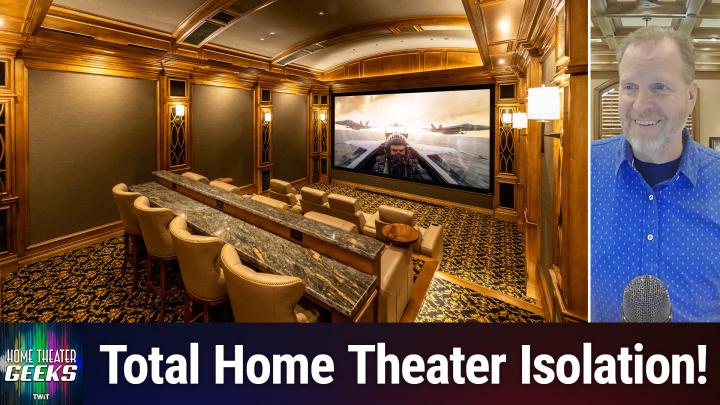
On Home Theater Geeks, Scott Wilkinson profiled the Van Cave Theater, one of the most acoustically advanced home cinemas ever built. The episode reveals the critical steps, materials, and planning you need if your goal is ultimate sound isolation and audio fidelity, whether you want to avoid disturbing your household or crave perfect movie immersion.
Why Sound Isolation and Acoustics Matter in Home Theater
The primary insight from this episode is the profound impact that comprehensive soundproofing and acoustic design have on the home theater experience. Scott Wilkinson and Robert Vanman demonstrated that with meticulous planning, expert integration, and real-world solutions, you can create a viewing space as sonically isolated as the world’s best commercial cinemas.
This doesn’t just prevent movie soundtracks from shaking the rest of your house, as it also keeps environmental noise out and preserves subtle audio details, taking immersion and clarity to the next level.
Core Principles for Sound-Isolated Theater Construction
Triple Layer Isolation
The Van Cave Theater employs a triple isolation approach:
- Room within a room within a room: Three separate structural shells—foundation, wall, and subfloor—each decoupled to stop sound transmission.
- Foundation set 30 inches below the main house slab to allow for all necessary layers and treatments.
Extreme Wall and Door Construction
- The isolation wall between theater and house is 38 inches thick, made up of 15 layers, including masonry, insulation, and dense materials.
- The calculated STC (Sound Transmission Class) is 114, meaning noise transfer is nearly nonexistent (typical high-performance studio construction aims for STC 60-70).
- Double-door airlock: A primary 550-pound, 5-inch-thick acoustic vault door (STC 61), followed by a second isolation door, matching wall performance.
Isolated Ceilings and Subfloors
- Ceilings and floors are suspended using steel hat channels, multiple drywall and vinyl layers, plus foam isolators and acoustical caulk, ensuring no direct contact or sound bridge to the main structure.
- Floating foundations use treated plywood, foam blocks, mass-loaded vinyl, and concrete to absorb vibrations.
Acoustic Treatment and Speaker Positioning
- Paradise Theater dedicated 5,000 hours of supercomputer simulation to optimize diffuser, absorber, and reflector placement for maximum clarity and minimal dead spots.
- Every speaker, both horizontal and vertical, was aimed precisely at the main seating positions for even coverage.
- The Van Cave uses JBL Synthesis SCL1 LCRs, SCL6 surrounds, five massive JBL subwoofers, and infrasonic Ascendo 24-inch subs for ultra-deep bass.
Practical Steps for Your Own Build
- Start early: Isolation and acoustic design should be integrated at the planning stage, not as an afterthought.
- Use multiple layers: Combine dense materials, air gaps, and soft insulation. Mass-loaded vinyl, rockwool, and double (or triple) wall/ceiling assemblies can drastically lower noise transfer.
- Decouple everything: Floors, foundations, walls, and ceilings should be isolated using resilient materials and suspension systems.
- Address doors and HVAC: Weak points like doors and vents often undermine a room’s sound isolation. Double up on doors and use acoustically treated HVAC paths.
- Professional design pays off: Hiring experts or using simulation tools (as with Paradise Theater) optimizes layout, treatments, and prevents expensive mistakes.
Takeaways
- Effective soundproofing is multi-layered and requires professional-grade materials and strategy.
- Speaker mounting matters: Rigid yet decoupled mounts (using heavy steel, Sorbothane rings for damping) reduce unwanted cabinet vibrations and improve sound clarity.
- Noise floor can reach recording-studio levels: With disciplined isolation, you can achieve a noise floor below NC5, rivaling top facilities! Amplifier and hardware selection (esp. silent cooling) become meaningful at this level.
- Even with extreme isolation and acoustic treatment, calibration is critical: Post-construction tuning (unique to your room) transforms good results into great ones.
If you want a home theater that rivals (or exceeds) commercial cinemas, prioritizing unrivaled sound isolation and acoustic engineering is essential. While the Van Cave Theater is a “no compromises” build, costing over $1 million, many of these methods can be adapted to more modest setups to dramatically enhance your viewing and listening experience. Start with the best isolation and layout you can manage, and remember: every layer and decoupling step brings you closer to perfect immersion.
For more expert tips and home theater inspiration, subscribe to Home Theater Geeks:
https://twit.tv/shows/home-theater-geeks/episodes/534