NASA's Artemis II: Launch Window, Crew, and Lunar Mission Insights
AI-generated, human-reviewed.
The countdown is on for NASA’s Artemis II mission—the first crewed trip around the Moon in over 50 years. On This Week in Space, hosts Rod Pyle and Tariq Malik, joined by Space.com writer Josh Dinner, broke down the latest updates on Artemis II’s launch window, the astronaut crew, and the mission’s technical milestones. Here’s a comprehensive look at what to expect as humanity prepares for its next giant leap beyond Earth orbit.
What Is Artemis II and Why Does It Matter?
Artemis II will be the first crewed test of NASA’s Orion spacecraft and the Space Launch System (SLS) rocket, sending four astronauts on a ten-day journey around the Moon and back to Earth. Unlike Apollo 8—which orbited the Moon in 1968—Artemis II will perform a “free return trajectory,” looping around the lunar far side without entering lunar orbit, before returning along a path that naturally brings the crew home even in case of an emergency.
This mission marks a major milestone in NASA’s Artemis program, ultimately aimed at returning humans to the lunar surface and paving the way for Mars exploration. Success here is crucial for subsequent missions, including Artemis III, when astronauts are slated to land near the Moon’s south pole.
When Is Artemis II Launching and How Does the Window Work?
According to Josh Dinner and the hosts on This Week in Space, NASA has now confirmed “no earlier than” February 5, 2026 as the technical opening of the Artemis II launch window. The window includes several specific launch opportunities between February and April 2026, each lasting a few days. The narrow timing is dictated by orbital mechanics: the Moon’s position and the desired free-return trajectory only align a handful of days each month.
Early attempts, particularly in February and March, will likely require nighttime launches, a challenge for astronauts and spectators alike. If Artemis II misses its earliest windows, options exist for several months, but delays could shift crewed lunar flight well into the year.
Meet the Artemis II Astronaut Crew
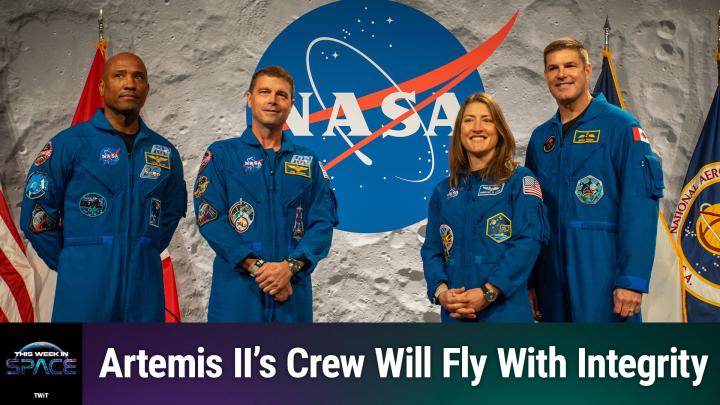
Artemis II’s crew blends deep experience with new milestones:
- Reid Wiseman, Commander: Former NASA chief astronaut and an International Space Station (ISS) veteran.
- Victor Glover, Pilot: Crew-1 veteran and seasoned ISS astronaut, with multiple spacewalks.
- Christina Koch, Mission Specialist: Record-holder for the longest single spaceflight by a woman; scientist with extensive ISS research experience.
- Jeremy Hansen, Mission Specialist (Canadian Space Agency): First Canadian assigned to a lunar mission—his first spaceflight.
According to the hosts, this team is cohesive, diverse, and uniquely qualified to test Orion over deep space—yet for some, such as Jeremy Hansen, it’s a giant leap, as his inaugural spaceflight will take him farther from Earth than any Canadian before.
What Will the Artemis II Astronauts Actually Do?
After launch, Artemis II will spend about two days in Earth orbit, verifying Orion’s systems. The crew then executes a translunar injection burn, sending them toward the Moon. Their closest approach, as explained by Josh Dinner, will bring them as near as roughly 5,000 to 9,000 miles from the lunar surface—making them potential record-breakers for the farthest humans from Earth.
This free-return flyby ensures safety: if any system fails, gravity brings the astronauts straight home. While the mission doesn’t involve landing, it’s a critical trial for life-support, navigation, and human adaptation to deep-space environments ahead of actual lunar landings. Crew members will also be key scientific observers, using their own eyes and instruments to scan the lunar surface, especially the rarely seen far side, during their closest pass.
What Technical Hurdles Remain Before Launch?
Experts on This Week in Space highlighted several open issues for Artemis II:
- Orion heat shield concerns: Engineers observed unexpected “mechanical liberation” (shedding material) during Artemis 1’s re-entry. NASA will now avoid the aggressive atmospheric “skip” maneuver to lessen stress on the shield and keep the crew safe.
- Spacecraft systems: Life-support, water, and waste management systems will all be tested with humans for the first time on this flight.
- Training and recovery: The crew will undergo rigorous training, including emergency suit use (up to 144 hours if needed) and post-mission evaluations simulating lunar landing acclimatization.
Public Engagement: Will Artemis II Capture the World’s Attention?
While Artemis II is technically ambitious, the show’s hosts noted that capturing broad public interest may be challenging, especially compared to the Apollo era. Despite NASA’s commitment to continuous coverage and modern social media engagement, current societal distractions and advanced entertainment technologies could dilute the impact. However, the hope is that the historic nature of a new lunar journey will excite a global audience and inspire the next generation.
The View From Above
- Artemis II is targeting launch no earlier than February 2026, with additional windows in March and April.
- This is the first crewed lunar mission since Apollo; a crucial test ahead of returning humans to the Moon’s surface.
- The four-person crew includes NASA veterans and Canada’s first lunar astronaut.
- The mission will not orbit or land on the Moon, but perform a free-return flyby around the far side.
- Key objectives: test Orion’s systems with crew, gather observations, and enhance deep-space safety protocols.
- Updated heat shield procedures and robust training are in place to minimize risks.
- NASA plans extensive public coverage, though engagement remains uncertain in the modern era.
Artemis II sets the stage for humanity’s long-term presence beyond Earth, aiming to safely deliver astronauts on a roundtrip mission around the Moon. With the launch window now defined, a highly skilled crew in place, and both technical challenges and public interest on the line, Artemis II is the mission to watch in the coming year.
Don’t miss future coverage and insights: Subscribe to This Week in Space at https://twit.tv/shows/this-week-in-space/episodes/179