From Cancer Cures to Next-Gen Tech: The ISS’s Real-World Benefits Revealed
Created by AI, reviewed by humans.
Life-saving advances and powerful new technologies are being made on the International Space Station (ISS) today. Research conducted in space is already creating more effective cancer drugs, improving Alzheimer’s and dementia treatments, and enabling higher-quality semiconductors than anything possible on Earth.
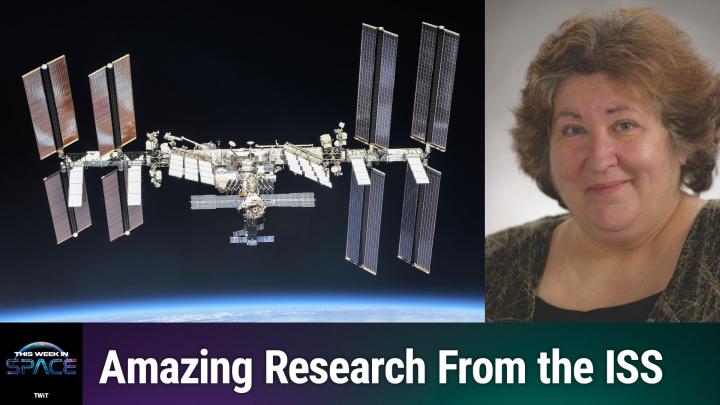
On This Week in Space, NASA’s Lynn D. Harper shared eye-opening details about how the unique microgravity environment aboard the ISS is leading to breakthroughs that will benefit millions—across healthcare, industry, and beyond.
ISS Research Is Creating Major Medical Breakthroughs
According to NASA’s Lynn Harper, new medicines and treatments developed in space are no longer just theoretical—they’re moving from the ISS lab to real patients and are poised to change lives within a few years.
For example, experiments with the cancer drug Keytruda demonstrated that producing the medicine in microgravity allows for more uniform crystals. That seemingly technical improvement translates to a less invasive, more effective version of the therapy (going from IV to injection), better patient outcomes, and lower costs. Harper explained that just this one “spin-in” from the ISS is projected to generate $25 billion per year in revenue by 2030—and could more than pay for the ISS itself in under five years.
Beyond cancer, space-based experiments are accelerating research into Alzheimer’s, ALS, Parkinson’s, and other neurodegenerative diseases. In space, cells grow in ways that more closely mimic human biology, which enables faster, more accurate drug testing. Recent work saw researchers compressing decades’ worth of cancer cell research into just 30 days in orbit—slashing both wait time and cost for the next generation of therapies.
Industrial and Tech Advances: Better Semiconductors and Fiber Optics
The benefits from ISS research aren’t confined to medicine. Harper described how microgravity is being used to create ultra-high-quality semiconductors—the vital chips inside electronics.
United Semiconductor, for example, recently achieved a 90% production yield in space, compared to only 5% on Earth, for a special type of microchip. This doesn’t just reduce waste; it means new, more powerful devices for everything from smartphones to satellites.
Similarly, ISS experiments with ZBLAN (a special glass used in advanced fiber optics) have produced materials that are five-to-ten times superior to what’s manufactured in Earth’s gravity. This could enable faster internet connections, more robust sensors, and better medical imaging in the future.
What Microgravity Offers That Earth Laboratories Cannot
Aboard the ISS, scientists can remove one of research’s biggest obstacles: gravity itself. Cells, crystals, and fluids behave very differently in microgravity, leading to purer materials, more accurate drug models, and innovative new industrial processes.
Harper emphasized that space research allows researchers to see biological phenomena and material behaviors that are impossible or obscured on Earth. For example, cancer cells’ ability to migrate and invade new tissue could be assessed in orbit, giving oncologists new tools to predict patient outcomes and tailor treatment.
Will ISS Research End When the Station Retires?
One of the episode’s pressing topics was the ISS’s future: with worries that the station could be deorbited in 2030, many fear a “research gap” before commercial successors are ready. According to Harper, the sheer value and momentum of ISS-based breakthroughs mean there’s a growing argument for extending operations—potentially overlapping with the next generation of commercial space stations, ensuring that critical research isn’t cut short.
Key Takeaways
- ISS microgravity experiments are driving breakthroughs in cancer, Alzheimer’s, and other diseases—delivering treatments advancing far faster than possible on Earth.
- Uniform crystals produced in space led to improved, less invasive cancer drugs like Keytruda, projected to generate tens of billions of dollars in value.
- Technologies like advanced semiconductors and fiber optics are being produced with far greater quality and yield in orbit than in traditional Earth labs.
- Space research is showing results so significant that experts are urging against any gap in orbital research as the ISS nears retirement.
- Microgravity enables more natural cell growth, quicker disease modeling, and purer materials than possible on Earth—directly benefiting industries and patients worldwide.
The Bottom Line
The ISS isn’t just a symbol of international cooperation or a stepping stone for astronauts—it’s functioning as a game-changing laboratory for medicine and technology. Thanks to space research, the next decade could bring new treatments for our most feared diseases and more powerful, efficient tech in everyday life. According to NASA’s Lynn Harper, these aren’t future promises—they’re practical advancements already in motion.
Don’t miss more stories like this from This Week in Space! Listen and subscribe at: https://twit.tv/shows/this-week-in-space/episodes/174