This Week in Space 201 Transcript
Tariq Malik [00:00:00]:
Coming up on This Week in Space, NASA's Artemis II has an April 1st launch date, and that's no fooling. There is also a report about the moon landers for Artemis, and there's some issues there that we'll talk about. And we get into down to brass tacks all about going to Jupiter, Saturn, and beyond with author Jay Gallantine of Born to Explore, all about John Casani, that legendary engineer and JPLer, and his missions like Galileo, Cassini, and more. Check it out.
Rod Pyle [00:00:33]:
This is This Week in Space, episode number 201, recorded on March 13th, 2026. Born to Explore. Hello everyone and welcome to another episode of This Week in Space, our Born to Explore edition, which is going to be every bit as cool as it sounds. I'm Rod Pyle, editor-in-chief at Astro Magazine. I'm here with my goodest pal ever, Little Tariq Malik of space.com. How are you, sir?
Tariq Malik [00:01:00]:
I'm doing well, except I'm not good, Rod. I am great. So that's because you're here, obviously, because you're here today.
Rod Pyle [00:01:07]:
So is your mother sitting on the other side of the desk again?
Tariq Malik [00:01:11]:
And she says to be nicer, Rod. So on your best behavior.
Rod Pyle [00:01:16]:
Nice try, Mom. This week we're going to be speaking with Jumpin' Jay Gallantine, one of the premier authors of robotic space histories. And by that, I mean about Jet Propulsion Laboratory's incredible adventures Mars and in the outer solar system. He is the guy, the expert, the man. But before we start, please don't forget to do us a solid. Make sure to like, subscribe, and support this podcast with all your might because it means the world and beyond to us. Now, very quickly, a Fresh Space joke with the name missing because I copied and pasted it. So if it was you, write in and take credit, please.
Rod Pyle [00:01:51]:
Hey, Tariq.
Tariq Malik [00:01:52]:
Yes, Rod.
Rod Pyle [00:01:53]:
What do you call a fight between a Martian and a social media introvert?
Tariq Malik [00:01:57]:
I don't know. What do you call that?
Rod Pyle [00:01:58]:
Alien versus Redditor.
Tariq Malik [00:02:02]:
I like that one. That is good.
Rod Pyle [00:02:04]:
I think we might have actually used that before because I had a flag on it that it was used, but I don't remember it.
Tariq Malik [00:02:10]:
I don't remember it either.
Rod Pyle [00:02:11]:
I don't remember what I had for breakfast.
Tariq Malik [00:02:13]:
I am getting a little old dose of the wisdom.
Rod Pyle [00:02:14]:
Now I've heard that some folks want to banish us from the interwebs when it's joke time on this show, but you have the power. To help by sending us your best, worst, or most indifferent space jokes at TwistedTwiit.tv, and we'll blame it on you on the air. And now on to headline news.
Tariq Malik [00:02:33]:
Headline news. I nailed that one. I know it. I felt good. I felt that one. John's nodding his head.
Rod Pyle [00:02:42]:
Yeah. Tariq and I virtually attended a press conference on Artemis II yesterday. And it was in general good news. There was an S-bomb dropped at one point, but not in a way that said, oh, well, you know, I'm mad at the spacecraft or the mission. It was just kind of describing some of the things that have been going through. So why don't you give us an update on that, Tard?
Tariq Malik [00:03:06]:
Yeah. So this is your weekly Artemis II roundup. And as of today, as of today, it is Friday the 13th as we're recording this.
Rod Pyle [00:03:15]:
As of today.
Tariq Malik [00:03:17]:
But all systems seem like they're go for an April 1st launch. And no, that's not a joke. For Artemis 2 after NASA's flight readiness review.
Rod Pyle [00:03:25]:
So I didn't even put that together yesterday. They're announcing an April Fool's launch. Well, it was the day before Friday the 13th, so I guess that's okay.
Rod Pyle [00:03:33]:
It was—
Tariq Malik [00:03:35]:
yeah, what is it, a tripophobia? Anyway, so, so yeah, so, so, you know, of course we've got the story at space.com, but everyone and their space mother has it as well. That rollout for Artemis 2 is now scheduled for March 19th, so that's a week just under a week now away as we're recording this, and they're going to get the rocket out to the pad. They will not be doing, Rod, another fueling test because they feel like they've got it all set. And as Lori Glaze said in that press conference, the next time she wants to fuel the rocket is the time they're going to— if it looks like it's good, she wants to be able to push the button and send it on the way to the moon with its 4 astronauts on board. So March 19th, they roll out to the pad. Couple weeks to turn everything around, get everything all cleaned up, get ready. The launch window opens on the 1st. They've even added a second, an extra launch day on the 2nd.
Tariq Malik [00:04:29]:
So now they have continuous launch opportunities from April 1st to April 6th for this 10-day mission. And they can launch probably about 4 times within that 6-day window, depending on like what happens.
Rod Pyle [00:04:41]:
So not launch for a time, they have 4 launch opportunities.
Tariq Malik [00:04:44]:
They have 4 opportunities to launch. They go out of that, they can't go every single day because it's NASA's biggest rocket since the Saturn V. So it takes a lot of gas to make sure they get it ready to go.
Rod Pyle [00:04:54]:
So a lot of good news.
Tariq Malik [00:04:56]:
Good news. They fixed the helium issue. They think they understand the leak for the hydrogen leaks and that that's going to be fixed as well. And they know what caused it. And so, I mean, all things seem like they've got it sorted, which is really good news for all of that.
Rod Pyle [00:05:13]:
And the National Space Society had their man at the press conference. @KennedySpaceCenter, Bert Dicht of our office out there on the East Coast, because we're coming, we're coming for you, Space.com.
Tariq Malik [00:05:25]:
All right.
Rod Pyle [00:05:26]:
Oh, and I did want to add, there was a moment where— is it John Honeycutt?
Tariq Malik [00:05:32]:
John Honeycutt, yeah.
Rod Pyle [00:05:33]:
Yeah. Was asked a question about, you know, okay, what are the odds of success versus failure and all that? And he, in a quite memorable way, said, well, at this point we're looking at about 1 and 2, and everybody kind of went, wait a minute, you're telling me it's a coin? Because the way it sounded was he was talking about total mission success, 50/50, which means that, you know, every little thing works, including the fact that they, you know, had some new tea dispenser on board or something. But what you saw, the faces of some of the people in the crowd, they're like, wait a minute, you're telling us we have a 50/50 chance of astronaut survival? That's not what they meant. Yeah, and they did walk that one back a little bit afterwards.
Tariq Malik [00:06:13]:
Not a little bit, quite a lot. John Honeycutt spent quite a lot of effort trying to kind of dig out of that 1 and 2 hole because this all started when, uh, when Bill Harwood, uh, the space reporter, asked about what the risk, the risk was of, of the, to the mission. Because in a recent OIG report this week, which we didn't really talk about too much, there were some, there were pretty specific risk numbers for the Artemis 4 moon landings and, and the different landers and what failure was, you know, for those missions themselves. And so the question was asked by space reporters, uh, well, just reporters, right? Because what are the odds? What are the odds? And NASA has given those in the past for missions, and they steadfastly did not want to give those. And so what John Hunnicutt said was it's not 1 in 2, but it's— or we say he said it was 1 in 2, but then he said it's not 1 in 50, which would mean that it would be like, you know, safer than the 1 in 30 that NASA thinks is acceptable risk, uh, of an accident happening.
Rod Pyle [00:07:12]:
Um, Of course, everybody's brain had locked up at that point.
Tariq Malik [00:07:15]:
Because he said one and two.
Rod Pyle [00:07:16]:
Survival, which is not what they mean.
Tariq Malik [00:07:18]:
And so it was a really— I mean, and they came back to it so many times, the reporters did, that the PR person running it, she pretty much just said, look, we're done. We've already talked about that. If you want more, contact us later and we'll get it to you later. So it's interesting. I mean, even we have a story on it today by Mike Waller, our Spaceflight Editor, about how, you know, yes, it's risky, but NASA doesn't want to say. Lori Glaze even said, like, we're not gonna say 1 in whatever. She said that during the briefing. They're not gonna give that kind of number to it because she knows that people are gonna latch onto it and say, you know, you said, you said, and they don't want that to be the—
Rod Pyle [00:07:55]:
And I did notice that the PIO's last name was Kraft and she was much more assertive. Rachel Kraft, yeah. Rachel Kraft than most PIOs. And I do wonder, as often happens, if she's related to Chris Kraft. There's a lot of generational trickle down in the field centers and sometimes at headquarters. I don't know, to have that Chris Kraft kind of, all right, we're done with this topic, we're moving on. Speaking of moving on, let's just very quickly hit the OIG report as it pertains to the ever elusive human landing system.
Jay Gallantine [00:08:25]:
Oh, sure.
Tariq Malik [00:08:25]:
Well, why don't you take this one since I kind of dominated the other stuff?
Rod Pyle [00:08:30]:
Well, I mean, they're both late.
Tariq Malik [00:08:34]:
We don't have one yet. We don't even have two.
Rod Pyle [00:08:36]:
But SpaceX is kind of— depending on how you look at it, a lot later than Blue Origin. Blue Origin started much later than SpaceX did. SpaceX has not even flown an orbital mission with Starship yet that was fully successful. They have not demonstrated cross-fueling in orbit. They have not demonstrated leaving Earth orbit, and they certainly haven't demonstrated anything close to landing on the moon, nor have we seen anything, at least I haven't, in the media that shows me the Human Landing System design with legs. We've seen renderings, but I haven't seen any metal bending. So at this point, I'm thinking 2030, 2032, whereas fingers crossed Blue Origin is going to fly their, their Mark 1 Pathfinder mission in third quarter of this year.
Tariq Malik [00:09:23]:
Is that maybe, you know, I mean, that, that's, that's, that's the first one. We'll have to see if they, if they're sticking to that or not. They are showing quite a lot of hardware for New Glenn, which is the, the rocket that's going to be going there, uh, now that, uh, Tory Bruno is over there and, and working on the team. So, uh, you know, if everything goes according to plan, and the fact that NASA has this new strategy of really trying to open up and accelerate everything— they asked them for pared-down approaches— I would not be surprised if we get more information about what the Mark 2 lander will look like as we get closer to a potential Mark 1 launch. Now, their New Glenn launch has been delayed. They've got one coming up, so how that's going to ripple down for the rest of the year, we'll have to see, because we thought that it was supposed to launch at the end of last month. Speaking of Starship, by the way, the next Starship launch, which is the first test of the V3 to hopefully showcase more reusability, also delayed. Now it's in April when it was supposed to be this month, according to Elon Musk.
Tariq Malik [00:10:22]:
Also news that came out this week.
Rod Pyle [00:10:23]:
You know, it's not my money, but I'd trade some of the reusability work just to see orbital refueling work and a lunar lander.
Tariq Malik [00:10:30]:
I would just like to be able to send stuff to the moon and just send it all at once like we did in 1968 and in 1969 and in 1970.
Rod Pyle [00:10:41]:
That's true. But let's bear in mind, if you really want a sustainable program, you probably aren't going to do that. You know, you need to be able to deliver things in a modular fashion.
Tariq Malik [00:10:50]:
Actually, Rod, I'm going to stop you right there because we've got Jay Gallantine on the line. We're going to talk all about John Casani and his Born to Explore legacy. Let's get to that.
Leo Laporte [00:10:59]:
This episode of This Week in Space brought to you by ThreatLocker. Hi guys, sorry to interrupt, but let me tell you, I loved ThreatLocker. We had such a good time at Zero Trust World in Orlando last week. I wish you'd been there. You would have had a blast. Did you see my space suit? Oh, don't worry, I paid a lot of money for that. I'll bring it out in Halloween. But let me tell you what I learned while I was at Zero Trust World.
Leo Laporte [00:11:21]:
I learned about ThreatLocker's Zero Trust platform and how it works. It takes a proactive, and this is the key, deny by default approach. Unless you explicitly authorize it, you're blocking every unauthorized action. That protects you from known and Maybe even more importantly, unknown threat zero days. And man, modern attacks, these guys are sneaky. They hide inside endpoints, attacker-controlled virtual machines or sandboxed environment, VM-based malware. They're invisible to traditional antivirus software, but not ThreatLocker. ThreatLocker Zero Trust prevents VM-based attacks before they can even launch.
Leo Laporte [00:12:01]:
ThreatLocker's innovative ring-fencing constrains tools and remote management utilities so attackers cannot weaponize them for lateral movement or mass deployment. ThreatLocker works in every industry, Macs and PCs, provides 24/7 US-based support, and gives you comprehensive visibility and control. Just ask Emirates Flight Catering, a global leader in the food industry, over 13,000 employees. They use ThreatLocker. ThreatLocker gives Emirates Flight Catering full control of their apps, their endpoints. It improved their compliance, and it delivers seamless security with strong IT support. And if you don't believe me, ask the CISO of Emirates Flight Catering. He said this, quote, the capabilities, the support, and the best part of ThreatLocker is how easily it integrates with almost any solution.
Leo Laporte [00:12:47]:
Other tools take time to integrate, but with ThreatLocker, it's seamless. That's one of the key reasons we use it. It's incredibly helpful to me as a CISO, end quote. ThreatLocker is trusted by every global enterprise that cannot afford to go down for one moment, like JetBlue, for instance, Heathrow Airport, They, you don't want them to go down. The Indianapolis Colts, the Port of Vancouver. ThreatLocker consistently receives high honors and industry recognition. G2's High Performer and Best Support for Enterprise Summer 2025. PeerSpot ranked ThreatLocker number 1 in application control.
Leo Laporte [00:13:22]:
They got GetApps Best Functionality and Features Award in 2025, and on and on. Get unprecedented protection quickly, easily, and cost-effectively with ThreatLocker. Visit threatlocker.com/twit. You'll get a free 30-day trial and learn more about how ThreatLocker can help mitigate unknown threats and ensure compliance. That's threatlocker.com/twit. And now back to Rod and Tariq and space.
Rod Pyle [00:13:51]:
And we are back with Jay Gallantine, roguish space reporter, raconteur, space writer, video guru, uh, and and marathoner, incredible athlete. How are you, Jay?
Jay Gallantine [00:14:05]:
I'm doing well, Rod. It's been a while, so thanks for having me on.
Rod Pyle [00:14:09]:
You're welcome. Very glad to have you here. Thanks for coming on. And, uh, that was probably the sloppiest introduction you've ever gotten, but you are, uh, you're kind of a legend in parts of the internet if you go to specific corners.
Tariq Malik [00:14:21]:
Yeah, don't—
Rod Pyle [00:14:22]:
Jay Gallantine, you know, the voices go down because you've written books that I think deep dive is putting it mildly. You've written primarily about robotic space exploration, which I love. And when you do a book on a topic like that, you go all the way to the bottom of the ocean and back many times to get your story. Is that a fair assessment?
Jay Gallantine [00:14:48]:
It is a fair assessment. And that's my disease. And that goes back That goes back a long way. There's a story that I wrote that got my writing career. It was the writing sample that got me my first book contract. And it was about Craig Breedlove, if anyone remembers him. He was the guy back in the '60s who would take a surplus fighter jet engine and build a car around it and go out to the Bonneville Salt Flats and try to set the land speed record. And, and it was just one of those hobby writing pieces where I was just writing for my own personal enjoyment.
Jay Gallantine [00:15:26]:
And in the beginning, I was just kind of making it up because I had read this entry in the Guinness Book of World Records about— there was this guy who was trying to set a speed record, and he lost control of his car and left skid marks that were 6 miles long. And that's really all I knew about it at that point. And I was just kind of making up a story around that. But the more I did that, the more I wondered what had really happened. And it turned into this research with talking to people who were subject matter experts on the salt flats. Then it turned into research talking to people who are members of the hot rod community. I finally found some people who were there that day. There was a bit of adventure, but I finally found Craig Breedlove himself.
Jay Gallantine [00:16:14]:
After calling literally every single Craig Breedlove in the United States. There's a separate story. I think I went through 7 before I got to the actual Craig Breedlove. It's easier these days to find people. And I just wanted to know everything. And then I had written a piece later on about something else, and someone was reading it, and they said, Jay, when you tell the story You seem to want to tell the whole story. And, and I said, yeah, and I, and I don't know why, but I don't seem to be able to sleep fully at night until I've done that.
Rod Pyle [00:16:57]:
Well, Tariq has a question that he's just burning to ask you.
Tariq Malik [00:17:01]:
Yeah, yeah, you know, you didn't leave me a slot in our rundown for it today, but I'm gonna, I'm gonna, I'm gonna ask it anyway. Uh, but Jay, you know, one thing that I do like to ask everybody who comes on the show is kind of how they found the path to space, right? Because, you know, it sounds like you've had a different approach than maybe Rod and I had in the past, for example. And so I'm—
Rod Pyle [00:17:25]:
Oh, you mean failing calculus? Yeah.
Tariq Malik [00:17:27]:
Well, you know, I, I wasn't going to say that, Rod, you know. So, but welcome. I saw the minor certificate that I got in astronomy. At home the other day, and it just drives it home that that was not supposed to be a miner. It was supposed to be something else. But I'm just curious how you got your start. Was it something that had bit you when you were young, or did you find it as a part of this evolution into deep diving into history that piqued your interest?
Jay Gallantine [00:17:59]:
The genesis moment. Yeah. Yeah. Yeah. And that's something that I definitely try to get to the bottom of. When I'm writing about these topics is what is the genesis of a mission? You know, we built this huge spaceship the size of a cargo van that went to Jupiter and we called it Galileo. And why did we do that? And why did we do it then? And why did we do it the way that we did it? And on every mission that I write about, I'm always trying to find that one little big bang moment of when this, this idea first erupted from the ether. And my interest in space, I couldn't tell you exactly when, but I do remember the moment pretty vividly.
Jay Gallantine [00:18:44]:
I had a father who was a pretty quiet guy. He was an FBI agent, actually, and he was a consummate G-man in that he didn't talk much, but he spent a lot of time observing and watching other people and kind of studying their interests, and never in a creepy way, but he was the guy who could give you the Christmas present that you never recalled mentioning that you were interested in, that kind of thing. And he came up to me one day when I was about 10, and he handed me this book, which I still have, called Apollo Expeditions to the Moon. And it was all about the moon landings. And I said, "Oh, you know, why are you giving me this?" And he said, "Well, I just thought you might be interested in this." And then he went away. And that was just consummate Jay's dad. Just keeps it minimal, you know, gets the point across and all this. And I spent a long time not even reading that book, but just leafing through the pictures.
Jay Gallantine [00:19:46]:
And certainly I had heard about the moon landings, probably from the space unit in school or something like that. And it was something that had just kind of washed over me. But my father, being the observant kind of guy that he was, surely noticed that I had more than a passing interest. If there was a space documentary at the video rental store, I might have been interested in that, or something that was on cable TV. He is the kind of person who would have paid attention to the sort of media that I consumed. And he gave me this book, my first book, on the space program, and I ended up reading it and just wanted more and more and more and more. And that was the genesis moment of my interest in space.
Rod Pyle [00:20:33]:
Now, if this is the book I'm thinking of, is the one that was published by NASA, correct? Yep. And every chapter was written by some different egghead or manager?
Jay Gallantine [00:20:41]:
That's right.
Rod Pyle [00:20:42]:
Yeah, it was not— it was not the most pleasant read, as I recall. It was good, but it was also a good lesson to guys like us to say, you know, Storytelling and consistency matter. But, but yes, it was a great and seminal book and all this. Can you just give us a quick rundown of the books you have written?
Jay Gallantine [00:20:59]:
Yep. Okay. So the first one that I wrote was called Ambassadors from Earth, and it's about kind of how we got our start exploring the moon and the planets and the moons of those planets of the solar system, just how we got off the ground, why we were doing what we did, what we were studying. How we figured out how to navigate a spaceship to Neptune using mostly gravity. It's pretty heavy on James Van Allen and Voyager, and a little bit on the, on the Soviet Union through Korolev's time. And that was for the University of Nebraska Press, and I really thought it was going to be a one-book deal, but the The early peer reviews were really promising, and they had sent it out to a couple people to have them review it anonymously, and the feedback was really positive. And they said, hey, how would you like to do another? And I'm stupid, right? So I'm like, oh sure, I'll just, I'm just gonna launch into it. And I had completely ignored how I had dropped everything for the last 5 years to write this book.
Jay Gallantine [00:22:13]:
Had spent the first 4 months at least really spinning my wheels trying to figure out how to do this. And then that won the American Astronomical Society's Emmy Award for the space book of the year, which was a huge shot in the arm, completely unexpected. And then the second book that I wrote for the press was also about Robotic Pilotless Lunar and Planetary Exploration. That's called Infinity Beckoned. The title is subject to incessant mocking by my colleague Francis French, but I love that title, I have to tell you. And that is about our first intensive explorations of the inner solar system, so the Moon, Venus, and Mars. It's pretty heavy on the Soviet side, which was definitely challenging in part because of my very limited Russian vocabulary, which has maybe gotten a little better, and part because the Soviets have been much more secretive. It's obviously harder to find people, find sources from that era.
Jay Gallantine [00:23:24]:
But I was really bound and determined to get to the bottom of certain stories. That one also goes pretty heavily into the Viking life detection experiments from when the U.S. sent these two Viking landers to Mars that landed there in 1976. And a lot of my topics are driven by selfish reasons, honestly. I had read some about Viking and I had come away with a lot of questions about why those experiments were chosen, And why they were built the way they were. And those questions fed right into how I wrote that. I really wanted to tell the story from the people who built these. And I ended up working with every single surviving member of the core biology team to tell the story of Viking.
Jay Gallantine [00:24:18]:
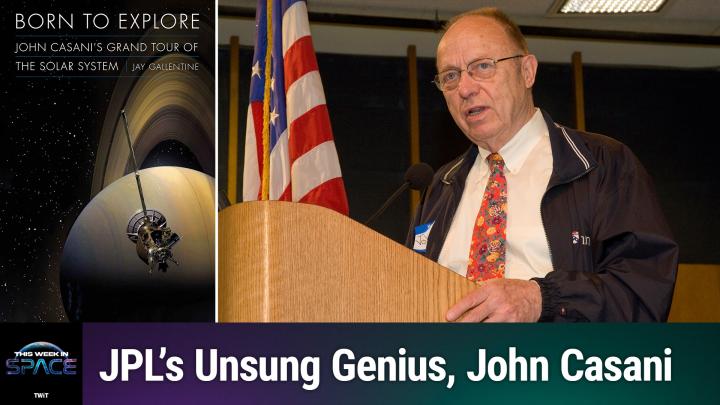
And then that one was done. And, and the press said, hey, Not bad, you turned it in on time. How about a third? And I said, hey folks, that sounds great, but I need a year off. So, so I took, took a year off, uh, did laundry, cleaned up my garage, uh, and then I started on this third one called Born to Explore. And I happen to have a copy right here. Uh, it's actually not the book I set out to write. Uh, it's by and large a biography of this man, John Casani, who I like to say is the most important person in planetary exploration you never heard of. So it's a look at his life, work, and philosophies in parallel with a look at really the most problem-plagued of the missions that he managed, which was this Galileo to Jupiter.
Jay Gallantine [00:25:10]:
And that's been it so far. Yeah, I have a 4th one in the works. Didn't mean to interrupt there, but it's all the stuff that didn't fit into Born to Explore. So we're going to be looking at how we got into building Mars rovers, and that's underway right now.
Rod Pyle [00:25:27]:
Okay, well, before you do that and before we go any further, we're going to rove our way over to a break and we'll be right back. So stand by.
Leo Laporte [00:25:33]:
Thanks, Rod. Thanks, Tariq. This Week in Space brought to you today by Melissa, the trusted data quality expert since 1985. They've been doing it longer than we have. Forward-thinking businesses these days use AI, right, in all kinds of new ways. But I gotta tell you, AI is only as good as the data you feed it. That makes sense, right? You can have the most sophisticated AI tools in the world, but if your customer data is incomplete or duplicated or just plain wrong, you're training your AI to make expensive mistakes. And that's where Melissa comes in.
Leo Laporte [00:26:08]:
For 41 years, Melissa has been the data quality partner that helps businesses get their data clean, complete, and current. Now, let me give you an example of what Melissa can do for you. There's, of course, global address verification and autocomplete— underline global there— real-time validation for addresses anywhere in the world in the format that country expects. So your deliveries actually arrive and your customer experience starts strong. You also get mobile identity verification, very important for know your customer and other regulations. This connects customers to their mobile numbers, which reduces fraud and lets you reach people on the devices they actually use. There's also change of address tracking. This is very cool.
Leo Laporte [00:26:52]:
You automatically will update records when customers move, which ensures you don't lose revenue due to outdated information. There's also something that's really hard to do— smart deduplication. On average, a database contains 8 to 10% duplicate records. Just think about your own contact list, right? MELISSA's powerful matchup technology can identify even non-exact matching duplicate records and eliminate them and merge them. They also do data enrichment, which means they can append demographic data, property information, geographic insights, take that basic contact record, turn it into marketing gold. And the new MELISSA Alert Service will monitor and automatically update your customer data for moves, address changes, property transactions, hazard risks, and a lot more. Whether you're a small business just getting started or an enterprise managing millions of records, Melissa scales with you. And they've got easy-to-use apps for Salesforce, Dynamics CRM, Shopify, Stripe, Microsoft Office, Google Docs, and on and on.
Leo Laporte [00:27:52]:
Melissa integrates right in with what you do. They even have a great API, which means you can integrate Melissa seamlessly into your existing workflows or, or your custom builds. Melissa's solutions and services, you need not worry, are GDPR and CCPA compliant, FedRAMP certified, ISO 27001 certified. They meet SOC 2 and HIPAA high trust standards. Of course they do for information security management. This is the bottom line. Clean data leads to better marketing ROI, higher customer lifetime value, and AI that works as intended. Get started today with 1,000 records cleaned for free at melissa.com/twit.
Leo Laporte [00:28:29]:
That's M-E-L-I-S-S-A, melissa.comcom/twit. We thank them so much for their support of This Week in Space. Now back to you, Rod and Tariq.
Tariq Malik [00:28:38]:
Well, Jay, that seems like a great place to start. You know, I, I had— I've heard of John Casani because, you know, obviously, part of the job, but also had a whole interaction with him when I was a very baby reporter before I even left school. But for folks who don't know, Who is John Casani, and why did you choose to make him the center of Born to Explore? Like, what, what really captivated you about, about this, this, this NASA guy?
Jay Gallantine [00:29:12]:
He's just everywhere. So he's been in every one of my books, and it seems like every mission that I went to work on, or every person that I talked to Casani would pop up somewhere. He was at the Jet Propulsion Laboratory in 1956, 2 years before NASA even came along, and he worked on everything. And he started out as sort of a line engineer, just with an electrical engineering degree, and worked his way up to be in charge of managing these billion-dollar space missions. Nobody ever said anything bad about him. Everyone seemed like they were ready to walk on boiling tar to pursue whatever it was this guy wanted them to do. Just, you know, he just cultivated this incredibly loyal team of people in an almost magical way to get them all facing in the same direction and all of them seeing a common goal. He tried to retire multiple times, and each time the NASA hierarchy would invent new jobs for him because they didn't want him to leave, and they saw him as way too valuable just because he understood everything.
Jay Gallantine [00:30:39]:
His philosophies have been in part canonized in these standard reference manuals that that JPL uses when they're conducting space missions. And now that he's gone, his ghost still seems to inhabit all of the buildings and hallways and meeting rooms of JPL. He's still invoked on a continual basis. And what would Casani have done? And what would Casani have said about this? Just such a such a central figure, just such a cornerstone of the success of JPL's chronology of missions, that it was just really surprising to me that no one had done a biography about him. And when my book manuscript was too long, I had all this material that was looking more at his personal life and his philosophies and his family background and everything.. And I saw a real opportunity to add all that in. I feel like I had this opportunity to change sort of another space book, you know, with all respect to my colleagues, change another space book into something that no one had done before, which was, as Rod had mentioned at the top, you know, a deep dive into this guy's life and work.
Tariq Malik [00:32:09]:
Yeah, and as you mentioned, I mean, you had talked to him for your, your kind of other, your other work, and you mentioned that about, you know, his work on Voyager and Galileo and Cassini and whatnot. But I guess in terms of like who he was as a person, because he passed away in 2025, right, which is what our readers probably don't— our listeners probably don't know about. But clearly, you've had a lot of dealings with him. So how did that happen, that you were able to kind of get the insight into what drove what was really like a lifelong, you know, space icon, you know, in John, you know, before he did pass away there, to get that all done?
Jay Gallantine [00:32:59]:
That took a long time. So I first started talking to him in 2007. I was working on Ambassadors from Earth. I was about two-thirds of the way through it. And I wanted some perspectives on two things. Why in Voyager there were project managers that got replaced every year and a half or something like that. I called them the revolving door project managers. Like, wouldn't you want one person who kind of sees this thing all the way through? So I wanted some perspective on that, and Casani had managed Voyager in its critical pre-launch stage.
Jay Gallantine [00:33:33]:
His job was really to get it off the ground. And then the other thing that I wanted to ask about was the origins of the Voyager Record, because I wanted to tell, I guess, an abbreviated story of that, because it's already been told in a book by Carl Sagan and the record team. But I just wanted some additional insights on it. And I knew from Carl Sagan's book that Casani was the one who had come to Sagan with an idea to have something, some kind of message from Earth to the cosmos on the Voyagers. And I called Casani at home, cold, and he asked me why I was calling him at home. And I said, well, because you're whatever age, and I I kind of figured you were retired. And he's like, no, I just got home from work an hour ago and I'll be back there tomorrow morning.
Tariq Malik [00:34:26]:
He's like, I have an office, Jay, you know.
Jay Gallantine [00:34:30]:
Yeah. So he's like, you know, can, can you call me tomorrow at work? Um, you know, once again, this incredibly important guy who takes a phone call at home, doesn't say no, says, can you call me tomorrow? And, and it's not, can you call me next month? It's "Call me tomorrow." And he was just so accessible like that. You know, I'm this first-time author who has published nothing. I'm a nobody, and he's ready to talk to me within 24 hours. And so we talked about those topics, and then there's always follow-up. And then anytime I quote someone or talk about their work, I try to get out a chapter draft to them so they can review it and comment on it. And so there was this continuity of communication with him that went on for multiple years until I contacted him again when I was working on my second one, Infinity Beckoned. And it was a similar kind of a thing.
Jay Gallantine [00:35:28]:
There was a project called Voyager Mars that he had worked on, and I was trying to gain some insights on that. And whenever we would finish talking, he would ask about my family or ask about me. And just, there was just always some get-to-know-you time. And he was just so personable like that and just seemed to have a genuine interest in pretty much anybody he interacted with. And then when it came to Born to Explore, he was going to be certainly a lead actor, or lead actress as I call them for my books, you know, people who are more prominently profiled. There's more words devoted to them. He wasn't going to be the focus of the book, but I had scheduled a week of interviews out in Pasadena, and he would only meet me at Italian restaurants. And we talked a lot about his childhood and whatnot, but it was still kind of on the same level as all of the other people that I had interviewed.
Jay Gallantine [00:36:35]:
And then in 2021, I had a scheduled phone call with him just to follow up on some various topics. I think I had half a page of questions or whatever. And I had a question for him that I'd finally like strapped on the huevos to ask him. I said, well, John, You know, you've done, you know, all this amazing work, um, and I know now that you were brought up in this very Catholic household. You went to Catholic schools, then you went to Jesuit schools, and your kids went to Catholic schools. And I'm just kind of curious about the role of religion in your life and whether your faith was able to get you through some of the low points in these missions? And that was like, maybe not a Hail Mary, but, but it was one of those kinds of questions that I would not have felt comfortable asking had I not been talking to this guy for over a decade. And he went totally quiet for like 30 seconds. And then he said, now that's a very interesting question.
Jay Gallantine [00:37:56]:
And at that point, he really started opening up to me. And what I thought was going to be a half an hour phone call went over 4 hours. And he opened up on— he had this first marriage that was a little bit of a minor disaster, and talking about his family and his dad getting mad at him, and these different motivations, these different challenges that he had endured over the years. And I just had these goosebumps when he was talking about how in the Jesuit schools that he went to, how they really taught him to be a person for others. And you're always looking to be a person who can help, a person that people can talk to, and you're engaging in respectful argumentation was the term that he used, that it's okay and often good to disagree with people, but you need to have the facts behind you. You need to look at the argument from the other person's perspective and really think about why they're making that argument making that argument. And the more he talked, the more this light was going on in my head, which was saying, you know, this explains everything in this guy's career, was his background and his upbringing. I'm like, John, you know, all these things that you've told me about, you know, adopting this boy that kind of nobody wanted and loving him so much that he calls you Pop and having this open-door policy and anybody can call you, anybody can talk to you.
Jay Gallantine [00:39:51]:
You're not up in this glass tower. I mean, that just explains everything. Like, when were you not a person for others? And he was like, "Oh, well, thanks. I appreciate that." You know, he was just kind of aw shucks about it and everything. But I came away from it going, you know, man, this would just be perfect. This is nothing I've ever read in any other space book that really helps explain who this guy is and why he operated the way that he did.
Rod Pyle [00:40:24]:
That's awesome. All right. Well, we're going to operate our way into a quick break and we'll be right back. Stand by. So, Jay, you mentioned that John had passed recently. I guess I've known him not quite as long as you did. I think I probably met him in 2014 or so, but because I live out here, I was, you know, able to see him more often, possibly. And I can only imagine, kind of knowing the raconteur side of him, that if there is such a thing as ghosts and if they're able to haunt places like the halls of JPL, can you imagine what he'd do? There would be goats everywhere.
Rod Pyle [00:41:00]:
But, um, as kind of just a quick peek into his personality and how he was so effective, um, did you have the experience I did at the JPL archives when you'd pull up the file boxes marked Casani with a big red restricted on the side?
Jay Gallantine [00:41:17]:
I don't think I ever saw anything that said restricted on the side, so I'm gonna have to get those box numbers from you.
Rod Pyle [00:41:24]:
Um, well, they may have taken them off, but this was, uh It was a Mars book in 2014, I think. And I asked for a number of books of Casani, and I think the name was Julia, the woman who ran the thing. JPL archives, like so many NASA things, are horribly underfunded. Wheeled out this cart and said, restricted, restricted, restricted. And I said, what's that all about? She said, well, you can look at them, but we can't let you have copies. And I said, why? And she said, look at a few, you'll understand. And I guess the way I'd put it is John had no problem speaking to power in the way that they needed to be spoken to. So when there were problems with Voyager, when there were problems with Galileo, if it was something where he felt that headquarters was piling on his people a little more than they should, he wasn't shy.
Rod Pyle [00:42:12]:
And I thought that spoke volumes about the kind of person he was. Not that he was unkind, but that he protected his brood, you know, and he made sure that they were covered at all times.
Jay Gallantine [00:42:22]:
Yeah, I think he first made sure that his brood was doing the right thing, you know, and that he was on the correct side of the argument with that. But I would also agree that he was pretty candid in a lot of his memos, which I think you need. I think there's a lot of, you know, corporate speak anymore, and the phrases are escaping me right now, but But, you know, it seems like with a lot of memos and emails these days that there's a lot more reading between the lines that you need to do in order to understand what someone is really telling you. Maybe they're trying to be nice, but part of me—
Rod Pyle [00:43:02]:
well, they're usually trying to avoid a trip to HR.
Jay Gallantine [00:43:07]:
Yeah, and so there's, you know, there's definitely some of that, which was not as much of an issue back in the '70s and '80s, of course. But I think part of it too is that people aren't as certain of their position sometimes, you know, when they're, when they're trying to make an argument and it's, and it's a weaker argument. And I think that just helped keep projects moving. I think, you know, part of his job was, was just to keep these things on track and keep the momentum going, proceeding towards launch day. And I've got to believe that You know, when every day counts, it's like every day where nothing happened is a lost day. And they're all chasing that planetary alignment and that period, that daily firing window when they need to get this thing off the ground. And that is immovable. And so why not be more candid? Why not be more direct? Because you're going to get things done faster.
Rod Pyle [00:44:08]:
So I do have a follow-up, and I hate to steer away from the core of the book, but I just have to ask, can you relate the goat story to us?
Jay Gallantine [00:44:21]:
Oh, so I've explained the goat story many times. I'm sure. Definitely one of my favorites. And actually, I got my hand slapped by my publisher for making late changes to the goat story. They were some of the last conversations that I had with John, actually, before he was hospitalized. Hospitalized. But basically, in the wake of the Challenger disaster, he was helming the Galileo mission to Jupiter, and the whole mission had been sidelined.
Rod Pyle [00:44:52]:
And because it was supposed to launch on the shuttle.
Tariq Malik [00:44:54]:
Yeah.
Jay Gallantine [00:44:54]:
So for folks who don't know, Galileo was supposed to be the first planetary mission to launch from the belly of the space shuttle. And the, and the mission had already been a victim of the shuttle's development. Because the shuttle's cargo carrying capacity kept changing. The dimensions would change, the weight budget would change, and the Galileo mission had already been redesigned something like 4 times to accommodate changes in the shuttle zone development. And here we are in January of '86, and the Challenger disaster has occurred, and the Galileo team thought they were 5 months from launch. And John, who always described himself as more of a leader than a manager, he actually never thought of himself as a good manager. I thought he was an excellent manager, but definitely as more of a leader in terms of the vision and the alignment of the troops. So he knew that it was critical to have the support of the families of the people who were working for him.
Jay Gallantine [00:46:05]:
And on previous missions, he had done these picnics, basically these all-day picnics for the, the people on the mission team as well as their families, just as a big thank you, acknowledging to the families how long of hours these people were putting in and how hard they were working. And he, he thought strongly that just a real first-class blowout picnic with great food and games and prizes would help rally the troops. I think he was right, but the problem was that he couldn't get any money out of JPL for this. And so he came up with the idea to sell tickets, and he wanted to have a ticket selling contest among the different technical divisions. So the JPL is this matrix organization, as you surely know, Rod. So there's all these different disciplines like guidance and navigation. Documentation is one of the disciplines, propulsion, structure, thermal control. And he had, I forget how many, I want to say it was about 10 people who reported to him who were representatives of these technical divisions.
Jay Gallantine [00:47:22]:
And one day at a regular meeting, he announced that he had this picnic in the works, and he was trying to get it paid for, and there was going to be a ticket-selling contest among the different technical divisions. And Casani had been looking for a way to spice it up, and so he said, so what's going to happen is Starting a week from now, at this next meeting, everyone is going to have to report the ticket sales for everyone underneath them, and the winner is going to get a bottle of wine for the week. The loser is going to have to take home the booby prize. And with that, he called for the guy in the back of the room to please walk the booby prize forward. Everyone turned to look, and it was a live goat. John and his wife Lynn had bought it the previous weekend for $15 cash at a livestock auction about half an hour outside of Pasadena. And they'd taken it home and Lynn had put a diaper on the thing so it could walk around the house wherever it wanted to. And then John had brought it to JPL that morning and had been keeping it in a large refrigerator-sized box outside of his office.
Jay Gallantine [00:48:39]:
People were bringing it vegetables from the JPL cafeteria. He said, if you have the lowest ticket sales for the previous week, you're going to have to take the goat home for the following week until you report your ticket sales again. This was actually the second time that he had done this, Rod.
Rod Pyle [00:48:58]:
Did you know that? No, I just thought it was the one time. I thought one would be enough because I remember him saying it was kind of difficult to get rid of a goat once you had one.
Jay Gallantine [00:49:06]:
Yeah, yeah, exactly. So, so a lot of people laughed and Casani made it very clear that he was very serious about this. One of the technical division representatives, Dennis, was outraged. He was genuinely outraged that a prestigious aerospace environment such as the Jet Propulsion Laboratory would ever stoop to something so bad and low and terrible. And at one point, that guy actually lost the week's ticket sales contest and just flatly refused to take the goat home. He was like, no. I'm just not going to do it. This is awful.
Jay Gallantine [00:49:56]:
I just can't believe you people are doing this. But it was a hit, and the ticket sales really exploded, and the team was able to have the picnic that they wanted. Now, the sad story about this is that the goat didn't make it to see the picnic. Oh no.
Rod Pyle [00:50:18]:
Yeah.
Jay Gallantine [00:50:18]:
So the goat was visiting someone. I forget if it was a JPLer or who exactly was keeping the goat, but basically their neighbor's dog smelled goat and hopped the fence and actually ate the goat. Oh my gosh! Yeah, so the day of the picnic, John was not about to say that that's what happened because it just would have killed the vibe, right?
Rod Pyle [00:50:46]:
Wow.
Jay Gallantine [00:50:47]:
So he got up and made brief remarks about how the goat wasn't able to be there that day. Oh no. And that, in the smallest nutshell that I can muster today, is the goat story.
Rod Pyle [00:51:01]:
Okay, the goat had a prior booking. Well, we're going to goat our way over to our last break, and we'll be right back with Mr. Malek's next question.
Tariq Malik [00:51:10]:
Stand by. Well, Jay, I did not know that a goat was so integral to the Galileo mission's team morale, you know, until now. So I guess RIP, that was a true goat of legend, if you will. But what, you like that one, right?
Jay Gallantine [00:51:25]:
No, Rod?
Tariq Malik [00:51:26]:
Yes. But what you mentioned earlier, how like a lot of your focus for Born to Explore is about the work that John had with that Galileo program. You've already talked about how It was delayed after the shuttle accident, and obviously that created a lot more work for the team. But I know that it wasn't all rosy. Galileo was probably one of the first missions that I, growing up, paid attention to independently, before I became a space reporter. And being very excited about its whole thing, you know, going to Jupiter, sending the great imagery home with its big main antenna. Dropping a probe into the planet. We're really excited about it.
Tariq Malik [00:52:10]:
But I imagine, just because of your experience talking with him, that it wasn't all roses and, uh, uh, what do you— what, champagne? What do you have? What are good things? I don't know. You know, wine and roses. So I imagine it wasn't all like that. And I'm curious how he as a leader approached those hiccups, uh, because when you're in a— you know, our listeners may not realize it, but you do a space mission, it's not like you're in it for a year or two.
Jay Gallantine [00:52:38]:
You're in it for a haul, uh, for a while. John was on his way back from one of the Voyager launches. He was in a rental car with his boss and found out from his boss that not only was he supposed to continue being Voyager's project manager, but he would be Galileo's project manager. And John was really excited about this in the beginning. Because he was going to have this mission like from its inception, you know, and all the others he had come in at some other point. And it turned out to be that that was just too much work. There were some problems with having Voyager sort of settle down into the mission and preparing the command sequences and whatnot for it, that there was no way that one person could do all this. So he focused on Galileo completely.
Jay Gallantine [00:53:28]:
There were a lot of wrenches thrown into Galileo that had nothing to do with the work that JPL was doing. A lot of it had to do with the space shuttle. You know, we've already talked about how the, the capacity of the shuttle kept changing. Another thing that kept changing was the booster rocket that Galileo was going to be carrying with it. So The spacecraft was going to ride up in, in the shuttle's payload bay, and then once it was ejected, there was going to be a supplemental stage on the back of the spacecraft that would ignite and, and send it to Jupiter. And there were different options that were on and off the table for various political, budgetary, and safety reasons. And every time that changed, The mission had to be redesigned, and not only the spacecraft itself, but the design of the mission itself. So how many orbits of Jupiter are we going to have, and what targets are we going to study, and how are we going to be approaching the different moons, and what are going to be the sun angles, and all these things, you know, all that work has to be redone whenever the mission changes.
Jay Gallantine [00:54:44]:
And it was getting pushed back in time. It was originally going to launch in '82, and then it moved to '84, and then it moved to '85. And each time, John found a way to keep the mission going, basically. And at one point, the mission and the spacecraft was actually split into two. So there was going to be a launch of the main spacecraft, and then there was going to be a separate launch to carry this descent probe that was going to be dropped into Jupiter. And years later, after Galileo had ended, John was talking to someone at some industry conference who had worked on Galileo, who was an outside vendor, and he said, "You know what we call you, Casani? We call you the man who lives in a world with no corners." Because every time we thought that there was going to be some kind of showstopper, you know, again, nothing that anyone been like deliberately maliciously introduced, just some complication like, oh, they are no longer going to be able to use this high-energy liquid hydrogen stage to get to Jupiter. I guess the Galileo mission is over. Nope, psych! You know, Casani pulls another rabbit out of his hat and rallies his troops to think in different directions, and they come up with a way to keep the mission going.
Jay Gallantine [00:56:09]:
And, and Casani told me that, that a man with no corners was the greatest compliment from those people. And, and I think that right there just encapsulates just how determined he was to never give up and never keep going, or never— excuse me— to never give up and always try to push forward to launch day.
Rod Pyle [00:56:34]:
That's pretty cool. We're sort of running short on time here, so I think I'll give you the choice. We can either talk about how Casani and team worked past the really, really punishing issues with the antenna on Galileo or the Cassini project.
Jay Gallantine [00:56:52]:
Maybe we should move on to Cassini. Yeah, Casani was no longer project manager when the antenna issues crops up.
Rod Pyle [00:56:59]:
Oh, okay, okay.
Jay Gallantine [00:57:00]:
Well, that makes sense then. So he, you know, he kind of flirted around with various roles and, you know, and after Galileo he did some other work, but then he came back to manage Cassini at the time that that mission was spinning up. And so this was going to be a massive spacecraft, you know, the size of a large cargo van that was going to go out and orbit Saturn. And it was going to have a probe that went and landed on the surface of Titan. You know, extraordinarily complicated mission, long-life mission, was going to take years to get to Saturn, obviously. And there was a problem. There was a problem because there was all this money that wasn't going to be available. So there had been budget cuts, there had been other aspects of the mission that that had had to be cut.
Jay Gallantine [00:57:53]:
You know, and Casani's job at that point on Cassini as its project manager was really to get the spacecraft off the ground. And he had to make some hard decisions in terms of compromises on how the spacecraft was going to be built. So there was going to be the main body of the ship, which they call the bus, and this was going to have its computing brain radio equipment and thrusters for maneuvering and all that stuff. But it's there to conduct experiments, right? And so the instruments that conducted these experiments are of two different types. There's some that you want on a stable platform that you can steer for taking pictures or taking a very precise reading from an object, and there's others that you want kind of twirling through space because they're sort of sampling the environment, as it were. And those are what we call fields and particles experiments. So they're looking at sort of that local environment, plasma, dust, radiation, all these different things. And you don't want to just grab a sample because you want to, you kind of want to look at the environment around the spacecraft.
Jay Gallantine [00:59:09]:
And so there was going to be this turntable that had all of these instruments on it that, that could sweep through the local space environment. And Casani realized that, that the way that he could keep the numbers in check for the budget and get this thing off the ground would be to delete both of those and rigidly attach the instruments to the body of the spacecraft itself. I consider that to be the most controversial decision of his entire career. There was a huge backlash from the scientific community on that. One of them, who was a plasma scientist, later complained to me, quite understandably, that, you know, for all of the time and money that we scientists spent coordinating our observations based on these new limitations, they probably could have paid for the boom arm and the turntable to be put on there. But Casani's response to that was like, look, at that time, you know, we didn't have the money. It's like, I've got this much money to get this thing off the ground. And so I can take off the boom and the turntable and rigidly attach the instruments, or we cannot launch.
Jay Gallantine [01:00:31]:
So you're going to have this in a limited fashion, or you're going to get nothing.
Tariq Malik [01:00:37]:
Wow.
Jay Gallantine [01:00:37]:
Yeah. And it was just one of those where he kind of, he kind of went into dad mode, and I could still hear his voice from talking to him about that. You know, it's like, because I remember hearing my dad say something like that. It's like, well, you can have this or you can have nothing.
Tariq Malik [01:00:51]:
You, you, you get what you get and you don't get upset, right?
Jay Gallantine [01:00:54]:
So yeah, it's like, do you want to go to Saturn? You know, this what we're going to have to do to go to Saturn. And I know you don't like it. Um, it's, it's the, uh, but as Casani once said, you know, the, the ideal solution is one that makes everybody equally unhappy. And so if everyone is equally unhappy, then, then I've done my job. That's the best I could do.
Rod Pyle [01:01:21]:
I, I'm spending my life doing exactly that.
Tariq Malik [01:01:23]:
That is awesome.
Rod Pyle [01:01:24]:
That is all.
Tariq Malik [01:01:25]:
So I mean, that's a hard— sorry, but you know, we got to this point. It got to Saturn. Yeah, I would just point out that, uh, I— the, the one time I— the first time I met, uh, John Casani was actually when I was at the University of Southern California. So I was really happy to see the little note about how him being— he was on this— the, the, the, the steps of the student union at USC, right?
Rod Pyle [01:01:48]:
And those—
Tariq Malik [01:01:49]:
just had to get that in there. I know, right? It wasn't the steps of UCLA. But, but they actually was studying astronomy at USC. And they said that they could go to see Cassini in the cleanroom, if you were able to get there on time. And I had missed my class's date and was able to get in my friend's class's date to go. And there wasn't room in the car to get me. And of course, I don't have a car in Los Angeles. So there's no, there's no Uber.
Tariq Malik [01:02:20]:
And there's no lift because it's like 95 or whatever it is, you know, 96. And, and so I missed Cassini in the clean room, and I was so bummed about it, uh, that, um, oh, I want to say like a year later or so, he gave a talk all about how great Cassini was going to be because I think it had just been shipped, uh, at that point in time. And, uh, uh, you know, for, for Saturn at Observatory. And E.C. Krepp was there. He's been on the show as well too, right, Rod? Um, and so that was when I met him for the first time, is this, as someone telling us how great going to Saturn was going to be, and we've got this, this giant spacecraft and it's going to be amazing. And I was so excited. And then, uh, and then we got to watch there in September of, of what, 20— 2015, when it, when it plunged.
Tariq Malik [01:03:07]:
2015, 20, 2018, 2019, when it plunged, plunged into, into the, into the—
Jay Gallantine [01:03:12]:
oh, for the grand finale.
Tariq Malik [01:03:13]:
Yeah, for the grand finale. So it was like one of the bookends. And John was there at the start for that mission, because that's one of the— that and Galileo are like some of the core ones for me when it comes to planetary astronomy. So I just thought it was really interesting when I found out that we're going to talk to you about him and your book, that it was just interesting how those stories are all intertwined for things.
Rod Pyle [01:03:38]:
So, yeah. Were you at JPL for the end of mission for Cassini?
Jay Gallantine [01:03:41]:
I was not, no. Would have been great. I should have made arrangements, begged to get out there for something. I should have gone.
Rod Pyle [01:03:56]:
Yeah. Sorry, the Queen Mary's blowing their horn behind me. They do that every 2 hours. I mean, you know, it was— There was a long buildup to a very short ending, but it was pretty amazing to watch the emotions of the— Mostly the engineering and science staff up in the balcony as they're watching. All we had on the screen, there was no video, but they had this line, like, you know, what you get with squiggly line science instruments. It was just the radio signal. It was kind of this peak. And then as it began to burn up, you just watched this kind of fall off and go to a flat line.
Rod Pyle [01:04:30]:
Oh my God. I mean, people were sobbing because it's like watching your dog, you know, take its last breath in the vet or something. I mean, it was really quite moving. Um, speaking of quite moving, what's your next book going to be about, and when can we expect to enjoy it?
Jay Gallantine [01:04:47]:
Well, thanks for asking. Um, the working title is And Then Magic Happens, and it's looking at how we got into building Mars rovers. So why did we build them the way that they did? They've got those 6-wheel distinctive chassis on them. Where did that come from? How did we teach rovers how to think, how to navigate, how to avoid hazards? And I've been working with some fascinating people on this. I've spent some time with Don Bickler, who invented that 6-wheel chassis. I've spent some time with Tom Rivellini, who was the key engineer behind the airbags that we used to land on the surface of Mars. G. Scott Hubbard, who was at NASA Ames, who had the original idea for a low-cost lander, which was what turned into Pathfinder.
Jay Gallantine [01:05:45]:
I've got the inside story of the rover naming contest, actually, and interviewed the woman who won the contest about writing her entry and the experience that she had and whatnot. And the most interesting thing that I found is the surprising relationship between Mars rovers and the Roomba.
Rod Pyle [01:06:09]:
I love it. Yeah, okay, well, that, that one's got a big dot, dot, dot after it. That's going to keep us interested.
Tariq Malik [01:06:15]:
And I'm just going to point out that he said that he interviewed the woman who named in the rover, and they were kids, Rod.
Rod Pyle [01:06:22]:
They were kids when we started. This was the Sojourner rover on Pathfinder, right? Yep, yep. Yeah, yeah, that's a really sweet story. Yeah. Well, Jay, I want to thank you from the bottom of our little dark hearts for joining us today on episode 201 that we like to call Born to Explore. Uh, where can we track your activities online and get a little more look at your future adventures coming up.
Jay Gallantine [01:06:49]:
Yeah, I, I have a Facebook page that is facebook.com/readablehistory, and I try to put updates there when, when there's something worth updating. That's, that's the big place. I don't have a website or anything like that because it always seems like, well, I could create a website or I could work on this next chapter, and then I always end up working on the next chapter. But, uh, facebook.com/readablehistory is, is the going to be the most direct connection for news.
Rod Pyle [01:07:21]:
Boy, it's music to a publisher's ears when they hear an author say, I don't have a website. That's okay. Whatever works for you. But speaking of such things, is there a way for people to get signed copies of your current book?
Jay Gallantine [01:07:34]:
Yeah, they could message me through my Facebook author page., and I am fulfilling those requests. So, so they could send me a direct message and I'll get back to them. And that is something that never gets old, I tell you. It's always a thrill when someone's interested in what you spent years working on and, and wants a signed copy. It's, uh, it's as, as much of a pleasure for me, uh, as, as I hope it is for them.
Rod Pyle [01:08:01]:
Well, when you have as many books on backlist as I do, At this point, I just said, look, I'll mail you a book plate. Okay. Just, just lick the back and stick it in the front cover. Cause half of mine, I can't even find anymore. Tariq, where should we find you in Webland?
Tariq Malik [01:08:15]:
Oh, Rod, Rod, you can sign my books. It's okay. It's okay, Rod.
Rod Pyle [01:08:19]:
It's all right.
Tariq Malik [01:08:20]:
Bring him to ISDC. I'll, I'll, uh, I'll, I'll sign, uh, I'll give you a signed copy of my book. Oh wait. Oh, I feel like I'm the only one now. So, uh, no. Jay, I haven't written any books because I'm a lazy bone. They're a lot of work. I tip my hat to anyone that has an attention span longer than a hamster like me.
Tariq Malik [01:08:43]:
But no, you can find me at space.com as always. And apparently in 2 or 3 weeks, you'll find me in Florida quite possibly for the launch of Artemis II. This weekend at 3:30, you will find me playing Fortnite because as the Dark Astronaut, or the Dark Voyager astronaut's gonna do it. Do something fun that's real spacey in that game, and I'm really excited about it. And I guess that's about it. Looks like you and I got a date in Houston for Artemis, Rodden. Yeah, I hope so.
Rod Pyle [01:09:10]:
Oh, on Twitter? It depends on how you mean that, but yeah.
Tariq Malik [01:09:12]:
On the socials @tariqjmaliq, by the way.
Rod Pyle [01:09:15]:
I forgot to mention that. Okay, don't wanna forget that. And of course you can find me at pylebooks.com or at adastramagazine.com, which I lovingly edit every quarter. Uh, also, if you're in the Southern California area— this is my last commercial, I promise— please consider joining me for a talk I'm doing on Apollo and Artemis at the Bowers Museum in Orange County on Thursday, March 19th, at 10:30 in the morning. Go to bowers.org— that's B-O-W-E-R-S dot org— and look in the program section. It's actually on the landing page, and you'll see my listing. And for your space smarty pants out there, I'll be giving away some books to whoever can answer some of my pithy space questions. Remember, you can always drop us a line at twist@twit.tv.
Rod Pyle [01:09:56]:
We welcome your comments, suggestions, and ideas of jokes. We're short on space jokes. I burned through about 20 of them last week, so you guys owe us some space jokes. Don't get them off, off of AI. Make up your own, or, or try and find some good old-timers. But we've seen the AI ones, and they're not very good. New episodes of this podcast publish every Friday on your favorite podcatcher, so make sure to subscribe, tell your friends, give us reviews. We'll take a thumbs up, a fist in the air, or poke in the eye, whatever you got.
Rod Pyle [01:10:24]:
You can also follow the TWiT Tech Podcast Network @TWiT on Twitter and on Facebook and TWiT.TV on Instagram. Thank you very much everyone, and we will see you next week.